Flange Cardan Shaft
In the entire modern industrial power transmission ecosystem, mechanical connection components that undertake torque transmission, motion conduction and displacement compensation have always occupied an indispensable foundational position, and the flange cardan shaft stands out among various transmission connection parts by virtue of its unique structural flexibility, reliable load-bearing performance and strong environmental adaptability. As a key articulated transmission component integrating flange connection structure and universal joint transmission mechanism, the flange cardan shaft is mainly used to connect two independent rotating shafts that cannot be kept on the same central axis due to equipment layout constraints, installation deviation or dynamic displacement during operation, realizing stable and continuous transmission of rotational torque and mechanical power between the driving end and the driven end. Different from rigid transmission shafts that only support coaxial linear transmission and ordinary flexible couplings with limited displacement compensation range, this type of cardan shaft combines the high-strength fixed connection advantage of flange structure and the multi-angle deflection compensation characteristic of universal joint mechanism, which can effectively cope with angular deviation, axial displacement and radial offset generated in the working process of mechanical equipment, and maintain efficient and stable power output without affecting the normal operating rhythm and working performance of the whole mechanical system. With the continuous upgrading of industrial production equipment, the gradual expansion of heavy-duty mechanical operation scenarios and the increasing requirements for transmission stability and equipment operation continuity, the application scope of flange cardan shafts has gradually covered heavy industrial manufacturing, metallurgical production, mining operation, engineering machinery, port handling equipment, industrial conveyor systems and many other core industrial fields, becoming an essential basic component to ensure the normal linkage and coordinated operation of various mechanical transmission systems.
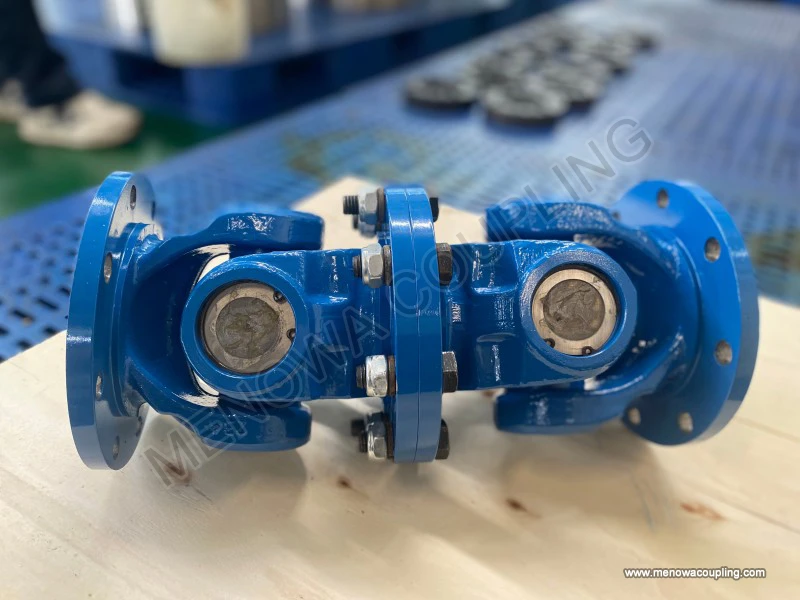
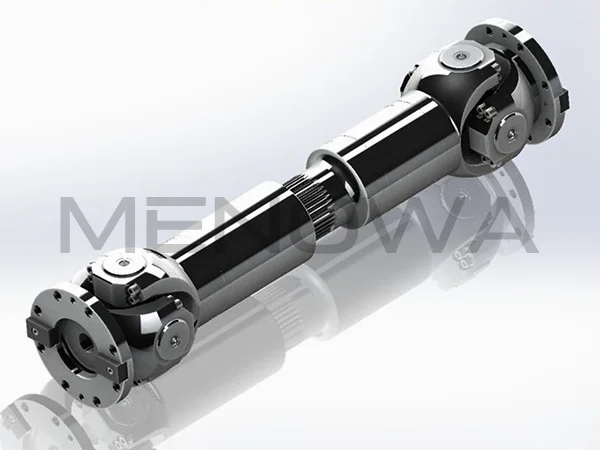
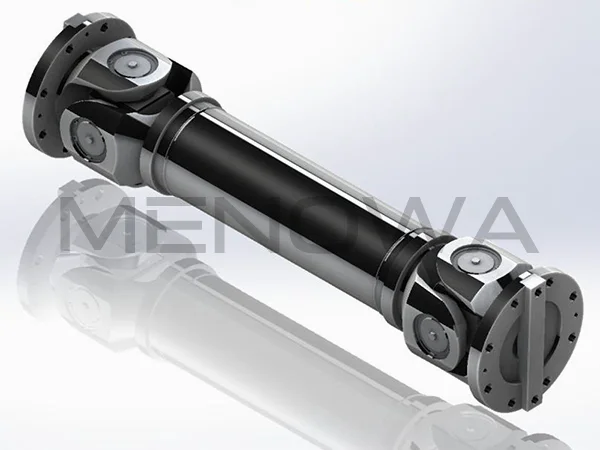
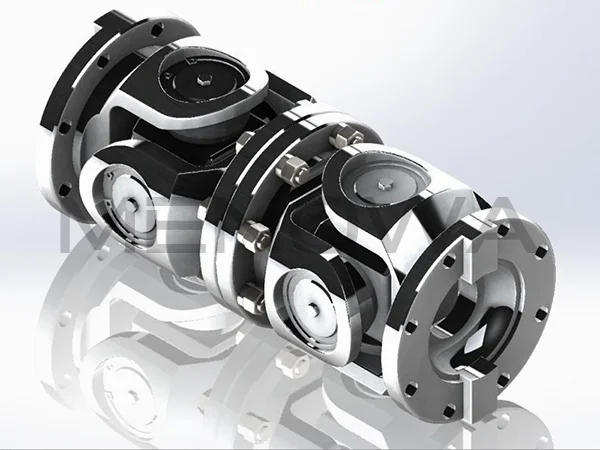
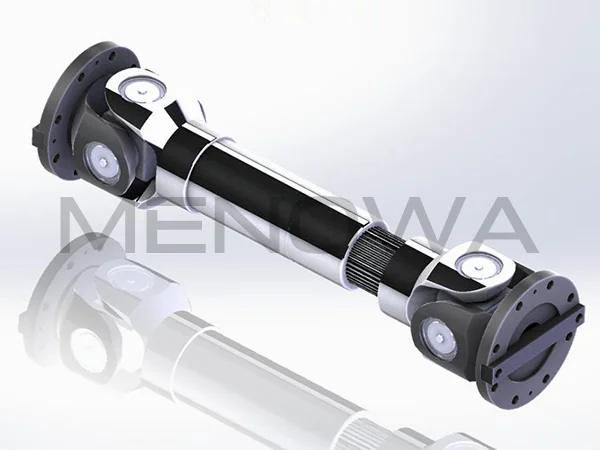
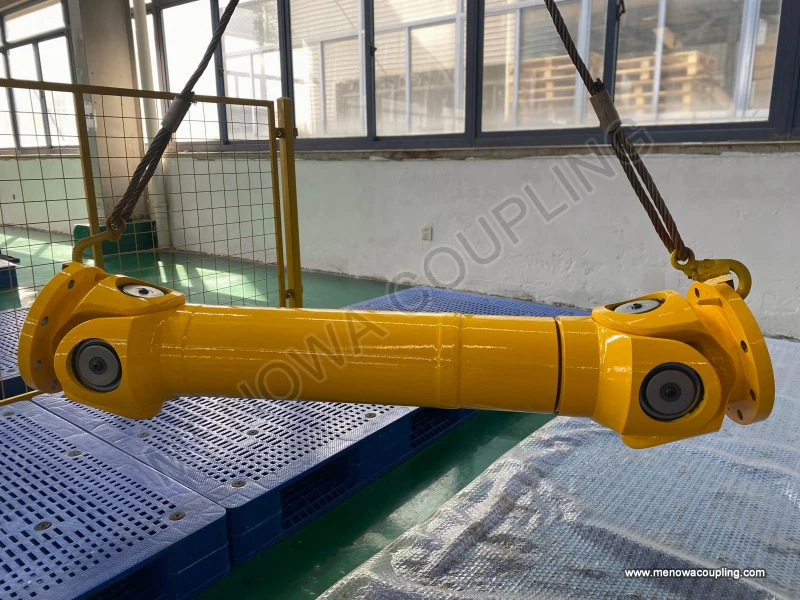
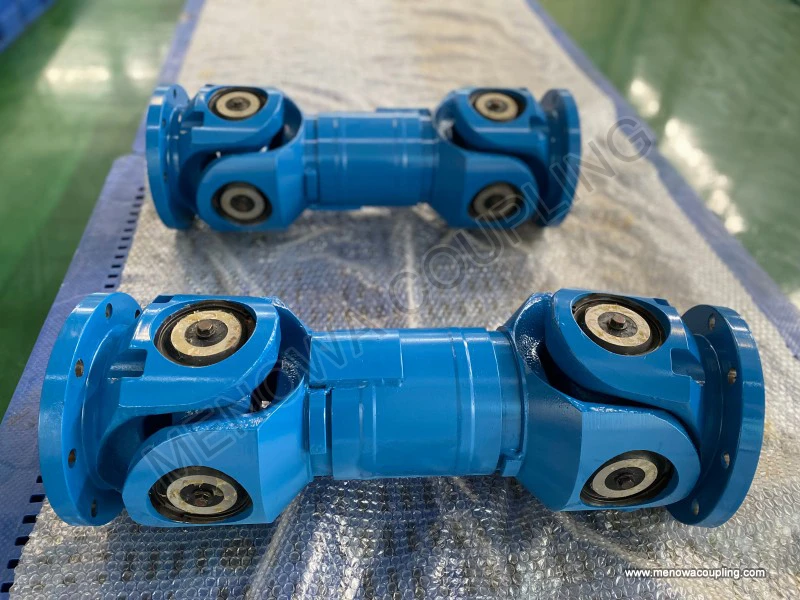
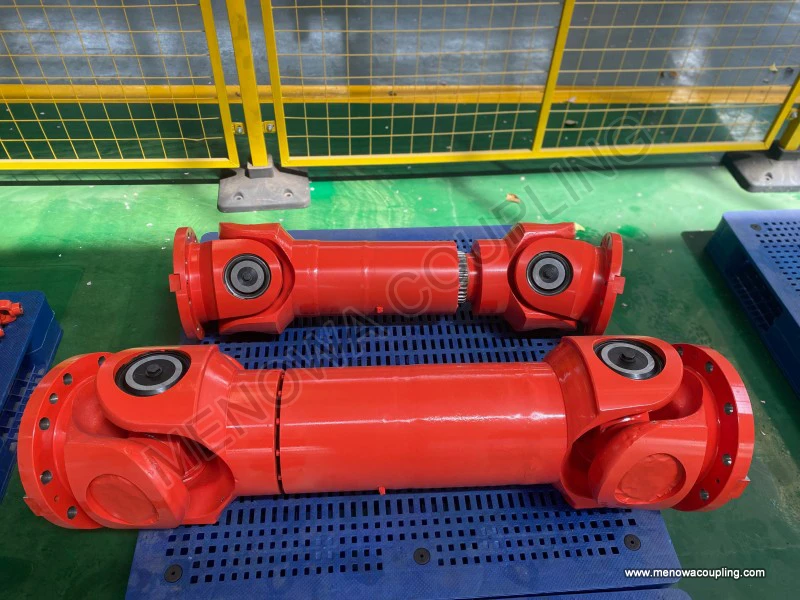
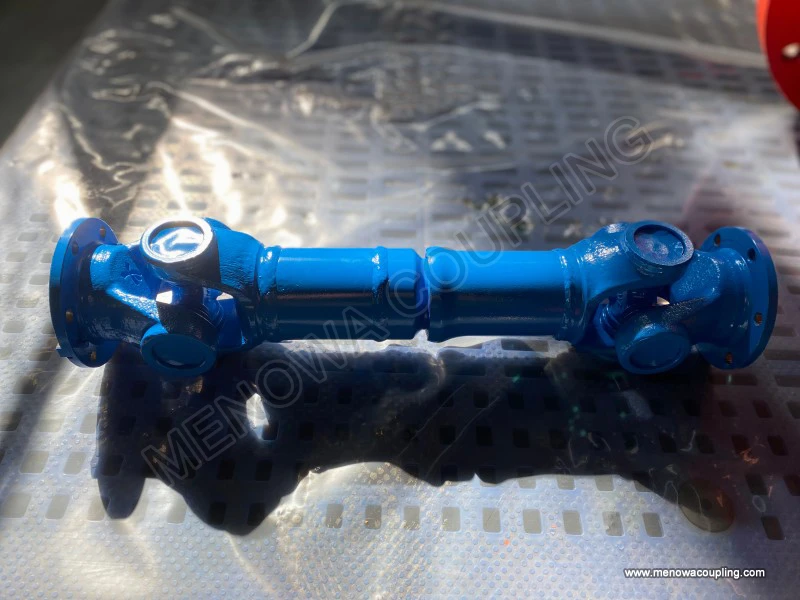
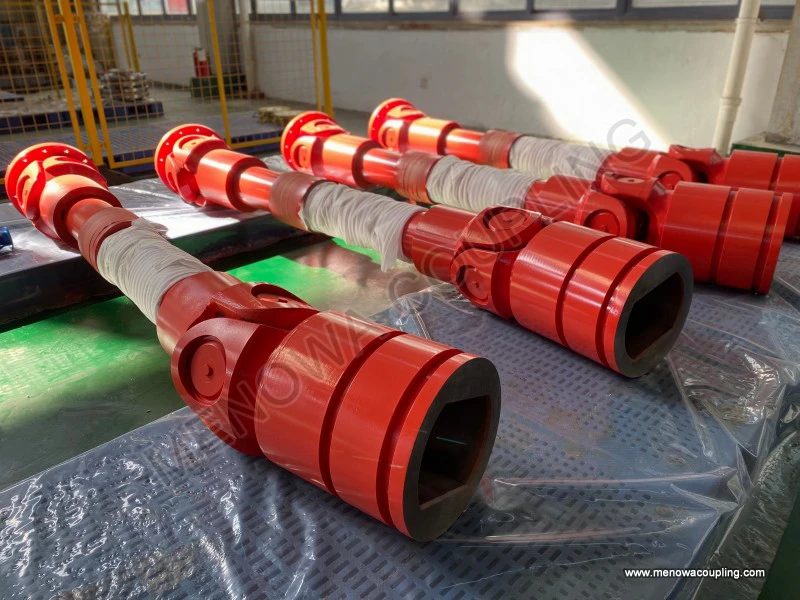
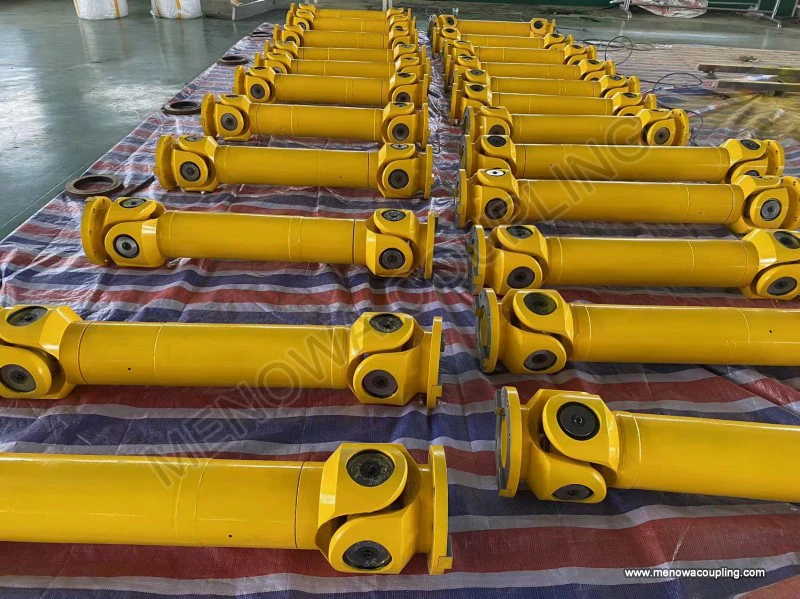
To understand the practical value and application advantages of flange cardan shafts in depth, it is necessary to start with the basic structural composition of the equipment and clarify the functional division and matching relationship of each core component inside the whole assembly. The overall structure of a standard flange cardan shaft follows a modular integrated design concept, and the whole assembly is mainly composed of two end flange connection parts, universal joint articulated assemblies, intermediate shaft body and auxiliary fastening and buffer protection components, and all parts are processed and assembled according to precise mechanical tolerance standards to ensure the coordination and stability of force transmission and motion operation in the working state. The flange parts located at both ends of the cardan shaft are the core connection and force-bearing bases of the whole equipment, and are designed with standard mounting holes and positioning structures, which can be closely and fixedly connected with the driving shaft end of power equipment such as motors and reducers and the driven shaft end of working machinery through matching fasteners. The flange structure adopts an integrated forging and forming processing mode in most conventional designs, which has good overall structural rigidity and pressure resistance, can uniformly disperse the instantaneous torque and cyclic load generated during the transmission process, avoid local stress concentration caused by long-term load operation, and effectively reduce the risk of structural deformation and connection looseness at the connection interface. Different from the socket connection mode of ordinary cardan shafts, the flange connection form realizes surface contact and fixed locking through the flange end face, which not only improves the firmness of the connection, but also simplifies the assembly and disassembly operation in the later stage, facilitating daily equipment inspection, component replacement and maintenance work without involving complex disassembly steps of the transmission shaft system.
The universal joint articulated assembly is the core functional component that determines the deflection compensation capability and flexible transmission performance of the flange cardan shaft, and is arranged between the end flange and the intermediate shaft body to undertake the key task of adapting to multi-dimensional displacement deviation in the transmission process. The universal joint assembly is mainly composed of cross shaft parts, precision matching bearings, fork-shaped connecting heads and sealing protection structures, and each small component has precise dimensional matching and motion coordination relations. The cross shaft is the central force-transmitting core of the universal joint, adopting a symmetrical four-axis integrated structure design, and each shaft head is matched with independent rotating bearings, which can realize flexible rotational deflection between the fork-shaped connecting heads at both ends. This special structural design allows the two shafts connected by the cardan shaft to form a certain angular deflection angle during operation, and the normal transmission of rotational motion and torque will not be affected while maintaining the deflection state. The bearings matched with the cross shaft are processed with high-precision specifications, which can reduce the friction resistance during the relative rotation and deflection movement of the universal joint, ensure the smoothness of power transmission, and reduce the mechanical vibration and noise generated by friction and impact during equipment operation. The fork-shaped connecting head is integrally connected with the flange and the intermediate shaft body respectively, forming a stable articulated connection structure with the cross shaft and bearings, which can bear cyclic torque and alternating load for a long time and maintain the structural stability of the universal joint under various working conditions.
The intermediate shaft body is the main force-transmitting connecting part of the flange cardan shaft, undertaking the task of long-distance torque transmission between the two end universal joints and flange structures. The design of the intermediate shaft body needs to comprehensively consider multiple key factors such as transmission torque magnitude, working rotation speed, equipment installation distance and mechanical vibration resistance. In terms of structural form, the intermediate shaft body is divided into solid shaft and hollow shaft according to different load-bearing and working requirements. The solid shaft body has strong structural rigidity and impact resistance, and is mostly suitable for low-speed, heavy-load and short-distance transmission working scenarios, which can bear large instantaneous impact torque and cyclic alternating load without structural deformation. The hollow shaft body adopts a thin-wall cylindrical integrated structure, which can effectively reduce the overall weight of the cardan shaft assembly on the premise of ensuring sufficient torsional rigidity, reduce the additional load and rotational inertia generated by the operation of the transmission shaft system, and is more suitable for high-speed operation and long-distance transmission working environments. The two ends of the intermediate shaft body are fixedly connected with the fork-shaped heads of the universal joints respectively through integral forging or welding process, ensuring the coaxiality and connection firmness of the whole shaft body, avoiding the problem of transmission imbalance caused by connection deviation, and maintaining the dynamic balance stability of the cardan shaft during high-speed rotation.
Auxiliary fastening and buffer protection components may seem inconspicuous in the overall structure of the flange cardan shaft, but they play a vital role in prolonging the service life of the equipment and ensuring long-term stable operation. The fastening components include high-strength connecting bolts, positioning pins and locking gaskets, which are mainly used to fix the flange connection interface and the assembly connection parts of each component of the universal joint, preventing connection looseness and component displacement caused by long-term vibration and torque impact during equipment operation. The sealing protection components cover the outer side of the universal joint bearing and cross shaft assembly, adopting dustproof and oil-proof sealing structure design, which can effectively isolate external dust, moisture, corrosive impurities and mechanical debris from entering the internal friction and rotation parts of the universal joint. At the same time, the sealing structure can lock the lubricating grease inside the bearing and articulated parts, ensure the long-term lubrication effect of the friction contact surface, reduce wear and tear of parts caused by dry friction, and avoid mechanical failure caused by poor lubrication. Some optimized structural designs are also equipped with buffer gaskets and vibration reduction auxiliary parts at the flange connection position, which can absorb part of the instantaneous impact force and mechanical vibration generated during torque transmission, further improving the operation stability of the transmission system and reducing the fatigue loss of each component of the cardan shaft.
The working principle of the flange cardan shaft is based on the geometric motion characteristics of the universal joint articulated mechanism and the rigid force-transmitting advantage of the flange fixed connection structure, realizing flexible and efficient power transmission under the premise of allowing multi-dimensional displacement deviation between the driving shaft and the driven shaft. In the actual working process, the power output by the driving equipment is first transmitted to the flange cardan shaft through the driving end flange connection part, and the torque and rotational motion are stably transmitted to the universal joint assembly through the flange and the fork-shaped connecting head. Relying on the rotational deflection coordination between the cross shaft and the bearings inside the universal joint, the cardan shaft can adapt to the angular deviation between the driving shaft and the driven shaft within a certain range, and at the same time compensate the axial and radial displacement generated by equipment installation errors, mechanical operation vibration and thermal expansion and contraction of parts during long-term work. Different from the rigid transmission mode that requires strict coaxiality of the two shafts, the articulated structure of the universal joint can keep the continuous transmission of rotational motion even when the two connected shafts are not in a straight line, and the torque transmission efficiency will not be significantly reduced due to the existence of deflection angle and displacement deviation.
In the whole torque transmission cycle, the cross shaft of the universal joint realizes flexible rotation and angle adjustment through the matching bearings, and the intermediate shaft body stably transmits the torque from the driving end universal joint to the driven end universal joint, and finally the power is transmitted to the driven mechanical equipment through the driven end flange structure, completing the whole process of power transmission and mechanical motion conduction. The coordinated operation of all components ensures that the flange cardan shaft can always maintain a stable transmission state whether it is in a static installation state, a normal low-speed operation state or a high-speed and heavy-load dynamic operation state. The structural linkage design also enables the cardan shaft to automatically adapt to small changes in working conditions during operation, without manual frequent adjustment and calibration, reducing the manual intervention demand in the equipment operation process and improving the continuity and reliability of industrial production and mechanical operation. The rationality of the working principle also determines that the flange cardan shaft has better adaptability than other ordinary couplings in complex working conditions with harsh installation conditions and large dynamic displacement of equipment.
The wide application of flange cardan shafts in modern industrial production and mechanical engineering is closely related to its excellent comprehensive performance characteristics, and its multiple structural and operational advantages make it irreplaceable in many key transmission scenarios. First of all, this type of cardan shaft has outstanding multi-dimensional displacement compensation capability, which can simultaneously cope with angular deviation, axial displacement and radial offset between the driving shaft and the driven shaft, and has a large allowable deflection angle range, which can meet the connection and transmission needs of various mechanical equipment with complex installation layout and large operation displacement. For mechanical systems that are difficult to achieve strict coaxial installation due to site space constraints and equipment structural design, the displacement compensation performance of flange cardan shafts can effectively avoid additional mechanical stress and transmission loss caused by shaft misalignment, and reduce the failure rate of transmission components.
Secondly, the flange cardan shaft has high torque bearing capacity and stable transmission performance. The integrated forging structure of the flange and the reasonable force-transmitting design of the universal joint and the intermediate shaft body enable the whole equipment to bear large cyclic torque and instantaneous impact load, and the torsional rigidity of the shaft body is sufficient to avoid torsional deformation and motion lag during torque transmission. Even under long-term continuous operation and alternating load working conditions, the cardan shaft can maintain stable torque transmission without obvious power attenuation and motion jitter, ensuring the consistent operating state of the front and rear end mechanical equipment. In addition, the overall structural design of the flange cardan shaft is compact and reasonable, the occupied installation space is small, and it can be adapted to narrow equipment installation spaces and compact mechanical structural layouts, which has strong space applicability and structural compatibility.
In terms of operation and maintenance convenience, the flange connection mode adopted by the flange cardan shaft simplifies the assembly, disassembly and replacement work of the whole component. When the equipment needs daily inspection, regular maintenance or partial component replacement, the staff only need to disassemble the fastening bolts at the flange connection position to separate the cardan shaft from the driving and driven equipment, without disassembling the whole transmission shaft system, which greatly reduces the maintenance time and labor cost. At the same time, the internal structural wear of the universal joint is easy to detect, and the lubrication maintenance work is simple and convenient, which can effectively extend the overall service life of the cardan shaft and reduce the long-term operation cost of mechanical equipment. In terms of operation stability, the optimized dynamic balance design of the intermediate shaft body and the low-friction matching of the universal joint bearings can reduce mechanical vibration and operation noise during high-speed rotation, improve the working environment of the equipment, and reduce the fatigue damage of mechanical parts caused by long-term vibration.
In the field of heavy industrial metallurgical production, flange cardan shafts are one of the core transmission components of various metallurgical rolling equipment, smelting auxiliary machinery and metal processing production lines. Metallurgical production equipment has the characteristics of heavy load operation, high continuous working intensity and harsh working environment, and the transmission shaft system needs to work stably for a long time under high temperature, dust and alternating impact load conditions. The rolling mill equipment in the metallurgical industry needs to transmit strong rotational torque to complete the rolling processing of metal raw materials, and there is a certain installation deviation and thermal displacement between the motor power end and the rolling mill working end due to the large volume of the equipment and the thermal expansion of parts during high-temperature operation. The flange cardan shaft can well adapt to this working condition, relying on its large torque bearing capacity and high-temperature structural stability to maintain stable power transmission, and its displacement compensation function can offset the thermal deformation and installation deviation of the equipment, avoiding transmission failure and equipment shutdown caused by shaft misalignment. At the same time, the sealed protection structure of the cardan shaft can resist the erosion of high-temperature dust and corrosive flue gas in the metallurgical workshop, reduce component wear and corrosion damage, and ensure the long-term continuous operation of the metallurgical production line.
Mining engineering machinery and underground mining equipment also rely heavily on flange cardan shafts for power transmission and mechanical connection. Mining operation equipment includes mining cutting machinery, ore conveying equipment, mining hoisting machinery and supporting mobile engineering equipment. Most of these equipment work in complex and harsh underground environments, with uneven equipment installation foundations, large mechanical vibration during operation, and frequent instantaneous impact loads generated by mining and ore handling operations. The flange cardan shaft used in mining equipment has strong impact resistance and structural stability, which can withstand the strong vibration and impact load generated during mining operation, and its flexible deflection compensation performance can adapt to the displacement deviation caused by the uneven foundation and vibration of mining equipment. For long-distance ore conveyor systems, the flange cardan shaft realizes the power connection between the driving motor and the conveyor roller group, ensuring the stable operation of the conveyor system and the continuous transportation of ore materials. The simple maintenance characteristics of the cardan shaft also adapt to the inconvenient maintenance conditions of underground mining, reducing the frequency of equipment failure shutdown and improving the overall mining operation efficiency.
Engineering construction machinery and road construction equipment are also important application scenarios for flange cardan shafts. Various excavators, loaders, road rollers, pavers and other engineering machinery need to realize power transmission between the power engine and the working execution mechanism, and the working state of engineering machinery is flexible and changeable, with frequent walking, steering and working action switching, resulting in continuous changes in the relative position and angle between the power end and the working end of the equipment. The flange cardan shaft can adapt to the dynamic angle change and displacement adjustment during the operation of engineering machinery, ensure that the power can be stably transmitted to the working execution mechanism in various working postures, and maintain the flexible and sensitive operation response of the machinery. The rugged structural design of the cardan shaft can cope with the complex working conditions of outdoor construction sites such as mud, gravel and impact friction, and has good wear resistance and corrosion resistance, adapting to the open-air and harsh construction operation environment. At the same time, the compact structural size of the flange cardan shaft is suitable for the limited internal installation space of engineering machinery equipment, meeting the structural layout and power transmission needs of various small and medium-sized engineering machinery.
Port handling equipment and industrial bulk material conveyor systems are also key application fields of flange cardan shafts. Port container handling machinery, bulk cargo loading and unloading equipment, and long-distance industrial belt conveyor systems all need stable and reliable power transmission components to ensure the continuous and efficient operation of material handling and transportation work. The port equipment has the characteristics of long-term continuous operation and large load fluctuation, and the conveyor system has a long transmission distance and multiple transmission nodes, requiring the transmission components to have good stability and durability. The flange cardan shaft realizes the power connection between the driving motor and the conveyor equipment, compensates the installation deviation and operation displacement of the long-distance conveyor system, avoids transmission blockage and material transportation interruption caused by shaft misalignment. The high-efficiency transmission performance of the cardan shaft ensures the low energy consumption of the conveyor system operation, and the convenient maintenance characteristics reduce the downtime loss of port and industrial conveyor equipment, improving the overall logistics transportation and production operation efficiency.
The material selection and processing technology of flange cardan shafts directly determine their mechanical performance, service life and environmental adaptability, and the whole production and processing process follows strict mechanical manufacturing process standards and performance design requirements. In terms of raw material selection, the main components such as flange, intermediate shaft body and universal joint cross shaft are made of high-strength alloy structural steel with good toughness, torsional resistance and impact resistance. This type of alloy steel material has excellent mechanical properties after forging and heat treatment, which can meet the long-term heavy-load operation needs of cardan shafts in various industrial scenarios, and has good fatigue resistance and structural stability, not easy to produce structural deformation, fatigue fracture and wear failure under cyclic alternating load. The bearing parts inside the universal joint are made of high-precision bearing steel materials, which have high hardness and wear resistance, reducing the friction and wear loss of rotating and deflecting parts, and ensuring the long-term smooth operation of the universal joint.
In terms of processing technology, all core components of the flange cardan shaft adopt integrated forging forming technology, which makes the internal metal structure of the parts compact and uniform, improves the overall structural rigidity and mechanical strength, and avoids the structural defects such as internal pores and cracks easily produced by traditional casting processing. After forging forming, the parts are subjected to professional heat treatment processes such as quenching and tempering, which can effectively adjust the hardness and toughness of the material, eliminate the internal stress generated by forging processing, and improve the fatigue resistance and impact resistance of the components. The flange mounting holes, universal joint matching shaft heads and bearing installation positions are processed by high-precision CNC machining equipment to ensure that the dimensional tolerance and matching accuracy of all parts meet the assembly standards, avoiding transmission imbalance and component wear caused by excessive machining deviation. After the assembly of the whole cardan shaft is completed, dynamic balance calibration testing will be carried out to correct the unbalanced amount generated in the processing and assembly process, ensuring that the cardan shaft will not produce obvious vibration and jitter during high-speed rotation, and improving the operation stability of the transmission system.
Daily operation maintenance and regular inspection and maintenance are key links to ensure the long-term stable operation of flange cardan shafts and extend their service life, and scientific and standardized maintenance management can effectively reduce equipment failure rates and reduce replacement and maintenance costs. In the daily operation process, the staff need to regularly observe the operation state of the cardan shaft transmission system, check whether there is abnormal vibration, abnormal noise, connection looseness and oil leakage at the flange connection position and the universal joint sealing part. During the operation of the equipment, if obvious vibration and noise are found, the equipment should be shut down in time for inspection to eliminate potential problems such as component wear and connection looseness, avoiding small faults evolving into major mechanical failures and affecting the normal production and operation work. For the working environment with high dust, high humidity and strong corrosion, the surface of the flange cardan shaft should be regularly cleaned to remove surface dust, debris and corrosive attachments, preventing the surface of the parts from being corroded and affecting the structural strength and service life.
Regular lubrication maintenance is the core content of the maintenance work of flange cardan shafts. The universal joint bearing and cross shaft articulated parts need long-term good lubrication to reduce friction and wear, and professional high-temperature and wear-resistant lubricating grease should be regularly injected according to the working intensity and operation time. The lubrication cycle can be adjusted according to the actual working conditions, the working environment with high operation intensity and harsh conditions shortens the lubrication cycle, and the conventional working environment can appropriately extend the lubrication interval. When injecting lubricating grease, ensure that the lubricating grease fully fills the internal friction contact parts of the universal joint, replace the aged and deteriorated lubricating grease in time, and avoid dry friction and abnormal wear of parts caused by insufficient lubrication or grease failure. At the same time, check the sealing performance of the universal joint sealing structure regularly, replace the aging and damaged sealing accessories in time, prevent external impurities from entering the inside of the universal joint and internal lubricating grease from leaking out, and maintain the good lubrication and protection state of the internal components.
Regular disassembly inspection and performance detection should be carried out according to the service time and operation load of the flange cardan shaft. During the regular inspection, disassemble the flange connection part and take out the cardan shaft, check the wear degree of the universal joint bearing, cross shaft and fork-shaped connecting head, observe whether there is structural deformation, surface crack and excessive wear of each component. For the parts with serious wear and deformation, replace them in time to ensure the matching accuracy and transmission performance of the whole cardan shaft. At the same time, check the tightening state of the flange fastening bolts and locking parts, replace the failed and deformed fasteners in time, and ensure the firmness of the connection position. After the inspection and maintenance are completed, reassemble the cardan shaft according to the assembly process standards, and recheck the dynamic balance and transmission flexibility to ensure that the cardan shaft can return to the best working state and continue to provide stable power transmission service for the mechanical equipment.
With the continuous progress of industrial mechanical manufacturing technology and the continuous upgrading of industrial production equipment, the development trend of flange cardan shafts is gradually moving towards structural optimization, lightweight design, high environmental adaptability and intelligent maintenance monitoring. On the basis of maintaining the original reliable transmission performance and displacement compensation advantages, the new generation of flange cardan shafts optimizes the structural design of the shaft body and universal joint, adopts lightweight high-strength new alloy materials, reduces the overall weight of the product while ensuring load-bearing capacity, reduces the rotational inertia of the transmission system, and improves the high-speed operation efficiency of the equipment. In terms of environmental adaptability optimization, targeted structural and material optimization designs are carried out for high-temperature, low-temperature, corrosive and dusty special working conditions, improving the corrosion resistance, high-temperature resistance and low-temperature toughness of the cardan shaft, and expanding the application scope in special industrial scenarios.
In terms of intelligent operation and maintenance, with the integration of industrial Internet and mechanical monitoring technology, more flange cardan shafts will be equipped with real-time operation state monitoring components in the future, which can monitor the operating vibration, torque load, component temperature and wear state of the cardan shaft in real time, realize early warning of potential faults, and change the traditional passive maintenance mode into active predictive maintenance. This intelligent maintenance mode can effectively reduce the failure shutdown time of equipment, improve the operation efficiency of industrial production lines, and reduce the overall operation and maintenance cost. At the same time, with the improvement of industrial energy-saving and emission reduction requirements, the structural design of flange cardan shafts will further focus on improving transmission efficiency, reducing friction energy consumption and mechanical loss, contributing to the energy-saving and efficient operation of the whole industrial mechanical system.
In conclusion, the flange cardan shaft, as a key basic transmission component integrating flange connection technology and universal joint transmission mechanism, has irreplaceable important value in modern industrial production and various mechanical operation fields. Its unique structural design, excellent displacement compensation performance, stable torque transmission capacity and convenient operation and maintenance characteristics enable it to adapt to various complex and harsh working conditions, and provide reliable power transmission guarantee for heavy industry, mining, engineering machinery, port logistics and many other fields. From structural composition and working principle to material processing, industrial application and daily maintenance, every link affects the operation performance and service life of the flange cardan shaft. With the continuous development of industrial manufacturing technology and the continuous expansion of industrial application scenarios, the flange cardan shaft will continue to carry out technological innovation and structural optimization, adapt to the increasingly stringent industrial operation requirements, and play a more core basic role in the development of modern mechanical transmission systems and industrial economic construction.
Post Date: Apr 25, 2026
https://www.menowacoupling.com/coupling-supplier/flange-cardan-shaft.html
Products
Tags
Related Articles
Universal Coupling Supplier
In the complex and interconnected system of modern mechanical transmission equipment, universal couplings stand out as one of the most fundamental and indispensable functional components, serving as a critical bridge for power and motion transmission between rotating shafts in diverse mechanical structures. Unlike rigid…Structure of Universal Coupling
A universal coupling, widely recognized as a core mechanical transmission component in modern machinery systems, serves as a flexible connection device designed to transmit rotational torque and motion between two shafts that present angular, parallel, or axial misalignment. Its unique structural configuration enables s…Components of Universal Coupling
A universal coupling, widely known as a universal joint or Cardan joint, is a fundamental mechanical transmission component designed to transmit torque and rotational motion between two shafts that exhibit angular misalignment, parallel offset, or axial displacement. Unlike rigid couplings that require precise shaft ali…Universal Coupling Supply
In the intricate ecosystem of mechanical power transmission, universal couplings stand out as indispensable foundational components that bridge the functional gaps of traditional rigid connection structures. Serving as a core link between rotating shafts in mechanical systems, these mechanical devices are engineered to …Uses of Universal Coupling
In the intricate ecosystem of mechanical transmission systems, universal couplings stand out as one of the most versatile and indispensable mechanical components, serving as a critical bridge for power and motion transmission across countless industrial and civilian mechanical devices. Also widely known as universal joi…Diagram of Universal Coupling
A universal coupling, widely recognized as a core mechanical component for flexible power transmission, serves as a pivotal connecting structure in mechanical transmission systems to transfer rotational torque and motion between two shafts with angular misalignment. The structural diagram of a universal coupling intuiti…Universal Coupling Vendor In China
Universal couplings stand as indispensable mechanical transmission components in modern industrial systems, serving as core connecting parts that transmit torque and rotational power between misaligned drive shafts. In China’s complete industrial manufacturing ecosystem, universal coupling production and supply have fo…What is Universal Coupling
A universal coupling, commonly referred to as a universal joint or U-joint, is a fundamental mechanical transmission component designed to connect two rotating shafts while enabling reliable transfer of torque and rotational motion under misaligned operating conditions. Unlike rigid coupling mechanisms that demand preci…Dimensions of Universal Coupling
Universal couplings, commonly known as universal joints or Cardan joints, serve as fundamental mechanical components for power transmission between misaligned rotating shafts in diverse mechanical systems. Their dimensional parameters are the core factors that determine structural compatibility, operational stability, l…Universal Coupling Exporter
As a vital component in mechanical transmission systems, universal couplings play an irreplaceable role in connecting two shafts that are not in the same axis or have relative displacement, ensuring stable and efficient torque transmission. For universal coupling exporters, understanding the product’s working principle…
 WeChat
 WhatsApp