Electric Motor Coupling
Electric motor coupling stands as an indispensable mechanical connecting component in the entire power transmission system of industrial and civilian mechanical equipment, serving as the core intermediate bridge that links the output shaft of electric motors with the input shaft of driven mechanical equipment. In the entire mechanical transmission chain dominated by electric motors, the stable operation of all rotating machinery and equipment fundamentally relies on the reliable connection and stable power transmission realized by motor couplings. Whether it is large-scale industrial production equipment operating continuously for a long time, medium and small mechanical devices involved in daily production and processing, or precision automation equipment that requires high operational stability, motor couplings undertake the basic mission of transmitting rotational torque and mechanical motion from the power source end to the load working end. Beyond the most fundamental power transmission function, electric motor couplings also bear multiple auxiliary and protective responsibilities in the actual operation of mechanical systems, including compensating for installation deviations between connecting shafts, buffering mechanical vibration and impact loads generated during equipment startup and operation, isolating operational resonance between different mechanical components, and avoiding rigid force transmission that causes structural damage to motor shafts and load equipment parts. The overall operational efficiency, service life, operational stability and maintenance cycle of the entire motor-driven mechanical system are all closely related to the rational selection, standardized installation and daily maintenance management of electric motor couplings. Even if the electric motor itself has excellent operating performance and the matched load equipment has precise structural design, unreasonable coupling matching, improper installation operation or neglected daily maintenance will lead to increased transmission resistance, intensified mechanical wear, obvious vibration and noise during equipment operation, and even serious faults such as shaft deformation, component fracture and system shutdown in severe cases, bringing unnecessary operational risks and additional maintenance costs to the entire mechanical production and operation process.
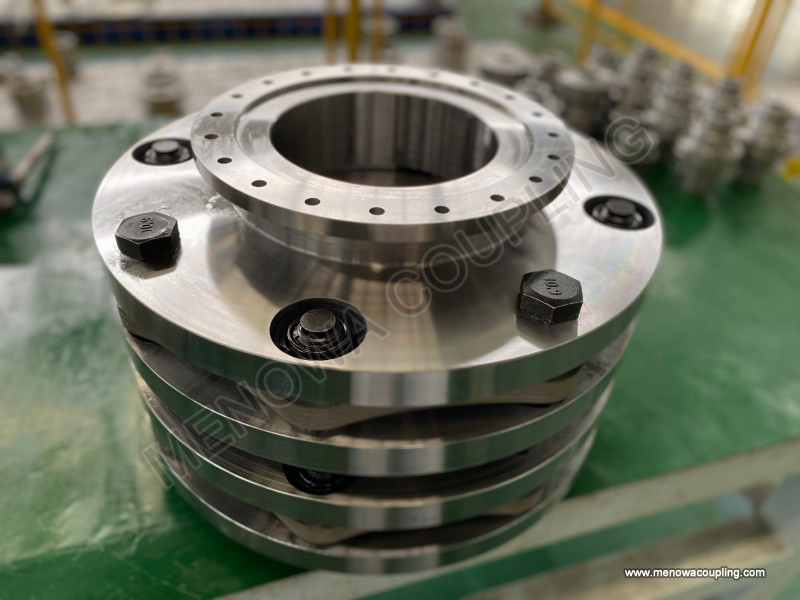
To fully understand the practical value and working logic of electric motor couplings, it is first necessary to clarify the basic working principle behind this seemingly simple mechanical component. The core working essence of all electric motor couplings is to build a stable and effective mechanical transmission connection between the driving shaft connected to the motor rotor and the driven shaft connected to the load equipment, ensuring that the rotational kinetic energy and torque generated by the electric motor during operation can be continuously and smoothly transmitted to the load equipment without obvious power loss and abnormal mechanical resistance. In the actual assembly and working state, the two shaft bodies connected by the coupling will never achieve absolute ideal coaxial alignment in the true sense, restricted by mechanical processing accuracy, on-site installation conditions, equipment assembly technology, and environmental temperature changes in the working space. There are always different degrees of tiny relative deviations between the driving shaft and the driven shaft, including radial displacement deviation, angular deflection deviation and axial telescopic deviation. Radial displacement deviation refers to the parallel offset phenomenon that occurs between the central axes of the two shafts in the horizontal and vertical radial directions; angular deflection deviation means that the central axes of the two connecting shafts form a certain included angle instead of being kept on the same straight line; axial telescopic deviation is mainly caused by thermal expansion and cold contraction of metal shaft bodies during long-term operation and mechanical stress release after equipment startup and shutdown, resulting in tiny reciprocating displacement of the two shafts in the axial direction. These unavoidable deviations will produce huge additional mechanical stress and rigid friction between the two shafts if there is no buffer and adjustment by couplings. Electric motor couplings rely on their own structural design characteristics and internal flexible or adjustable structural parts to absorb and offset these various shaft body deviations in real time during the power transmission process, ensuring that the torque transmission process between the motor and the load remains smooth and stable, and avoiding additional stress concentration on the shaft bodies, bearings and key connecting parts of the equipment. At the same time, during the startup, shutdown, sudden load change and frequent forward and reverse rotation switching of electric motors, the instantaneous impact force and vibration generated by power mutation will be effectively buffered and weakened through the structural characteristics of the coupling, preventing the instantaneous impact load from directly acting on the motor internal structure and the core components of the load equipment, thereby protecting the key mechanical parts of the entire transmission system from damage caused by impact and vibration fatigue.
According to different structural design forms, material selection characteristics, deviation compensation capabilities and vibration buffering effects, electric motor couplings can be divided into two core mainstream categories in the general industrial field, namely rigid couplings and flexible couplings, and each category derives multiple subdivided types adapted to different working conditions and transmission requirements. Rigid electric motor couplings are the most basic and structurally simple type of coupling products, which are manufactured with integrated or assembled rigid metal structures without any flexible buffer components inside. The structural design of rigid couplings focuses on realizing rigid and fixed connection between the motor shaft and the load shaft, with the core advantage of high transmission accuracy, small power transmission loss and strong structural rigidity, which can ensure that the rotational speed and torque output by the motor are completely and synchronously transmitted to the load equipment without relative rotation and displacement. Due to the lack of flexible buffer structures and deviation adjustment space, rigid couplings have extremely high requirements for the coaxial alignment accuracy of the two connecting shafts during the installation process, and are only suitable for working scenarios where the installation foundation is stable, the processing and assembly accuracy of equipment is high, the operating load is stable without sudden impact, and the shaft body deviation is extremely small. In actual industrial applications, rigid couplings are mostly used in low-speed, high-torque, stable-load mechanical transmission links, such as some fixed industrial transmission equipment and mechanical devices that run continuously with constant load for a long time. Once rigid couplings are installed with excessive shaft deviation or encounter sudden impact load during operation, the stress generated cannot be buffered and released, which will directly lead to intensified wear of shaft bearings, deformation of shaft bodies and loosening of connecting fasteners, affecting the normal service life of the entire transmission equipment.
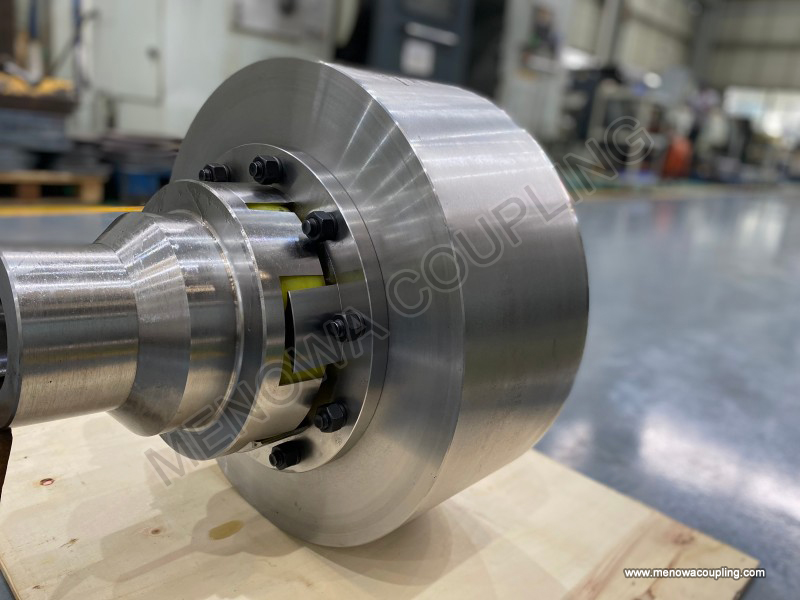
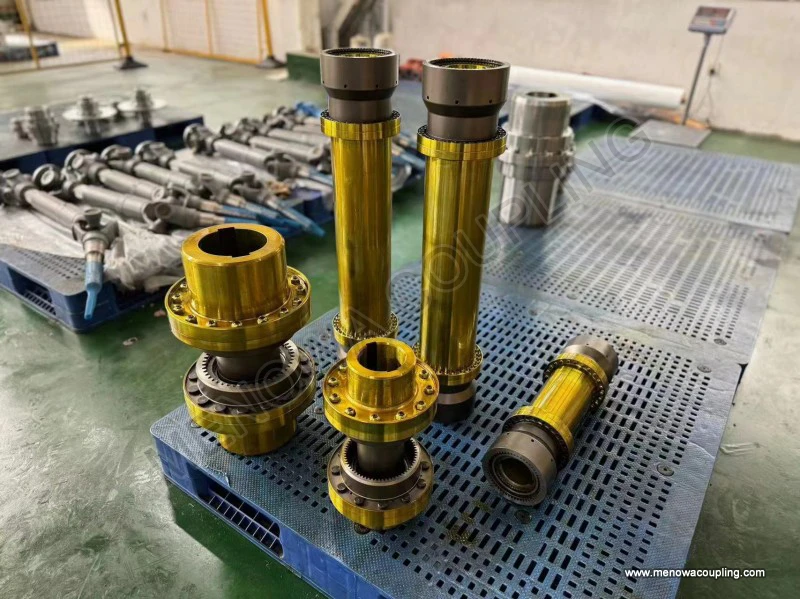
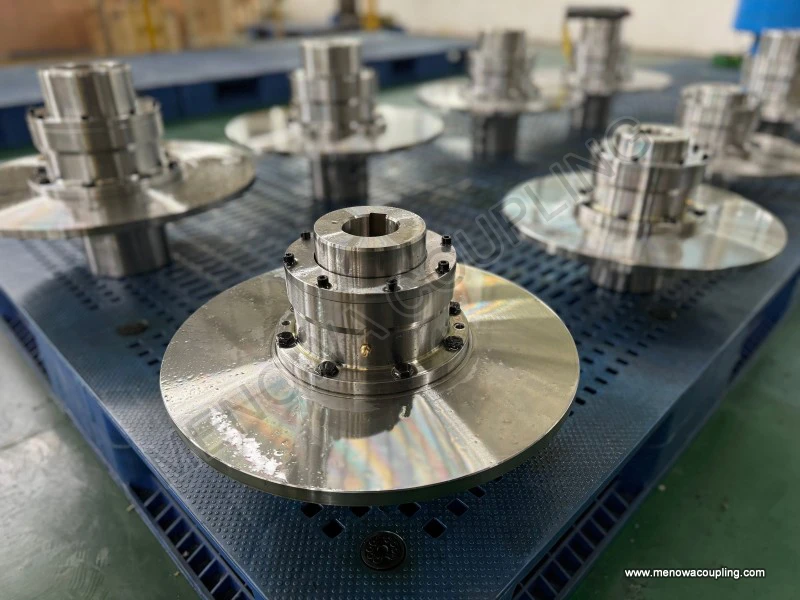
Flexible electric motor couplings are the most widely used type in various motor transmission scenarios, with various flexible elastic components or adjustable connecting structures built inside, which fundamentally solve the defects of rigid couplings such as no deviation compensation capability and poor impact buffering effect. The internal flexible parts of flexible couplings are usually made of elastic metal materials or high-performance elastomer materials, which can produce reversible elastic deformation within a certain range during the power transmission process. This elastic deformation not only effectively compensates for radial, angular and axial various deviations between the motor shaft and the load shaft caused by installation errors and thermal expansion and cold contraction, but also plays a good role in damping vibration and absorbing impact. When the motor starts and stops frequently or the load changes suddenly, the elastic components inside the flexible coupling can absorb the instantaneous impact energy generated by power mutation through self-deformation, slow down the torque change speed in the transmission process, avoid rigid impact between mechanical structures, and reduce vibration and noise during equipment operation. Compared with rigid couplings, flexible couplings have lower requirements for installation alignment accuracy, stronger adaptability to complex working conditions, and better protective effect on motor and load equipment components, so they are widely used in most industrial production equipment, civil mechanical devices, automation supporting facilities and other fields with variable load, frequent startup and shutdown, and complex installation environments. With the continuous upgrading of industrial mechanical equipment and the continuous improvement of transmission system stability requirements, flexible couplings have derived many subdivided structural types according to different use scenarios, including diaphragm couplings, gear couplings, grid couplings, plum blossom couplings, oldham couplings, bellows couplings and fluid couplings, each with unique structural characteristics and targeted application advantages to meet the differentiated power transmission needs under different speed, torque and working condition environments.
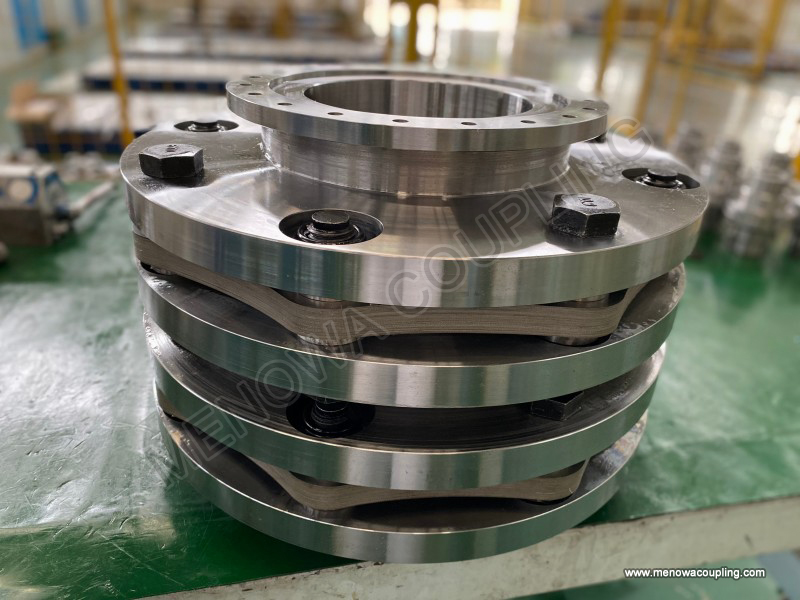
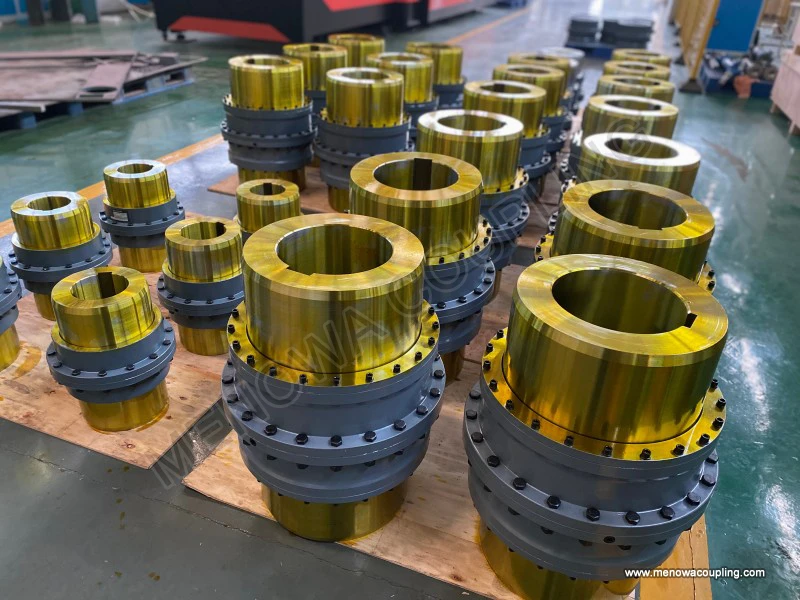
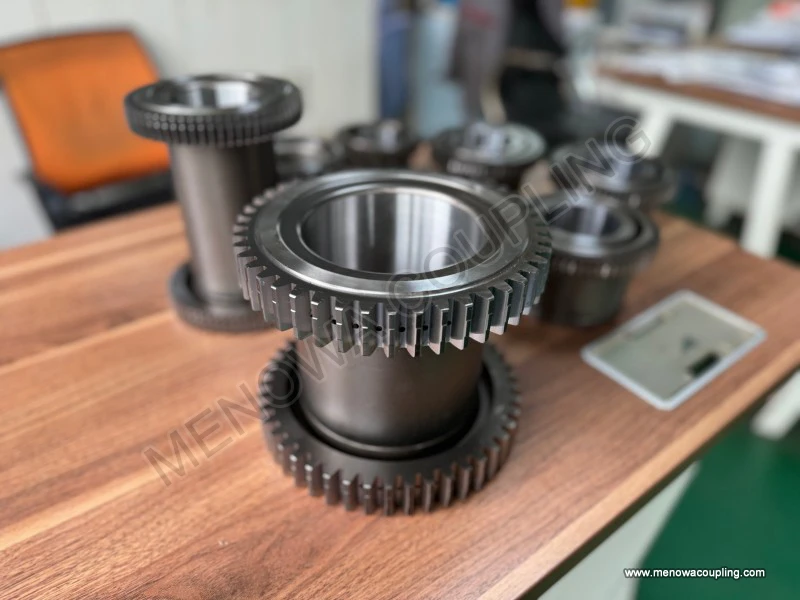
Diaphragm flexible couplings rely on the elastic bending deformation of metal diaphragm components to transmit torque and compensate for shaft body deviations, adopting an all-metal structural design without any non-metal elastic parts. This type of coupling has the characteristics of high temperature resistance, low temperature resistance, corrosion resistance and aging resistance, and will not be affected by environmental temperature changes and chemical medium erosion during long-term operation. The structural design of diaphragm couplings can achieve precise torque transmission while maintaining good compensation effect on tiny shaft deviations, and has small vibration damping and stable operation, which is very suitable for high-speed operation, high-precision transmission and long-term continuous working scenarios, such as precision automation production lines, high-speed rotating mechanical equipment and industrial transmission devices that require high transmission synchronization accuracy. Gear flexible couplings transmit torque through the meshing cooperation between internal and external gear structures, with strong structural bearing capacity and ultra-high torque transmission performance, and can adapt to heavy-duty working conditions with large load and high transmission power. Gear couplings have a certain tolerance for angular and radial deviations of connecting shafts, and can maintain stable transmission performance under harsh working environments such as heavy load and frequent variable load operation. They are mostly used in heavy industrial mechanical equipment such as mining machinery, metallurgical equipment and large conveying devices that require high-power torque transmission. Grid flexible couplings use metal or elastomeric grid structures as the core torque transmission and buffer components, relying on the elastic deformation of the grid to absorb vibration and compensate for shaft deviations. This type of coupling has excellent vibration damping and shock absorption effects, can effectively reduce mechanical resonance in the transmission system, and has good adaptability to frequent startup and impact load working conditions, often used in general industrial processing machinery, fan and pump equipment and other conventional motor transmission scenarios.
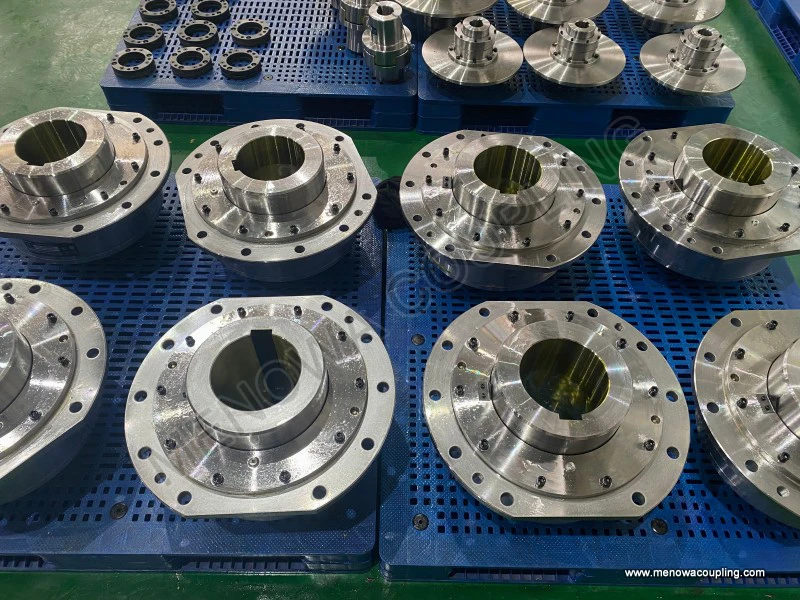
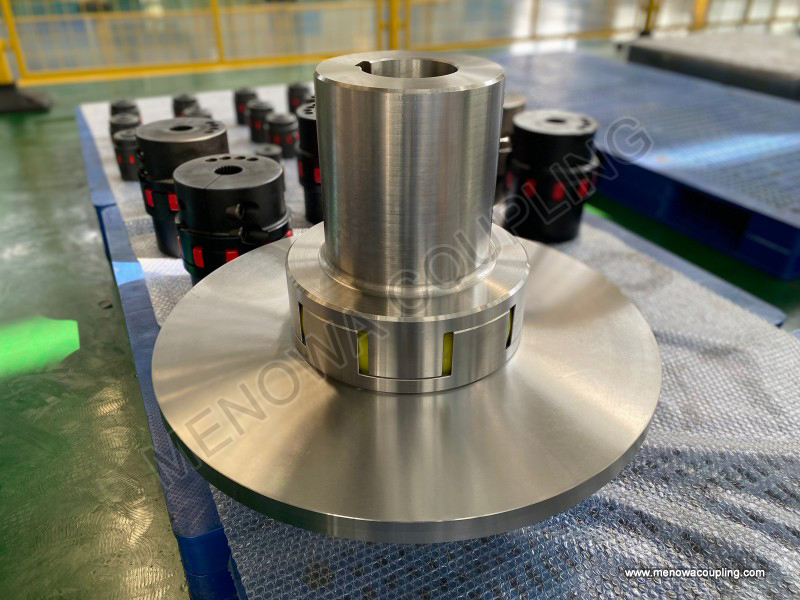
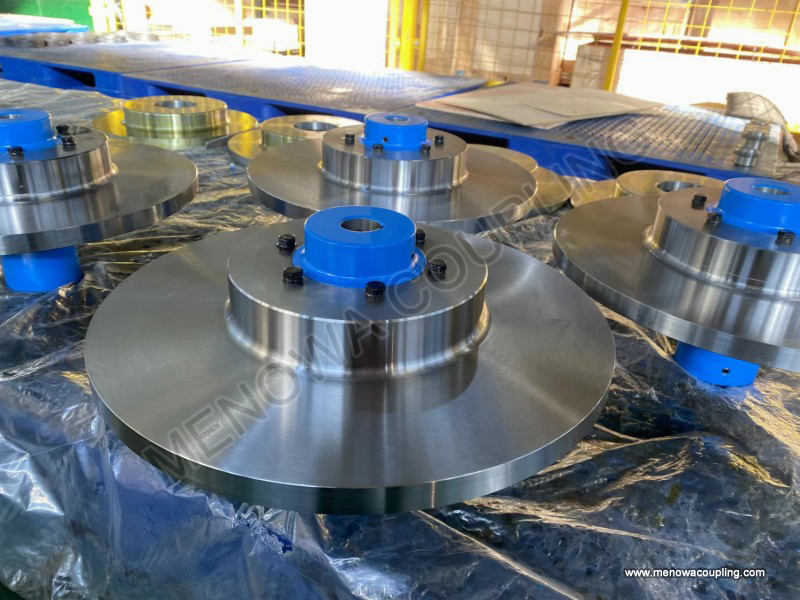
Plum blossom couplings are equipped with plum-blossom-shaped elastomer buffer parts in the middle of two sets of rigid connecting discs, with simple overall structure, convenient installation and disassembly, and low maintenance difficulty. The elastomer parts can effectively buffer impact and damp vibration, and have good compensation ability for small shaft deviations, suitable for medium and small power motor transmission scenarios with medium speed and ordinary load requirements. Oldham couplings adopt a three-piece structural design, with two connecting discs and a middle sliding block component, relying on the sliding fit of the middle block to compensate for large radial displacement deviations between shafts, and are mostly used in mechanical transmission links with large installation parallel offset of connecting shafts, such as printing machinery and light industrial processing equipment. Bellows couplings use integrated metal bellows as the flexible connecting part, with good elasticity and deformation recovery ability, high transmission accuracy, small rotational backlash, and excellent compensation effect on various tiny deviations, suitable for precision transmission fields such as numerical control equipment and precision testing instruments. Fluid couplings, also known as hydraulic couplings, transmit torque completely through internal fluid medium instead of solid mechanical contact, relying on the hydraulic circulation movement of mineral oil and other fluids inside the coupling to realize power transmission. This non-rigid transmission mode can achieve extremely smooth power transmission effect, has an outstanding soft start function for high-inertia load equipment, can completely isolate mechanical impact and vibration, and has a good overload protection effect on the motor and transmission system, often used in large mechanical equipment that needs slow start and overload protection such as large fans, water pumps and conveyor systems. Magnetic couplings realize non-contact torque transmission through the interaction of magnetic fields between internal permanent magnet components, with no physical friction and wear during operation, low operation noise, and good isolation effect for vibration and impact, suitable for special working scenarios with high requirements for sealing, noise reduction and wear resistance.
The correct selection of electric motor coupling is a key link to ensure the efficient and stable operation of the entire transmission system, and the selection process needs to comprehensively consider multiple core factors related to the actual working conditions and transmission requirements, rather than simply choosing according to the size and basic parameters of the shaft body. The first core factor to be considered is the rated transmission torque required by the mechanical system, which needs to match the output torque of the electric motor and the actual operating load torque of the driven equipment. The selected coupling needs to have sufficient torque bearing capacity to meet the peak torque demand during equipment startup and load mutation, avoiding coupling deformation, damage and torque transmission failure caused by insufficient torque bearing capacity. The second key factor is the operating speed of the equipment. Different types of couplings have different applicable speed ranges, and high-speed rotating transmission systems need to choose couplings with high structural balance, small rotational inertia and stable high-speed operation performance, preventing vibration and dynamic imbalance faults caused by coupling structural problems during high-speed operation. The third important factor is the actual deviation compensation demand between the motor shaft and the load shaft, which needs to select the corresponding coupling type according to the installation conditions and shaft deviation magnitude of the equipment on site. For working conditions with small installation deviation and high alignment accuracy, rigid couplings or high-precision flexible couplings can be selected; for scenarios with large installation deviation and obvious thermal expansion and cold contraction deformation of shaft bodies, flexible couplings with strong deviation compensation ability need to be prioritized.
In addition, the working environment conditions of the equipment also need to be fully considered in the coupling selection process, including environmental temperature, humidity, corrosive medium contact degree, dust and vibration interference and other external factors. For high-temperature working environments, couplings made of high-temperature resistant metal materials should be selected to avoid deformation and aging of non-metal elastic parts; for humid and corrosive working environments, couplings with anti-corrosion surface treatment and corrosion-resistant materials are required to prevent structural rust and component corrosion from affecting service life; for dusty and harsh working conditions, couplings with closed structural design should be preferred to avoid dust and impurities entering the internal transmission structure and causing wear and failure. The startup and operation mode of the equipment is also an indispensable selection basis. For equipment with frequent startup and shutdown, forward and reverse rotation switching and sudden load change, flexible couplings with good impact buffering and vibration damping performance must be selected to reduce the fatigue wear of the coupling and the entire transmission system; for equipment running continuously with stable load for a long time, couplings with high transmission efficiency and stable structural performance can be selected according to the actual torque and speed parameters. At the same time, the later installation, maintenance and replacement cost and operation convenience also need to be taken into account. For some mechanical equipment with difficult disassembly and assembly and inconvenient later maintenance, couplings with simple structure, convenient installation and disassembly and low maintenance difficulty should be selected to reduce the daily maintenance workload and equipment shutdown maintenance time.
Standardized installation and commissioning operations are the prerequisite to ensure that electric motor couplings give full play to their due performance and achieve long-term stable operation. No matter how excellent the structural design and performance parameters of the selected coupling are, irregular installation and unqualified alignment commissioning will lead to poor coupling use effect and even early failure damage. Before the formal installation of the motor coupling, it is necessary to carefully check the dimensional accuracy and surface integrity of the motor output shaft, load equipment input shaft and the coupling itself, remove burrs, rust, oil stains and impurities on the surface of the shaft body and the coupling connecting part, ensure that the matching size of the shaft body and the coupling inner hole meets the assembly requirements, and avoid assembly gaps and installation looseness caused by dimensional deviation and surface impurities. In the formal installation process, the coaxial alignment adjustment of the motor shaft and the load shaft must be done carefully and meticulously. Even for flexible couplings with strong deviation compensation ability, excessive shaft misalignment should not be relied on the coupling itself to compensate, because long-term operation under excessive deviation will increase the elastic deformation and internal stress of the coupling flexible parts, accelerate the fatigue wear and aging damage of the coupling, and greatly shorten the service life. The alignment adjustment work needs to be carried out with professional measuring tools and debugging methods, gradually calibrating the radial and axial position of the two shafts to minimize the relative deviation, and ensure that the coupling is in the best stress state after installation.
After the coupling is positioned in place, the connecting fasteners need to be tightened evenly and symmetrically in accordance with the standard assembly sequence, avoiding the problem of single-sided tightness and uneven stress caused by one-time full tightening of individual fasteners. After the installation is completed, it is necessary to conduct a manual rotation test first to check whether the coupling rotation is smooth and flexible, whether there is jamming, abnormal friction and obvious rotation resistance, and troubleshoot and adjust abnormal problems in a timely manner. Then, no-load test operation and gradual load test operation should be carried out. The no-load operation state is maintained for a certain period of time to observe whether the coupling has abnormal vibration, abnormal noise and temperature rise, and confirm that the operation is stable before gradually adding the working load until the equipment reaches the normal rated operating state. In the daily operation process of the equipment, regular inspection and maintenance of the electric motor coupling cannot be ignored, which is an important measure to extend the service life of the coupling and ensure the long-term stable operation of the transmission system. The daily maintenance work mainly includes regular visual inspection of the coupling appearance structure, checking whether there is looseness, deformation, crack and damage of the connecting parts, whether the flexible elastic parts have aging, wear, deformation and failure, and whether the coupling operation has abnormal vibration and noise. For couplings operating in harsh working environments, regular cleaning and anti-corrosion maintenance should be done to remove surface dust, dirt and corrosive attachments, and do a good job in surface protection treatment.
For flexible couplings equipped with elastomer parts, the aging and wear degree of the elastic components should be checked regularly according to the operating time and working conditions, and the worn and aging elastic parts should be replaced in a timely manner to avoid buffer failure and deviation compensation failure caused by component aging and wear, which affects the normal operation of the entire transmission system. For gear couplings and other couplings with meshing transmission structures, regular lubrication maintenance is required to supplement and replace lubricating grease to ensure good lubrication effect of the meshing parts, reduce meshing wear and friction loss, and avoid mechanical failure caused by poor lubrication. In the process of equipment long-term operation, if the equipment has abnormal vibration, increased noise, unstable torque transmission and other abnormal phenomena, the coupling should be inspected and checked first, eliminate coupling failure problems in a timely manner, and avoid small faults evolving into large mechanical failures, resulting in equipment shutdown and production loss. With the continuous development of modern industrial mechanical equipment towards high efficiency, high precision, energy saving and stability, the technical performance and structural design of electric motor couplings are also constantly optimized and upgraded, and new structural forms and new material couplings are continuously emerging to adapt to more complex and diversified motor transmission working conditions.
In the future industrial development and mechanical equipment upgrading process, electric motor couplings will still occupy an irreplaceable core position in the motor power transmission system. All mechanical equipment driven by electric motors cannot do without the connection and protection function of couplings. Only by deeply understanding the working principle, structural classification, performance characteristics and selection and maintenance key points of electric motor couplings, scientifically selecting coupling products suitable for actual working conditions, standardizing installation and commissioning operations, and doing a good job in daily regular maintenance and fault inspection, can we ensure that the electric motor coupling always maintains a good working state, give full play to the functions of power transmission, deviation compensation, vibration buffering and equipment protection, effectively improve the overall operation efficiency and stability of the motor transmission system, reduce equipment operation failure rate and maintenance cost, and lay a solid foundation for the long-term stable and efficient operation of various industrial and civilian mechanical equipment. Every link from type selection to installation to maintenance is closely linked to the service life and operation effect of the coupling, and also directly affects the production and operation efficiency of the entire mechanical system. Attaching importance to the application management of electric motor couplings is not only a basic requirement for mechanical equipment operation and maintenance, but also an important guarantee for realizing efficient, stable and safe operation of motor-driven mechanical transmission systems in various fields.
Post Date: Apr 25, 2026
https://www.menowacoupling.com/coupling-supplier/electric-motor-coupling.html
Tags
Related Articles
Advantages Of Flexible Coupling
In the complex and interconnected world of mechanical power transmission, the seamless transfer of torque and rotational motion between rotating shafts stands as a foundational requirement for the steady operation of all types of industrial and commercial machinery. Every mechanical system that relies on motors, engines…
 WeChat
 WhatsApp