Crane Coupling
In the complex and interconnected ecosystem of industrial material handling and heavy-duty mechanical operation, every mechanical component undertakes an irreplaceable foundational role, and crane couplings stand out as one of the most indispensable core connecting parts in the entire crane transmission system. As a key mechanical device dedicated to connecting two rotating shafts within various crane equipment, including driving shafts and driven shafts distributed in hoisting mechanisms, trolley travel systems, gantry walking structures and auxiliary transmission units, crane couplings undertake the basic task of transmitting rotational motion and torque while shouldering more critical adaptive and protective responsibilities adapted to the special working conditions of cranes. Unlike ordinary couplings used in conventional light-load and stable-operation mechanical equipment, crane couplings are designed and manufactured to adapt to frequent start-stop cycles, alternating impact loads, complex shaft misalignment states, and harsh on-site working environments that are common in crane operation scenarios. Every structural detail, material selection standard and processing technology application of these components is closely linked to the overall operating stability, continuous working efficiency and long-term operational safety of crane equipment. Even though crane couplings are not large in volume compared with the main body of cranes such as steel structures, lifting drums and driving motors, they are regarded as the vital connecting bridge of the entire power transmission chain, determining whether the power output from the power source can be smoothly, efficiently and stably transmitted to each execution mechanism of the crane, and further affecting the smooth progress of various heavy-load lifting, horizontal transportation and precise positioning operations in industrial production, port logistics, engineering construction and mining development fields.
To fully understand the important value of crane couplings in practical mechanical operation, it is necessary to start with the basic working principles of shaft connection and power transmission, and deeply analyze the essential differences between crane-specific couplings and ordinary mechanical couplings in design logic and performance orientation. In all mechanical transmission systems relying on rotating shafts for power transmission, the driving shaft connected to the power end and the driven shaft connected to the execution end cannot achieve absolute coaxial alignment in actual installation and long-term operation. Influenced by many objective factors such as manufacturing dimensional tolerances of mechanical parts, assembly deviation during on-site installation, slight structural deformation of the crane frame under long-term heavy load, thermal expansion and contraction of metal materials caused by temperature changes in the working environment, and gradual wear and tear of components after long-term operation, different degrees of radial misalignment, angular misalignment and axial displacement will inevitably occur between the two connected shafts. For ordinary mechanical equipment running at a constant speed with stable load and few start-stop actions, slight shaft misalignment may not cause obvious adverse effects on the overall operation, but for crane equipment, which is in a working state of frequent starting, sudden stopping, forward and reverse rotation, and instantaneous load change all year round, any small shaft misalignment will be continuously amplified in the transmission process. If there is no effective compensation and buffering structure provided by couplings, the unbalanced force generated by misalignment will be directly transmitted to the surface of the shaft body, bearing parts and gear transmission components, resulting in increased mechanical friction, intensified component wear, abnormal vibration and noise in the transmission system, and even serious problems such as shaft body fracture and gear tooth damage in severe cases. Crane couplings are precisely designed to solve these practical mechanical problems. On the premise of ensuring efficient torque transmission, they can effectively compensate for various forms of misalignment between connected shafts, absorb instantaneous impact loads generated during crane start-up, braking and load lifting and lowering, reduce vibration and resonance in the shafting transmission process, and isolate part of mechanical vibration to avoid the vibration generated by a single transmission component from spreading to the entire crane mechanical structure.
The basic structural composition of crane couplings follows the core design idea of integrating connection, transmission, compensation and buffering, and most product structures are composed of two independent hub components and an intermediate connecting and matching structure. The two hubs are respectively fixedly installed on the driving shaft and the driven shaft of the crane transmission system through interference fit or key connection modes, ensuring that each hub can rotate synchronously with the corresponding shaft body without relative sliding and torque loss. The intermediate connecting structure is the core part that determines the comprehensive performance of the crane coupling, and different structural forms and material configurations of the intermediate part directly divide crane couplings into multiple types with different performance characteristics and applicable working scenarios. In the actual operation process, the rotational torque output by the crane driving motor is first transmitted to the driving hub of the coupling, and then stably transmitted to the driven hub through the intermediate connecting structure, and finally transmitted to the subsequent reduction gearbox, lifting drum or walking wheel mechanism, realizing the synchronous rotation and coordinated operation of the entire transmission link. While completing the basic torque transmission work, the intermediate structure of the coupling can rely on its own structural elasticity, mechanical gap coordination or flexible material deformation to adapt to the relative displacement and angle deviation between the two hubs caused by shaft misalignment, avoiding rigid collision and excessive stress concentration between the shaft bodies. At the same time, when the crane starts to lift heavy loads or brakes suddenly after reaching the designated position, the instantaneous impact force generated by load mutation will be absorbed and buffered by the intermediate structure of the coupling, preventing the instantaneous peak torque from directly acting on expensive core components such as motors and reducers, and playing a good role in protecting the key equipment of the entire transmission system.
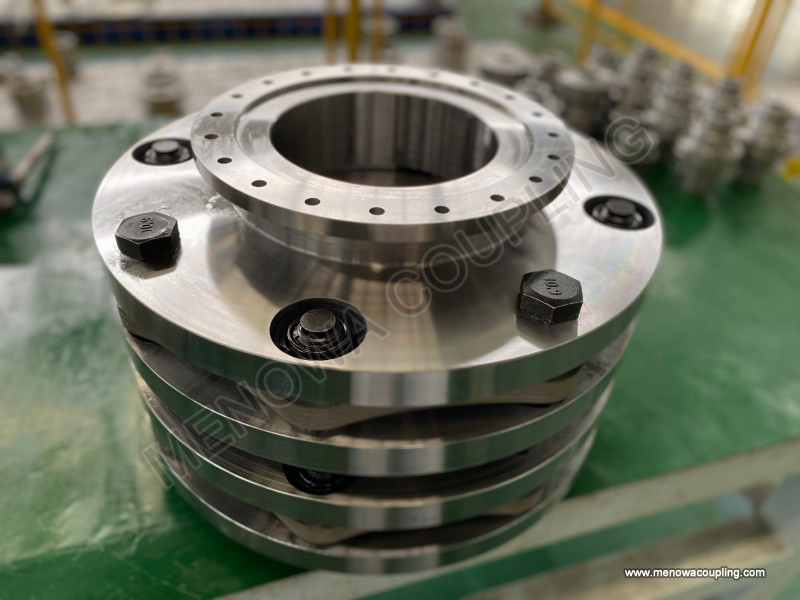
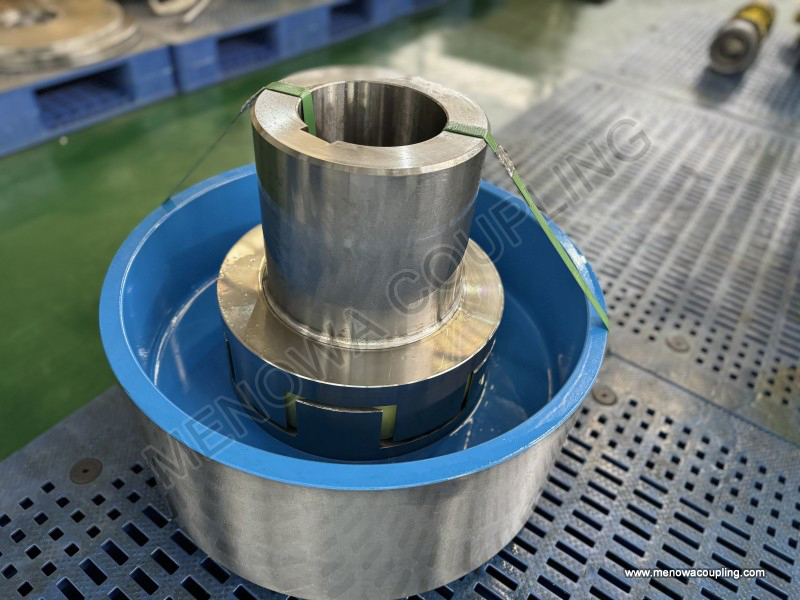
According to different structural forms, transmission modes, compensation capabilities and buffering effects, crane couplings used in actual engineering operation can be roughly divided into several mainstream types, each with unique structural characteristics, mechanical performance advantages and targeted applicable working conditions, and the reasonable classification and targeted selection of these couplings are the primary premise to ensure the efficient and stable operation of crane transmission systems. Gear couplings are one of the most widely used heavy-duty crane couplings in the field of large-tonnage crane equipment, and their basic structure consists of two external gear hubs fixedly connected to the driving and driven shafts and an internal gear sleeve sleeved outside the two hubs for meshing connection. The internal gear teeth of the outer sleeve and the external gear teeth of the two hubs adopt a special tooth profile design, which not only ensures a large contact area during gear meshing and strong torque transmission capacity, but also reserves a reasonable matching gap between the gear teeth. This structural design enables gear couplings to have excellent compensation performance for radial, angular and axial misalignment of shafts, and can adapt to large deviation ranges generated in the long-term operation of heavy-duty crane equipment. The overall structure of gear couplings is made of high-strength forged steel materials, which has strong bearing capacity, good fatigue resistance and long service life, and can withstand long-term alternating impact loads and continuous heavy-load transmission work. Such couplings are mostly installed in the core transmission links of large overhead cranes, gantry cranes and port container cranes, especially suitable for the connection between the reducer output shaft and the lifting drum, as well as the main power transmission position of the trolley heavy-load walking mechanism. It is worth noting that although gear couplings have outstanding heavy-load transmission performance, their rigid meshing structure leads to general vibration and noise reduction effects, so they are more suitable for working scenarios focusing on heavy-load torque transmission rather than high-precision silent operation.
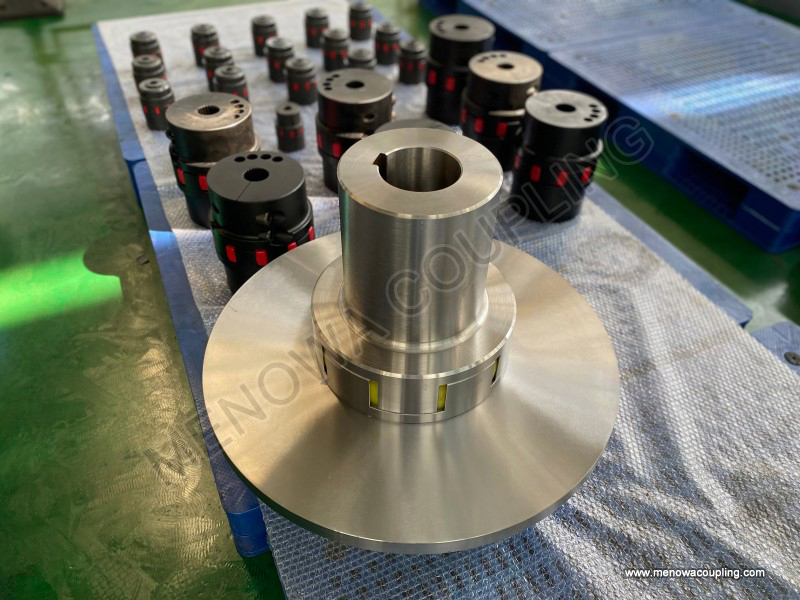
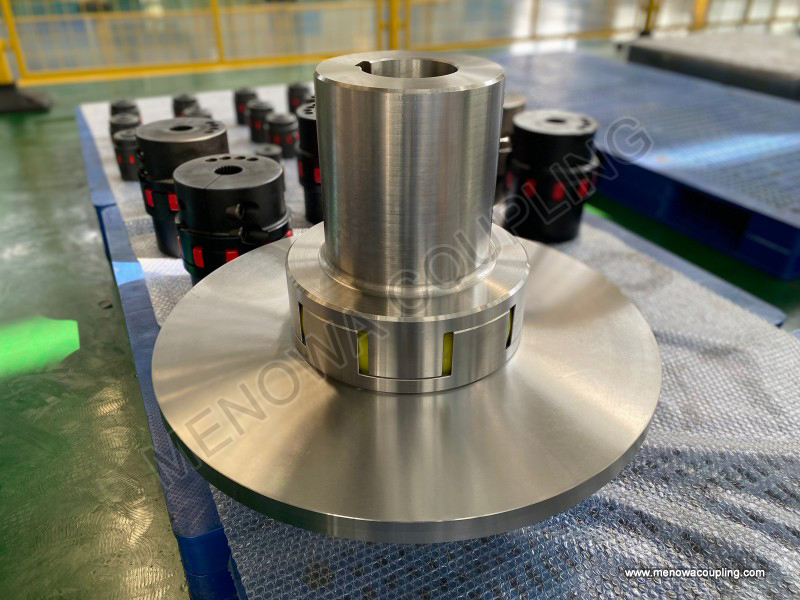
Elastic couplings are another important type of crane coupling widely used in medium and small-tonnage crane equipment and auxiliary transmission mechanisms, and their core feature is the adoption of elastic flexible components as the intermediate connecting structure between the two hubs. The elastic components are mostly made of rubber, polyurethane or other high-elasticity polymer materials with good toughness and fatigue resistance, and are clamped and fixed between the driving hub and the driven hub in a mosaic or pressing manner. Different from the rigid meshing transmission mode of gear couplings, elastic couplings rely on the elastic deformation of flexible materials to complete torque transmission and shaft misalignment compensation. When the crane is started and braked, the elastic components can rely on their own deformation to absorb most of the instantaneous impact energy, effectively reduce the vibration and mechanical noise generated during the operation of the transmission system, and have excellent vibration damping and buffering effects. In addition, the structural design of elastic couplings is relatively simple, the overall weight is light, the installation and disassembly process is convenient, and the later maintenance and replacement work does not need complex professional operation and long downtime, which can effectively improve the overall operation and maintenance efficiency of crane equipment. Such couplings are mostly applied to the connection of the motor input end and the reducer of medium and small cranes, as well as the transmission link of the light-load walking mechanism of cranes, and are especially suitable for working environments with frequent start-stop actions and high requirements for equipment operation stability and low noise. However, limited by the material characteristics of elastic components, the torque bearing capacity of elastic couplings is lower than that of gear couplings, and they are not suitable for long-term continuous operation under ultra-heavy load and high-temperature working conditions, so they need to be selected according to the actual load level of the crane.
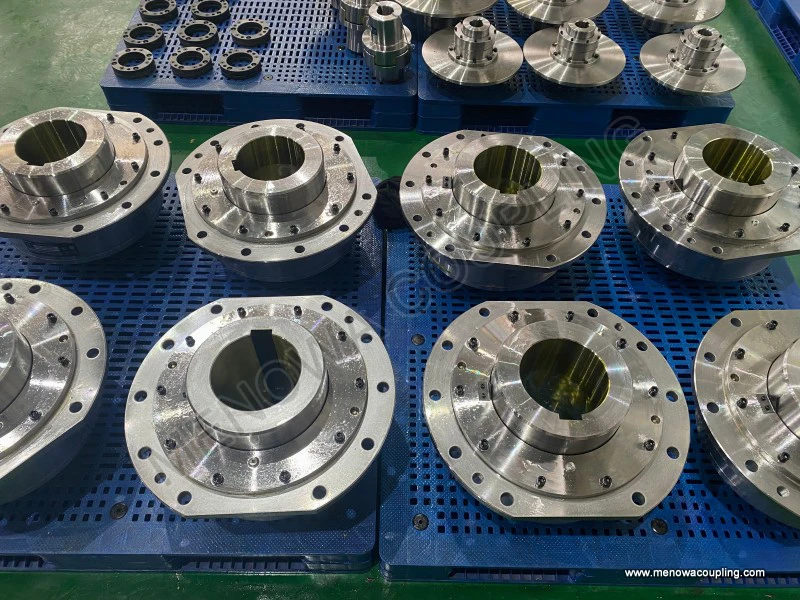
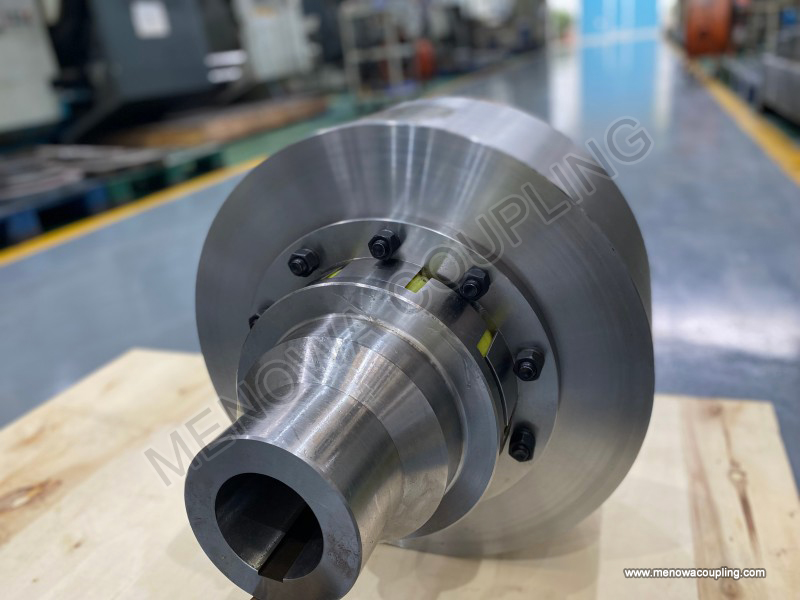
Drum couplings belong to a special type of flange-type heavy-duty crane couplings, which are specially designed for the rigid connection between the output shaft of the crane reducer and the lifting drum, and occupy an irreplaceable position in the core hoisting mechanism of various heavy-duty cranes. Different from other ordinary couplings that only undertake torque transmission and shaft misalignment compensation tasks, drum couplings need to bear dual mechanical loads in actual operation: one is the rotational torque transmitted by the reducer to drive the lifting drum to rotate, and the other is the huge radial tension load generated by the steel wire rope winding and lifting heavy objects on the drum. The overall structure of drum couplings adopts an integrated forged flange design, with high structural rigidity and overall stability, which can effectively resist radial deformation and structural damage caused by heavy radial loads. The internal matching structure of drum couplings is optimized according to the coaxiality requirements of the reducer shaft and the drum shaft, which can ensure near-loss-free torque transmission while maintaining the relative position stability between the two shafts, avoiding excessive displacement and vibration of the drum during the lifting process, and ensuring the precise and stable lifting and lowering of heavy loads. The installation position of drum couplings is at the key power output end of the crane hoisting mechanism, which is the last core connecting component in the entire hoisting power transmission chain, so their structural stability and operational reliability are directly related to the safety of heavy-load lifting operations. In the actual working process, drum couplings need to adapt to long-term forward and reverse rotation, frequent load lifting and lowering, and complex working conditions of alternating load changes, so the structural design and material heat treatment process of such couplings are stricter, and the overall structural strength and fatigue resistance are higher than those of ordinary heavy-duty couplings.
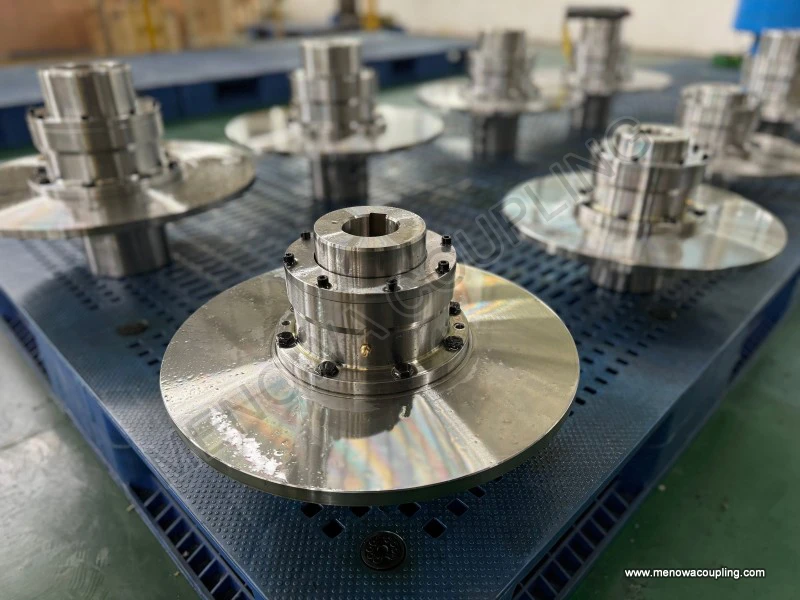
Brake wheel couplings are a composite functional coupling specially configured for crane braking and transmission integration requirements, which organically combines the basic torque transmission function of ordinary couplings with the braking matching function of brake wheels, and is widely used in various crane transmission mechanisms that need precise braking and rapid stop positioning. The structural design of brake wheel couplings integrates the coupling connecting hub and the brake wheel structure into a whole, which not only completes the stable connection and torque transmission between the driving shaft and the driven shaft, but also can cooperate with the crane brake device to complete rapid braking and parking positioning actions. This integrated structural design saves the installation space of the crane transmission system, avoids the installation deviation and additional vibration problems caused by the separate installation of couplings and brake wheels, and simplifies the overall structural layout of the crane transmission mechanism. In the operation process of cranes, especially in the trolley walking and gantry traveling mechanisms that need frequent starting, stopping and precise positioning, brake wheel couplings can ensure that the transmission system can quickly and accurately stop rotating after the brake acts, without obvious inertial rotation and position deviation, improving the positioning accuracy of crane operation. At the same time, the main body of brake wheel couplings is made of high-strength wear-resistant steel materials, and the surface of the brake wheel is specially treated to enhance wear resistance and high-temperature resistance, which can withstand frequent friction and high-temperature heat generation generated by long-term braking work, ensuring the long-term stable use of the braking and transmission integrated structure.
The working environment of cranes in different application fields varies greatly, and the complex and changeable on-site conditions have a crucial impact on the service performance and service life of crane couplings, so it is necessary to analyze the actual application status and performance requirements of crane couplings in different working scenarios. In industrial factory workshops, overhead cranes are mainly used for the handling and transshipment of raw materials, semi-finished products and finished products in the production process. The working environment of such cranes is relatively good, with stable ambient temperature, less dust and no corrosive medium erosion. The crane couplings used in this scenario mainly need to adapt to frequent start-stop and light and medium alternating load operation, and focus on balancing torque transmission efficiency, vibration damping effect and convenient maintenance. Most medium and small elastic couplings and conventional gear couplings can meet the actual use needs, and the daily wear degree of the couplings is low, and the replacement cycle is relatively long. In port and terminal working scenarios, gantry cranes and container cranes need to operate outdoors all year round, facing the influence of wind and rain erosion, humid air, salt spray corrosion and other adverse factors, and the crane load is large, the operation frequency is high, and the start-stop and forward and reverse rotation actions are more frequent. The crane couplings used in ports need to have not only high heavy-load transmission performance and fatigue resistance, but also good corrosion resistance and weather resistance. The surface of the couplings usually needs to be treated with anti-corrosion coating and rust prevention, and the internal structural matching parts need to adopt wear-resistant and corrosion-resistant materials to avoid structural rust, component wear and performance degradation caused by long-term outdoor harsh environment, ensuring the continuous and stable operation of cranes in all weather conditions.
In mining and metallurgical industrial scenarios, cranes need to work in high-temperature, high-dust and strong corrosive environments for a long time. The high-temperature radiation generated by metallurgical smelting equipment will increase the ambient temperature of the crane working area, and a large amount of dust, smoke and corrosive gas generated in the mining and smelting process will continuously erode the coupling components. In addition, the mining and metallurgical cranes have heavy single lifting load and harsh operation conditions, and the instantaneous impact load generated during operation is large. Therefore, the crane couplings used in this field must have high-temperature resistance, dust resistance, corrosion resistance and strong impact resistance. The structural design of the couplings needs to avoid complex gap structures that are easy to accumulate dust, and the materials need to maintain stable mechanical strength and structural toughness under high-temperature and corrosive conditions, preventing structural deformation, performance attenuation and sudden failure of the couplings under extreme working conditions. In construction engineering and road and bridge construction scenarios, mobile cranes and temporary gantry cranes have strong mobility, and the equipment needs to be frequently transferred, installed and debugged. The crane couplings used in this scenario need to have simple structural design, convenient installation and disassembly, and strong adaptability to different installation conditions. At the same time, the construction site environment is complex and changeable, with uneven ground and large vibration during equipment operation, so the couplings need to have good misalignment compensation performance and vibration resistance to adapt to the unstable working state of mobile crane equipment.
The scientific and reasonable selection of crane couplings is a systematic work that needs to comprehensively consider multiple key factors, and the correct selection directly determines the operating efficiency, service life and safety stability of the crane transmission system. The first core factor to be considered in coupling selection is the actual load characteristics of the crane, including the magnitude of the rated lifting load, the frequency of start-stop and forward and reverse rotation, the size of instantaneous impact load and the duration of continuous heavy-load operation. Different tonnages of cranes have huge differences in torque demand for transmission components. Large-tonnage heavy-duty cranes must select heavy-duty gear couplings or drum couplings with high torque bearing capacity and strong structural rigidity, while medium and small-tonnage light-load cranes can choose elastic couplings with good vibration damping effect and convenient maintenance. The second key factor is the working speed and movement mode of the crane transmission mechanism. The main hoisting mechanism of the crane has low rotating speed and large transmission torque, focusing on heavy-load stability and impact resistance; the trolley and gantry walking mechanism has relatively high rotating speed and frequent start-stop, focusing on vibration damping performance and positioning accuracy, so the matching coupling types are completely different.
The working environment conditions are also indispensable selection indicators, including ambient temperature, humidity, dust concentration, corrosive medium and outdoor weather changes. For high-temperature working environments, elastic couplings with low heat resistance of flexible materials should be avoided, and rigid gear couplings with high-temperature resistant structural materials should be selected; for humid and corrosive environments, couplings with anti-corrosion treatment and corrosion-resistant materials should be prioritized to prevent rust and performance damage. In addition, the installation and maintenance conditions of the crane also need to be fully considered. Some crane transmission positions have narrow installation space and inconvenient later maintenance and replacement, so couplings with simple structure, few components and convenient disassembly and assembly should be selected; for key transmission positions with high safety requirements, couplings with high structural reliability and long service life should be selected to reduce the frequency of later maintenance and replacement and avoid production interruption caused by coupling failure. It is also necessary to match the installation size and shaft diameter parameters of the coupling with the actual shaft size and installation space of the crane equipment to ensure that the coupling can be accurately installed and matched without additional modification and adaptation, ensuring the coordination and stability of the entire transmission system.
Long-term scientific operation and standardized daily maintenance are important guarantees to maintain the stable performance of crane couplings, extend their service life and avoid sudden mechanical failures. In the daily operation process of crane equipment, operators should standardize the operation behavior, avoid violent start-up, sudden braking and overload lifting operations, and reduce the instantaneous impact load on the coupling as much as possible. Overload operation will make the coupling bear torque far exceeding the rated design range, resulting in excessive deformation of the coupling structure, accelerated wear of matching parts and premature fatigue damage of elastic components. Violent start and stop will generate huge instantaneous impact force, which will easily cause loosening of coupling fixing parts, deviation of installation position and aggravation of shaft misalignment, affecting the transmission stability of the entire system. Daily maintenance work of crane couplings mainly includes regular visual inspection, fastening of connecting parts, lubrication maintenance, wear detection and regular replacement of vulnerable components. Maintenance personnel should regularly check the external structure of the coupling to observe whether there is obvious structural deformation, surface crack, rust corrosion and abnormal wear, and check whether the key connecting bolts and fixing keys are loose or displaced, and fasten the loose parts in time to avoid relative sliding and torque loss of the coupling during operation.
For gear couplings and other rigid couplings requiring lubrication, regular replenishment and replacement of special lubricating grease should be carried out according to the operation cycle requirements. Good lubrication can reduce the friction and wear between gear meshing parts, reduce the heat generated by friction during operation, and avoid gear tooth wear and ablation caused by poor lubrication. For elastic couplings, it is necessary to regularly check the aging, deformation and damage of the internal elastic flexible components. Elastic materials will gradually age, harden and lose elasticity after long-term use, resulting in reduced buffering and vibration damping performance of the coupling. Once aging, cracking or permanent deformation of elastic components is found, they should be replaced in a timely manner to avoid affecting the compensation and protection effect of the coupling. In addition, during the regular overhaul of crane equipment, the coaxiality of the driving shaft and driven shaft connected by the coupling should be detected and calibrated regularly to correct the shaft misalignment caused by long-term operation and structural deformation, reducing the additional stress and wear of the coupling caused by excessive deviation. Scientific and standardized maintenance work can not only effectively extend the service life of crane couplings, reduce the frequency of failure and replacement, but also ensure the long-term stable and safe operation of the entire crane transmission system, reducing the overall operation and maintenance cost of enterprise equipment.
With the continuous progress of industrial mechanical manufacturing technology and the continuous upgrading of crane equipment towards large-scale, intelligent and high-efficiency development, the design, manufacturing and application technology of crane couplings are also constantly innovating and optimizing, and the future development trend of crane couplings is more in line with the needs of modern industrial efficient and safe production. In terms of material selection, with the continuous application of new high-strength, wear-resistant, corrosion-resistant and fatigue-resistant alloy materials and high-performance elastic polymer materials, the comprehensive mechanical performance of crane couplings will be further improved, which can adapt to more extreme working environments and heavier load operation conditions, and achieve longer service life and lower failure rate. In terms of structural design, crane couplings are developing towards integration, lightweight and high compensation performance. The integrated composite structure can realize multiple functions of transmission, buffering, braking and protection in one component, simplify the overall transmission system structure, save installation space, and reduce the weight of mechanical components and energy consumption of equipment operation.
In terms of intelligent matching application, with the popularization of intelligent monitoring technology for crane equipment, more and more crane couplings will be equipped with built-in vibration, temperature and torque monitoring sensing components. Through real-time collection and data analysis of the operating state parameters of the couplings, the real-time operating condition monitoring, early warning of potential failures and reminder of maintenance cycle of the couplings can be realized, which can avoid sudden equipment shutdown and safety accidents caused by coupling failure, and improve the intelligent operation and management level of crane equipment. In terms of processing and manufacturing technology, the application of precision forging, numerical control finishing and heat treatment precision processing technology makes the dimensional accuracy and structural stability of crane couplings higher, the shaft misalignment compensation effect and torque transmission efficiency better, and the overall operation process more stable and reliable. In the future, with the continuous development of industrialization and the increasing demand for safe and efficient material handling in various industries, crane couplings, as the core basic connecting components of crane equipment, will continue to play an important foundational role, and continuously promote the stable operation and efficient development of crane mechanical transmission systems in various industrial fields through continuous technological innovation and performance optimization.
Post Date: Apr 26, 2026
https://www.menowacoupling.com/coupling-supplier/crane-coupling.html
Tags
Related Articles
Advantages Of Flexible Coupling
In the complex and interconnected world of mechanical power transmission, the seamless transfer of torque and rotational motion between rotating shafts stands as a foundational requirement for the steady operation of all types of industrial and commercial machinery. Every mechanical system that relies on motors, engines…
 WeChat
 WhatsApp