Universal Coupling Vendor In China
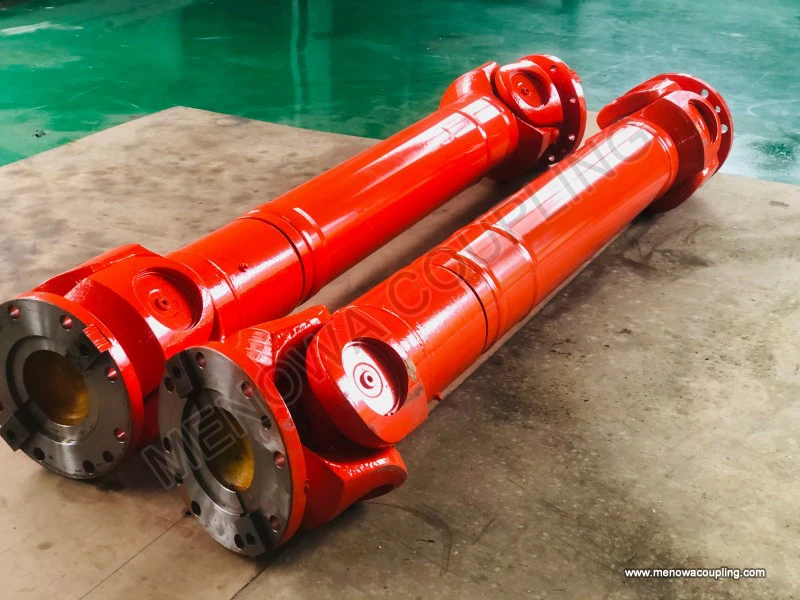
Universal couplings stand as indispensable mechanical transmission components in modern industrial systems, serving as core connecting parts that transmit torque and rotational power between misaligned drive shafts. In China’s complete industrial manufacturing ecosystem, universal coupling production and supply have formed a mature and standardized industrial chain, covering basic civil machinery, heavy industrial equipment, intelligent automation devices and mobile engineering machinery. Local manufacturers focus on structural optimization, performance stability and adaptive customization, providing cost-effective and high-reliability transmission solutions for global mechanical transmission scenarios. Unlike rigid couplings that require high-precision shaft alignment, universal couplings feature unique angular compensation capabilities, which can stably transmit power under conditions of angular deviation, parallel offset and axial displacement between driving and driven shafts, effectively solving the power transmission bottleneck of dynamic misalignment in mechanical operation.
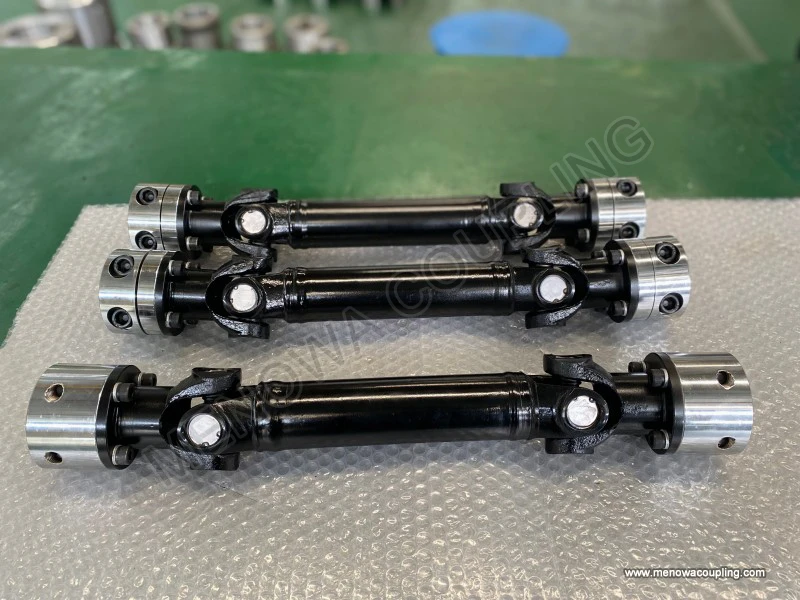
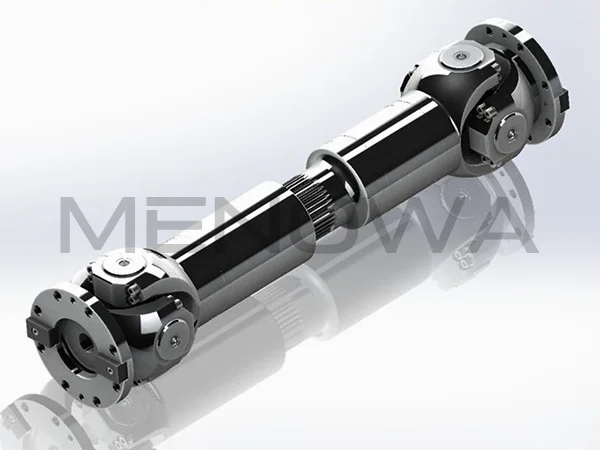
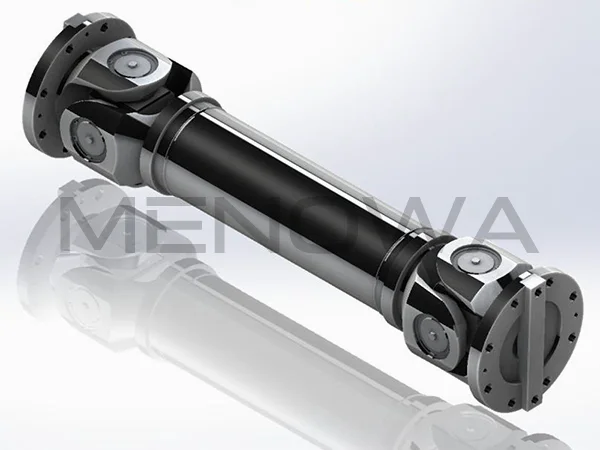
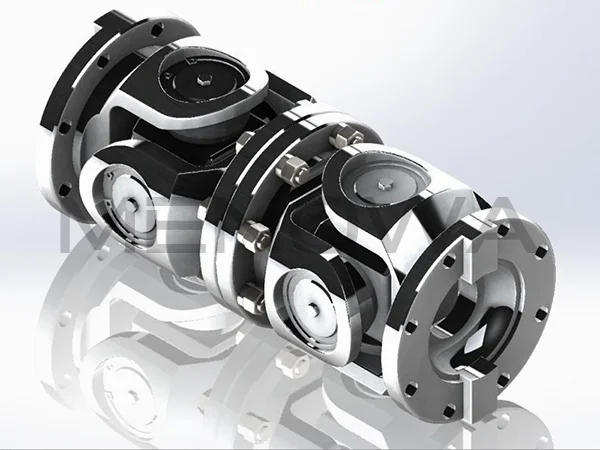
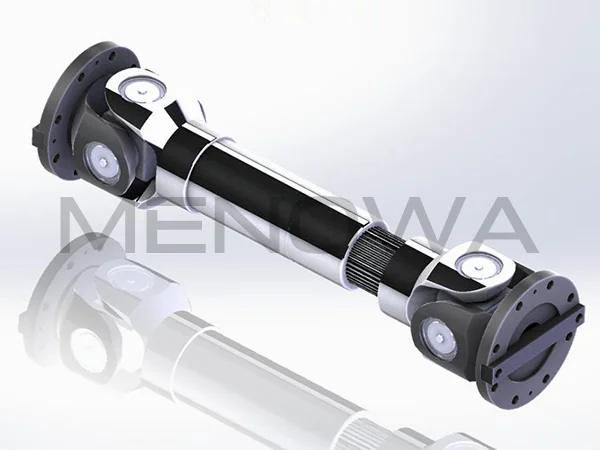
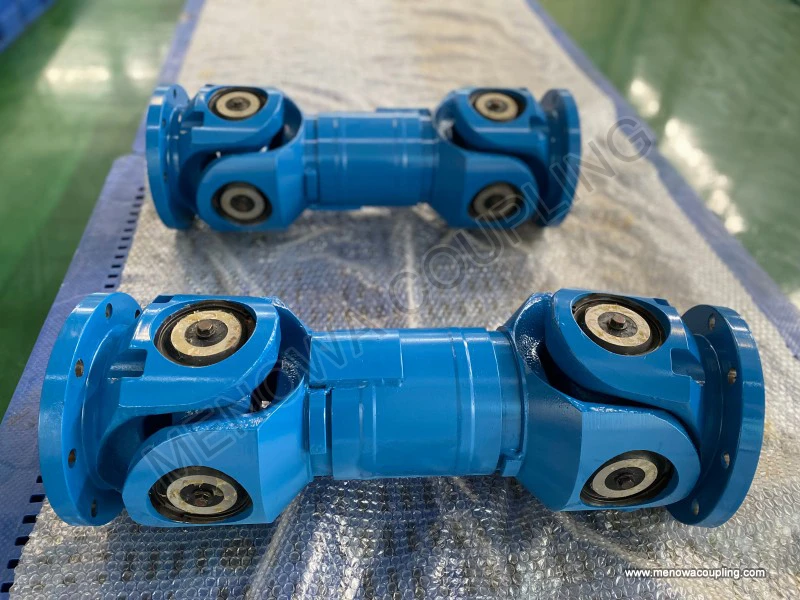
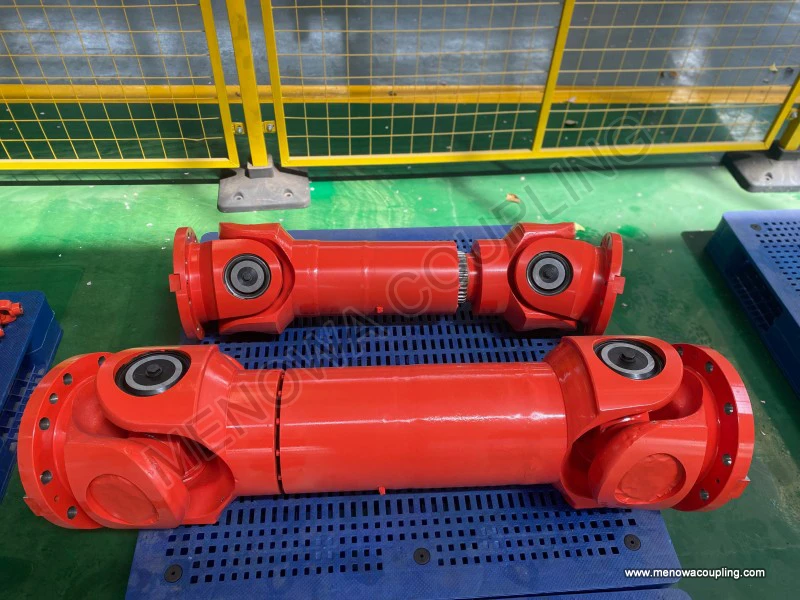
The basic working principle of universal couplings relies on the hinged connection structure of cross shaft or ball joint components, which can realize flexible rotation in multiple spatial directions. A single-section universal coupling can adapt to angular misalignment between intersecting shafts, while its instantaneous transmission speed will fluctuate periodically with the change of rotation angle. This speed fluctuation will cause alternating shear stress and vibration in the transmission system, which is suitable for low-speed, light-load and low-stability requirement scenarios. For high-speed, heavy-load and high-precision transmission occasions, double-section universal coupling structures are mostly adopted. By arranging two single-section joints symmetrically and controlling the equal deflection angle of the two sections, the speed fluctuation generated by the front joint can be offset by the rear joint, realizing constant-speed power transmission and greatly improving the smoothness and stability of the whole mechanical system operation. This structural diversity makes universal couplings widely adaptable to complex and variable working conditions in industrial production.
In terms of application scenarios, universal couplings produced by Chinese manufacturers cover almost all fields involving mechanical power transmission with shaft misalignment. In the field of industrial manufacturing equipment, they are applied to rolling mills, printing machinery, textile equipment, packaging machines and pump compressor units. These devices will produce slight shaft position offset due to long-term vibration, equipment aging and installation errors during operation, and the flexible compensation performance of universal couplings can avoid rigid friction and torque loss caused by shaft misalignment, reducing equipment failure rate and maintenance cost. In engineering and agricultural machinery, universal couplings undertake the power transmission task of mobile operating equipment. Tractors, loaders, excavators and harvesting machinery often face complex working environments such as uneven ground and fuselage jitter, and the drive shaft will produce real-time angular and offset changes during operation. The high toughness and strong misalignment tolerance of universal couplings can ensure continuous and stable power output under dynamic working conditions.
In addition, universal couplings are also widely used in automotive transmission systems, automated production lines, robotic arm rotating joints and metallurgical mining equipment. In automated intelligent equipment, they meet the flexible transmission requirements of multi-angle rotation and multi-degree-of-freedom movement of mechanical arms; in heavy mining machinery, they bear high-torque and shock-load power transmission, adapting to harsh working conditions such as dust, vibration and variable load. The wide application of universal couplings benefits from their simple structure, convenient installation and maintenance, strong environmental adaptability and low failure rate, which make them preferred transmission components for various mechanical equipment upgrading and new equipment supporting.
Scientific selection is the core premise to ensure the long-term stable operation of universal couplings, and blind selection will easily lead to insufficient torque capacity, excessive vibration, accelerated wear and even component fracture failure. The selection of universal couplings must follow quantitative calculation formulas and combine qualitative working condition analysis to match the most suitable product specifications. The core calculation index of selection is the design torque of the coupling, which is the key parameter to determine the load-bearing capacity of the coupling. The theoretical torque of the transmission system is calculated according to the mechanical power and speed parameters, with the formula: T=9550P/n. In this formula, T represents the theoretical torque of the system, with the unit of N·m; P is the rated power of the driving equipment, with the unit of kW; n is the rated working speed of the shaft, with the unit of r/min.
Since the actual operation of mechanical equipment will be affected by start-stop impact, load fluctuation, speed change and shaft deflection, the theoretical torque cannot be directly used as the selection basis. It is necessary to introduce multiple correction coefficients to calculate the design torque that meets the actual working conditions. The design torque calculation formula is summarized as Td=T×Ks×Kn×Kh. Among them, Td is the final design torque for coupling selection; Ks is the working condition safety factor, which is selected according to the load stability of the equipment. For stable load equipment such as fans and pumps, the value ranges from 1.2 to 1.5; for medium fluctuation load equipment such as textile machinery and printing equipment, the value ranges from 1.5 to 2.0; for impact load equipment such as mining machinery and engineering machinery, the value needs to be 2.0 to 3.0 to resist instantaneous impact torque.
Kn is the speed correction coefficient. High-speed operation will increase the centrifugal force and friction loss of the coupling, and accelerate component wear. When the working speed is lower than 500r/min, the coefficient is 1.0; when the speed is between 500r/min and 1500r/min, the coefficient is 1.1 to 1.2; when the speed exceeds 1500r/min, the coefficient needs to be increased to 1.3 to 1.5. Kh is the service life correction coefficient. For equipment that operates continuously for a long time with annual operating hours exceeding 5000 hours, the coefficient is 1.2 to 1.4; for intermittent and short-time operating equipment, the coefficient is 1.0. After calculating the design torque, the rated torque of the selected universal coupling must be greater than or equal to the design torque to ensure that the coupling will not be overloaded during operation.
In addition to torque calculation, multiple key factors need to be comprehensively considered in the selection process. The first is the misalignment adaptation range. Different structural universal couplings have different limits of angular compensation and parallel offset compensation. Single-section universal couplings are suitable for angular misalignment of 3° to 15°, while double-section structures can adapt to larger deflection angles and are more suitable for working conditions with frequent misalignment changes. It is necessary to measure the maximum shaft deviation of the equipment during static installation and dynamic operation to avoid exceeding the compensation limit of the coupling, otherwise it will cause severe transmission vibration and accelerated wear of hinge parts.
Shaft diameter and installation space are also key limiting factors for selection. The inner hole size of the coupling must match the diameter of the driving and driven shafts to ensure precise assembly and effective torque transmission. Too loose fit will cause relative sliding and torque loss, while too tight fit will bring difficulties to installation and disassembly. At the same time, the overall length and outer diameter of the coupling need to adapt to the equipment installation space. For compact and densely arranged equipment, miniature and lightweight universal coupling structures need to be selected; for heavy equipment with sufficient installation space, high-rigidity and large-size structures are adopted to meet high-torque transmission requirements.
Working environment adaptation cannot be ignored in selection. Conventional universal couplings are suitable for normal temperature and dry indoor working conditions. For outdoor equipment, high-temperature production workshops, humid and dusty environments, it is necessary to select couplings with enhanced surface wear resistance, corrosion resistance and dustproof performance. In low-temperature working environments, attention should be paid to the low-temperature toughness of the coupling material to prevent structural brittleness and fracture caused by temperature reduction. For working conditions with frequent start-stop and alternating loads, priority should be given to universal couplings with high fatigue resistance to avoid premature failure caused by long-term alternating stress.
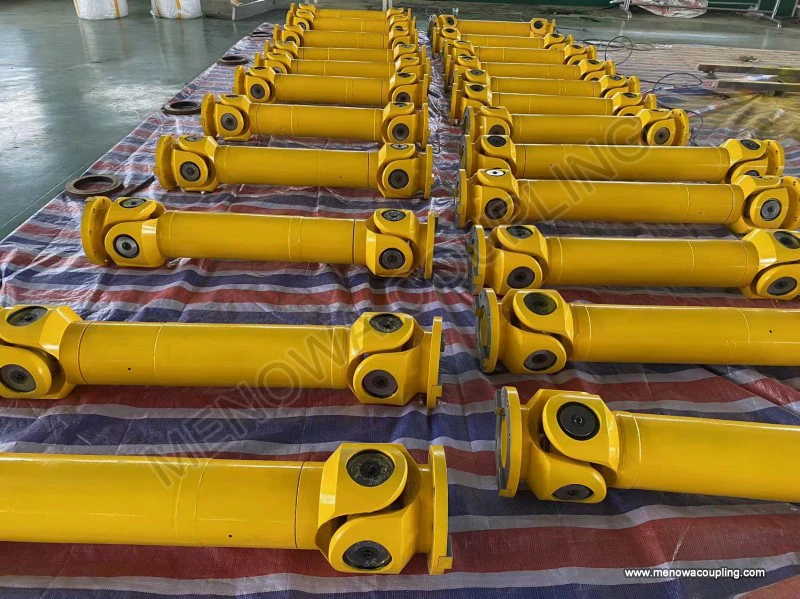
In China’s universal coupling supply market, manufacturers have rich production experience and strong customized service capabilities, which can meet the personalized needs of different industries and different working conditions. Relying on perfect mechanical processing equipment and mature production technology, local suppliers can realize standardized mass production of conventional products and targeted structural optimization of special working condition products, such as increasing hinge lubrication structures, optimizing cross shaft precision, improving component matching accuracy, and reducing transmission backlash and friction loss. At the same time, Chinese manufacturers pay attention to product performance iteration, continuously optimize material proportioning and structural design, improve the overall rigidity, wear resistance and service life of couplings, and maintain stable product quality in long-term batch supply.
In actual engineering application and selection practice, it is also necessary to avoid common selection errors. Many users only focus on the basic size parameters of the coupling and ignore the matching of torque grade and working condition, resulting in frequent coupling damage in high-load working conditions. Some users ignore the influence of speed factors, resulting in excessive vibration and noise of high-speed operation equipment, which affects the overall operation precision of mechanical equipment. In addition, unreasonable installation angle is also a common problem. Excessive single-side deflection angle will lead to uneven stress on the hinge structure, accelerate local wear, and reduce the overall service life of the coupling by more than half. Therefore, on the basis of accurate formula calculation, it is necessary to combine the actual operation state, installation conditions and environmental factors of the equipment to conduct comprehensive selection verification.
With the continuous upgrading of China’s manufacturing industry towards high precision, high efficiency and intelligence, the market demand for high-performance universal couplings is also increasing. Traditional low-precision and short-life products are gradually replaced by high-precision, low-noise and long-service-life optimized products. Local universal coupling vendors keep pace with the market demand, continuously upgrade production processes and testing technologies, conduct strict performance tests on product torque bearing capacity, misalignment compensation performance, fatigue resistance and high-speed operation stability, and ensure that each batch of products can adapt to complex industrial working conditions. While meeting domestic industrial supporting needs, Chinese universal coupling products also occupy an important position in the global mechanical transmission parts market with high cost performance and reliable performance.
To sum up, universal couplings, as key flexible transmission components, have irreplaceable application value in various mechanical equipment. Correct product selection is based on standardized torque calculation formulas, combined with working condition load characteristics, speed parameters, misalignment range, installation space and environmental factors. Chinese professional universal coupling vendors rely on mature industrial chain advantages, rich production experience and perfect customized service capabilities, which can provide reliable and targeted transmission component solutions for diverse industrial scenarios. In the future, with the continuous innovation of mechanical manufacturing technology, universal coupling products will develop towards higher precision, longer service life, stronger environmental adaptability and more diversified customization, and continue to empower the high-quality development of the global mechanical transmission industry.
Post Date: Jun 3, 2026
https://www.menowacoupling.com/china-coupling/universal-coupling-vendor-in-china.html
Products
Tags
Supply
Related Articles
Universal Coupling Supply
In the intricate ecosystem of mechanical power transmission, universal couplings stand out as indispensable foundational components that bridge the functional gaps of traditional rigid connection structures. Serving as a core link between rotating shafts in mechanical systems, these mechanical devices are engineered to …Uses of Universal Coupling
In the intricate ecosystem of mechanical transmission systems, universal couplings stand out as one of the most versatile and indispensable mechanical components, serving as a critical bridge for power and motion transmission across countless industrial and civilian mechanical devices. Also widely known as universal joi…Diagram of Universal Coupling
A universal coupling, widely recognized as a core mechanical component for flexible power transmission, serves as a pivotal connecting structure in mechanical transmission systems to transfer rotational torque and motion between two shafts with angular misalignment. The structural diagram of a universal coupling intuiti…What is Universal Coupling
A universal coupling, commonly referred to as a universal joint or U-joint, is a fundamental mechanical transmission component designed to connect two rotating shafts while enabling reliable transfer of torque and rotational motion under misaligned operating conditions. Unlike rigid coupling mechanisms that demand preci…Dimensions of Universal Coupling
Universal couplings, commonly known as universal joints or Cardan joints, serve as fundamental mechanical components for power transmission between misaligned rotating shafts in diverse mechanical systems. Their dimensional parameters are the core factors that determine structural compatibility, operational stability, l…Universal Coupling Exporter
As a vital component in mechanical transmission systems, universal couplings play an irreplaceable role in connecting two shafts that are not in the same axis or have relative displacement, ensuring stable and efficient torque transmission. For universal coupling exporters, understanding the product’s working principle…
 WeChat
 WhatsApp