Parts of Universal Coupling
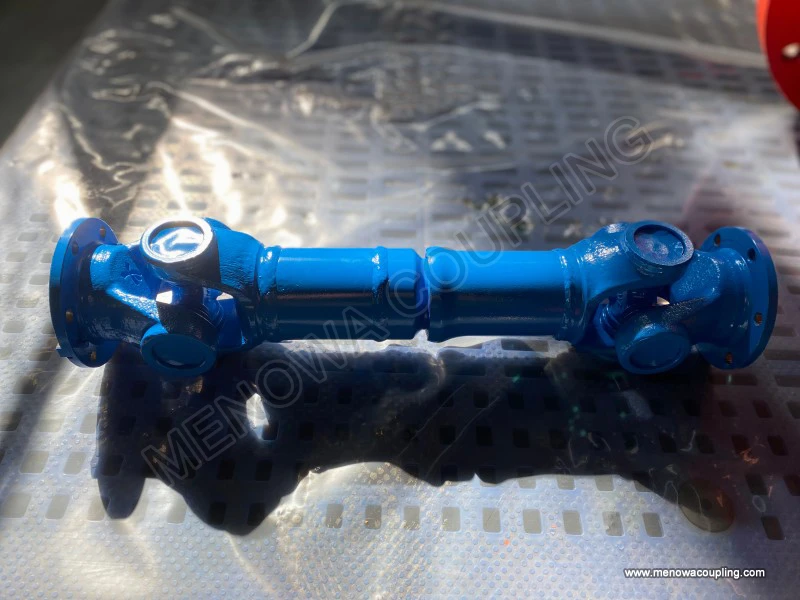
A universal coupling, widely recognized as a flexible mechanical transmission component, serves as a critical connection between two rotating shafts in diverse mechanical systems. Its core value lies in its ability to transmit continuous torque and rotational motion while accommodating angular misalignment, axial displacement, and minor radial deviation between interconnected shafts, overcoming the limitations of rigid shaft connections that fail to adapt to complex operating postures and structural variations. The stable and efficient operation of a universal coupling relies on the precise coordination of multiple independent structural parts, each with unique structural design, material attributes, and functional positioning. Every component is engineered to withstand mechanical stress, friction, and fatigue generated during high-speed rotation and heavy-load operation, collectively ensuring the reliability, durability, and transmission accuracy of the entire coupling system. Understanding the detailed structure and functional logic of each part is essential for grasping the operating principle of universal couplings and optimizing their application and maintenance in mechanical equipment.
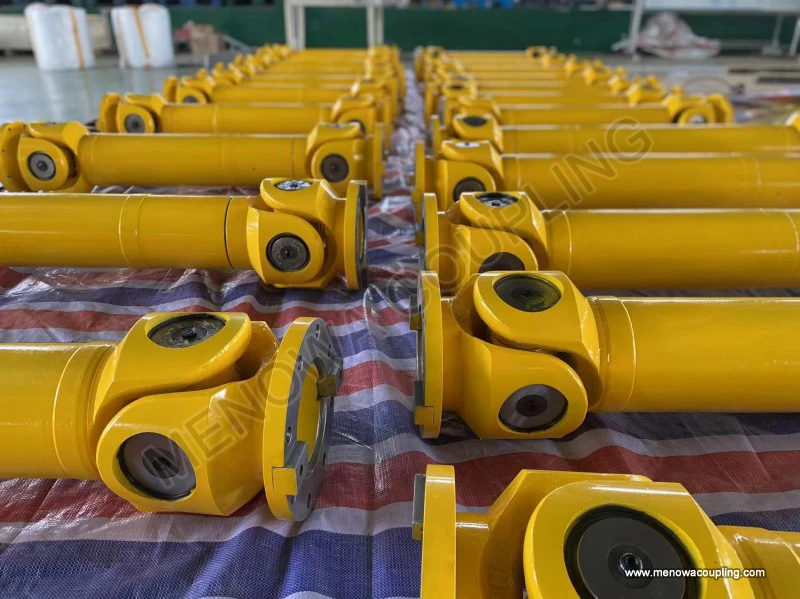
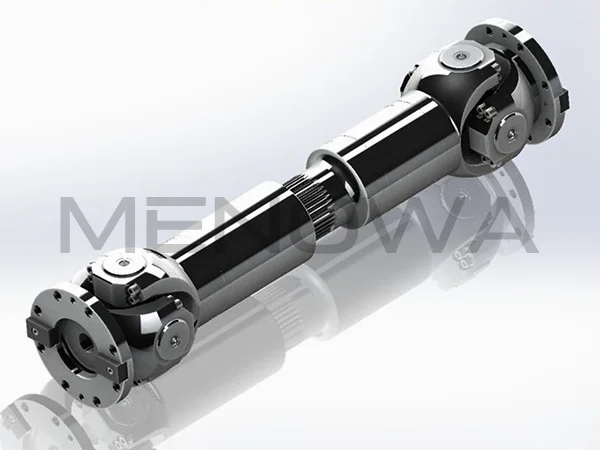
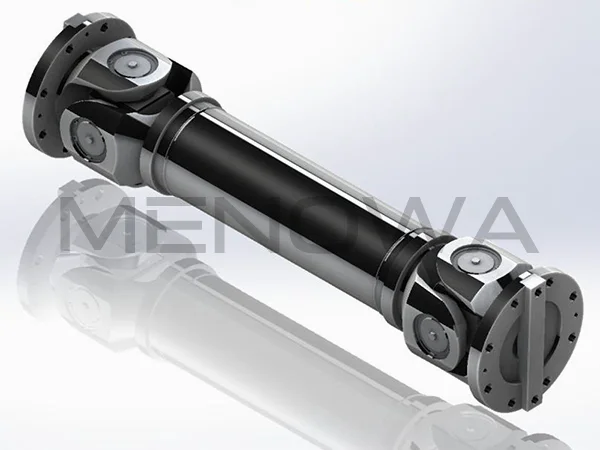
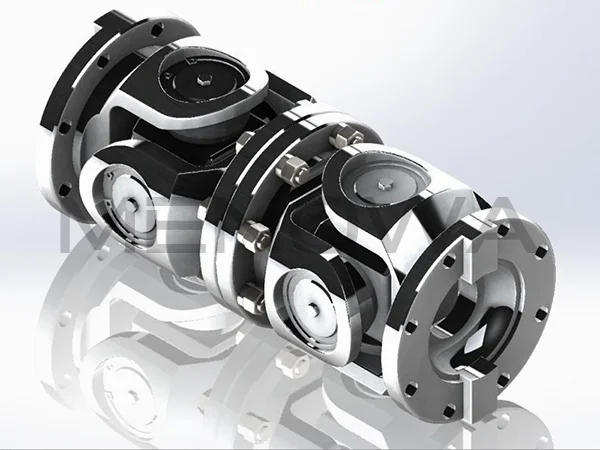
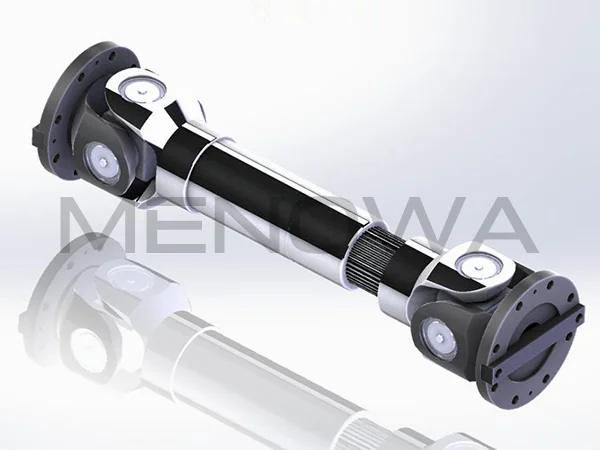
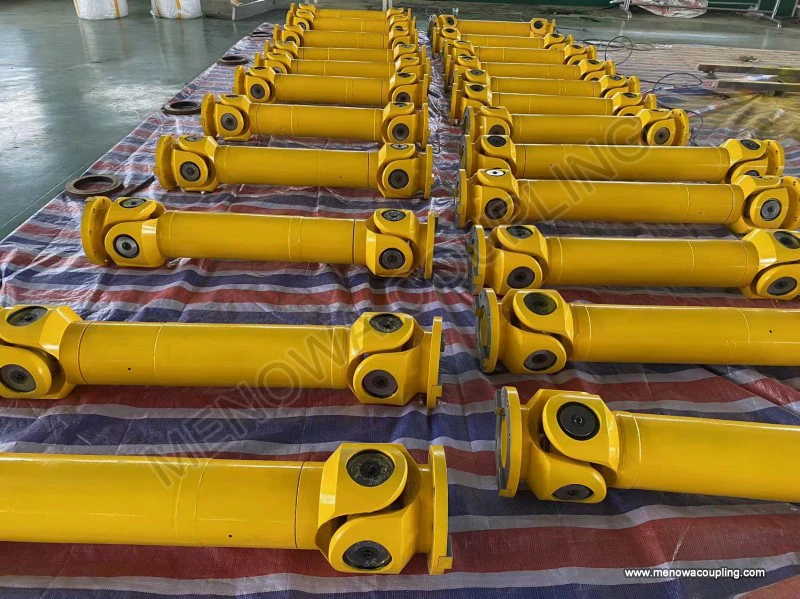
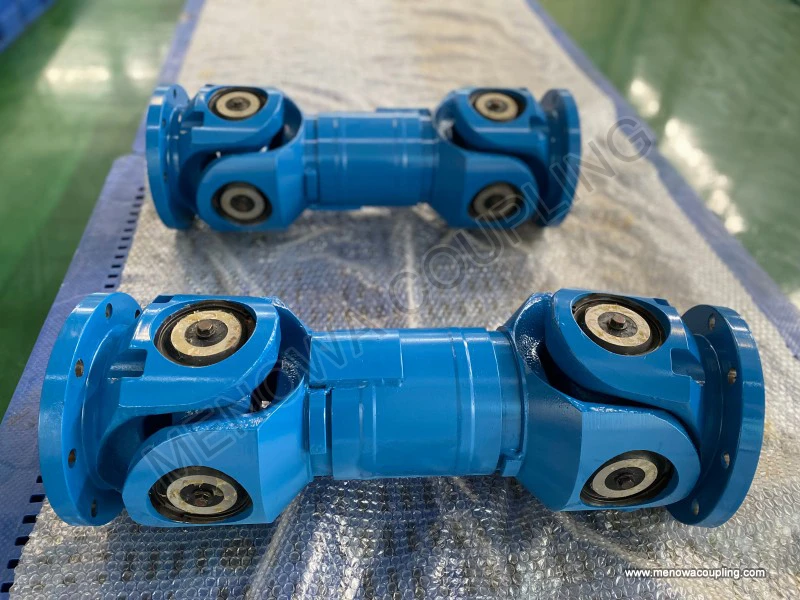
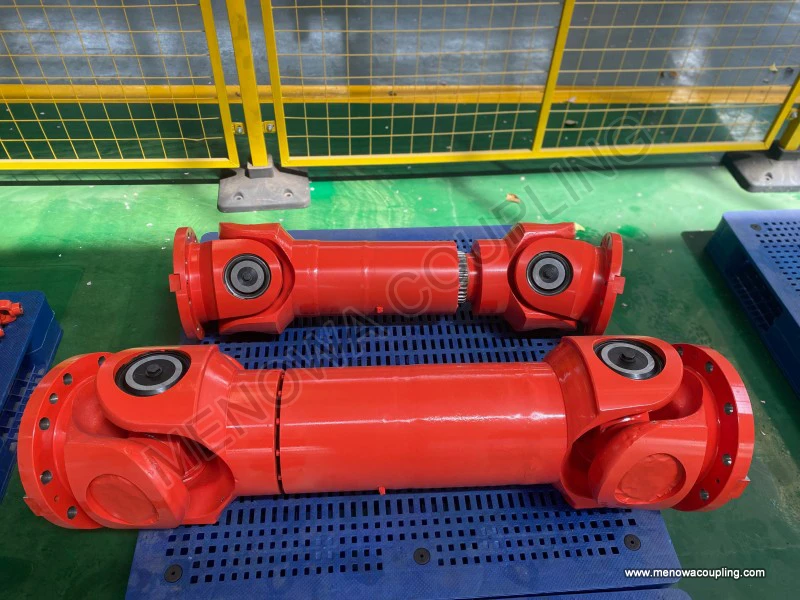
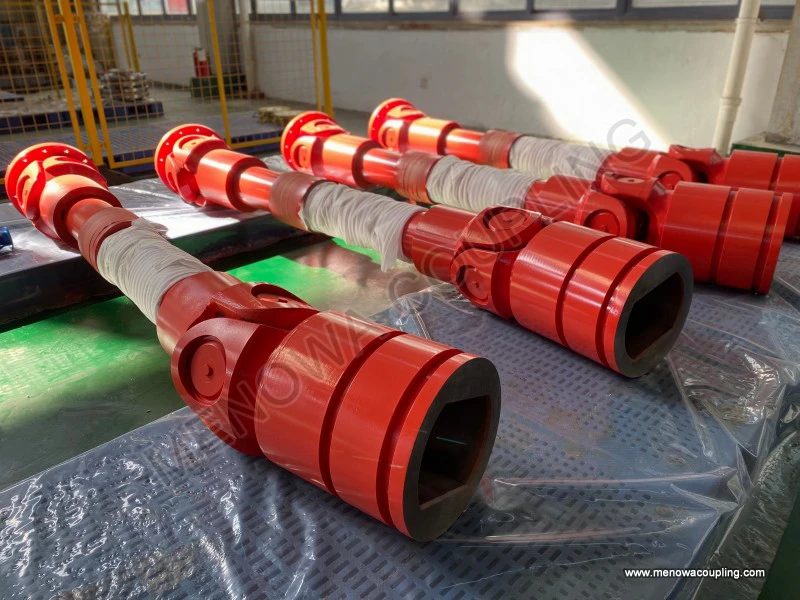
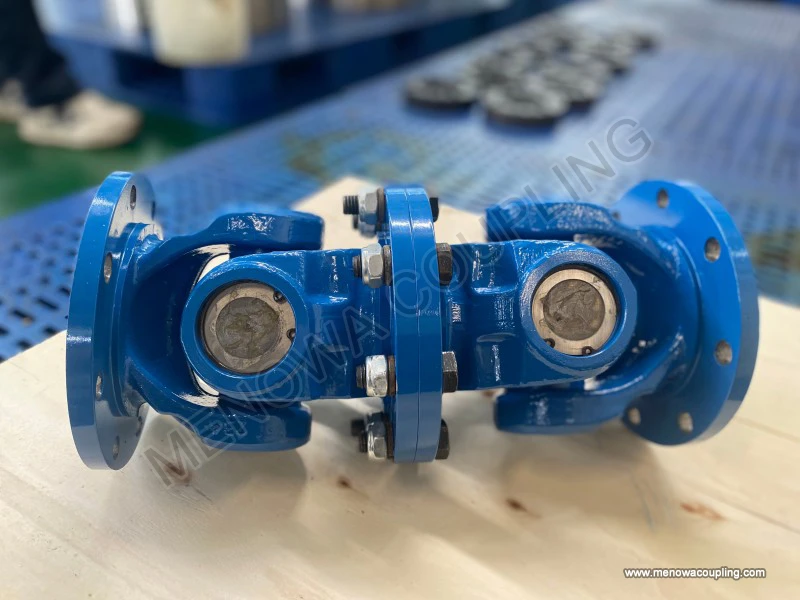
Yokes, also commonly referred to as forks, are the basic end components of a universal coupling and form the foundational connection structure between the coupling and the driving and driven shafts. A complete universal coupling is equipped with two symmetrical yokes, classified as the driving yoke and the driven yoke according to their installation positions. The driving yoke is fixedly mounted on the end of the power input shaft, while the driven yoke connects to the power output shaft, undertaking the task of receiving and outputting rotational torque respectively. Structurally, each yoke features a cylindrical base with a central mounting hole that fits tightly with the shaft end, and keyways are usually reserved inside the central hole to accommodate shaft keys, preventing relative rotation between the yoke and the shaft and ensuring synchronous rotation during power transmission. The front end of the yoke extends into a fork-shaped structure with two parallel lugs, and each lug is precision-drilled with a circular assembly hole for connecting with the central cross component. To adapt to harsh working conditions involving high torque, frequent rotation, and alternating loads, yokes are generally manufactured from high-strength alloy steel or carbon steel through forging and precision machining processes. Forging technology enhances the internal density of the metal material, eliminating internal pores and defects, while subsequent heat treatment improves the overall hardness, toughness, and impact resistance of the yoke, effectively avoiding deformation, cracking, or wear failure under long-term load operation. The dimensional accuracy of the yoke’s assembly holes and the parallelism of the double lugs directly affect the matching precision of the entire coupling; any deviation in processing accuracy will cause uneven stress during operation, increase friction loss, and even lead to abnormal vibration and noise of the mechanical system.
The cross shaft, also named the spider, is the core central component of the universal coupling and the key medium for realizing flexible power transmission and angle compensation. Presenting a symmetrical cross-shaped structure, this component has four mutually perpendicular journal arms of equal length and uniform diameter, forming a 90-degree spatial distribution. Each journal arm corresponds to the assembly hole on the yoke lugs, enabling the cross shaft to be flexibly hinged between the driving yoke and the driven yoke. The unique cross structure allows the two connected yokes to produce relative angular deflection in multiple spatial directions, which is the fundamental reason why the universal coupling can adapt to shaft misalignment. During equipment operation, the cross shaft bears complex composite forces, including torsional force, shear force, and alternating impact force generated by shaft angle changes. Therefore, its material and processing requirements are extremely stringent. Most cross shafts are made of high-quality carburized steel, which undergoes carburizing, quenching, and tempering treatments after precision turning and grinding. This processing method makes the surface of the journal arms have high hardness and wear resistance, while the core part maintains good toughness, effectively resisting surface wear and core fracture under long-term alternating loads. The surface of each journal arm is processed with smooth precision finish to reduce friction with matching bearings, and some are designed with tiny oil storage grooves to cooperate with lubrication systems, ensuring continuous lubrication during operation. The symmetry of the cross shaft structure is crucial for dynamic balance; uniform size and consistent surface precision of the four journal arms can avoid unbalanced centrifugal force during high-speed rotation, ensuring stable operation of the coupling.
Bearing assemblies are indispensable auxiliary components installed between the journal arms of the cross shaft and the assembly holes of the yoke lugs, playing a decisive role in reducing friction loss and improving transmission flexibility. The most widely used type in universal couplings is needle roller bearing assemblies, which consist of multiple slender needle rollers, a bearing outer ring, and a bearing retainer. Different from traditional ball bearings, needle roller bearings have a larger contact area with the journal surface, enabling them to bear higher radial loads and adapt to the compact assembly space of universal couplings. The needle rollers are neatly arranged in the annular gap between the cross shaft journal and the outer ring under the limit of the retainer, maintaining uniform rolling tracks during rotation. When the coupling operates and the two yokes produce relative angular movement, the needle rollers roll flexibly around the journal arms, converting sliding friction into low-resistance rolling friction, which greatly reduces mechanical wear and power consumption. The bearing outer ring is a precision thin-walled sleeve structure that fits tightly with the yoke assembly hole, providing a stable supporting surface for the needle rollers and preventing radial displacement of the bearing assembly. The retainer is designed with uniform separation grooves to isolate each needle roller, avoiding mutual friction, extrusion, and skew displacement between rollers, and ensuring the continuity and stability of rolling motion. The overall performance of the bearing assembly directly determines the service life and transmission efficiency of the universal coupling. Poor bearing operation will lead to increased friction heat, accelerated wear of the cross shaft journal and yoke holes, and in severe cases, cause jamming of the coupling and interruption of power transmission.
Sealing components are vital protective parts of the universal coupling, mainly including oil seals and dust covers, which work together to maintain the internal working environment of the coupling and extend the service life of core components. Oil seals are installed at the assembly gap between the bearing outer ring and the yoke, adopting elastic rubber and metal framework composite structures. The inner lip of the oil seal closely fits the surface of the cross shaft journal, while the outer edge is fixed with the yoke hole wall, forming a closed lubrication cavity inside the bearing assembly. Its core function is to lock the lubricating grease filled in the bearing gap, preventing lubricant leakage caused by centrifugal force during high-speed rotation, which would lead to dry friction of internal parts. Meanwhile, oil seals can effectively block external fine dust, metal debris, and moisture from entering the bearing interior. Dust covers are usually installed on the outer side of the yoke assembly holes, covering the entire bearing and cross shaft connection area. Made of wear-resistant and aging-resistant elastic materials or thin metal plates, dust covers can resist the erosion of external sundries and corrosive media in complex working environments such as industrial production and mechanical operation. In harsh environments with heavy dust, humidity, or corrosive gases, sealing components can avoid abrasive wear and electrochemical corrosion of bearings and cross shafts, preventing early failure of parts. The sealing performance of these components directly affects the maintenance cycle of the coupling; intact sealing structures can keep the internal lubrication state stable for a long time, reduce frequent lubrication maintenance, and improve the continuous operation capability of mechanical equipment.
Fastening parts include snap rings, lock pins, and positioning bolts, which undertake the task of fixing the assembly position of all components and preventing structural loosening during operation. Snap rings are widely used in universal coupling assembly, installed in the annular grooves preset on the inner wall of yoke assembly holes or the root of cross shaft journals. They can limit the axial displacement of bearing assemblies, ensuring that bearings remain in the correct matching position during rotation and avoiding axial deviation and assembly dislocation caused by vibration and centrifugal force. Lock pins penetrate the reserved pin holes of yokes and cross shaft journals, further strengthening the connection stability between yokes and the cross shaft, preventing relative rotation and separation of components under high torque impact. Positioning bolts are mostly used for fixing the matching position of yokes and transmission shafts, locking the yoke base and shaft end as a whole to ensure synchronous rotation of the coupling and the shaft. All fastening parts are made of high-strength anti-loosening materials, with anti-rust and anti-fatigue treatments on the surface, which can adapt to long-term vibration and alternating load working conditions. Loosening of any fastening part will lead to assembly clearance increase of the coupling, cause abnormal noise and vibration during operation, and even trigger component falling off and equipment failure in serious cases. Therefore, the reasonable matching and intact state of fastening parts are important guarantees for the safe and stable operation of the universal coupling.
The collaborative operation of all the above parts constitutes the complete working mechanism of a universal coupling. In the power transmission process, the driving shaft drives the driving yoke to rotate, and the torque is transmitted to the cross shaft through the flexible connection of the bearing assembly. The cross shaft relies on its multi-directional deflection capability to adapt to the angle change between the two shafts, and then transmits the torque to the driven yoke and the driven shaft, realizing continuous and stable power output. Yokes undertake torque input and output and structural connection, the cross shaft achieves flexible angle compensation, bearings reduce transmission friction, sealing parts protect the internal operating environment, and fastening parts maintain structural stability. Each part complements and restricts each other, forming a highly integrated mechanical transmission system. With the continuous development of mechanical manufacturing technology, the structural design of universal coupling parts is constantly optimized, and material performance and processing precision are continuously improved, making universal couplings more adaptable to high-speed, heavy-load, and complex working conditions, and widely applied in various mechanical transmission fields such as engineering machinery, transportation equipment, and industrial production machinery. In practical application, regular inspection and maintenance of each component, timely replacement of worn and aging parts, and guaranteeing the integrity of assembly and sealing performance are key measures to maintain the long-term stable working performance of universal couplings.
Post Date: May 26, 2026
https://www.menowacoupling.com/china-coupling/parts-of-universal-coupling.html
Products
Tags
Supply
Related Articles
Universal Coupling Price
Universal coupling manufacture stands as a sophisticated and precise mechanical production discipline focused on crafting flexible transmission components that serve as critical connecting parts in mechanical power systems. These specialized mechanical structures are designed to transmit rotational torque and motion bet…Classification of Universal Coupling
Universal couplings are indispensable mechanical transmission components widely applied in modern mechanical systems, serving the core function of transmitting rotational torque and motion between two shafts with angular misalignment, parallel offset, or axial displacement. Unlike rigid couplings that require precise sh…Universal Coupling Manufacture
In the complex landscape of mechanical power transmission, universal couplings stand out as indispensable components that bridge the gap between misaligned shafts, enabling the seamless transfer of torque and rotational motion across a wide range of industrial and mechanical applications. Unlike rigid couplings that dem…Universal Coupling Production
Universal couplings stand as indispensable mechanical components in modern industrial transmission systems, serving as flexible connection units that enable stable torque and rotational motion transfer between misaligned rotating shafts. Unlike rigid connecting structures that demand precise coaxial alignment of paired …Specification of Universal Coupling
Universal couplings represent a fundamental category of mechanical transmission components engineered to transmit rotational torque and motion between two shafts that operate with intentional or unavoidable misalignment. Widely adopted in mechanical transmission systems across industrial machinery, transportation equipm…Coaxiality of Universal Coupling
Coaxiality stands as one of the most fundamental and influential precision indicators governing the operational performance of universal couplings, serving as the core benchmark for evaluating the alignment accuracy between driving and driven shafts in mechanical transmission systems. A universal coupling, as a flexible…
 WeChat
 WhatsApp