Material of Universal Coupling
Universal couplings serve as indispensable mechanical transmission components in modern industrial and mechanical systems, dedicated to transmitting torque and rotational power between two misaligned rotating shafts. Their core operational value lies in adapting to angular deviation, axial displacement and radial offset during equipment operation, ensuring continuous and stable power transmission under complex motion states. The overall performance, service life, environmental adaptability and operational stability of universal couplings are fundamentally determined by the selection and processing technology of their manufacturing materials. Different working scenarios involving load intensity, operating temperature, environmental humidity, corrosive medium and running speed put forward differentiated performance requirements for coupling materials, making material research and selection the core link in the design and production of high-quality universal couplings. In practical industrial applications, the rational matching of base materials and auxiliary materials can effectively reduce wear, fatigue damage and structural deformation, improve the overall reliability of mechanical transmission systems, and lower the frequency of equipment maintenance and component replacement.
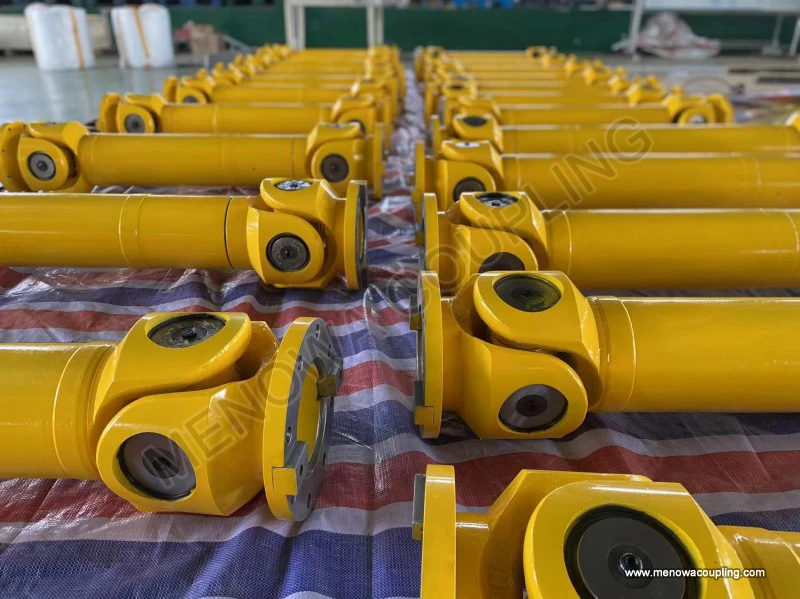
Carbon steel is one of the most traditional and widely used base materials for universal couplings, favored by the machinery manufacturing industry for its balanced mechanical properties, excellent processing performance and cost-effective raw material supply. Ordinary medium carbon steel has moderate tensile strength and hardness, with good plasticity and toughness under normal temperature conditions, which enables it to withstand conventional torque impact and cyclic load in daily mechanical operation. This type of material is easy to implement cutting, forging, welding and heat treatment processing, and can be precisely manufactured into various structural parts of universal couplings, including fork heads, cross shafts and connecting shafts. After simple quenching and tempering treatment, the internal grain structure of carbon steel can be optimized, effectively improving its surface hardness and fatigue resistance, reducing surface wear caused by long-term friction and avoiding structural fracture caused by frequent cyclic stress. In light-load and low-speed working environments such as ordinary civilian machinery, small transmission equipment and general mechanical transmission devices, carbon steel universal couplings can maintain stable working performance and fully meet basic power transmission needs. However, the inherent limitations of carbon steel are also obvious. Its high-temperature resistance and corrosion resistance are relatively weak, and it is prone to oxidation and rust in humid and high-temperature environments. Under long-term heavy-load and high-speed operation, carbon steel is easy to produce fatigue cracks and plastic deformation, which limits its application in high-strength and harsh working conditions.
Alloy steel has become the mainstream high-performance material for manufacturing industrial-grade heavy-duty universal couplings on the basis of ordinary carbon steel, by adding trace alloy elements such as chromium, molybdenum and manganese to optimize the internal metallographic structure of the steel. Compared with carbon steel, alloy steel exhibits far more excellent comprehensive mechanical properties, including higher tensile strength, yield strength and fatigue limit, as well as stronger resistance to impact load and alternating stress. The alloy elements uniformly distributed in the steel can refine the internal grains, eliminate structural defects such as pores and inclusions, and greatly improve the structural compactness and stability of the material. After strict forging and standardized heat treatment processes including quenching and high-temperature tempering, alloy steel can achieve an optimal match of hardness and toughness, effectively resisting surface pitting, fretting wear and crack propagation during long-term high-load operation. Universal couplings made of alloy steel can stably work under high torque, high speed and frequent variable load conditions, and are widely applied in heavy industrial equipment such as mining machinery, metallurgical equipment, engineering construction machinery and large transmission systems. In addition, alloy steel has good thermal stability, and will not produce obvious structural softening and strength decline in a certain high-temperature working range, which ensures the continuity and stability of power transmission for high-temperature operating equipment. Although the processing difficulty and raw material cost of alloy steel are higher than those of ordinary carbon steel, its ultra-long service life and stable performance in harsh working environments make it the preferred material for high-end industrial universal couplings, and effectively reduce the comprehensive operating cost of mechanical equipment in the long-term service cycle.
Stainless steel is a special functional material for universal couplings targeting corrosive and hygienic working environments, with the core advantage of excellent corrosion resistance, oxidation resistance and high-temperature stability. The chromium element contained in stainless steel can form a dense and stable oxide protective film on the material surface, which can effectively isolate the contact between the base metal and external air, moisture, acid-base medium and chemical corrosives, avoiding rust, corrosion and structural damage of coupling components. This material maintains stable physical and chemical properties in humid environment, marine atmosphere, weak acid and weak alkali medium and high-temperature oxidation environment, and will not produce performance degradation or structural failure due to environmental corrosion. Universal couplings made of stainless steel are mostly used in professional fields with strict environmental requirements, including food processing equipment, pharmaceutical production machinery, chemical transmission equipment and marine mechanical systems. In addition to corrosion resistance, stainless steel also has good low-temperature toughness, which can maintain stable mechanical properties in low-temperature working environments and avoid brittle fracture of components caused by low-temperature cold brittleness. Different types of stainless steel have differentiated performance characteristics. Common stainless steel materials can adapt to conventional corrosive environments, while optimized stainless steel with more stable alloy ratio can cope with stronger chemical corrosion and higher temperature working conditions. The main limitation of stainless steel is its relatively low hardness and wear resistance compared with alloy steel, and its bearing capacity for ultra-heavy load is limited. Therefore, stainless steel universal couplings are mostly used in medium and light-load working scenarios with high environmental requirements rather than heavy-duty industrial transmission equipment.
In addition to the main metal base materials, auxiliary non-metallic materials also play a vital role in the overall performance and service life of universal couplings, mainly including elastic sealing materials and buffer protective materials. In the overall structure of universal couplings, sealing and protective components made of rubber and thermoplastic elastomer materials are essential auxiliary structures. These flexible materials have excellent elasticity, compression resistance and aging resistance, and can closely fit with metal components to form a stable sealing structure. Their core functions are to block external dust, moisture, impurities and corrosive media from entering the internal friction pairs of the coupling, prevent abrasive wear and internal corrosion of precision matching parts such as cross shafts and bearings, and ensure the flexibility and precision of internal transmission structures. At the same time, these elastic materials can absorb part of vibration and impact generated during equipment operation, reduce the rigid friction and collision between metal components, and play a good buffering and damping effect. In long-term continuous operation, high-quality non-metallic auxiliary materials can resist aging, deformation and fatigue failure caused by repeated compression and temperature change, and maintain stable sealing and protection performance. The performance of auxiliary materials directly affects the maintenance cycle and service life of universal couplings. Poor-quality non-metallic materials are prone to aging, cracking and falling off, which will lead to the entry of external impurities, accelerate the wear of internal precision parts, and even cause transmission jitter and failure in serious cases.
The material selection of universal couplings is a systematic engineering process that needs to comprehensively balance working conditions, performance requirements and service cycle, and there is no universal optimal material, only the most matching material scheme. In the actual design and production process, the first factor to be considered is the load level of the equipment. For light-load, low-speed and intermittent working equipment, ordinary carbon steel can meet the usage requirements, which can effectively control the manufacturing cost on the premise of ensuring basic performance. For heavy-load, high-speed, continuous operation and frequently impacted industrial equipment, high-strength alloy steel must be selected to ensure the structural strength, fatigue resistance and operational stability of the coupling. For working environments with humidity, corrosion, high hygiene requirements or obvious temperature changes, stainless steel and matching anti-aging auxiliary non-metallic materials need to be selected to improve the environmental adaptability of the coupling. In addition, the processing technology of materials also has a decisive impact on the final performance of universal couplings. Even for the same type of material, different forging processes, heat treatment parameters and finishing processes will lead to obvious differences in material hardness, toughness, internal stress and wear resistance. Reasonable processing technology can eliminate the internal residual stress of materials, optimize the surface precision and matching performance of components, and give full play to the inherent performance advantages of materials.
With the continuous upgrading of modern industrial manufacturing technology and the gradual improvement of equipment precision and load requirements, the material technology of universal couplings is also constantly innovating and optimizing. On the basis of traditional metal materials, new composite materials and optimized alloy materials are gradually applied to the production of high-end universal couplings. These new materials have higher specific strength, better fatigue resistance and stronger environmental adaptability, which can adapt to more extreme working conditions such as ultra-high speed, ultra-heavy load and strong corrosion. At the same time, the continuous progress of heat treatment and surface modification technology further maximizes the performance potential of traditional materials. Through surface strengthening treatment, the surface wear resistance and corrosion resistance of coupling components are greatly improved, while the internal toughness of materials is maintained, realizing the complementary optimization of surface performance and internal performance. The continuous innovation of materials and processing technology not only improves the comprehensive performance of universal couplings, but also expands their application scope in high-end equipment manufacturing, intelligent machinery, aerospace and other emerging fields.
In conclusion, the material system of universal couplings covers diversified metal base materials and supporting non-metallic auxiliary materials, and each material has its unique performance characteristics and applicable scenarios. Carbon steel is economical and practical for conventional light-load scenarios, alloy steel is reliable and durable for heavy-duty industrial transmission, stainless steel is specialized and efficient for corrosive and hygienic environments, and high-quality non-metallic auxiliary materials provide effective protection and buffering for the overall structure. The scientific selection of materials and standardized processing technology are the key to ensure the stable operation, long service life and high transmission efficiency of universal couplings. In the future, with the continuous development of industrialization and the continuous improvement of equipment operation requirements, the material research and development and application of universal couplings will continue to move towards high strength, high wear resistance, strong corrosion resistance and multi-environment adaptability, providing more reliable basic component support for the stable operation of modern mechanical transmission systems.
Post Date: May 26, 2026
https://www.menowacoupling.com/china-coupling/material-of-universal-coupling.html
Products
Tags
Supply
Related Articles
Universal Coupling Supply
In the intricate ecosystem of mechanical power transmission, universal couplings stand out as indispensable foundational components that bridge the functional gaps of traditional rigid connection structures. Serving as a core link between rotating shafts in mechanical systems, these mechanical devices are engineered to …Uses of Universal Coupling
In the intricate ecosystem of mechanical transmission systems, universal couplings stand out as one of the most versatile and indispensable mechanical components, serving as a critical bridge for power and motion transmission across countless industrial and civilian mechanical devices. Also widely known as universal joi…Diagram of Universal Coupling
A universal coupling, widely recognized as a core mechanical component for flexible power transmission, serves as a pivotal connecting structure in mechanical transmission systems to transfer rotational torque and motion between two shafts with angular misalignment. The structural diagram of a universal coupling intuiti…Universal Coupling Vendor In China
Universal couplings stand as indispensable mechanical transmission components in modern industrial systems, serving as core connecting parts that transmit torque and rotational power between misaligned drive shafts. In China’s complete industrial manufacturing ecosystem, universal coupling production and supply have fo…What is Universal Coupling
A universal coupling, commonly referred to as a universal joint or U-joint, is a fundamental mechanical transmission component designed to connect two rotating shafts while enabling reliable transfer of torque and rotational motion under misaligned operating conditions. Unlike rigid coupling mechanisms that demand preci…Dimensions of Universal Coupling
Universal couplings, commonly known as universal joints or Cardan joints, serve as fundamental mechanical components for power transmission between misaligned rotating shafts in diverse mechanical systems. Their dimensional parameters are the core factors that determine structural compatibility, operational stability, l…
 WeChat
 WhatsApp