Dimensions of Universal Coupling
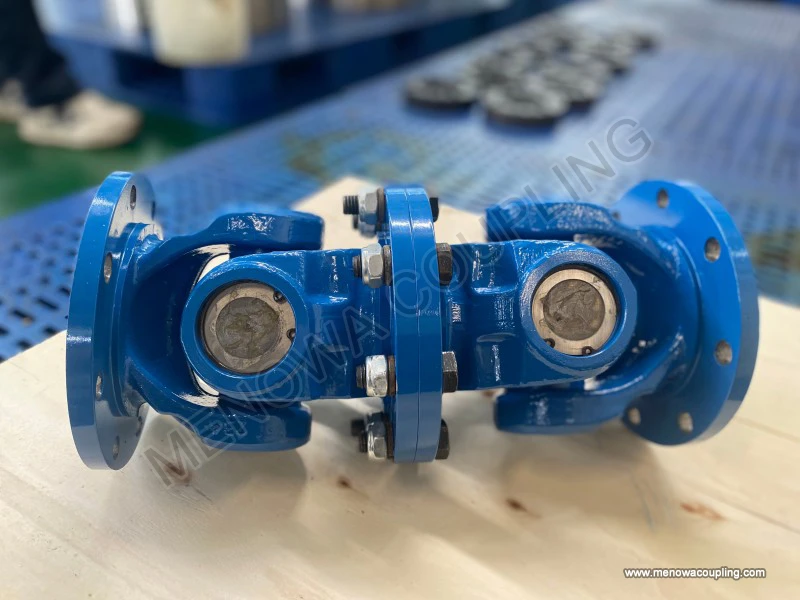
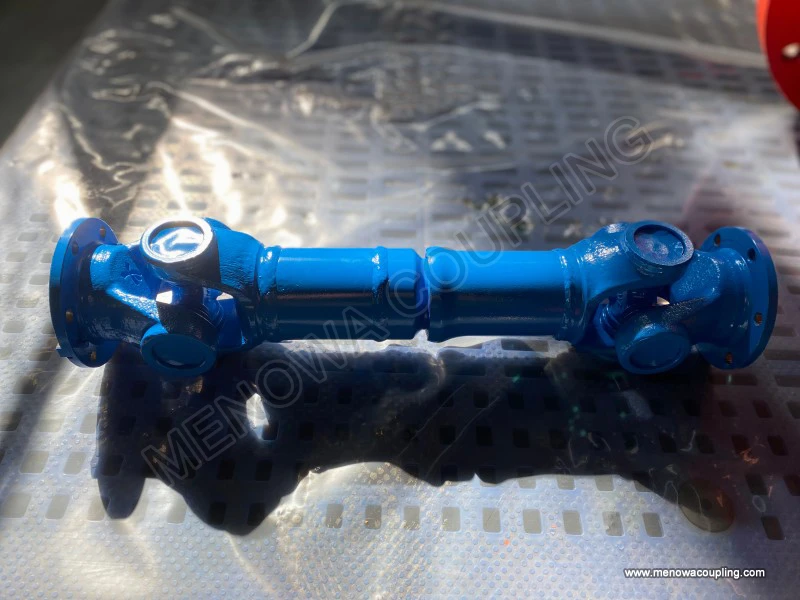
Universal couplings, commonly known as universal joints or Cardan joints, serve as fundamental mechanical components for power transmission between misaligned rotating shafts in diverse mechanical systems. Their dimensional parameters are the core factors that determine structural compatibility, operational stability, load-bearing capacity, and service life, forming a complete dimensional system that integrates structural layout, assembly adaptation, and dynamic performance. Unlike fixed couplings that require precise shaft alignment, universal couplings rely on scientific dimensional design to achieve flexible compensation of angular, axial, and radial misalignment, making their dimensional specifications the primary benchmark for mechanical matching and engineering application. A comprehensive understanding of universal coupling dimensions, their internal correlations, and their adaptation to working conditions is essential to maximize transmission efficiency, avoid mechanical interference, and reduce component wear in mechanical transmission systems.
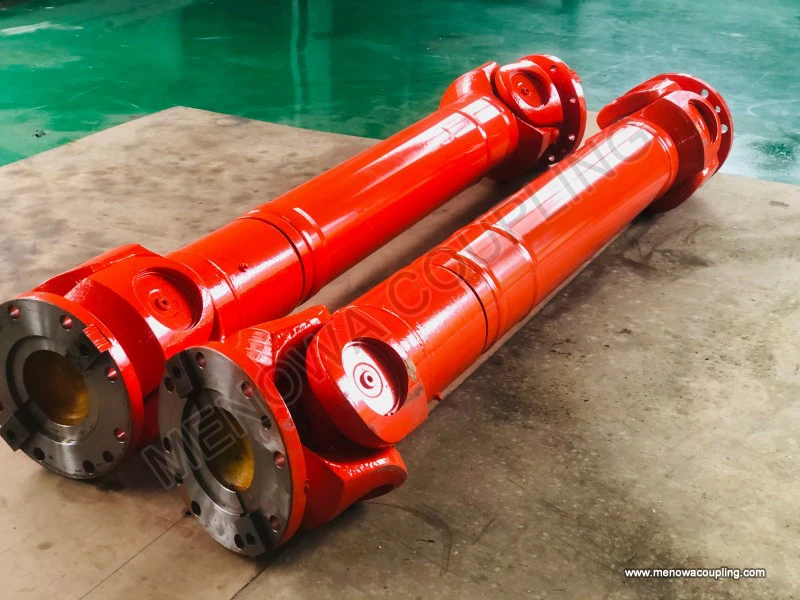
The dimensional system of universal couplings consists of a series of core structural parameters, each undertaking independent structural functions and interacting with one another to define the overall performance of the coupling assembly. The most fundamental dimensional indicator is the bore diameter, which refers to the inner diameter of the coupling hub that connects with the driving and driven shafts. This dimension directly determines the matching degree between the coupling and the transmission shaft, and it is designed in strict accordance with the outer diameter of the supporting shaft to ensure tight interference or transitional fit. A reasonable bore diameter eliminates relative rotation and axial sliding between the coupling and the shaft during high-speed rotation and load transmission, avoiding abrasion of the shaft surface and power transmission loss. If the bore diameter deviates from the standard matching range, excessive clearance will cause rotational vibration and impact load, while excessive tightness will lead to assembly difficulty and local stress concentration, resulting in early fatigue damage of the shaft and coupling hub. In practical design, the bore diameter is not an isolated parameter but is matched with hub wall thickness to balance structural rigidity and assembly feasibility, ensuring the hub can withstand torsional shear force without deformation under rated load.
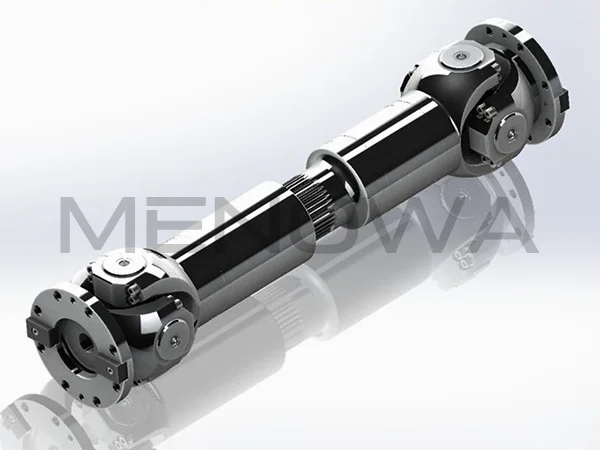
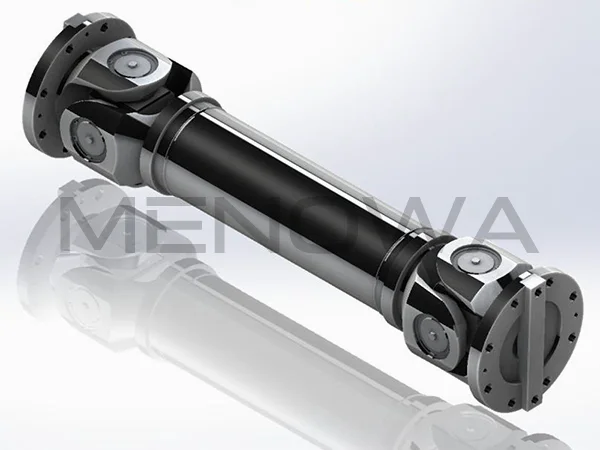
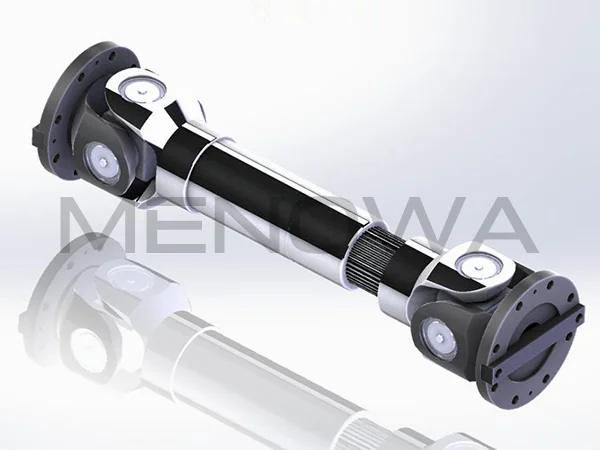
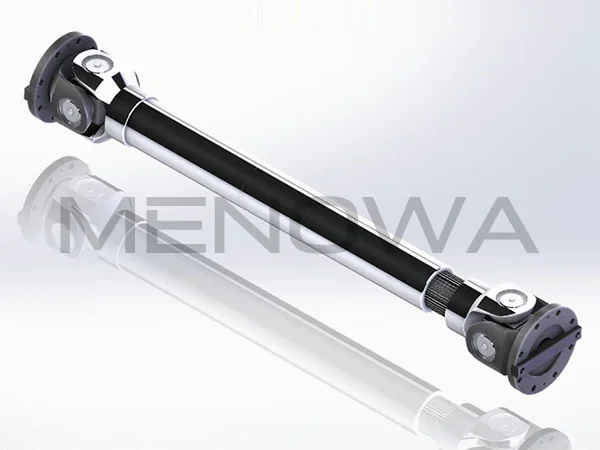
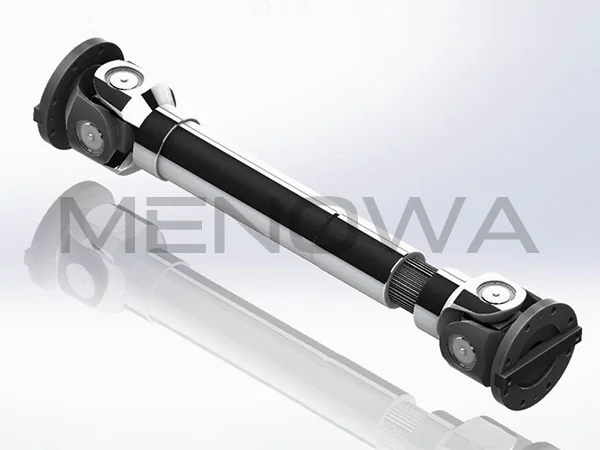
Overall length is another key macroscopic dimensional parameter of universal couplings, representing the total distance between the two outermost end faces of the double yoke structure. This dimension dominates the spatial occupation of the coupling in the transmission system and is a key consideration in mechanical layout design. The overall length varies significantly with structural types, including fixed-length rigid structures and telescopic adjustable structures. Telescopic universal couplings reserve a certain axial dimensional tolerance range, which can compensate for axial displacement caused by thermal expansion and contraction of mechanical components, equipment vibration, or installation errors during operation. The setting of overall length needs to balance spatial compactness and transmission stability: an excessively short overall length will reduce the spacing between the two joint centers, weaken the structural flexibility of the coupling, and limit the range of angular misalignment compensation; an excessively long overall length will increase the cantilever length of the transmission shaft, raise rotational inertia, and easily induce high-speed vibration and resonance phenomena, affecting the smoothness of power transmission. Therefore, the overall length design must be coordinated with the shaft span, installation space, and operating speed of the transmission system to achieve optimal spatial matching and dynamic performance.
Outer diameter of the coupling body is a critical dimensional indicator reflecting the radial structural scale, which determines the radial installation space and the overall rigidity of the coupling. This dimension refers to the maximum radial width of the yoke and cross shaft assembly, directly restricting the installation adaptability in narrow mechanical spaces. Meanwhile, the outer diameter is positively correlated with the structural strength of the coupling. A larger outer diameter allows for thicker yoke arm structures and larger-size cross shaft components, thereby improving the torsional load-bearing capacity and impact resistance of the coupling. However, the outer diameter is not allowed to be blindly increased, as excessive radial size will cause interference with surrounding mechanical parts, increase the overall weight of the transmission system, and reduce the dynamic balance performance during high-speed operation. In heavy-duty transmission scenarios, the outer diameter is appropriately enlarged to meet high torque transmission requirements, while in high-speed light-load equipment, a compact outer diameter design is adopted to reduce rotational inertia and operating noise.
Hub length, an important local dimensional parameter of the coupling end structure, refers to the axial length of the shaft matching hub. It is closely related to the connection stability and load uniformity between the coupling and the shaft. A sufficient hub length can increase the contact area between the coupling and the shaft, disperse torsional load and friction stress, and prevent local stress concentration at the shaft end. When the hub length is insufficient, the effective matching area is too small, which will lead to uneven force on the matching surface, causing shaft slip, keyway abrasion, and even shaft fracture under long-term alternating load. In contrast, an overly long hub length will cause redundant structural weight, increase assembly difficulty, and may interfere with adjacent components. The design of hub length is usually matched with the bore diameter in a certain proportional range, forming a standardized dimensional coordination relationship to ensure the stability of the shaft-coupling connection structure under various working conditions.
The distance between joint centers is a unique core dimension of universal couplings, referring to the center spacing of the two cross shaft hinge points of the double joint structure. This dimension is the key to determining the angular misalignment compensation capability and transmission uniformity of the coupling. The structural principle of universal couplings determines that there is a slight periodic fluctuation in the transmission angular velocity during operation, and the distance between joint centers directly affects the amplitude of this velocity fluctuation. A reasonable center distance can effectively reduce the non-uniformity of rotary transmission, stabilize output speed, and reduce vibration and impact. In addition, the center distance defines the maximum allowable angular deflection of the coupling. Within the effective dimensional range, a larger center distance can support a larger shaft deflection angle, improving the adaptability of the coupling to complex misalignment working conditions. For transmission systems requiring high-speed and stable operation, the center distance is precisely calibrated to minimize transmission fluctuation, while for low-speed heavy-duty equipment with large misalignment, the center distance is optimized to prioritize compensation performance.
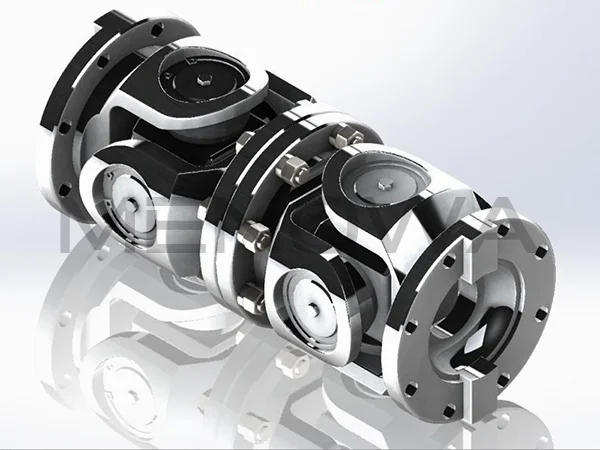
Cross shaft and bearing assembly dimensions are the microscopic core parameters that determine the internal motion and load-bearing performance of universal couplings, including cross shaft journal diameter, journal length, and bearing cap outer diameter. The cross shaft journal is the main force-bearing part of the coupling hinge structure, and its diameter directly determines the shear resistance and torsional strength of the cross shaft. A larger journal diameter can bear higher alternating torque and impact load, avoiding plastic deformation and fatigue fracture of the cross shaft. The journal length matches the internal width of the yoke ear, ensuring that the needle roller bearing can be fully installed and positioned without axial deviation or jamming during rotation. The outer diameter of the bearing cap needs to be precisely matched with the yoke bearing hole dimension to achieve zero-clearance positioning, prevent bearing loosening and radial runout, and ensure the flexibility and stability of the hinge motion. The coordination of these microscopic dimensions directly affects the friction coefficient, wear rate, and rotational flexibility of the coupling hinge, further determining the operational reliability and service life of the entire coupling.
Yoke width and yoke ear spacing are key dimensional parameters that restrict the assembly accuracy and motion freedom of the coupling. The yoke width refers to the thickness of the fork-shaped yoke arm, which affects the overall rigidity and anti-deformation ability of the yoke structure. Sufficient yoke width can resist bending deformation caused by torsional load and ensure the positional accuracy of the bearing installation hole. The yoke ear spacing is the gap between the two symmetric yoke ears, which must be adapted to the width of the matching cross shaft and bearing assembly to ensure free rotation of the hinge structure without friction and interference. Unreasonable yoke ear spacing will lead to motion jamming during coupling operation, aggravate component wear, and even cause structural damage in severe cases. In precision mechanical transmission scenarios, the tolerance of yoke-related dimensions is strictly controlled to ensure the repeat positioning accuracy and long-term operational stability of the coupling.
The dimensional matching logic of universal couplings runs through the whole process of model selection, installation, and operation, and all dimensional parameters form an interconnected and restricted organic whole. Macroscopic dimensions such as overall length and outer diameter determine the spatial adaptability and overall load level, while microscopic dimensions such as journal diameter and bearing size determine the internal structural strength and motion performance. In the engineering selection process, dimension matching must prioritize the core working parameters of the transmission system, including rated torque, operating speed, shaft misalignment angle, and installation space. For high-torque heavy-duty working conditions, priority should be given to couplings with larger journal diameter, thicker yoke structure, and larger outer diameter to meet high load-bearing requirements; for high-speed precision transmission working conditions, couplings with optimized center distance, precise bearing matching dimensions, and compact and balanced structural dimensions are required to reduce vibration and transmission error; for mechanical systems with frequent axial displacement and angular deflection, telescopic structural dimensions and reasonable joint center spacing need to be selected to maximize the misalignment compensation capability.
Dimensional accuracy and tolerance control are indispensable parts of universal coupling dimensional research, which directly affect the assembly quality and operational performance of the product. Any dimensional deviation beyond the allowable tolerance range will break the coordination relationship between components, resulting in reduced transmission efficiency, increased wear, and shortened service life. For key matching dimensions such as bore diameter, bearing hole diameter, and cross shaft journal size, high-precision machining tolerances are required to ensure the tight fit and flexible movement of mating parts. For macroscopic structural dimensions such as overall length and outer diameter, moderate tolerance control is adopted on the premise of meeting spatial installation requirements to balance manufacturing cost and product performance. In addition, the dimensional symmetry of the left and right yokes and the coaxiality of the hub hole are important dimensional accuracy indicators. Symmetrical and coaxial dimensional design can ensure uniform force on the coupling during rotation, avoid unbalanced load caused by dimensional deviation, and reduce mechanical vibration and noise.
With the continuous upgrading of mechanical equipment towards high precision, high speed, and heavy load, the dimensional design of universal couplings is also constantly optimized and innovated. Traditional dimensional design focuses on meeting basic assembly and load-bearing requirements, while modern dimensional design pays more attention to the comprehensive balance of structural lightweight, dynamic performance, fatigue resistance, and environmental adaptability. Through finite element analysis and mechanical simulation, designers optimize the proportional relationship between various dimensions, remove redundant structural sizes on the premise of ensuring structural strength, reduce the overall weight of the coupling, and improve the dynamic response speed of the transmission system. At the same time, for special working environments such as high temperature, low temperature, and dusty conditions, the dimensional tolerance design is adjusted according to the thermal expansion and contraction characteristics of materials and environmental interference factors to ensure the stable operation of the coupling in complex environments.
In practical engineering applications, the standardized dimensional series of universal couplings provides unified selection criteria for mechanical design and equipment maintenance. Standardized dimensional parameters form a complete gradient range from small-size light-load types to large-size heavy-load types, covering the transmission needs of various mechanical equipment. The standardized dimensional design realizes the interchangeability of coupling components, facilitates equipment assembly, maintenance, and replacement, and reduces the overall operating cost of mechanical systems. It is worth noting that standardized dimensions are not fixed and rigid. For special mechanical structures and personalized working conditions, targeted dimensional optimization and non-standard customization can be carried out on the basis of standard dimensions to adapt to unique installation spaces and transmission requirements.
In conclusion, the dimensions of universal couplings are a systematic engineering system covering macroscopic layout, microscopic matching, precision tolerance, and working condition adaptation. Each dimensional parameter has independent structural significance and performance value, and the coordinated cooperation of all dimensions determines the overall quality and operational effect of the coupling. In mechanical design and equipment application, scientific selection and accurate matching of coupling dimensions are crucial to ensure efficient, stable, and long-term operation of the power transmission system. In the future, with the development of advanced manufacturing technology and mechanical optimization theory, the dimensional design of universal couplings will be more refined, intelligent, and specialized, further adapting to the diversified and high-end development needs of modern mechanical transmission systems.
Post Date: May 26, 2026
https://www.menowacoupling.com/china-coupling/dimensions-of-universal-coupling.html
Products
Tags
Supply
Related Articles
Universal Coupling Manufacture
In the complex landscape of mechanical power transmission, universal couplings stand out as indispensable components that bridge the gap between misaligned shafts, enabling the seamless transfer of torque and rotational motion across a wide range of industrial and mechanical applications. Unlike rigid couplings that dem…Universal Coupling Production
Universal couplings stand as indispensable mechanical components in modern industrial transmission systems, serving as flexible connection units that enable stable torque and rotational motion transfer between misaligned rotating shafts. Unlike rigid connecting structures that demand precise coaxial alignment of paired …Specification of Universal Coupling
Universal couplings represent a fundamental category of mechanical transmission components engineered to transmit rotational torque and motion between two shafts that operate with intentional or unavoidable misalignment. Widely adopted in mechanical transmission systems across industrial machinery, transportation equipm…Coaxiality of Universal Coupling
Coaxiality stands as one of the most fundamental and influential precision indicators governing the operational performance of universal couplings, serving as the core benchmark for evaluating the alignment accuracy between driving and driven shafts in mechanical transmission systems. A universal coupling, as a flexible…Size Chart of Universal Coupling
A universal coupling, also known as a universal joint, is a critical mechanical component designed to transmit torque between two shafts that are not aligned perfectly, allowing for angular misalignment while maintaining efficient power transfer. The size chart of a universal coupling serves as a fundamental reference t…Universal Coupling Supplier
In the complex and interconnected system of modern mechanical transmission equipment, universal couplings stand out as one of the most fundamental and indispensable functional components, serving as a critical bridge for power and motion transmission between rotating shafts in diverse mechanical structures. Unlike rigid…
 WeChat
 WhatsApp