Coaxiality of Universal Coupling
Coaxiality stands as one of the most fundamental and influential precision indicators governing the operational performance of universal couplings, serving as the core benchmark for evaluating the alignment accuracy between driving and driven shafts in mechanical transmission systems. A universal coupling, as a flexible transmission component designed to transfer rotary motion and torque between spatially offset or angled shafts, relies on its unique articulated structure to accommodate minor shaft misalignments during operation. Nevertheless, the inherent structural flexibility does not negate the necessity of strict coaxiality control; on the contrary, reasonable coaxiality tolerance is the prerequisite for eliminating abnormal transmission resistance, reducing component fatigue loss, and maintaining long-term stable operation of the entire mechanical system. In essence, coaxiality of universal couplings refers to the deviation degree between the actual axes of the two connected shafts and the ideal collinear axis defined by mechanical design standards, covering two core deviation forms: radial offset and angular deflection. Radial offset describes the parallel displacement between the two shaft axes in the radial plane, while angular deflection represents the inclined angle formed by the intersection of the two axes. These two types of deviations often coexist in actual engineering scenarios, jointly affecting the transmission state and service life of universal couplings and surrounding matching components.
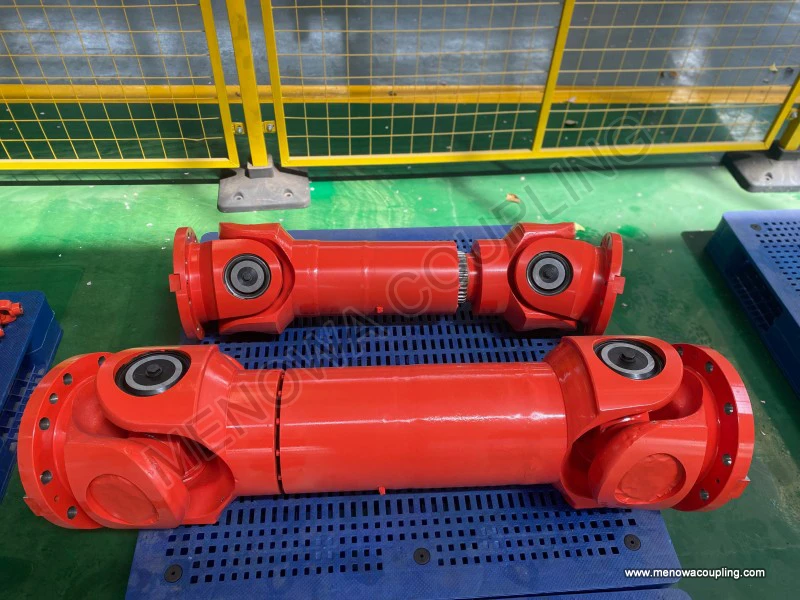
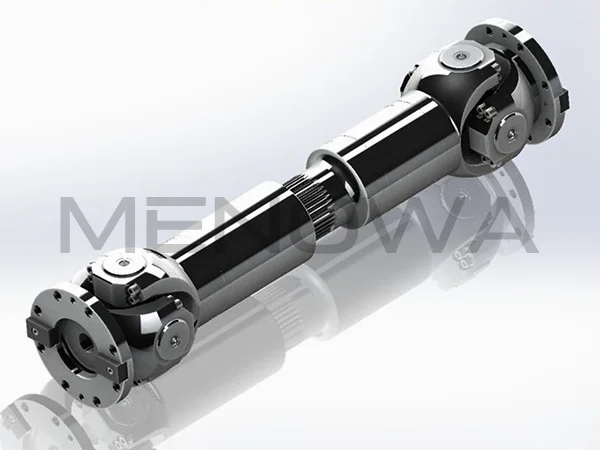
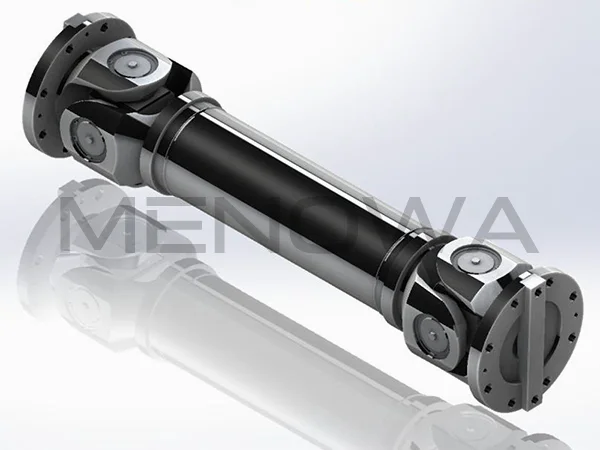
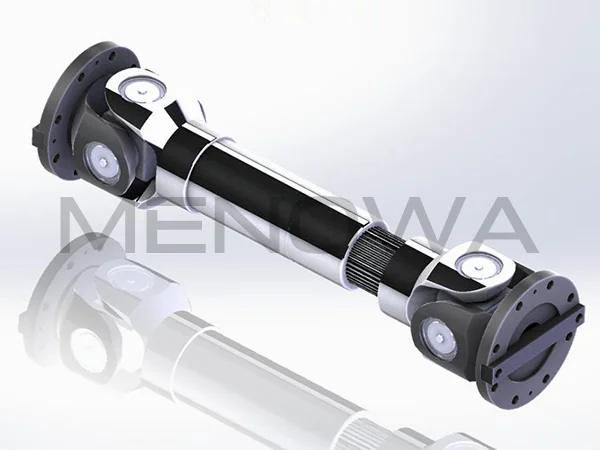
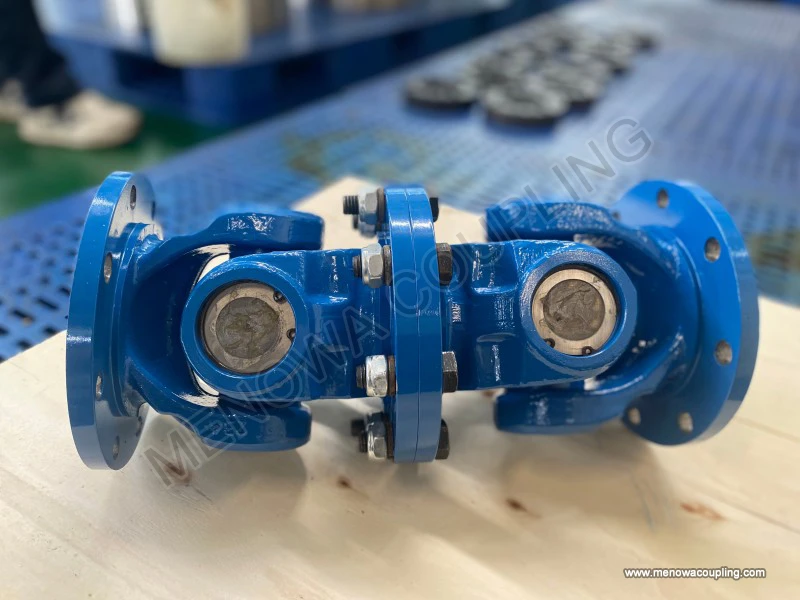
To fully understand the importance of coaxiality control, it is essential to combine the basic working mechanism of universal couplings. Most conventional universal couplings adopt a cross-shaft structure composed of two fork-shaped joints, a central cross shaft and matching rolling bearing components. This structural design enables the coupling to compensate for a certain range of shaft misalignment during rotation, realizing continuous torque transmission between non-collinear shafts. Unlike rigid couplings that require absolute shaft collinearity, universal couplings possess inherent misalignment adaptability, which is why they are widely applied in complex working conditions with dynamic shaft displacement, such as mechanical transmission systems with vibration, equipment settlement or variable working posture. However, this adaptive capacity has clear functional limits. Excessive coaxiality deviation beyond the design tolerance range will break the balanced transmission state of the coupling’s articulated structure, triggering a series of negative chain reactions in the transmission system. Even subtle coaxiality errors that are difficult to detect by naked eyes will gradually accumulate into structural fatigue and performance attenuation under long-term high-speed rotation and load operation, ultimately affecting the overall working efficiency and operational safety of mechanical equipment.
The formation of universal coupling coaxiality deviation stems from multiple links throughout component manufacturing, equipment installation and actual operation, with each factor producing different degrees of impact on shaft alignment accuracy. In the manufacturing stage, machining errors of core coupling components constitute the primary source of initial coaxiality deviation. The dimensional tolerance of fork-shaped joint holes, the perpendicularity error of cross shaft journal surfaces, and the assembly clearance between bearings and matching parts will all lead to inconsistent axis positioning of the two joints after coupling assembly, forming inherent coaxiality deviation. In addition, the straightness error of the connected driving and driven shafts and the flatness deviation of equipment installation bases will further expand the initial misalignment of the coupling. During the equipment installation process, manual alignment errors are another key factor. Even with professional auxiliary tools, it is difficult to achieve absolute collinearity of the two shafts, and improper installation sequences or unbalanced pre-tightening force of connecting fasteners will cause artificial shaft deflection, resulting in obvious coaxiality loss.
In addition to static errors formed before equipment operation, dynamic coaxiality deviation generated during service is more complex and destructive. Long-term alternating load operation will cause slight elastic deformation of shafts, couplings and supporting components, changing the original aligned state of shaft systems. Continuous mechanical vibration in working environments will loosen matching structures and aggravate shaft offset and deflection. Moreover, temperature variation in the operating environment will produce thermal expansion and contraction effects on metal components, leading to dimensional changes of shafts and couplings and further disrupting coaxiality. For mechanical equipment with frequent start-stop and variable load operation, the repeated impact force generated during working will accelerate the fatigue deformation of structural parts, making coaxiality deviation increase gradually with service time, and forming a continuous deterioration trend of transmission accuracy.
Uncontrolled coaxiality deviation imposes comprehensive and far-reaching adverse effects on the performance of universal couplings and the entire transmission system, covering transmission efficiency, component wear, operational stability and service life. The most intuitive impact is the reduction of power transmission efficiency. When coaxiality is out of tolerance, the cross shaft and bearings of the universal coupling will bear additional radial and tangential alternating loads beyond the design range. These extra loads will generate unnecessary friction resistance during rotation, consuming effective output power in the form of heat energy and mechanical loss. The greater the coaxiality deviation, the more obvious the power loss, which directly reduces the energy utilization rate of mechanical equipment and increases the operating cost of mechanical systems. In high-speed and high-load transmission scenarios, even small coaxiality errors will be amplified exponentially with the increase of rotating speed, leading to a sharp decline in transmission efficiency.
Excessive coaxiality deviation is also the leading cause of accelerated wear and premature failure of universal coupling components. Under ideal coaxial alignment conditions, the force on each journal of the cross shaft and each bearing is uniform and stable, with friction loss maintained within the design allowable range. When coaxiality deviation occurs, the stress distribution of the coupling structure becomes extremely uneven. Individual bearings and local areas of the cross shaft will bear concentrated alternating stress, resulting in intensified abrasive wear and fatigue wear. Long-term eccentric load operation will cause pitting, scratching and fatigue cracks on the bearing rolling surfaces and cross shaft journals. In severe cases, bearing jamming and cross shaft fracture will occur directly, leading to sudden failure of the transmission system. Meanwhile, coaxiality deviation will also cause abnormal wear of the connected shafts, shaft sleeves and sealing components, expanding the failure range of parts and increasing the frequency of equipment maintenance and component replacement.
Operational vibration and noise problems caused by coaxiality deviation cannot be ignored either. Shaft misalignment will make the universal coupling produce periodic eccentric force during rotation, inducing regular mechanical vibration of the transmission system. This vibration will not only reduce the running stability of equipment and affect the working accuracy of mechanical components, but also transmit to the entire equipment frame, causing resonance of structural parts in severe cases. The continuous friction and impact between components caused by misalignment will also produce persistent abnormal noise, deteriorating the working environment and indicating potential hidden dangers of equipment failure. For precision mechanical equipment that requires high operational stability and low noise, coaxiality deviation is one of the key factors restricting equipment processing accuracy and working performance.
Furthermore, long-term coaxiality out-of-tolerance will significantly shorten the overall service life of the universal coupling and even the entire transmission system. Mechanical components operate under alternating eccentric load for a long time, and structural fatigue will accumulate continuously, leading to reduced component strength and increased brittleness. Compared with couplings operating under standard coaxial conditions, couplings with excessive misalignment have a significantly higher fatigue failure probability, and their effective service life will be shortened by a large margin. At the same time, the abnormal load caused by coaxiality deviation will also affect the matching gears, bearings and other key components in the transmission system, triggering linkage failure problems and reducing the overall reliability and durability of mechanical equipment.
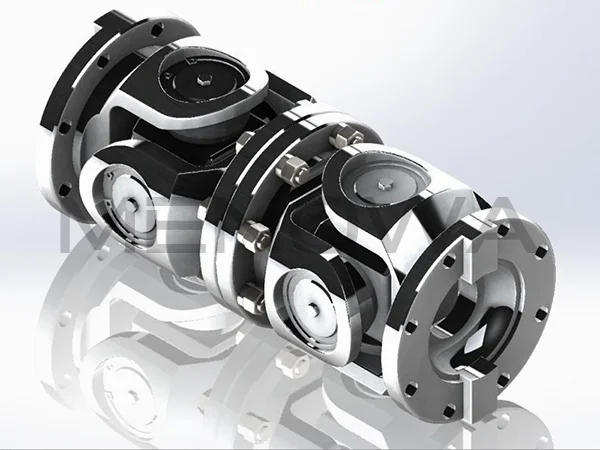
Effective coaxiality control of universal couplings runs through the whole cycle of component design, manufacturing, installation and daily operation and maintenance, requiring systematic and standardized technical means to minimize misalignment deviation. In the design and manufacturing stage, optimizing component structural precision is the foundation of improving coaxiality stability. Reasonably formulate machining tolerance standards for fork-shaped joints, cross shafts and bearing matching surfaces, reduce manufacturing errors of core components, and ensure the structural symmetry and dimensional consistency of couplings. Optimizing the structural rigidity of shafts and supporting parts can reduce elastic deformation during load operation, thereby inhibiting dynamic coaxiality deviation caused by structural deformation. In addition, adopting reasonable structural optimization designs such as double universal coupling arrangement can effectively compensate for residual coaxiality deviation, utilize the complementary principle of double-section angular transmission to offset velocity fluctuation and eccentric load caused by single coupling misalignment, and improve the overall stability of the transmission system.
Standardized installation and accurate alignment are the key links to control initial coaxiality deviation. Before equipment assembly, the flatness of the installation base and the straightness of the connected shafts need to be inspected strictly to eliminate initial structural deviation. In the alignment process, professional detection methods should be adopted to calibrate the radial and angular deviation of the two shafts step by step, ensuring that the coaxiality error is controlled within the design allowable range. During the fastening and assembly of components, uniform pre-tightening force of fasteners should be maintained to avoid local stress concentration and shaft deflection caused by asymmetric fastening. After installation, static detection and low-speed trial operation verification must be carried out to confirm that there is no abnormal vibration, noise and jamming in the coupling operation, ensuring that the coaxiality state meets the operational requirements before formal load operation.
Daily operation maintenance and regular precision detection are important guarantees to maintain long-term coaxiality stability of universal couplings. In the daily working process, avoid equipment overloading, frequent violent start-stop and long-term high-speed no-load operation, so as to reduce the impact load and fatigue deformation of the coupling and shaft system, and delay the deterioration of coaxiality deviation. Regularly inspect the fastening state of coupling connecting parts to prevent misalignment caused by loose fasteners due to long-term vibration. At the same time, conduct periodic coaxiality detection and calibration for the shaft system, timely discover and correct the slowly increased misalignment deviation in the operation process, and avoid small deviation accumulation into large-scale failure hidden dangers. For equipment working in high temperature, high vibration and heavy load harsh environments, the detection cycle should be appropriately shortened to strengthen the dynamic monitoring of coaxiality state.
In practical engineering applications, the coaxiality tolerance standard of universal couplings is not fixed, but needs to be reasonably formulated according to equipment working conditions, transmission speed and load level. For low-speed and light-load general mechanical transmission scenarios, a moderate coaxiality tolerance range can be adopted to reduce installation and maintenance costs on the premise of ensuring stable operation. For high-speed, heavy-load and high-precision mechanical equipment, stricter coaxiality control standards must be implemented to eliminate abnormal transmission loss and component fatigue damage caused by tiny misalignment. Reasonable matching of coaxiality tolerance and working conditions can not only ensure the efficient and stable operation of the transmission system, but also avoid excessive precision control leading to increased manufacturing and installation costs, realizing the balance between equipment performance and economic benefits.
In conclusion, coaxiality is a core precision index that determines the transmission performance, operational stability and service life of universal couplings. Its deviation originates from the whole process of component manufacturing, equipment installation and operational use, and produces multi-dimensional adverse effects on mechanical transmission systems. Scientific and systematic coaxiality control measures can effectively reduce additional load and friction loss of couplings, improve power transmission efficiency, inhibit component wear and fatigue failure, and extend the service cycle of mechanical equipment. With the continuous improvement of modern mechanical equipment towards high precision, high efficiency and high reliability, the importance of universal coupling coaxiality management has become increasingly prominent. Standardizing the whole-process precision control of coaxiality will provide a solid technical guarantee for the stable and efficient operation of various mechanical transmission systems, and is also an essential key link to improve the overall operational quality and economic benefits of mechanical equipment.
Post Date: May 26, 2026
https://www.menowacoupling.com/china-coupling/coaxiality-of-universal-coupling.html
Products
Tags
Supply
Related Articles
Universal Coupling Supplier
In the complex and interconnected system of modern mechanical transmission equipment, universal couplings stand out as one of the most fundamental and indispensable functional components, serving as a critical bridge for power and motion transmission between rotating shafts in diverse mechanical structures. Unlike rigid…Structure of Universal Coupling
A universal coupling, widely recognized as a core mechanical transmission component in modern machinery systems, serves as a flexible connection device designed to transmit rotational torque and motion between two shafts that present angular, parallel, or axial misalignment. Its unique structural configuration enables s…Components of Universal Coupling
A universal coupling, widely known as a universal joint or Cardan joint, is a fundamental mechanical transmission component designed to transmit torque and rotational motion between two shafts that exhibit angular misalignment, parallel offset, or axial displacement. Unlike rigid couplings that require precise shaft ali…Universal Coupling Supply
In the intricate ecosystem of mechanical power transmission, universal couplings stand out as indispensable foundational components that bridge the functional gaps of traditional rigid connection structures. Serving as a core link between rotating shafts in mechanical systems, these mechanical devices are engineered to …Uses of Universal Coupling
In the intricate ecosystem of mechanical transmission systems, universal couplings stand out as one of the most versatile and indispensable mechanical components, serving as a critical bridge for power and motion transmission across countless industrial and civilian mechanical devices. Also widely known as universal joi…Diagram of Universal Coupling
A universal coupling, widely recognized as a core mechanical component for flexible power transmission, serves as a pivotal connecting structure in mechanical transmission systems to transfer rotational torque and motion between two shafts with angular misalignment. The structural diagram of a universal coupling intuiti…
 WeChat
 WhatsApp