Uses of Universal Coupling
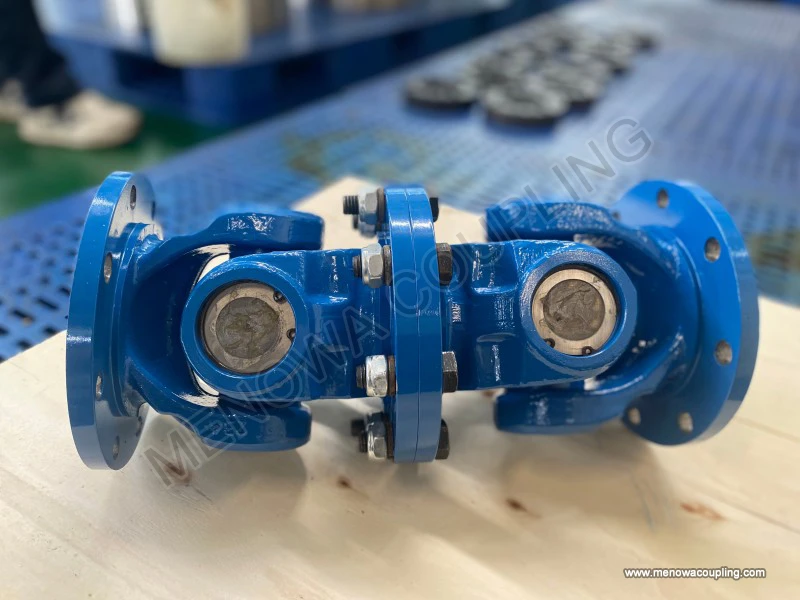
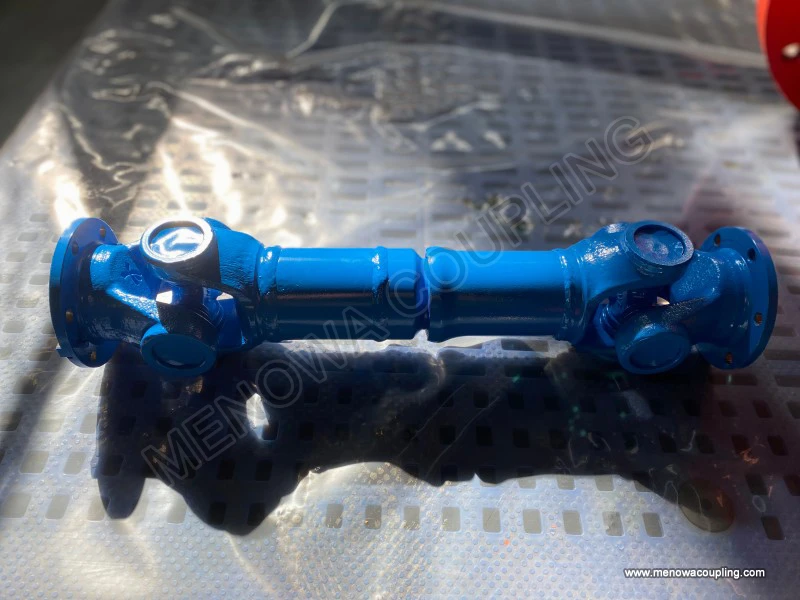
In the intricate ecosystem of mechanical transmission systems, universal couplings stand out as one of the most versatile and indispensable mechanical components, serving as a critical bridge for power and motion transmission across countless industrial and civilian mechanical devices. Also widely known as universal joints, these mechanical elements feature a unique cross-shaped structural design that distinguishes them from rigid transmission parts, endowing them with exceptional adaptability to complex shaft alignment conditions. Unlike fixed couplings that only work efficiently when two connected shafts maintain perfect coaxial alignment, universal couplings can steadily transmit rotational torque and continuous motion between shafts with angular deviation, axial displacement, and radial offset. This core functional advantage makes them ubiquitous in modern machinery manufacturing, industrial production, transportation equipment, and daily mechanical devices, laying a solid foundation for the stable operation of diverse mechanical systems.
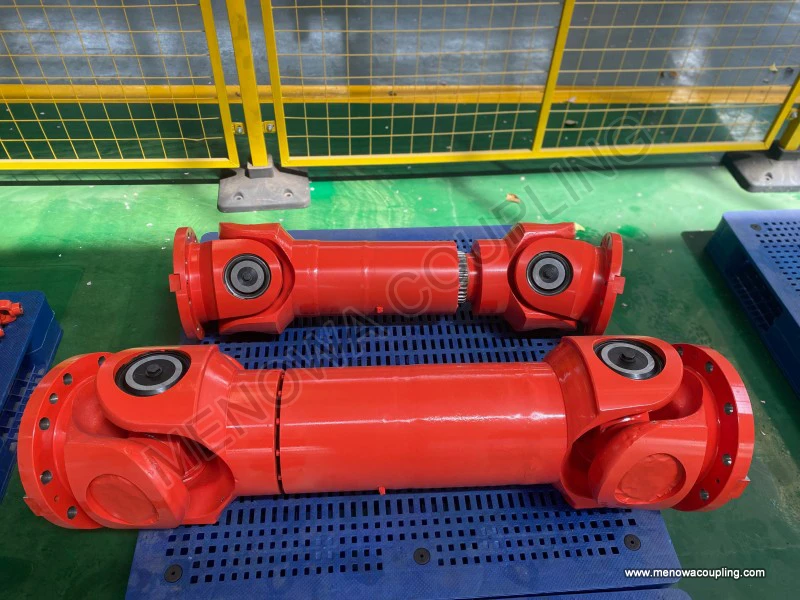
The fundamental value of universal couplings lies in their ability to resolve the inherent limitations of traditional rigid transmission structures. In mechanical assembly and long-term operation, it is nearly impossible to achieve absolute coaxial alignment between rotating shafts. Manufacturing tolerances, minor installation deviations, thermal expansion and contraction caused by long-duration equipment operation, structural deformation under mechanical load, and vibration-induced displacement will all lead to misalignment between driving and driven shafts. Without adaptive coupling components, these subtle deviations will generate tremendous additional mechanical stress on shafts, bearings, and transmission accessories, accelerating component wear, causing operational noise and vibration, and even triggering equipment failure and production shutdowns in severe cases. Universal couplings perfectly address this industry pain point by flexibly compensating for multi-dimensional shaft misalignment, buffering mechanical vibration, and dispersing concentrated transmission pressure, thereby protecting the integrity and stability of the entire transmission system.
The automotive industry represents one of the most mature and extensive application scenarios of universal couplings, where their flexible transmission characteristics fully adapt to the dynamic structural changes of vehicle operating systems. In rear-wheel-drive and four-wheel-drive vehicles, the power generated by the engine needs to be transmitted from the transmission system to the rear differential and finally to the driving wheels. During vehicle driving, the chassis will produce continuous jitter and structural displacement due to road bumps, acceleration and deceleration, and body torsion. The drive shaft connecting the transmission and differential cannot maintain a fixed linear state, and universal couplings precisely undertake the power transmission task in this dynamic changing environment. They allow the drive shaft to produce real-time angular deflection and displacement adjustment with chassis deformation, ensuring uninterrupted and stable torque output while the vehicle is traveling on complex road surfaces. Beyond vehicle drive systems, universal couplings also play a vital role in automotive steering mechanisms. The steering column of most vehicles requires angle conversion and position adjustment during the transmission of steering operation force, and universal couplings connect the segmented steering shafts to realize flexible transmission of steering motion, ensuring sensitive and accurate steering control even when the steering shaft has a certain inclination angle, effectively improving driving safety and operation fluency.
Engineering machinery and heavy industrial equipment are another core application field for universal couplings, where their high load resistance and strong environmental adaptability are fully demonstrated. Large-scale mechanical equipment such as excavators, bulldozers, cranes, and road rollers often operate in harsh working conditions with heavy loads, strong vibration, and complex terrain changes. The internal transmission shafts of these devices frequently bear impact loads and structural torsion, and shaft misalignment is more obvious and frequent compared with ordinary mechanical equipment. Heavy-duty universal couplings with high-strength alloy structures can withstand large torque output and frequent angular displacement changes, stably transmitting power for walking mechanisms, hydraulic transmission systems, and working devices of engineering machinery. In mining and metallurgical industries, universal couplings are widely equipped on crushing equipment, grinding machines, and rolling machinery. Mining crushers need to bear continuous impact force when crushing hard ores, resulting in severe vibration and shaft displacement of internal transmission parts. The flexible compensation performance of universal couplings can effectively absorb impact vibration, reduce rigid friction between transmission shafts, and extend the service life of core equipment. Metallurgical rolling equipment operates in high-temperature working environments for a long time, and thermal deformation of metal shafts is inevitable. Universal couplings can compensate for axial and angular displacement caused by high-temperature expansion, ensuring the continuous and stable operation of rolling production lines and avoiding production interruptions caused by transmission system jamming or component damage.
In the field of industrial general machinery, universal couplings have become standard supporting components for various power transmission equipment due to their simple structure, convenient installation, and reliable performance. Pumps and compressors, which are widely used in petrochemical, water treatment, and industrial production lines, mostly adopt motor-driven rotating structures. During long-term continuous operation, the rotating shafts of motors and pump bodies will produce minor misalignment due to equipment aging, base settlement, and operational vibration. The application of universal couplings can effectively eliminate additional mechanical stress caused by shaft misalignment, reduce operational noise and mechanical loss, and improve the operational efficiency and stability of pump and compressor equipment. Similarly, in power generation equipment such as generators and wind power units, universal couplings undertake the power transmission task between power components and power generation components. In wind turbines, the rotor shaft will produce irregular angular deflection and displacement with the change of wind speed and wind direction. Universal couplings can adapt to this dynamic displacement change, stably transmitting wind energy-converted mechanical torque to the power generation system, ensuring efficient and continuous power generation operation. In printing machinery, textile equipment, and packaging machinery used in light industry production, precision small and medium-sized universal couplings are applied to fine transmission structures, realizing accurate and flexible transmission of low-torque motion, ensuring the precise operation of each functional component of precision light industry equipment, and avoiding product processing defects caused by transmission jitter and displacement deviation.
Marine and aerospace mechanical systems also rely heavily on the superior performance of universal couplings, with extreme working environments putting forward higher requirements for their stability and adaptability. Marine propulsion systems need to transmit power from ship engines to propellers. During ship navigation, hull shaking, water wave impact, and structural deformation will cause continuous changes in the relative position and angle between the engine shaft and propeller shaft. Universal couplings used in marine equipment have excellent corrosion resistance and structural stability, which can adapt to the humid and saline marine working environment, while flexibly compensating for various shaft misalignments to ensure stable output of ship power. In aerospace equipment, many precision transmission mechanisms need to complete motion transmission in limited space and complex attitude changes. Miniature high-precision universal couplings with compact structure and high sensitivity can realize accurate power and motion transmission under small-angle deflection, meeting the high-precision and high-reliability operation requirements of aerospace precision instruments and control mechanisms.
In addition to large-scale industrial and transportation equipment, universal couplings also penetrate into various civilian mechanical and daily equipment, playing an inconspicuous but essential role. In household electrical appliances such as washing machines and dryers, the internal rotating drum needs to produce eccentric rotation and slight displacement during operation. Small universal couplings connect the drive motor and the rotating drum shaft, compensating for minor shaft misalignment generated during equipment operation, reducing vibration and noise during the operation of household appliances, and improving the stability and service life of equipment operation. In handheld power tools, sewing machines, and small processing equipment, universal couplings realize flexible transmission of power in limited installation space, adapting to multi-angle operation and displacement changes of equipment, ensuring the flexibility and convenience of equipment use. In precision instruments and optical detection equipment, ultra-precision universal couplings are used in micro-transmission systems, realizing error-free transmission of tiny rotational motion, providing accurate power support for precision detection and data acquisition.
Beyond basic power transmission and misalignment compensation, universal couplings also deliver profound practical value in energy conservation, consumption reduction, and equipment maintenance. Traditional rigid transmission structures will produce severe friction and mechanical loss when shaft misalignment occurs, consuming extra power and increasing equipment operating energy consumption. Universal couplings can effectively reduce rigid friction between transmission components, lower mechanical energy loss in the power transmission process, and improve the overall transmission efficiency of mechanical systems. At the same time, by absorbing vibration and buffering impact loads, they reduce the fatigue wear of shafts, bearings, gears, and other core components, greatly lowering the frequency of equipment failure and maintenance costs, and improving the continuous operation capacity and economic benefits of mechanical equipment. For automated production lines that require long-term uninterrupted operation, the application of universal couplings effectively guarantees the continuity and stability of production, avoiding production losses caused by frequent equipment shutdown and maintenance.
With the continuous progress of material technology and mechanical processing technology, the performance and application scope of universal couplings are constantly expanding. New high-strength, corrosion-resistant, and wear-resistant materials are applied to the production of universal couplings, enabling them to adapt to more extreme working conditions such as high temperature, low temperature, strong corrosion, and high humidity. Optimized structural design further improves their transmission accuracy, load-bearing capacity, and service life, making them more adaptable to the precision and high-efficiency development trend of modern machinery. From heavy industrial heavy-load transmission to civilian precision micro-transmission, from fixed equipment operation to dynamic mobile mechanical motion, universal couplings always maintain irreplaceable application advantages with their unique flexible transmission performance and strong environmental adaptability.
In summary, the diverse uses of universal couplings stem from their core structural characteristics of flexible misalignment compensation and stable power transmission. They solve various transmission pain points in mechanical operation caused by shaft misalignment, vibration impact, and structural displacement, providing reliable basic guarantee for the normal operation of all kinds of mechanical equipment. As a classic and efficient mechanical transmission component, universal couplings have long broken through the limitation of single application scenario, covering almost all fields involving rotational power transmission. Their continuous technical iteration and performance improvement will further empower the upgrading and development of modern machinery manufacturing industry, and maintain an important strategic position in the future development of mechanical transmission technology.
Post Date: Jun 3, 2026
https://www.menowacoupling.com/china-coupling/uses-of-universal-coupling.html
Products
Tags
Supply
Related Articles
Universal Coupling Vendor In China
Universal couplings stand as indispensable mechanical transmission components in modern industrial systems, serving as core connecting parts that transmit torque and rotational power between misaligned drive shafts. In China’s complete industrial manufacturing ecosystem, universal coupling production and supply have fo…What is Universal Coupling
A universal coupling, commonly referred to as a universal joint or U-joint, is a fundamental mechanical transmission component designed to connect two rotating shafts while enabling reliable transfer of torque and rotational motion under misaligned operating conditions. Unlike rigid coupling mechanisms that demand preci…Dimensions of Universal Coupling
Universal couplings, commonly known as universal joints or Cardan joints, serve as fundamental mechanical components for power transmission between misaligned rotating shafts in diverse mechanical systems. Their dimensional parameters are the core factors that determine structural compatibility, operational stability, l…Universal Coupling Exporter
As a vital component in mechanical transmission systems, universal couplings play an irreplaceable role in connecting two shafts that are not in the same axis or have relative displacement, ensuring stable and efficient torque transmission. For universal coupling exporters, understanding the product’s working principle…Universal Coupling Wholesale
In the global mechanical transmission industry, universal couplings have emerged as indispensable core components for power transmission systems, widely favored by downstream manufacturing, engineering, and transportation sectors across international markets. As global industrialization continues to advance and mechanic…Working Principle of Universal Coupling
A universal coupling, also widely known as a universal joint, is a fundamental mechanical transmission component designed to solve the core problem of power transmission between two non-collinear rotating shafts. Unlike rigid couplings that only work efficiently when connected shafts maintain perfect coaxial alignment, …
 WeChat
 WhatsApp