Universal Coupling Wholesale
In the global mechanical transmission industry, universal couplings have emerged as indispensable core components for power transmission systems, widely favored by downstream manufacturing, engineering, and transportation sectors across international markets. As global industrialization continues to advance and mechanical equipment becomes increasingly diversified and customized, the market demand for universal couplings maintains stable growth, with wholesale trade occupying a dominant position in the international circulation system. Unlike traditional rigid transmission parts, universal couplings feature unique angular compensation performance, enabling stable power and torque transmission between misaligned, intersecting, or dynamically offset shafts. This core advantage allows them to adapt to complex and variable working conditions in diverse global industrial scenarios, making them a key basic component supporting the normal operation of various mechanical equipment. In international wholesale transactions, buyers from different regions such as Southeast Asia, Europe, America, and the Middle East put forward differentiated requirements for universal coupling specifications, performance parameters, and applicability based on local industrial characteristics, equipment types, and operating environments. Therefore, mastering the market application rules, accurate selection methods, and key technical precautions of universal couplings is crucial for participating in global wholesale trade and matching the diverse needs of international end users.
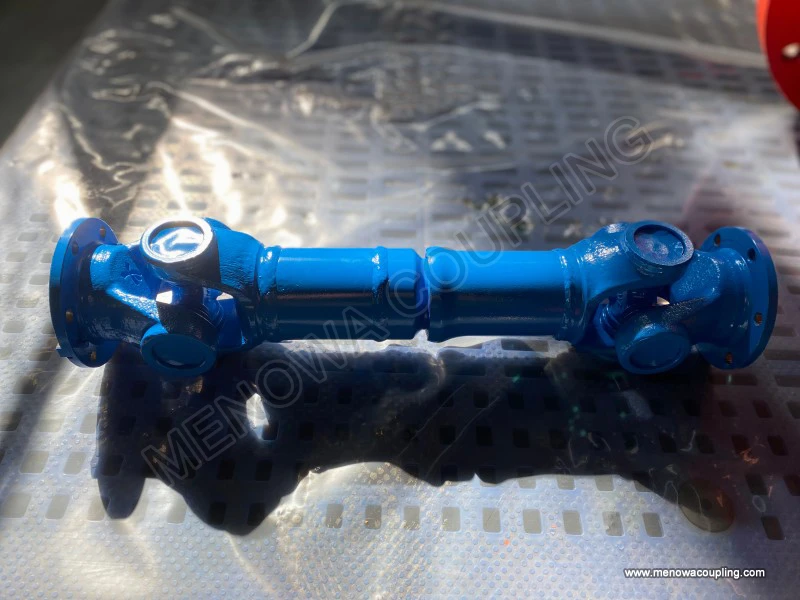
Universal couplings are specially designed to solve the power transmission problem of non-coaxial shafts, effectively compensating angular misalignment, slight axial displacement, and radial offset generated during equipment installation, operation, and load changes. In actual mechanical operation, shaft misalignment is an unavoidable common problem caused by manufacturing errors, installation deviations, equipment operation vibration, thermal deformation, and mechanical wear. Rigid transmission components are unable to adapt to such displacement changes, which easily leads to increased equipment vibration, aggravated component wear, reduced transmission efficiency, and even equipment failure and shutdown in severe cases. Universal couplings perfectly make up for this technical defect, relying on their flexible hinge structure to realize continuous and stable rotation and power transmission under variable angular conditions. This functional advantage makes them widely applicable in almost all mechanical scenarios that require variable-angle power transmission, covering light industrial equipment, heavy engineering machinery, transportation equipment, agricultural machinery, and automated production lines, forming a broad and diversified international market demand.
In terms of global application scenarios, universal couplings show strong environmental adaptability and scenario compatibility, with typical application fields covering multiple mainstream industrial tracks. In the transportation industry, they are widely used in various vehicle transmission systems, realizing power connection between engines, transmissions, and drive shafts. During the driving process of vehicles, the suspension system will produce continuous jitter and displacement with road conditions, resulting in real-time changes in the angle of connected shafts. Universal couplings can adapt to this dynamic angular change to ensure stable power output and avoid transmission jamming or power loss. In the field of engineering machinery, equipment such as excavators, loaders, and cranes often operates in complex working environments with large load fluctuations and severe vibration. The variable-angle power transmission function of universal couplings can cope with the position offset of transmission parts caused by heavy load operation and mechanical deformation, ensuring the continuous operation of engineering equipment. Agricultural machinery is also a major downstream application scenario in the international market; tractors, harvesters, and rotary tillers often work in uneven field environments, with frequent load changes and large shaft misalignment during operation. Universal couplings can adapt to harsh working conditions such as dust, vibration, and variable loads, providing reliable power transmission support for agricultural equipment.
In addition, universal couplings have important application value in industrial automated production equipment, including printing machinery, textile equipment, packaging machines, and conveyor systems. These precision production equipment require stable torque transmission and low vibration operation, and the angular compensation performance of universal couplings can eliminate transmission errors caused by slight shaft misalignment, ensuring the processing accuracy and operational stability of the equipment. In marine and offshore engineering equipment, they adapt to the working characteristics of high humidity, large vibration, and frequent equipment position adjustment at sea, maintaining efficient power transmission of mechanical systems. In small and medium-sized mechanical transmission systems such as instrumentation equipment and small power tools, compact universal coupling structures are used to realize flexible connection of micro-shafts, meeting the transmission requirements of miniature precision equipment. The diversified global application scenarios determine that universal coupling wholesale needs to cover multiple specifications and performance types to meet the differentiated procurement needs of different regional industries.
Accurate model selection is the core premise to ensure the efficient and stable operation of universal couplings and avoid equipment failure. In international wholesale business, many procurement failures and user equipment problems stem from unreasonable coupling selection, which fails to match the actual working conditions of the equipment. Therefore, standardized selection formulas and scientific parameter calculation methods must be followed in the selection process, combined with on-site working condition factors for comprehensive judgment. The core of universal coupling selection is to calculate the actual required transmission torque and verify the matching degree between the coupling’s load capacity and operating parameters and the equipment working conditions. The basic theoretical torque calculation formula for universal coupling selection is T=9550P/N, where T represents the theoretical transmission torque, measured in N·m; P refers to the rated power of the driving equipment, measured in kW; N is the rated operating speed of the equipment, measured in r/min. This formula can calculate the basic theoretical torque required by the equipment under stable operating conditions, which is the basic parameter for preliminary selection.
In actual working conditions, equipment operation is affected by load fluctuation, start-stop impact, operating angle, and bearing fatigue loss, so the theoretical torque cannot be directly used as the selection basis, and comprehensive correction coefficient superposition is required to obtain the actual required fatigue torque. The corrected fatigue torque calculation formula is Tf=T×Ka×K×Kn×Kh, where Tf is the fatigue torque that the coupling needs to bear, Ka is the load correction coefficient, K is the shaft axis deflection angle correction coefficient, Kn is the speed correction coefficient, and Kh is the bearing life correction coefficient. Each correction coefficient corresponds to different working condition characteristics: the load correction coefficient Ka is determined according to the stability of equipment load, with uniform and stable load corresponding to a smaller coefficient, and frequent impact load and variable load requiring a larger coefficient to avoid coupling damage caused by instantaneous overload. The deflection angle correction coefficient K is matched according to the actual operating angle of the coupling; the larger the operating angle between shafts, the higher the torque loss and structural wear during operation, so a larger correction coefficient is needed to improve the load reserve of the coupling.
The speed correction coefficient Kn is linked to the equipment operating speed. High-speed operation will increase the centrifugal force and friction loss of the coupling structure, accelerating component wear, so the coefficient value increases with the rise of speed. The bearing life correction coefficient Kh is formulated based on the continuous operating time of the equipment. For industrial equipment that operates continuously for a long time, a higher coefficient is required to ensure the long-term fatigue resistance of the coupling. After calculating the fatigue torque through the corrected formula, the selected universal coupling’s rated bearing torque must be greater than the calculated fatigue torque, and a certain safety margin should be reserved to adapt to unexpected load changes and long-term wear in actual operation. For intermittent operating equipment with low frequency of use and stable load, the safety margin can be appropriately reduced; for heavy-duty, high-speed, and frequent impact operating equipment, the safety margin needs to be increased to ensure operational reliability.
In addition to parameter formula calculation, there are multiple key selection precautions that must be focused on in international wholesale and actual equipment matching, which are applicable to various regional market scenarios. First, attention should be paid to the matching of operating angle and equipment working conditions. The operating angle is the core working parameter of universal couplings, directly affecting transmission efficiency and service life. For general conventional industrial machinery, the optimal operating angle range is 5° to 10°, within which the coupling maintains high transmission efficiency and low wear. For heavy-duty transmission equipment with large misalignment demand, the maximum allowable operating angle can reach about 15°, but long-term operation at the limit angle will significantly reduce the service life and increase torque fluctuation. When the actual operating angle of the equipment exceeds the allowable range, it is necessary to adjust the installation position to reduce the shaft deflection angle or add an intermediate shaft for transition, avoiding long-term overload operation of the coupling.
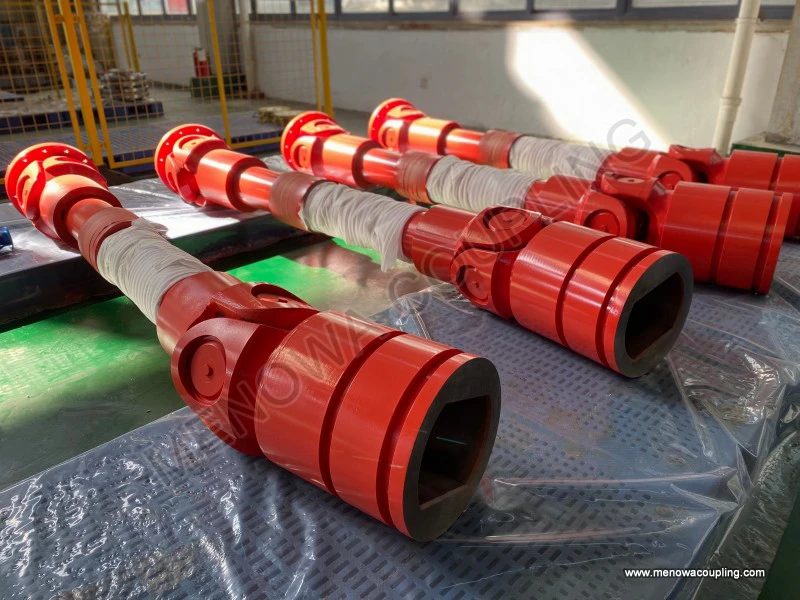
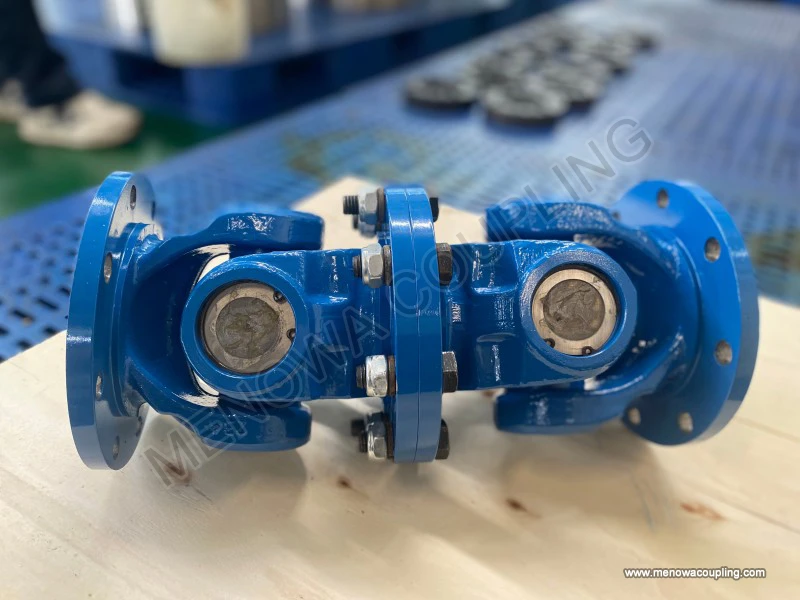
Second, the structural type of universal coupling should be selected according to the equipment transmission requirements. Single-section universal couplings have simple structures and low cost, suitable for conventional low-speed, medium and low torque transmission scenarios with small and stable operating angles, and are widely used in general mechanical equipment wholesale. Dual-section universal couplings can offset the torque fluctuation defect of single-section structures under variable angles, realizing more stable constant-speed transmission, and are suitable for high-speed, high-precision, and large-angle transmission scenarios such as vehicle drive systems and automated precision production lines. For miniature precision equipment, compact small-size universal coupling structures are required to adapt to limited installation space, while heavy engineering machinery needs thickened and reinforced structural couplings to bear ultra-high torque and impact loads.
Third, environmental adaptability must be considered for scenario-based selection. Different regional markets and equipment working environments have distinct environmental requirements for couplings. For outdoor working equipment such as agricultural machinery and engineering machinery, which are exposed to wind, sun, dust, and rain for a long time, couplings with good wear resistance and structural sealing performance should be selected to prevent dust, sediment, and moisture from entering the hinge structure and causing abrasion and corrosion. For high-temperature operating scenarios such as industrial furnaces and high-power transmission equipment, structural materials with high-temperature resistance and low thermal deformation should be prioritized to avoid structural failure caused by high-temperature expansion and contraction. For humid and corrosive working environments such as marine equipment and chemical machinery, corrosion-resistant structural configurations are required to extend the service life of the coupling.
Fourth, the matching of installation size and shaft connection specifications should be accurately verified. In international wholesale trade, different regional mechanical equipment has diversified shaft diameter specifications and installation space sizes. Before procurement and selection, it is necessary to confirm the shaft diameter of the driving and driven ends, installation spacing, and limit space of the equipment to ensure that the selected coupling can be accurately installed and matched. Mismatched installation sizes will lead to inability to assemble, excessive installation preload, or loose connection, affecting transmission stability. At the same time, attention should be paid to the dynamic balance performance of the coupling. High-speed operating equipment must select couplings with good dynamic balance performance to reduce operating vibration and noise and ensure the smooth operation of the transmission system.
Fifth, maintenance adaptability is an important indicator for wholesale selection. In international terminal market applications, equipment maintenance efficiency directly affects user operating costs. Universal couplings with simple structures and convenient lubrication and disassembly are more popular in the global wholesale market. The hinge bearing part of the coupling is the main wear component; regular lubrication and maintenance can effectively extend the service life. Therefore, in the selection process, priority should be given to structural designs that facilitate daily maintenance, avoiding overly complex structures that increase later maintenance difficulty and cost. For equipment with inconvenient daily maintenance such as field engineering machinery and remote agricultural equipment, couplings with high wear resistance and long maintenance cycles should be selected to reduce subsequent maintenance frequency.
From the perspective of the international wholesale market, the current global demand for universal couplings presents a trend of segmented differentiation and standardized generalization. The European and American markets focus on high-precision, high-speed, and long-life coupling products, with high requirements for transmission stability and dynamic performance, and are suitable for high-end manufacturing and precision mechanical equipment scenarios. The Southeast Asian, African, and South American markets are dominated by cost-effective conventional products, with large demand for general-purpose couplings suitable for ordinary industrial machinery, agricultural equipment, and conventional engineering machinery. The Middle Eastern market focuses on environmental adaptability, requiring couplings to adapt to high-temperature and dusty working environments, with higher requirements for structural wear resistance and sealing performance. Understanding the differentiated demand characteristics of regional markets can help wholesale suppliers accurately match product specifications and improve the pertinence and competitiveness of international trade services.
In the process of global wholesale sales and user service, standardized selection guidance is an important part of improving customer trust and transaction conversion. Most bulk procurement customers in the international market lack professional selection experience and often rely on suppliers to provide accurate matching schemes. Therefore, wholesale businesses need to rely on scientific calculation formulas and working condition judgment standards to provide targeted selection suggestions according to customers’ equipment types, power parameters, operating speed, working environment, and operating cycle. Avoiding arbitrary selection by experience can effectively reduce the after-sales failure rate of products and establish a stable long-term cooperative relationship with global customers.
In summary, universal couplings, as key basic transmission components, have broad market space in global wholesale trade, supported by diverse application scenarios and rigid market demand. Accurate selection based on scientific torque calculation formulas, combined with comprehensive judgment of operating angle, load characteristics, operating environment, structural adaptability, and maintenance performance, is the key to ensuring product application effect and meeting international market demand. With the continuous development of global industrial upgrading and mechanical equipment iteration, the market will put forward higher requirements for the precision, durability, environmental adaptability, and personalized customization of universal couplings. Wholesale businesses that master professional selection technologies and market scenario rules can better adapt to the changes in the international market, meet the differentiated needs of global downstream customers, and maintain stable development in the fierce global market competition.
Post Date: Jun 3, 2026
https://www.menowacoupling.com/china-coupling/universal-coupling-wholesale.html
Products
Tags
Supply
Related Articles
Working Principle of Universal Coupling
A universal coupling, also widely known as a universal joint, is a fundamental mechanical transmission component designed to solve the core problem of power transmission between two non-collinear rotating shafts. Unlike rigid couplings that only work efficiently when connected shafts maintain perfect coaxial alignment, …Gap Chart of Universal Coupling
The operational stability and transmission accuracy of universal couplings are fundamentally determined by the internal gap distribution between mating components, making gap chart analysis a core technical method for evaluating assembly quality, predicting operating performance, and optimizing structural design. A univ…Universal Coupling For Ball Mill
In the complex and demanding operating environment of mineral processing, building materials production, chemical raw material grinding and other heavy industrial fields, ball mills stand as core processing equipment responsible for crushing and grinding various bulk raw materials into fine particles and powders that me…Universal Coupling Fabrication
Universal coupling fabrication stands as a foundational discipline within mechanical manufacturing, focusing on the precise production of flexible shaft connection components that enable reliable torque transmission between misaligned rotating shafts. As a core mechanical component widely adopted in power transmission s…Maintenance of Universal Coupling
Universal couplings serve as indispensable connecting components in mechanical transmission systems, designed to transmit rotational torque between two shafts that operate with angular misalignment, parallel offset, or variable positional relationships. Widely applied in industrial transmission equipment, mechanical eng…Characteristics of Universal Coupling
A universal coupling, also commonly referred to as a universal joint or U-joint, is a critical mechanical component designed to connect two rigid shafts whose axes are inclined to each other, enabling the transmission of rotary motion and torque even when the shafts are not perfectly aligned. This versatile component ha…
 WeChat
 WhatsApp