Drum Coupling Wholesale
In the vast and intricate landscape of modern industrial mechanical transmission systems, every small component plays an irreplaceable role in maintaining the smooth operation of entire production lines and mechanical equipment. Among these core mechanical parts, drum couplings stand out as a vital connecting component that bridges power output devices and load-bearing equipment, undertaking the key task of torque transmission, shaft deviation compensation, and operational vibration buffering across diverse heavy-duty and continuous working scenarios. For industrial enterprises, mechanical equipment maintenance teams, engineering project contractors, and mechanical parts distributors engaged in machinery manufacturing, mining exploitation, metallurgical processing, lifting handling, and port logistics operations, drum coupling wholesale procurement is not a simple one-time parts purchasing behavior, but a strategic layout related to long-term equipment operation efficiency, subsequent maintenance cost control, and stable production cycle guarantee. Understanding the inherent structural characteristics, practical application advantages, core selection principles, wholesale procurement management points, and matching usage and maintenance norms of drum couplings is essential for every bulk purchaser to optimize procurement plans, match applicable working conditions, and extend the service life of mechanical transmission equipment.
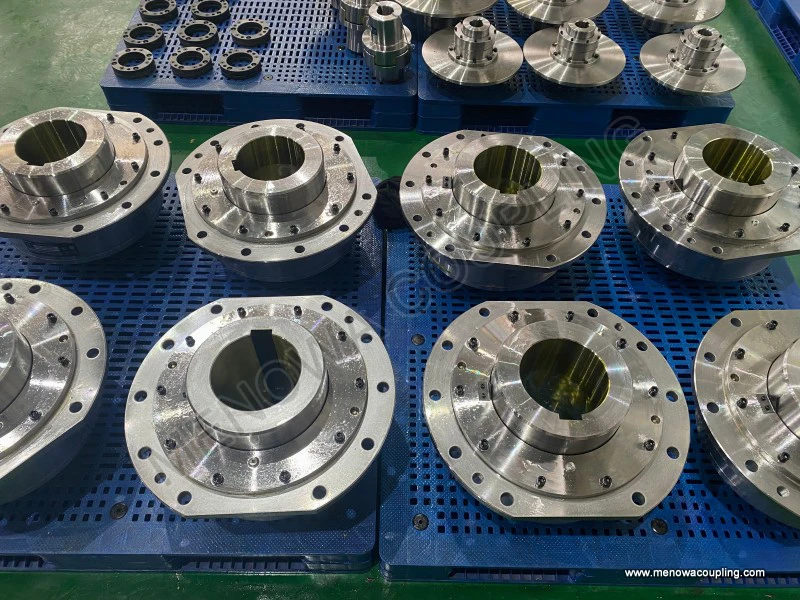
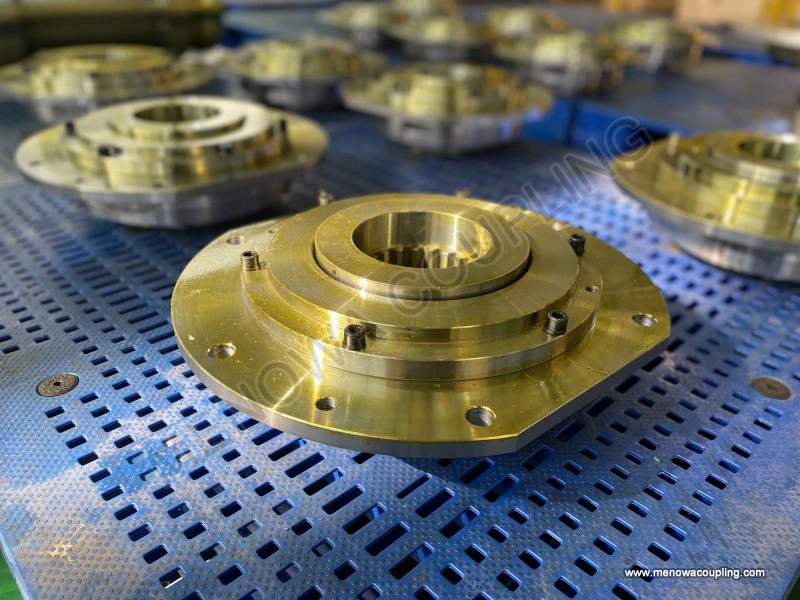
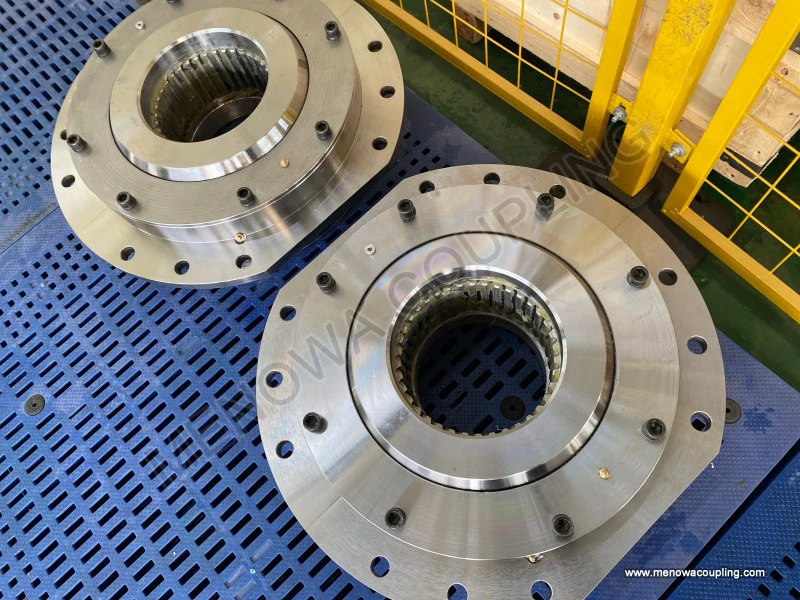
Drum couplings belong to a type of flexible gear coupling with a special curved tooth structural design, different from ordinary straight tooth couplings and other conventional flexible connecting parts in the market. The basic structure of this coupling consists of inner gear rings and two outer gear sleeves with drum-shaped tooth profiles, forming a precise gear meshing transmission structure through scientific structural collocation. The outer teeth of the gear sleeves are processed into a unique arc drum shape, with the tooth top designed as a spherical structure centered on the equipment axis, which reserves reasonable gaps at the top and side positions of the meshing teeth. This ingenious structural design enables the drum coupling to have excellent deformation adaptability and displacement compensation capability during the power transmission process, fundamentally solving the common mechanical problems faced by traditional connecting parts in actual operation, such as difficult installation alignment, easy wear of meshing parts, poor tolerance to shaft body deviation, and unstable torque transmission. Unlike rigid couplings that cannot bear any shaft displacement and simple elastic couplings that have limited torque bearing capacity, drum couplings perfectly balance the dual core performance of rigid and flexible transmission, ensuring efficient and lossless transmission of rotational power and torque while coping with various installation errors and operational deviations generated during long-term equipment operation.
The working principle of drum couplings is based on the free deformation space of the meshing gear structure and the elastic coordination between internal components. When the power equipment drives one side of the coupling hub to rotate, the meshing drum-shaped teeth transmit torque and rotational motion to the other side of the connected shaft body through uniform and stable gear engagement. The reserved gaps between the drum-shaped teeth and the flexible coordination space inside the coupling allow the equipment shaft connected at both ends to produce appropriate free deformation in the axial, radial, and angular inclination directions. This natural deformation can effectively offset the installation misalignment deviation generated during the equipment assembly process, as well as the slight shaft displacement and angular deflection caused by mechanical vibration, equipment operation wear, and foundation settlement during long-term continuous production. In the actual industrial operation process, most mechanical equipment will inevitably produce different degrees of shaft position deviation after long-term start-stop cycles and heavy-load operation; if the connecting coupling cannot compensate for these deviations in time, it will directly lead to excessive local stress on the transmission shaft, accelerated wear of bearings and gears, increased equipment operating vibration and noise, and even frequent equipment failure and production shutdown in severe cases. The structural characteristics of drum couplings just make up for this industry pain point, relying on reliable displacement compensation performance to protect the entire transmission system from additional stress damage, and maintain the continuity and stability of power transmission under various complex working conditions.
One of the most prominent practical advantages of drum couplings is their strong load-bearing performance and stable overload resistance, which makes them highly adaptable to low-speed and heavy-load working environments that are common in the industrial field. Compared with straight tooth couplings of the same overall outer diameter and structural specification, drum couplings have a more reasonable gear meshing contact area and force distribution mode in the transmission process. The drum-shaped tooth design enables the stress generated during torque transmission to be evenly distributed on each meshing tooth surface, avoiding the problem of local stress concentration and single tooth excessive load that is easy to occur in straight tooth structures. This uniform force distribution mode not only effectively improves the overall torque bearing capacity of the coupling but also reduces the wear degree of the meshing tooth surface in daily operation, slowing down the aging and damage speed of core components. In many heavy industrial scenarios, equipment often needs to bear instantaneous impact load and alternating load during start-up, shutdown, and operation conversion; ordinary couplings are prone to tooth surface fracture, elastic element failure, and structural deformation under such working conditions, while drum couplings can well buffer instantaneous impact force through their structural advantages, maintain the integrity of the meshing structure, and ensure that the transmission system can still operate normally under occasional overload conditions without sudden failure.
In terms of displacement compensation performance, drum couplings show far better adaptability than many other types of mechanical couplings. In the actual equipment installation process, affected by construction accuracy, on-site space constraints, and installation process differences, it is difficult to achieve complete absolute alignment of the two connected shafts, and tiny angular deviation and radial displacement are almost unavoidable. The special drum-shaped tooth structure allows the coupling to tolerate a large range of angular misalignment and radial displacement during operation, with far higher allowable deviation values than conventional straight tooth coupling products. This excellent compensation performance greatly reduces the precision requirements for on-site equipment installation and alignment, shortening the installation and debugging cycle of mechanical equipment, reducing the technical difficulty and labor cost of installation construction, and also avoiding the subsequent equipment operation problems caused by minor installation deviations. For engineering construction teams and equipment maintenance personnel, this means lower installation technical thresholds, higher construction efficiency, and less follow-up maintenance work caused by installation errors, which can effectively save comprehensive operational management costs for enterprises in the long run.
Drum couplings have a very wide range of industrial application scenarios, covering almost all heavy-duty mechanical transmission links that require stable torque transmission and deviation compensation. In the metallurgical industry, various smelting and rolling production equipment needs to operate continuously for a long time under high temperature and heavy load conditions, and the transmission system bears continuous alternating torque and mechanical vibration; drum couplings can adapt to such harsh working environments, maintain stable transmission performance for a long time, and reduce the frequency of equipment shutdown maintenance. In the mining industry, mining machinery, ore conveying equipment, and lifting hoist equipment often work in complex and harsh underground or open-air working conditions, with large equipment vibration and frequent load changes; the impact resistance and deviation compensation capabilities of drum couplings can effectively protect the core transmission components of mining equipment and ensure the safe and stable progress of mining operations. In the lifting and handling industry, various cranes, hoisting machinery, and port handling equipment need to bear large radial load and torque impact during the lifting and moving of heavy materials; drum couplings, as the core connecting part between reducers and winding drums, can stably transmit power and limit the axial movement of equipment components, ensuring the safety and reliability of hoisting operations. In addition, drum couplings are also widely used in cement processing, chemical production, power station equipment, heavy machinery manufacturing, and other fields, becoming an indispensable basic component for the normal operation of various heavy industrial mechanical equipment.
For purchasers engaged in drum coupling wholesale business, whether they are mechanical parts distributors supplying local industrial markets, engineering procurement teams supporting large-scale industrial projects, or enterprise procurement departments responsible for long-term equipment parts reserve, it is necessary to focus on multiple core key points in the wholesale procurement process, rather than only paying attention to simple supply and delivery links. First of all, it is essential to select suitable coupling specifications and structural types according to actual working condition requirements. Different industrial scenarios have different requirements for coupling torque transmission range, rotational speed adaptability, installation space size, and working environment adaptability. Wholesale purchasers need to fully combine the actual operating parameters of supporting equipment, installation space limitations, load characteristics, and environmental conditions such as temperature and humidity to select matching drum coupling products, ensuring that the purchased couplings can perfectly adapt to the actual use scenarios and avoid performance mismatch caused by blind bulk procurement. Reasonable specification matching can not only give full play to the use value of drum couplings but also avoid unnecessary resource waste and cost increase caused by inappropriate model selection.
Secondly, in drum coupling wholesale procurement, attention should be paid to the overall manufacturing process and material quality of the products. The service life and operating stability of drum couplings are directly determined by the raw material quality of gear components and the precision of processing technology. High-quality raw materials can ensure that the coupling has good wear resistance, impact resistance, and structural rigidity, and will not be easily deformed, worn, or damaged under long-term heavy-load operation. Exquisite processing technology can ensure the precise meshing degree of drum-shaped teeth, smooth transmission operation, small operating vibration and noise, and uniform force on each component. In the wholesale bulk procurement process, purchasers need to focus on checking the processing details of the product, the surface finish of the tooth surface, the structural uniformity of the overall components, and the stability of the production process, so as to ensure that all bulk purchased drum couplings have consistent quality and stable performance, avoiding batch quality differences that affect the normal use of subsequent equipment. For long-term cooperative wholesale procurement, maintaining stable product quality is the core premise to ensure the continuous and stable operation of downstream industrial equipment.
Thirdly, drum coupling wholesale procurement needs to reasonably plan the procurement quantity and reserve cycle according to the actual equipment operation and maintenance cycle. Different industrial equipment has different service life and maintenance cycles for wearing parts such as couplings. Purchasers need to formulate scientific wholesale procurement plans based on the equipment operation status, regular maintenance plans, and parts replacement cycles of downstream users or their own enterprises. Moderate bulk wholesale procurement can not only meet the daily replacement and maintenance needs of equipment but also avoid production shutdown losses caused by insufficient parts reserve. At the same time, reasonable reserve planning can also avoid excessive capital occupation and inventory backlog caused by excessive blind procurement, realizing the balanced coordination between procurement cost control and supply guarantee. For mechanical parts distributors doing wholesale business, reasonable inventory reserve can also meet the emergency procurement needs of local industrial enterprises at any time, improving customer satisfaction and market competitiveness.
In addition to standardized model selection and quality control, the later installation, use, and daily maintenance management of drum couplings are also important links to give full play to their performance and extend their service life, and also important content that wholesale purchasers need to convey and pay attention to in the process of supplying products to downstream users. After the drum coupling is installed in place, regular inspection and maintenance work should be done well during daily equipment operation, including checking the meshing state of the gear parts, the tightness of the connecting structure, the wear degree of the tooth surface, and the working temperature of the coupling during operation. Timely cleaning of dust and sundries on the surface of the coupling and regular replacement of matching lubricating grease can reduce the friction and wear of the meshing parts, ensure the flexibility of displacement compensation, and maintain the efficient transmission state of the coupling. Good daily maintenance can effectively extend the service life of drum couplings, reduce the frequency of parts replacement, and further reduce the long-term operation and maintenance cost of industrial equipment. For wholesale purchasers, providing users with basic use and maintenance guidance while supplying products can improve the added value of procurement cooperation, stabilize long-term cooperative relationships, and form a good wholesale supply and operation cycle.
With the continuous upgrading and development of modern industrial manufacturing industry, the overall operating requirements for mechanical transmission equipment are constantly improving, and the market demand for high-performance and high-stability drum couplings in various industrial fields is also steadily rising. More and more industrial enterprises and engineering projects pay more attention to the quality and performance stability of basic mechanical components, and no longer ignore the impact of small coupling parts on the overall production efficiency. This market development trend puts forward higher requirements for drum coupling wholesale procurement and supply work. Wholesale purchasers need to keep up with the development pace of the industrial market, continuously understand the performance upgrading direction and structural optimization trends of drum coupling products, optimize their own wholesale procurement plans and supply systems, and provide downstream users with cost-effective, stable-performance, and suitable drum coupling products. In the fierce market competition, only by focusing on product quality, precise model matching, and thoughtful supporting services can drum coupling wholesale business maintain stable development and better serve the stable operation of various industrial production lines.
In conclusion, drum couplings are indispensable core connecting components in modern heavy-duty industrial transmission systems, with unique structural design, excellent displacement compensation performance, strong load-bearing capacity, and wide industrial adaptability, playing an important role in ensuring stable equipment operation, reducing maintenance costs, and extending equipment service life. Drum coupling wholesale procurement is a systematic work that integrates model selection, quality control, procurement planning, and later use and maintenance management. For all bulk purchasers in the industrial supply chain, attaching importance to every link of wholesale procurement, reasonably selecting products suitable for working conditions, strictly controlling product quality, and doing a good job in inventory reserve and user service can not only ensure the stable operation of downstream mechanical equipment but also realize the stable and long-term development of their own wholesale procurement business. In the continuous development of industrialization, drum couplings will continue to play an irreplaceable role in the field of mechanical transmission, and standardized and high-quality wholesale procurement management will also become an important foundation to promote the efficient and safe operation of various industrial mechanical equipment.
Post Date: Apr 25, 2026
https://www.menowacoupling.com/china-coupling/drum-coupling-wholesale.html
Supply
Related Articles
Barrel Coupling Wholesale
Barrel couplings stand as indispensable mechanical transmission components in modern heavy industrial and general mechanical operation systems, serving as the key connecting medium between rotating shafts in diverse mechanical equipment sets. Their core working principle relies on precision-machined barrel-shaped rollin…Barrel Coupling For Drums
In the complex and demanding landscape of industrial power transmission systems, the reliable connection between drive components and load-bearing operating parts stands as a foundational factor in maintaining stable mechanical operation across heavy-duty working scenarios. Among the critical connecting components speci…
 WeChat
 WhatsApp