Flexible Diaphragm Coupling Manufacture
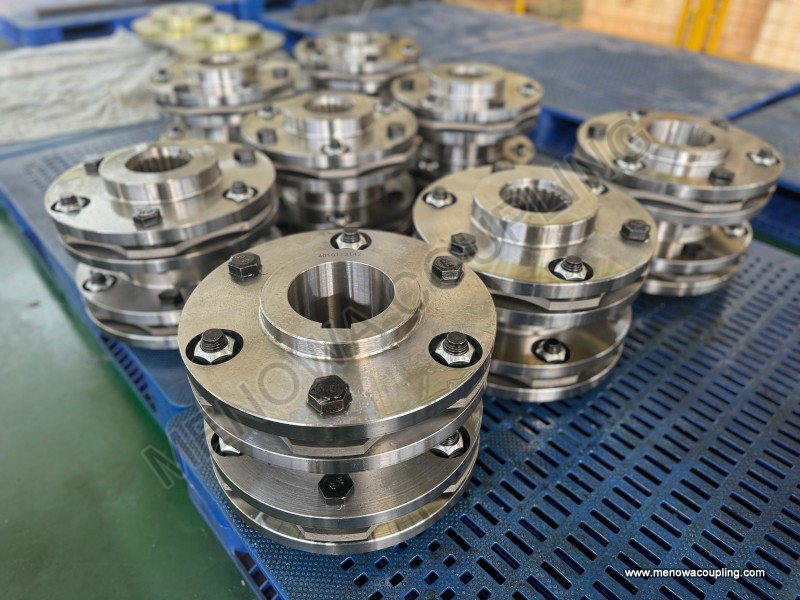
Flexible diaphragm couplings stand as critical components in modern power transmission systems, bridging driving and driven shafts while accommodating misalignment, absorbing vibration, and ensuring efficient torque delivery across diverse industrial scenarios. The manufacture of these precision components integrates material science, precision machining, advanced forming technologies, and rigorous quality control, forming a systematic process that balances performance, durability, and operational stability. Every stage of production, from raw material selection to final assembly and inspection, is engineered to meet the dynamic demands of high-speed rotating machinery, heavy-duty loading, and harsh environmental conditions. This article explores the full scope of flexible diaphragm coupling manufacture, detailing material selection, core processing, structural design optimization, assembly techniques, performance validation, and the practical value these components deliver across industrial applications.
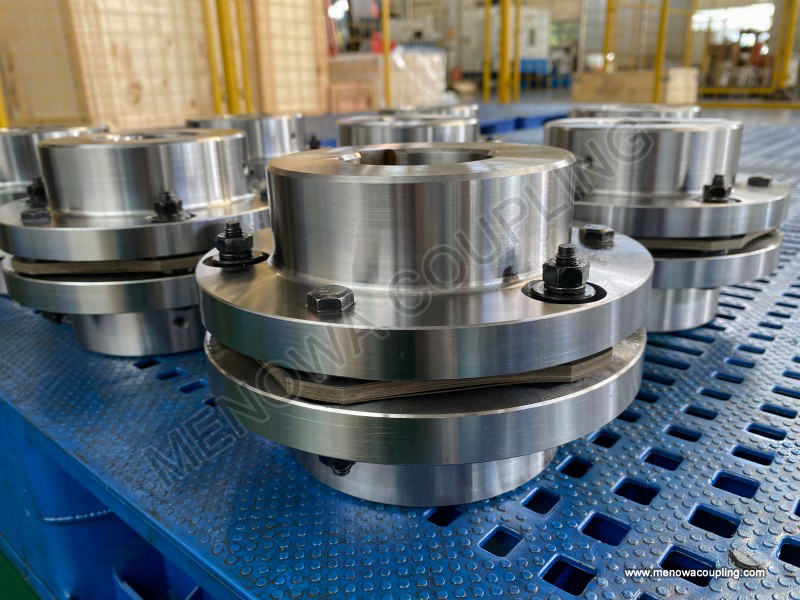
Material selection forms the foundation of reliable flexible diaphragm coupling performance, with choices directly shaping fatigue life, corrosion resistance, temperature tolerance, and mechanical strength. Most high-performance diaphragms are fabricated from martensitic or precipitation-hardened stainless steels, chosen for their exceptional tensile strength, fatigue resistance, and dimensional stability under cyclic loading. These materials maintain elastic integrity over billions of flex cycles, resisting cracking or permanent deformation even under continuous angular, radial, and axial misalignment. For hubs, flanges, and spacer components, alloy steels with high tensile strength and toughness are preferred, often subjected to quenching and tempering to enhance structural rigidity and load-bearing capacity. In corrosive or high-temperature environments, nickel-based alloys or titanium alloys may be employed, offering superior resistance to oxidation, chemical degradation, and thermal distortion. Material specifications are tailored to application requirements, balancing mechanical properties, formability, and cost-effectiveness without compromising long-term operational reliability. Each batch of raw materials undergoes comprehensive testing to verify chemical composition, hardness, tensile strength, and microstructure, ensuring consistency and compliance with engineering design parameters before entering production.
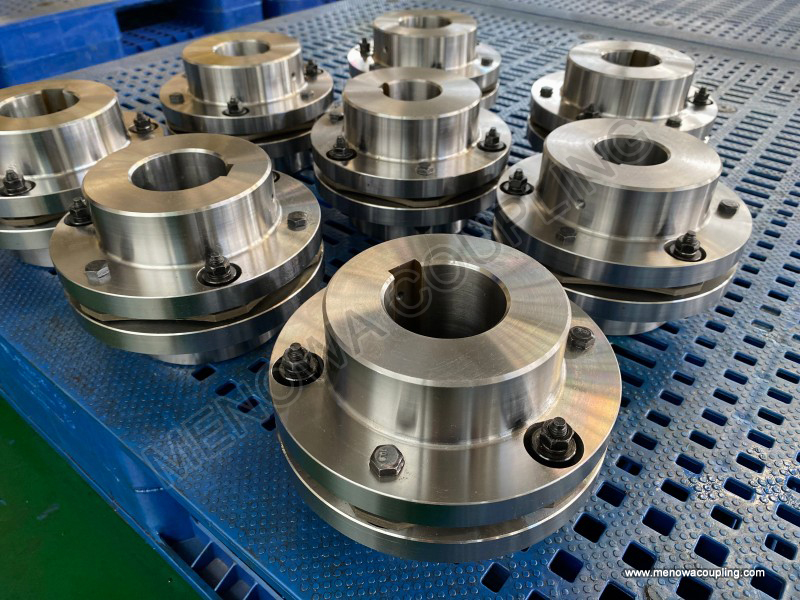
Precision machining constitutes the core of flexible diaphragm coupling manufacture, demanding tight dimensional control and surface quality to guarantee proper fit, torque transmission, and misalignment compensation. Diaphragm production begins with precision blanking or laser cutting, where thin metal sheets are shaped into precise profiles with uniform edge quality and minimal thermal distortion. Laser cutting offers exceptional accuracy, maintaining tight tolerances for bolt holes, contour profiles, and inner/outer diameters while preserving material integrity. After cutting, diaphragms undergo surface finishing processes such as grinding, polishing, and shot peening to remove burrs, improve surface smoothness, and induce compressive residual stress, which significantly enhances fatigue life and resistance to stress corrosion cracking. Shot peening, in particular, creates a controlled layer of compressed surface material, mitigating crack initiation and propagation under cyclic flexing. Hubs and flanges are produced through hot forging or precision casting to achieve dense grain structure and high structural strength, followed by rough machining, heat treatment, and finish machining. CNC turning and milling are employed to machine key features including shaft bores, bolt circles, pilot diameters, and mating surfaces, with dimensional tolerances controlled to within micrometer levels. Heat treatment processes such as quenching, tempering, and normalizing are carefully calibrated to optimize hardness, toughness, and dimensional stability, preventing distortion during subsequent machining or in-service operation.
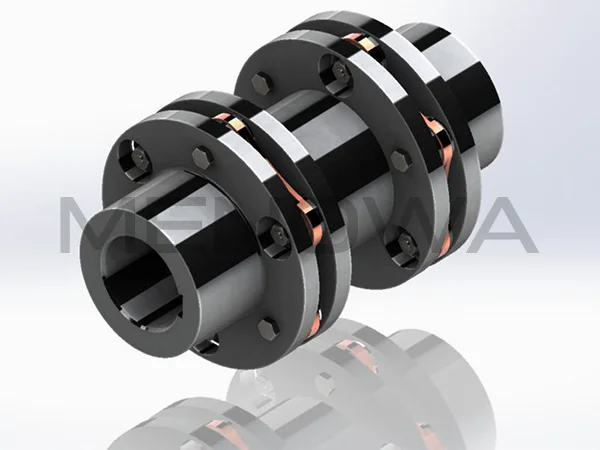
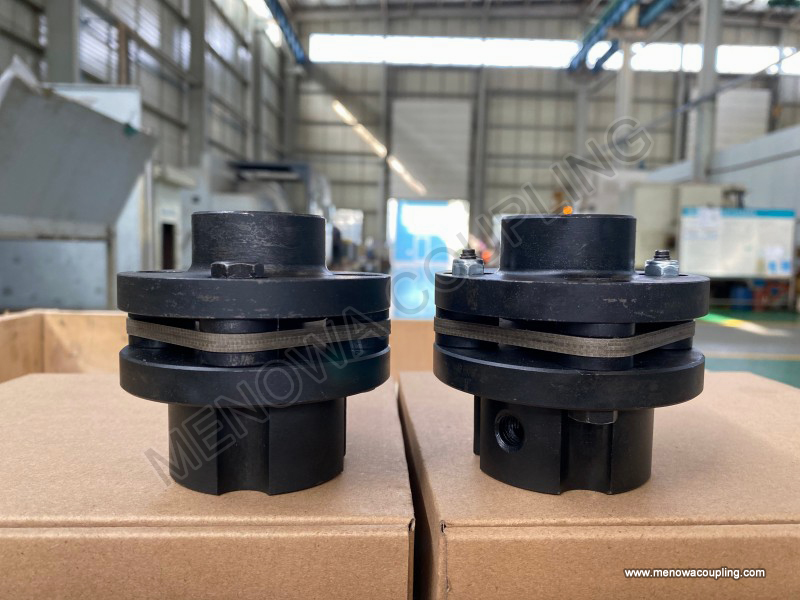
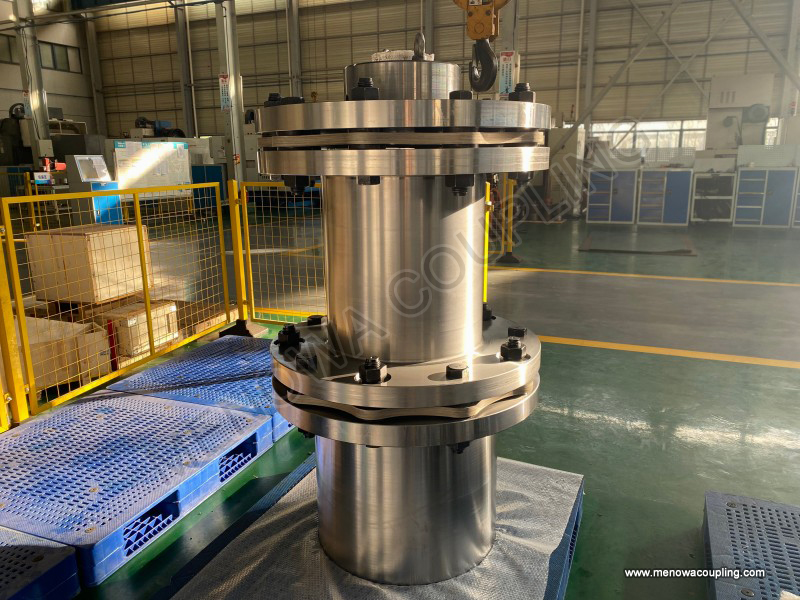
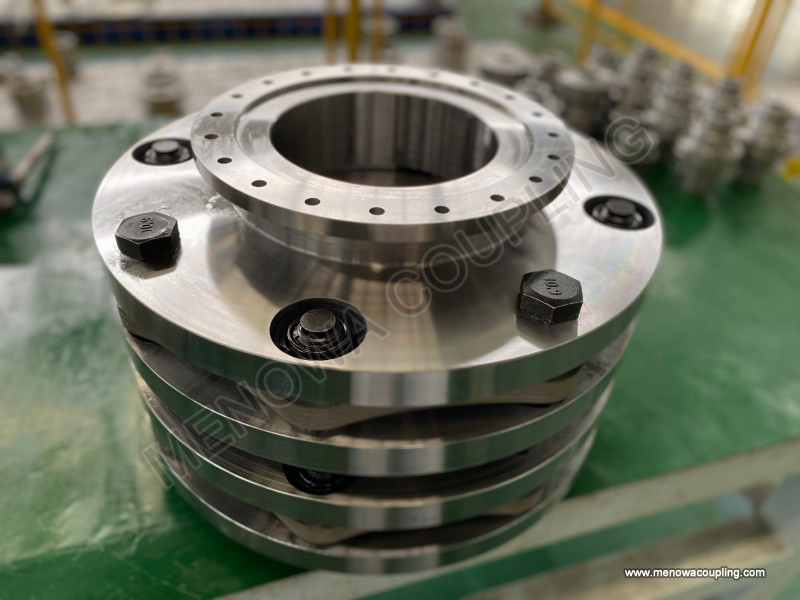
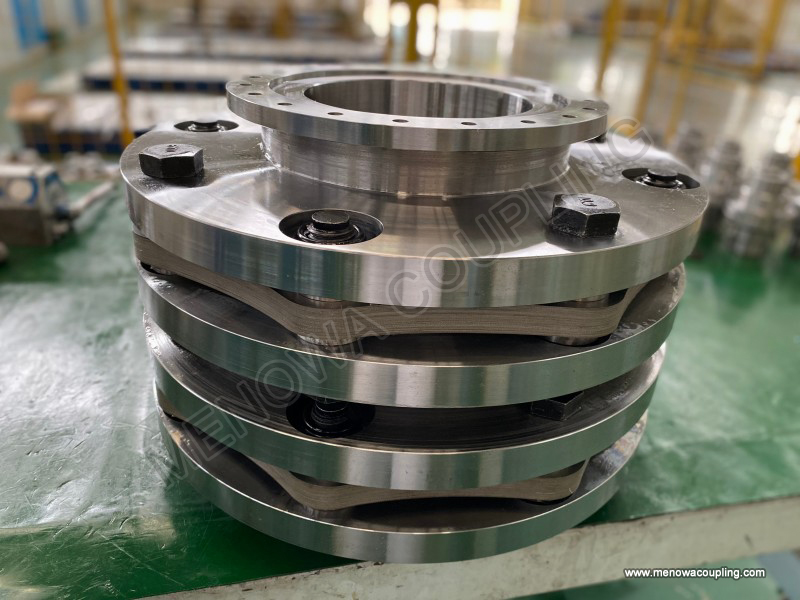
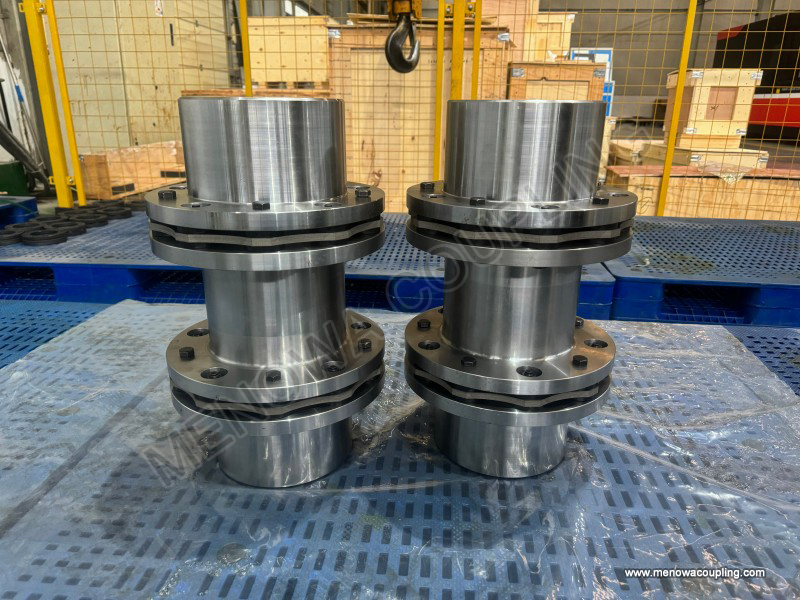
Structural design and optimization play a vital role in maximizing the performance of flexible diaphragm couplings, with engineering analysis guiding profile geometry, layer configuration, and component integration. Finite element analysis is widely used to simulate stress distribution, deformation behavior, and dynamic response under torque, misalignment, and vibration, enabling designers to refine diaphragm contours, thickness gradients, and bolt hole layouts to minimize stress concentration. Typical diaphragm designs feature smooth, streamlined profiles that distribute flexural stress evenly across the surface, avoiding sharp corners or abrupt transitions that could trigger fatigue failure. Diaphragm assemblies often consist of multiple thin layers stacked together, allowing collective elastic deformation while maintaining high torque transmission capacity; this layered design enhances flexibility and misalignment tolerance compared to single thick diaphragms. Bolt hole arrangements are optimized for uniform load distribution, with precision spacing and edge distances to prevent tearing or elongation under dynamic loading. For heavy-duty or high-speed applications, double-diaphragm configurations with central spacer shafts are utilized, providing enhanced misalignment compensation and reducing reaction loads on connected equipment bearings. Modular design principles simplify assembly, maintenance, and replacement, allowing components to be interchangeable while preserving dynamic balance and performance consistency. Every design iteration is validated through physical testing to ensure alignment with torque ratings, speed limits, and misalignment capabilities.
Assembly and fitting of flexible diaphragm couplings demand meticulous attention to detail to preserve dynamic balance, clamping integrity, and operational stability. All components undergo thorough cleaning before assembly to remove machining residues, oils, or particulate contaminants that could cause abrasion, corrosion, or imbalance during operation. Diaphragm stacks are aligned precisely with hubs and flanges, with bolt holes meticulously matched to ensure concentricity and uniform load distribution. High-strength fasteners are used to secure diaphragms and components, tightened in a staggered, sequential pattern using calibrated torque tools to achieve uniform clamping force without overloading or distorting the diaphragms. Controlled torque application prevents localized stress, bolt loosening, or diaphragm damage, while maintaining the frictional contact necessary for reliable torque transmission. For double-diaphragm units, central spacer tubes are aligned and fastened to maintain precise spacing between diaphragm sets, ensuring symmetrical flexibility and balanced load distribution. After mechanical assembly, complete coupling units undergo dynamic balancing to minimize vibration and rotational imbalance, critical for high-speed applications. Balancing is performed at specified operating speeds, with material removal or correction weights applied to achieve optimal balance quality. The balancing process accounts for the entire assembly, ensuring consistent performance across the full speed range and preventing premature bearing wear or structural fatigue.
Performance testing and quality validation are integral to flexible diaphragm coupling manufacture, verifying that every unit meets functional, durability, and safety requirements before delivery. Static and dynamic tests are conducted to assess torque capacity, torsional stiffness, misalignment tolerance, and fatigue life under simulated operating conditions. Torque testing applies incremental loads to confirm rated transmission capacity and evaluate elastic recovery, ensuring no permanent deformation or loss of performance. Misalignment testing simulates angular, radial, and axial displacements to validate flexibility and reaction force characteristics, confirming compatibility with real-world shaft misalignment caused by thermal expansion, installation tolerances, or structural deflection. Fatigue testing subjects couplings to millions of load cycles to replicate long-term service conditions, verifying resistance to fatigue cracking and maintaining dimensional and mechanical stability. Environmental testing exposes components to temperature extremes, humidity, and corrosive media to assess material durability and surface protection effectiveness. Dimensional inspection uses precision metrology equipment to verify critical dimensions, concentricity, parallelism, and surface finish, ensuring compliance with design specifications. Non-destructive testing techniques detect internal flaws, cracks, or material inconsistencies that could compromise performance, providing additional assurance of structural integrity. Only units that pass all validation stages proceed to final packaging and shipment, ensuring consistent quality and reliability for end-users.
The manufacturing process of flexible diaphragm couplings is continuously refined through technological innovation and industry advancements, driven by the demand for higher efficiency, greater durability, and broader environmental adaptability. Advances in machining technology, such as high-precision laser cutting, CNC milling, and automated grinding, improve dimensional accuracy and surface quality while increasing production efficiency. New surface treatment technologies enhance wear resistance, corrosion protection, and fatigue life, extending service intervals and reducing maintenance requirements. Digital design and simulation tools enable faster prototyping, optimization, and customization, allowing manufacturers to tailor couplings to specific application needs such as high-speed turbomachinery, heavy-duty pumps, precision servo systems, or marine propulsion units. Material science advancements introduce new alloys and composite structures with improved strength-to-weight ratios, temperature resistance, and fatigue performance, expanding the operating envelope of flexible diaphragm couplings. Automation and intelligent manufacturing systems enhance process consistency, repeatability, and traceability, reducing human error and ensuring uniform quality across production batches. These innovations collectively elevate the performance and reliability of flexible diaphragm couplings, supporting the evolution of industrial machinery toward higher efficiency, lower energy consumption, and longer service life.
In practical industrial applications, flexible diaphragm couplings manufactured through these rigorous processes deliver distinct advantages over traditional coupling types. Their all-metal, lubrication-free construction eliminates the need for routine maintenance, reducing downtime and operational costs while avoiding environmental contamination from lubricants. Zero-backlash design ensures precise torque transmission and positional accuracy, making them ideal for precision machinery, servo systems, and high-speed rotating equipment. High torsional stiffness maintains dynamic responsiveness and system stability, while the flexible diaphragm structure absorbs vibration and shock loads, protecting connected components and extending equipment service life. Wide operating temperature ranges and corrosion resistance enable reliable performance in harsh environments including chemical processing, oil and gas, power generation, and marine applications. Compact, lightweight designs reduce rotational inertia and overhung loads, improving system efficiency and reducing bearing stress. Whether in small precision instruments or large-scale industrial drive systems, high-quality flexible diaphragm couplings enhance operational stability, efficiency, and longevity, providing dependable power transmission solutions for critical engineering systems.
The manufacture of flexible diaphragm couplings represents a harmonious integration of material science, precision engineering, design optimization, and quality assurance. Each production stage, from material selection to final testing, is executed with strict control and technical expertise to ensure that finished components meet the most demanding performance requirements. As industrial systems continue to evolve toward higher speeds, heavier loads, and greater efficiency, flexible diaphragm couplings will remain essential components, their manufacture continuously advancing to meet emerging challenges. By upholding rigorous manufacturing standards, embracing technological innovation, and focusing on application-specific performance, manufacturers ensure that flexible diaphragm couplings deliver reliable, long-lasting service across global industries. This commitment to excellence solidifies the role of flexible diaphragm couplings as indispensable elements in modern power transmission, supporting the efficiency, reliability, and sustainability of industrial machinery worldwide.
Post Date: Apr 27, 2026
https://www.menowacoupling.com/china-coupling/flexible-diaphragm-coupling-manufacture.html
Products
Tags
Related Articles
Types of Shim Pack Coupling
Shim pack couplings stand as a vital category of metal flexible transmission components widely applied in modern industrial mechanical shaft connection systems, serving the core purpose of stable torque transmission between driving and driven equipment while effectively absorbing and compensating for various minor misal…Uses of Flexible Diaphragm Coupling
In modern mechanical transmission systems, the stable connection and efficient torque transmission between rotating shafts are the core guarantees for the normal operation of all kinds of mechanical equipment. As a high-performance metal flexible transmission component, flexible diaphragm coupling has gradually become a…Diagram of Flexible Diaphragm Coupling
A flexible diaphragm coupling is a high-performance mechanical component designed to connect two shafts in rotating machinery, enabling the efficient transmission of torque while accommodating various types of misalignments between the shafts. Unlike traditional rigid couplings that require precise alignment to function…Flexible Diaphragm Coupling Fabrication
Flexible diaphragm couplings are essential components in modern mechanical transmission systems, designed to connect two shafts while compensating for axial, radial, and angular misalignments, absorbing vibrations, and ensuring efficient power transfer. The fabrication of these couplings is a sophisticated process that …What is Flexible Diaphragm Coupling
Flexible diaphragm coupling is a high-performance metal flexible transmission component widely used in modern mechanical shafting systems, designed to connect driving and driven shafts while achieving efficient torque transmission and adaptive compensation of shaft misalignment. Unlike traditional rigid couplings that r…Gap Chart of Flexible Diaphragm Coupling
The gap chart of flexible diaphragm couplings serves as a core technical reference that quantifies the spatial clearance parameters between key structural components under diverse operating conditions, laying a foundational role in installation calibration, operational condition monitoring, and service life prediction o…
 WeChat
 WhatsApp