What is Elastic Coupling
Elastic coupling is a critical component in mechanical transmission systems, designed to connect two rotating shafts while accommodating misalignments, absorbing vibrations, and protecting machinery from damage. Unlike rigid couplings that require precise alignment and offer no flexibility, elastic couplings utilize elastic elements—such as rubber, polyurethane, metal bellows, or springs—to bridge the gap between shafts, ensuring smooth power transmission even in less-than-ideal operating conditions. The versatility of elastic couplings makes them indispensable across a wide range of industries, from heavy manufacturing to precision automation, and their unique properties address key challenges in mechanical design, including misalignment compensation, vibration damping, and load protection. This article explores the diverse uses of elastic couplings, highlighting their functional roles in different applications, the benefits they provide, and the ways in which they enhance the reliability and efficiency of mechanical systems.
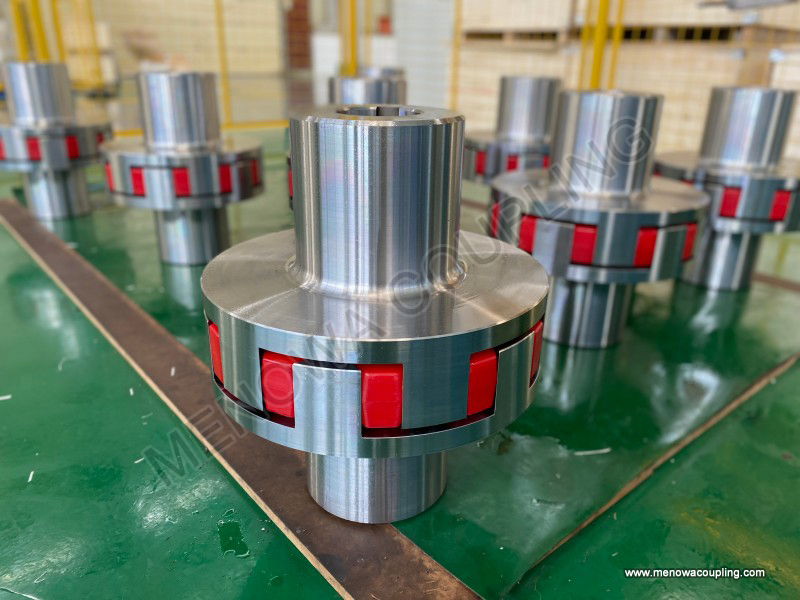
One of the primary uses of elastic coupling is to compensate for shaft misalignment, a common issue in most mechanical systems. Shaft misalignment can occur due to a variety of factors, including improper installation, thermal expansion during operation, structural deformation, or wear and tear over time. There are three main types of misalignment: radial, axial, and angular. Radial misalignment happens when the two shafts are parallel but not concentric, meaning their centers are offset from one another. Axial misalignment occurs when the shafts are aligned concentrically but move along their axial direction, often due to thermal expansion or axial loads. Angular misalignment refers to a situation where the shafts are not parallel but intersect at a point, creating an angle between their axes. Rigid couplings are unable to accommodate any of these misalignments, and even small deviations can lead to excessive stress on bearings, shafts, and other components, resulting in premature failure. Elastic couplings, however, use their elastic elements to absorb these misalignments by deforming slightly, thereby reducing the stress transferred to the connected machinery. This compensation capability is particularly valuable in large industrial equipment, where precise alignment is difficult to maintain and thermal expansion can cause significant shifts in shaft position. For example, in industrial pumps and compressors, which operate at high speeds and generate significant heat, elastic couplings allow the motor and pump shafts to expand and contract without causing damage to the bearings or seals. Similarly, in conveyor systems, where long shafts may flex under load, elastic couplings compensate for radial and angular misalignment, ensuring smooth operation and extending the lifespan of the conveyor components.
Another key use of elastic coupling is vibration damping, which is essential for protecting sensitive machinery and improving overall system performance. Vibrations are inherent in most rotating machinery, generated by imbalances in the rotating parts, gear meshing, or external forces. If left unaddressed, these vibrations can cause excessive noise, reduce the accuracy of precision equipment, and lead to premature wear of bearings, gears, and other mechanical components. Elastic couplings mitigate these issues by absorbing and dissipating vibrational energy through their elastic elements. The elastic material acts as a buffer, converting the kinetic energy of vibrations into heat, which is then dissipated into the surrounding environment. This damping effect not only reduces noise levels but also protects the motor and other connected equipment from the harmful effects of vibration. In applications where precision is critical, such as CNC machines, robotics, and measuring instruments, vibration damping is particularly important. CNC machines, for instance, require extremely stable operation to achieve high precision in cutting and machining. Elastic couplings help to isolate the motor’s vibrations from the machine’s spindle, ensuring that the cutting tool moves smoothly and accurately, resulting in higher quality finished products. Similarly, in robotic systems, where precise movement is essential for tasks such as assembly and pick-and-place operations, elastic couplings reduce vibrations that could affect the robot’s positioning accuracy, improving the overall efficiency and reliability of the system.
Elastic couplings also play a crucial role in protecting machinery from shock loads, which are sudden, intense forces that can occur during startup, shutdown, or unexpected operational changes. Shock loads can be caused by a variety of factors, including sudden changes in load, equipment jams, or power surges. These forces can be extremely damaging to mechanical components, leading to bent shafts, cracked gears, or damaged bearings. Elastic couplings absorb these shock loads by deforming their elastic elements, which act as a shock absorber, cushioning the impact and reducing the stress transferred to the connected machinery. This protective function is particularly important in heavy-duty applications, such as mining, construction, and metallurgy, where shock loads are common. For example, in mining equipment such as crushers and conveyors, which handle large, irregularly shaped materials, sudden jams can create massive shock loads. Elastic couplings help to absorb these shocks, preventing damage to the motor, gearbox, and other critical components. Similarly, in construction machinery such as excavators and loaders, which operate in harsh, unpredictable environments, elastic couplings protect the drivetrain from the shock loads generated by uneven terrain and heavy lifting.
In addition to their primary functions of misalignment compensation, vibration damping, and shock load protection, elastic couplings are also used to improve the efficiency of power transmission in a variety of applications. By reducing friction and minimizing energy loss, elastic couplings help to ensure that more of the motor’s power is transferred to the load, resulting in higher overall system efficiency. This is particularly important in energy-intensive industries, such as manufacturing, where reducing energy consumption is a key priority. Elastic couplings also allow for smoother power transmission, which reduces wear and tear on the connected components, extending their lifespan and reducing maintenance costs. For example, in industrial fans and blowers, which operate continuously for long periods, elastic couplings ensure that the motor’s power is transferred smoothly to the fan blades, reducing vibration and wear on the bearings and shaft. This not only improves the efficiency of the fan but also reduces the frequency of maintenance, resulting in lower operational costs.
The versatility of elastic couplings is further demonstrated by their wide range of applications across different industries. In the automotive industry, for example, elastic couplings are used in the drivetrain to connect the engine to the transmission, absorbing vibrations and compensating for misalignments. This helps to improve the comfort of the vehicle by reducing noise and vibration in the cabin, while also protecting the transmission and other drivetrain components from damage. In the marine industry, elastic couplings are used in ship propulsion systems, where they connect the engine to the propeller shaft. The harsh marine environment, with its high levels of vibration and potential for misalignment due to hull flexing, makes elastic couplings essential for ensuring reliable operation. Elastic couplings in marine applications must also be resistant to corrosion and able to withstand high temperatures and pressures, making them a critical component in ship design.
In the renewable energy sector, elastic couplings play a vital role in wind turbines and solar power systems. Wind turbines, for example, generate power by converting the kinetic energy of wind into rotational energy, which is then transferred to a generator. The turbine blades are connected to the generator via a shaft, and elastic couplings are used to compensate for the misalignment between the turbine shaft and the generator shaft, which can occur due to wind loads and structural flexing. Elastic couplings also absorb the vibrations generated by the rotating turbine blades, protecting the generator and other components from damage. In solar power systems, elastic couplings are used in the drives for solar trackers, which adjust the position of solar panels to maximize sunlight absorption. The precise movement of solar trackers requires smooth power transmission, and elastic couplings ensure that the motor’s power is transferred accurately, while also compensating for any misalignments in the tracker’s drivetrain.
Precision engineering and automation are another area where elastic couplings are widely used. In automated production lines, such as those used in the electronics and pharmaceutical industries, precise movement and positioning are essential. Elastic couplings are used to connect servo motors to lead screws, linear actuators, and other precision components, ensuring that the motor’s motion is transferred accurately and smoothly. The vibration damping properties of elastic couplings are particularly important in these applications, as even small vibrations can affect the precision of the production process. For example, in the production of microelectronics, where components are extremely small and delicate, elastic couplings help to ensure that the machinery operates with minimal vibration, reducing the risk of damage to the components and improving the quality of the finished products. Similarly, in pharmaceutical manufacturing, where precision is critical for dosage accuracy and product quality, elastic couplings play a key role in ensuring the reliable operation of mixing, filling, and packaging equipment.
The chemical and petrochemical industries also rely heavily on elastic couplings due to the harsh operating conditions in these sectors. Chemical processing equipment, such as pumps, compressors, and mixers, often operate in corrosive environments, at high temperatures and pressures, and with varying loads. Elastic couplings used in these applications are typically made from corrosion-resistant materials, such as stainless steel or special polymers, to ensure durability and reliability. They also provide the necessary misalignment compensation and vibration damping to protect the equipment from the harsh conditions, ensuring continuous operation and reducing the risk of downtime. For example, in chemical pumps that transfer corrosive fluids, elastic couplings prevent the motor and pump shafts from becoming misaligned due to thermal expansion or corrosion, while also absorbing vibrations that could cause leaks or damage to the pump seals.
Another important application of elastic coupling is in the field of robotics and automation, where they are used to connect motors to robotic arms, grippers, and other moving components. Robotic systems require precise, smooth movement, and elastic couplings help to achieve this by reducing vibration and compensating for any misalignments between the motor and the robotic component. This is particularly important in collaborative robots, which work alongside humans and require high levels of precision and safety. Elastic couplings in robotic systems also help to protect the motor and gearbox from the shock loads that can occur during sudden stops or collisions, extending the lifespan of the robot and reducing maintenance costs.
Elastic couplings are also used in household appliances, although their presence is often overlooked. Many common household appliances, such as washing machines, dishwashers, and refrigerators, use electric motors to drive their components. Elastic couplings are used to connect the motor to the pump, fan, or other moving parts, absorbing vibrations and compensating for misalignments. This helps to reduce noise levels in the home and extend the lifespan of the appliance. For example, in a washing machine, the motor is connected to the drum via an elastic coupling, which absorbs the vibrations generated during the spin cycle, preventing the machine from shaking excessively and reducing noise. Similarly, in a refrigerator, the motor that drives the compressor is connected via an elastic coupling, which dampens vibrations and ensures smooth operation.
The design and material selection of elastic couplings vary depending on their application, with different types of elastic elements and materials chosen to meet specific requirements. For example, metal bellows elastic couplings are used in high-temperature applications, such as aerospace and automotive engines, due to their ability to withstand extreme temperatures and provide high precision. Rubber or polyurethane elastic couplings are more commonly used in industrial applications where vibration damping is a priority, as they offer excellent shock absorption and flexibility. Composite materials, such as carbon fiber, are also being used increasingly in elastic couplings, particularly in applications where weight reduction is important, such as aerospace and renewable energy. These materials offer high strength-to-weight ratios, making them ideal for use in lightweight, high-performance systems.
In addition to their functional uses, elastic couplings also offer practical benefits in terms of installation and maintenance. Unlike rigid couplings, which require precise alignment during installation, elastic couplings can accommodate small misalignments, making installation easier and reducing the time and cost associated with setup. They also require less maintenance than rigid couplings, as the elastic elements absorb wear and tear, reducing the need for frequent replacement of components. In some cases, elastic couplings can even be replaced without disassembling the entire system, further reducing maintenance downtime.
The importance of elastic couplings in modern mechanical systems cannot be overstated. As industries continue to evolve and demand higher levels of efficiency, reliability, and precision, the role of elastic couplings will only become more critical. From heavy industrial machinery to precision automation and renewable energy systems, elastic couplings provide the flexibility, protection, and efficiency needed to ensure smooth operation and extend the lifespan of equipment. Their ability to compensate for misalignments, dampen vibrations, and absorb shock loads makes them an indispensable component in a wide range of applications, and ongoing advancements in material science and design are likely to expand their uses even further in the future.
In conclusion, elastic couplings are versatile, essential components in mechanical transmission systems, with a wide range of uses across various industries. Their primary functions of misalignment compensation, vibration damping, and shock load protection make them critical for ensuring the reliability and efficiency of machinery, while their practical benefits in installation and maintenance make them a preferred choice for engineers and designers. As technology continues to advance, elastic couplings will continue to play a key role in supporting the growth and development of industries around the world, from manufacturing and automotive to renewable energy and precision engineering. Whether in large-scale industrial applications or everyday household appliances, elastic couplings are a silent but essential part of the mechanical systems that power our modern world.
Post Date: May 14, 2026
https://www.menowacoupling.com/china-coupling/what-is-elastic-coupling.html
Products

Related Articles
Classification of Elastic Coupling
Elastic couplings are essential mechanical components designed to connect two rotating shafts while transmitting power efficiently, compensating for misalignments, and dampening vibrations and shock loads. Unlike rigid couplings, which require near-perfect alignment between shafts and offer no flexibility, elastic coupl…Components of Elastic Coupling
Elastic couplings are essential mechanical components widely used in various industrial applications to connect two rotating shafts, transmitting torque while accommodating misalignments, absorbing vibrations, and protecting connected equipment from damage. Unlike rigid couplings that require precise alignment and offer…Maintenance of Elastic Coupling
Elastic couplings are essential components in mechanical transmission systems, serving to connect two rotating shafts, transmit torque, and compensate for axial, radial, and angular misalignments. They also play a crucial role in absorbing vibrations and shock loads, thereby protecting the connected equipment such as mo…Dimensions of Elastic Coupling
The dimensions of elastic couplings are a critical factor that directly determines their performance, compatibility, and service life in mechanical transmission systems. Unlike rigid couplings, which rely on precise alignment and rigid connections to transmit torque, elastic couplings integrate flexible elements that al…Coaxiality of Elastic Coupling
In the complex ecosystem of mechanical transmission systems, elastic couplings serve as critical connectors that bridge rotating shafts, enabling the seamless transfer of torque while accommodating minor misalignments and absorbing vibrations. Unlike rigid couplings, which demand near-perfect alignment to function effec…Gap Chart of Elastic Coupling
In the realm of mechanical power transmission, elastic couplings serve as critical components that bridge the gap between driving and driven shafts, accommodating misalignments while ensuring efficient torque transfer. Among the various tools and methodologies used to optimize the performance and longevity of elastic co…
 WeChat
 WhatsApp