Elastic Coupling Production
Elastic couplings are essential components in mechanical transmission systems, serving as the critical link between two rotating shafts to transmit torque while accommodating misalignments, absorbing vibrations, and reducing shock loads. The production of elastic couplings is a sophisticated process that combines precision engineering, material science, and strict quality control to ensure optimal performance, durability, and reliability in various industrial applications. From the initial design phase to the final inspection and packaging, every step in the production process plays a vital role in determining the quality and functionality of the end product. This article explores the comprehensive production process of elastic couplings, delving into the key stages, technologies, and considerations that define modern manufacturing practices.
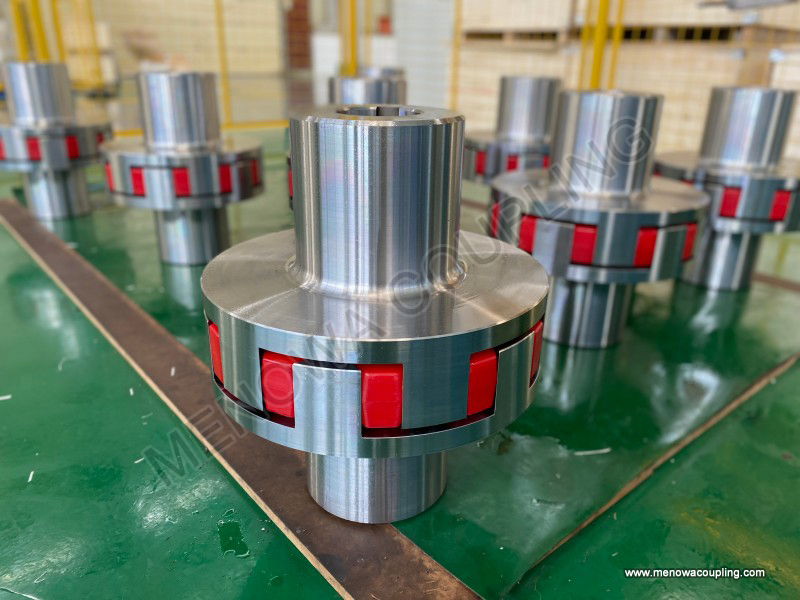
The production process of elastic couplings begins with a detailed design phase, which is tailored to meet the specific requirements of different applications. Designers must first analyze the operational conditions that the coupling will encounter, including torque capacity, rotational speed, misalignment tolerance, temperature range, and environmental factors such as humidity, corrosion, and chemical exposure. These parameters directly influence the design decisions, including the type of elastic coupling, the selection of materials, and the structural configuration. For instance, couplings used in high-torque applications such as heavy machinery require a more robust design with stronger metal components, while those used in precision equipment like数控机床 demand a lightweight structure with minimal backlash and high misalignment compensation capabilities. During the design phase, computer-aided design (CAD) software is widely used to create detailed 3D models of the coupling, allowing designers to simulate performance, test different configurations, and optimize the design for strength, flexibility, and cost-effectiveness. Finite element analysis (FEA) is also employed to evaluate the structural integrity of the coupling under various load conditions, ensuring that it can withstand the stresses of operation without failure. This simulation process helps identify potential weak points in the design, such as areas prone to fatigue or deformation, allowing for adjustments before the production process begins.
Material selection is a critical aspect of elastic coupling production, as the performance and durability of the coupling are directly dependent on the properties of the materials used. Elastic couplings consist of two main components: the metal hubs (or flanges) that connect to the shafts, and the elastic element that provides the flexibility to accommodate misalignments and absorb vibrations. The choice of materials for each component is based on the specific application requirements. For the metal hubs, common materials include carbon steel, alloy steel, aluminum alloy, and stainless steel. Carbon steel is widely used for general-purpose couplings due to its high strength, durability, and cost-effectiveness, making it suitable for applications with moderate torque and temperature requirements. Alloy steel, such as 40CrMo, is preferred for high-torque applications, as it offers enhanced tensile strength, fatigue resistance, and toughness, allowing it to withstand heavy loads and repeated stress. Aluminum alloy is chosen for lightweight applications, such as in robotics and aerospace, where weight reduction is critical, as it provides a good balance of strength and weight. Stainless steel is used in corrosive environments, such as chemical plants and marine applications, due to its excellent resistance to rust and chemical damage. The elastic element, which is the heart of the elastic coupling, is typically made from materials such as rubber, polyurethane, nylon, or composite materials. Rubber is a common choice for its excellent vibration absorption and flexibility, but it may have limitations in high-temperature or oil-rich environments. Polyurethane offers superior wear resistance, oil resistance, and elasticity, making it suitable for a wide range of industrial applications. Nylon is lightweight, self-lubricating, and cost-effective, making it ideal for low-torque, low-speed applications. Composite materials, such as fiber-reinforced polymers, are increasingly used in high-performance applications, as they offer a combination of high strength, light weight, and resistance to extreme temperatures and chemicals.
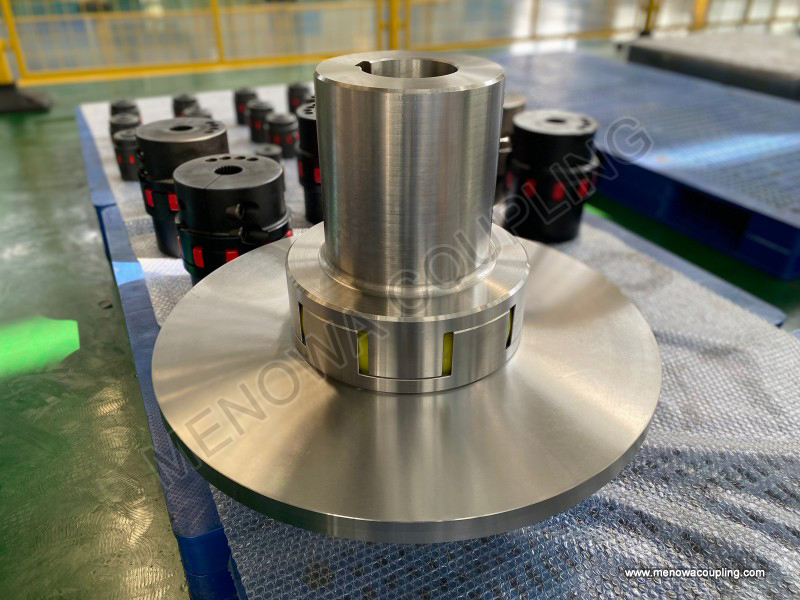
Once the design is finalized and materials are selected, the production process moves to the manufacturing of the metal components. The first step in manufacturing the metal hubs is the preparation of the raw materials, which involves cutting the metal into the required size and shape using processes such as shearing, sawing, or plasma cutting. For large-scale production, automated cutting machines are used to ensure precision and consistency. The next step is machining, which involves removing excess material from the raw workpiece to achieve the desired dimensions and surface finish. Machining processes include turning, milling, drilling, and grinding. Turning is used to create cylindrical surfaces, such as the inner bore that fits onto the shaft and the outer surface of the hub. Milling is employed to create flat surfaces, slots, or keyways, which are used to secure the coupling to the shaft. Drilling is used to create holes for fasteners, such as bolts, which hold the coupling components together. Grinding is the final machining step, used to achieve a high surface finish and tight tolerances, ensuring that the components fit together perfectly. In modern production facilities, computer numerical control (CNC) machines are widely used for machining, as they offer high precision, repeatability, and efficiency. CNC machines are programmed using the CAD models, allowing for automated production and reducing the risk of human error. For complex components, multi-axis CNC machines are used to machine multiple surfaces in a single setup, further improving efficiency and precision.
After machining, the metal components may undergo additional treatments to enhance their performance and durability. Heat treatment is a common process used to improve the mechanical properties of the metal, such as hardness, strength, and fatigue resistance. The specific heat treatment process depends on the type of metal used. For example, carbon steel hubs may be subjected to quenching and tempering, which involves heating the metal to a high temperature, rapidly cooling it (quenching), and then reheating it to a lower temperature (tempering) to reduce brittleness and improve toughness. Stainless steel components may undergo annealing, which involves heating the metal to a specific temperature and then cooling it slowly to relieve internal stresses and improve ductility. Surface treatments are also applied to protect the metal components from corrosion and wear. Common surface treatments include painting, galvanizing, and chrome plating. Painting provides a protective coating that prevents rust and corrosion, while galvanizing involves coating the metal with a layer of zinc, which offers excellent corrosion resistance, especially in outdoor or humid environments. Chrome plating is used to improve the surface hardness and wear resistance of the components, making them suitable for applications with high friction.
The manufacturing of the elastic element is a separate process that requires specialized techniques, depending on the material used. For rubber elastic elements, the production process typically involves mixing, molding, and vulcanization. Rubber is first mixed with additives such as fillers, plasticizers, and curing agents to improve its properties, such as elasticity, strength, and resistance to heat and oil. The mixed rubber is then placed into a mold that has the shape of the elastic element. The mold is heated and pressurized, a process known as vulcanization, which causes the rubber to cross-link and harden, forming a solid, flexible component. The vulcanization process is critical, as it determines the final properties of the rubber, such as its hardness, elasticity, and durability. For polyurethane elastic elements, the production process involves casting or injection molding. Polyurethane is a thermosetting polymer that is mixed with a curing agent and poured into a mold, where it hardens into the desired shape. Injection molding is used for large-scale production, as it allows for fast, consistent manufacturing of complex shapes. Nylon elastic elements are typically manufactured using injection molding, which involves melting the nylon resin and injecting it into a mold under high pressure. The mold is then cooled, and the nylon solidifies into the desired shape. Composite elastic elements are manufactured using processes such as lay-up, where layers of fiber-reinforced material are placed into a mold and bonded together using a resin. This process allows for the creation of lightweight, high-strength components that can withstand extreme conditions.
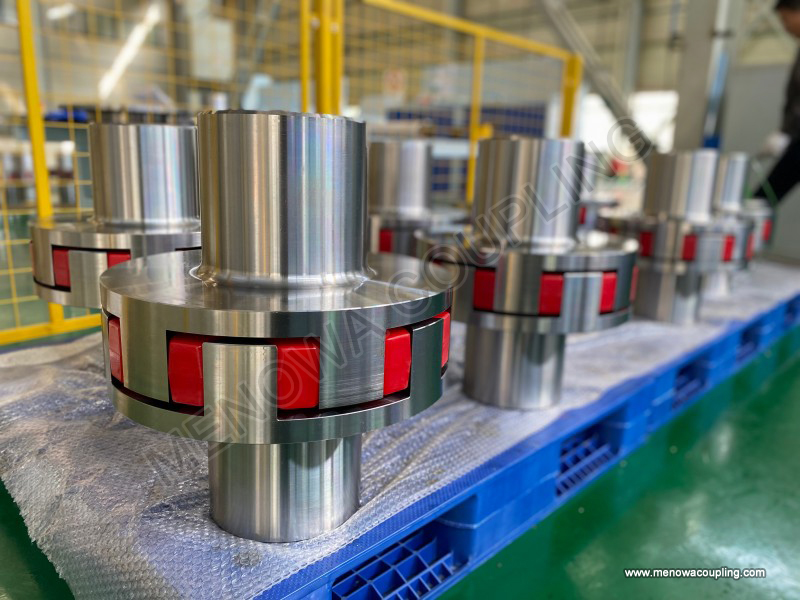
Once all components are manufactured, the next step is assembly. The assembly process involves fitting the elastic element between the two metal hubs and securing them together using fasteners such as bolts, screws, or pins. The assembly must be done with precision to ensure that the elastic element is properly aligned and seated, and that the hubs are securely attached. In some cases, the elastic element is press-fitted onto the hubs, while in others, it is secured using adhesive or mechanical fasteners. During assembly, it is important to ensure that there is no excessive tension or compression on the elastic element, as this can affect its performance and lifespan. Automated assembly machines are often used in large-scale production to improve efficiency and consistency, while small-scale production may involve manual assembly. After assembly, the coupling is inspected to ensure that all components are properly fitted and that there are no defects, such as loose fasteners or misaligned components.
Quality control is an integral part of the elastic coupling production process, ensuring that every product meets the specified standards and performance requirements. Quality control begins with the inspection of raw materials, where samples are tested to verify their chemical composition, mechanical properties, and dimensional accuracy. During the manufacturing process, in-process inspections are conducted at each stage to identify any defects early and prevent them from affecting the final product. For example, after machining, the metal components are inspected using tools such as calipers, micrometers, and coordinate measuring machines (CMMs) to ensure that they meet the required dimensions and tolerances. The elastic elements are inspected for defects such as cracks, bubbles, or uneven thickness. After assembly, the entire coupling is subjected to a series of tests to evaluate its performance. These tests include torque testing, which measures the coupling’s ability to transmit torque without failure; misalignment testing, which evaluates its ability to accommodate angular, parallel, and axial misalignments; vibration testing, which measures its ability to absorb vibrations; and durability testing, which involves subjecting the coupling to repeated cycles of load to simulate real-world operation and ensure that it can withstand long-term use. Any couplings that fail these tests are rejected and either reworked or discarded.
In addition to performance testing, the final inspection also includes a visual inspection to check for any surface defects, such as scratches, dents, or corrosion. The coupling is also checked for proper labeling, which includes information such as the torque capacity, rotational speed, and material type. Once the coupling passes all quality control tests, it is prepared for packaging. Packaging is an important step in the production process, as it protects the coupling from damage during transportation and storage. Couplings are typically packaged in cardboard boxes or plastic containers, with protective materials such as foam or bubble wrap to prevent scratches and impacts. The packaging also includes instructions for installation and maintenance, which help ensure that the coupling is installed correctly and maintained properly to maximize its lifespan.
The production of elastic couplings is constantly evolving, driven by advancements in technology, changes in industrial requirements, and the need for more efficient, durable, and cost-effective products. Modern production facilities are increasingly adopting automation and robotics to improve efficiency, reduce labor costs, and enhance precision. For example, automated machining systems, robotic assembly lines, and computerized quality control systems are now common in large-scale production facilities. These technologies not only improve the speed and consistency of production but also reduce the risk of human error, leading to higher quality products. In addition, advancements in material science are leading to the development of new materials with improved properties, such as higher strength, better elasticity, and increased resistance to extreme conditions. For instance, the use of composite materials in elastic elements is growing, as they offer a combination of light weight, high strength, and resistance to heat and corrosion, making them suitable for a wide range of advanced applications. Another trend in elastic coupling production is the focus on sustainability, with manufacturers increasingly using recycled materials and implementing eco-friendly production processes to reduce their environmental impact. This includes using water-based paints and coatings, reducing energy consumption in manufacturing processes, and recycling waste materials.
The application of elastic couplings spans a wide range of industries, including automotive, aerospace, manufacturing, energy, and agriculture. In the automotive industry, elastic couplings are used in powertrain systems to connect the engine to the transmission, absorbing vibrations and accommodating misalignments. In the aerospace industry, they are used in aircraft engines and landing gear systems, where lightweight and high-performance components are critical. In manufacturing, elastic couplings are used in machinery such as pumps, fans, compressors, and conveyors, ensuring smooth and efficient operation. In the energy industry, they are used in wind turbines and power generation systems, where they transmit torque while absorbing vibrations from the rotating components. The diverse range of applications means that the production of elastic couplings must be flexible, with the ability to customize products to meet the specific needs of each industry and application. Manufacturers work closely with their customers to understand their requirements and develop tailored solutions, from custom designs to specialized materials and finishes.
In conclusion, the production of elastic couplings is a complex and multi-stage process that requires a combination of precision engineering, material expertise, and strict quality control. From the initial design phase to the final packaging, every step is critical in ensuring that the coupling meets the performance, durability, and reliability requirements of its intended application. The use of advanced technologies, such as CAD, FEA, CNC machining, and automated assembly, has revolutionized the production process, leading to higher quality products, increased efficiency, and reduced costs. As industrial applications continue to evolve, the production of elastic couplings will continue to adapt, with a focus on innovation, sustainability, and customization. Whether used in heavy machinery, precision equipment, or advanced aerospace systems, elastic couplings play a vital role in ensuring the smooth and efficient operation of mechanical transmission systems, making them an indispensable component in modern industry.
Post Date: May 2, 2026
https://www.menowacoupling.com/china-coupling/elastic-coupling-production.html
Products

Related Articles
Parts of Elastic Coupling
Elastic couplings are essential components in mechanical transmission systems, designed to connect two rotating shafts while accommodating misalignments, absorbing vibrations, and protecting connected equipment from damage. Unlike rigid couplings that require precise alignment and offer no flexibility, elastic couplings…Elastic Coupling For Sale
In the complex world of mechanical transmission systems, elastic couplings stand as essential components that bridge the gap between rotating shafts, ensuring smooth power transfer while accommodating the inevitable misalignments and vibrations that occur during operation. These versatile devices are designed to transmi…Specification of Elastic Coupling
An elastic coupling is a critical mechanical component designed to connect two rotating shafts in a power transmission system, enabling the transfer of torque while accommodating various forms of misalignment and dampening vibrations. Unlike rigid couplings that require precise alignment and offer no flexibility, elasti…Diagram of Elastic Coupling
Diagram of Elastic CouplingAn elastic coupling is a critical mechanical component designed to connect two rotating shafts, transmitting torque while accommodating misalignments, absorbing vibrations, and mitigating shock loads in various industrial and mechanical systems. Unlike rigid couplings that require precise alig…What is Elastic Coupling
Elastic coupling is a critical component in mechanical transmission systems, designed to connect two rotating shafts while accommodating misalignments, absorbing vibrations, and protecting machinery from damage. Unlike rigid couplings that require precise alignment and offer no flexibility, elastic couplings utilize ela…Characteristics of Elastic Coupling
Elastic coupling is a critical component in mechanical transmission systems, designed to connect two rotating shafts while accommodating various forms of misalignment, absorbing vibrations, and transmitting torque efficiently. Unlike rigid couplings that require precise alignment and offer no flexibility, elastic coupli…
 WeChat
 WhatsApp