Working Principle of Elastic Coupling
In the complex and interconnected world of mechanical power transmission, elastic couplings stand as indispensable components that bridge the gap between driving and driven shafts, ensuring the smooth, efficient, and protected transfer of torque. Unlike rigid couplings that demand precise alignment and offer no flexibility, elastic couplings incorporate elastic elements to accommodate misalignments, absorb vibrations, and mitigate shock loads, thereby safeguarding the integrity of the entire transmission system. To fully understand their functionality, it is essential to delve into the core working principles, structural components, material characteristics, and operational mechanisms that define elastic couplings, as well as the various factors that influence their performance in diverse industrial applications.
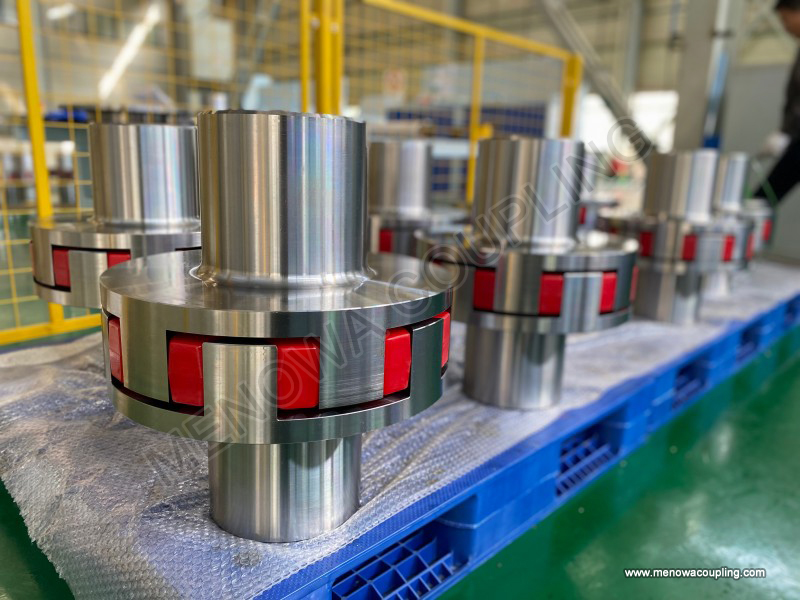
At its most fundamental level, an elastic coupling operates on the principle of combining the rigidity required for torque transmission with the flexibility needed to adapt to dynamic operational conditions. The primary function of any coupling is to transmit rotational force from a driving shaft—typically connected to a motor, engine, or other power source—to a driven shaft, which powers a load such as a pump, fan, conveyor, or machine tool. Elastic couplings achieve this by integrating two key components: metal hubs that attach to the respective shafts and an elastic element that connects these hubs. The metal hubs provide the structural strength necessary to withstand the torque generated by the driving shaft, while the elastic element acts as the flexible intermediary that absorbs vibrations, compensates for misalignments, and cushions shock, preventing these harmful forces from being transmitted to the connected equipment.
The elastic element is the heart of an elastic coupling, and its design and material properties directly determine the coupling’s performance characteristics. These elements can be constructed from a variety of materials, each selected based on the specific requirements of the application, including torque capacity, operating temperature, environmental conditions, and vibration damping needs. Common materials for elastic elements include rubber, polyurethane, engineering plastics, and metal alloys such as stainless steel or aluminum. Rubber and polyurethane are widely used due to their excellent elasticity, damping properties, and ability to absorb shock, while metal elastic elements—often in the form of bellows, diaphragms, or spiral springs—offer higher torque capacity, rigidity, and resistance to high temperatures and chemical corrosion. The choice of material influences not only the coupling’s ability to compensate for misalignments and dampen vibrations but also its durability, maintenance requirements, and overall service life.
One of the key operational principles of elastic couplings is their ability to compensate for three types of shaft misalignment: radial, angular, and axial. Radial misalignment occurs when the two shafts are parallel but not concentric, meaning their axes are offset from one another. Angular misalignment happens when the shafts are not parallel, resulting in an angle between their axes. Axial misalignment refers to the linear displacement of one shaft relative to the other along the axis of rotation. These misalignments can arise from a variety of factors, including improper installation, thermal expansion of components during operation, structural deformation, bearing wear, and uneven loading. Rigid couplings are unable to accommodate any significant misalignment, which can lead to excessive stress on bearings, shafts, and other components, ultimately resulting in premature failure. In contrast, elastic couplings use the deformability of their elastic elements to absorb these misalignments, allowing the shafts to rotate smoothly without transferring excessive forces to the system.
When radial misalignment occurs, the elastic element bends or stretches to bridge the offset between the two shafts. For example, in a spiral groove elastic coupling, the continuous spiral cut in the metal body allows the coupling to flex radially, accommodating small to moderate radial offsets without generating excessive internal stress. Similarly, angular misalignment is compensated for by the elastic element’s ability to twist or bend at an angle, ensuring that the torque is transmitted evenly even when the shafts are not perfectly parallel. Axial misalignment is handled by the elastic element’s ability to compress or extend along the axis of rotation, absorbing the linear displacement between the shafts. This compensation mechanism not only protects the shafts and bearings from damage but also ensures that the load receives a consistent and smooth supply of power, improving the overall efficiency and stability of the transmission system.
Another critical working principle of elastic couplings is their ability to dampen vibrations and absorb shock loads. In any mechanical system, vibrations are inevitable, generated by the operation of the driving motor, the movement of the load, or external factors such as uneven terrain or adjacent equipment. These vibrations can be harmful if transmitted to sensitive components, leading to noise, wear, fatigue, and even structural failure. Elastic couplings mitigate this risk by using their elastic elements to absorb vibrational energy. When vibrations occur, the elastic element deforms, converting the vibrational energy into heat, which is then dissipated, reducing the amplitude of the vibrations before they reach the driven shaft and load. This damping effect not only protects the equipment but also improves the comfort and safety of the working environment by reducing noise levels.
Shock loads, which are sudden, transient increases in torque, pose a similar threat to mechanical systems. These loads can occur during startup, shutdown, or when the load suddenly changes, such as when a conveyor encounters an obstruction or a pump cavitates. Elastic couplings absorb these shock loads by allowing the elastic element to deform rapidly, cushioning the impact and distributing the force over a longer period. This prevents the shock from being transmitted directly to the shafts, bearings, and other critical components, reducing the risk of immediate failure and extending the service life of the system. For example, in applications with frequent start-stop cycles, such as automated production lines, elastic couplings play a vital role in protecting the motor and load from the repeated shock of acceleration and deceleration.
The torque transmission mechanism of elastic couplings is another key aspect of their working principle. Torque is transmitted from the driving shaft to the driven shaft through the interaction between the metal hubs and the elastic element. The metal hubs are securely attached to the shafts using various mounting methods, including set screws, clamping screws, keyways, D-shaped holes, or expansion sleeves. Set screws and clamping screws are common mounting methods, with clamping screws being preferred in many applications due to their ability to secure the hub to the shaft without causing damage to the shaft surface. Keyways and D-shaped holes are used for applications requiring higher torque transmission, ensuring a secure connection that prevents slippage between the hub and the shaft.
Once the hubs are attached to the shafts, torque is transferred from the driving hub to the elastic element, which then transmits it to the driven hub. The elastic element must be designed to withstand the maximum torque required by the application while maintaining its flexibility. In metal elastic couplings, such as diaphragm or bellows couplings, torque is transmitted through the elastic deformation of the metal components, which are designed to be rigid enough to transmit torque efficiently but flexible enough to accommodate misalignments and dampen vibrations. In non-metallic elastic couplings, such as those with rubber or polyurethane elements, torque is transmitted through the shear or compression of the elastic material, which deforms under load and then returns to its original shape, ensuring consistent torque transmission.
The design of the elastic element also influences the coupling’s torsional stiffness, which is a measure of its resistance to torsional deformation under torque. Torsional stiffness is an important parameter because it affects the precision of torque transmission and the responsiveness of the system. High torsional stiffness is desirable in applications requiring precise positioning, such as servo motor systems and machine tools, where even small torsional deformations can lead to errors in positioning. In contrast, lower torsional stiffness is preferred in applications where vibration damping is a priority, such as pumps, fans, and crushers, where the ability to absorb vibrations is more important than absolute precision.
There are several common types of elastic couplings, each with a unique design that optimizes their performance for specific applications. Spiral groove elastic couplings feature a single continuous spiral cut in the metal body, which provides excellent elasticity and low bearing load. These couplings are particularly effective at compensating for angular and axial misalignments but have limited ability to handle radial misalignment, as bending the spiral groove in two directions can generate excessive internal stress. Parallel groove elastic couplings, on the other hand, have three to five short parallel cuts, which increase torsional stiffness while maintaining the ability to compensate for misalignments. These couplings are suitable for light to moderate torque applications, such as connecting servo motors to ball screws.
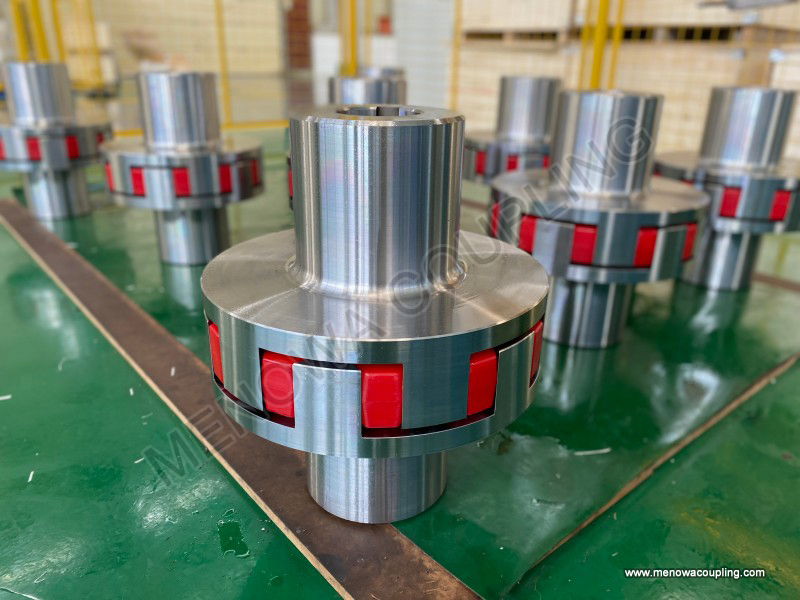
Another type of elastic coupling is the jaw coupling, which consists of two metal jaws connected by an elastic insert, typically made of rubber or polyurethane. The elastic insert absorbs vibrations and compensates for misalignments, while the jaws provide a secure connection for torque transmission. Jaw couplings are simple in design, easy to install, and require minimal maintenance, making them suitable for a wide range of industrial applications. Diaphragm couplings use thin metal diaphragms as the elastic element, which offer high torsional stiffness, zero backlash, and excellent resistance to high temperatures and chemical corrosion. These couplings are ideal for high-speed, high-precision applications, such as aerospace, automotive, and precision machining.
The performance of an elastic coupling is also influenced by environmental factors, such as temperature, humidity, and chemical exposure. Elastic elements made of rubber or polyurethane have specific temperature limits, typically ranging from -30°C to 80°C, beyond which their elasticity and durability may be compromised. In high-temperature applications, metal elastic elements or specialized high-temperature elastomers are used to ensure reliable performance. Similarly, in corrosive environments, such as chemical processing plants or marine applications, couplings made of stainless steel or other corrosion-resistant materials are preferred to prevent degradation of the components.
Maintenance is another important consideration in the operation of elastic couplings. While many elastic couplings are designed to be maintenance-free, some require periodic inspection and replacement of the elastic element. Rubber and polyurethane elements, for example, can degrade over time due to fatigue, exposure to heat, or chemical exposure, leading to a loss of elasticity and reduced performance. Regular inspection of the coupling for signs of wear, cracks, or deformation can help prevent unexpected failure and ensure the continued reliability of the transmission system. In contrast, metal elastic elements, such as diaphragms and bellows, have a longer service life and require less frequent maintenance, making them suitable for applications where access is limited or maintenance costs are a concern.
The selection of the appropriate elastic coupling for a specific application depends on a variety of factors, including torque capacity, operating speed, misalignment tolerance, vibration damping requirements, environmental conditions, and installation space. It is essential to accurately calculate the maximum torque required by the application, including peak torque during startup or overload, to ensure that the coupling can withstand the load without failure. The operating speed is also a critical factor, as high-speed applications require couplings with low rotational inertia to prevent excessive centrifugal forces, which can cause vibration and damage to the system.
In addition to these factors, the type of misalignment present in the system must be considered. If radial misalignment is the primary concern, a coupling with a flexible elastic element, such as a spiral groove or jaw coupling, may be the best choice. For angular misalignment, diaphragm or bellows couplings offer excellent compensation capabilities. Axial misalignment can be accommodated by most elastic couplings, but the specific design may affect the maximum axial displacement that can be handled. Vibration damping requirements also play a role in selection, with rubber and polyurethane elements providing better damping than metal elements.
To illustrate the practical application of elastic coupling working principles, consider a typical industrial scenario: a motor connected to a centrifugal pump. In this application, the motor generates torque that must be transmitted to the pump shaft to drive the impeller. During operation, the motor and pump may experience slight misalignments due to thermal expansion, bearing wear, or improper installation. Without an elastic coupling, these misalignments would transfer excessive stress to the motor and pump bearings, leading to premature failure. The elastic coupling absorbs these misalignments, allowing the shafts to rotate smoothly. Additionally, the pump may generate vibrations due to the movement of fluid, which are absorbed by the coupling’s elastic element, preventing them from being transmitted to the motor and reducing noise levels. The coupling also cushions the shock load during startup, protecting the motor and pump from damage.
Another example is the use of elastic couplings in servo motor systems, which require precise torque transmission and positioning. In these applications, the coupling must have high torsional stiffness to ensure that the torque from the servo motor is transmitted accurately to the load, with minimal torsional deformation. Diaphragm couplings are often used in this context, as they offer zero backlash and high torsional stiffness, ensuring precise positioning while still accommodating small misalignments that may occur during operation. The metal diaphragm also provides excellent resistance to high speeds, making it suitable for the high rotational speeds of servo motors.
In summary, the working principle of elastic couplings revolves around the synergistic interaction between rigid metal hubs and flexible elastic elements to transmit torque, compensate for shaft misalignments, dampen vibrations, and absorb shock loads. The elastic element is the key component that enables these functions, with its material and design determining the coupling’s performance characteristics. By accommodating misalignments and mitigating harmful forces, elastic couplings protect the connected equipment, improve the efficiency and stability of the transmission system, and extend the service life of the entire mechanical system. Understanding the working principles of elastic couplings is essential for selecting the appropriate coupling for a specific application, ensuring optimal performance, reliability, and safety in industrial and mechanical operations.
The versatility of elastic couplings makes them suitable for a wide range of applications across various industries, including manufacturing, automotive, aerospace, marine, and energy. From small precision instruments to large industrial machinery, elastic couplings play a vital role in ensuring the smooth and efficient transfer of power. As technology advances, the design and materials of elastic couplings continue to evolve, with new innovations focused on improving torque capacity, reducing weight, enhancing durability, and expanding the range of environmental conditions in which they can operate. Despite these advancements, the core working principles remain consistent: combining rigidity for torque transmission with flexibility for adaptability, ensuring that elastic couplings remain an essential component in modern mechanical power transmission systems.
Post Date: May 11, 2026
https://www.menowacoupling.com/china-coupling/working-principle-of-elastic-coupling.html
Products

Related Articles
Components of Elastic Coupling
Elastic couplings are essential mechanical components widely used in various industrial applications to connect two rotating shafts, transmitting torque while accommodating misalignments, absorbing vibrations, and protecting connected equipment from damage. Unlike rigid couplings that require precise alignment and offer…Maintenance of Elastic Coupling
Elastic couplings are essential components in mechanical transmission systems, serving to connect two rotating shafts, transmit torque, and compensate for axial, radial, and angular misalignments. They also play a crucial role in absorbing vibrations and shock loads, thereby protecting the connected equipment such as mo…Dimensions of Elastic Coupling
The dimensions of elastic couplings are a critical factor that directly determines their performance, compatibility, and service life in mechanical transmission systems. Unlike rigid couplings, which rely on precise alignment and rigid connections to transmit torque, elastic couplings integrate flexible elements that al…Coaxiality of Elastic Coupling
In the complex ecosystem of mechanical transmission systems, elastic couplings serve as critical connectors that bridge rotating shafts, enabling the seamless transfer of torque while accommodating minor misalignments and absorbing vibrations. Unlike rigid couplings, which demand near-perfect alignment to function effec…Gap Chart of Elastic Coupling
In the realm of mechanical power transmission, elastic couplings serve as critical components that bridge the gap between driving and driven shafts, accommodating misalignments while ensuring efficient torque transfer. Among the various tools and methodologies used to optimize the performance and longevity of elastic co…Size Chart of Elastic Coupling
The size chart of elastic coupling is an indispensable reference tool in mechanical transmission systems, serving as a bridge between the coupling’s design parameters and its practical application. It systematically organizes key dimensional and performance data, enabling engineers, technicians, and procurement personn…
 WeChat
 WhatsApp