Specification of Elastic Coupling
An elastic coupling is a critical mechanical component designed to connect two rotating shafts in a power transmission system, enabling the transfer of torque while accommodating various forms of misalignment and dampening vibrations. Unlike rigid couplings that require precise alignment and offer no flexibility, elastic couplings integrate elastic elements to absorb shocks, compensate for axial, radial, and angular deviations, and protect the connected equipment from premature wear or damage. This versatility makes them indispensable in a wide range of industrial, automotive, and precision engineering applications, where smooth and reliable power transmission is essential. The fundamental functionality of an elastic coupling lies in its ability to balance the need for torque transmission efficiency with the flexibility to adapt to real-world operating conditions, where perfect alignment is often impractical or impossible due to installation errors, thermal expansion, or structural deformation.
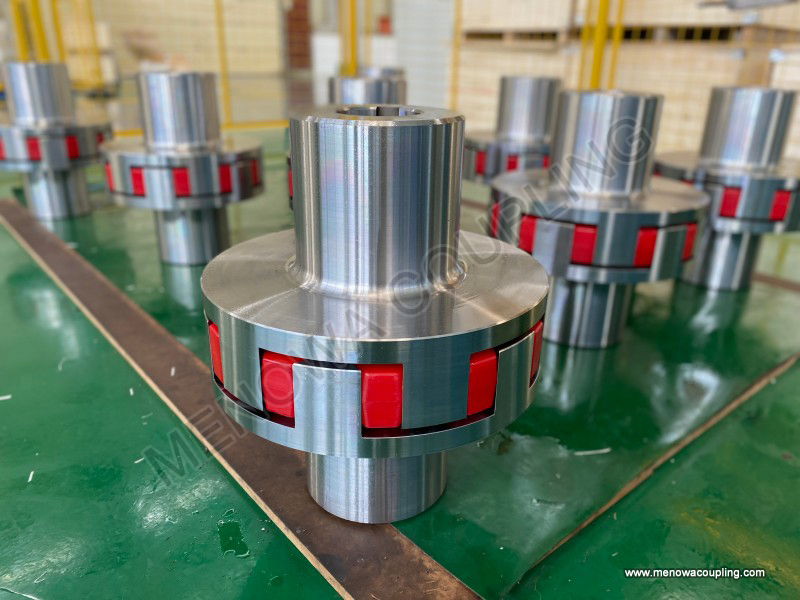
The basic structure of an elastic coupling typically consists of two hubs that attach to the respective shafts, an elastic element that connects these hubs, and fastening mechanisms to secure the assembly in place. The hubs are usually crafted from high-strength materials to ensure they can withstand the torque and rotational forces generated during operation, while the elastic element is designed to provide the necessary flexibility and vibration dampening. The design of each component is carefully engineered to work in harmony, ensuring that the coupling can transmit torque efficiently without sacrificing its ability to compensate for misalignment. The elastic element, in particular, is the heart of the coupling, as its material properties and shape directly influence the coupling’s performance, including its torque capacity, misalignment compensation range, and service life.
Materials used in the construction of elastic couplings are selected based on the specific application requirements, including torque load, operating temperature, environmental conditions, and desired flexibility. Common materials for the hubs include aluminum alloy, stainless steel, and sometimes engineering plastics, each offering distinct advantages. Aluminum alloy is widely preferred for its lightweight nature, excellent corrosion resistance, and good mechanical strength, making it suitable for most general-purpose applications where weight reduction is beneficial. Stainless steel, on the other hand, provides superior durability and corrosion resistance, making it ideal for harsh environments such as those involving exposure to chemicals, moisture, or high temperatures. Engineering plastics are used in applications where weight is a critical factor and torque requirements are relatively low, offering cost-effectiveness and ease of manufacturing. The elastic element is typically made from rubber, polyurethane, engineering plastics, or metal springs, with each material offering different levels of flexibility, damping capacity, and resistance to wear and environmental factors.
Rubber is a common material for elastic elements due to its excellent elasticity, vibration absorption capabilities, and cost-effectiveness. It can effectively dampen shocks and vibrations, reducing the impact on connected equipment such as motors, pumps, and gearboxes. However, rubber has limitations in terms of temperature resistance, as it can degrade over time when exposed to high temperatures or harsh chemicals. Polyurethane offers improved durability and temperature resistance compared to rubber, along with better resistance to oil and abrasion, making it suitable for applications where the coupling is exposed to lubricants or harsh operating conditions. Metal springs, such as spiral springs or leaf springs, are used in high-torque applications where greater rigidity and durability are required, as they can withstand higher loads while still providing a degree of flexibility and vibration dampening. The choice of elastic element material is crucial, as it directly affects the coupling’s performance, service life, and suitability for a given application.
Elastic couplings are available in various types, each designed to address specific application needs and operating conditions. The most common types include helical groove couplings, parallel groove couplings, jaw couplings, diaphragm couplings, and tire couplings. Each type features a unique design that influences its torque capacity, misalignment compensation capabilities, vibration dampening performance, and maintenance requirements. Helical groove couplings, for example, feature a continuous multi-turn helical groove that provides excellent elasticity and low bearing load, making them ideal for applications requiring precise torque transmission and the ability to compensate for angular and axial misalignment. However, they have limited capacity to handle radial misalignment, as bending the helical groove in two different directions can generate excessive internal pressure, leading to premature wear.
Parallel groove couplings, by contrast, have 3 to 5 short parallel grooves that balance the need for flexibility and torque rigidity. The shorter grooves enhance the coupling’s torque capacity while still allowing for a degree of misalignment compensation, making them suitable for light-load applications such as connecting servo motors to ball screws. Unlike helical groove couplings, parallel groove couplings can handle moderate radial misalignment and are more suitable for applications involving frequent forward and reverse rotation. Jaw couplings consist of two jaw-shaped hubs and an elastomeric insert that fits between them, providing excellent vibration dampening and misalignment compensation. The elastomeric insert absorbs shocks and vibrations, while the jaw design ensures secure torque transmission, making them suitable for a wide range of general-purpose applications, including pumps, fans, and compressors.
Diaphragm couplings use thin metal diaphragms as the elastic element, offering high torque rigidity, zero backlash, and excellent misalignment compensation. The metal diaphragms flex to accommodate axial, radial, and angular misalignment without losing torque transmission efficiency, making them ideal for high-precision applications such as数控机床, aerospace equipment, and high-speed turbines. Unlike couplings with rubber or polyurethane elements, diaphragm couplings require no lubrication and have a long service life, as the metal diaphragms are resistant to wear and environmental degradation. Tire couplings feature a flexible tire-shaped elastomeric element that connects two hubs, providing exceptional vibration dampening and misalignment compensation capabilities. They are particularly suitable for applications involving high levels of shock and vibration, such as矿山 machinery, crushers, and agricultural equipment, as the tire element can absorb large amounts of energy and accommodate significant misalignment.
The working principle of an elastic coupling revolves around the interaction between the hubs and the elastic element. When torque is applied to one shaft, the hub attached to that shaft transfers the torque to the elastic element, which then transmits it to the other hub and ultimately to the second shaft. During this process, the elastic element deforms elastically to accommodate any misalignment between the two shafts, including axial movement (endplay), radial offset (parallel misalignment), and angular deviation (tilt between shafts). This elastic deformation also absorbs shocks and vibrations generated by the rotating shafts, reducing the transmission of these forces to the connected equipment. The ability to compensate for misalignment is particularly important in industrial applications, where installation errors, thermal expansion, and structural deflection can cause significant deviations between shafts, leading to increased wear, noise, and premature failure of bearings and other components.
Axial misalignment occurs when the two shafts move along their central axes relative to each other, which can be caused by thermal expansion of the shafts during operation or by structural changes in the equipment. Elastic couplings compensate for axial misalignment by allowing the elastic element to stretch or compress, absorbing the axial movement without transferring excessive forces to the shafts or bearings. Radial misalignment happens when the central axes of the two shafts are parallel but offset from each other, which can result from improper installation, uneven foundation settlement, or wear of bearing components. The elastic element in the coupling bends to accommodate this offset, ensuring that torque is transmitted smoothly without creating additional stress on the shafts. Angular misalignment occurs when the two shafts are not parallel but intersect at an angle, which can be caused by misalignment during installation or by deflection of the equipment frame. The elastic element flexes to accommodate this angular deviation, maintaining efficient torque transmission while reducing the load on the connected components.
In addition to misalignment compensation and vibration dampening, elastic couplings also play a crucial role in protecting the connected equipment from damage caused by shock loads and torque fluctuations. When a machine starts or stops suddenly, or when there is a sudden change in load, shock loads are generated that can damage motors, gearboxes, and other components. The elastic element in the coupling absorbs these shock loads by deforming elastically, converting the kinetic energy of the shock into elastic potential energy, which is then released gradually. This reduces the impact of the shock on the connected equipment, extending its service life and improving overall system reliability. Torque fluctuations, which are common in applications such as pumps, compressors, and conveyors, can also be dampened by the elastic element, ensuring that the torque transmitted to the driven shaft is smooth and consistent.
The performance characteristics of an elastic coupling are determined by several key parameters, including torque capacity, misalignment compensation range, torsional stiffness, damping ratio, and operating temperature range. Torque capacity is the maximum amount of torque that the coupling can transmit without failure, and it is determined by the material strength of the hubs and the elastic element, as well as the design of the coupling. Misalignment compensation range refers to the maximum amount of axial, radial, and angular misalignment that the coupling can accommodate while maintaining efficient torque transmission. Torsional stiffness is a measure of the coupling’s resistance to torsional deformation, with higher stiffness being desirable for applications requiring precise torque transmission, such as servo systems and precision machinery. Damping ratio is a measure of the coupling’s ability to absorb vibrations, with higher damping ratios being beneficial for applications involving high levels of shock and vibration.
Operating temperature range is another critical parameter, as it determines the suitability of the coupling for a given application. The elastic element material is particularly sensitive to temperature, with most rubber and polyurethane elements having a maximum operating temperature of between -30°C and 80°C. For applications involving higher temperatures, such as those in the automotive or aerospace industries, metal elastic elements such as diaphragms or springs are preferred, as they can withstand temperatures in excess of 200°C. The operating temperature also affects the service life of the coupling, as high temperatures can accelerate the degradation of elastic materials, leading to premature failure.
The selection of an appropriate elastic coupling for a specific application requires careful consideration of several factors, including the torque and speed requirements, the type and magnitude of misalignment, the operating environment, and the desired level of vibration dampening. It is essential to choose a coupling with a torque capacity that exceeds the maximum torque generated by the system, to ensure that the coupling can handle peak loads without failure. The misalignment compensation range of the coupling should be sufficient to accommodate the expected misalignment in the application, taking into account installation errors, thermal expansion, and structural deflection. The operating environment, including temperature, humidity, and exposure to chemicals or lubricants, should also be considered when selecting the material of the hubs and elastic element.
For high-precision applications such as数控机床 and servo systems, diaphragm couplings are often the preferred choice due to their zero backlash, high torsional stiffness, and excellent misalignment compensation capabilities. These couplings ensure precise torque transmission, which is essential for maintaining the accuracy of the machine. For general-purpose applications such as pumps, fans, and compressors, jaw couplings or parallel groove couplings are often suitable, as they offer a good balance of cost-effectiveness, flexibility, and vibration dampening. For applications involving high levels of shock and vibration, such as矿山 machinery and crushers, tire couplings or snake spring couplings are ideal, as they provide exceptional vibration absorption and misalignment compensation.
Proper installation and maintenance are essential to ensure the optimal performance and long service life of an elastic coupling. During installation, it is important to align the shafts as accurately as possible, even though the coupling can compensate for misalignment, as excessive misalignment can increase the load on the coupling and reduce its service life. The hubs should be securely fastened to the shafts using appropriate fastening mechanisms, such as set screws or clamping collars, to prevent slippage during operation. It is also important to ensure that the elastic element is properly installed and not damaged, as any damage to the elastic element can compromise the coupling’s performance.
Regular maintenance involves inspecting the coupling for signs of wear, damage, or degradation. The elastic element should be checked for cracks, tears, or hardening, which can indicate that it needs to be replaced. The hubs and fastening mechanisms should also be inspected for signs of wear or loosening, and any loose fasteners should be tightened immediately. In applications involving exposure to lubricants or chemicals, the coupling should be cleaned regularly to prevent the buildup of contaminants, which can accelerate wear. It is also important to monitor the operating temperature of the coupling, as excessive heat can indicate a problem with misalignment, overloading, or material degradation.
In industrial applications, elastic couplings are used in a wide range of systems, including power transmission systems, conveyor systems, pump and fan systems, and precision machinery. In power transmission systems, they connect motors to gearboxes, pumps, or compressors, ensuring the smooth transfer of power while compensating for misalignment and dampening vibrations. In conveyor systems, they connect the drive motor to the conveyor belt, allowing for flexibility in alignment and absorbing shocks caused by the movement of the belt. In pump and fan systems, they help to reduce vibration and noise, extending the service life of the pumps and fans and improving overall system efficiency. In precision machinery such as数控机床 and measuring instruments, they ensure precise torque transmission and alignment, which is essential for maintaining the accuracy of the equipment.
The evolution of elastic coupling design has been driven by advances in materials science and manufacturing technology, leading to the development of more efficient, durable, and versatile couplings. Modern elastic couplings are designed to meet the increasingly demanding requirements of industrial applications, including higher torque capacities, wider misalignment compensation ranges, and improved resistance to harsh environments. The use of advanced materials such as high-strength alloys and composite materials has enabled the development of couplings that are both lightweight and durable, while advances in manufacturing processes such as CNC machining and 3D printing have allowed for more precise and complex designs.
One of the key trends in elastic coupling design is the integration of smart technologies, such as sensors, to monitor the performance of the coupling in real time. These sensors can detect changes in temperature, vibration, and torque, providing early warning of potential issues such as misalignment, overloading, or material degradation. This allows for predictive maintenance, which can reduce downtime and extend the service life of the coupling and the connected equipment. Another trend is the development of environmentally friendly couplings, which use sustainable materials and are designed to be more energy-efficient, reducing the environmental impact of industrial operations.
In conclusion, elastic couplings are essential components in power transmission systems, providing the flexibility to compensate for misalignment, dampen vibrations, and protect connected equipment from damage. Their design, materials, and performance characteristics are tailored to meet the specific needs of a wide range of applications, from general-purpose industrial machinery to high-precision aerospace equipment. Proper selection, installation, and maintenance of elastic couplings are crucial to ensuring the reliability, efficiency, and long service life of the systems in which they are used. As technology continues to advance, elastic couplings will continue to evolve, offering improved performance and versatility to meet the changing demands of modern industry.
Post Date: May 14, 2026
https://www.menowacoupling.com/china-coupling/specification-of-elastic-coupling.html
Products

Related Articles
Gap Chart of Elastic Coupling
In the realm of mechanical power transmission, elastic couplings serve as critical components that bridge the gap between driving and driven shafts, accommodating misalignments while ensuring efficient torque transfer. Among the various tools and methodologies used to optimize the performance and longevity of elastic co…Size Chart of Elastic Coupling
The size chart of elastic coupling is an indispensable reference tool in mechanical transmission systems, serving as a bridge between the coupling’s design parameters and its practical application. It systematically organizes key dimensional and performance data, enabling engineers, technicians, and procurement personn…Material of Elastic Coupling
Elastic couplings play a crucial role in mechanical transmission systems, serving as a vital connection between driving and driven shafts to transmit torque while compensating for axial, radial, and angular misalignments. The performance, durability, and suitability of an elastic coupling for specific applications are l…Structure of Elastic Coupling
An elastic coupling is a critical mechanical component designed to connect two rotating shafts—typically a driving shaft and a driven shaft—in various mechanical systems, enabling the seamless transmission of torque while accommodating misalignments and dampening vibrations. Unlike rigid couplings that require precise…Parts of Elastic Coupling
Elastic couplings are essential components in mechanical transmission systems, designed to connect two rotating shafts while accommodating misalignments, absorbing vibrations, and protecting connected equipment from damage. Unlike rigid couplings that require precise alignment and offer no flexibility, elastic couplings…Elastic Coupling For Sale
In the complex world of mechanical transmission systems, elastic couplings stand as essential components that bridge the gap between rotating shafts, ensuring smooth power transfer while accommodating the inevitable misalignments and vibrations that occur during operation. These versatile devices are designed to transmi…
 WeChat
 WhatsApp