Dimensions of Elastic Coupling
The dimensions of elastic couplings are a critical factor that directly determines their performance, compatibility, and service life in mechanical transmission systems. Unlike rigid couplings, which rely on precise alignment and rigid connections to transmit torque, elastic couplings integrate flexible elements that allow for a certain degree of misalignment while damping vibrations and absorbing shocks. As such, their dimensional design must balance structural integrity, flexibility, and adaptability to various operating conditions. Every dimension, from the outer diameter and length to the bore size and keyway specifications, plays a vital role in ensuring the coupling can effectively connect two shafts, transmit power efficiently, and withstand the mechanical stresses encountered during operation. Understanding the significance of each dimension, how they interact with one another, and how they relate to the specific requirements of a transmission system is essential for selecting, installing, and maintaining elastic couplings effectively.
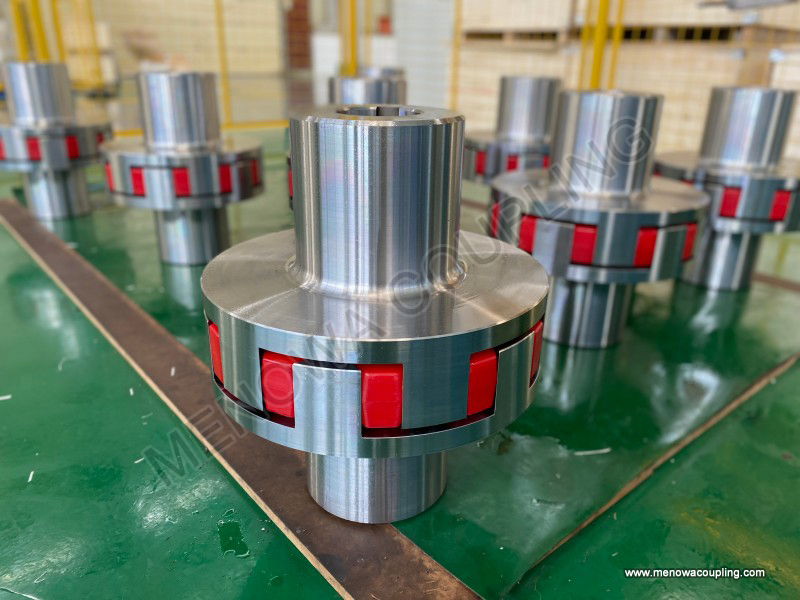
At the most basic level, the primary dimensions of an elastic coupling include the bore diameter, shaft engagement length, outer diameter, overall length, and the dimensions of the flexible element. Each of these dimensions is interdependent, and any deviation from the optimal specifications can lead to reduced performance, premature wear, or even complete failure of the coupling and the connected equipment. For instance, a bore diameter that is too large will result in a loose fit with the shaft, leading to slippage, increased vibration, and potential damage to both the coupling and the shaft. Conversely, a bore diameter that is too small will make installation difficult, exert excessive pressure on the shaft, and may cause deformation or cracking over time. The bore diameter is typically designed to match the standard shaft sizes used in industrial machinery, ensuring compatibility and a secure fit that minimizes relative movement between the coupling and the shaft.
The shaft engagement length, which refers to the length of the coupling hub that fits over the shaft, is another critical dimension that directly impacts the stability of the connection. A sufficient engagement length is necessary to distribute the torque evenly across the shaft and coupling interface, reducing the concentration of stress at any single point. If the engagement length is too short, the torque load will be concentrated on a small area, leading to excessive wear on the shaft and the coupling’s internal components, such as keyways or set screws. In contrast, an excessively long engagement length may increase the overall size of the coupling unnecessarily, leading to higher material costs and potential interference with other components in the transmission system. The optimal engagement length is typically determined by the diameter of the shaft and the amount of torque that needs to be transmitted; larger shafts and higher torque loads require longer engagement lengths to ensure a secure and reliable connection.
The outer diameter of the elastic coupling is a dimension that influences both its torque-carrying capacity and its compatibility with the surrounding equipment. A larger outer diameter generally allows for a larger flexible element, which can absorb more vibration and accommodate greater misalignment. Additionally, a larger outer diameter provides more surface area for heat dissipation, which is important in high-speed applications where friction and energy loss can generate significant heat. However, the outer diameter is also constrained by the available space in the mechanical system; if the coupling is too large, it may collide with other components, such as bearings, housings, or guards. Therefore, the outer diameter must be carefully selected to balance the coupling’s performance requirements with the spatial constraints of the application. In applications where space is limited, compact elastic couplings with smaller outer diameters are preferred, even if they have slightly lower torque-carrying capacities.
The overall length of the elastic coupling is another key dimension that affects its installation and performance. The overall length includes the length of both hubs and the flexible element, and it must be compatible with the distance between the two shafts being connected. If the overall length is too short, the shafts may not be able to be properly aligned, leading to excessive misalignment and increased stress on the coupling. If the overall length is too long, it can increase the moment of inertia of the coupling, which may affect the dynamic balance of the transmission system, especially at high speeds. Additionally, the overall length influences the coupling’s ability to accommodate axial misalignment; longer couplings typically have a greater capacity to absorb axial movement between the shafts, which is important in applications where thermal expansion or contraction of the shafts is common.
The dimensions of the flexible element are perhaps the most critical in determining the elastic coupling’s ability to dampen vibrations and accommodate misalignment. The flexible element, which is often made of rubber, polyurethane, or other elastic materials, is designed to deform under load, absorbing shocks and vibrations while allowing for radial, angular, and axial misalignment between the two shafts. The thickness, shape, and material properties of the flexible element are all dimensional factors that impact its performance. For example, a thicker flexible element will have greater flexibility and can accommodate more misalignment, but it may also have a lower torque-carrying capacity. Conversely, a thinner flexible element will be stiffer, able to transmit higher torques, but will have limited flexibility and shock absorption capabilities. The shape of the flexible element, such as whether it is cylindrical, hexagonal, or梅花-shaped, also affects its ability to distribute stress evenly and accommodate different types of misalignment.
In addition to these primary dimensions, there are several secondary dimensions that play important roles in the performance and functionality of elastic couplings. Keyway dimensions, for example, are critical for ensuring a secure connection between the coupling and the shaft. The keyway is a slot cut into the bore of the coupling hub and the shaft, and a key is inserted into this slot to prevent relative rotation between the two components. The width, depth, and length of the keyway must match the size of the key, which is typically selected based on the shaft diameter and the torque being transmitted. If the keyway dimensions are incorrect, the key may not fit properly, leading to slippage, excessive wear, or even shearing of the key under load. Set screw holes are another secondary dimension that is important for securing the coupling to the shaft. The size and position of these holes must be designed to ensure that the set screws can exert sufficient pressure to hold the coupling in place without damaging the shaft.
The dimensional design of elastic couplings is also influenced by the specific operating conditions of the application. For example, in high-speed applications, the coupling must be designed with precise dimensions to ensure dynamic balance, as any imbalance can lead to excessive vibration, noise, and premature wear. In such applications, the outer diameter, overall length, and the distribution of mass across the coupling must be carefully controlled to minimize the moment of inertia and ensure smooth operation. In applications where the coupling is exposed to harsh environments, such as high temperatures, corrosive substances, or heavy dust, the dimensions of the coupling may need to be adjusted to accommodate protective features, such as seals or covers, without compromising performance.
Another important consideration in the dimensional design of elastic couplings is the type of misalignment that the coupling will need to accommodate. Radial misalignment, which occurs when the two shafts are offset parallel to each other, requires the flexible element to have sufficient radial flexibility. The radial dimension of the flexible element, such as its outer diameter relative to the hub diameter, determines the maximum radial misalignment that the coupling can accommodate. Angular misalignment, which occurs when the two shafts are not colinear, requires the flexible element to be able to bend without permanent deformation. The length and thickness of the flexible element are key dimensions that influence the coupling’s ability to accommodate angular misalignment. Axial misalignment, which occurs when the two shafts move along their axial direction relative to each other, requires the flexible element to have sufficient axial flexibility, which is influenced by the length and compressibility of the element.
The material used in the construction of the elastic coupling also has a significant impact on its dimensional design. Different materials have different mechanical properties, such as strength, flexibility, and durability, which affect the optimal dimensions of the coupling. For example, couplings made of steel have higher strength and can transmit higher torques, allowing for smaller overall dimensions compared to couplings made of aluminum or plastic. However, steel couplings are also heavier, which may be a disadvantage in high-speed applications where weight is a concern. Elastic elements made of rubber have excellent vibration damping properties but may degrade over time when exposed to high temperatures or chemicals, requiring the dimensions of the flexible element to be adjusted to compensate for potential wear. Polyurethane flexible elements, on the other hand, have better durability and resistance to chemicals, allowing for smaller dimensions while maintaining performance.
When selecting an elastic coupling, it is essential to match the dimensions of the coupling to the requirements of the transmission system. This involves considering the shaft diameter, torque load, speed, misalignment tolerance, and spatial constraints of the application. For example, a small electric motor driving a pump may require a compact elastic coupling with a small outer diameter and short overall length, while a large industrial machine transmitting high torque may require a larger coupling with a longer engagement length and thicker flexible element. Additionally, the dimensions of the coupling must be compatible with the other components in the system, such as the bearings, shafts, and housings, to ensure proper installation and operation.
Installation and maintenance also rely heavily on the dimensional accuracy of the elastic coupling. During installation, the bore diameter must match the shaft diameter precisely to ensure a secure fit, and the keyway dimensions must align with the key to prevent slippage. The overall length of the coupling must be such that the two shafts are properly aligned, and the flexible element must be positioned correctly to accommodate any misalignment. During maintenance, checking the dimensions of the coupling, such as the wear on the flexible element or the fit between the hub and the shaft, can help identify potential issues before they lead to failure. For example, if the bore diameter becomes enlarged due to wear, the coupling may need to be replaced to prevent slippage and damage to the shaft.
It is also important to note that the dimensions of elastic couplings are often standardized to ensure compatibility across different manufacturers and applications. Standardized dimensions for bore diameters, keyways, and overall lengths allow for easy replacement of couplings and ensure that they can be used with standard shaft sizes and other components. However, in some specialized applications, custom dimensions may be required to meet specific performance or spatial requirements. Custom elastic couplings are designed to match the unique dimensions of the transmission system, ensuring optimal performance and compatibility. When designing custom couplings, it is essential to consider all the factors that influence dimensional design, including torque load, speed, misalignment, material properties, and environmental conditions.
The impact of dimensional inaccuracies on the performance of elastic couplings cannot be overstated. Even small deviations from the optimal dimensions can lead to a range of issues, including increased vibration, noise, wear, and reduced torque transmission efficiency. For example, a slight increase in the bore diameter can lead to a loose fit, causing the coupling to slip and generate heat, which can degrade the flexible element and shorten the coupling’s service life. A decrease in the engagement length can lead to stress concentration, resulting in premature failure of the hub or the shaft. Similarly, a flexible element with incorrect dimensions may not be able to accommodate the required misalignment, leading to excessive stress on the coupling and the connected equipment.
In high-torque applications, the dimensional design of the elastic coupling becomes even more critical. The torque-carrying capacity of the coupling is directly related to its dimensions, such as the outer diameter, engagement length, and the size of the flexible element. A coupling with insufficient dimensions may not be able to withstand the torque load, leading to shearing of the flexible element or damage to the hubs. In contrast, a coupling with excessive dimensions may be unnecessarily heavy and expensive, increasing the overall cost of the transmission system. Therefore, striking the right balance between dimensions and performance is essential in high-torque applications.
Vibration damping is another key function of elastic couplings, and this is also influenced by their dimensional design. The flexible element’s dimensions, such as its thickness, shape, and material, determine how effectively it can absorb and dissipate vibrations. A larger, more flexible element will be able to dampen more vibration, but it may also have a lower natural frequency, which can lead to resonance in some applications. The outer diameter and overall length of the coupling also affect its vibration characteristics; a larger coupling may have a lower natural frequency, making it more susceptible to resonance at certain speeds. Therefore, the dimensions of the coupling must be designed to avoid resonance while providing effective vibration damping.
Environmental factors also play a role in determining the optimal dimensions of elastic couplings. In applications where the coupling is exposed to high temperatures, the dimensions of the flexible element may need to be adjusted to account for thermal expansion and contraction. For example, a flexible element made of rubber may shrink or expand at high temperatures, requiring a slightly larger or smaller initial dimension to ensure proper performance. In corrosive environments, the dimensions of the coupling may need to be adjusted to accommodate protective coatings or materials that resist corrosion, without compromising the coupling’s flexibility or torque-carrying capacity.
In summary, the dimensions of elastic couplings are a complex interplay of structural, functional, and environmental factors. Every dimension, from the bore diameter and engagement length to the outer diameter and flexible element specifications, plays a critical role in ensuring the coupling can effectively transmit torque, accommodate misalignment, dampen vibrations, and withstand the stresses of operation. Understanding the relationship between these dimensions and the requirements of the transmission system is essential for selecting the right coupling, ensuring proper installation and maintenance, and maximizing the service life of the coupling and the connected equipment. Whether selecting a standard coupling or designing a custom one, careful consideration of all dimensional factors is necessary to achieve optimal performance and reliability in any mechanical transmission application.
Post Date: May 14, 2026
https://www.menowacoupling.com/china-coupling/dimensions-of-elastic-coupling.html
Products

Related Articles
What is Elastic Coupling
Elastic coupling is a critical component in mechanical transmission systems, designed to connect two rotating shafts while accommodating misalignments, absorbing vibrations, and protecting machinery from damage. Unlike rigid couplings that require precise alignment and offer no flexibility, elastic couplings utilize ela…Characteristics of Elastic Coupling
Elastic coupling is a critical component in mechanical transmission systems, designed to connect two rotating shafts while accommodating various forms of misalignment, absorbing vibrations, and transmitting torque efficiently. Unlike rigid couplings that require precise alignment and offer no flexibility, elastic coupli…Working Principle of Elastic Coupling
In the complex and interconnected world of mechanical power transmission, elastic couplings stand as indispensable components that bridge the gap between driving and driven shafts, ensuring the smooth, efficient, and protected transfer of torque. Unlike rigid couplings that demand precise alignment and offer no flexibil…Uses of Elastic Coupling
In the complex landscape of mechanical power transmission, elastic couplings stand as indispensable components that bridge the gap between rotating shafts, ensuring seamless torque transfer while addressing the inherent challenges of misalignment, vibration, and shock. Unlike rigid couplings that demand precise alignmen…Classification of Elastic Coupling
Elastic couplings are essential mechanical components designed to connect two rotating shafts while transmitting power efficiently, compensating for misalignments, and dampening vibrations and shock loads. Unlike rigid couplings, which require near-perfect alignment between shafts and offer no flexibility, elastic coupl…Components of Elastic Coupling
Elastic couplings are essential mechanical components widely used in various industrial applications to connect two rotating shafts, transmitting torque while accommodating misalignments, absorbing vibrations, and protecting connected equipment from damage. Unlike rigid couplings that require precise alignment and offer…
 WeChat
 WhatsApp