Characteristics of Elastic Coupling
Elastic coupling is a critical component in mechanical transmission systems, designed to connect two rotating shafts while accommodating various forms of misalignment, absorbing vibrations, and transmitting torque efficiently. Unlike rigid couplings that require precise alignment and offer no flexibility, elastic couplings integrate elastic elements to bridge the gap between shafts, ensuring smooth operation even under less-than-ideal conditions. Their unique combination of flexibility, durability, and adaptability makes them indispensable in a wide range of industrial, automotive, and aerospace applications, where they play a vital role in protecting equipment, reducing maintenance costs, and enhancing overall system performance. To fully understand the value of elastic couplings, it is essential to explore their key characteristics, including their structural design, material properties, misalignment compensation capabilities, vibration damping performance, torque transmission efficiency, and environmental adaptability, as well as the factors that influence their selection and performance in different operating conditions.
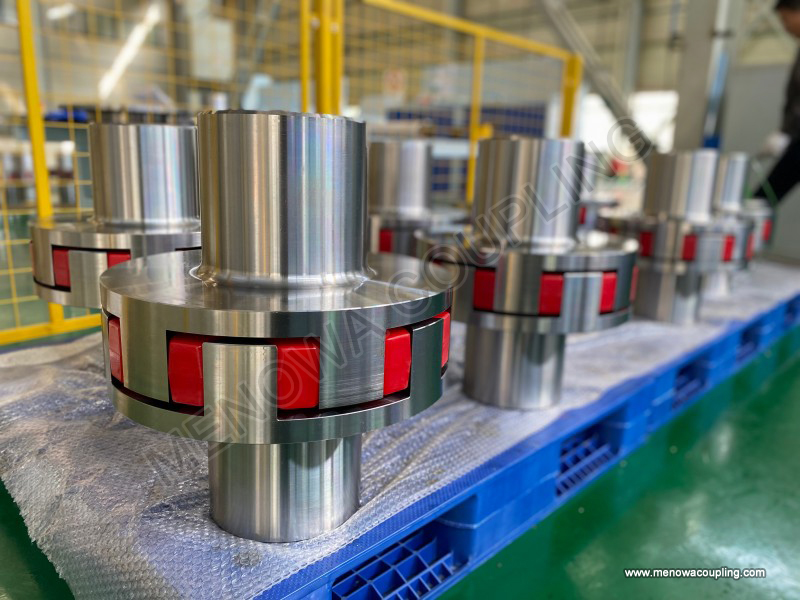
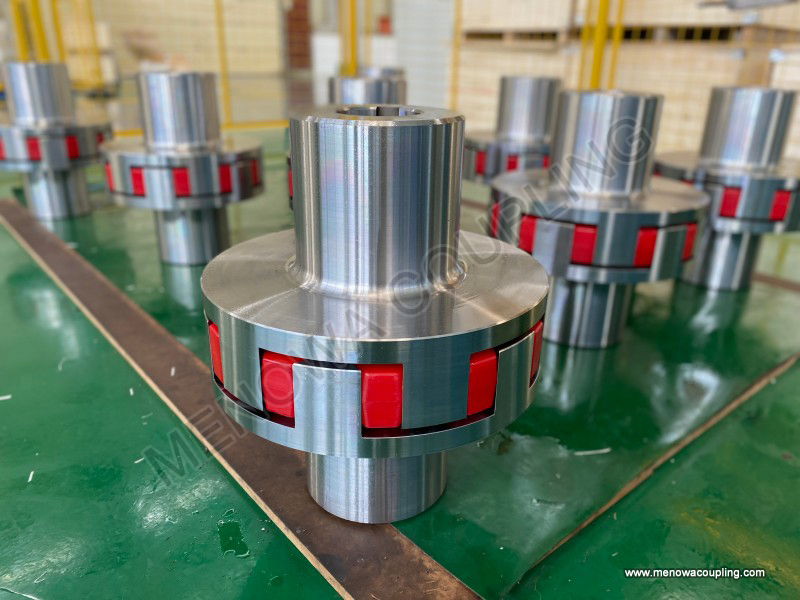
The structural design of elastic couplings is a fundamental aspect that determines their performance and functionality. Typically, an elastic coupling consists of two hubs that connect to the driving and driven shafts, respectively, and an elastic element that links these two hubs. The hubs are usually made of rigid materials to ensure stable torque transmission, while the elastic element is crafted from flexible materials that allow for deformation without permanent damage. The design of the elastic element varies significantly depending on the intended application, with common configurations including spiral grooves, parallel grooves,梅花-shaped (plum-blossom) inserts, and rubber or polyurethane sleeves. For example, spiral groove elastic couplings feature a continuous multi-turn long groove, which provides excellent elasticity and minimal bearing load, making them suitable for correcting angular and axial misalignment. In contrast, parallel groove elastic couplings have 3 to 5 short grooves that overlap to enhance torque rigidity while maintaining the ability to compensate for misalignment, making them ideal for light-load applications such as connecting servo motors to ball screws. The one-piece integrated design, often used in metal elastic couplings, eliminates rotational backlash, ensuring synchronous operation and zero clearance torque transmission, which is crucial for high-precision applications like CNC machine tools and encoder systems.
Material selection is another key characteristic that directly impacts the performance, durability, and application range of elastic couplings. The hubs are commonly manufactured from high-strength metals such as aluminum alloy and stainless steel. Aluminum alloy is preferred for many applications due to its lightweight nature, corrosion resistance, and good mechanical strength, which reduces inertial forces and improves overall system efficiency. Stainless steel, on the other hand, offers superior corrosion resistance and higher torque-bearing capacity, making it suitable for harsh environments where exposure to chemicals, moisture, or extreme temperatures is common. However, the increased weight and inertia of stainless steel can offset some of its advantages in high-speed applications. The elastic elements, which are the heart of the coupling, are made from a variety of flexible materials, including rubber, polyurethane (PU), nitrile rubber (NBR), chloroprene rubber (CR), and silicone rubber (VMQ). Each material has unique properties that make it suitable for specific operating conditions. Polyurethane, for instance, exhibits excellent elasticity, wear resistance, and impact absorption, making it ideal for applications with high vibration and shock loads. Nitrile rubber offers superior oil resistance, making it suitable for use in oil-immersed environments such as hydraulic systems and industrial machinery. Silicone rubber, meanwhile, has an extremely wide temperature range, capable of operating between -50°C and +200°C, making it suitable for extreme temperature applications in aerospace and automotive industries. The choice of material for both the hubs and elastic elements is critical, as it directly affects the coupling’s torque capacity, flexibility, wear resistance, and service life.
One of the most important characteristics of elastic couplings is their ability to compensate for shaft misalignment, which is a common issue in mechanical systems due to installation errors, thermal expansion, and structural deformation during operation. Shaft misalignment can occur in three main forms: radial misalignment (where the shafts are offset parallel to each other), angular misalignment (where the shafts are tilted relative to each other), and axial misalignment (where the shafts move along their axial direction). Elastic couplings are designed to absorb these misalignments through the elastic deformation of their flexible elements, thereby reducing the additional stress exerted on the shafts, bearings, and other transmission components. The degree of misalignment compensation varies depending on the coupling design and material. For example, spiral groove couplings excel at correcting angular and axial misalignment but have limited capacity for radial misalignment, as bending the spiral grooves in two different directions can generate excessive internal pressure and lead to premature failure. Parallel groove couplings, on the other hand, can accommodate greater radial misalignment due to their shorter, overlapping grooves, which provide increased flexibility without compromising torque rigidity. In general, elastic couplings can compensate for radial misalignment ranging from 0.1 to 0.5 mm, axial misalignment from ±1 to 3 mm, and angular misalignment from 1° to 2°, significantly reducing the need for precise installation and minimizing the risk of equipment damage.
Vibration damping and shock absorption are additional key characteristics that make elastic couplings essential in many mechanical systems. In rotating machinery, vibrations are often generated by unbalanced loads, gear meshing, or motor operation, which can cause noise, reduce equipment precision, and shorten the service life of bearings, seals, and other components. Elastic couplings absorb these vibrations through the elastic deformation of their flexible elements, which convert vibrational energy into elastic potential energy and release it gradually, thereby reducing the amplitude of vibrations transmitted to the driven shaft and other parts of the system. Studies have shown that properly selected elastic couplings can reduce vibration transmission by 30% to 50%, significantly improving system stability and reducing noise levels. In addition to damping regular vibrations, elastic couplings also absorb shock loads, such as those generated during motor startup or sudden changes in load, which can cause severe damage to rigid transmission components. The elastic elements act as a buffer, absorbing the impact energy and preventing it from being transmitted to the shafts and bearings, thus protecting the entire transmission system. This shock absorption capability is particularly important in applications with frequent start-stop cycles, such as automated production lines, or in equipment subject to sudden load changes, such as crushers and presses.
Torque transmission efficiency and rigidity are also critical characteristics of elastic couplings. Torque transmission efficiency refers to the ability of the coupling to transfer power from the driving shaft to the driven shaft with minimal energy loss. Elastic couplings typically have high transmission efficiency, ranging from 90% to 98%, depending on the material and design. The energy loss is primarily due to the elastic deformation of the flexible elements, which is minimal in well-designed couplings. Torque rigidity, on the other hand, refers to the coupling’s resistance to torsional deformation under load. High torque rigidity is essential for applications that require precise torque control and synchronization, such as servo systems and CNC machine tools. Metal elastic couplings, particularly those with one-piece designs, offer high torque rigidity and zero rotational backlash, ensuring that the driven shaft follows the driving shaft’s motion exactly. However, some elastic couplings, such as those with rubber elements, have lower torque rigidity, which can lead to slight torsional deformation under heavy loads. This trade-off between flexibility and torque rigidity must be considered when selecting an elastic coupling for a specific application. For example, high-precision applications require high torque rigidity to maintain accuracy, while applications with significant misalignment or vibration require greater flexibility, even if it means slightly lower torque rigidity.
Maintenance requirements and service life are important practical characteristics of elastic couplings. One of the key advantages of many elastic couplings is their low maintenance nature. Couplings with one-piece metal elastic elements or durable elastic materials such as polyurethane require no lubrication, as they are designed to operate without friction between moving parts. This eliminates the need for regular lubrication checks and reduces maintenance costs. However, elastic elements made of rubber or other organic materials are subject to aging over time, which can reduce their flexibility and strength. Factors such as temperature, exposure to chemicals, and operating load can accelerate aging, and it is generally recommended to replace these elastic elements every 3 to 5 years to ensure optimal performance. Metal elastic elements, such as stainless steel or aluminum alloy, have a longer service life and are less prone to aging, making them suitable for applications where maintenance is difficult or costly. The service life of an elastic coupling also depends on the operating conditions, with factors such as load magnitude, speed, misalignment, and environmental factors all playing a role. Proper installation and alignment, even for elastic couplings, can significantly extend their service life by reducing unnecessary stress on the components.
Environmental adaptability is another important characteristic that determines the suitability of elastic couplings for different applications. Elastic couplings are designed to operate in a wide range of environmental conditions, from clean, temperature-controlled industrial settings to harsh outdoor or chemical environments. Corrosion resistance is a key factor in environments where the coupling is exposed to moisture, chemicals, or saltwater. Stainless steel hubs and elastic elements made of nitrile rubber or polyurethane offer excellent corrosion resistance, making them suitable for marine, chemical, and food processing applications. Temperature resistance is another critical factor, as extreme temperatures can affect the performance of the elastic elements. Silicone rubber elastic elements can withstand a wide temperature range, making them suitable for high-temperature applications such as aerospace engines or low-temperature applications such as refrigeration systems. In addition, some elastic couplings are designed to be dustproof or waterproof, with protective covers or sealed designs to prevent the ingress of debris or moisture, which can damage the components and reduce service life. The ability to adapt to different environmental conditions makes elastic couplings versatile and suitable for a wide range of industries, including automotive, aerospace, marine, industrial manufacturing, and renewable energy.
The fixed methods of elastic couplings are also a notable characteristic, as they determine how the coupling is attached to the shafts and affect its stability and ease of installation. Common fixed methods include set screw fixation, clamping screw fixation, keyway fixation, D-shaped hole fixation, and expansion sleeve fixation. Set screw fixation involves using two set screws placed 90° apart to lock the coupling onto the shaft. This is a traditional method but can cause damage to the shaft surface due to the direct contact between the screw and the shaft. Clamping screw fixation, on the other hand, uses hexagon socket bolts to tighten the coupling, causing the slit to contract and clamp the shaft tightly. This method is easy to install and remove, and does not damage the shaft, making it one of the most commonly used fixed methods. Keyway fixation is suitable for high-torque applications and is often used in conjunction with set screws or clamping screws to prevent axial sliding. D-shaped hole fixation is used when the motor shaft is D-shaped and set screws cannot provide sufficient fixation, as it matches the shape of the shaft to prevent slipping. Expansion sleeve fixation uses four set screws on the end face of the coupling to compress the expansion sleeve, which expands to clamp the shaft tightly. This method is suitable for high-torque applications, such as connecting stepping motors and servo motors.
Different types of elastic couplings exhibit unique characteristics that make them suitable for specific applications. Metal elastic couplings, such as diaphragm couplings and bellows couplings, offer high precision, zero backlash, and excellent temperature resistance, making them ideal for high-speed, high-precision applications such as CNC machine tools and aerospace systems. Diaphragm couplings use metal diaphragms to compensate for misalignment and transmit torque, while bellows couplings use metal bellows for flexibility and low inertia. Non-metallic elastic couplings, such as elastic sleeve pin couplings and plum-blossom elastic couplings, are more cost-effective and offer excellent vibration damping, making them suitable for medium and low-load applications such as pumps, fans, and conveyors. Elastic sleeve pin couplings use rubber sleeves to absorb vibration and compensate for misalignment, while plum-blossom elastic couplings use a plum-shaped rubber insert to provide flexibility and shock absorption. Combination elastic couplings, such as tire-type couplings, offer large misalignment compensation and excellent vibration damping, making them suitable for heavy-duty applications with significant shock loads, such as mining machinery and crushers.
The performance of elastic couplings is also influenced by various operating factors, including rotational speed, torque load, and misalignment magnitude. Rotational speed is a critical factor, as high speeds can generate centrifugal forces that affect the coupling’s balance and stability. Elastic couplings must be designed to withstand the centrifugal forces generated at their maximum operating speed, and it is generally recommended that the coupling’s allowable speed be 20% higher than the actual operating speed to ensure safety and stability. Torque load is another important factor, as exceeding the coupling’s maximum torque capacity can lead to elastic element failure or permanent deformation. The selection of an elastic coupling must be based on the rated torque of the motor and the actual operating torque, with a safety factor applied to account for sudden load changes or shock loads. The safety factor typically ranges from 1.2 to 4.0, depending on the application: 1.2 to 1.5 for stable loads, 1.5 to 2.0 for medium impact loads, 2.0 to 3.0 for heavy impact loads, and 2.5 to 4.0 for applications with frequent forward and reverse rotation. Misalignment magnitude also affects coupling performance, as excessive misalignment can increase stress on the elastic elements and reduce service life. It is important to ensure that the misalignment does not exceed the coupling’s maximum compensation capacity to avoid premature failure.
In summary, elastic couplings possess a unique set of characteristics that make them essential components in modern mechanical transmission systems. Their structural design, material properties, misalignment compensation capabilities, vibration damping performance, torque transmission efficiency, maintenance requirements, environmental adaptability, fixed methods, and type-specific features all contribute to their versatility and effectiveness. By accommodating shaft misalignment, absorbing vibrations, and transmitting torque efficiently, elastic couplings protect equipment, reduce maintenance costs, and enhance system performance. The selection of the right elastic coupling depends on a variety of factors, including the application’s torque and speed requirements, misalignment conditions, environmental factors, and precision needs. Understanding the characteristics of elastic couplings is crucial for engineers and technicians to make informed decisions when selecting and installing these components, ensuring optimal performance and reliability of the entire transmission system. As technology advances, elastic couplings continue to evolve, with new materials and designs being developed to meet the increasingly complex demands of modern industrial applications, further expanding their range of uses and enhancing their performance.
Post Date: May 14, 2026
https://www.menowacoupling.com/china-coupling/characteristics-of-elastic-coupling.html
Products

Related Articles
Classification of Elastic Coupling
Elastic couplings are essential mechanical components designed to connect two rotating shafts while transmitting power efficiently, compensating for misalignments, and dampening vibrations and shock loads. Unlike rigid couplings, which require near-perfect alignment between shafts and offer no flexibility, elastic coupl…Components of Elastic Coupling
Elastic couplings are essential mechanical components widely used in various industrial applications to connect two rotating shafts, transmitting torque while accommodating misalignments, absorbing vibrations, and protecting connected equipment from damage. Unlike rigid couplings that require precise alignment and offer…Maintenance of Elastic Coupling
Elastic couplings are essential components in mechanical transmission systems, serving to connect two rotating shafts, transmit torque, and compensate for axial, radial, and angular misalignments. They also play a crucial role in absorbing vibrations and shock loads, thereby protecting the connected equipment such as mo…Dimensions of Elastic Coupling
The dimensions of elastic couplings are a critical factor that directly determines their performance, compatibility, and service life in mechanical transmission systems. Unlike rigid couplings, which rely on precise alignment and rigid connections to transmit torque, elastic couplings integrate flexible elements that al…Coaxiality of Elastic Coupling
In the complex ecosystem of mechanical transmission systems, elastic couplings serve as critical connectors that bridge rotating shafts, enabling the seamless transfer of torque while accommodating minor misalignments and absorbing vibrations. Unlike rigid couplings, which demand near-perfect alignment to function effec…Gap Chart of Elastic Coupling
In the realm of mechanical power transmission, elastic couplings serve as critical components that bridge the gap between driving and driven shafts, accommodating misalignments while ensuring efficient torque transfer. Among the various tools and methodologies used to optimize the performance and longevity of elastic co…
 WeChat
 WhatsApp