Uses of Elastic Coupling
In the complex landscape of mechanical power transmission, elastic couplings stand as indispensable components that bridge the gap between rotating shafts, ensuring seamless torque transfer while addressing the inherent challenges of misalignment, vibration, and shock. Unlike rigid couplings that demand precise alignment and offer no flexibility, elastic couplings leverage the deformable properties of their components to accommodate variations in shaft position, absorb unwanted vibrations, and protect connected machinery from premature wear and damage. Their versatility and adaptability make them a cornerstone in countless industrial, commercial, and even specialized applications, spanning from small household appliances to large-scale industrial machinery and advanced aerospace systems. Understanding the diverse uses of elastic couplings requires a deep dive into their core functionalities and how these capabilities translate to real-world applications across different sectors.
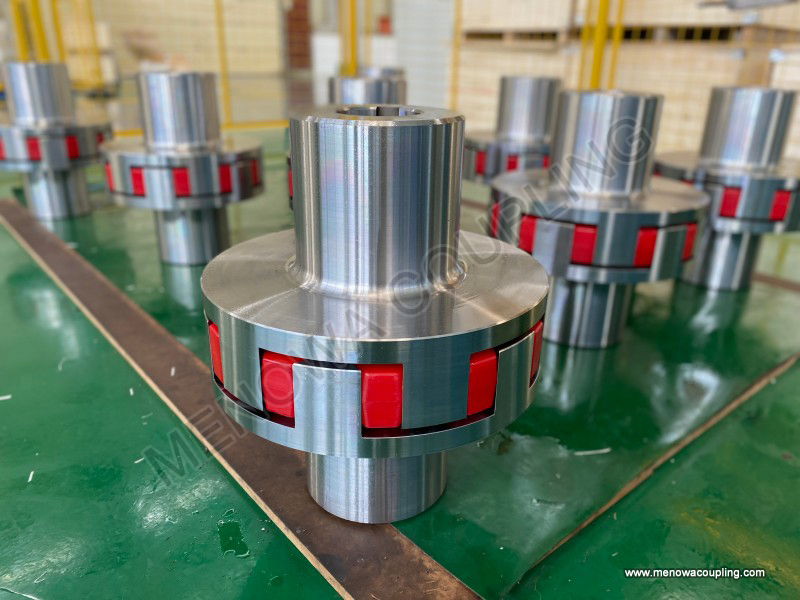
At the most fundamental level, the primary use of an elastic coupling is to transmit torque between two rotating shafts while allowing for a degree of flexibility that rigid couplings cannot provide. Torque transmission is the backbone of any mechanical system, as it enables the transfer of power from a driving source—such as an electric motor, internal combustion engine, or turbine—to a driven component, including pumps, fans, conveyors, and gearboxes. Elastic couplings excel in this role by balancing the need for efficient power transfer with the ability to adapt to minor misalignments that are almost inevitable in any mechanical setup. Even with careful installation, factors such as manufacturing tolerances, thermal expansion, and operational wear can cause shafts to deviate from perfect alignment, and elastic couplings absorb these deviations without compromising torque transmission efficiency. This ensures that the driven component receives a consistent and reliable supply of power, even when the driving and driven shafts are not perfectly aligned.
One of the most critical and widely recognized uses of elastic couplings is vibration damping and shock absorption. In any rotating machinery, vibrations are generated as a result of imbalances, uneven load distribution, or the inherent operation of the driving source. These vibrations can be detrimental to the entire system, leading to increased noise, accelerated wear on bearings and other moving parts, and even catastrophic failure if left unaddressed. Elastic couplings mitigate this risk by incorporating flexible elements made from materials such as rubber, polyurethane, or metal springs, which act as shock absorbers and vibration dampeners. When vibrations occur, these flexible elements deform elastically, absorbing the energy of the vibrations and preventing them from being transmitted to the connected shafts and machinery. This not only reduces noise pollution in the workplace but also extends the lifespan of the entire mechanical system by minimizing wear and tear on critical components. For example, in industrial settings where large electric motors drive heavy-duty pumps or compressors, elastic couplings play a vital role in absorbing the vibrations generated by the motor, protecting the pump’s bearings and seals from premature failure and reducing maintenance costs over time.
Another key use of elastic couplings is the compensation of shaft misalignments, which can occur in three main forms: angular, radial, and axial misalignment. Angular misalignment happens when the two shafts are not colinear but intersect at an angle, while radial misalignment occurs when the shafts are parallel but offset from each other. Axial misalignment, on the other hand, refers to the linear displacement of one shaft relative to the other along the axis of rotation. All three types of misalignment are common in mechanical systems, often caused by factors such as improper installation, thermal expansion (as machinery heats up during operation, shafts can expand and shift position), or structural settling of equipment over time. Rigid couplings are unable to accommodate any of these misalignments, and attempting to use them in such scenarios can lead to excessive stress on shafts, bearings, and other components, resulting in premature failure. Elastic couplings, however, are specifically designed to handle these misalignments by allowing the flexible elements to bend or stretch, effectively absorbing the offset and ensuring that torque is still transmitted smoothly. This flexibility makes elastic couplings ideal for applications where precise alignment is difficult to maintain, such as in long-distance shaft connections or in machinery that operates under varying temperature conditions.
In the automotive industry, elastic couplings find a wide range of applications, particularly in powertrain systems. The powertrain of a vehicle consists of numerous rotating components, including the engine, transmission, driveshaft, and differential, all of which need to be connected to transmit power from the engine to the wheels. Elastic couplings are used to connect the engine to the transmission, absorbing the vibrations generated by the engine’s combustion process and accommodating the slight misalignments that occur as the engine moves during operation (due to engine mounts and dynamic forces). This not only improves the smoothness of the vehicle’s operation but also protects the transmission and other powertrain components from damage caused by vibrations and misalignment. Additionally, elastic couplings are used in auxiliary systems such as the water pump, alternator, and air conditioning compressor, where they connect these components to the engine’s crankshaft, ensuring reliable power transfer while damping vibrations that could affect the performance of these systems. In electric vehicles, elastic couplings are even more critical, as they connect the electric motor to the drivetrain, accommodating the high torque output of electric motors while reducing vibrations that could impact the vehicle’s comfort and component lifespan.
The industrial sector is perhaps the largest user of elastic couplings, with applications spanning a wide range of machinery and processes. In manufacturing facilities, elastic couplings are used in conveyor systems, which are essential for moving materials and products throughout the production line. Conveyor systems often have long shafts that are prone to radial and angular misalignment, and elastic couplings ensure that power is transmitted smoothly from the motor to the conveyor belt, even when the shafts are not perfectly aligned. They also absorb the shocks that occur when the conveyor belt starts, stops, or encounters heavy loads, protecting the motor and conveyor components from damage. Similarly, in pump and compressor systems—used in industries such as oil and gas, water treatment, and chemical processing—elastic couplings connect the motor to the pump or compressor, damping vibrations and accommodating misalignments that can occur due to the weight of the equipment or thermal expansion. This is particularly important in high-pressure applications, where any failure in the power transmission system could lead to costly leaks or equipment damage.
Elastic couplings also play a vital role in the aerospace and defense industries, where reliability and performance are paramount. In aircraft, elastic couplings are used in various systems, including the engine, landing gear, and auxiliary power units (APUs). The engine of an aircraft generates high levels of torque and vibrations, and elastic couplings are used to connect the engine to the gearbox, absorbing vibrations and accommodating misalignments caused by the engine’s operation at high speeds and temperatures. This ensures that the gearbox and other critical components receive a smooth supply of power, reducing the risk of failure during flight. In defense applications, such as military vehicles and naval vessels, elastic couplings are used in powertrain systems and auxiliary equipment, where they must withstand harsh operating conditions, including extreme temperatures, shock loads, and vibrations. Their ability to absorb shocks and accommodate misalignments makes them ideal for these applications, where equipment reliability can mean the difference between success and failure in critical missions.
In the field of robotics and automation, elastic couplings are essential for ensuring precise and smooth movement. Robotic systems rely on precise torque transmission to control the movement of arms, grippers, and other components, and any vibrations or misalignments can affect the accuracy of the robot’s operations. Elastic couplings are used to connect the motors to the robotic joints, damping vibrations that could cause jitter or inaccuracies in movement, and accommodating minor misalignments that may occur due to the robot’s dynamic motion. This is particularly important in collaborative robots (cobots), which work alongside humans and require smooth, precise movement to ensure safety and efficiency. Additionally, elastic couplings are used in automated manufacturing equipment, such as CNC machines and 3D printers, where they connect the motor to the lead screws or other moving components, ensuring precise power transmission and reducing vibrations that could affect the quality of the finished product.
Another important use of elastic couplings is in renewable energy systems, such as wind turbines and solar tracking systems. Wind turbines generate power by converting the kinetic energy of wind into rotational energy, which is then transmitted to a generator. The rotor of a wind turbine is connected to the generator via a shaft, and elastic couplings are used to connect these shafts, absorbing the vibrations generated by the rotating rotor and accommodating the misalignments that can occur due to wind loads and structural movement. This is critical for the reliability of wind turbines, which operate in harsh outdoor conditions and must withstand variable wind speeds and directions. In solar tracking systems, elastic couplings are used to connect the motors to the tracking mechanism, ensuring that the solar panels can move smoothly and precisely to follow the sun, even when there are minor misalignments in the system.
Elastic couplings are also widely used in household and commercial appliances, where their ability to dampen vibrations and accommodate misalignments improves the performance and lifespan of the equipment. For example, in washing machines, elastic couplings connect the motor to the drum, absorbing the vibrations generated during the spin cycle and preventing them from being transmitted to the rest of the appliance. This reduces noise and prevents damage to the washing machine’s frame and components. Similarly, in refrigerators, elastic couplings are used in the compressor system, damping vibrations and ensuring reliable power transmission from the motor to the compressor. In commercial appliances such as air conditioners and heat pumps, elastic couplings play a similar role, connecting the compressor to the motor and reducing vibrations that could affect the efficiency and lifespan of the equipment.
Beyond these common applications, elastic couplings are also used in specialized fields such as medical equipment, laboratory instruments, and marine systems. In medical equipment, such as centrifuges and diagnostic machines, elastic couplings are used to ensure precise torque transmission and vibration damping, which is critical for the accuracy of the equipment’s measurements. In laboratory instruments, such as stirrers and pumps, elastic couplings accommodate minor misalignments and reduce vibrations, ensuring that the instruments operate smoothly and reliably. In marine systems, such as ship propulsion systems, elastic couplings connect the engine to the propeller shaft, absorbing the vibrations generated by the engine and accommodating the misalignments that occur due to the ship’s movement in the water. This protects the propulsion system from damage and ensures that the ship can operate efficiently even in rough sea conditions.
The versatility of elastic couplings is further enhanced by the variety of materials and designs available, which allow them to be tailored to specific application requirements. For example, elastic couplings made from rubber or polyurethane are ideal for applications that require high vibration damping, while those made from metal springs are better suited for high-torque applications. Some elastic couplings are designed to be maintenance-free, while others can be easily disassembled for inspection and replacement of the flexible elements. This adaptability means that elastic couplings can be used in almost any mechanical system where torque transmission, vibration damping, and misalignment compensation are required.
In summary, the uses of elastic couplings are diverse and far-reaching, touching almost every aspect of modern mechanical engineering. From transmitting torque between misaligned shafts to damping vibrations and absorbing shocks, elastic couplings play a critical role in ensuring the reliability, efficiency, and longevity of mechanical systems. Their applications span industries ranging from automotive and industrial manufacturing to aerospace, robotics, renewable energy, and household appliances. As technology continues to advance, the demand for elastic couplings is likely to grow, as engineers and designers increasingly recognize their value in solving the complex challenges of power transmission in a wide range of applications. Whether in a small household appliance or a large industrial turbine, elastic couplings remain an essential component that enables smooth, reliable, and efficient operation of rotating machinery.
Post Date: May 3, 2026
https://www.menowacoupling.com/china-coupling/uses-of-elastic-coupling.html
Products

Related Articles
Components of Elastic Coupling
Elastic couplings are essential mechanical components widely used in various industrial applications to connect two rotating shafts, transmitting torque while accommodating misalignments, absorbing vibrations, and protecting connected equipment from damage. Unlike rigid couplings that require precise alignment and offer…Maintenance of Elastic Coupling
Elastic couplings are essential components in mechanical transmission systems, serving to connect two rotating shafts, transmit torque, and compensate for axial, radial, and angular misalignments. They also play a crucial role in absorbing vibrations and shock loads, thereby protecting the connected equipment such as mo…Dimensions of Elastic Coupling
The dimensions of elastic couplings are a critical factor that directly determines their performance, compatibility, and service life in mechanical transmission systems. Unlike rigid couplings, which rely on precise alignment and rigid connections to transmit torque, elastic couplings integrate flexible elements that al…Coaxiality of Elastic Coupling
In the complex ecosystem of mechanical transmission systems, elastic couplings serve as critical connectors that bridge rotating shafts, enabling the seamless transfer of torque while accommodating minor misalignments and absorbing vibrations. Unlike rigid couplings, which demand near-perfect alignment to function effec…Gap Chart of Elastic Coupling
In the realm of mechanical power transmission, elastic couplings serve as critical components that bridge the gap between driving and driven shafts, accommodating misalignments while ensuring efficient torque transfer. Among the various tools and methodologies used to optimize the performance and longevity of elastic co…Size Chart of Elastic Coupling
The size chart of elastic coupling is an indispensable reference tool in mechanical transmission systems, serving as a bridge between the coupling’s design parameters and its practical application. It systematically organizes key dimensional and performance data, enabling engineers, technicians, and procurement personn…
 WeChat
 WhatsApp