Types of Gear Type Coupling
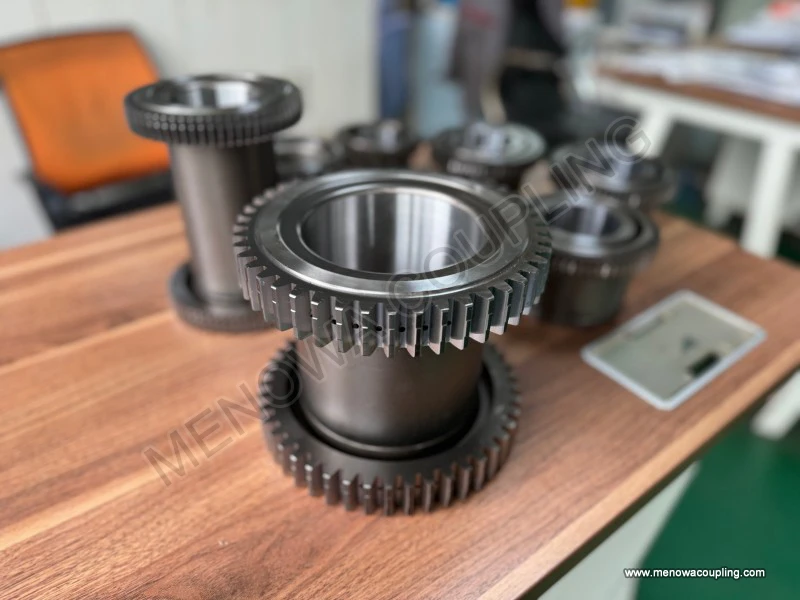
Gear type couplings stand as one of the most robust and reliable flexible coupling solutions in modern industrial mechanical transmission systems, widely utilized for connecting rotating shafts to transmit torque while compensating for various shaft misalignments during equipment operation. Unlike rigid couplings that require precise shaft alignment and offer no adaptive flexibility, gear type couplings rely on the meshing engagement of precision-machined gear teeth to achieve power transmission, combining high torque transmission efficiency, strong load resistance, and moderate flexibility to adapt to complex operating conditions. The basic structural composition of all gear type couplings remains consistent in core principle, generally consisting of two toothed hubs installed on the driving and driven shafts respectively and one or two internal toothed sleeves that enclose and mesh with the external teeth of the hubs. The external gear teeth on the hubs are usually processed with a crowned tooth profile, which enables the teeth to slide and pivot freely within the internal tooth grooves of the sleeves, thereby offsetting angular, axial, and parallel misalignments between shafts caused by installation errors, equipment vibration, thermal expansion, or long-term mechanical wear. Based on structural differences, functional design characteristics, and applicable working scenarios, gear type couplings can be divided into multiple mainstream types, each with unique structural advantages and targeted application scopes that cater to diverse industrial transmission demands.
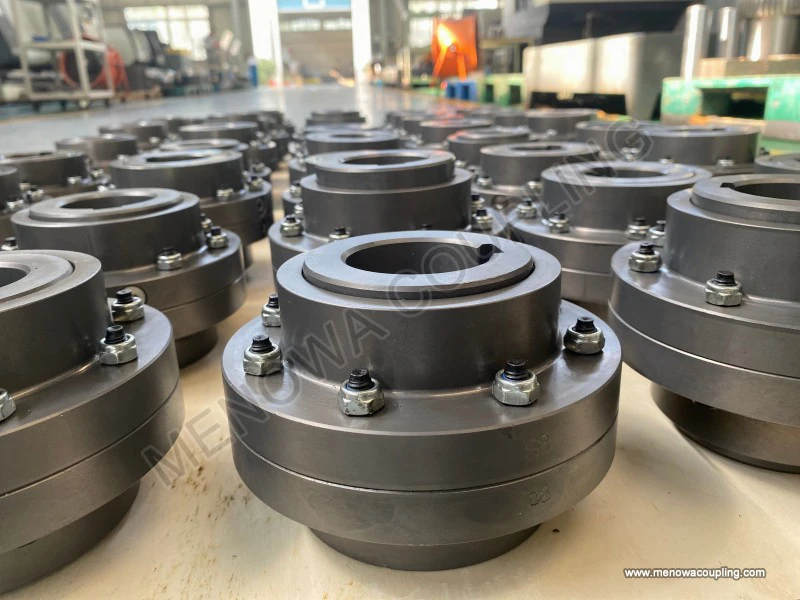
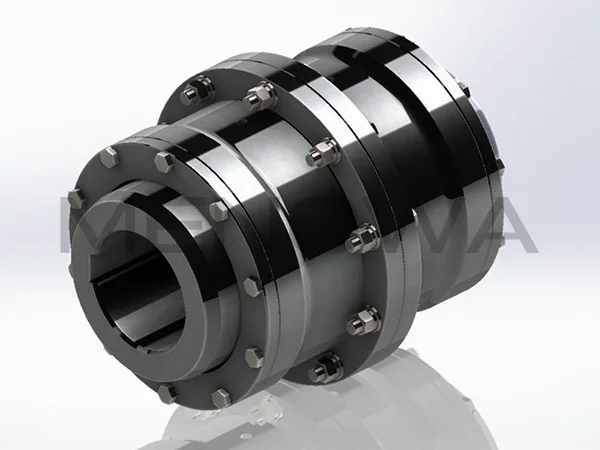
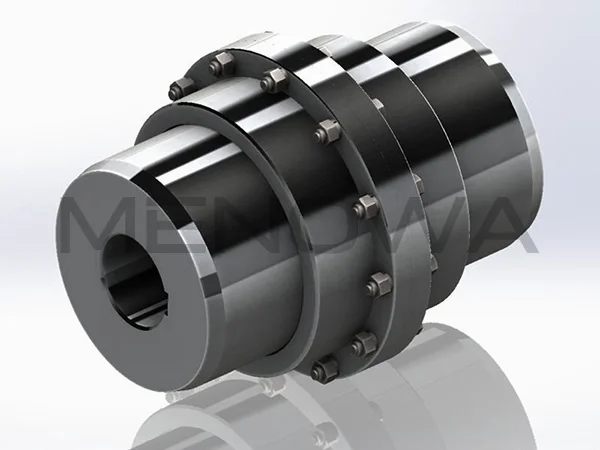
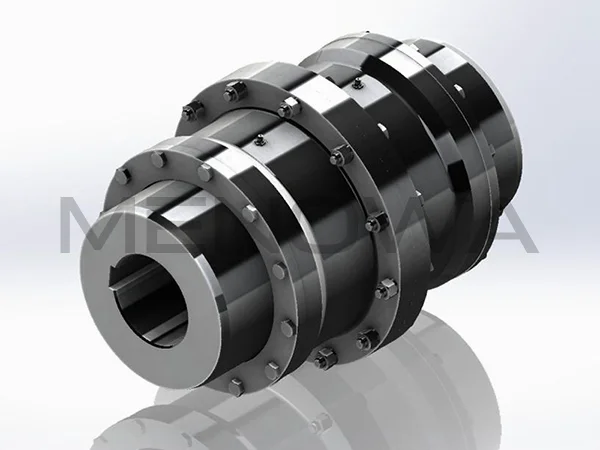
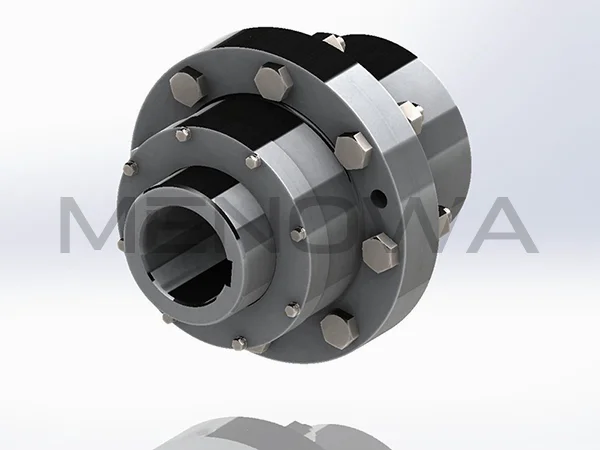
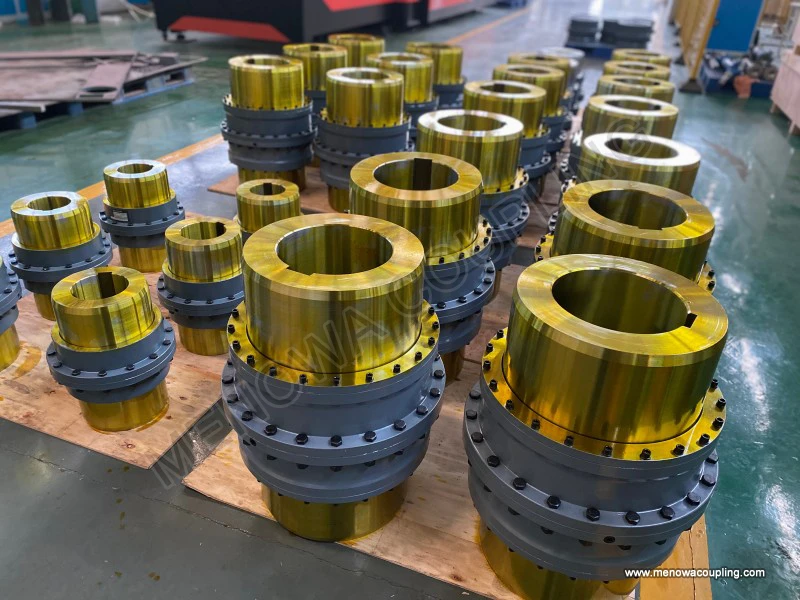
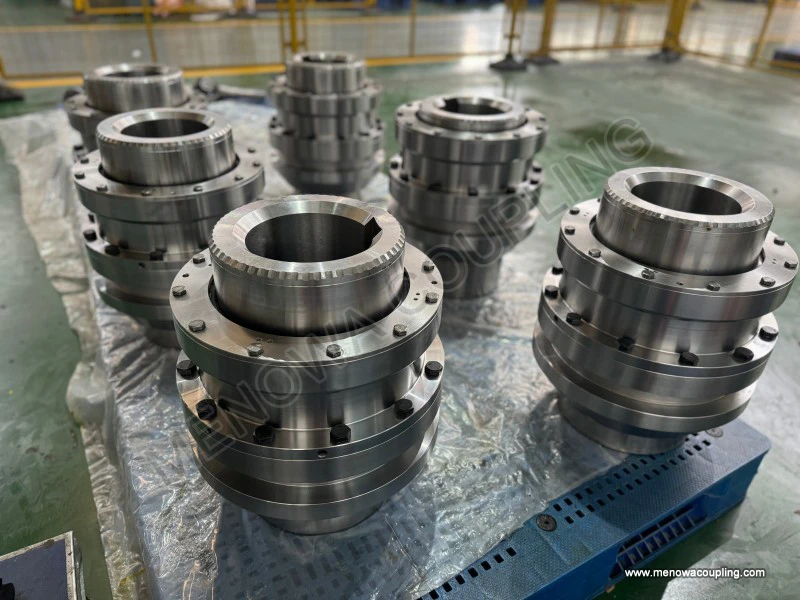
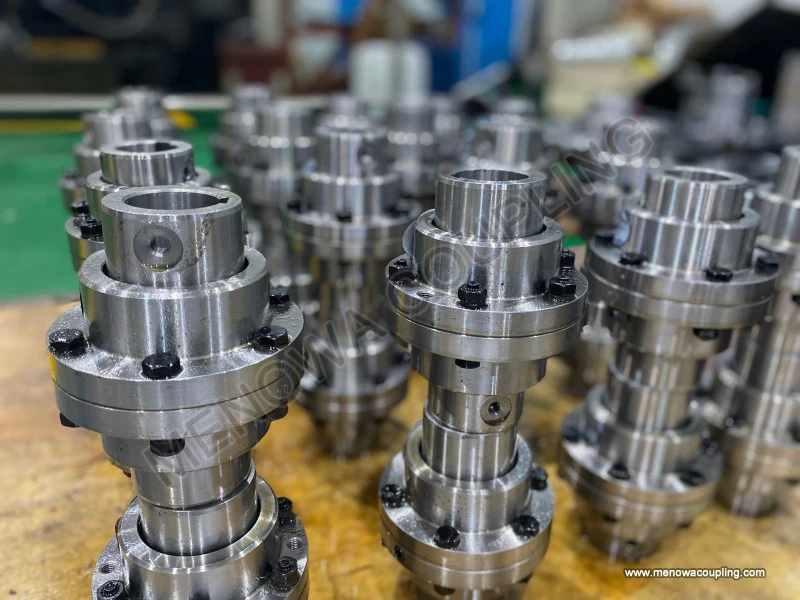
Full gear type coupling is the most widely used and versatile category among all gear coupling variants, featuring a complete double-sided meshing structure that delivers comprehensive misalignment compensation capabilities. This type of coupling is composed of two identical external toothed hubs and two separate internal toothed flanged sleeves that are tightly connected through bolt fastening. The symmetrical double-engagement structure forms two independent flexible meshing points at both ends of the coupling, which enables it to simultaneously adapt to angular deviation, axial displacement, and radial parallel offset between the connected shafts. The crowned tooth design on the hub teeth effectively reduces friction and wear during tooth meshing and sliding, avoiding tooth jamming or transmission failure even under continuous dynamic load operation. In terms of working performance, full gear type couplings boast extremely high torque transmission density, capable of maintaining stable and efficient power output in a compact structural space, which makes them suitable for heavy-load and high-power transmission scenarios. In actual industrial operation, mechanical equipment will inevitably produce slight shaft misalignment during startup, shutdown, and long-term continuous operation; full gear type couplings can fully absorb these deviations, reduce additional mechanical stress on shafts, bearings, and other components, and extend the overall service life of the transmission system. This type of coupling is commonly applied in large industrial equipment such as industrial fans, centrifugal compressors, heavy-duty pumps, and metallurgical transmission equipment, where stable high-torque transmission and reliable misalignment compensation are essential.
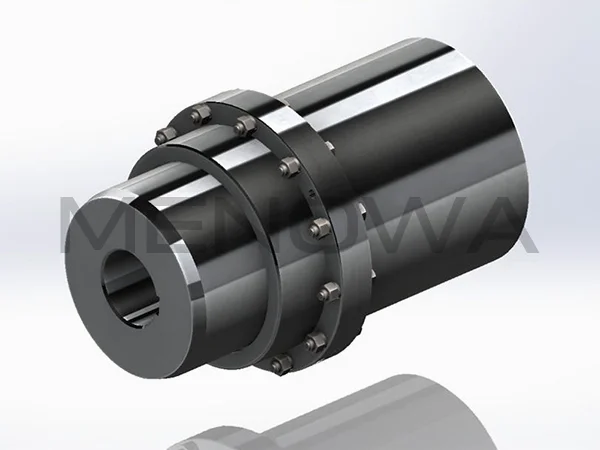
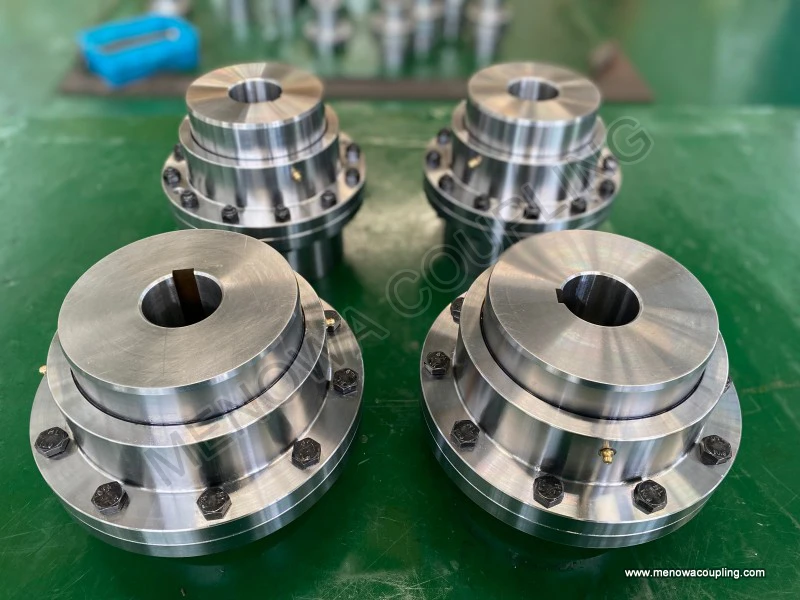
Half gear half rigid coupling, also known as single engagement gear coupling, adopts an asymmetric structural design that differentiates it fundamentally from full gear type couplings, with one end featuring a flexible gear meshing structure and the other end adopting a rigid fixed connection structure. The flexible end consists of a toothed hub and an internal toothed sleeve to provide limited misalignment compensation, while the rigid end uses a solid integrated connection mode that locks the relative position of the shaft and the coupling without any displacement allowance. This unique structural design endows the coupling with distinct functional characteristics: it can only compensate for angular misalignment and a small amount of axial displacement, with no adaptive capacity for radial parallel offset of shafts. Despite its relatively single compensation performance compared with full gear couplings, this type of coupling has outstanding advantages in specific working conditions. The rigid single-end positioning effectively controls the axial floating range of the transmission shaft system, avoids excessive shaft displacement during high-speed operation, and ensures high rotational accuracy of the equipment. Meanwhile, the simplified structure reduces overall mechanical clearance, improves the rigidity of the transmission system, and guarantees precise and synchronous power transmission. Half gear half rigid couplings are particularly suitable for floating shaft transmission systems and mechanical equipment that requires fixed shaft positioning, such as auxiliary transmission mechanisms of industrial turbines, light and medium-duty conveyor equipment, and small-scale power transmission units where alignment accuracy is prioritized over full-range misalignment compensation. In addition, this coupling features a simpler assembly and disassembly process, allowing maintenance and replacement of intermediate components without repositioning the main equipment, which greatly improves the convenience of daily equipment maintenance.
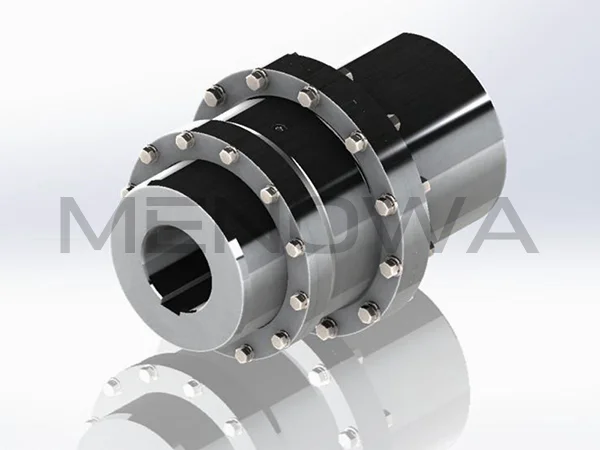
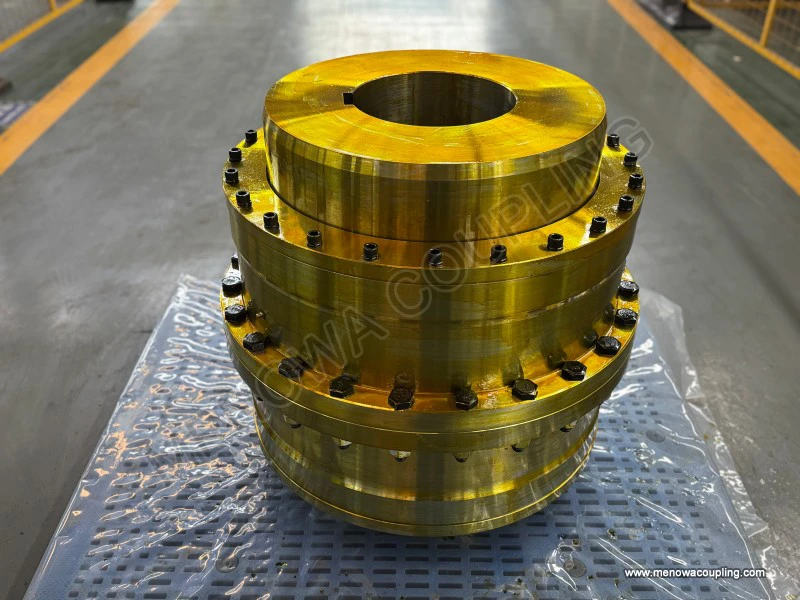
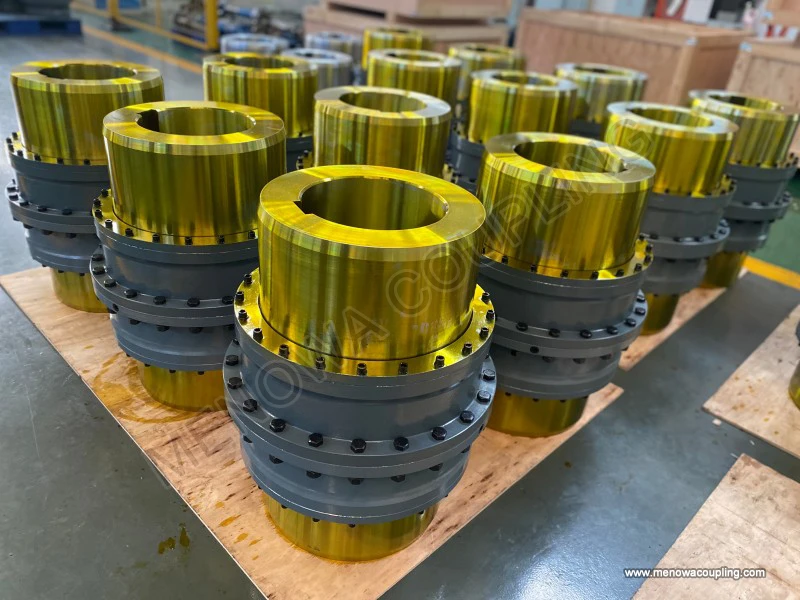
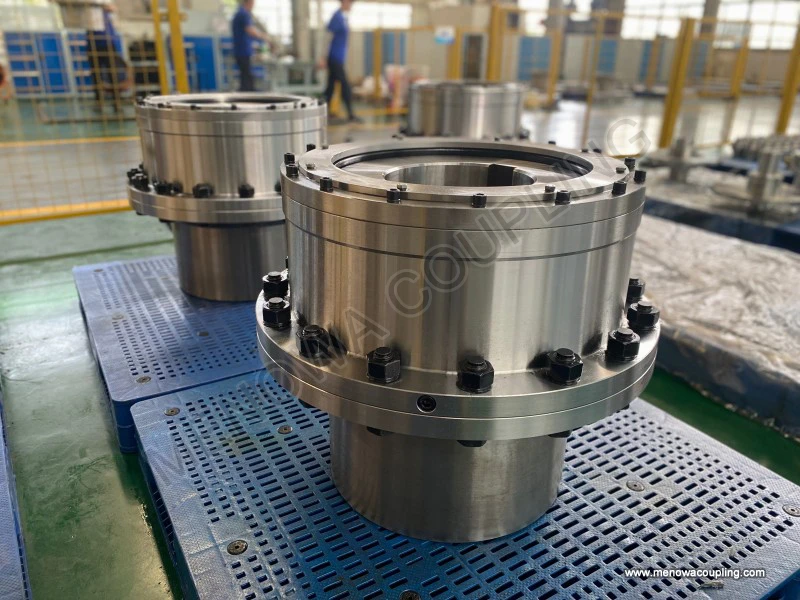
Flanged sleeve gear coupling is a conventional and mature structural type optimized on the basis of basic gear coupling principles, characterized by integrated flanged sleeve components and standardized bolt connection structures. Its main structure includes two external toothed hubs and two internal toothed sleeves with integral flanges, where the flanges of the two sleeves are closely fitted and fastened by circumferentially arranged bolts to form a closed meshing transmission structure. The integral flange design enhances the overall structural stability of the coupling, effectively avoiding structural deformation or loose connection caused by long-term high-load operation. The tooth meshing part adopts a standard straight or curved tooth profile with precise machining accuracy, ensuring uniform stress distribution during torque transmission and reducing local tooth wear and impact load. This type of coupling maintains excellent comprehensive misalignment compensation capabilities, able to cope with combined misalignment states of angular, axial, and radial deviations in actual operation. In terms of operational performance, flanged sleeve gear couplings have strong environmental adaptability, capable of stable operation in harsh working environments with dust, humidity, and slight vibration. Their standardized structural design realizes universal component compatibility, reducing equipment matching costs and improving part replaceability. They are widely used in general industrial manufacturing fields, including chemical industry transmission equipment, building material processing machinery, and general mechanical power transmission systems, serving as a universal and durable transmission connection component for conventional industrial scenarios.
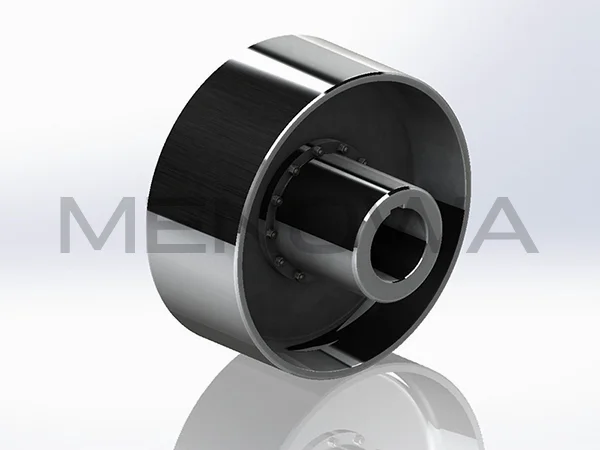
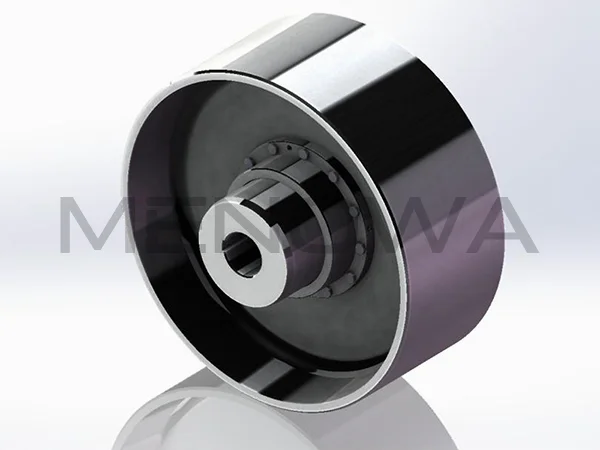
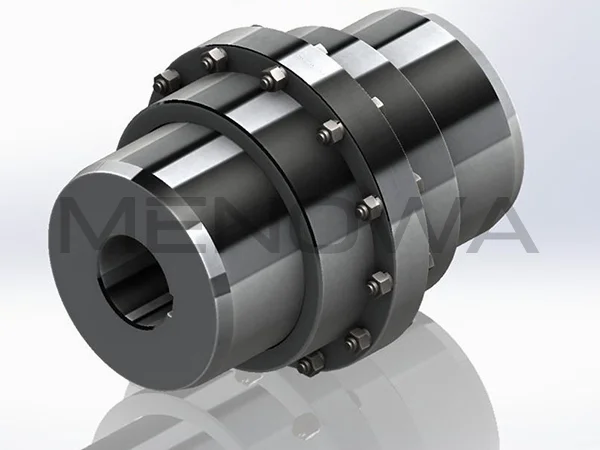
Continuous sleeve gear coupling represents an optimized structural form with an integrated sleeve design, abandoning the split flanged sleeve structure of traditional gear couplings and adopting a single integral internal toothed sleeve to wrap the two opposite external toothed hubs. The two shaft ends connected by the coupling are closely butted inside the continuous sleeve, with the external teeth of the two hubs meshing with the internal teeth of the integral sleeve simultaneously to complete power transmission. The most prominent advantage of this integrated structure is the elimination of assembly gaps between split sleeves, making the overall transmission structure more compact and rigid, and effectively reducing vibration and noise during high-speed operation. The continuous sleeve forms a fully enclosed protective structure for the tooth meshing area, which can prevent external dust, impurities, and moisture from entering the meshing part, reduce tooth surface abrasion and corrosion, and maintain long-term stable meshing accuracy. Although the integral sleeve structure slightly increases the difficulty of assembly and disassembly compared with split structures, it significantly improves the sealing performance and operational stability of the coupling. This type of coupling is more suitable for high-speed, low-vibration, and high-precision transmission scenarios, such as precision mechanical transmission equipment and high-speed rotating power systems that require strict control of operational noise and vibration. In addition, the uniform stress characteristics of the continuous sleeve enable it to bear stable alternating loads for a long time, showing excellent fatigue resistance and service life in continuous operating equipment.
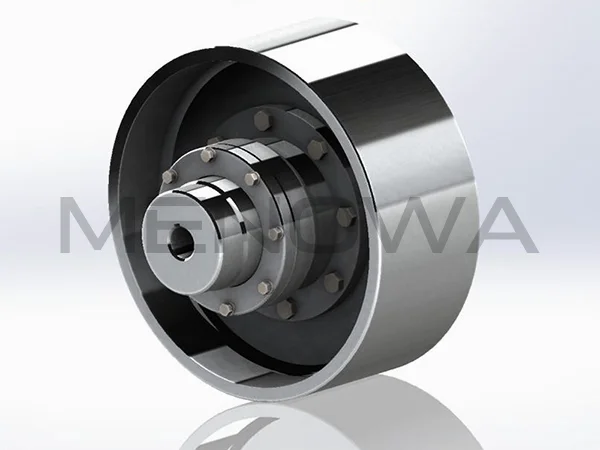
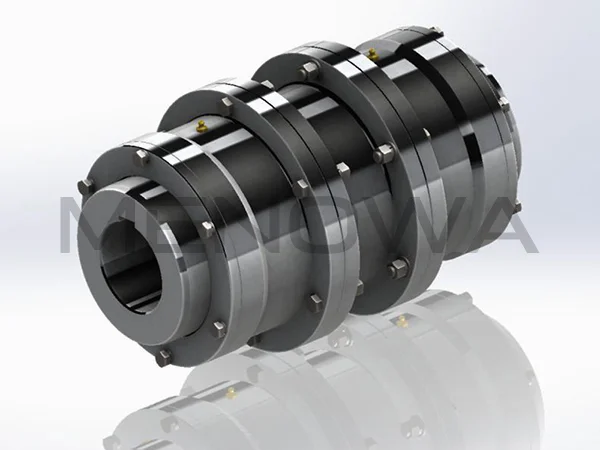
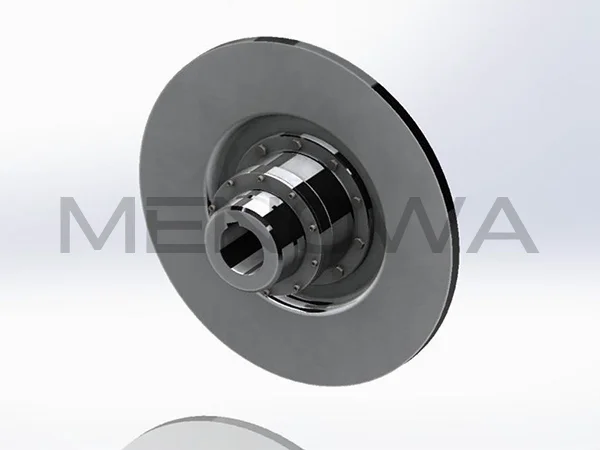
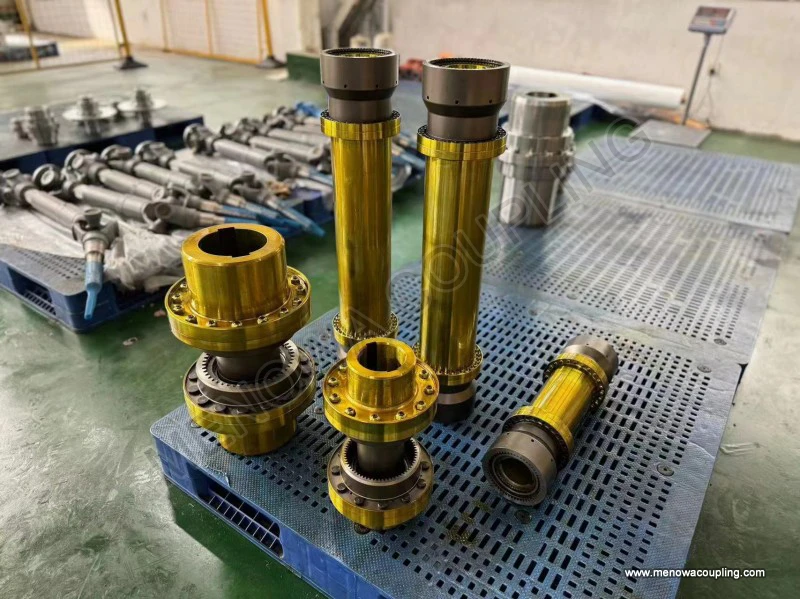
Special functional gear couplings are series of derivative types designed for specific installation methods and working conditions, realizing targeted adaptation to extreme or special industrial scenarios through structural optimization and functional improvement. Vertical installation gear coupling is a typical special type, specially optimized for vertical shaft transmission systems. Different from horizontal conventional couplings, this type adds structural designs that can resist axial gravity and vertical load offset, effectively solving the problems of poor meshing stability and easy axial displacement of ordinary gear couplings in vertical installation environments. It can maintain stable tooth meshing under the action of vertical shaft gravity and alternating load, ensuring accurate torque transmission and reliable misalignment compensation for vertical transmission equipment such as vertical pumps and vertical reduction units. Telescopic gear coupling is another important functional derivative, retaining the basic gear meshing transmission structure while adding a slidable telescopic mechanism inside the coupling. This design provides a larger allowable axial displacement range, which can adapt to significant axial position changes of shafts caused by equipment thermal expansion, mechanical vibration, or installation distance deviation. It is widely used in long-distance shaft transmission systems and mechanical equipment with variable axial working strokes. Brake disc gear coupling integrates a brake disc structure on the basis of the standard gear coupling transmission part, combining power transmission and braking functions into one component. This integrated design saves the installation space of independent braking components, simplifies the overall structure of the transmission system, and is suitable for mechanical equipment that needs frequent braking and stable torque transmission, such as heavy-duty lifting machinery and industrial transmission devices with quick stop requirements.
In practical industrial selection and application, the differences in structural characteristics, misalignment compensation range, transmission rigidity, and environmental adaptability of various gear type couplings determine their respective applicable scenarios. Full gear couplings are preferred for heavy-load, high-power, and complex misalignment working conditions due to their comprehensive performance; half gear half rigid couplings are more suitable for working conditions requiring high positioning accuracy and limited shaft floating; flanged sleeve couplings are the best choice for conventional general industrial scenarios relying on their high cost performance and stable versatility; continuous sleeve couplings excel in high-speed, low-noise, and high-precision transmission fields; and various special functional gear couplings fill the application gaps of conventional couplings in special installation and extreme working environments. As a key component of mechanical transmission systems, the continuous upgrading and differentiation of gear type coupling types have always been centered on meeting the diversified and high-precision development needs of modern industrial equipment. Reasonable selection of coupling types according to actual working conditions can effectively improve the operational stability of mechanical systems, reduce equipment failure rates and maintenance costs, and maximize the service life and transmission efficiency of industrial mechanical equipment.
Post Date: May 25, 2026
https://www.menowacoupling.com/china-coupling/types-of-gear-type-coupling.html
Products
Tags
Supply
Related Articles
Dimensions of Curved Tooth Coupling
Global industrial development across diversified manufacturing sectors continues to push steady market expansion for curved tooth couplings, whose unique curved crowned tooth geometry distinguishes them from conventional straight-tooth gear couplings and enables outstanding comprehensive mechanical performance to match …Gear Type Coupling Manufacture
Gear type couplings stand as one of the most reliable and widely used mechanical transmission components in modern industrial machinery, renowned for their exceptional load-bearing capacity, excellent misalignment compensation performance, and stable operation under high-speed and heavy-duty working conditions. The manu…Parts of Gear Type Coupling
Gear type coupling stands as one of the most reliable and high-performance flexible transmission components widely applied in heavy-duty industrial mechanical systems, serving the core purpose of connecting two rotating shafts to transmit torque and rotational motion while accommodating minor shaft misalignments and mit…Characteristics of Gear Type Coupling
Gear type couplings stand as one of the most versatile and robust mechanical transmission components widely applied in modern industrial power transmission systems, serving the core function of connecting two rotating shafts to transfer torque and rotational motion while adapting to various operational deviations and co…Gear Type Coupling Vendor In China
In the global mechanical transmission industry, gear type couplings play an indispensable role as key components that connect rotating shafts, transmit torque, and compensate for axial, radial, and angular displacements between shafts. As one of the world’s major manufacturing hubs, China has nurtured a large number of…Gear Type Coupling Production
Gear type couplings are essential mechanical components widely used in various industrial fields to connect two shafts and transmit torque while accommodating minor misalignments. The production of gear type couplings is a complex and precise process that requires strict control over every link, from material selection …
 WeChat
 WhatsApp