Components of Gear Type Coupling
Gear type couplings are essential mechanical transmission components widely applied in heavy-duty industrial mechanical systems, serving as key connecting structures for rotating shafts in power transmission equipment. Classified as rigid flexible couplings, they rely on the precise meshing of internal and external gear teeth to transmit torque and rotational motion, while possessing excellent capabilities to compensate for various relative displacements between connected shafts. The overall performance, service life, and operational stability of gear type couplings are entirely determined by the coordination and working state of their internal components. Each part undertakes unique structural and functional responsibilities, and the organic combination of all components enables the coupling to adapt to complex working conditions such as high load, high speed, and frequent variable-speed operation. A comprehensive understanding of the composition, structural characteristics, and functional principles of each component of gear type couplings is the core basis for mastering their working mechanism, selecting appropriate models, and conducting daily maintenance and fault inspection.
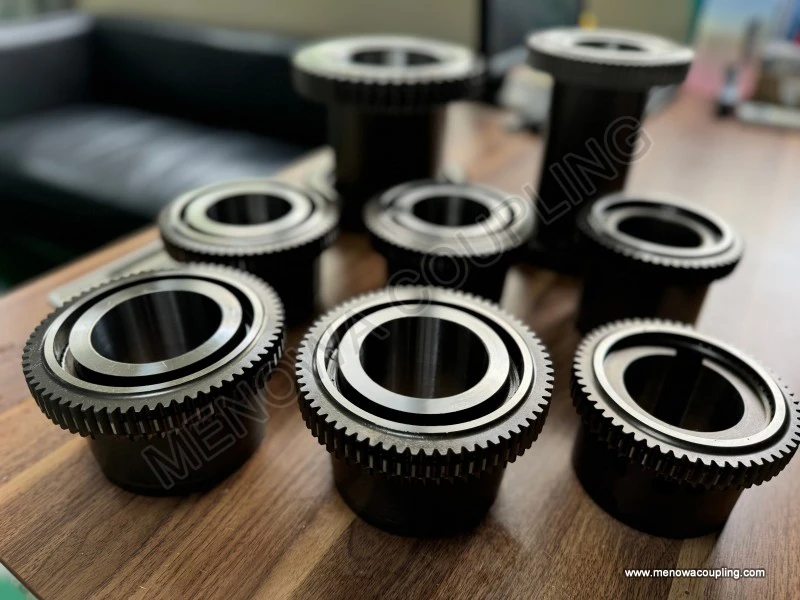
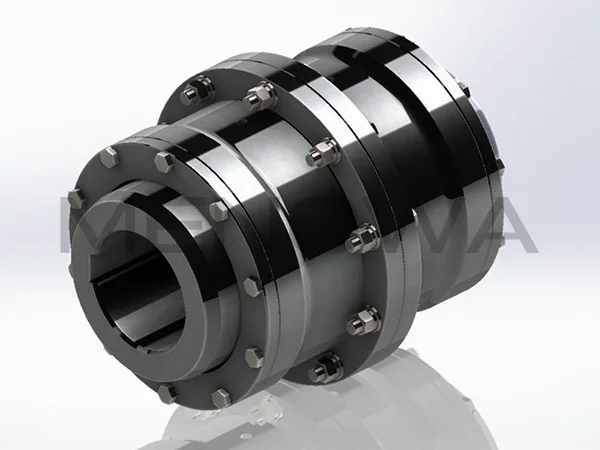
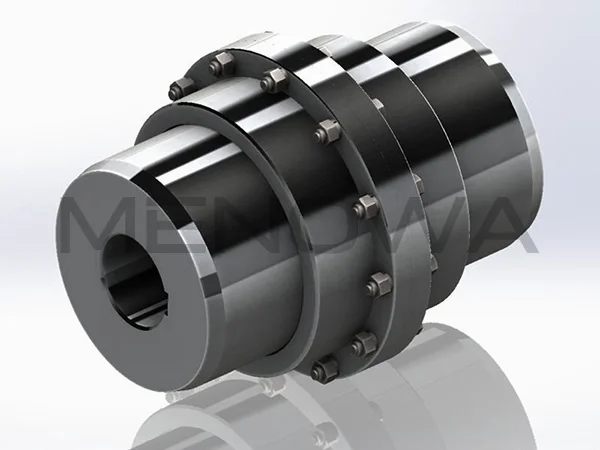
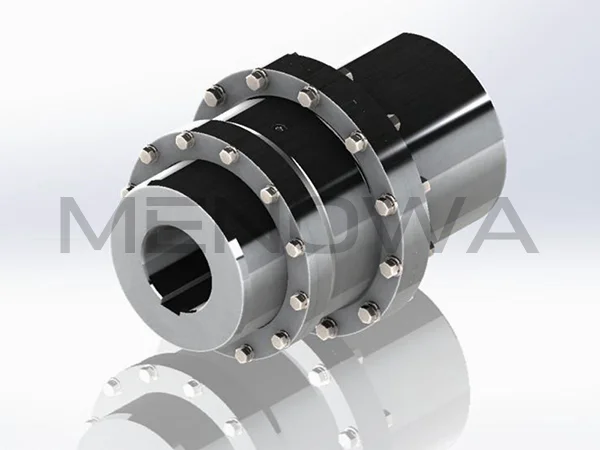
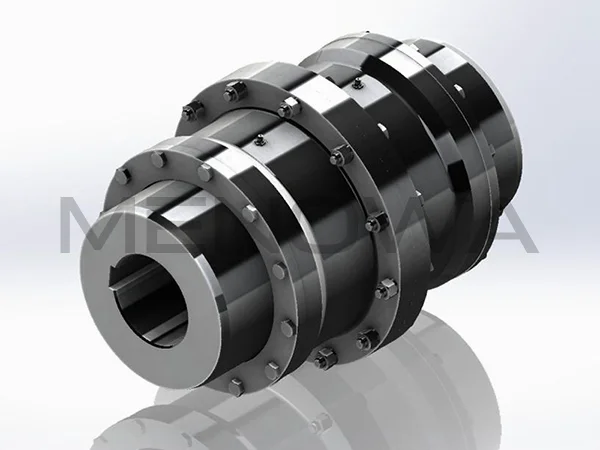
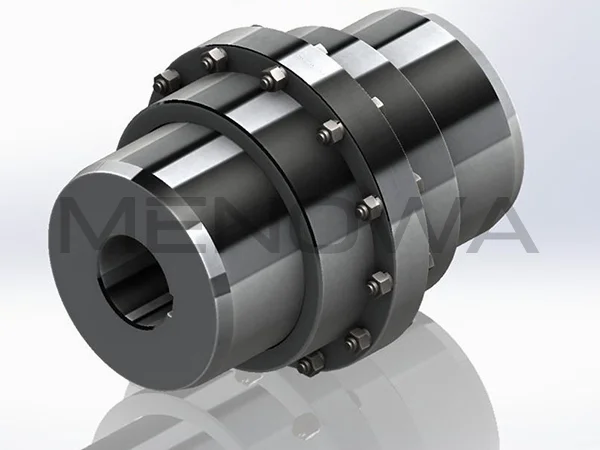
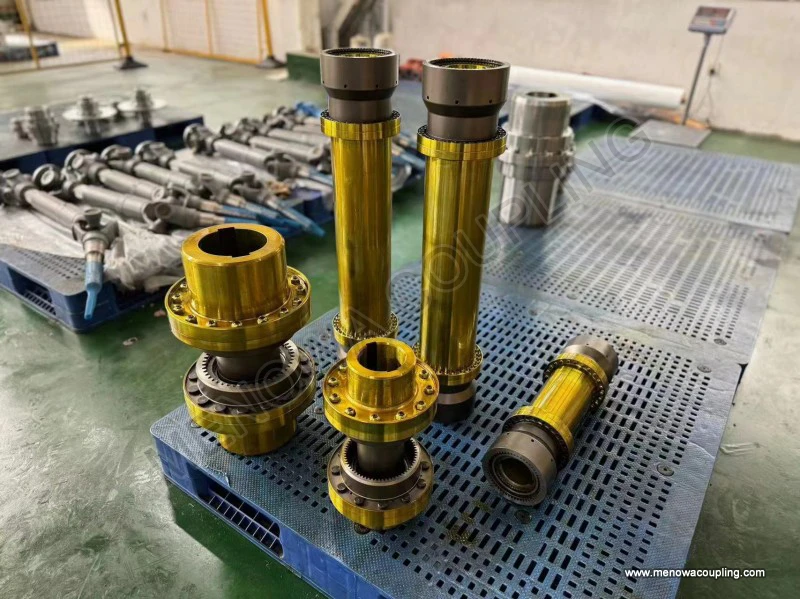
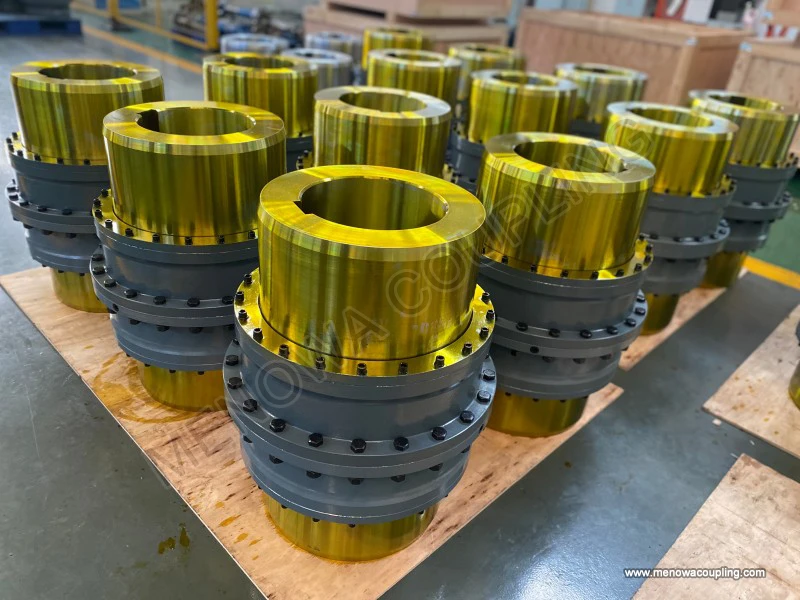
The core components of a standard gear type coupling mainly include external gear hubs, internal gear sleeves, flange connecting structures, sealing parts, lubrication auxiliary structures, and shaft fixing components. All components are designed with high structural matching, ensuring stable torque transmission while retaining reasonable displacement compensation space. Different from ordinary rigid couplings that lack deformation tolerance capability, the structural design of gear type coupling components fully considers the minor axial, angular, and radial misalignments that inevitably occur during the operation of mechanical equipment, effectively avoiding additional stress and mechanical vibration caused by shaft misalignment, thereby protecting the connected equipment and extending the service life of the entire transmission system.
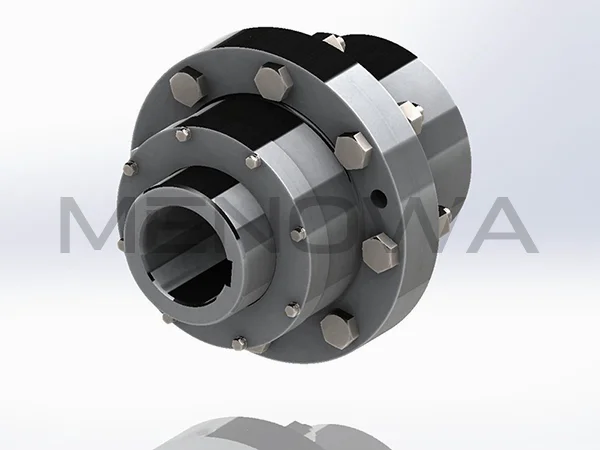
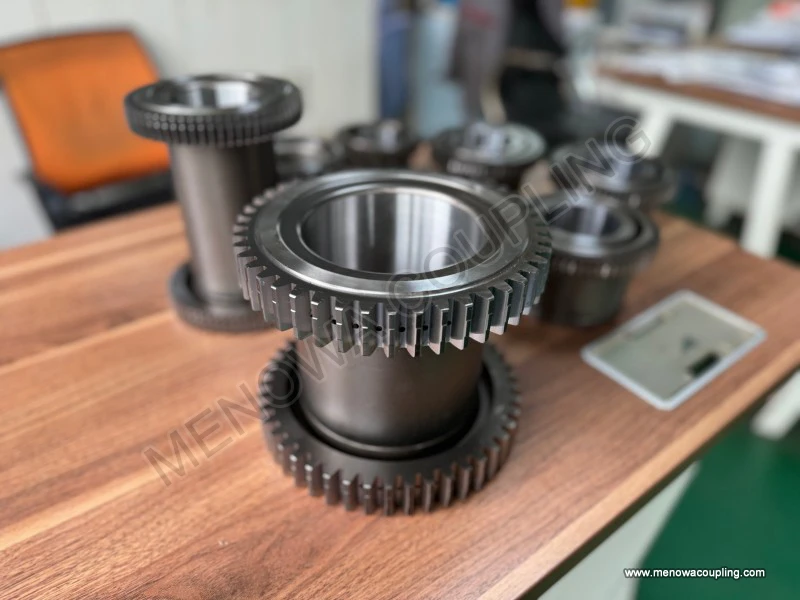
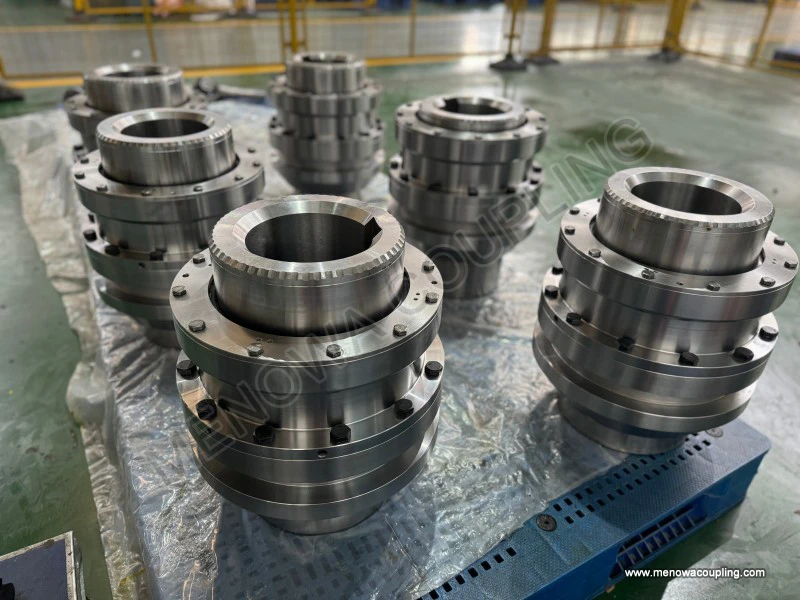
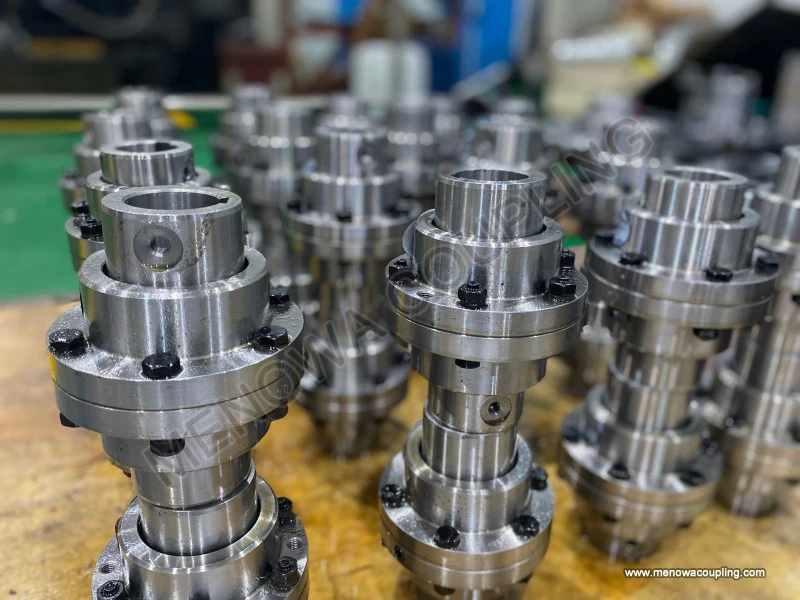
The external gear hub is one of the most fundamental and load-bearing core components of gear type couplings, usually arranged in two symmetrical sets inside the coupling, respectively installed on the driving shaft and driven shaft of the mechanical transmission system. The main body of the external gear hub is a cylindrical hub structure with a through shaft hole in the center, which is used for tight sleeving and fixing with the rotating shaft. The outer circular surface of the hub is precisely processed with uniformly distributed external gear teeth, which are the key structures for meshing transmission with the internal gear sleeve. Unlike ordinary transmission gears, the external gear teeth of gear hubs mostly adopt a crowned tooth design, with a certain arc transition on the tooth profile and tooth end. This special structural design enables the gear teeth to produce slight sliding and swinging displacement during meshing operation, which can effectively compensate for angular and radial misalignment between the two connected shafts. The tooth thickness, tooth height, and tooth spacing of the external gear teeth are processed with high precision to ensure uniform stress on each tooth during meshing, avoid local overload and tooth surface wear, and maintain the stability of long-term torque transmission. The inner hole of the external gear hub is usually processed with keyways or flat positioning structures, which cooperate with shaft keys to realize torque transmission between the shaft and the hub, preventing relative rotation and slipping between the hub and the shaft during high-speed operation. As the main load-bearing component, the external gear hub is made of high-strength alloy materials with good hardness, toughness, and wear resistance, which can withstand alternating torque, impact load, and friction wear generated during long-term operation.
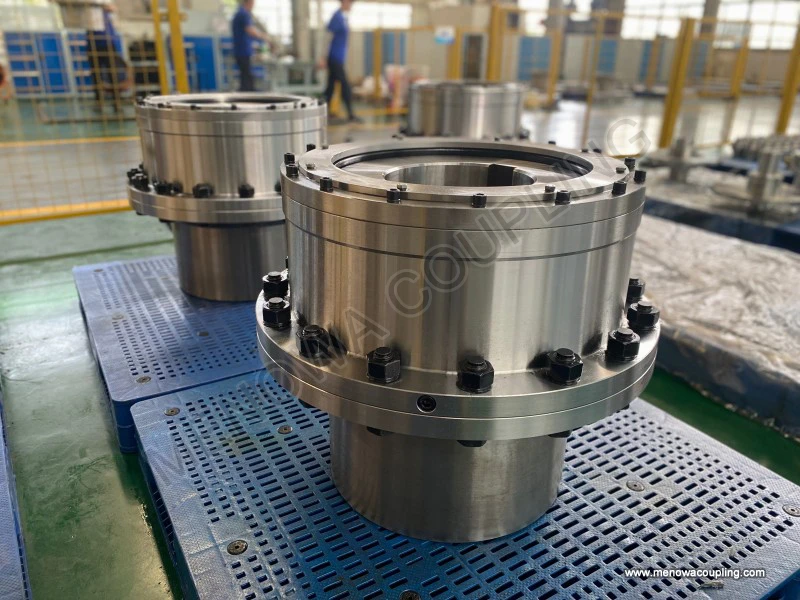
Matching with the external gear hub is the internal gear sleeve, which is the intermediate connecting component that bridges the two external gear hubs and realizes synchronous rotation and torque transmission. The internal gear sleeve is a hollow cylindrical or split flange structure, with a circle of precision-machined internal gear teeth on the inner wall, the parameters of which completely match the external gear teeth of the hub to form a precise meshing pair. In most conventional gear type coupling structures, the internal gear sleeve adopts an integral or two-piece split design. The integral sleeve has better overall rigidity and structural stability, suitable for high-speed and stable operation working conditions; the split sleeve is convenient for on-site assembly and disassembly, conducive to daily equipment maintenance and replacement. The internal gear sleeve wraps the two external gear hubs in the inner cavity, and the meshing fit between internal and external gear teeth converts the rotational torque of the driving hub into the rotational force of the sleeve, and then transmits it to the driven hub, realizing the synchronous operation of the two shafts. The inner cavity space of the internal gear sleeve reserves a reasonable gap for the meshing gear teeth. This gap not only provides a movement allowance for the displacement compensation of the gear teeth but also forms a storage space for lubricating media, ensuring that the meshing tooth surface can be fully lubricated during operation. The outer wall of the internal gear sleeve is smooth and compact, with good structural rigidity, which can effectively resist deformation caused by external load and internal meshing stress, and maintain the stability of the overall meshing state of the coupling.
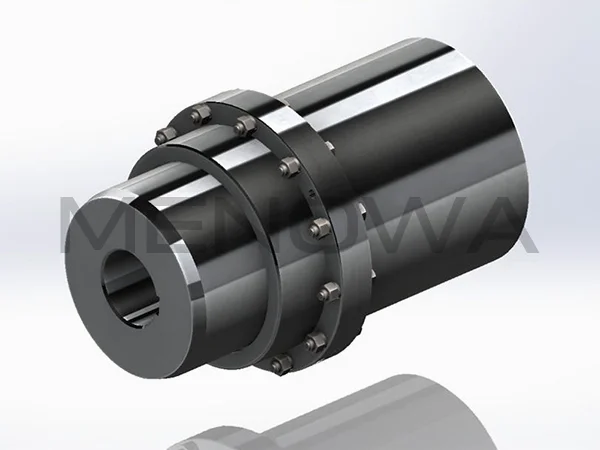
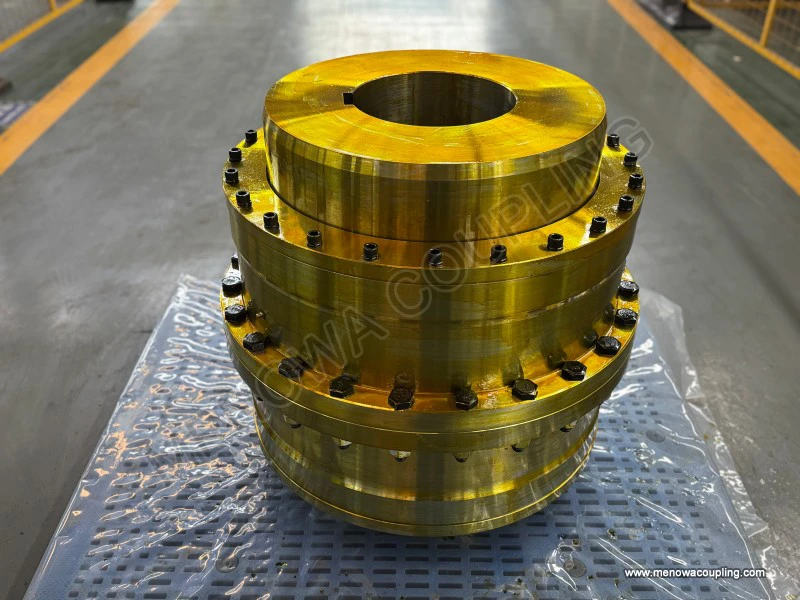
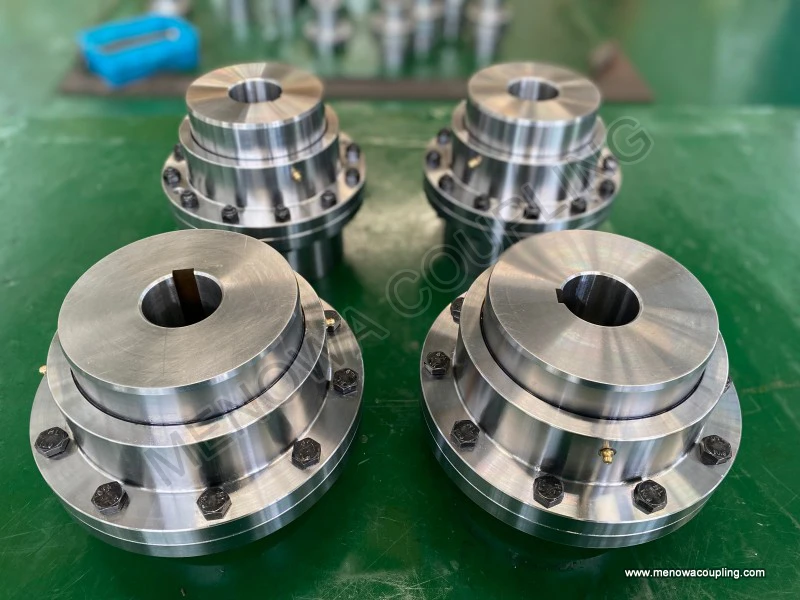
Flange connecting components are key structures that ensure the overall fastening and assembly stability of split gear type couplings. For two-piece split internal gear sleeves, the end faces of the two sections of the sleeve are processed with matched flange plates, and uniform bolt holes are distributed on the flange surfaces. The flange plates are closely fitted and locked by high-strength connecting bolts and nuts, forming a complete closed sleeve structure. The structural design of the flange strictly follows the symmetry and stress balance principle, ensuring uniform pressure on the flange joint surface after bolt fastening, no gap deviation, and no local stress concentration. The number and distribution of flange bolts are determined according to the coupling specification and load-bearing capacity, which can provide sufficient fastening force to prevent flange separation and structural looseness caused by centrifugal force and vibration during high-speed rotation of the coupling. The flatness of the flange end face is processed with high precision to ensure the coaxiality of the two sections of the sleeve after assembly, avoid the overall eccentricity of the coupling, and reduce mechanical vibration and running noise during operation. In addition to the split sleeve matching structure, some integrated gear couplings are also equipped with auxiliary flange structures at the ends, which play a positioning and auxiliary fixing role in the overall assembly of the coupling, further improving the structural firmness of the connecting part.
Sealing components are indispensable auxiliary parts for gear type couplings, mainly including elastic sealing rings, gaskets, and end cover sealing structures. The meshing operation of internal and external gear teeth of gear couplings relies on lubricating media to reduce friction and wear, and the sealing components undertake the important task of sealing the internal lubrication cavity. Common sealing structures are arranged at the matching gaps between the two ends of the internal gear sleeve and the outer circle of the external gear hub. The elastic sealing rings are closely fitted with the hub outer wall and the sleeve inner wall, which can effectively prevent the leakage of internal lubricating grease or lubricating oil, avoid the reduction of lubrication effect caused by lubricant loss, and prevent external dust, impurities, moisture, and other pollutants from entering the meshing area. Once impurities enter the gear meshing gap, they will cause abrasive wear on the tooth surface, aggravate gear tooth loss, and even lead to meshing jamming in serious cases. The end cover sealing gasket is installed at the assembly gap of the coupling end cover, filling the tiny assembly gaps to enhance the overall sealing performance of the coupling. The sealing components are made of elastic, aging-resistant, and wear-resistant rubber or polymer materials, which can adapt to the temperature changes and vibration environment during the long-term operation of mechanical equipment, maintain stable sealing performance, and avoid sealing failure caused by material aging or elastic fatigue.
Lubrication auxiliary components are special functional structures designed to ensure the long-term stable operation of gear type couplings, mainly including lubrication holes, oil nozzles, and internal lubrication storage cavities. Different from other flexible couplings that do not require regular lubrication, the gear meshing transmission mode of gear type couplings will produce continuous friction between tooth surfaces during operation, and sufficient lubrication is the key to reducing wear, reducing transmission noise, and improving load-bearing capacity. The lubrication holes are usually arranged on the outer wall of the internal gear sleeve, with detachable sealing oil nozzles installed at the orifices. During daily maintenance, lubricating media can be injected into the coupling cavity through the lubrication holes. After the lubrication is completed, the oil nozzles are tightened to keep the internal cavity closed and prevent lubricant leakage and impurity entry. The internal cavity of the coupling forms a closed lubrication space after assembly, which can store a certain amount of lubricating medium. During the rotation of the coupling, the lubricant evenly adheres to the surface of the meshing gear teeth, forming a stable lubricating oil film. This oil film can isolate direct contact friction between metal tooth surfaces, reduce friction resistance and mechanical wear, and at the same time take away part of the heat generated by friction, playing a role in heat dissipation and temperature reduction, avoiding tooth surface ablation and material performance degradation caused by excessive operating temperature. Reasonable lubrication auxiliary structures ensure that the coupling can maintain efficient and low-loss transmission state for a long time and greatly extend the maintenance cycle and service life of the equipment.
Shaft fixing and positioning components are basic structural parts to ensure the stable connection between the coupling and the transmission shaft, mainly including shaft keys, positioning snap rings, and fastening screws. The keyway processed on the inner hole of the external gear hub is matched with the shaft key installed on the transmission shaft. Through the extrusion action between the key body and the keyway, the torque is stably transmitted from the shaft to the gear hub, realizing the synchronous rotation of the shaft and the coupling. The shaft key adopts a standard flat key structure with uniform stress and strong shear resistance, which can withstand large torque transmission without deformation or shear failure. Positioning snap rings are installed at the two ends of the gear hub and the shaft shoulder, which play an axial positioning role, limiting the axial displacement of the coupling hub during operation and preventing the hub from sliding and disengaging from the shaft due to axial thrust and equipment vibration. Fastening screws are used for auxiliary locking of the hub and the shaft, further enhancing the connection firmness, avoiding relative displacement between parts caused by long-term alternating load, and ensuring the alignment accuracy of the coupling and the shaft. These small positioning and fixing components看似 simple, but they are the key to avoiding connection looseness and transmission failure. The matching precision and installation firmness of the components directly affect the operational stability of the entire transmission system.
The cooperative work of all components endows gear type couplings with unique performance advantages that other couplings do not have. The crowned tooth design of the external gear hub and the precise meshing fit of the internal gear sleeve realize flexible torque transmission and multi-directional displacement compensation, enabling the coupling to adapt to minor installation errors and operational deformation of the shaft system. The high-strength metal main components ensure excellent torque transmission capacity and structural rigidity, making it suitable for heavy-load and high-power mechanical transmission scenarios. The closed sealing structure and perfect lubrication system reduce component wear and failure probability, improving the reliability and durability of long-term continuous operation. The standardized fastening and positioning structures simplify assembly and disassembly processes, reducing the difficulty of equipment installation and daily maintenance.
In the actual operation process of gear type couplings, the failure of individual components is the main cause of coupling failure. Excessive wear of external gear teeth will lead to insufficient meshing accuracy, resulting in torque transmission loss and vibration impact; aging and failure of sealing components will cause lubricant leakage and impurity accumulation, accelerating tooth surface wear; loose flange connecting bolts will cause structural dislocation, affecting the coaxiality of the coupling; failure of positioning components will lead to shaft hub sliding, inducing transmission failure. Therefore, mastering the structural characteristics and working functions of each component is of great significance for the daily maintenance, fault diagnosis, and performance optimization of gear type couplings. With the continuous development of mechanical manufacturing technology, the structural design of various components of gear type couplings is constantly optimized, and the precision, material performance, and matching degree of parts are continuously improved, making gear type couplings more adaptable to high-precision, high-load, and long-cycle industrial production scenarios, and providing stable and reliable technical support for the safe operation of mechanical transmission systems.
Post Date: May 25, 2026
https://www.menowacoupling.com/china-coupling/components-of-gear-type-coupling.html
Products
Tags
Supply
Related Articles
Material of Gear Type Coupling
Gear type couplings stand as one of the most reliable and widely adopted power transmission components in modern mechanical systems, renowned for their high torque transmission capacity, compact structural design, and excellent tolerance to shaft misalignment. The overall performance, service lifespan, and operational s…Diagram of Gear Type Coupling
A gear type coupling is a crucial mechanical component widely utilized in industrial transmission systems to connect two rotating shafts, enabling the efficient transfer of torque while accommodating minor misalignments that may occur during operation. Unlike rigid couplings that require precise alignment between shafts…Gear Type Coupling For Sale
A gear type coupling is a versatile and robust mechanical device designed to connect two rotating shafts, enabling the efficient transmission of torque while accommodating a certain degree of misalignment between the shafts. This type of coupling is widely recognized for its ability to handle heavy loads and harsh opera…Dimensions of Curved Tooth Coupling
Global industrial development across diversified manufacturing sectors continues to push steady market expansion for curved tooth couplings, whose unique curved crowned tooth geometry distinguishes them from conventional straight-tooth gear couplings and enables outstanding comprehensive mechanical performance to match …Gear Type Coupling Manufacture
Gear type couplings stand as one of the most reliable and widely used mechanical transmission components in modern industrial machinery, renowned for their exceptional load-bearing capacity, excellent misalignment compensation performance, and stable operation under high-speed and heavy-duty working conditions. The manu…Parts of Gear Type Coupling
Gear type coupling stands as one of the most reliable and high-performance flexible transmission components widely applied in heavy-duty industrial mechanical systems, serving the core purpose of connecting two rotating shafts to transmit torque and rotational motion while accommodating minor shaft misalignments and mit…
 WeChat
 WhatsApp