Maintenance of Gear Type Coupling
Gear type couplings serve as indispensable mechanical transmission components in industrial mechanical systems, widely applied in shaft connection scenarios of various rotating equipment to transmit torque, compensate for minor shaft displacement deviations, and buffer mechanical vibration generated during equipment operation. Their structural design relies on the meshing fit between internal and external gear teeth, which enables them to bear large torque loads and adapt to complex operating conditions such as high speed, heavy load, and frequent start-stop cycles. Despite the high structural robustness and operational stability of gear type couplings, long-term continuous operation under harsh industrial environments will inevitably lead to gradual wear of gear teeth, aging of sealing components, deterioration of lubricating media, and shaft misalignment problems. These subtle abnormal states will gradually evolve into equipment vibration, transmission efficiency reduction, component damage, and even sudden shutdown failures if left unmanaged. Therefore, systematic, standardized, and periodic maintenance work is the core prerequisite to maintain the stable performance of gear type couplings, extend their service cycle, and ensure the safe and continuous operation of the entire mechanical transmission system.
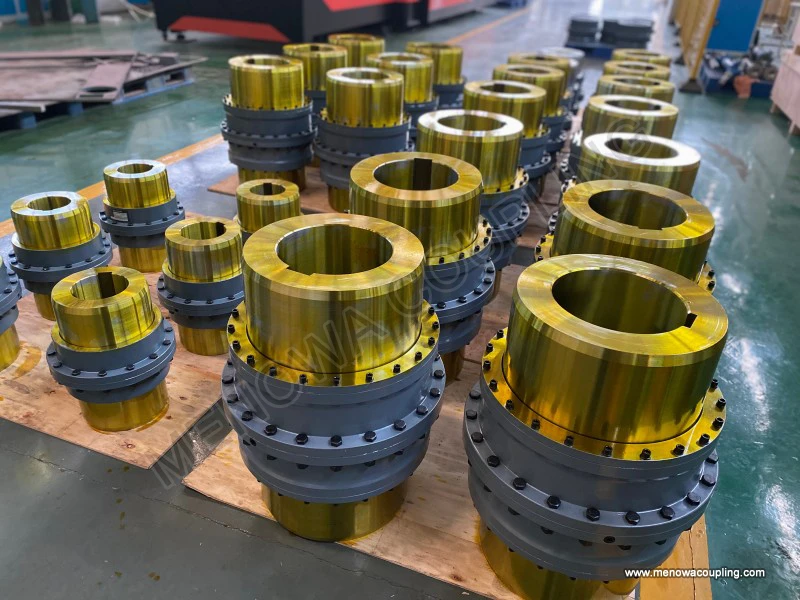
The core purpose of gear type coupling maintenance is to eliminate potential hidden dangers in advance, delay the aging and wear rate of components, and keep the transmission accuracy and load-bearing capacity of the coupling within the optimal range for a long time. Different from ordinary mechanical parts, the failure of gear type couplings rarely occurs suddenly; most faults are accumulated by long-term irregular operation, insufficient maintenance, or improper daily management. In actual industrial production, most coupling damage problems can be traced back to neglected daily inspection, untimely lubrication replacement, uncorrected shaft misalignment, and failure to handle minor wear defects in a timely manner. It can be said that scientific maintenance management can maximize the service life of gear type couplings, reduce the frequency of equipment failure shutdowns, and effectively lower the comprehensive operation and maintenance cost of mechanical equipment, which is of great significance for improving industrial production efficiency and ensuring operational safety.
Daily visual and operational inspection is the most basic and critical link in the whole maintenance system of gear type couplings, and it is also the primary means to discover early abnormal problems. In the daily operation process of equipment, operators and maintenance personnel need to conduct regular intuitive inspections of the coupling operating state according to the operating frequency and environmental conditions of the equipment. The inspection content covers the overall appearance of the coupling, the tightness of connecting fasteners, the sealing state, and the abnormal vibration and noise generated during operation. During the inspection, personnel should first observe whether there is grease leakage, dust accumulation, and foreign matter adhesion on the surface of the coupling. A small amount of grease leakage often indicates the aging, deformation or poor fitting of the internal sealing ring, which will cause the loss of internal lubricating grease and the invasion of external dust, moisture and impurities. Once impurities enter the meshing gap of internal and external gear teeth, they will form abrasive wear, continuously scratch the tooth surface, destroy the smoothness of the meshing surface, and accelerate the wear and failure of gear teeth.
At the same time, it is necessary to check the fastening state of all connecting bolts and locking parts of the coupling. Long-term high-speed rotation and mechanical vibration will cause the bolts to loosen gradually, resulting in inconsistent stress on all parts of the coupling. Loose fasteners will lead to unstable meshing of gear teeth, increase local load pressure, cause eccentric wear of tooth surface, and further induce equipment vibration and abnormal noise. In the daily inspection process, any loose bolts should be tightened in place in a timely manner, and the fastening state should be recorded to form a continuous inspection file, so as to track the component state changes of the coupling in the long-term operation process. In addition, attention should be paid to observing the overall deformation of the coupling, such as local bulge, crack and structural offset of the sleeve. These macroscopic abnormal phenomena often mean that the coupling has borne excessive impact load or fatigue damage, and it is necessary to stop the machine for detailed inspection in time to avoid structural fracture failure during subsequent operation.
Lubrication maintenance is the core content of gear type coupling maintenance, and the quality of lubrication state directly determines the wear degree and service life of gear teeth components. The meshing operation of internal and external gear teeth of gear type couplings belongs to sliding friction operation. Without effective lubrication protection, direct dry friction between tooth surfaces will generate a large amount of friction heat, cause tooth surface abrasion, scratch and gluing failure, and seriously reduce the transmission accuracy and load-bearing performance of the coupling. The main functions of lubricating grease include isolating the direct friction between gear teeth surfaces, reducing friction resistance and heat generation, taking away fine wear debris generated by meshing operation, and forming a protective oil film on the tooth surface to isolate external moisture and corrosive substances and prevent gear teeth from rusting and corrosion.
In terms of lubrication management, the first key point is to select a suitable lubricating medium according to the actual operating conditions of the coupling. Different operating speeds, load levels and environmental temperatures have different requirements for the viscosity, adhesion and extreme pressure resistance of lubricating grease. For couplings operating under high-speed and light-load conditions, low-viscosity lubricating media with good fluidity should be selected to ensure that the lubricant can quickly cover all meshing surfaces and reduce operating resistance. For heavy-load and low-speed operating scenarios, high-viscosity lubricating grease with excellent extreme pressure resistance is required. This kind of lubricant can form a thick and stable oil film on the gear tooth surface, resist the huge pressure generated by heavy-load meshing, and avoid oil film rupture and failure. It is strictly prohibited to use deteriorated, invalid or impure lubricating grease, and mixed use of different types of lubricants should be avoided to prevent chemical reaction failure of lubricating components, which will affect the lubrication effect.
Reasonable lubrication cycle and standardized lubrication operation are also essential to ensure the lubrication effect of gear couplings. Under conventional industrial operating conditions, the coupling needs regular grease replenishment and replacement every six months to one year. For equipment operating continuously for a long time, with high load, frequent start and stop, or operating in dusty, humid and corrosive harsh environments, the lubrication cycle needs to be appropriately shortened. Before replenishing and replacing lubricating grease, it is necessary to thoroughly clean the residual old grease, wear debris and internal impurities inside the coupling. Residual old grease will gradually oxidize and deteriorate after long-term operation, and contain a large number of fine metal wear particles. If it is not cleaned completely, mixing with new grease will accelerate the wear of gear teeth. After cleaning, fill fresh lubricating grease evenly into the meshing gap of internal and external gear teeth to ensure full coverage without dead angles, and avoid excessive or insufficient grease filling. Excessive grease will cause increased operating resistance and heat accumulation, while insufficient grease cannot form a complete protective oil film, resulting in local dry friction and wear.
Shaft alignment correction is an indispensable maintenance procedure for gear type couplings, and shaft misalignment is one of the main causes of premature failure of couplings and rotating equipment. In the installation and long-term operation of equipment, factors such as foundation settlement, equipment support deformation, bolt loosening and component wear will cause the displacement and deflection of the driving shaft and driven shaft connected by the coupling, resulting in radial, axial and angular misalignment. When misalignment occurs, the meshing state of the internal and external gear teeth of the coupling will deviate from the optimal design state. The gear teeth will bear additional alternating load and eccentric force during operation, resulting in uneven tooth surface wear, increased local stress, tooth edge chipping and other problems. At the same time, shaft misalignment will also cause severe vibration of the equipment system, increase the fatigue load of the coupling and bearing components, and greatly shorten the overall service life of the transmission system.
Regular alignment detection and correction should be carried out in combination with equipment maintenance cycles. The alignment state of the two shafts should be checked comprehensively at least once a year. For equipment with frequent load changes and unstable operating conditions, the detection frequency should be increased appropriately. During the detection process, professional detection tools are used to measure the radial runout and axial deviation of the two shafts, and the offset data is recorded accurately. According to the detection results, the position of the equipment base is adjusted fine-tuning to eliminate the misalignment deviation of the shaft system. After each alignment correction, it is necessary to test run the equipment and verify the alignment effect again to ensure that the shaft system is kept within the allowable deviation range. Timely alignment correction can effectively reduce the additional load of the coupling, improve the stability of equipment operation, and fundamentally reduce the wear failure caused by shaft system deviation.
Sealing component maintenance is easily overlooked in daily maintenance, but it plays a vital role in protecting the internal structure of gear couplings. The sealing components of gear couplings are mainly responsible for locking internal lubricating grease and isolating external dust, moisture, corrosive gas and solid impurities. After long-term operation, the sealing ring will age, harden, deform and wear due to the influence of operating temperature, environmental humidity and mechanical friction, resulting in reduced sealing performance and even failure. Once the sealing performance fails, on the one hand, the internal lubricating grease will continue to leak, resulting in insufficient internal lubrication and accelerated gear teeth wear; on the other hand, external impurities will invade the interior of the coupling, causing abrasive wear and corrosion of gear teeth, and even causing the meshing gap to be blocked by impurities, affecting the normal torque transmission.
In the maintenance process, the state of sealing components should be checked synchronously every time the coupling is inspected and lubricated. For the aging, deformed, cracked and worn sealing rings, they should be replaced in a timely manner instead of continuing to use them. When replacing sealing components, it is necessary to ensure that the matching size is consistent with the original components, and the installation position is accurate and in place, so as to avoid poor sealing effect caused by installation deviation. After replacement, the sealing tightness should be checked to ensure that there is no grease leakage during equipment operation. Regular replacement and maintenance of sealing components can effectively maintain the clean internal operating environment of the coupling, ensure the stability of the lubrication system, and lay a foundation for the long-term stable operation of gear teeth meshing structure.
Fault inspection and timely correction are important links to avoid minor defects evolving into major failures. In the daily operation of gear type couplings, common abnormal states include abnormal vibration, irregular noise, local overheating, grease deterioration and tooth surface wear. When the equipment vibrates abnormally, it is necessary to first check whether the shaft system is misaligned, the fasteners are loose, or the gear teeth are unevenly worn. Abnormal noise is usually caused by dry friction of gear teeth, impurity jamming or meshing deviation. Persistent local overheating of the coupling mostly results from insufficient lubrication, excessive lubrication or long-term overload operation. Once these abnormal phenomena are found, the equipment should be stopped in time for detailed inspection and troubleshooting, and blind continuous operation is strictly prohibited. Long-term operation with minor faults will continuously expand the damage range, cause irreversible wear of gear teeth and structural deformation of components, and eventually lead to coupling scrapping and equipment shutdown loss.
For the worn gear teeth, slight wear can be repaired by cleaning and supplementing high-performance lubricant to improve the meshing state. For the gear teeth with obvious scratch, gluing and excessive wear, the damaged components need to be replaced in time to ensure the meshing accuracy and load-bearing capacity of the coupling. For the fatigue deformation of coupling sleeve and structural parts, targeted correction or replacement measures should be taken according to the deformation degree to ensure the overall structural stability of the coupling. After each fault maintenance and component replacement, it is necessary to conduct test run verification to confirm that all operating parameters return to normal, and record the fault cause, maintenance measures and replacement components to accumulate experience for subsequent maintenance work and form a perfect closed-loop maintenance management mechanism.
In addition to regular inspection and maintenance, standardized equipment operation management is also an important part of extending the service life of gear type couplings. In actual industrial production, many coupling damages are caused by non-standard operation, such as sudden overload start, frequent positive and negative rotation, long-term overload operation and severe impact load. These irregular operating behaviors will cause instantaneous impact load on the gear teeth meshing structure, resulting in fatigue damage and local stress concentration of components, and accelerate the failure of the coupling. Therefore, it is necessary to formulate standardized equipment operation specifications, standardize the start-stop and load adjustment operations of the equipment, avoid instantaneous overload and impact operation, and keep the coupling operating within the rated load and speed range. At the same time, strengthen the professional training of operation and maintenance personnel, improve their ability to identify abnormal states and standardize maintenance operations, and avoid secondary damage to the coupling caused by improper manual operation.
Long-term maintenance management of gear type couplings also needs to formulate differentiated maintenance strategies according to different operating environments and equipment types. For couplings operating in open-air, humid and corrosive environments, the frequency of cleaning, lubrication and sealing inspection should be increased to prevent moisture corrosion and dust abrasion. For high-speed rotating equipment couplings, focus on checking shaft alignment, lubrication uniformity and dynamic balance state to avoid vibration and high-temperature wear. For heavy-load industrial equipment couplings, focus on monitoring gear teeth wear and fastener tightness to ensure that the coupling can bear stable torque load for a long time. Through personalized and refined maintenance management, the adaptability of maintenance work to actual operating conditions can be improved, and the maintenance effect can be maximized.
In conclusion, the maintenance of gear type couplings is a systematic and long-term work that runs through the whole life cycle of equipment operation. It covers daily visual inspection, regular lubrication maintenance, shaft alignment correction, sealing protection, fault troubleshooting and standardized operation management. The stable performance and long service life of gear type couplings cannot be separated from scientific and standardized maintenance management. Effective maintenance work can not only reduce the failure rate of couplings and extend the service cycle of components, but also ensure the stable and efficient operation of the entire mechanical transmission system, reduce production shutdown losses caused by equipment failures, and create stable operational benefits for industrial production. In future industrial equipment management, it is necessary to always adhere to the concept of preventive maintenance, continuously optimize maintenance processes and standards, implement refined maintenance management, and give full play to the transmission performance of gear type couplings to provide reliable guarantee for the safe and stable operation of industrial mechanical equipment.
Post Date: May 25, 2026
https://www.menowacoupling.com/china-coupling/maintenance-of-gear-type-coupling.html
Products
Tags
Supply
Related Articles
Characteristics of Curved Tooth Coupling
In the global industrial transmission equipment market, curved tooth couplings have emerged as a core universal transmission component, widely adopted in heavy-duty machinery, energy equipment, marine engineering, and mining industries across all regional markets. Differing from traditional straight tooth gear couplings…Gear Type Coupling Supply
Gear type couplings stand as one of the most reliable and high-performance mechanical components designed for torque transmission and shaft connection across diverse industrial mechanical systems. As a core component in power transmission machinery, these specialized couplings are engineered to connect two rotating shaf…Types of Gear Type Coupling
Gear type couplings stand as one of the most robust and reliable flexible coupling solutions in modern industrial mechanical transmission systems, widely utilized for connecting rotating shafts to transmit torque while compensating for various shaft misalignments during equipment operation. Unlike rigid couplings that r…Components of Gear Type Coupling
Gear type couplings are essential mechanical transmission components widely applied in heavy-duty industrial mechanical systems, serving as key connecting structures for rotating shafts in power transmission equipment. Classified as rigid flexible couplings, they rely on the precise meshing of internal and external gear…Parts of Curved Tooth Coupling
Curved tooth couplings stand as one of the most reliable and widely adopted mechanical transmission components in the global industrial machinery sector, renowned for their superior torque transmission capacity, flexible misalignment compensation, and durable structural performance. As global industrialization continues…Classification of Curved Tooth Coupling
Classification and Application Analysis of Curved Tooth Coupling in Global Industrial MarketsIn the global industrial transmission system, curved tooth couplings have emerged as one of the most critical flexible transmission components, widely adopted in heavy-duty machinery, precision industrial equipment, and large-sc…
 WeChat
 WhatsApp