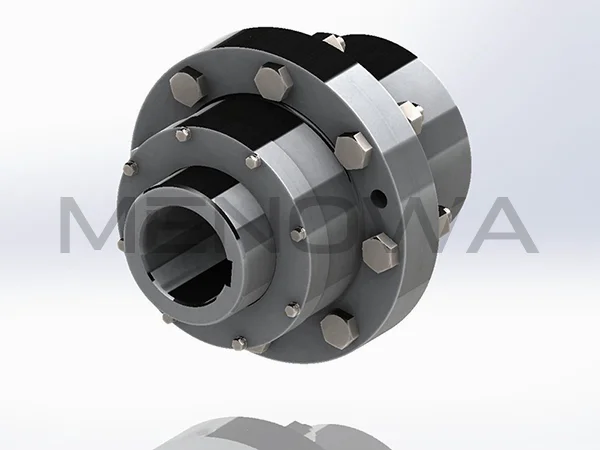
Brake Drum Gear Coupling
In the entire field of industrial mechanical transmission systems, the stable coordination between power torque transmission and equipment braking control has always been a core link that determines the safe and efficient operation of various heavy-duty and continuous production machinery. Many mechanical equipment in industrial production scenarios need to complete two basic core functions in the working process at the same time: one is to stably and continuously transmit rotational torque between adjacent driving shafts and driven shafts, ensuring that the power output by power equipment can be efficiently transmitted to the working execution end without excessive power loss; the other is to realize flexible deceleration, stable stopping and reliable static braking of the equipment according to production process requirements, avoiding equipment runaway, inertial impact and mechanical collision accidents caused by sudden load changes or shutdown operations. Among various mechanical transmission and braking integrated components, brake drum gear coupling stands out as a key composite mechanical part that integrates high-efficiency gear torque transmission and integrated braking execution functions. It abandons the separate design of traditional transmission coupling and independent brake component, organically combines the gear transmission structure with the brake drum friction braking structure into a single integrated assembly, which not only simplifies the overall structural layout of the mechanical transmission system, reduces the number of connecting parts and installation space occupation, but also effectively optimizes the coordination matching relationship between power transmission and braking action, making the switching between equipment normal operation and braking stopping more smooth and synchronous, and greatly improving the overall operational stability and safety of mechanical equipment in complex working conditions. Unlike ordinary standard gear couplings that only focus on basic torque transmission and shaft misalignment compensation, and simple brake drum parts that only undertake friction braking tasks, brake drum gear coupling takes into account the dual performance requirements of long-term stable power transmission and frequent cyclic braking work, and its structural design, material selection, processing technology and operation and maintenance management are all formulated and optimized around the dual-dimensional needs of transmission efficiency and braking reliability, adapting to various harsh industrial working environments such as heavy load, variable load, high frequency start and stop, and dusty humid operation.
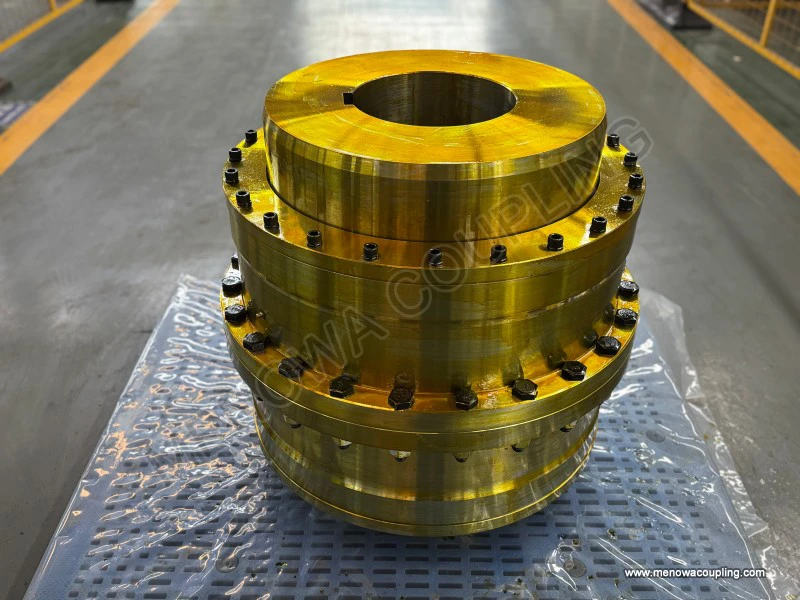
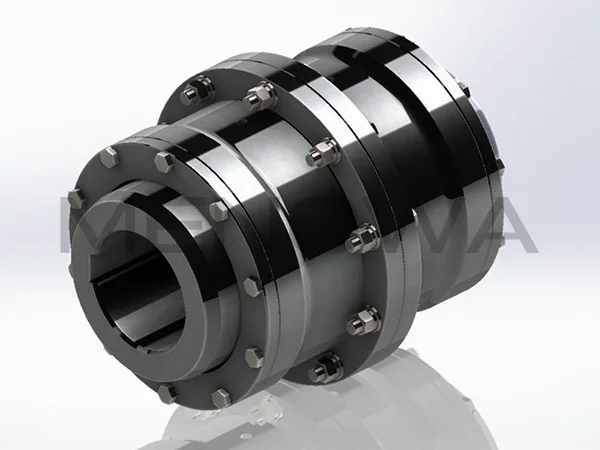
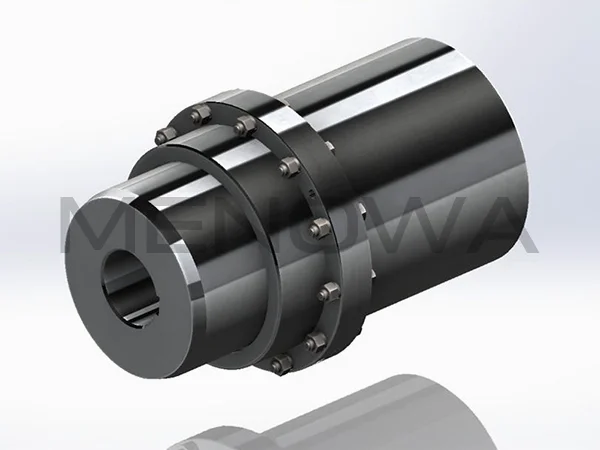
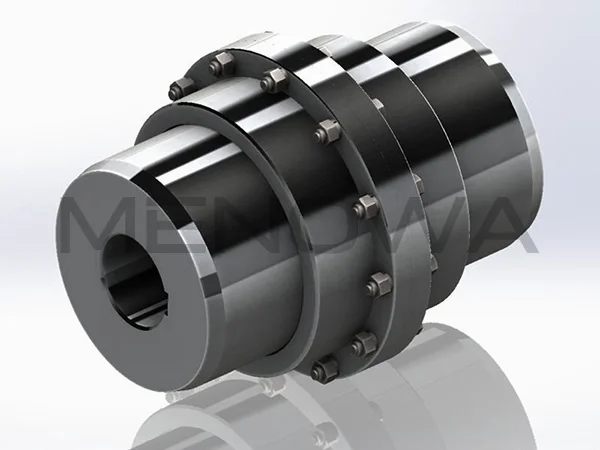
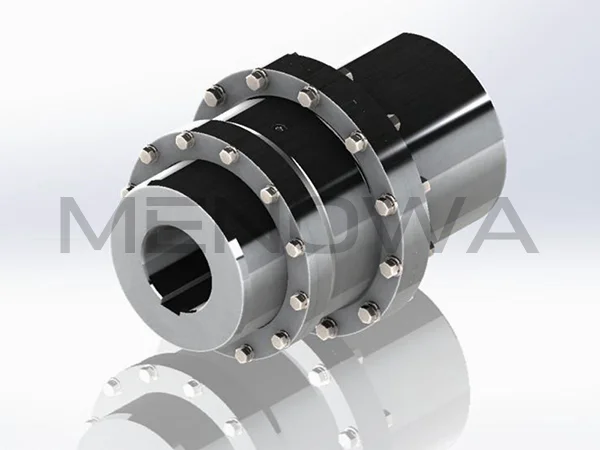
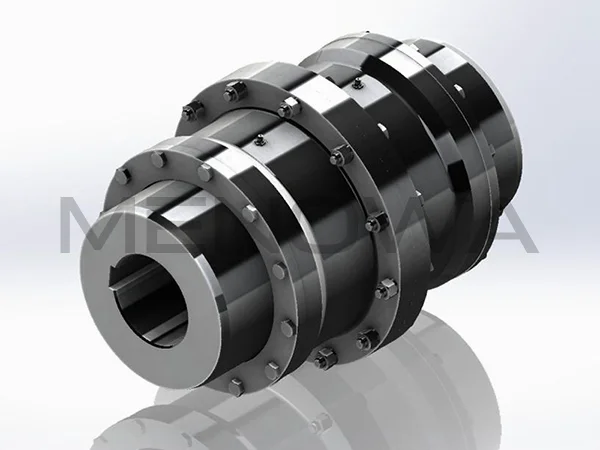
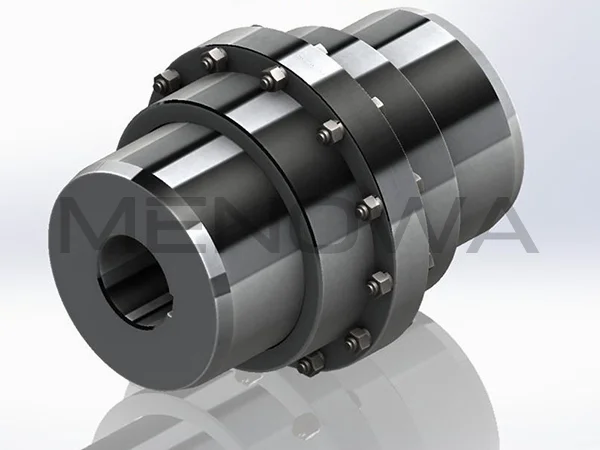
To deeply understand the practical application value and core working advantages of brake drum gear coupling in modern industrial machinery operation, it is necessary to start with its overall structural composition and the functional characteristics of each component, and clarify the connection and matching relationship between different parts and the respective core responsibilities undertaken in the transmission and braking process. The overall structural design of brake drum gear coupling follows the integrated integration concept of transmission main body and braking auxiliary structure, and the whole assembly is mainly composed of gear transmission assembly, integrated brake drum body, sealing protection assembly and shaft connection and fastening assembly. Each part is closely matched and mutually restricted, and any structural defect or assembly deviation of any part will directly affect the overall working performance and service life of the entire coupling. The gear transmission assembly is the core power transmission carrier of the coupling, mainly including external gear half coupling hubs and internal gear ring sleeves matched with each other. In most conventional designs, the external gear teeth adopt drum-shaped tooth profile structure instead of ordinary straight tooth profile, and the spherical center of the drum-shaped external gear is kept coincident with the central axis of the gear hub. This special tooth profile design can effectively increase the tooth side clearance of the gear meshing part compared with ordinary straight gear structures, provide sufficient deformation and displacement buffer space for gear meshing operation, and enable the coupling to have good compensation ability for various shaft misalignment states generated during equipment operation. In the actual operation of mechanical equipment, due to machining errors of equipment parts, installation and alignment deviations, thermal deformation of shafts caused by long-term high-load operation, and slight foundation settlement of equipment installation positions, the driving shaft and driven shaft connected by the coupling often cannot maintain an absolute ideal coaxial state, and angular misalignment, radial displacement and axial displacement are inevitable. The drum-shaped gear meshing structure of the brake drum gear coupling can well adapt to these misalignment changes, ensure that the gear meshing state remains stable during torque transmission, avoid abnormal tooth surface friction, gear tooth extrusion and local stress concentration caused by shaft misalignment, and reduce the wear and fatigue damage speed of gear parts in the transmission process.
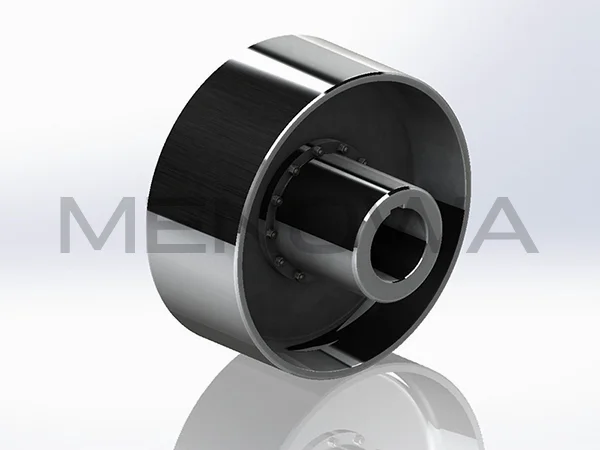
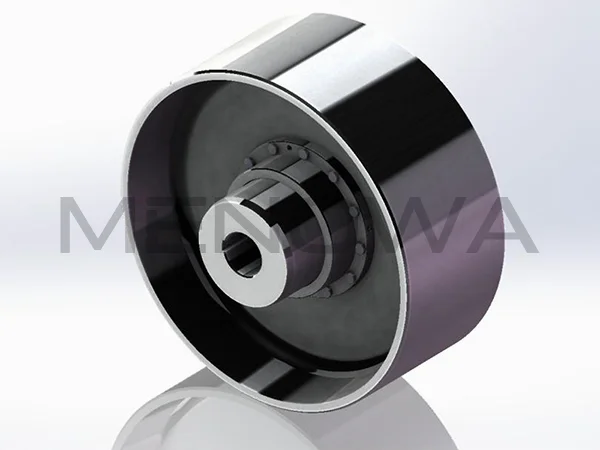
The brake drum body is the core functional component of the coupling to realize the braking function, and it is usually designed as an integrated cylindrical annular structure, which is seamlessly connected and fixed with the outer side of the internal gear ring sleeve of the gear transmission assembly to form an integrated overall structure. The outer circular surface of the brake drum is processed into a smooth and uniform friction working surface through precision machining and special surface treatment processes, which is the direct acting part matched with the external brake caliper or brake shoe assembly. When the equipment needs to be decelerated or stopped, the external braking mechanism applies uniform and stable clamping pressure on the outer friction surface of the brake drum, and through the friction effect between the braking friction material and the drum body surface, the rotational kinetic energy generated by the operation of the mechanical equipment is converted into thermal energy, which is gradually dissipated into the surrounding working environment, so as to realize the smooth deceleration and final static stopping of the rotating shaft and the connected mechanical equipment. The inner part of the brake drum body is closely combined with the gear transmission assembly, which can not only ensure the synchronous rotation of the brake drum and the gear coupling during normal power transmission, without relative rotational sliding and power loss between parts, but also ensure that the braking force applied on the drum body can be quickly and evenly transmitted to the entire coupling and the connected shaft parts during braking operation, realizing rapid and accurate braking response. The structural thickness and overall rigidity of the brake drum body are designed according to the maximum braking torque and continuous heat dissipation requirements of the matching equipment. Sufficient structural rigidity can avoid structural deformation, drum body distortion and friction surface warping caused by instantaneous impact force during frequent braking and long-term high-load braking, ensuring the flatness and stability of the friction working surface for a long time. At the same time, the reasonable wall thickness design also takes into account the heat dissipation efficiency in the braking process, preventing the thermal deformation of the drum body and the aging damage of internal gear lubricant caused by excessive heat accumulation after multiple continuous braking operations.
The sealing protection assembly and shaft connection and fastening assembly are important auxiliary structural parts to ensure the long-term reliable and stable operation of the brake drum gear coupling, and play an irreplaceable role in protecting internal transmission parts, maintaining lubrication effect and ensuring firm shaft connection. The sealing protection assembly mainly includes integral sealing end covers, rubber sealing rings, dust-proof baffles and anti-leakage gaskets, which are installed at the assembly gap between the gear meshing part and the brake drum, as well as the shaft penetration position of the coupling hub. The working environment of most industrial mechanical equipment equipped with brake drum gear couplings is relatively harsh, with a large amount of dust, metal debris, industrial dust, humid moisture and even corrosive medium gas in the surrounding air. The sealing assembly can effectively isolate the external harsh environmental pollutants from the internal gear meshing area, prevent dust and impurities from entering the gear meshing gap and causing abrasive wear of the gear tooth surface, and avoid moisture and corrosive media from contacting the gear metal parts and causing oxidation rust and chemical corrosion damage. At the same time, the sealing structure can also effectively lock the special lubricating grease filled in the gear meshing cavity, prevent the loss and leakage of lubricating oil during the high-speed rotation and frequent braking of the coupling, maintain the good lubrication state of the gear meshing parts for a long time, and reduce the friction coefficient and wear degree of gear transmission. The shaft connection and fastening assembly mainly includes interference fit hubs, positioning key parts, fastening bolts and anti-loosening gaskets. The coupling hubs are tightly sleeved on the shaft ends of the driving equipment and driven equipment through interference fit and positioning key connection, realizing the fixed connection between the coupling and the transmission shaft. The fastening bolts and anti-loosening parts can prevent the relative displacement and loosening of the coupling and the shaft caused by mechanical vibration, torque impact and frequent start-stop braking during equipment operation, ensure the synchronous rotation of the coupling and the shaft body all the time, and avoid transmission failure and braking failure caused by connection loosening.
The working operation process of brake drum gear coupling can be divided into two stable working states: normal power transmission operation state and braking deceleration stopping state, and the two states can be switched quickly and smoothly according to the production operation needs of mechanical equipment, with clear functional division and coordinated operation. In the normal power transmission operation state of the equipment, the external braking mechanism is in a released state, there is no clamping pressure between the brake caliper or brake shoe and the outer friction surface of the brake drum, and the brake drum and the internal gear transmission assembly rotate synchronously with the driving shaft and driven shaft without any friction resistance generated by the braking system. At this time, the core function of the coupling is efficient torque transmission. The driving shaft drives the external gear half coupling hub to rotate synchronously, and the external gear teeth mesh with the internal gear ring sleeve to transmit rotational torque and power. The drum-shaped gear meshing structure automatically compensates for the slight misalignment between the shafts generated during operation, ensures the uniform and stable meshing stress of each gear tooth, and transmits the power output by the power equipment to the driven shaft and the subsequent working mechanical equipment efficiently and stably. During the whole power transmission process, the internal lubricating grease ensures the low-friction operation of the gear meshing parts, the sealing assembly maintains the clean and dust-free internal working environment, and the overall structure of the coupling runs stably without abnormal vibration, noise and power loss, meeting the continuous operation needs of industrial production equipment for long-term stable power transmission.
When the mechanical equipment needs to reduce the operating speed, stop running in an emergency or keep a static stopped state for a long time, the system enters the braking deceleration stopping working state, and the working focus of the brake drum gear coupling is switched from power transmission to friction braking execution. At this stage, the external control system drives the braking mechanism to act, the brake shoe or brake caliper of the braking device clamps the outer friction surface of the integrated brake drum body with stable and controllable pressure, and strong friction resistance is generated between the braking friction material and the drum friction surface. This friction resistance forms braking torque opposite to the rotation direction of the coupling and the shaft body, which offsets the rotational torque of the equipment operation and gradually reduces the rotation speed of the driving shaft, driven shaft and all connected mechanical operating parts. With the continuous action of braking friction torque, the rotational kinetic energy of the equipment is continuously converted into thermal energy and dissipated through the brake drum surface and the braking friction parts, and the equipment speed gradually drops until it completely stops rotating and maintains a stable static braking state. In the braking process, the integrated structural design of the brake drum and the gear coupling ensures that the braking torque can be directly and uniformly applied to the transmission shaft system without intermediate transition transmission links, the braking response speed is fast, the braking process is stable and smooth, and there will be no sudden braking impact and equipment jitter. After the equipment stops completely, the braking mechanism keeps the clamping state, and the brake drum gear coupling maintains the static braking locking state, ensuring that the equipment will not rotate automatically due to external load inertia or external force interference, providing safe guarantee for equipment maintenance, material replacement and production process adjustment operations.
Compared with the traditional separate transmission and braking structure and other types of transmission and braking integrated couplings, brake drum gear coupling has prominent comprehensive performance advantages in structural design, working performance, environmental adaptability and long-term operation economy, which makes it widely used in many industrial fields. First of all, the integrated composite structural design effectively simplifies the overall layout of the mechanical transmission system. The traditional mechanical design needs to separately install an independent gear coupling for power transmission and a separate brake drum for braking operation, which requires more installation space, more connecting and fixing parts, and complicated installation and alignment procedures. The brake drum gear coupling integrates the two core functions into one part, reducing the number of parts of the transmission and braking system, simplifying the equipment assembly process, reducing the difficulty of installation and later disassembly and maintenance, and also reducing the overall weight of the equipment transmission part, which is conducive to the lightweight design and stable operation of mechanical equipment. Secondly, the drum-shaped gear meshing structure gives the coupling excellent shaft misalignment compensation performance, which can adapt to angular displacement, radial displacement and axial displacement generated by equipment installation deviation and long-term operation deformation, avoid additional bending stress and friction wear caused by shaft misalignment, reduce the failure rate of transmission parts, and extend the service life of the entire transmission and braking system.
In terms of braking performance and transmission stability, the integrated brake drum has high structural rigidity and good heat dissipation performance, which can adapt to frequent start-stop and frequent cyclic braking working conditions, and will not cause braking performance attenuation and structural deformation due to heat accumulation after long-term repeated braking. The gear transmission part has large torque transmission capacity, stable transmission operation and low vibration and noise during operation, which can meet the power transmission needs of heavy-load mechanical equipment. In addition, the overall structural design of the coupling has good sealing and environmental adaptability, and can work normally in harsh working environments such as high dust, high humidity, outdoor open-air operation and industrial corrosive atmosphere, without being easily affected by external environmental factors to cause performance degradation and part damage. In terms of long-term operation and maintenance cost control, the structure of brake drum gear coupling is simple and compact, the wearing parts are concentrated in the gear meshing parts and brake friction matching parts, the maintenance and replacement work is convenient and fast, the daily maintenance workload is small, and the overall long-term operation cost is low, which is in line with the cost control needs of modern industrial enterprises for mechanical equipment operation.
Brake drum gear coupling is widely applied in multiple core industrial fields, covering heavy machinery manufacturing, metallurgical production, mining operation, port handling, building material processing and other key industrial sectors, and it plays an indispensable core role in the normal operation and safe production of various mechanical equipment. In the field of metallurgical industrial production, various rolling mills, steel conveying machinery and metallurgical lifting equipment need to transmit large torque power, and also need to realize frequent deceleration and stopping according to the steel rolling production process and material handling rhythm. The heavy-load transmission performance and stable braking performance of brake drum gear coupling can fully adapt to the harsh working conditions of heavy load, variable load and frequent start-stop of metallurgical equipment, ensure the stable operation of steel rolling transmission and accurate positioning and stopping of material conveying, and avoid production accidents and product quality problems caused by unstable transmission and inaccurate braking. In the field of mining machinery operation, mining hoists, conveyor belt transmission equipment and mining crushing machinery usually work in underground or open-air mining areas, with harsh working environments, large dust and humid air, and the equipment bears large impact load during operation. The good environmental adaptability, misalignment compensation performance and impact resistance of brake drum gear coupling can ensure the reliable transmission of mining equipment power and safe braking and stopping, prevent equipment failure caused by bad environment and load impact, and ensure the safe and efficient progress of mining production operations.
In port handling and logistics transportation machinery, port container cranes, cargo handling hoists and bulk material conveying equipment need to frequently start, stop, lift and lower materials, with high requirements for braking stability and transmission synchronization. The brake drum gear coupling can realize smooth switching between transmission and braking, ensure accurate positioning and stable stopping during cargo handling, avoid cargo shaking, slipping and collision accidents caused by unstable braking, and improve the efficiency and safety of port logistics operation. In the building material processing industry, cement production equipment, stone crushing machinery and building material conveying machinery work continuously for a long time, with high requirements for the continuous operation stability and long service life of transmission and braking parts. The low wear and long-term stable operation performance of brake drum gear coupling reduce the number of equipment shutdown maintenance times, improve the continuous operation rate of building material production lines, and ensure the continuous and efficient progress of building material production and processing. In addition, in the fields of chemical industry machinery, power station auxiliary equipment and general industrial lifting machinery, brake drum gear coupling also has a wide range of application scenarios, providing reliable transmission and braking guarantee for various types of mechanical equipment operation.
The installation and commissioning work of brake drum gear coupling is the key link to ensure its subsequent stable operation and give full play to transmission and braking performance. Standardized and accurate installation and commissioning can avoid potential hidden dangers such as poor meshing of gear parts, misalignment of shaft bodies and unstable braking in the later operation process, and lay a foundation for the long-term reliable work of the coupling. Before the formal installation operation, it is necessary to carry out comprehensive inspection and pretreatment on all parts of the coupling, including checking whether the surface of gear teeth, brake drum friction surface, sealing parts and connecting fasteners have processing defects, surface scratches, deformation damage and rust corrosion, cleaning the anti-rust oil, dust and sundries on the surface of all parts, ensuring that the matching surface and meshing surface are clean and smooth without any impurities affecting assembly and operation. At the same time, it is necessary to check the coaxiality and installation dimensional accuracy of the driving shaft and driven shaft connected with the coupling, adjust the installation position of the equipment shaft body according to the installation requirements, minimize the initial installation misalignment of the two shafts, and reduce the compensation pressure of the coupling gear structure in the subsequent operation process.
In the formal installation process, the gear half coupling hubs should be installed on the shaft ends of the driving shaft and driven shaft respectively through interference fit and positioning key positioning, and the fastening bolts and anti-loosening gaskets should be installed and tightened in place to ensure that the hubs and the shaft body are firmly connected without relative rotation and loosening. Then, the internal gear ring sleeve integrated with the brake drum is sleeved on the outer side of the external gear hub, so that the internal gear and the external gear are accurately meshed, and the meshing gap is kept uniform and reasonable. After the gear meshing assembly is completed, install the sealing protection assembly such as sealing end covers and dust-proof baffles, check the sealing tightness of all assembly gaps, ensure that the internal gear cavity forms a closed and sealed space, and fill the gear meshing cavity with special high-temperature and wear-resistant lubricating grease according to the assembly requirements to ensure that the gear meshing parts have sufficient lubricating protection materials. After the overall assembly of the coupling is completed, the alignment commissioning of the coupling and the matching gap adjustment between the brake drum and the external braking mechanism are carried out. It is necessary to ensure that the coupling runs smoothly without abnormal jitter and eccentric rotation when the shaft body rotates, and the gap between the brake drum friction surface and the brake shoe or brake caliper is uniform and reasonable, avoiding the problems of friction drag during normal operation and insufficient braking pressure during braking caused by too small or uneven gap.
Daily operation maintenance and regular professional maintenance management are essential to prolong the service life of brake drum gear coupling and maintain stable transmission and braking performance for a long time. Scientific and standardized maintenance work can timely eliminate potential small faults and hidden dangers in the operation process, avoid small problems evolving into major equipment failures, reduce equipment shutdown time and maintenance replacement costs, and ensure the long-term efficient and safe operation of the coupling and matching mechanical equipment. In the daily operation and use process, the operator needs to regularly observe the operation state of the coupling during the operation of the equipment every day, including whether the coupling has abnormal vibration, abnormal noise and local overheating phenomenon during power transmission and braking operation, whether there is lubricating grease leakage at the sealing position, and whether the braking response is sensitive and the stopping state is stable during braking operation. Once abnormal operation signs are found, the equipment should be shut down in time for inspection and troubleshooting, and it is not allowed to operate with faults reluctantly, so as to prevent fault expansion and cause more serious mechanical damage and production accidents.
Regular professional maintenance work needs to be carried out regularly according to the equipment operation time and working condition severity. For mechanical equipment working in ordinary clean working environment, the maintenance cycle can be appropriately extended; for equipment working in harsh working conditions such as high dust, high humidity and heavy variable load, the maintenance cycle needs to be shortened appropriately. The core contents of regular maintenance include gear lubrication maintenance, sealing part inspection and replacement, brake drum friction surface detection, connecting fastener anti-loosening inspection and gear wear degree detection. In terms of lubrication maintenance, the old deteriorated lubricating grease in the gear cavity needs to be cleaned regularly, and new high-quality special lubricating grease needs to be refilled to ensure the good lubrication effect of gear meshing parts and reduce gear wear and friction heat generation. For sealing parts, check whether the sealing rings and gaskets are aging, deformed and damaged, replace the failed sealing parts in time to ensure the sealing protection effect and prevent dust ingress and lubricant leakage. For the brake drum friction surface, regularly detect the surface flatness, wear thickness and surface roughness, polish and repair the slight scratches and wear marks on the friction surface in time, and replace the brake drum in time when the wear degree exceeds the safe range to ensure the stable friction braking effect.
For the connecting fasteners, check the tightening state and anti-loosening effect of all bolts and anti-loosening parts regularly, re-tighten the loose fasteners and replace the failed anti-loosening parts to ensure the firm connection of all coupling parts. For the gear meshing parts, regularly check the wear degree, tooth surface corrosion and meshing state of the gear teeth, timely repair the slight wear and tooth surface damage, and replace the gear parts when the gear wear exceeds the standard and the meshing performance declines, so as to ensure the stable power transmission capacity of the coupling. In addition, in the daily operation process, it is necessary to avoid frequent overload start-stop and emergency braking operations as much as possible, reduce the instantaneous impact load on the coupling, and prolong the service life of the coupling transmission and braking parts.
In the long-term operation process of brake drum gear coupling, due to long-term wear, environmental corrosion, improper operation and maintenance negligence, some common typical faults may occur, and targeted fault diagnosis and scientific troubleshooting methods are needed to ensure the rapid recovery of equipment normal operation. The common typical faults mainly include abnormal vibration and noise during transmission operation, insufficient braking force and unstable stopping effect, lubricating grease leakage and gear internal corrosion and wear, and connection loosening and shaft displacement deviation. When abnormal vibration and noise occur during the transmission operation of the coupling, the main reasons are usually excessive installation misalignment of the driving and driven shafts, serious wear of gear meshing parts, aging and failure of damping and buffering parts, and loosening of connecting fasteners. The troubleshooting method is to shut down the equipment to re-adjust the shaft alignment accuracy, replace the seriously worn gear parts, re-tighten all connecting fasteners and replace the failed damping and sealing parts to restore the stable meshing and operation state of the coupling.
When the coupling has insufficient braking force and unstable stopping effect, the main reasons include excessive wear of the brake drum friction surface, uneven gap between the brake drum and the braking mechanism, aging and wear of the braking friction material, and thermal deformation of the brake drum caused by frequent high-intensity braking. The troubleshooting measures are to adjust the matching gap between the brake drum and the braking mechanism to keep it uniform and reasonable, replace the aging and worn braking friction material, repair or replace the brake drum with serious surface wear and thermal deformation, and control the frequency of high-intensity continuous braking to avoid excessive heat accumulation of the drum body. When lubricating grease leakage and internal gear corrosion and wear occur, the main causes are aging and damage of sealing parts, poor sealing effect, long-term failure to replace lubricating grease, and entry of external dust and humid moisture. The solution is to replace all failed sealing components, clean the deteriorated lubricating grease and internal impurities, refill new high-quality lubricating grease, and do a good job in daily sealing protection and regular lubrication maintenance to avoid internal corrosion and abrasive wear of gears.
For the fault of connection loosening and shaft displacement deviation, it is mostly caused by long-term mechanical vibration impact, insufficient fastening force of fasteners and failure of anti-loosening measures. It is necessary to re-fasten all connecting bolts and positioning parts, replace the failed anti-loosening gaskets and fastening parts, re-calibrate the shaft coaxiality, and strengthen the daily inspection of fastening state to prevent the recurrence of loosening and displacement faults. Timely and accurate fault diagnosis and troubleshooting can effectively reduce the impact of coupling faults on industrial production, ensure the continuous and stable operation of mechanical equipment, and reduce the economic loss caused by equipment shutdown and production interruption.
With the continuous progress of modern industrial mechanical manufacturing technology and the continuous improvement of industrial production automation and intelligent operation level, the design, processing and application technology of brake drum gear coupling is also constantly optimized and upgraded, and it is developing towards the direction of more compact structure, higher transmission efficiency, better braking stability, stronger environmental adaptability and longer service life. In the aspect of structural optimization design, with the help of finite element simulation analysis technology, the structural stress distribution and wear law of each part of the coupling are accurately calculated and analyzed, the local stress concentration position of the coupling structure is optimized, the structural rigidity and wear resistance of key parts are improved, the overall weight of the coupling is reduced on the premise of ensuring transmission and braking performance, and the structural design is more reasonable and efficient. In terms of material selection and processing technology, high-strength wear-resistant alloy materials and special surface strengthening treatment processes are gradually adopted to improve the surface hardness, wear resistance, corrosion resistance and high-temperature resistance of gear parts and brake drum friction surface, reduce the wear speed of parts in long-term operation, and further extend the overall service life of the coupling.
In terms of operation matching and intelligent monitoring, more and more industrial production lines begin to equip brake drum gear couplings with real-time operation state monitoring devices, which can real-time monitor the operation vibration, temperature, gear wear degree and braking state parameters of the coupling, realize real-time early warning of potential faults, change the traditional passive maintenance mode after faults occur into active predictive maintenance, further improve the operation reliability of the coupling, and reduce the equipment failure rate and maintenance cost. In the future industrial intelligent production and green manufacturing development trend, brake drum gear coupling, as an important basic mechanical transmission and braking integrated part, will continue to rely on technological innovation and performance optimization, adapt to the increasingly stringent working condition requirements of various industrial mechanical equipment, provide more reliable and efficient basic guarantee for the stable operation and safe production of modern industrial machinery, and play a more important core role in the development of industrial mechanical transmission engineering field.
Post Date: Apr 26, 2026
https://www.menowacoupling.com/coupling-supplier/brake-drum-gear-coupling.html
Products
Tags
Related Articles
Characteristics of Gear Type Coupling
Gear type couplings stand as one of the most versatile and robust mechanical transmission components widely applied in modern industrial power transmission systems, serving the core function of connecting two rotating shafts to transfer torque and rotational motion while adapting to various operational deviations and co…Gear Type Coupling Vendor In China
In the global mechanical transmission industry, gear type couplings play an indispensable role as key components that connect rotating shafts, transmit torque, and compensate for axial, radial, and angular displacements between shafts. As one of the world’s major manufacturing hubs, China has nurtured a large number of…Gear Type Coupling Production
Gear type couplings are essential mechanical components widely used in various industrial fields to connect two shafts and transmit torque while accommodating minor misalignments. The production of gear type couplings is a complex and precise process that requires strict control over every link, from material selection …Gap Chart of Curved Tooth Coupling
Global industrial transformation across manufacturing, energy exploitation, heavy engineering and marine equipment has steadily lifted market demand for curved tooth coupling in cross-continental industrial supply chains over recent years, with gap chart becoming an indispensable technical reference for product matching…Gear Type Coupling Price
Gear type couplings stand as one of the most versatile and widely adopted mechanical transmission components in modern industrial machinery, serving as a critical link between rotating shafts to ensure stable torque transfer while accommodating unavoidable shaft deviations during equipment operation. Unlike rigid coupli…Specification of Gear Type Coupling
Gear type coupling is a widely adopted rigid-flexible transmission component in mechanical power transmission systems, designed primarily to connect two rotating shafts for continuous torque transmission while absorbing and compensating for various shaft misalignments generated during equipment operation. Its core worki…Classification of Gear Type Coupling
Gear type couplings are essential mechanical transmission components widely applied in industrial mechanical systems, serving the core function of connecting two rotating shafts to transmit torque and rotational motion while compensating for various installation and operation deviations between shafts. Compared with oth…Maintenance of Curved Tooth Coupling
Curved tooth coupling, also widely known as crowned gear coupling, remains one of the most widely adopted positive-locking flexible transmission components across global heavy-duty industrial markets, thanks to its outstanding torque capacity, multi-directional misalignment compensation and stable torsional rigidity und…Gear Type Coupling Supplier
xIn the complex and interconnected system of modern industrial transmission machinery, gear type couplings stand out as one of the most indispensable core components, undertaking the critical task of torque transmission, shaft misalignment compensation, and mechanical operation stabilization for various heavy-duty and h…Structure of Gear Type Coupling
Gear type coupling is a widely used flexible mechanical transmission component designed to connect two rotating shafts in mechanical systems, realizing stable torque and rotational motion transmission while compensating for various shaft misalignments generated during equipment operation and installation. Its structural…
 WeChat
 WhatsApp