Structure of Gear Type Coupling
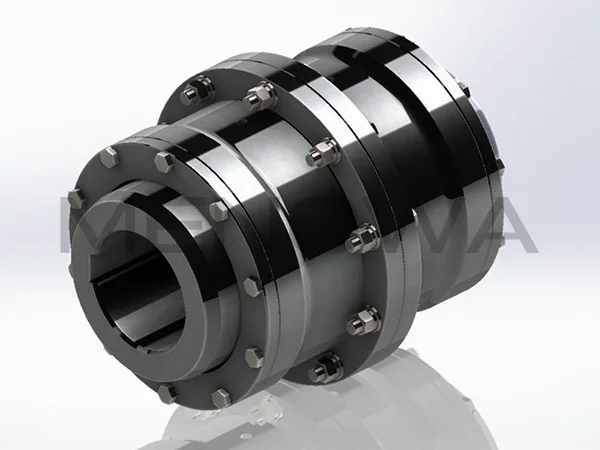
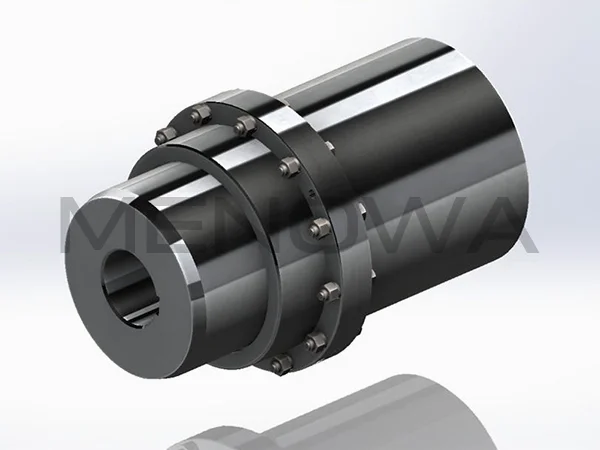
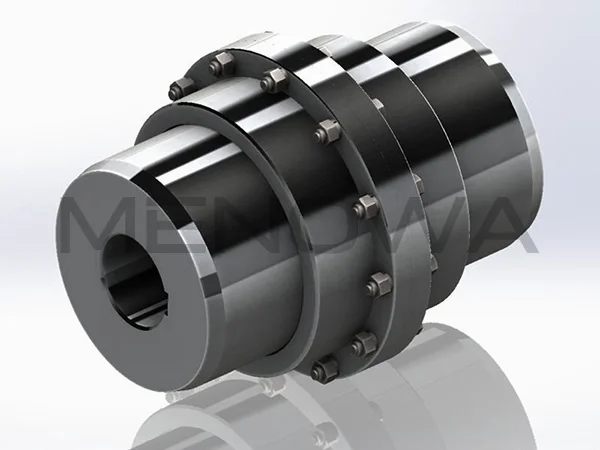
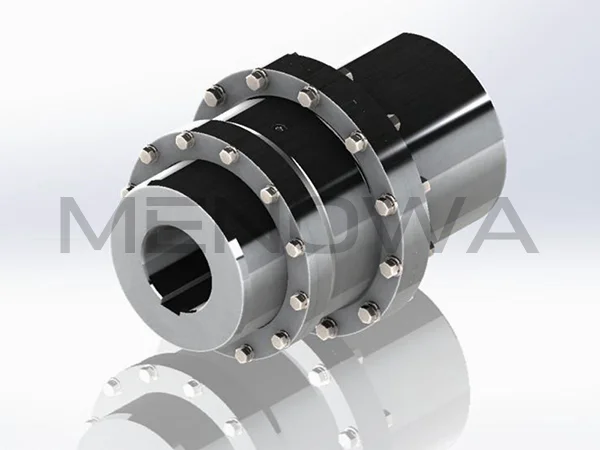
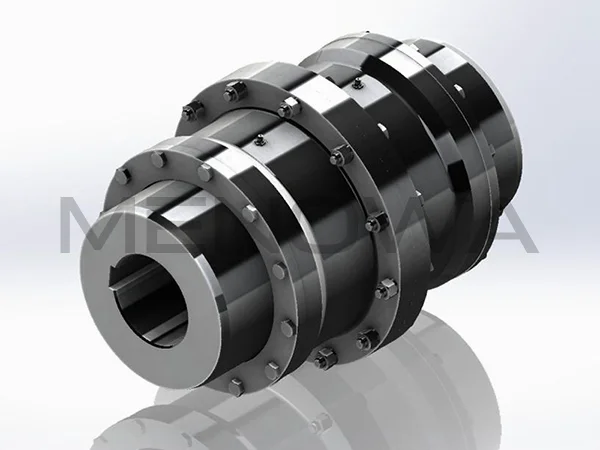
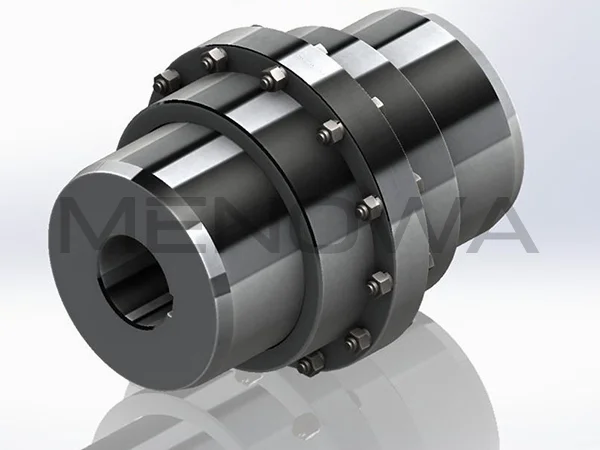
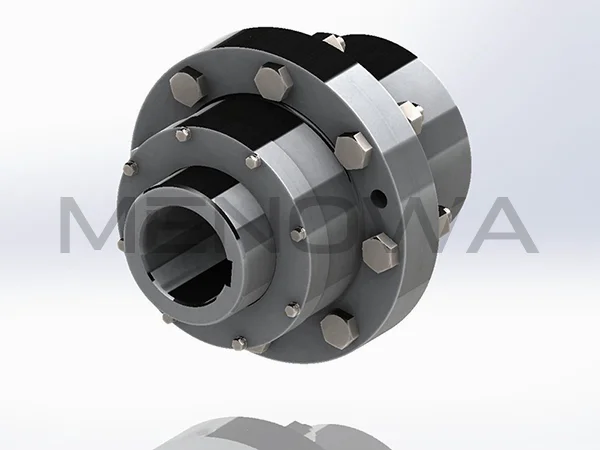
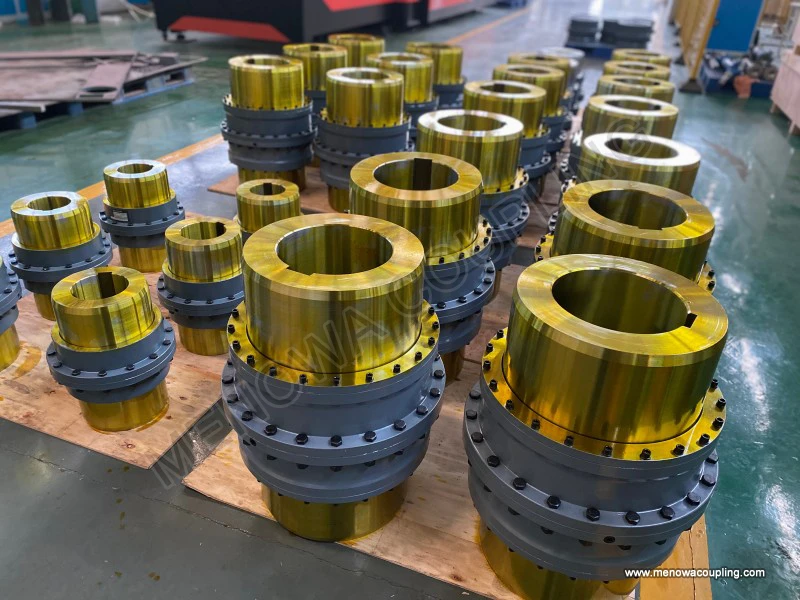
Gear type coupling is a widely used flexible mechanical transmission component designed to connect two rotating shafts in mechanical systems, realizing stable torque and rotational motion transmission while compensating for various shaft misalignments generated during equipment operation and installation. Its structural design is based on the meshing principle of internal and external gear teeth, combining high structural rigidity, strong load-bearing capacity and flexible displacement compensation performance, making it suitable for heavy-load, low-to-medium speed and continuous operating industrial scenarios. The overall structure of a standard gear type coupling presents a symmetrical and compact assembly form, which is mainly composed of external tooth hubs, internal tooth sleeves, connecting fasteners, sealing components and lubrication auxiliary structures. All parts cooperate closely to form a complete transmission system, and the structural characteristics of each component directly determine the coupling’s transmission efficiency, service life and operating stability.
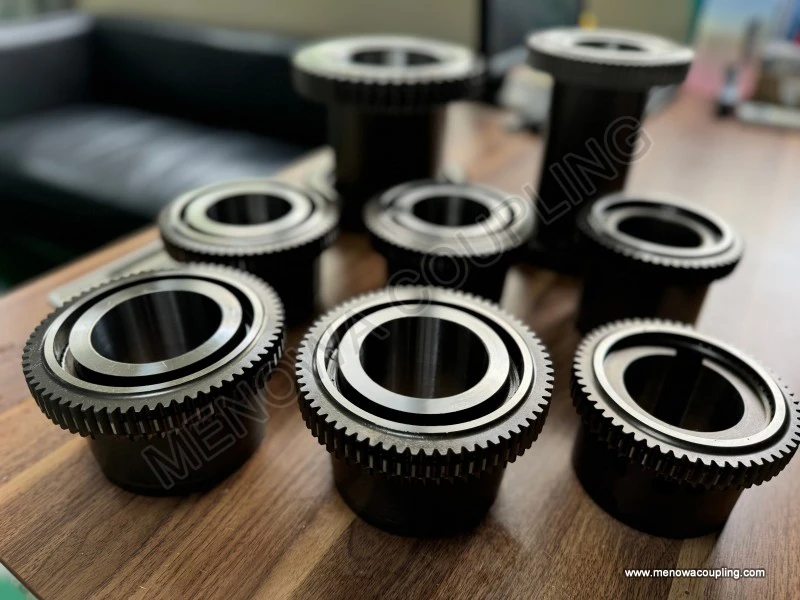
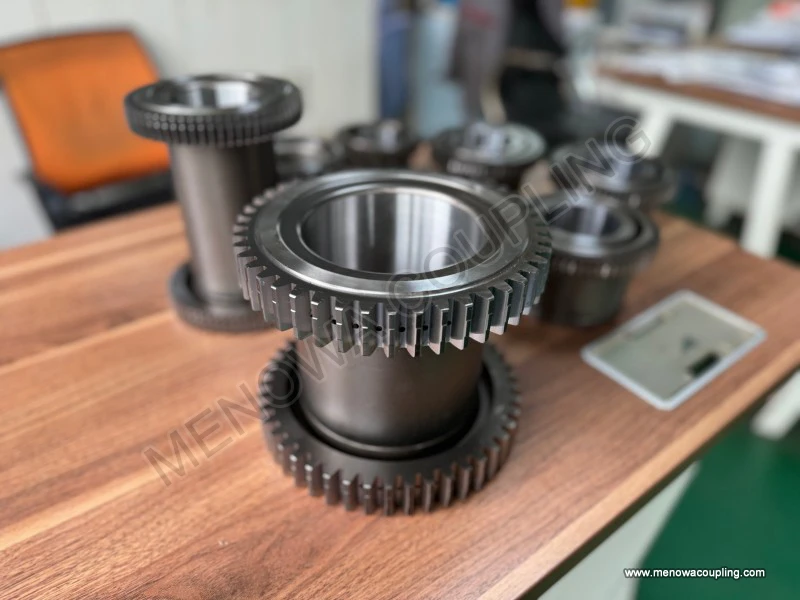
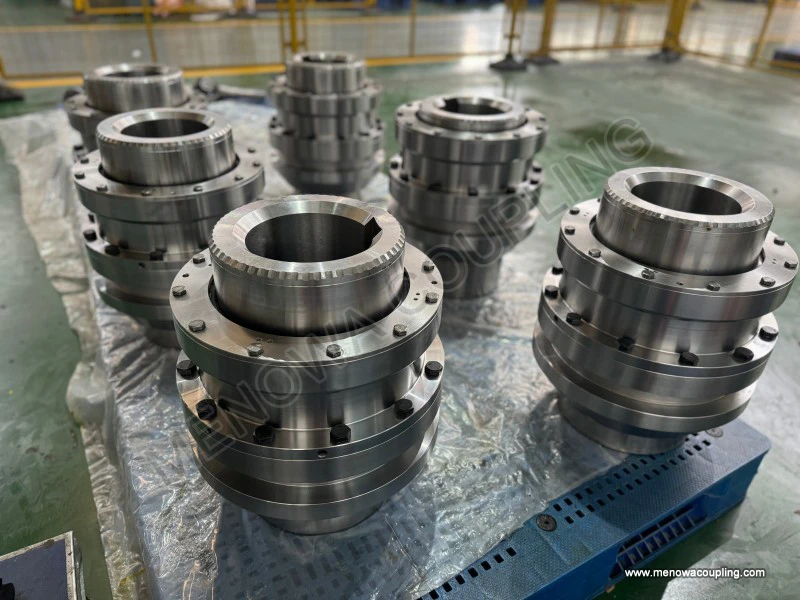
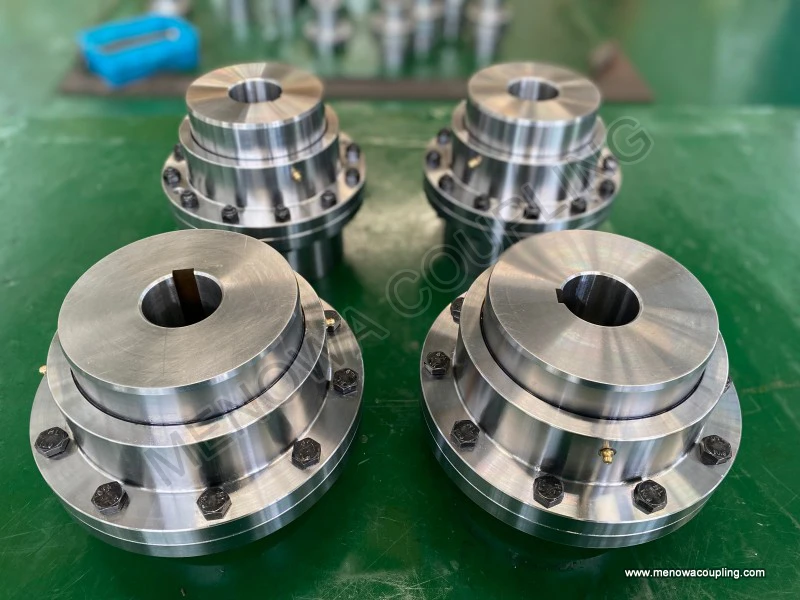
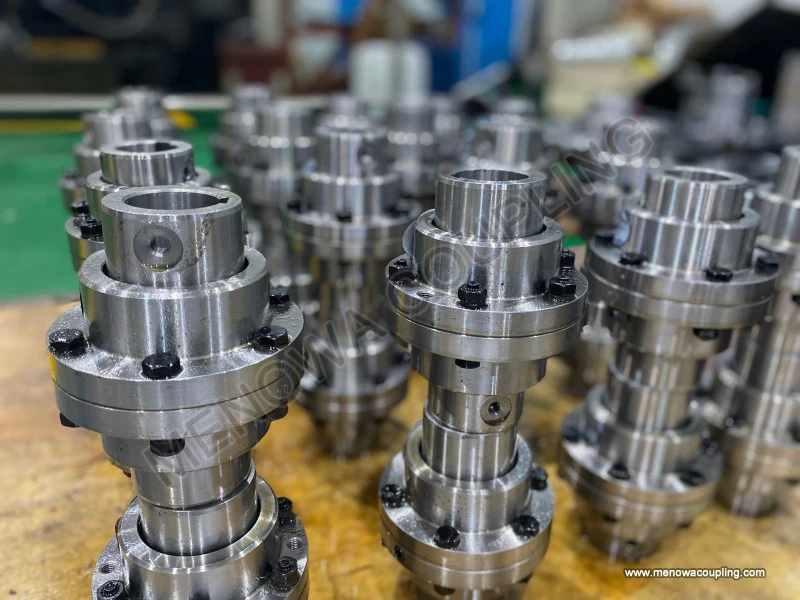
The core force-bearing and transmission parts of the gear type coupling are a pair of external tooth hubs, which are respectively installed and fixed on the driving shaft and the driven shaft of the mechanical equipment. The main body of the external tooth hub is a solid annular metal structure with high structural strength and rigidity, which can withstand large torque and impact loads during long-term operation. The inner hole of the hub is precisely machined to match the outer diameter of the connecting shaft, and the matching mode includes clearance fit and interference fit according to different application working conditions. For conventional working conditions, the inner hole is equipped with a keyway structure, and the torque transmission between the hub and the shaft is realized through the cooperation of flat keys or splines, which ensures synchronous rotation between the hub and the shaft and avoids relative sliding. For high-load and high-precision working scenarios, the hub and the shaft adopt integral interference shrink fit, eliminating the gap caused by key connection and improving the overall transmission accuracy and anti-fatigue performance. The outer circular surface of the hub is processed with evenly distributed external gear teeth, which are the key meshing parts for power transmission. According to different tooth profile designs, external gear teeth are divided into straight teeth and drum teeth. Straight external teeth have a simple processing technology and regular tooth shape, which is suitable for general working conditions with small misalignment. Drum external teeth are processed into spherical generatrix on the top circle of the teeth, with the spherical center located on the axis of the hub. This special structural design increases the side clearance of the gear teeth, effectively improves the contact state between meshing teeth, and allows larger angular displacement compensation, which can reduce the extrusion and wear of tooth surfaces during shaft deflection and greatly improve the overload resistance and service life of the coupling.
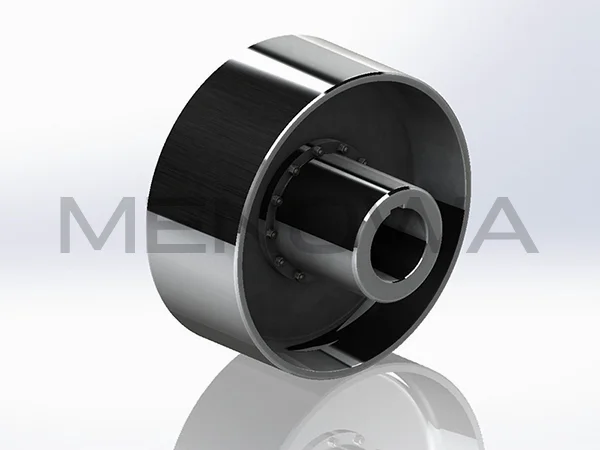
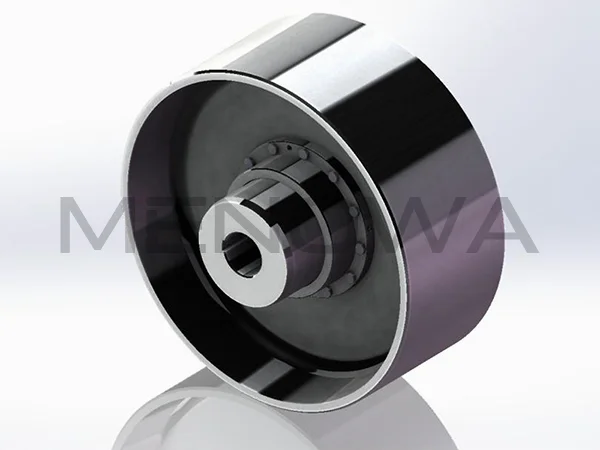
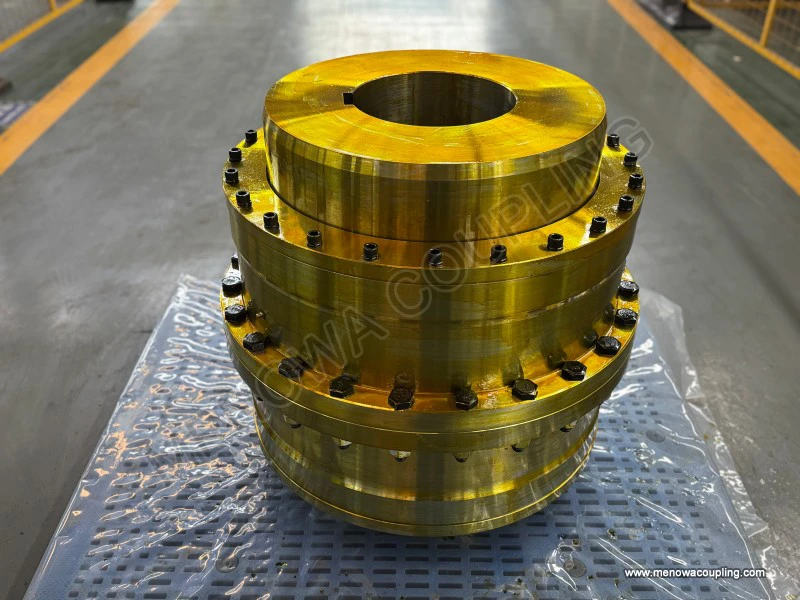
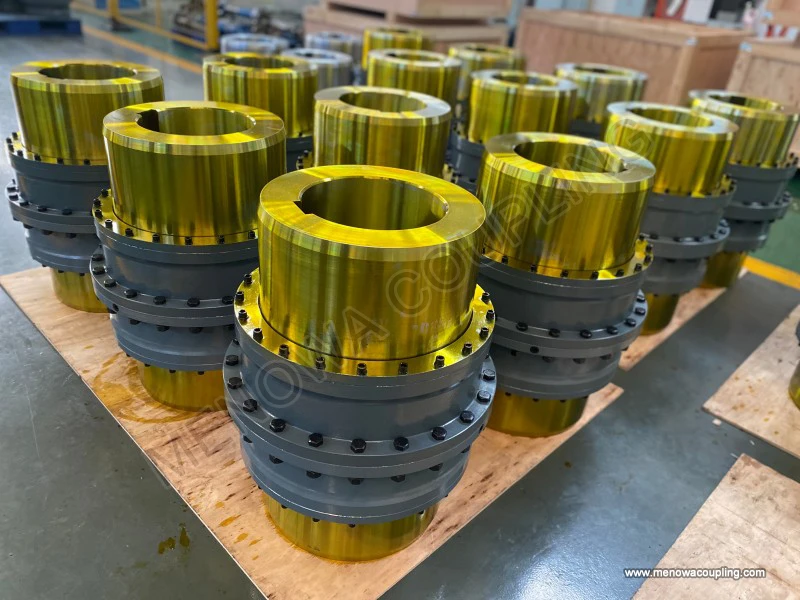
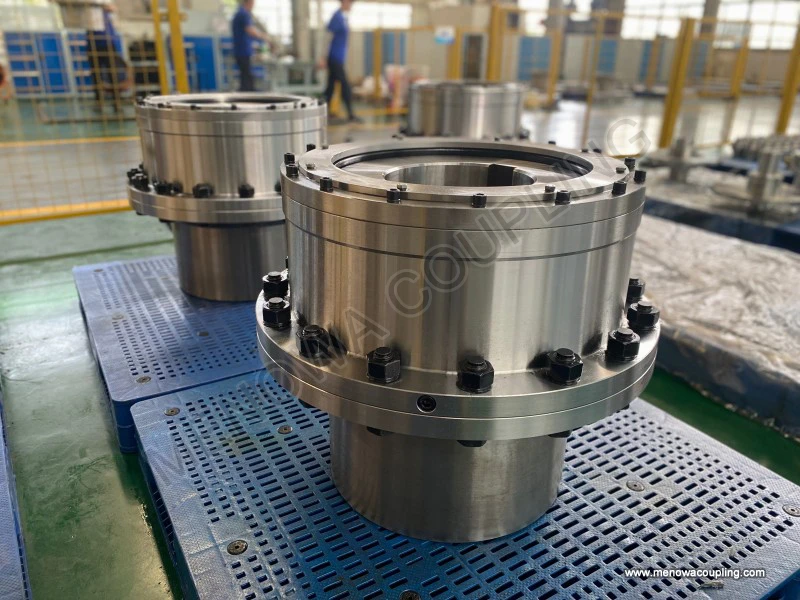
Matching with the external tooth hubs is the internal tooth sleeve structure, which is the intermediate connecting component of the gear type coupling and undertakes the important task of transmitting torque between the two hubs. The internal tooth sleeve is usually a integral or combined annular sleeve structure, and its inner wall is processed with internal gear teeth that have the same number of teeth as the external teeth on the hub, forming a precise meshing pair with the external gear teeth. The integral internal tooth sleeve has high overall rigidity, uniform stress distribution and good structural stability, and is mostly used in small and medium-sized couplings with compact installation space. The combined internal tooth sleeve is composed of two symmetrical flange tooth sleeves, which are connected as a whole by circumferentially distributed fasteners. This split structure is more convenient for installation, disassembly and maintenance, and can realize quick assembly and replacement without moving the connected shafts, which is more suitable for large-scale heavy-duty couplings. The outer wall of the internal tooth sleeve is a smooth cylindrical or flanged structure without redundant protruding structures, which ensures the compact overall layout of the coupling and avoids structural interference with surrounding mechanical parts during operation. The tooth surface of the internal gear adopts fine finishing treatment, with high dimensional accuracy and smooth surface, which can reduce meshing friction resistance and improve transmission efficiency. The tooth groove width of the internal gear is slightly larger than the tooth thickness of the external gear, reserving a reasonable meshing gap, which not only ensures stable torque transmission, but also provides space for the radial, axial and angular displacement compensation of the two connected shafts.
Fastening connection structures are indispensable auxiliary components to ensure the integral stability of the gear type coupling. For split internal tooth sleeve couplings, high-strength bolts are arranged uniformly along the flange circumference of the two half sleeves. These bolts adopt equal-strength design and precise dimensional matching, which can tightly connect the two split sleeves into a whole and prevent separation and loosening during high-speed rotation and heavy-load operation. The bolt holes are processed with high precision to ensure consistent stress of each bolt and avoid local stress concentration caused by uneven fastening force. In order to prevent bolt loosening caused by mechanical vibration during long-term operation, the fastening structure is usually matched with anti-loosening gaskets or double nut structures, which effectively improves the structural reliability of the coupling in continuous vibration working environments. For integral sleeve gear couplings, the fastening structure is mainly reflected in the matching and positioning between the hub and the shaft. In addition to key connection and interference fit, positioning screws or snap ring structures are often installed at the end of the hub to limit the axial displacement of the hub, ensuring that the hub remains fixed in the axial direction during shaft rotation and avoiding axial sliding and transmission failure caused by equipment vibration.
Sealing and lubrication structures are key structural designs that determine the service life and operating performance of gear type couplings. Since the gear type coupling relies on the meshing of metal gear teeth for power transmission, the meshing process will produce friction and wear. Sufficient lubrication can reduce friction coefficient, weaken tooth surface wear, and also play a role in heat dissipation, vibration reduction and corrosion prevention. The sealing structure is mainly composed of elastic sealing rings and end cover gaskets, which are installed at the axial gaps between the two ends of the internal tooth sleeve and the external tooth hubs. The sealing rings are made of elastic wear-resistant materials, which can fit closely with the contact surfaces of the sleeve and the hub, forming a closed inner cavity for gear meshing. This closed structure can effectively prevent the leakage of internal lubricating grease, and also block external dust, moisture and abrasive impurities from entering the meshing gap. External impurities entering the tooth surface will cause abrasive wear, scratch the precision-machined tooth surface, and even lead to meshing jamming in severe cases. The lubrication structure is equipped with grease injection holes on the outer wall of the internal tooth sleeve, which are reserved processing holes during production. Regular grease injection through the holes can supplement the lubricant inside the coupling cavity and maintain the long-term lubrication state of the meshing tooth surface. Some optimized structural designs also add grease storage grooves on the inner wall of the sleeve and the tooth root of the internal gear, which can store more lubricating grease, prolong the lubrication cycle and reduce the frequency of daily maintenance.
The overall structural layout of the gear type coupling has excellent mechanical performance and structural rationality. Compared with other flexible couplings, its gear meshing structure has higher load-bearing density, and the compact spatial layout enables it to transmit larger torque under the same volume size. The symmetrical structural design makes the stress distribution of the coupling uniform during operation, without eccentric load and local overstress, which effectively reduces mechanical vibration and operation noise. The reserved meshing gap and the flexible fit of the sealing and lubrication structure enable the coupling to comprehensively compensate for three types of common shaft misalignments in mechanical operation: axial displacement caused by thermal expansion and contraction of the shaft, radial displacement caused by installation deviation and equipment vibration, and angular displacement caused by shaft deflection. This multi-dimensional displacement compensation capability can effectively eliminate the additional stress generated by shaft misalignment, protect the connected shaft, bearing and other key equipment parts, and reduce the failure rate of the entire transmission system.
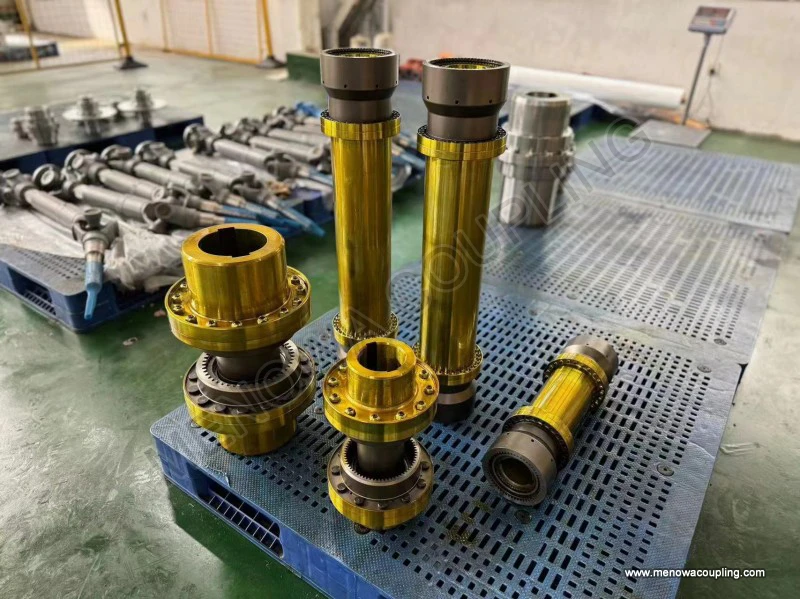
In terms of structural classification, gear type couplings can be divided into full gear structure and half gear structure according to different meshing forms. The full gear coupling adopts double-sided gear meshing design, with external teeth arranged on both driving and driven hubs, and the internal tooth sleeve meshes with the external teeth of the two hubs at the same time. This structure has comprehensive displacement compensation performance and strong load adaptability, suitable for complex working conditions with large misalignment and heavy load. The half gear coupling has a relatively simplified structure, only one side of the hub is provided with external teeth for meshing with the internal tooth sleeve, and the other side adopts rigid flange connection. This structural design reduces the production and processing cost on the premise of meeting basic transmission requirements, and is suitable for working conditions with small shaft misalignment and stable load operation. In addition, according to different structural integration degrees, gear couplings can also be divided into single-section structure and multi-section combined structure. The single-section structure is compact in size and simple in assembly, suitable for short-distance shaft connection; the multi-section combined structure is composed of multiple groups of gear meshing units and intermediate connecting shafts, which can realize long-distance power transmission between shafts while maintaining flexible compensation performance.
The structural design details of gear type couplings are continuously optimized with the development of mechanical manufacturing technology. In modern high-precision gear coupling structures, the tooth surface adopts modified grinding processing technology to improve the finish and machining accuracy of the meshing surface, reduce meshing impact and friction loss. The transition part between the tooth root and the hub body adopts arc transition structure to avoid stress concentration at the tooth root, improve the anti-fatigue strength of the gear teeth, and prevent tooth root fracture failure under long-term alternating load. The overall structural materials are selected according to mechanical performance requirements, with high strength, high toughness and wear-resistant metal materials, which are matched with overall heat treatment processes to improve the hardness and structural stability of parts. The optimized structural details not only improve the mechanical performance and service life of the coupling, but also enhance the stability and safety of the mechanical transmission system in long-term continuous operation.
In practical industrial applications, the excellent structural characteristics of gear type couplings make them widely applicable in various heavy-duty mechanical transmission fields. Its compact structure, high torque transmission capacity and reliable displacement compensation performance can adapt to harsh working environments such as high load, frequent start and stop, and certain vibration impact. The modular structural design of standard gear couplings facilitates standardized production, installation and maintenance, realizing the interchangeability of parts and reducing the difficulty of equipment operation and maintenance. From the perspective of mechanical transmission system design, the structure of gear type coupling perfectly balances rigidity and flexibility. The rigid gear meshing structure ensures accurate and efficient transmission of torque and rotational speed without rotation lag, while the flexible meshing gap and tooth profile design provide sufficient displacement compensation space, avoiding the rigid extrusion and structural damage of shaft parts caused by installation and operation errors. This unique structural advantage makes gear type couplings irreplaceable in heavy industrial transmission systems, and their structural design principles and optimization directions have been continuously promoting the progress of mechanical connection and transmission technology.
Post Date: May 25, 2026
https://www.menowacoupling.com/china-coupling/structure-of-gear-type-coupling.html
Products
Tags
Supply
Related Articles
Diagram of Gear Type Coupling
A gear type coupling is a crucial mechanical component widely utilized in industrial transmission systems to connect two rotating shafts, enabling the efficient transfer of torque while accommodating minor misalignments that may occur during operation. Unlike rigid couplings that require precise alignment between shafts…Gear Type Coupling For Sale
A gear type coupling is a versatile and robust mechanical device designed to connect two rotating shafts, enabling the efficient transmission of torque while accommodating a certain degree of misalignment between the shafts. This type of coupling is widely recognized for its ability to handle heavy loads and harsh opera…Dimensions of Curved Tooth Coupling
Global industrial development across diversified manufacturing sectors continues to push steady market expansion for curved tooth couplings, whose unique curved crowned tooth geometry distinguishes them from conventional straight-tooth gear couplings and enables outstanding comprehensive mechanical performance to match …Gear Type Coupling Manufacture
Gear type couplings stand as one of the most reliable and widely used mechanical transmission components in modern industrial machinery, renowned for their exceptional load-bearing capacity, excellent misalignment compensation performance, and stable operation under high-speed and heavy-duty working conditions. The manu…Parts of Gear Type Coupling
Gear type coupling stands as one of the most reliable and high-performance flexible transmission components widely applied in heavy-duty industrial mechanical systems, serving the core purpose of connecting two rotating shafts to transmit torque and rotational motion while accommodating minor shaft misalignments and mit…Characteristics of Gear Type Coupling
Gear type couplings stand as one of the most versatile and robust mechanical transmission components widely applied in modern industrial power transmission systems, serving the core function of connecting two rotating shafts to transfer torque and rotational motion while adapting to various operational deviations and co…
 WeChat
 WhatsApp