Elastic Coupling For Sale
In the complex world of mechanical transmission systems, elastic couplings stand as essential components that bridge the gap between rotating shafts, ensuring smooth power transfer while accommodating the inevitable misalignments and vibrations that occur during operation. These versatile devices are designed to transmit torque from a driving shaft to a driven shaft, all while absorbing shocks, reducing vibration, and compensating for axial, radial, and angular displacements that would otherwise cause premature wear and tear on machinery. Whether used in industrial factories, agricultural equipment, automotive applications, or precision machinery, elastic couplings play a critical role in enhancing the reliability, efficiency, and lifespan of mechanical systems. For those seeking high-quality elastic couplings for sale, understanding their design, functionality, types, and applications is essential to making an informed decision that aligns with specific operational needs.
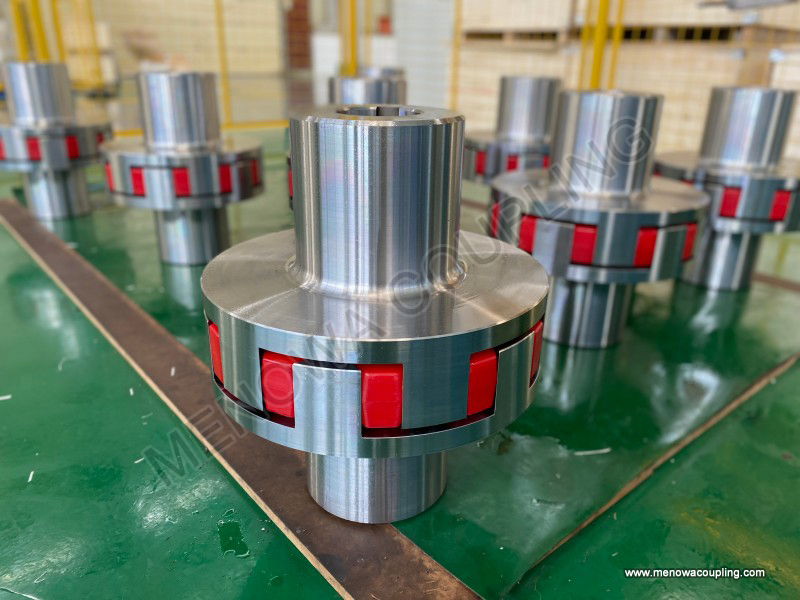
An elastic coupling is fundamentally a mechanical device that connects two rotating shafts, allowing for relative movement between them without compromising the transmission of torque. Unlike rigid couplings, which require precise alignment and offer no flexibility, elastic couplings incorporate elastic elements that deform under load, absorbing shocks and vibrations and accommodating misalignments. This flexibility is what makes elastic couplings indispensable in countless applications where perfect alignment is difficult to achieve or maintain, such as in systems with thermal expansion, mounting errors, or dynamic loads. The elastic elements act as a buffer, reducing the stress on shafts, bearings, and other components, thereby minimizing maintenance costs and downtime.
The core functionality of elastic couplings revolves around three key purposes: torque transmission, misalignment compensation, and vibration damping. Torque transmission is the primary function, as the coupling must efficiently transfer power from the driving source (such as an electric motor, engine, or turbine) to the driven component (such as a pump, fan, conveyor, or gearbox). This requires the coupling to have sufficient strength and durability to withstand the operational torque without deformation or failure. Misalignment compensation is another critical feature, as even minor misalignments between shafts can lead to excessive vibration, noise, and component wear. Elastic couplings can accommodate three types of misalignment: axial (movement along the shaft axis), radial (side-to-side movement), and angular (tilting of one shaft relative to the other). The ability to compensate for these misalignments ensures that the mechanical system operates smoothly and efficiently, even under less-than-perfect mounting conditions. Vibration damping, meanwhile, is achieved through the elastic elements, which absorb and dissipate vibrational energy, reducing noise and preventing the transmission of harmful vibrations to other parts of the system. This not only improves the comfort and safety of the working environment but also protects sensitive components from damage.
There are several types of elastic couplings available for sale, each designed to meet specific application requirements based on factors such as torque capacity, misalignment tolerance, operating speed, environmental conditions, and maintenance needs. These types can be broadly categorized into two main groups: metal elastic couplings and non-metal elastic couplings, each with unique characteristics and advantages.
Metal elastic couplings utilize metal components as the elastic elements, offering high strength, durability, and resistance to high temperatures and harsh environments. One common type of metal elastic coupling is the diaphragm coupling, which uses thin metal diaphragms (typically made of stainless steel or alloy steel) to transmit torque and accommodate misalignments. The diaphragms are designed to flex elastically, allowing for angular and axial misalignment while maintaining zero backlash, making them ideal for high-precision applications such as数控机床, aerospace equipment, and high-speed machinery. Another type of metal elastic coupling is the serpentine spring coupling, which uses a curved metal spring (shaped like a snake) to transmit torque. This design provides excellent shock absorption and torque capacity, making it suitable for heavy-duty applications such as crushers, conveyors, and marine propulsion systems. The serpentine spring coupling is also known for its reliability and ability to handle torque fluctuations, making it a popular choice in industrial settings where durability is a top priority.
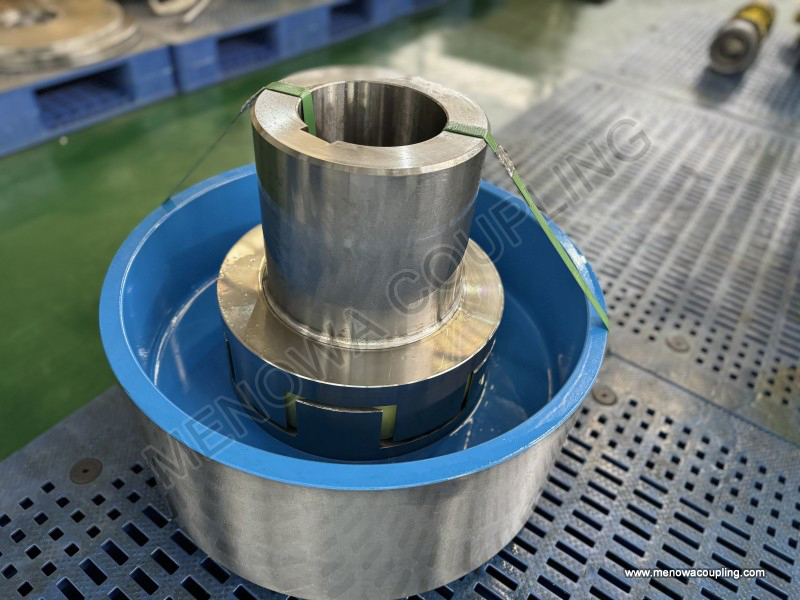
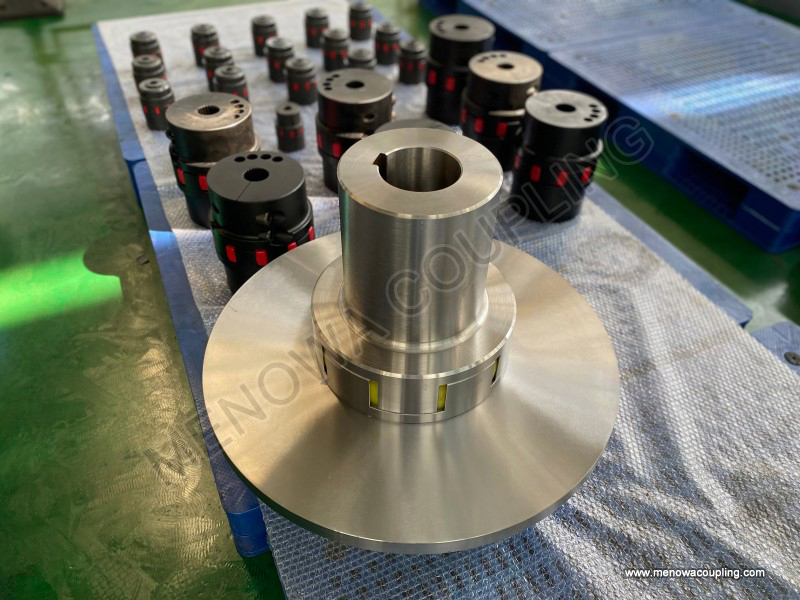
Non-metal elastic couplings, on the other hand, use non-metallic materials such as rubber, polyurethane, nylon, or plastic as the elastic elements. These couplings are typically lighter, more cost-effective, and offer superior vibration damping compared to metal elastic couplings, making them suitable for light to medium-duty applications. One of the most common non-metal elastic couplings is the elastomeric sleeve coupling, which features a rubber or polyurethane sleeve that fits over the ends of the two shafts, secured by bolts or set screws. This design is simple, easy to install, and provides good compensation for radial and angular misalignment, making it ideal for small motors, pumps, and fans. Another popular type is the plum blossom coupling, named for its plum blossom-shaped elastic element (usually made of polyurethane or rubber) that fits between two metal hubs. The plum blossom coupling offers excellent vibration damping and can accommodate all three types of misalignment, making it suitable for applications with frequent starts and stops, such as conveyors, packaging machinery, and robotic systems. Additionally, the elastic element in plum blossom couplings is easy to replace, reducing maintenance time and costs.
The choice of material for elastic couplings is a critical factor that determines their performance, durability, and suitability for specific applications. For metal elastic elements, common materials include stainless steel, alloy steel, and aluminum alloy. Stainless steel is preferred for its corrosion resistance and high temperature tolerance, making it ideal for harsh environments such as chemical plants, food processing facilities, and marine applications. Alloy steel offers high strength and fatigue resistance, making it suitable for heavy-duty torque transmission. Aluminum alloy, meanwhile, is lightweight and has good thermal conductivity, making it ideal for high-speed applications where weight reduction is important. For non-metal elastic elements, rubber and polyurethane are the most common materials. Rubber offers excellent vibration damping and flexibility but may degrade over time in high-temperature or oil-rich environments. Polyurethane, on the other hand, is more durable, resistant to oil and chemicals, and has a longer service life, making it a popular choice for a wide range of applications. Nylon and engineering plastics are also used for non-metal elastic elements, offering lightweight design and low maintenance requirements for light-duty applications.
When selecting elastic couplings for sale, it is important to consider several key factors to ensure that the chosen coupling meets the specific needs of the application. Torque capacity is one of the most important considerations, as the coupling must be able to handle the maximum torque generated by the driving source without failure. It is recommended to select a coupling with a torque capacity that exceeds the maximum operational torque by a safety margin to account for unexpected torque spikes. Operating speed is another critical factor, as high-speed applications require couplings with low inertia and good balance to prevent vibration and premature wear. The maximum allowable speed of the coupling should be higher than the operational speed of the system. Misalignment tolerance is also important, as different applications require different levels of compensation for axial, radial, and angular misalignments. It is essential to choose a coupling that can accommodate the expected misalignments in the system to avoid excessive stress on components. Environmental conditions, such as temperature, humidity, corrosion, and exposure to chemicals or oil, also play a role in material selection. For example, couplings used in high-temperature environments should be made of heat-resistant materials, while those used in corrosive environments should be made of corrosion-resistant materials such as stainless steel.
Another important consideration when purchasing elastic couplings is ease of installation and maintenance. Couplings that are easy to install can reduce downtime during setup, while those with simple maintenance requirements can lower long-term operational costs. Many non-metal elastic couplings, such as plum blossom couplings, feature replaceable elastic elements, allowing for quick and easy maintenance without disassembling the entire system. Metal elastic couplings, such as diaphragm couplings, typically require less maintenance but may be more difficult to install due to their precision design. It is also important to consider the size and weight of the coupling, as it must fit within the available installation space and not add excessive weight to the system.
Elastic couplings are used in a wide range of industries and applications, making them a versatile component in mechanical transmission systems. In the industrial sector, they are commonly used in pumps, fans, compressors, conveyors, and crushers, where they help to reduce vibration and accommodate misalignments. In the automotive industry, elastic couplings are used in powertrain systems, connecting the engine to the transmission and reducing the transmission of vibrations to the vehicle body. In the agricultural sector, they are used in tractors, harvesters, and other farm equipment, where they can handle the harsh operating conditions and frequent torque fluctuations. In precision machinery, such as数控机床, robotic arms, and medical equipment, elastic couplings with zero backlash and high precision are used to ensure accurate motion control. Additionally, elastic couplings are used in renewable energy systems, such as wind turbines and solar trackers, where they help to transmit power efficiently while accommodating misalignments caused by wind or environmental factors.
Proper installation and maintenance of elastic couplings are essential to ensuring their optimal performance and longevity. During installation, it is important to ensure that the shafts are aligned as closely as possible, even though the coupling can accommodate misalignments. Improper alignment can lead to excessive stress on the coupling and other components, reducing their service life. It is also important to follow the manufacturer’s instructions for mounting the coupling, including the use of proper fasteners and torque specifications. Regular maintenance should include inspecting the coupling for signs of wear, such as cracks, deformation, or damage to the elastic elements. The elastic elements should be replaced if they show signs of aging, such as hardening, cracking, or loss of elasticity. Additionally, the coupling should be kept clean and free from debris, as dirt and contaminants can cause premature wear. In applications where the coupling is exposed to oil or chemicals, regular cleaning and inspection are even more important to prevent degradation of the elastic elements.
When searching for elastic couplings for sale, it is important to source them from reliable suppliers who offer high-quality products. High-quality elastic couplings are manufactured using premium materials and strict quality control processes, ensuring that they meet the required performance standards and have a long service life. It is also important to choose a supplier who can provide technical support and advice, helping to select the right coupling for the specific application. Many suppliers offer a wide range of elastic couplings, including both standard and custom designs, allowing customers to find the perfect solution for their needs. Custom elastic couplings can be designed to meet specific torque requirements, misalignment tolerances, size constraints, or environmental conditions, making them ideal for unique or specialized applications.
In conclusion, elastic couplings are essential components in mechanical transmission systems, offering torque transmission, misalignment compensation, and vibration damping to enhance the reliability and efficiency of machinery. With a wide range of types, materials, and designs available, there is an elastic coupling suitable for every application, from light-duty household equipment to heavy-duty industrial machinery. When purchasing elastic couplings for sale, it is important to consider factors such as torque capacity, operating speed, misalignment tolerance, environmental conditions, and ease of maintenance to ensure that the chosen coupling meets the specific needs of the application. By selecting high-quality elastic couplings and following proper installation and maintenance practices, businesses can reduce downtime, lower maintenance costs, and extend the lifespan of their mechanical systems. Whether you are in need of a standard elastomeric sleeve coupling for a small pump or a custom diaphragm coupling for a high-precision machine, there is a wide selection of elastic couplings available to meet your requirements.
Post Date: May 2, 2026
https://www.menowacoupling.com/china-coupling/elastic-coupling-for-sale.html
Products

Related Articles
Dimensions of Elastic Coupling
The dimensions of elastic couplings are a critical factor that directly determines their performance, compatibility, and service life in mechanical transmission systems. Unlike rigid couplings, which rely on precise alignment and rigid connections to transmit torque, elastic couplings integrate flexible elements that al…Coaxiality of Elastic Coupling
In the complex ecosystem of mechanical transmission systems, elastic couplings serve as critical connectors that bridge rotating shafts, enabling the seamless transfer of torque while accommodating minor misalignments and absorbing vibrations. Unlike rigid couplings, which demand near-perfect alignment to function effec…Gap Chart of Elastic Coupling
In the realm of mechanical power transmission, elastic couplings serve as critical components that bridge the gap between driving and driven shafts, accommodating misalignments while ensuring efficient torque transfer. Among the various tools and methodologies used to optimize the performance and longevity of elastic co…Size Chart of Elastic Coupling
The size chart of elastic coupling is an indispensable reference tool in mechanical transmission systems, serving as a bridge between the coupling’s design parameters and its practical application. It systematically organizes key dimensional and performance data, enabling engineers, technicians, and procurement personn…Material of Elastic Coupling
Elastic couplings play a crucial role in mechanical transmission systems, serving as a vital connection between driving and driven shafts to transmit torque while compensating for axial, radial, and angular misalignments. The performance, durability, and suitability of an elastic coupling for specific applications are l…Structure of Elastic Coupling
An elastic coupling is a critical mechanical component designed to connect two rotating shafts—typically a driving shaft and a driven shaft—in various mechanical systems, enabling the seamless transmission of torque while accommodating misalignments and dampening vibrations. Unlike rigid couplings that require precise…
 WeChat
 WhatsApp