Size Chart of Elastic Coupling
The size chart of elastic coupling is an indispensable reference tool in mechanical transmission systems, serving as a bridge between the coupling’s design parameters and its practical application. It systematically organizes key dimensional and performance data, enabling engineers, technicians, and procurement personnel to accurately select, install, and maintain elastic couplings that match specific equipment requirements. Unlike simple dimensional lists, a comprehensive size chart integrates multiple critical factors that directly affect the coupling’s functionality, durability, and compatibility with other components in the transmission chain. Understanding how to interpret and utilize this chart is essential for ensuring the smooth operation of mechanical systems, reducing downtime, and optimizing overall performance.
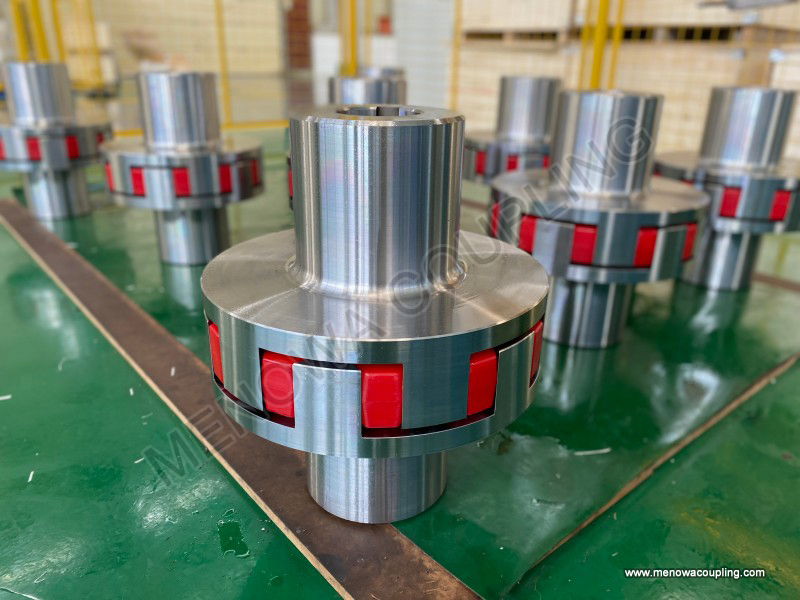
At its core, an elastic coupling size chart is designed to present information in a clear, structured manner, even without explicit headings, allowing users to quickly locate the data they need. The primary components of the chart typically include dimensional parameters, torque ratings, speed limits, and material-related specifications, all of which are interrelated and must be considered collectively when making a selection. Each entry in the size chart corresponds to a specific coupling model, with consistent formatting to ensure readability and avoid confusion. While the exact layout may vary slightly depending on the type of elastic coupling—such as jaw couplings, pin-and-bush couplings, diaphragm couplings, or tire couplings—the fundamental information remains consistent, focusing on the parameters that directly impact the coupling’s ability to transmit power and compensate for misalignments.
Dimensional parameters form the foundation of the size chart, as they determine the coupling’s physical fit with the shafts of the driving and driven equipment. These dimensions include the outer diameter of the coupling, the length of the coupling body, the bore diameter (both minimum and maximum), the keyway dimensions, and the distance between mounting holes (if applicable). The bore diameter is particularly critical, as it must match the diameter of the shafts it connects; a mismatch can lead to loose fits, excessive vibration, and premature wear. Most size charts provide a range of bore diameters for each coupling size, allowing for flexibility in adapting to different shaft sizes. Additionally, keyway dimensions—including width and depth—are specified to ensure proper torque transmission between the coupling and the shafts, preventing slippage even under high load conditions. The outer diameter and length of the coupling are important for determining the installation space required, as well as for calculating the coupling’s moment of inertia, which affects the system’s dynamic performance.
Torque ratings are another vital component of the elastic coupling size chart, as they define the maximum amount of torque the coupling can transmit without sustaining damage. Torque is a measure of the rotational force applied to the coupling, and exceeding the rated torque can result in elastic element failure, shaft damage, or even complete coupling breakdown. The size chart typically provides both nominal torque and peak torque ratings; nominal torque refers to the continuous torque the coupling can handle during normal operation, while peak torque is the maximum torque it can withstand for short durations, such as during startup or sudden load changes. It is important to note that torque ratings are often temperature-dependent, as extreme temperatures can affect the elasticity and strength of the coupling’s materials. For example, high temperatures may soften elastic elements, reducing their torque-carrying capacity, while low temperatures may make them brittle, increasing the risk of fracture. As such, some size charts include notes on temperature ranges to guide users in selecting couplings appropriate for their operating environment.
Speed limits are also prominently featured in the size chart, specifying the maximum rotational speed at which the coupling can operate safely. Rotational speed is measured in revolutions per minute (rpm), and exceeding this limit can lead to excessive centrifugal force, which may cause the coupling to deform, crack, or separate. The speed limit is determined by the coupling’s design, material strength, and balance; lighter, more rigid couplings typically have higher speed limits than heavier, more flexible ones. In applications where the rotational speed varies, it is crucial to select a coupling with a speed limit that exceeds the maximum operating speed of the system to account for transient speed spikes. Additionally, the size chart may include information on the coupling’s balance grade, which indicates its ability to operate smoothly at high speeds without generating excessive vibration. A higher balance grade means the coupling is more precisely machined, reducing vibration and extending the life of both the coupling and the connected equipment.
Material specifications, while sometimes implicit, are an integral part of the size chart, as they influence the coupling’s torque capacity, speed limit, durability, and resistance to environmental factors. Elastic couplings are typically constructed from a combination of rigid materials (such as cast iron, steel, or aluminum) for the hubs and flexible materials (such as rubber, polyurethane, or elastomers) for the elastic elements. The size chart may specify the material of the hubs and elastic elements, as well as their respective properties, such as hardness, tensile strength, and resistance to oil, chemicals, or abrasion. For example, couplings used in harsh industrial environments may be made from corrosion-resistant materials, while those used in food processing applications may require food-grade elastomers. Understanding the material specifications from the size chart is essential for ensuring the coupling is compatible with the operating environment and can withstand the stresses of the application.
Interpreting the size chart requires a holistic approach, as each parameter is interdependent. For instance, selecting a coupling with a larger outer diameter may increase its torque capacity and speed limit, but it will also require more installation space and may increase the system’s moment of inertia. Similarly, a coupling with a smaller bore diameter may be suitable for a small shaft but may not be able to transmit the required torque. To effectively use the size chart, users must first determine the key requirements of their application, including the maximum torque to be transmitted, the rotational speed, the shaft diameters, the installation space, and the operating environment. Once these requirements are defined, they can cross-reference this information with the size chart to identify the appropriate coupling size.
The process of selecting an elastic coupling using the size chart typically begins with calculating the required torque. This involves determining the power of the driving equipment (in kilowatts or horsepower) and the rotational speed (in rpm), then using the formula T = (9550 × P) / n (where T is torque in N·m, P is power in kW, and n is speed in rpm) to calculate the nominal torque. Once the required torque is known, users can look for couplings in the size chart with a nominal torque rating equal to or greater than the calculated value. It is recommended to select a coupling with a torque rating that exceeds the calculated value by a safety factor, which accounts for unexpected load spikes, misalignments, and wear over time. The safety factor varies depending on the application; for example, applications with frequent start-stop cycles or high load fluctuations may require a higher safety factor than those with steady, continuous operation.
Next, users must ensure the coupling’s bore diameter is compatible with the shaft diameters of the driving and driven equipment. The size chart provides a range of bore diameters for each coupling size, and users should select a bore diameter that matches the shaft size exactly. If the shaft diameter falls between two available bore sizes, it may be possible to machine the coupling’s bore to the required size, provided this does not exceed the maximum bore diameter specified in the size chart. Additionally, the keyway dimensions must match the keys used on the shafts to ensure proper torque transmission. It is important to check both the width and depth of the keyway to avoid mismatches that could lead to slippage or damage.
The rotational speed of the system must also be compared to the speed limit specified in the size chart. If the system’s operating speed exceeds the coupling’s speed limit, the coupling may fail prematurely, leading to costly downtime. In cases where the operating speed is close to the speed limit, it may be necessary to select a larger coupling size with a higher speed limit, even if the torque requirement is lower. This ensures the coupling can withstand the centrifugal forces generated at high speeds without deforming or failing.
Installation space is another important consideration when using the size chart. The outer diameter and length of the coupling must fit within the available space in the mechanical system. If the installation space is limited, users may need to select a compact coupling size that still meets the torque and speed requirements. Some size charts include information on the coupling’s overall length and outer diameter, allowing users to quickly assess whether the coupling will fit in their application.
Environmental factors, such as temperature, humidity, and exposure to chemicals or oil, must also be considered when selecting a coupling from the size chart. Couplings used in high-temperature environments require elastic elements that can withstand elevated temperatures without losing their elasticity, while those used in wet or corrosive environments need materials that are resistant to rust and degradation. The size chart may include notes on the operating temperature range and chemical resistance of the coupling, helping users select the appropriate model for their environment.
In addition to selecting the correct coupling size, the size chart also provides valuable information for installation and maintenance. For example, some charts include specifications for the torque required to tighten the coupling’s mounting bolts, ensuring a secure fit between the coupling and the shafts. Proper installation is critical for the coupling’s performance; insufficient bolt torque can lead to loose connections, excessive vibration, and premature wear, while excessive torque can damage the bolts or the coupling itself. The size chart may also include information on the recommended alignment tolerance, as elastic couplings can compensate for minor misalignments between the driving and driven shafts, but excessive misalignment can increase stress on the coupling and reduce its service life.
Maintenance is another area where the size chart proves useful. By referencing the chart, technicians can identify the correct replacement parts for the coupling, such as elastic elements, bolts, or keys. The size chart specifies the dimensions of these parts, ensuring that replacements are compatible with the existing coupling. Additionally, the chart may include information on the expected service life of the coupling under normal operating conditions, helping users schedule maintenance and replacement before failure occurs. Regular maintenance, such as inspecting the elastic elements for wear, checking bolt tightness, and ensuring proper alignment, can extend the life of the coupling and prevent unexpected breakdowns.
It is important to note that while the size chart provides comprehensive information, it is not a substitute for engineering judgment. In complex applications, such as those involving high torque, high speed, or extreme environmental conditions, it may be necessary to consult with a coupling manufacturer or a mechanical engineer to ensure the correct selection. Additionally, the size chart may be updated periodically to reflect new materials, design improvements, or changes in industry standards, so users should always refer to the most current version of the chart.
Elastic couplings are used in a wide range of applications, from small household appliances to large industrial machinery, and the size chart is a universal tool that applies to all these applications. For example, in a small electric motor driving a pump, the size chart would help select a compact coupling that matches the motor and pump shaft diameters, transmits the required torque, and operates within the motor’s speed range. In a large industrial gearbox system, the size chart would guide the selection of a heavy-duty coupling that can handle high torque and speed, while compensating for any misalignments between the gearbox and the driven equipment.
Another important aspect of the size chart is its role in ensuring compatibility between different components of the transmission system. For example, the coupling must be compatible with the shafts, bearings, and other components to ensure smooth power transmission. The size chart provides the necessary dimensions to verify this compatibility, reducing the risk of mismatches that could lead to system failure. Additionally, the chart may include information on the coupling’s weight, which is important for applications where weight is a concern, such as in automotive or aerospace systems.
In summary, the size chart of elastic coupling is a critical tool for anyone involved in the selection, installation, or maintenance of mechanical transmission systems. It provides a structured, comprehensive overview of the coupling’s key parameters, including dimensional specifications, torque ratings, speed limits, and material properties. By understanding how to interpret and use this chart, users can select the correct coupling size for their application, ensure proper installation and maintenance, and optimize the performance and durability of their mechanical systems. Whether for small-scale or large-scale applications, the size chart remains an essential reference that simplifies the complex process of coupling selection and ensures the reliable operation of transmission systems.
Post Date: May 2, 2026
https://www.menowacoupling.com/china-coupling/size-chart-of-elastic-coupling.html
Products

Related Articles
Material of Elastic Coupling
Elastic couplings play a crucial role in mechanical transmission systems, serving as a vital connection between driving and driven shafts to transmit torque while compensating for axial, radial, and angular misalignments. The performance, durability, and suitability of an elastic coupling for specific applications are l…Structure of Elastic Coupling
An elastic coupling is a critical mechanical component designed to connect two rotating shafts—typically a driving shaft and a driven shaft—in various mechanical systems, enabling the seamless transmission of torque while accommodating misalignments and dampening vibrations. Unlike rigid couplings that require precise…Parts of Elastic Coupling
Elastic couplings are essential components in mechanical transmission systems, designed to connect two rotating shafts while accommodating misalignments, absorbing vibrations, and protecting connected equipment from damage. Unlike rigid couplings that require precise alignment and offer no flexibility, elastic couplings…Elastic Coupling For Sale
In the complex world of mechanical transmission systems, elastic couplings stand as essential components that bridge the gap between rotating shafts, ensuring smooth power transfer while accommodating the inevitable misalignments and vibrations that occur during operation. These versatile devices are designed to transmi…Specification of Elastic Coupling
An elastic coupling is a critical mechanical component designed to connect two rotating shafts in a power transmission system, enabling the transfer of torque while accommodating various forms of misalignment and dampening vibrations. Unlike rigid couplings that require precise alignment and offer no flexibility, elasti…Diagram of Elastic Coupling
Diagram of Elastic CouplingAn elastic coupling is a critical mechanical component designed to connect two rotating shafts, transmitting torque while accommodating misalignments, absorbing vibrations, and mitigating shock loads in various industrial and mechanical systems. Unlike rigid couplings that require precise alig…
 WeChat
 WhatsApp