Coaxiality of Elastic Coupling
In the complex ecosystem of mechanical transmission systems, elastic couplings serve as critical connectors that bridge rotating shafts, enabling the seamless transfer of torque while accommodating minor misalignments and absorbing vibrations. Unlike rigid couplings, which demand near-perfect alignment to function effectively, elastic couplings leverage flexible components to compensate for axial, radial, and angular deviations. However, this inherent flexibility does not negate the importance of coaxiality—a fundamental geometric parameter that directly influences the performance, reliability, and service life of both the coupling itself and the entire transmission system. Coaxiality, defined as the degree to which two or more rotating shafts share a common central axis, is not merely a technical specification but a cornerstone of efficient and safe mechanical operation. Even the most advanced elastic couplings cannot fully mitigate the adverse effects of excessive coaxiality deviation, making it essential for engineers, technicians, and industry professionals to understand its implications, measurement methods, and control strategies.
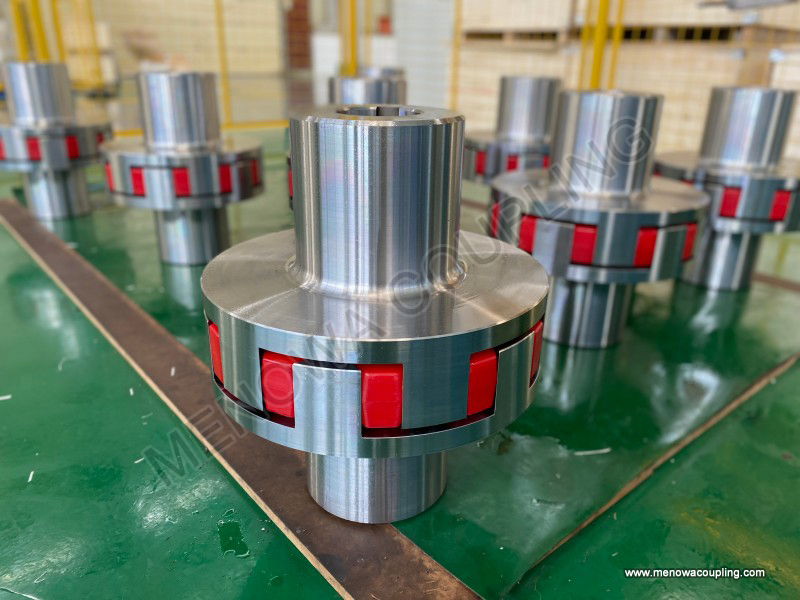
To appreciate the significance of coaxiality in elastic couplings, it is first necessary to grasp the basic function and structure of these components. Elastic couplings are designed to connect two shafts—typically a driving shaft (e.g., from a motor) and a driven shaft (e.g., from a pump, gearbox, or other working machinery)—while addressing the inevitable misalignments that occur during installation, operation, or due to environmental factors. The elastic elements within these couplings, which can be made of rubber, polyurethane, metal springs, or composite materials, act as buffers, absorbing shocks and vibrations that would otherwise be transmitted to the connected equipment. These elements also allow for a certain degree of misalignment, but their compensation capacity is limited. When coaxiality deviation exceeds this limit, the elastic elements are subjected to uneven stress, leading to premature wear, deformation, or even failure. Moreover, poor coaxiality disrupts the uniform distribution of torque, increases energy loss, and generates excessive noise and vibration, which can cascade through the entire system, damaging bearings, seals, and other critical components.
The impact of coaxiality deviation on elastic coupling performance is multifaceted and far-reaching. At the most basic level, excessive deviation causes the elastic elements to undergo asymmetric deformation during operation. For example, in a jaw-type elastic coupling, which uses a star-shaped elastic spider between two metal hubs, a radial coaxiality error will cause one side of the spider to be compressed more than the other. Over time, this uneven stress leads to localized wear, cracking, or tearing of the elastic component, reducing its service life and compromising its ability to absorb vibrations. Similarly, angular misalignment can result in the elastic elements being subjected to torsional stresses beyond their design limits, leading to fatigue failure. In high-speed applications, such as those found in aerospace, automotive, or precision manufacturing, even minor coaxiality deviations can amplify centrifugal forces, causing the coupling to vibrate excessively. This vibration not only affects the accuracy of the machinery but also increases the load on bearings, leading to overheating and premature failure. In extreme cases, severe coaxiality deviation can cause the coupling to decouple or break, resulting in unexpected downtime, equipment damage, and potential safety hazards.
Several factors contribute to coaxiality deviation in elastic couplings, ranging from installation errors to equipment wear and environmental conditions. Installation inaccuracies are among the most common causes, often resulting from improper alignment techniques, lack of precision tools, or human error. For instance, if the driving and driven shafts are not properly aligned during installation, even a small angular or radial offset can lead to significant coaxiality issues once the system is operational. Additionally, the use of worn or improperly sized mounting hardware, such as bolts or keyways, can cause the coupling hubs to be misaligned relative to the shafts. Equipment wear is another major contributor to coaxiality deviation. Over time, bearings in the motor, gearbox, or other connected machinery can wear out, causing the shafts to deflect or shift from their original position. This deflection directly impacts the coaxiality of the coupling, as the shafts are no longer aligned along a common axis. Environmental factors, such as temperature changes, vibration from adjacent equipment, and exposure to corrosive substances, can also affect coaxiality. Temperature fluctuations, for example, can cause thermal expansion or contraction of the shafts and coupling components, leading to temporary or permanent misalignment. Similarly, vibrations from nearby machinery can propagate through the system, disrupting the alignment of the coupling and causing cumulative damage over time.
Understanding the types of coaxiality deviation is crucial for effectively diagnosing and addressing alignment issues. There are three primary types of misalignment that affect elastic couplings: radial, angular, and axial. Radial deviation occurs when the axes of the two shafts are parallel but offset from each other, creating a gap between the centers of the shafts. This type of deviation is particularly common in applications where the shafts are mounted on separate bearings or where the mounting surfaces are not perfectly flat. Angular deviation, on the other hand, occurs when the axes of the two shafts intersect at a point, forming an angle between them. This type of misalignment often results from improper installation or wear in the bearing supports. Axial deviation, which involves the movement of one shaft along its axis relative to the other, is less common but can still impact coaxiality, especially in systems where thermal expansion or contraction is significant. In many real-world applications, these types of deviation often occur simultaneously, creating a composite misalignment that is more challenging to address.
Accurate measurement of coaxiality is essential for identifying and correcting misalignment issues before they lead to equipment failure. There are several methods available for measuring coaxiality in elastic couplings, each with its own advantages and limitations, depending on the application, precision requirements, and available equipment. One of the most common methods is the dial indicator method, which involves mounting a dial indicator on one coupling hub and measuring the radial and axial runout as the shafts are rotated. This method is relatively simple, cost-effective, and suitable for on-site measurements in industrial settings. However, it requires a certain level of skill to ensure accurate results, as the position of the dial indicator and the rotation of the shafts must be carefully controlled. Another widely used method is the laser alignment method, which uses a laser beam to establish a reference axis and measure the deviation of the shafts relative to this axis. Laser alignment tools are highly precise, capable of detecting even minute deviations, and are particularly suitable for high-precision applications and large-scale machinery. They also provide real-time feedback, making it easier to adjust the alignment of the shafts during installation or maintenance. Other methods include the use of optical comparators, coordinate measuring machines (CMMs), and feeler gauges, each of which is suited to specific measurement scenarios.
When measuring coaxiality, it is important to follow best practices to ensure accurate and reliable results. First, the system should be in a stable state, with all components properly mounted and secured. The shafts should be rotated slowly and evenly to avoid introducing additional vibrations that could affect the measurement. Additionally, the measurement should be performed at multiple points around the coupling to account for any irregularities in the shaft or coupling surfaces. It is also important to consider the effects of temperature on the measurement, as thermal expansion or contraction can cause temporary misalignment. For high-precision measurements, the system should be allowed to reach thermal equilibrium before measurements are taken. Finally, the measurement tools should be regularly calibrated to ensure their accuracy, as worn or uncalibrated tools can lead to incorrect readings and misdiagnosis of alignment issues.
Controlling coaxiality in elastic couplings requires a proactive approach that encompasses proper installation, regular maintenance, and the use of appropriate alignment techniques. During installation, it is essential to use precision alignment tools to ensure that the driving and driven shafts are aligned within the acceptable coaxiality tolerance for the specific coupling and application. The alignment process should follow a systematic approach, starting with rough alignment using basic tools and progressing to fine alignment using more precise methods, such as laser alignment. It is also important to ensure that the coupling hubs are properly seated on the shafts, with no gaps or misfits that could cause misalignment. For example, the hub should be pressed firmly against the shaft shoulder, and the keyway should be properly aligned to prevent the hub from rotating or shifting during operation.
Regular maintenance is another critical aspect of coaxiality control. Over time, the performance of the coupling and the connected equipment can degrade, leading to increased coaxiality deviation. Routine inspections should include checking the alignment of the shafts, inspecting the elastic elements for wear or damage, and ensuring that all mounting hardware is tight and in good condition. If wear or damage is detected, the affected components should be replaced promptly to prevent further misalignment and potential failure. Additionally, the lubrication of the coupling and connected bearings should be maintained according to the manufacturer’s recommendations, as inadequate lubrication can lead to increased friction, wear, and shaft deflection.
In some cases, even with proper installation and maintenance, coaxiality deviation may occur due to factors such as equipment wear or environmental conditions. In such instances, corrective measures may be necessary to restore alignment. These measures can include adjusting the position of the motor or other equipment using shims or adjustable mounting brackets, replacing worn bearings or coupling components, or re-machining the shafts to correct any deflection or misalignment. For severe cases of misalignment, it may be necessary to disassemble the entire system and re-align the components from scratch. It is important to note that corrective measures should be performed by trained professionals using appropriate tools and techniques to ensure that the coaxiality is restored to within the acceptable tolerance range.
The importance of coaxiality in elastic couplings is further underscored by its impact on the overall efficiency and reliability of mechanical systems. In industrial applications, such as manufacturing, power generation, and transportation, unexpected downtime can result in significant financial losses. By ensuring proper coaxiality, businesses can reduce the risk of equipment failure, extend the service life of coupling components and connected machinery, and improve the overall efficiency of their operations. For example, in a pump system, proper coaxiality of the elastic coupling between the motor and the pump can reduce energy consumption by minimizing friction and vibration, while also reducing the likelihood of pump failure due to bearing damage. In precision manufacturing, such as CNC machining, accurate coaxiality is essential for maintaining the precision of the machined parts, as excessive vibration from misaligned couplings can lead to dimensional errors and poor product quality.
Advancements in technology have also contributed to improved coaxiality control in elastic couplings. The development of high-precision alignment tools, such as laser alignment systems with advanced software, has made it easier to measure and correct misalignment with greater accuracy and efficiency. Additionally, the use of advanced materials in the manufacturing of elastic couplings, such as high-strength composites and wear-resistant elastomers, has improved their ability to withstand the effects of minor misalignment while maintaining performance. These advancements have also led to the development of more robust coupling designs that are better able to compensate for coaxiality deviation without sacrificing torque transmission or vibration absorption capabilities.
It is important to recognize that coaxiality requirements vary depending on the specific application and type of elastic coupling. For example, high-speed, high-precision applications, such as those in the aerospace or semiconductor industries, require extremely tight coaxiality tolerances, often in the range of a few micrometers. In contrast, heavy-duty industrial applications, such as mining or construction machinery, may have more lenient tolerances, as the elastic couplings in these systems are designed to handle larger misalignments and heavier loads. Engineers must carefully consider the specific requirements of their application when selecting an elastic coupling and determining the acceptable coaxiality tolerance. This involves evaluating factors such as the operating speed, torque requirements, environmental conditions, and the sensitivity of the connected equipment to vibration and misalignment.
In conclusion, coaxiality is a critical parameter that directly impacts the performance, reliability, and service life of elastic couplings and the mechanical systems they connect. Excessive coaxiality deviation can lead to premature wear of elastic elements, increased vibration and noise, energy loss, and equipment failure. By understanding the causes and types of coaxiality deviation, implementing accurate measurement methods, and following proper installation and maintenance practices, engineers and technicians can ensure that elastic couplings operate within their design limits, maximizing the efficiency and reliability of the entire transmission system. As technology continues to advance, the ability to control and maintain coaxiality will become even more important, enabling the development of more efficient, durable, and high-performance mechanical systems across a wide range of industries. Whether in precision manufacturing, power generation, or heavy industry, the importance of coaxiality in elastic couplings cannot be overstated—it is the foundation upon which reliable mechanical transmission is built.
Post Date: May 2, 2026
https://www.menowacoupling.com/china-coupling/coaxiality-of-elastic-coupling.html
Products

Related Articles
Specification of Elastic Coupling
An elastic coupling is a critical mechanical component designed to connect two rotating shafts in a power transmission system, enabling the transfer of torque while accommodating various forms of misalignment and dampening vibrations. Unlike rigid couplings that require precise alignment and offer no flexibility, elasti…Diagram of Elastic Coupling
Diagram of Elastic CouplingAn elastic coupling is a critical mechanical component designed to connect two rotating shafts, transmitting torque while accommodating misalignments, absorbing vibrations, and mitigating shock loads in various industrial and mechanical systems. Unlike rigid couplings that require precise alig…Elastic Coupling Production
Elastic couplings are essential components in mechanical transmission systems, serving as the critical link between two rotating shafts to transmit torque while accommodating misalignments, absorbing vibrations, and reducing shock loads. The production of elastic couplings is a sophisticated process that combines precis…What is Elastic Coupling
Elastic coupling is a critical component in mechanical transmission systems, designed to connect two rotating shafts while accommodating misalignments, absorbing vibrations, and protecting machinery from damage. Unlike rigid couplings that require precise alignment and offer no flexibility, elastic couplings utilize ela…Characteristics of Elastic Coupling
Elastic coupling is a critical component in mechanical transmission systems, designed to connect two rotating shafts while accommodating various forms of misalignment, absorbing vibrations, and transmitting torque efficiently. Unlike rigid couplings that require precise alignment and offer no flexibility, elastic coupli…Working Principle of Elastic Coupling
In the complex and interconnected world of mechanical power transmission, elastic couplings stand as indispensable components that bridge the gap between driving and driven shafts, ensuring the smooth, efficient, and protected transfer of torque. Unlike rigid couplings that demand precise alignment and offer no flexibil…
 WeChat
 WhatsApp