What is Gear Type Coupling
Gear type coupling is a fundamental flexible mechanical transmission component widely applied in modern industrial power transmission systems, serving as a critical connecting unit between two rotating shafts in mechanical equipment. Unlike rigid couplings that require precise shaft alignment and lack displacement compensation capability, this type of coupling adopts a unique tooth meshing structure to achieve efficient torque and rotational motion transmission, while tolerating and compensating for various minor relative displacements between connected shafts. It falls into the category of rigid flexible couplings, which integrates the high structural rigidity of rigid couplings and the displacement adaptability of flexible couplings, making it indispensable in heavy-duty, high-speed, and continuous operating mechanical scenarios across diverse industrial fields.
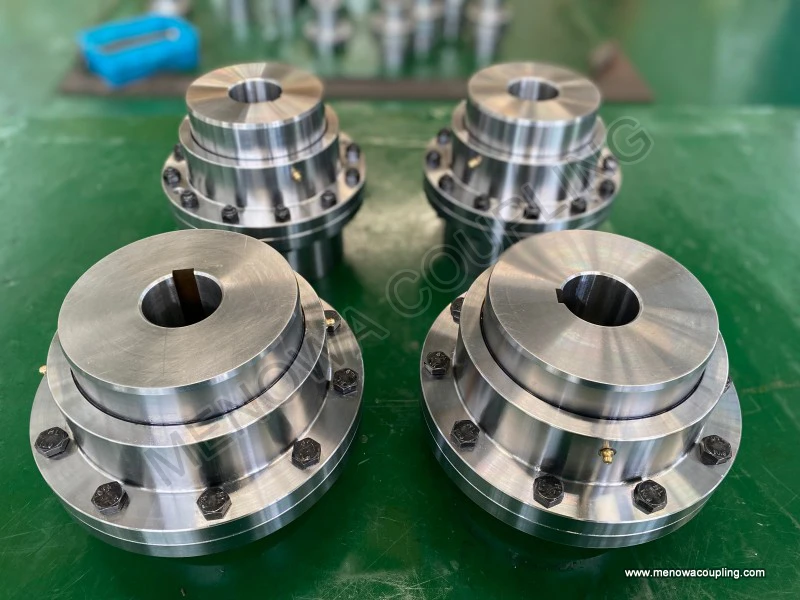
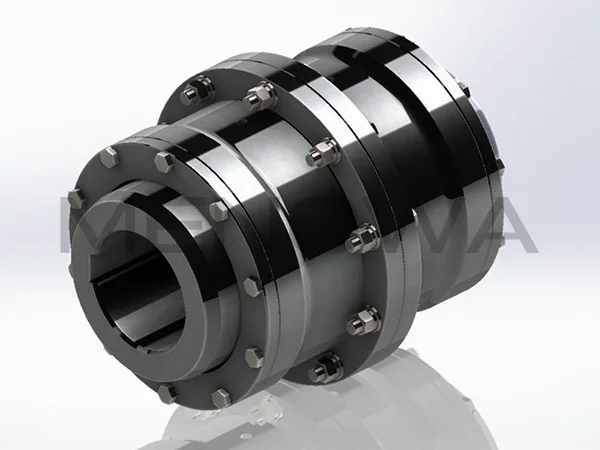
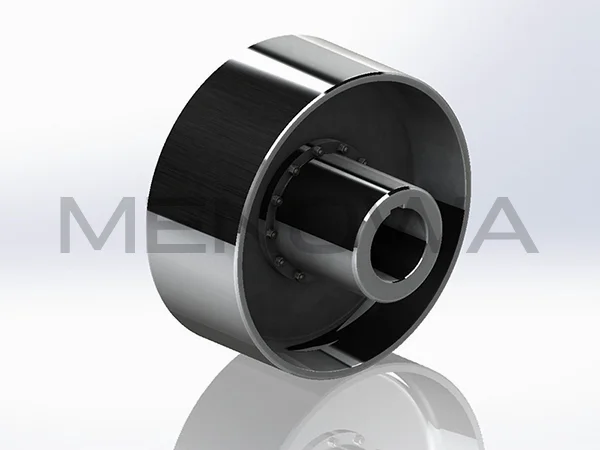
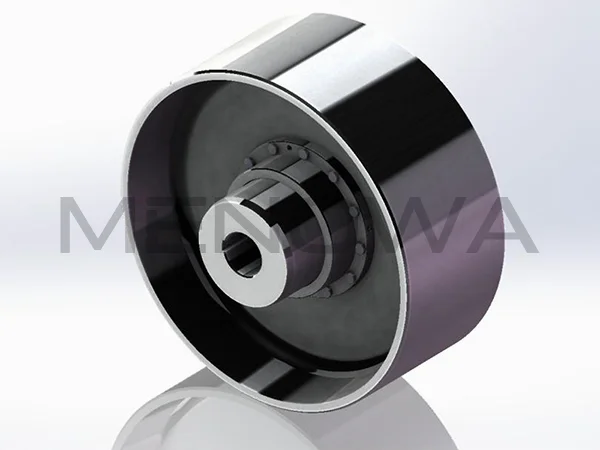
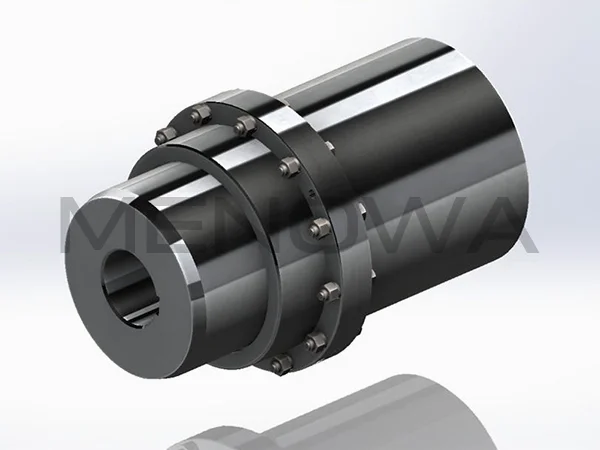
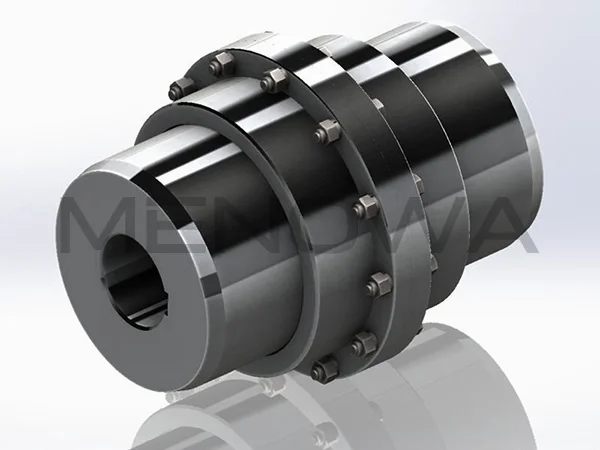
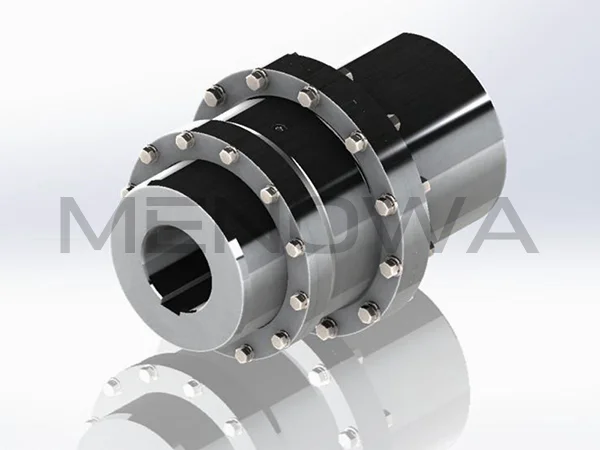
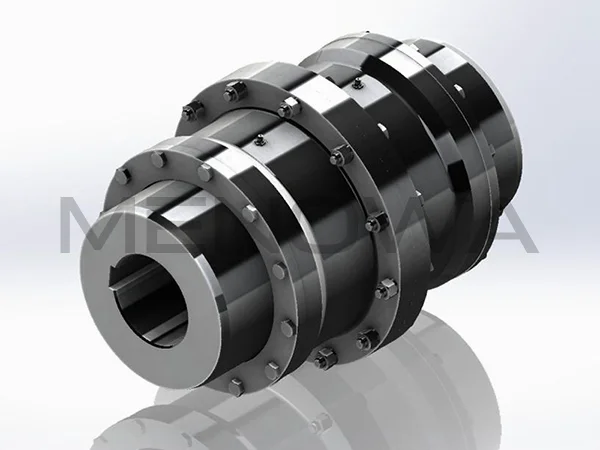
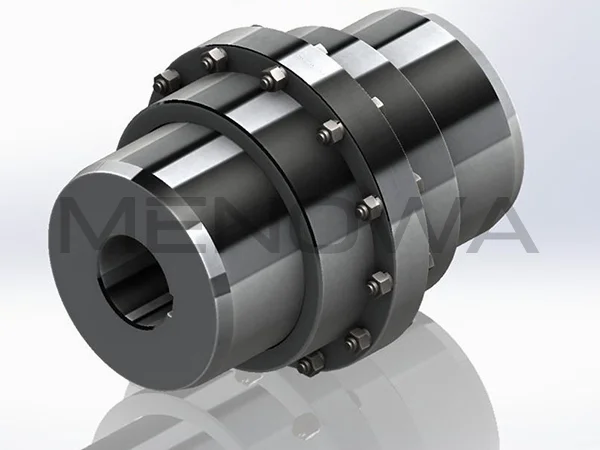
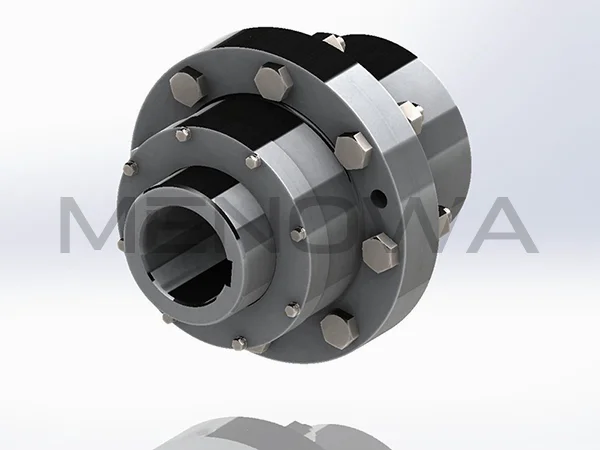
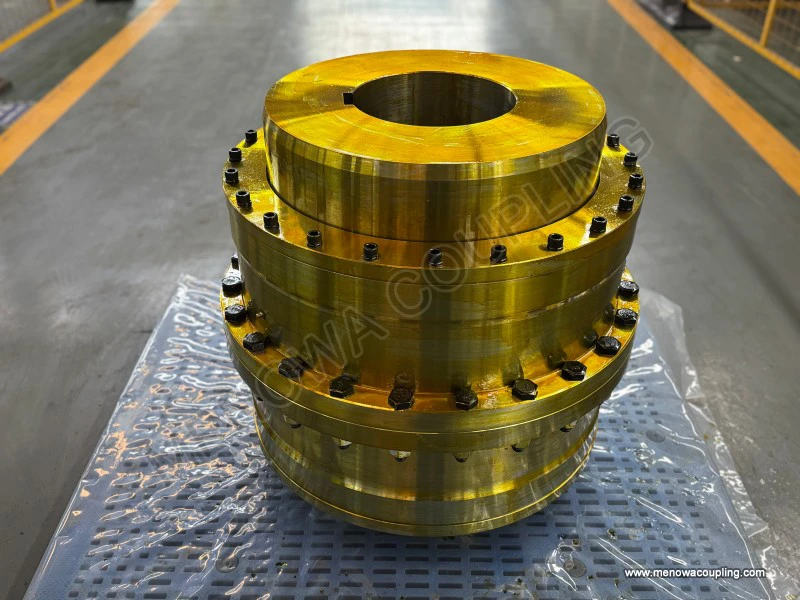
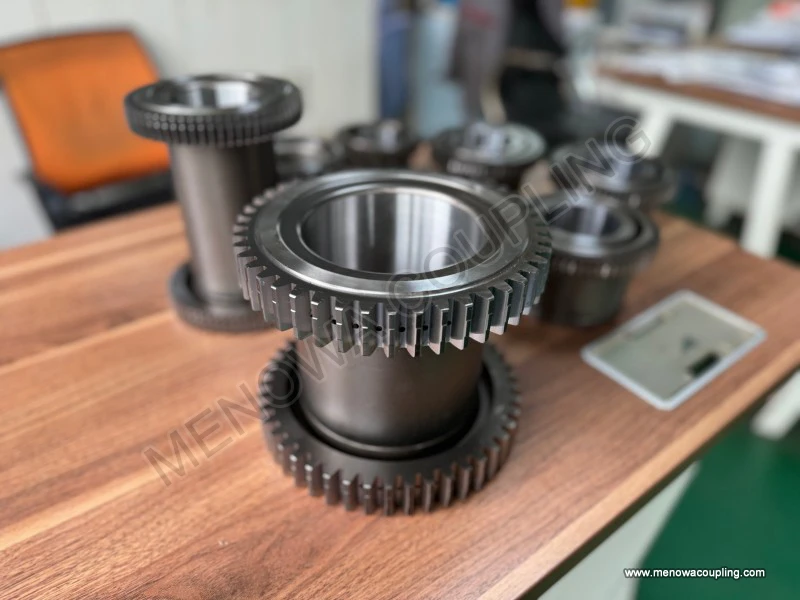
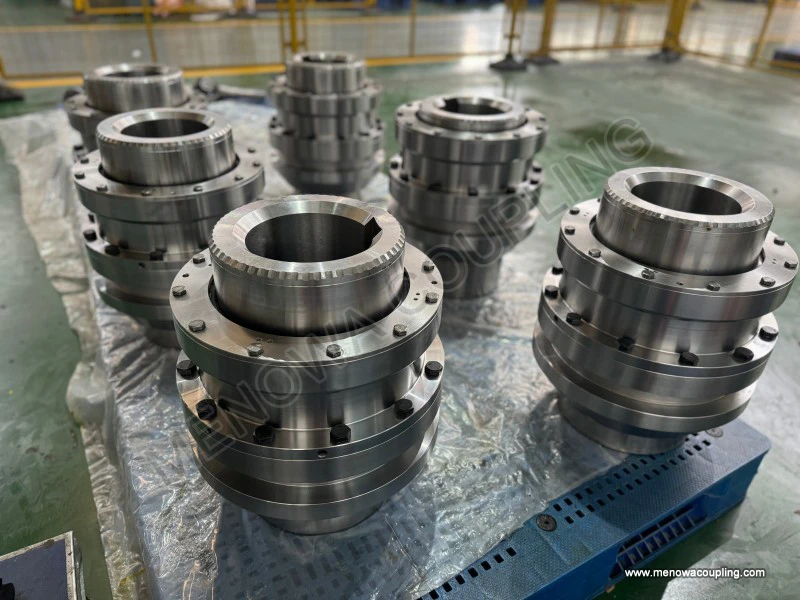
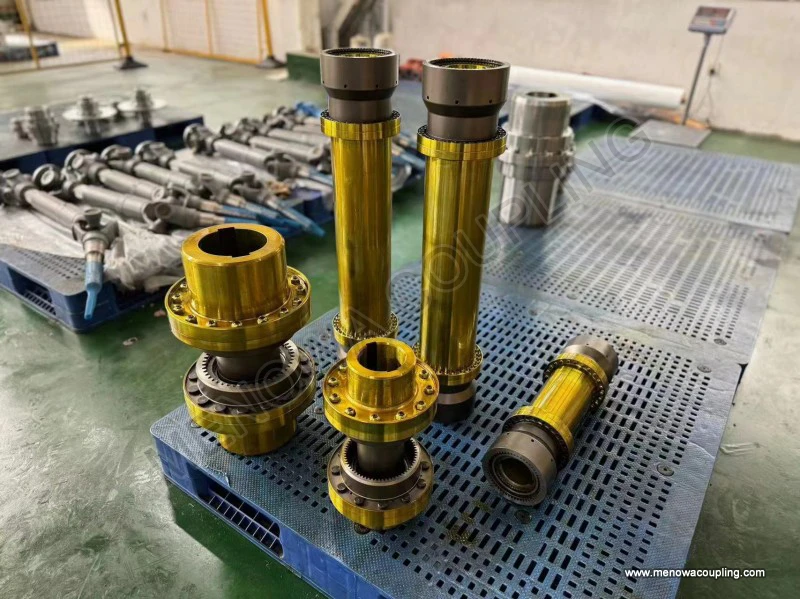
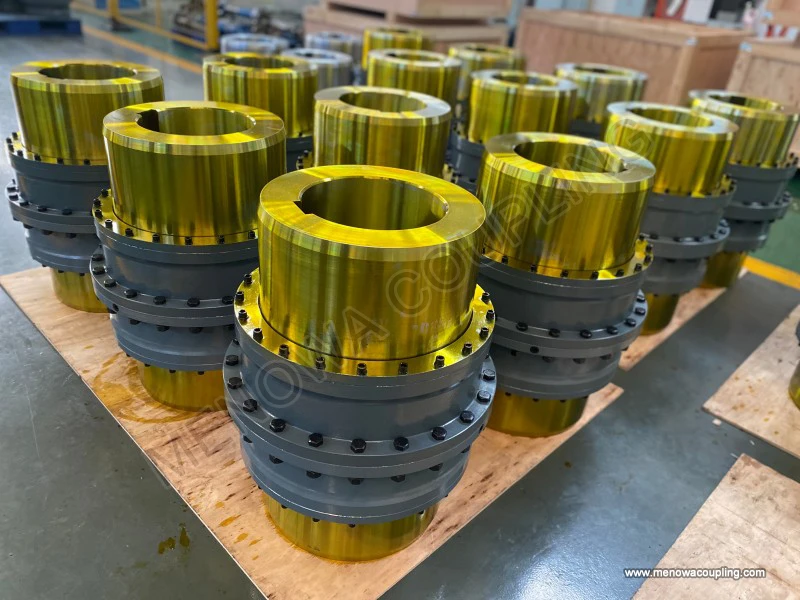
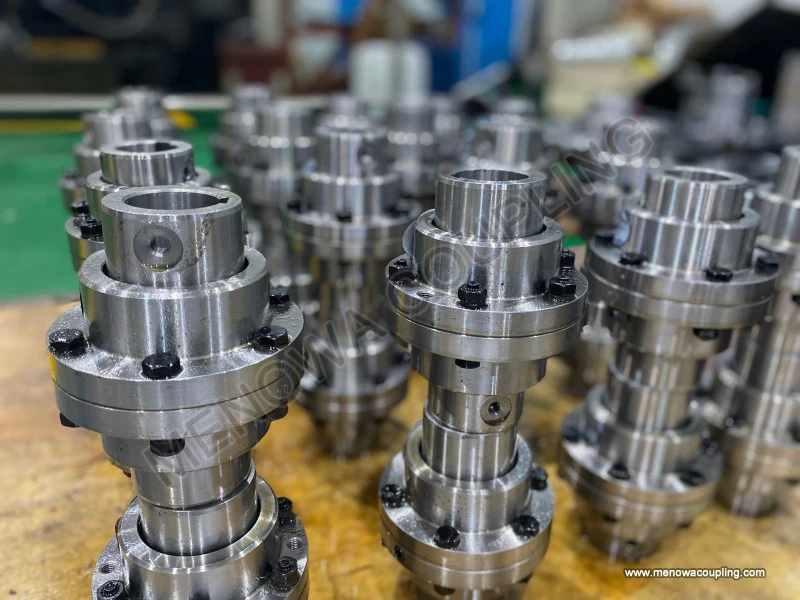
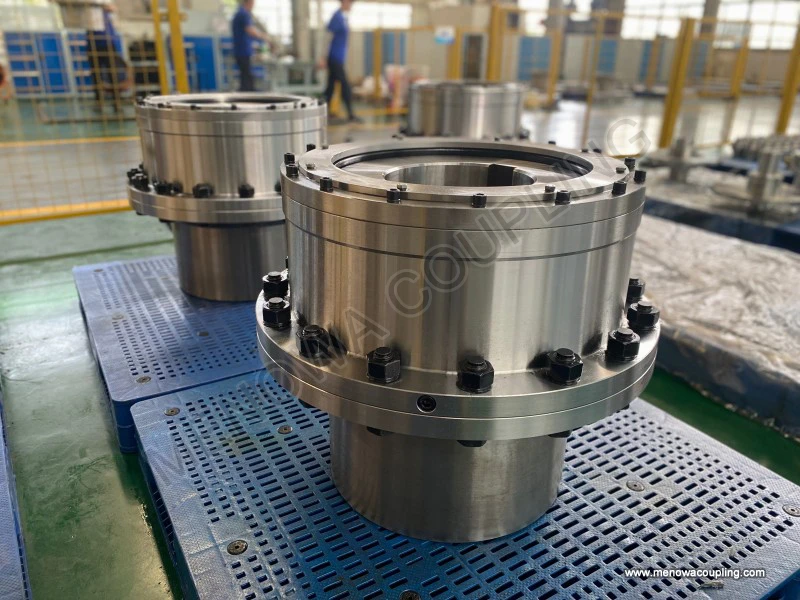
The basic structural composition of gear type coupling is concise and robust, mainly consisting of two external gear hubs and one or two internal gear sleeves. The two external gear hubs are respectively fixed on the driving shaft and driven shaft of the mechanical equipment, with uniformly distributed external gear teeth processed on the outer circular surface of the hubs. The internal gear sleeve is equipped with complete internal gear teeth that match the external gear teeth in modulus, pressure angle and tooth profile, realizing precise meshing connection between the two hubs. Most conventional gear couplings adopt a double-sleeve structure, where two independent internal gear sleeves cover the meshing parts of the two groups of internal and external teeth respectively, while a small number of lightweight models use an integrated single-sleeve structure to simplify the overall structure. In addition, the complete assembly is equipped with sealing components and lubrication chambers, which form a closed lubrication space for the meshing tooth surfaces, ensuring stable relative sliding operation of gear teeth during equipment operation.
The core working principle of gear type coupling lies in the meshing transmission and adaptive sliding of gear teeth. When the driving shaft rotates, the external gear hub fixed on the driving shaft drives the internal gear sleeve through tooth meshing, and the internal gear sleeve further transmits power to the external gear hub on the driven shaft, thereby realizing synchronous rotation and torque transmission between the two shafts. In the ideal state where the two connected shafts are completely concentric and collinear, the gear teeth are uniformly stressed and only undertake pure rotational transmission without relative sliding. However, in actual industrial operation, affected by equipment installation errors, mechanical vibration, equipment operation deformation and foundation settlement, the two connected shafts inevitably produce different degrees of relative displacement, including radial displacement, axial displacement and angular displacement. At this time, the matched gear teeth will produce continuous micro-sliding along the tooth surface and axial direction. The special tooth profile design of gear coupling reserves reasonable backlash and tooth surface clearance, which can effectively adapt to these three-dimensional displacements, avoid additional assembly stress and transmission resistance caused by shaft misalignment, and ensure continuous and stable power transmission of the equipment system.
The unique structural design endows gear type coupling with outstanding comprehensive performance advantages that distinguish it from other types of couplings. First of all, it has extremely high torque transmission density. Under the same installation space and structural size, gear couplings can bear and transmit far higher torque than sleeve couplings, pin couplings and universal joints, which is mainly attributed to the multi-tooth simultaneous meshing structure. Multiple groups of gear teeth share the transmission load, so the unit tooth surface stress is low, and the overall bearing capacity is greatly improved, making it suitable for heavy-load mechanical transmission scenarios. Secondly, it has excellent comprehensive displacement compensation ability. Compared with diaphragm couplings that only adapt to small angular displacement and slider couplings with limited radial compensation, gear couplings can simultaneously and effectively compensate radial, axial and angular multi-directional misalignment, with a wide range of displacement adaptation, which can well eliminate the adverse effects of shaft system deviation on equipment operation.
In terms of transmission performance, gear type coupling features high transmission efficiency and stable operation. The precise involute tooth profile meshing minimizes power loss during transmission, and the overall transmission efficiency can remain at a high level for a long time. Meanwhile, the uniform stress of multi-tooth meshing avoids local stress concentration, reduces transmission vibration and operation noise, and ensures the smooth rotation of the shaft system even under high-speed and heavy-load conditions. In addition, this coupling has strong structural rigidity and good impact resistance. The integral metal tooth structure is not easy to deform under sudden load impact and alternating load, can adapt to frequent start-stop and variable-load operation conditions of equipment, and has stable working reliability in complex industrial environments. Its compact structural design also saves installation space, with small axial and radial dimensions, which is convenient for layout and installation in integrated mechanical equipment with compact structure.
Nevertheless, gear type coupling also has inherent performance limitations and usage constraints determined by its structural characteristics. The most prominent feature is its strict dependence on lubrication conditions. Since relative sliding always occurs between internal and external gear teeth during operation, dry friction will cause rapid wear of tooth surfaces, sharp increase in transmission resistance, and even tooth surface ablation and tooth breakage in severe cases. Therefore, good lubrication and reliable sealing are the key prerequisites for the normal operation of gear couplings. Once the sealing fails and lubricating oil leaks or dust and impurities enter the meshing area, the service life of the coupling will be greatly shortened. In addition, compared with elastic couplings using rubber and other elastic elements, gear couplings have poor damping and vibration isolation capabilities. It cannot effectively absorb high-frequency vibration and buffer severe impact load, so it is not suitable for mechanical systems with extremely strict vibration reduction requirements.
Moreover, the manufacturing and assembly precision requirements of gear type coupling are relatively high. The tooth profile precision, tooth spacing uniformity and surface smoothness of internal and external gears directly affect the meshing accuracy and service life of the coupling. Low-precision tooth processing will lead to uneven meshing clearance, increased operation vibration and accelerated local wear. Meanwhile, although the coupling can compensate for shaft misalignment, excessive misalignment beyond the allowable range will cause sharp increase of tooth surface sliding friction, eccentric load of single tooth, and abnormal wear and fatigue damage. Therefore, certain alignment precision is still required during equipment installation to control the shaft misalignment within the optimal working range of the coupling.
Relying on superior heavy-load transmission performance and stable environmental adaptability, gear type coupling has been widely used in almost all heavy industrial mechanical transmission systems. In the metallurgical industry, it is applied to the transmission shafts of rolling mills, smelting equipment and cooling bed equipment, stably transmitting huge torque under long-term continuous heavy-load operation. In the mining industry, it serves for the transmission parts of crushers, conveyors and hoisting equipment, adapting to harsh working conditions such as dust pollution, load fluctuation and frequent impact. In the field of power equipment, gear couplings are used for the connection of turbine shafts, generator auxiliary transmission shafts and large fan and water pump shafts, meeting the high-speed and high-stability operation requirements of power equipment.
In addition, gear type coupling also plays an important role in heavy machinery manufacturing, port handling equipment, chemical industry equipment and building material production equipment. Large cranes, stackers and reclaimers, chemical centrifuges, rotary kilns and other key equipment all use gear couplings as core transmission connecting parts. In these application scenarios, the long-term continuous operation characteristics of equipment put forward high requirements on the reliability and fatigue resistance of couplings, and the durable metal gear meshing structure of gear couplings can fully meet the long-cycle and high-strength operation demands of industrial equipment.
Daily maintenance and scientific selection are crucial to giving full play to the performance of gear type coupling and extending its service life. In terms of maintenance, regular inspection of sealing performance is required to check for lubricant leakage and seal aging and damage, and replace failed sealing parts in a timely manner to ensure the closed lubrication environment of the meshing area. Regular replacement and replenishment of professional lubricating grease or lubricating oil are also necessary. Different lubrication media should be selected according to the operating speed and load level to ensure sufficient oil film formation on the tooth surface, reduce friction and wear. In addition, the operation vibration and temperature of the coupling should be monitored regularly. Abnormal vibration and overheating often indicate excessive misalignment, insufficient lubrication or tooth surface wear failure, and timely shutdown inspection and adjustment are needed to avoid equipment failure expansion.
In terms of model selection, the first core factor is the torque demand of the transmission system. It is necessary to select a coupling with rated torque higher than the maximum working torque of the equipment, and fully consider the safety margin under alternating load and impact load to avoid overload operation. Secondly, the actual misalignment state of the equipment shaft system should be comprehensively evaluated, and a gear coupling with matching displacement compensation range should be selected according to the installation error and operation deformation of the shaft. At the same time, the operating speed of the equipment should be matched. High-speed rotating equipment needs couplings with higher tooth processing precision and better dynamic balance performance to reduce operation vibration. In addition, the working environment should be taken into account. For high-temperature, dusty and humid working environments, couplings with better sealing performance and high-temperature resistant lubricants should be selected to adapt to harsh environmental conditions.
With the continuous upgrading of modern industrial manufacturing technology, the processing precision and structural design of gear type coupling are also constantly optimized and improved. Modern production processes such as precision gear grinding and surface strengthening treatment are applied to the processing of coupling gear teeth, which effectively improves the surface hardness, wear resistance and fatigue strength of tooth surfaces, further enhancing the service life and operation stability of the coupling. At the same time, the optimized structural design reduces the overall weight and rotational inertia of the coupling on the premise of ensuring bearing capacity, improving the dynamic response performance of high-speed transmission systems. The improvement of sealing structure also enhances the environmental adaptability of gear couplings, enabling them to work stably in more complex industrial scenarios.
As a mature and efficient power transmission component, gear type coupling has irreplaceable application value in heavy industrial transmission systems. Its unique tooth meshing structure realizes the perfect balance of high torque transmission capability and multi-dimensional displacement compensation, solving the core problem of stable power transmission of misaligned shafts in mechanical equipment. Although it has certain limitations in vibration damping performance and maintenance requirements, its excellent load resistance, high efficiency transmission and long-term operation reliability make it still the preferred coupling type for heavy-load and high-power transmission occasions. With the continuous development of industrial equipment towards large-scale, high-speed and intelligent direction, gear type coupling will continue to be optimized in performance and structure, and play a more important role in the field of mechanical power transmission, providing stable and reliable basic guarantee for the safe operation of various industrial mechanical systems.
Post Date: May 25, 2026
https://www.menowacoupling.com/china-coupling/what-is-gear-type-coupling.html
Products
Tags
Supply
Related Articles
Gear Type Coupling Price
Gear type couplings stand as one of the most versatile and widely adopted mechanical transmission components in modern industrial machinery, serving as a critical link between rotating shafts to ensure stable torque transfer while accommodating unavoidable shaft deviations during equipment operation. Unlike rigid coupli…Specification of Gear Type Coupling
Gear type coupling is a widely adopted rigid-flexible transmission component in mechanical power transmission systems, designed primarily to connect two rotating shafts for continuous torque transmission while absorbing and compensating for various shaft misalignments generated during equipment operation. Its core worki…Classification of Gear Type Coupling
Gear type couplings are essential mechanical transmission components widely applied in industrial mechanical systems, serving the core function of connecting two rotating shafts to transmit torque and rotational motion while compensating for various installation and operation deviations between shafts. Compared with oth…Maintenance of Curved Tooth Coupling
Curved tooth coupling, also widely known as crowned gear coupling, remains one of the most widely adopted positive-locking flexible transmission components across global heavy-duty industrial markets, thanks to its outstanding torque capacity, multi-directional misalignment compensation and stable torsional rigidity und…Gear Type Coupling Supplier
xIn the complex and interconnected system of modern industrial transmission machinery, gear type couplings stand out as one of the most indispensable core components, undertaking the critical task of torque transmission, shaft misalignment compensation, and mechanical operation stabilization for various heavy-duty and h…Structure of Gear Type Coupling
Gear type coupling is a widely used flexible mechanical transmission component designed to connect two rotating shafts in mechanical systems, realizing stable torque and rotational motion transmission while compensating for various shaft misalignments generated during equipment operation and installation. Its structural…
 WeChat
 WhatsApp