Gear Type Coupling Production
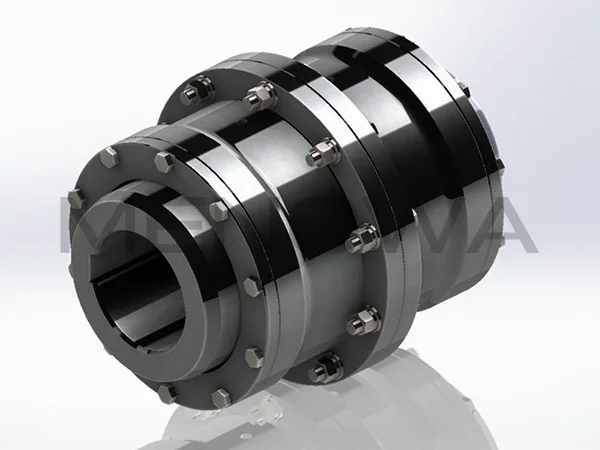
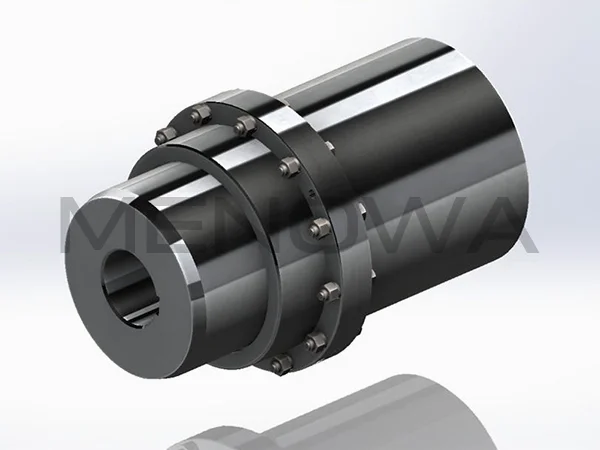
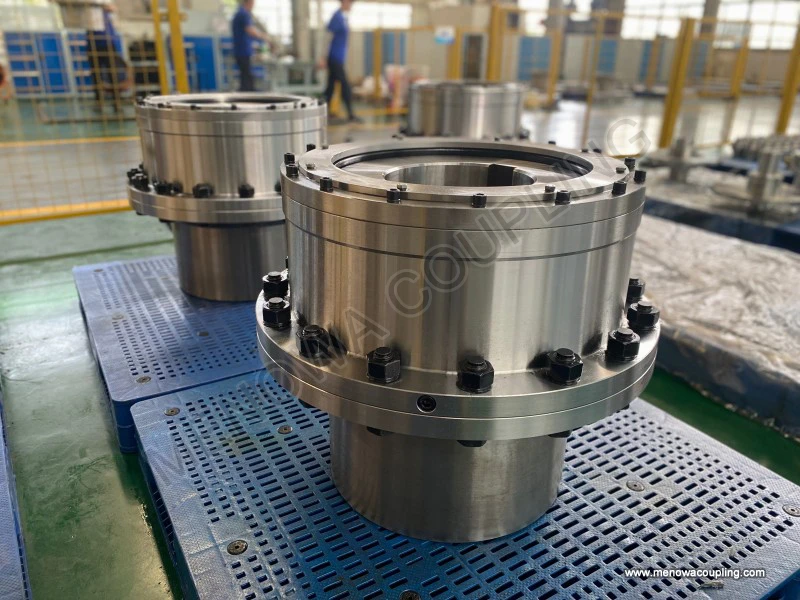
Gear type couplings are essential mechanical components widely used in various industrial fields to connect two shafts and transmit torque while accommodating minor misalignments. The production of gear type couplings is a complex and precise process that requires strict control over every link, from material selection to final assembly, to ensure their reliability, durability, and performance in harsh working environments. This article explores the entire production process of gear type couplings, focusing on the key technologies, process requirements, and quality control measures that define high-quality production, while avoiding any brand references, certification mentions, or specific pricing information.
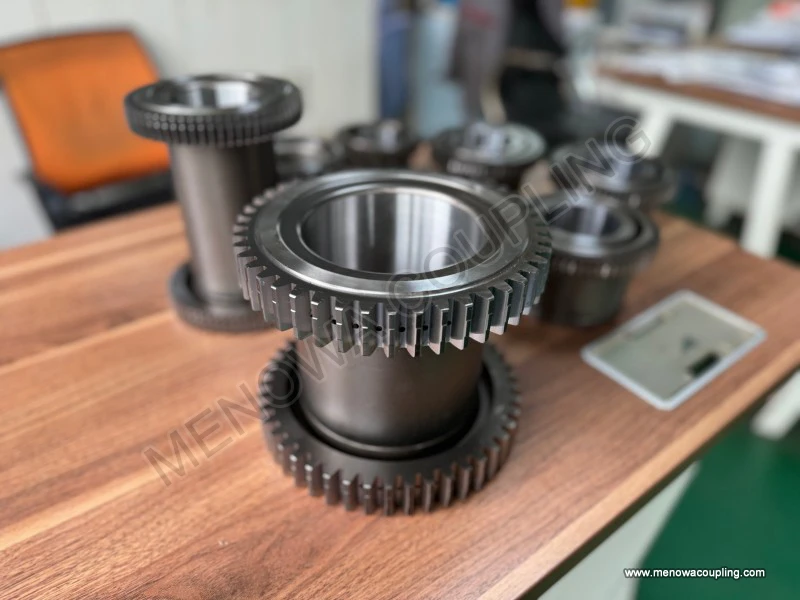
The foundation of gear type coupling production lies in the selection of appropriate materials, as the material properties directly determine the coupling’s load-bearing capacity, wear resistance, and service life. In most industrial applications, gear type couplings are made of high-strength alloy steels, which offer an optimal balance of strength, toughness, and machinability. Common alloy steels used include those with chromium, molybdenum, and manganese additions, which enhance the material’s hardenability and resistance to fatigue. For applications in corrosive environments, such as chemical processing or marine equipment, stainless steel may be selected to prevent rust and degradation, while in low-temperature conditions, special low-temperature alloy steels are used to maintain toughness and avoid brittle fracture. The material selection process also considers the specific working conditions of the coupling, such as the torque requirements, rotational speed, operating temperature, and environmental factors, to ensure that the final product can withstand the stresses and challenges of its intended use.
Once the materials are selected, the production process begins with raw material preparation. The raw steel is first inspected for chemical composition and mechanical properties to ensure it meets the required standards. This inspection is crucial to eliminate any material defects that could lead to premature failure of the coupling. The raw steel is then cut into appropriate sizes using cutting tools such as band saws or plasma cutters, depending on the thickness and shape of the material. The cut blanks are then subjected to a forging process, which involves heating the steel to a high temperature and shaping it using compressive forces. Forging improves the material’s internal structure by eliminating pores and refining the grain size, thereby enhancing its strength and toughness. The forging process must be carefully controlled to ensure the blank has the correct shape and dimensions, as any deviations at this stage can affect the subsequent machining processes.
After forging, the blanks undergo heat treatment to further optimize their mechanical properties. Heat treatment is a critical step in gear type coupling production, as it modifies the microstructure of the steel to achieve the desired hardness, toughness, and wear resistance. The most common heat treatment processes include quenching and tempering. Quenching involves heating the forging to a temperature above its critical point and then rapidly cooling it in a quenching medium such as oil or water, which transforms the steel’s microstructure into martensite, a hard and brittle phase. Tempering follows quenching, where the material is reheated to a lower temperature and held for a specific period before cooling. This process relieves internal stresses caused by quenching, reduces brittleness, and improves toughness, resulting in a material that is both hard and ductile. For gear teeth, which are subjected to high contact stresses and wear, additional surface hardening processes may be applied, such as carburizing, nitriding, or induction hardening. Carburizing involves heating the gear in a carbon-rich atmosphere to diffuse carbon into the surface layer, which is then quenched to achieve a hard surface and a tough core. Nitriding uses a nitrogen-rich atmosphere to form a hard nitride layer on the surface, which enhances wear resistance without significant distortion. Induction hardening uses electromagnetic induction to heat the surface of the gear teeth rapidly, followed by quenching, which is particularly suitable for large gears where uniform surface hardening is required.
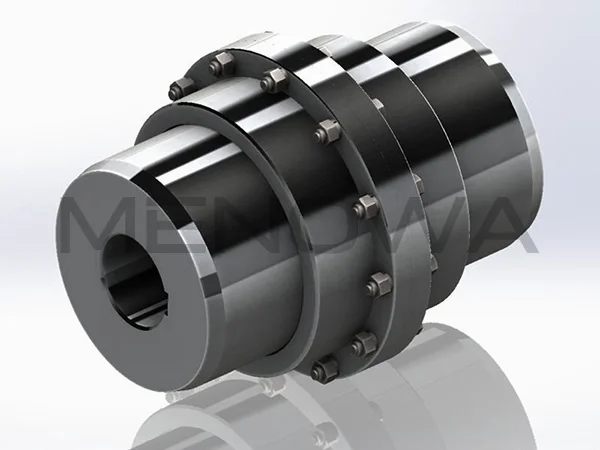
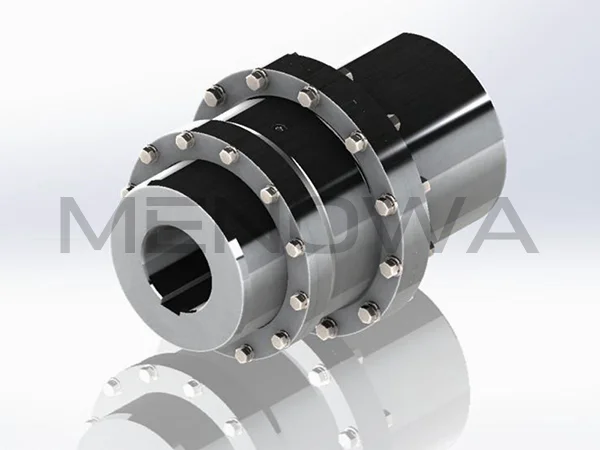
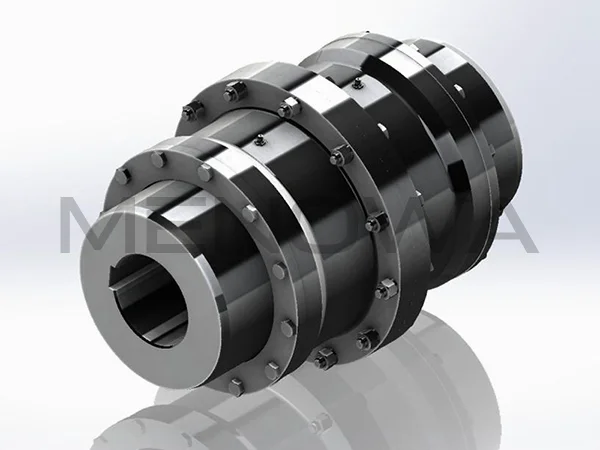
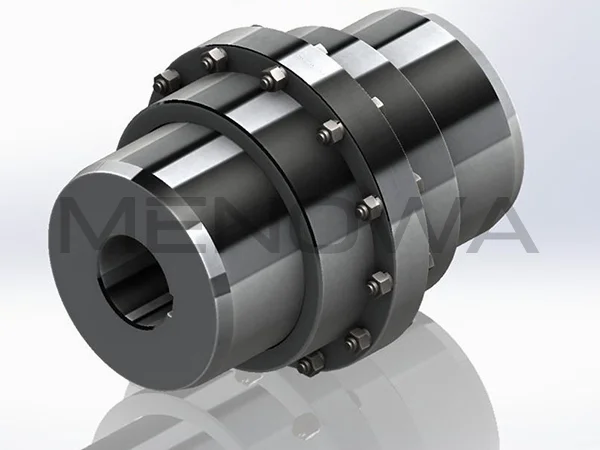
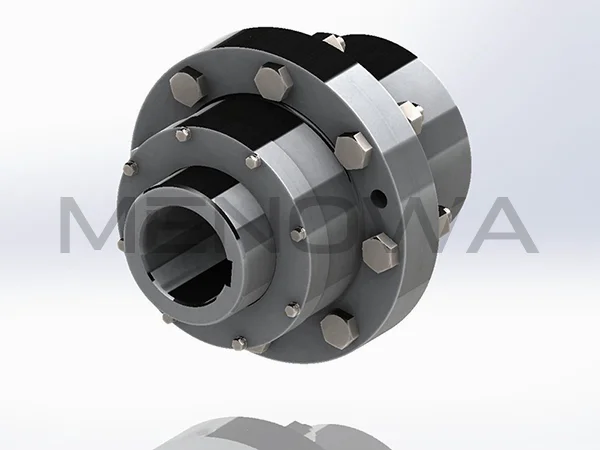
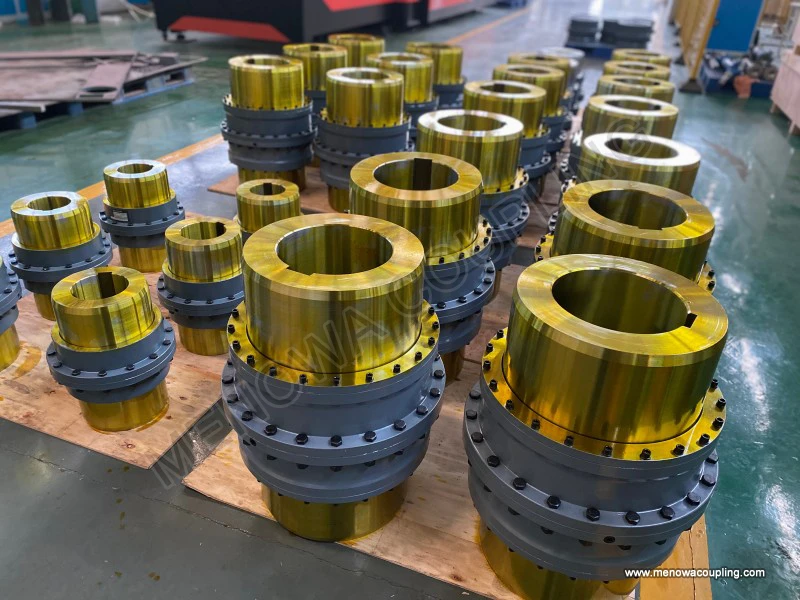
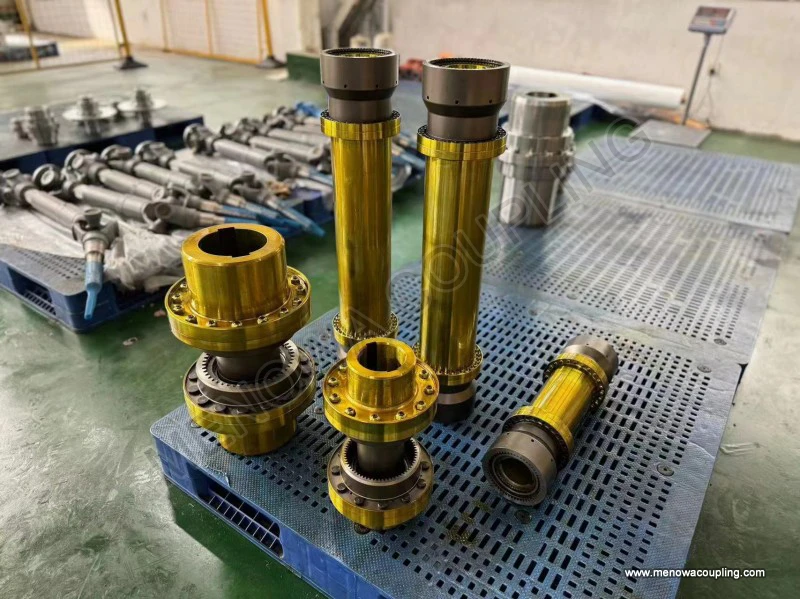
Following heat treatment, the blanks are ready for machining, which is the most precise and time-consuming stage of gear type coupling production. Machining involves removing excess material from the blank to achieve the final shape, dimensions, and surface finish of the coupling components. The main components of a gear type coupling include the gear hubs, gear sleeves, and flanges, each of which requires specific machining processes. The first step in machining is turning, where the blank is mounted on a lathe and rotated at high speed while a cutting tool removes material from the outer and inner surfaces to achieve the desired diameter, length, and concentricity. Turning is used to machine the cylindrical surfaces of the hubs and sleeves, as well as the flange faces and bolt holes. The accuracy of turning is critical, as any eccentricity or dimensional deviation can affect the alignment of the coupling and lead to vibration during operation.
After turning, the gear teeth are machined using specialized gear-cutting processes. The type of gear-cutting process used depends on the type of gear teeth (e.g., straight teeth, helical teeth, or drum teeth) and the required precision. Common gear-cutting methods include hobbing, shaping, and grinding. Hobbing is the most widely used method for mass production of gear teeth, as it is efficient and can produce high-precision teeth. A hob, which is a cylindrical tool with helical cutting edges, is rotated and fed along the length of the blank, cutting the teeth into the surface. Shaping is used for smaller gears or gears with complex shapes, where a shaping tool reciprocates to cut the teeth. Grinding is a finishing process used to achieve high precision and surface finish, particularly for gears that require tight tolerances. Gear grinding involves using a grinding wheel to remove small amounts of material from the tooth surfaces, correcting any deviations from the desired tooth profile and improving surface roughness. The gear teeth must be machined to precise dimensions to ensure proper meshing between the hub and sleeve, as poor tooth geometry can lead to excessive wear, noise, and reduced torque transmission efficiency.
In addition to gear cutting, other machining processes may be required, such as drilling, tapping, and milling. Drilling is used to create bolt holes in the flanges, which are used to connect the coupling to the shafts. Tapping is used to create internal threads in the bolt holes, allowing for the installation of bolts. Milling may be used to machine keyways, which are grooves cut into the hub to prevent relative rotation between the hub and the shaft. All these machining processes must be performed with high precision, as even small deviations can affect the performance and reliability of the coupling. For example, the bolt holes must be accurately positioned to ensure proper alignment of the flanges, and the keyways must be the correct size and shape to ensure a secure fit with the shaft key.
Once all components are machined, they undergo a series of quality inspections to ensure they meet the required specifications. Quality control is an integral part of gear type coupling production, as it ensures that only products of the highest quality are delivered to customers. The first step in quality inspection is dimensional inspection, where the components are measured using precision tools such as calipers, micrometers, and coordinate measuring machines (CMMs). The CMM is particularly useful for measuring complex geometries, such as gear teeth profiles and flange dimensions, with high accuracy. Dimensional inspection checks for deviations in diameter, length, tooth pitch, tooth profile, and other critical dimensions. Any components that do not meet the dimensional requirements are either reworked or discarded.
In addition to dimensional inspection, surface quality inspection is also performed. The surface finish of the coupling components, particularly the gear teeth and bearing surfaces, is critical to their performance. A smooth surface finish reduces friction and wear, while a rough surface can lead to premature failure. Surface quality is inspected using tools such as surface roughness testers, which measure the roughness of the surface and compare it to the required standards. Any surface defects, such as scratches, cracks, or pits, are identified and addressed. For gear teeth, a tooth contact analysis may be performed to ensure that the teeth mesh properly and evenly, which is essential for efficient torque transmission and reduced wear.
Another important quality control measure is the inspection of mechanical properties, such as hardness and toughness. Hardness testing is performed using methods such as Rockwell or Brinell hardness tests, which measure the resistance of the material to indentation. The hardness of the gear teeth and other critical components must meet the specified requirements to ensure wear resistance and load-bearing capacity. Toughness testing may also be performed to ensure that the material can withstand impact loads without fracturing. For couplings used in high-speed applications, a dynamic balance test is required to ensure that the coupling rotates smoothly without excessive vibration. Dynamic balance testing involves mounting the coupling on a balancing machine, which measures any unbalance and identifies the areas where material needs to be added or removed to achieve balance. Excessive unbalance can cause vibration, which can damage the coupling and other connected components over time.
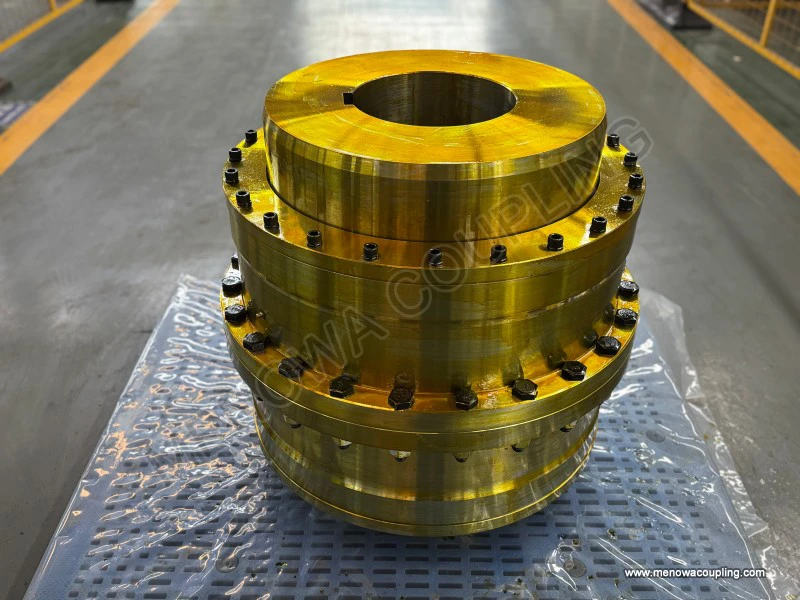
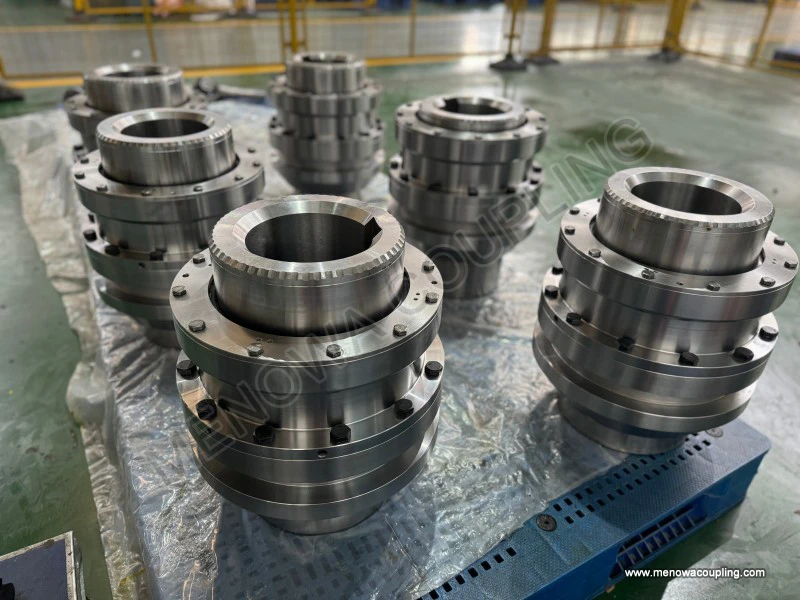
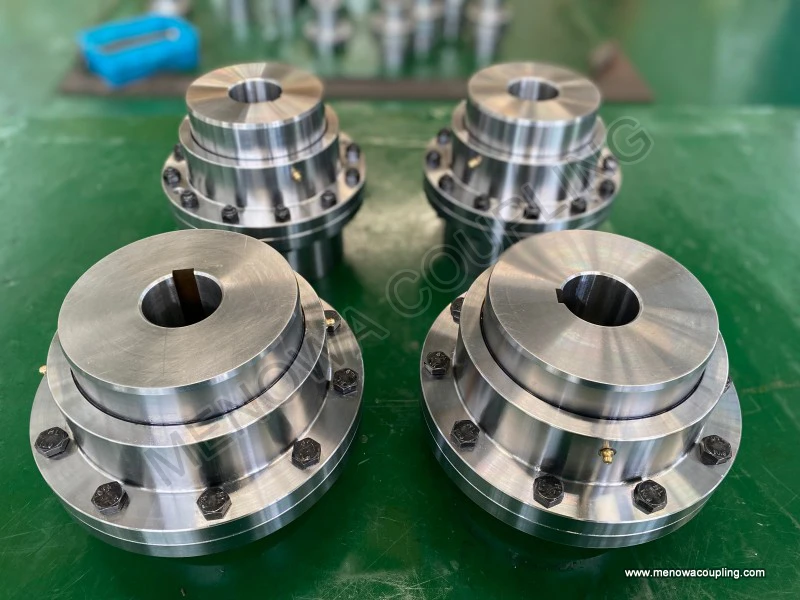
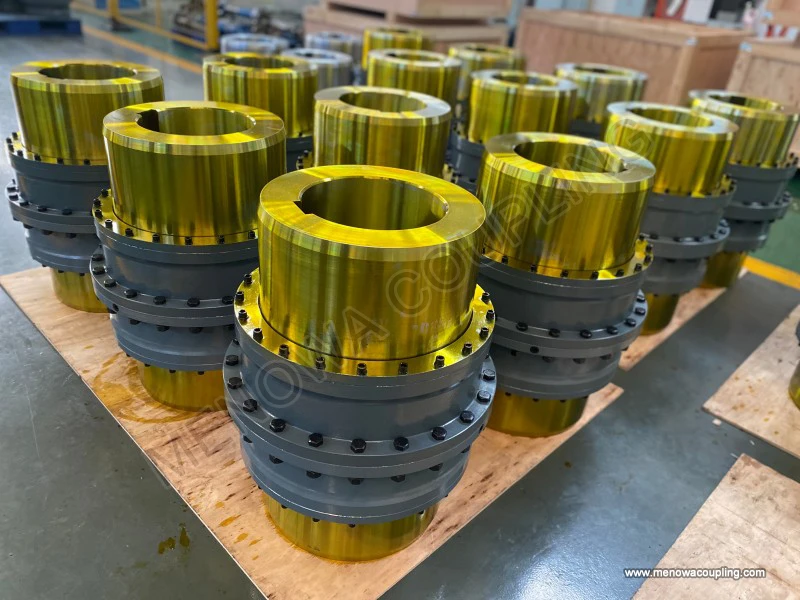
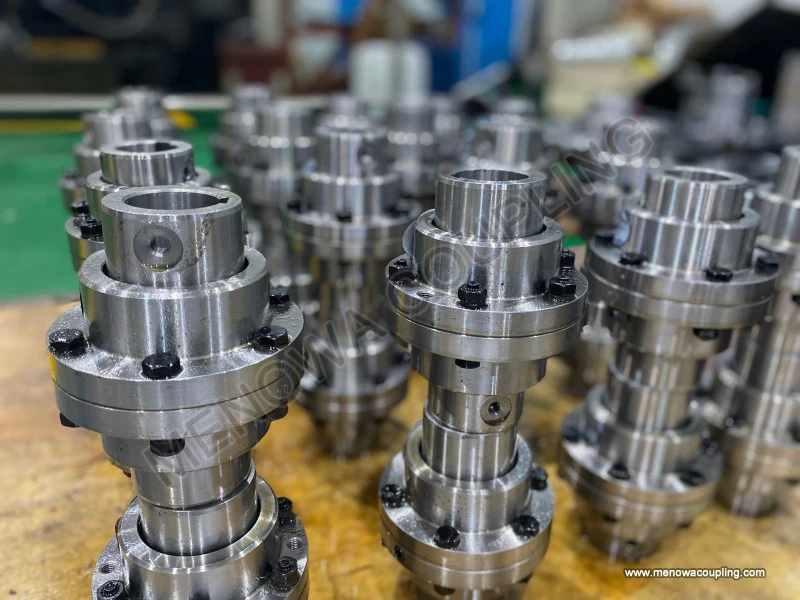
After passing all quality inspections, the components are ready for assembly. Assembly is a critical stage that requires careful handling to ensure that all components are correctly aligned and fitted. The assembly process begins with cleaning the components to remove any dirt, debris, or machining fluids that may have accumulated during the machining process. Clean components are essential to ensure proper fit and prevent premature wear. The gear hubs are then fitted onto the gear sleeves, ensuring that the gear teeth mesh properly. The flanges are then attached to the hubs using bolts, which are tightened to the specified torque to ensure a secure connection. In some cases, a lubricant is applied to the gear teeth to reduce friction and wear during operation. The type of lubricant used depends on the working conditions of the coupling, such as operating temperature and load. For high-temperature applications, high-temperature lubricants are used to prevent degradation, while for corrosive environments, corrosion-resistant lubricants are selected.
Once assembled, the complete gear type coupling undergoes a final inspection to ensure that all components are correctly assembled and that the coupling meets all performance requirements. This final inspection may include a visual inspection to check for any assembly errors, such as loose bolts or misaligned components, as well as a functional test to ensure that the coupling can transmit torque smoothly and accommodate misalignments. The functional test may involve mounting the coupling on a test rig and operating it under simulated working conditions to measure its performance, such as torque transmission efficiency, vibration levels, and noise levels. Any issues identified during the final inspection are addressed before the coupling is deemed ready for use.
The production of gear type couplings also involves considerations for environmental sustainability and process optimization. In recent years, manufacturers have been adopting more environmentally friendly practices, such as reducing energy consumption during machining and heat treatment, using recycled materials where possible, and minimizing waste. Process optimization techniques, such as computer-aided design (CAD) and computer-aided manufacturing (CAM), are used to improve the efficiency and precision of the production process. CAD software is used to design the coupling components, allowing for accurate modeling and simulation of the gear teeth and other geometries. CAM software is used to generate the machining instructions for the lathes, milling machines, and gear-cutting machines, ensuring that the components are machined to the correct dimensions with minimal waste. These technologies not only improve the quality of the final product but also reduce production time and costs.
Another important aspect of gear type coupling production is the adaptation to different industrial applications. Gear type couplings are used in a wide range of industries, including metallurgy, mining, power generation, chemical processing, and marine engineering, each with its own unique requirements. For example, in the metallurgical industry, couplings are used in rolling mills and continuous casting machines, where they must withstand high torque, high temperatures, and heavy loads. In the mining industry, couplings are used in crushers and conveyors, where they must be resistant to dust, dirt, and impact loads. To meet these diverse requirements, manufacturers must customize the design and production process of the couplings, including material selection, gear tooth design, and heat treatment processes. For example, couplings used in high-temperature applications may require special heat-resistant materials and lubricants, while those used in corrosive environments may require stainless steel components and corrosion-resistant coatings.
The performance of gear type couplings is also influenced by the design of the gear teeth. Different gear tooth designs, such as straight teeth, helical teeth, and drum teeth, offer different advantages. Straight teeth are simple to manufacture and are suitable for low-speed, low-torque applications. Helical teeth have a more gradual meshing process, which reduces noise and vibration and is suitable for high-speed, high-torque applications. Drum teeth are designed to accommodate larger misalignments, making them ideal for applications where shaft alignment is difficult, such as in heavy machinery. The design of the gear teeth also affects the coupling’s torque transmission efficiency and wear resistance. For example, helical teeth have a larger contact area than straight teeth, which distributes the load more evenly and reduces wear. Drum teeth have a curved profile that allows for axial movement, which helps to compensate for misalignments and reduce stress on the gear teeth.
In addition to the gear teeth design, the overall structure of the coupling also plays a role in its performance. Gear type couplings can be divided into two main types: rigid gear couplings and flexible gear couplings. Rigid gear couplings are designed to transmit torque without any flexibility, making them suitable for applications where shaft alignment is precise. Flexible gear couplings, on the other hand, are designed to accommodate minor misalignments, such as radial, axial, and angular misalignments, which can occur due to installation errors, thermal expansion, or structural deformation. Flexible gear couplings typically use a flexible element, such as a rubber or elastomeric bushing, to absorb vibration and compensate for misalignments. The choice between rigid and flexible gear couplings depends on the specific application requirements, such as the level of misalignment expected and the need for vibration damping.
The maintenance of gear type couplings is also an important consideration in their production. A well-designed coupling should be easy to maintain, with components that can be easily accessed and replaced if necessary. For example, some couplings are designed with split sleeves, which allow for easy removal and replacement of the gear teeth without disassembling the entire coupling. This reduces downtime and maintenance costs, making the coupling more cost-effective in the long run. Manufacturers also provide guidelines for maintenance, such as lubrication intervals and inspection schedules, to ensure that the coupling remains in good working condition throughout its service life.
In conclusion, the production of gear type couplings is a complex and precise process that requires careful control over every stage, from material selection to final assembly. The selection of appropriate materials, strict heat treatment processes, precise machining, and thorough quality control are essential to ensure the reliability, durability, and performance of the couplings. With the adoption of advanced technologies and environmentally friendly practices, manufacturers are able to produce high-quality gear type couplings that meet the diverse needs of various industrial applications. As industries continue to evolve and demand higher performance from their machinery, the production of gear type couplings will continue to advance, with a focus on improving efficiency, reducing costs, and enhancing sustainability. Whether used in heavy machinery, power generation, or chemical processing, gear type couplings play a vital role in ensuring the smooth and efficient operation of industrial systems, making their production a critical component of modern manufacturing.
Post Date: Apr 27, 2026
https://www.menowacoupling.com/china-coupling/gear-type-coupling-production.html
Products
Tags
Supply
Related Articles
Diagram of Curved Tooth Coupling
The diagram of curved tooth coupling intuitively presents the structural layout, meshing logic and spatial assembly relationship of this mainstream flexible transmission component, serving as a core technical reference for design optimization, model selection, installation and maintenance in the global industrial machin…Gear Type Coupling Factory
Gear type couplings stand as one of the most reliable and widely adopted power transmission components in modern industrial mechanical systems, serving as a critical bridge between rotating shafts in diverse heavy-duty and high-precision equipment. As a professional gear type coupling manufacturing facility, we focus on…Material of Gear Type Coupling
Gear type couplings stand as one of the most reliable and widely adopted power transmission components in modern mechanical systems, renowned for their high torque transmission capacity, compact structural design, and excellent tolerance to shaft misalignment. The overall performance, service lifespan, and operational s…Diagram of Gear Type Coupling
A gear type coupling is a crucial mechanical component widely utilized in industrial transmission systems to connect two rotating shafts, enabling the efficient transfer of torque while accommodating minor misalignments that may occur during operation. Unlike rigid couplings that require precise alignment between shafts…Gear Type Coupling For Sale
A gear type coupling is a versatile and robust mechanical device designed to connect two rotating shafts, enabling the efficient transmission of torque while accommodating a certain degree of misalignment between the shafts. This type of coupling is widely recognized for its ability to handle heavy loads and harsh opera…Dimensions of Curved Tooth Coupling
Global industrial development across diversified manufacturing sectors continues to push steady market expansion for curved tooth couplings, whose unique curved crowned tooth geometry distinguishes them from conventional straight-tooth gear couplings and enables outstanding comprehensive mechanical performance to match …
 WeChat
 WhatsApp