Characteristics of Gear Type Coupling
Gear type couplings stand as one of the most versatile and robust mechanical transmission components widely applied in modern industrial power transmission systems, serving the core function of connecting two rotating shafts to transfer torque and rotational motion while adapting to various operational deviations and complex working conditions. Distinguished from other flexible coupling types such as diaphragm couplings, jaw couplings and chain couplings, gear type couplings integrate unique structural design and mechanical properties that enable them to balance high load capacity, reliable flexibility and stable transmission performance, making them indispensable in heavy machinery, industrial transmission equipment and high-speed rotating systems. Understanding the inherent characteristics of gear type couplings is essential for mechanical design optimization, equipment matching selection and long-term operational maintenance of transmission systems.
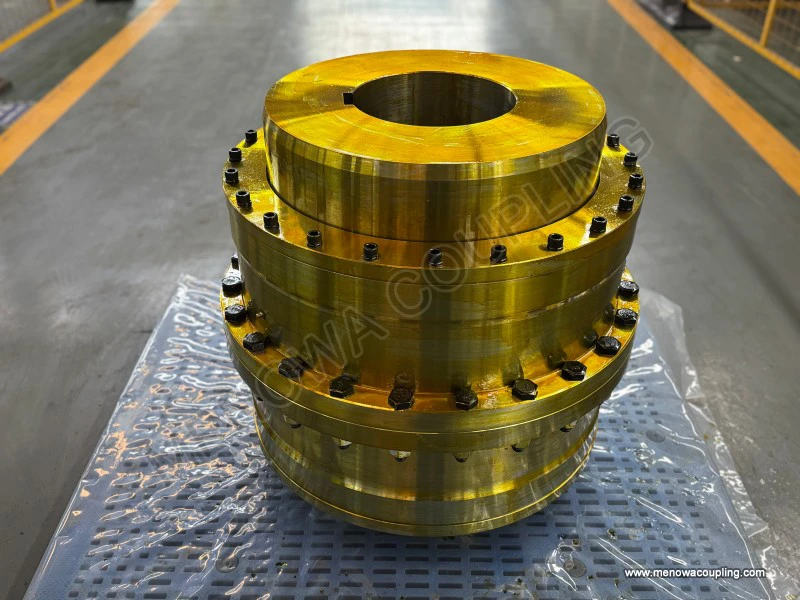
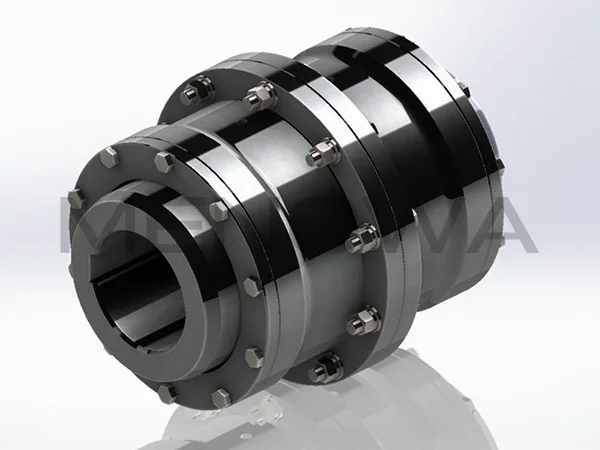
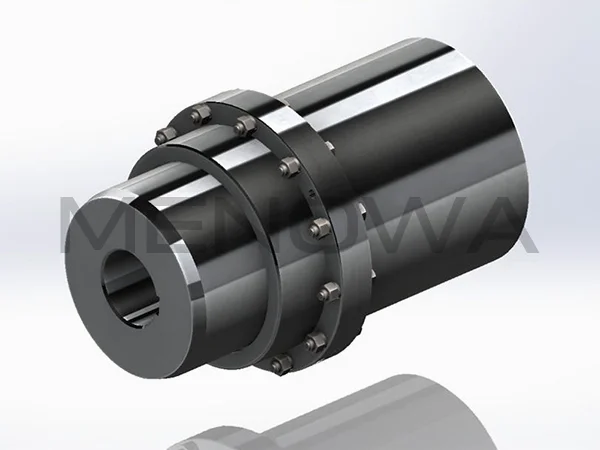
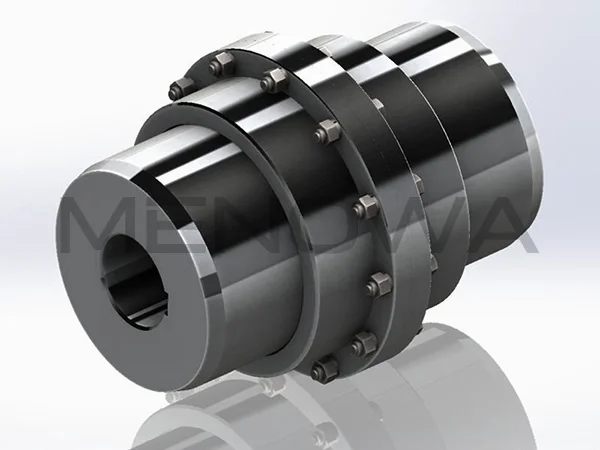
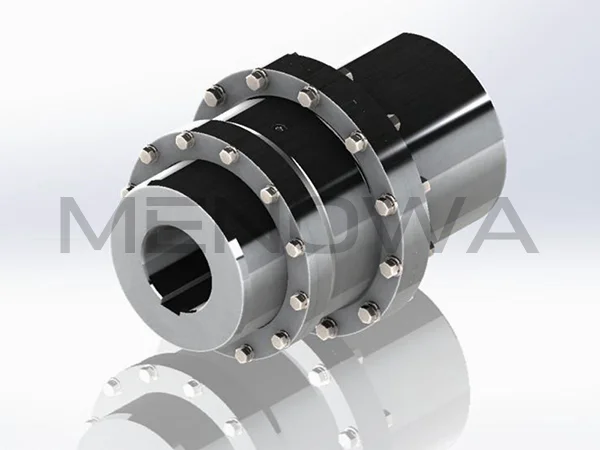
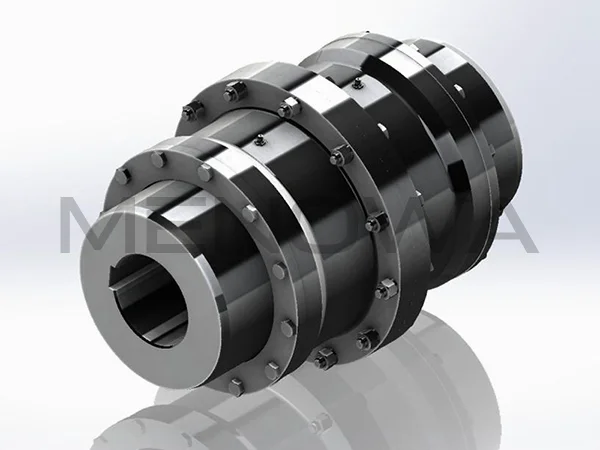
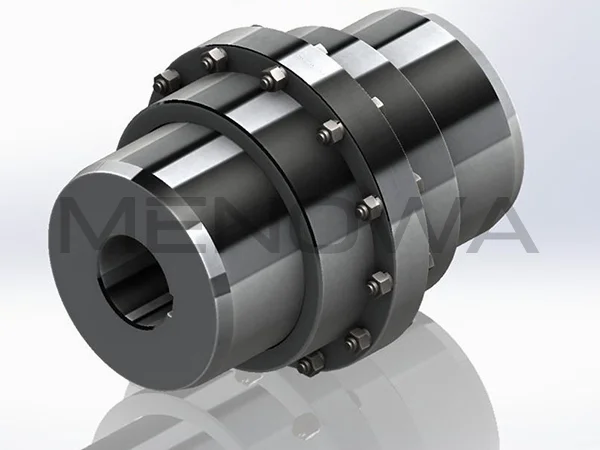
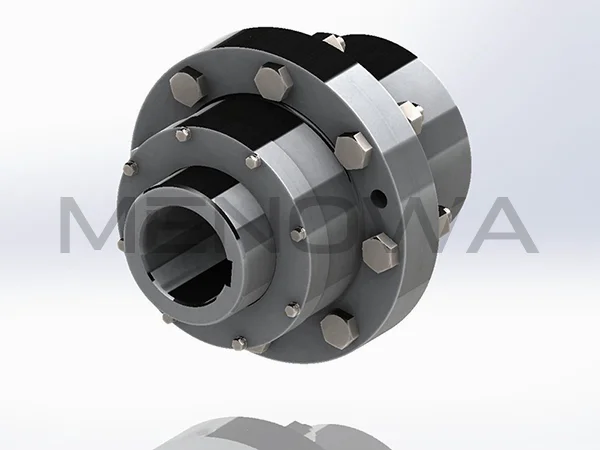
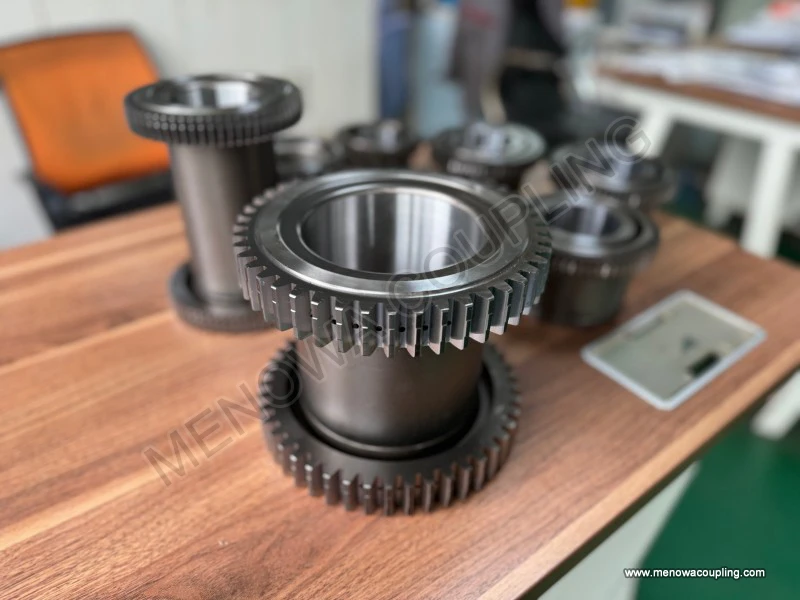
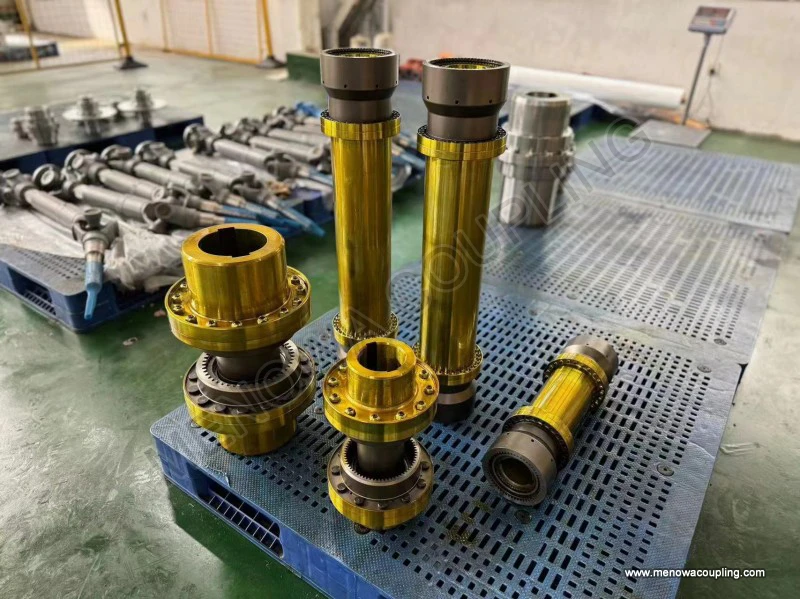
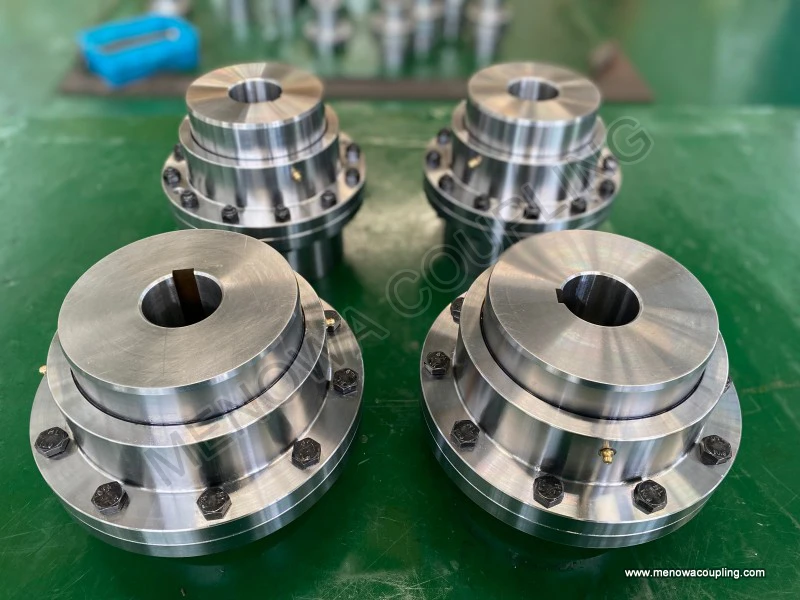
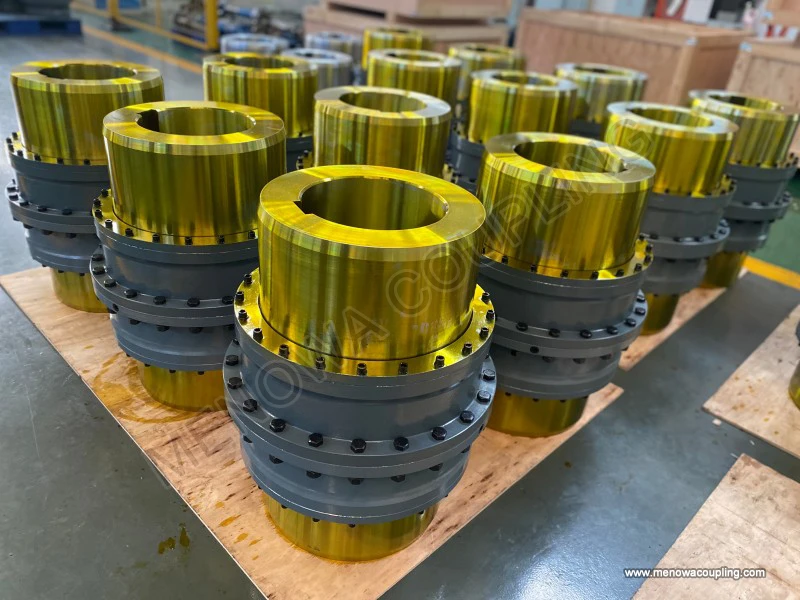
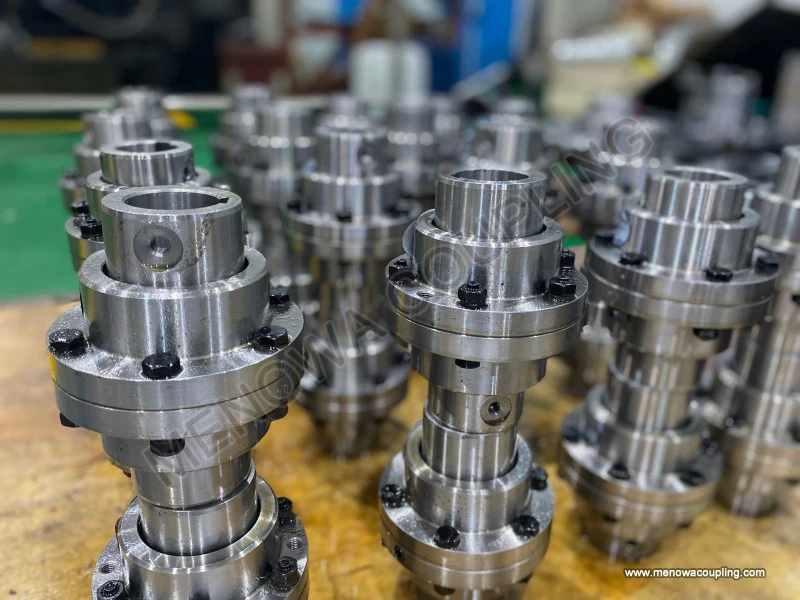
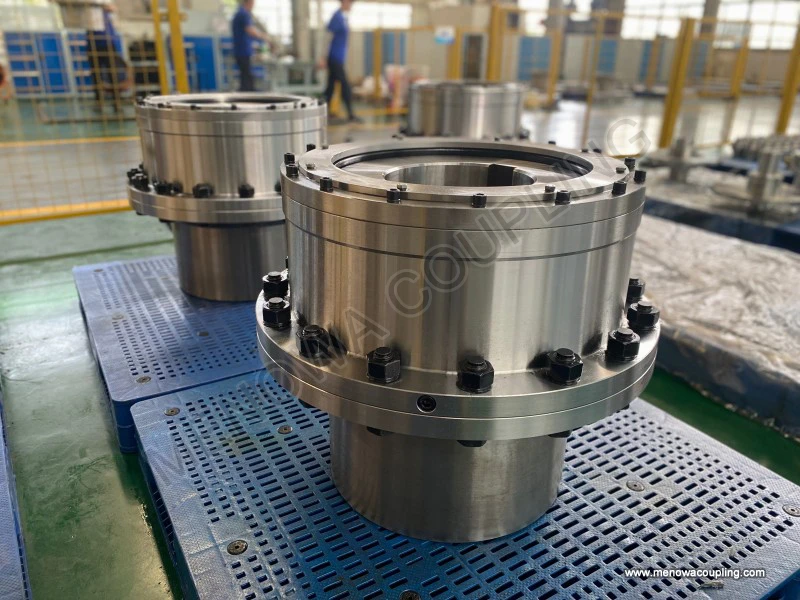
The fundamental structural characteristics lay the foundation for the superior mechanical performance of gear type couplings. A standard gear type coupling mainly consists of two external gear hubs fixed on the shaft ends and an internal gear sleeve that meshes with the external gears. The external gear teeth are processed into special crowned shapes in most modern designs, differing from traditional straight gear structures, while the internal gear sleeve adopts a circular tooth profile matching the external gears. This meshing structure with equal tooth numbers on internal and external components forms a closed transmission pair, which simplifies the overall structural layout and realizes a compact radial dimension. Compared with flexible couplings relying on elastic element deformation, the gear meshing transmission structure features higher structural rigidity and better integral stability, avoiding permanent deformation and fatigue failure of elastic parts under long-term load. Meanwhile, the split design of gear hubs and sleeves facilitates independent processing, heat treatment and assembly of components, effectively improving the overall manufacturing precision and structural uniformity of the coupling. All core components are usually made of high-strength alloy steel through integral forging and precision machining, which eliminates structural defects such as casting pores and enhances the overall mechanical strength and structural uniformity of the coupling.
High torque transmission capacity is the most prominent functional characteristic of gear type couplings, which differentiates them from most conventional flexible couplings. The torque transmission of gear couplings is completed through the surface contact meshing of multiple gear teeth, and the load is evenly distributed on each meshing tooth pair during operation. This multi-tooth synchronous bearing mode greatly improves the effective load-bearing area, enabling the coupling to withstand large static torque and impact torque without tooth slipping or transmission failure. Under the same radial and axial installation dimensions, the load capacity of gear type couplings is significantly higher than that of elastic couplings and sleeve couplings, allowing them to adapt to heavy-load transmission scenarios that require compact installation space and high power output. Even in intermittent load operation and frequent start-stop working states, the rigid meshing structure can maintain stable torque transmission, avoid power loss caused by elastic deformation, and ensure high transmission efficiency of the entire shaft system. In low-speed and heavy-duty mechanical equipment, this high-load characteristic gives gear type couplings unique application advantages, meeting the long-term stable operation requirements of high-power transmission systems.
Excellent misalignment compensation performance constitutes another core characteristic of gear type couplings, solving the installation and operation deviation problems of shaft systems. In actual mechanical equipment operation, it is difficult to achieve absolute coaxial alignment of two connected shafts due to manufacturing errors, installation deviations, equipment foundation settlement and thermal expansion and contraction during operation. These inevitable deviations will generate additional bending stress and friction on the shaft system, seriously affecting the service life of shafts, bearings and other components. Gear type couplings can effectively compensate for three typical misalignment states through the flexible fit of internal and external gear meshing: axial misalignment caused by shaft thermal expansion and assembly gaps, parallel misalignment formed by shaft centerline offset, and angular misalignment generated by shaft deflection. The crowned tooth design of external gears optimizes the contact state of tooth surfaces under angular deflection conditions, enabling the tooth surfaces to form uniform contact rather than local stress concentration, which greatly improves the compensation range of angular misalignment compared with traditional straight tooth structures. This multi-dimensional compensation capability eliminates additional mechanical stress of the transmission system, buffers operation vibration, and protects the shaft system and related supporting components from abnormal wear and fatigue damage.
Stable high-speed operation performance expands the application scope of gear type couplings in precision transmission fields. Although gear couplings are widely known for heavy-load adaptation, precision-machined and dynamically balanced gear type couplings can fully meet the operational requirements of high-speed rotating equipment. The symmetrical structural design and uniform tooth distribution ensure balanced mass distribution of the coupling during high-speed rotation, effectively reducing centrifugal force and rotational vibration. The precision grinding process of tooth surfaces reduces meshing clearance and friction resistance, realizing smooth and continuous power transmission without obvious impact and noise during high-speed operation. Different from elastic couplings that are prone to elastic fatigue and deformation under high-speed cyclic load, the metal gear meshing structure has stable mechanical properties, no stiffness attenuation during long-term high-speed operation, and can maintain consistent transmission precision and dynamic balance performance. This characteristic enables gear type couplings to be applied not only to low-speed heavy-duty machinery but also to high-speed power transmission equipment such as turbine units and high-speed motor systems, achieving multi-scene adaptive operation of high speed and heavy load.
Good vibration damping and impact resistance characteristics enhance the operational reliability of transmission systems under complex working conditions. Industrial mechanical equipment often faces unstable load impacts such as sudden load changes, equipment start-stop and external vibration interference during operation. The internal meshing gap of gear type couplings provides a moderate buffer space, which can absorb part of instantaneous impact energy and suppress vibration amplitude generated by load fluctuation. When the transmission system is subjected to sudden torque impact, the tiny relative sliding between meshing tooth surfaces can buffer instantaneous stress peaks, avoid rigid impact damage to shafts and key components, and protect the integrity of the transmission system. Meanwhile, the integral rigid structure of the coupling will not produce excessive deformation under impact load, ensuring that the basic transmission accuracy and power output stability are not affected. This combination of rigidity and flexibility enables gear type couplings to adapt to harsh working conditions with frequent load changes and complex vibration environments, reducing equipment failure rates caused by load impact and vibration fatigue.
Durable service life and outstanding wear resistance are important practical characteristics of gear type couplings. The core gear components undergo strict surface heat treatment processes such as carburizing and quenching or high-frequency quenching, which greatly improves the surface hardness, wear resistance and contact fatigue strength of tooth surfaces. The high-precision machining ensures smooth tooth surface finish and uniform meshing clearance, reducing abrasive wear and adhesive wear during gear meshing operation. In continuous rotating operation, the evenly distributed meshing load avoids local over-wear of individual tooth surfaces, ensuring consistent component performance attenuation. Compared with couplings relying on non-metal elastic elements that are prone to aging, cracking and fatigue failure, all-metal gear structures have strong resistance to temperature changes, oxidation and corrosion, and can maintain stable structural performance in long-term continuous operation. Under reasonable lubrication and normal working conditions, gear type couplings can achieve long service cycles, effectively reducing the frequency of component replacement and equipment downtime.
Simple maintenance and convenient installation and disassembly characteristics reduce the overall operational cost of mechanical systems. The structural design of gear type couplings is highly modular, with independent and detachable core components. The two gear hubs are fixed on the shaft ends through key connection or interference fit, and the internal gear sleeve is sleeved on the outer side of the meshing gear teeth, realizing rapid assembly and positioning. During equipment maintenance, the coupling can be disassembled and inspected without moving the connected equipment and shafts, which simplifies the maintenance process and shortens maintenance time. The daily maintenance work of gear type couplings is mainly regular lubrication replacement, without complex parameter calibration and performance debugging. The closed meshing structure can isolate external dust, impurities and moisture to a certain extent, reducing the probability of tooth surface corrosion and abrasive wear, and lowering the requirement for on-site environmental cleanliness. This low-maintenance characteristic makes gear type couplings suitable for industrial production lines and unattended mechanical equipment that require long-term continuous operation.
Strong environmental adaptability is another notable characteristic that expands the application boundaries of gear type couplings. Benefiting from the all-metal rigid structure and stable material properties, gear type couplings can work normally in a wide temperature range, adapting to high-temperature working environments generated by equipment heat accumulation and low-temperature industrial environments. They have excellent resistance to mechanical fatigue and chemical corrosion, and can maintain stable transmission performance in harsh environments containing dust, humidity and slight corrosive media. Unlike elastic couplings that are sensitive to temperature changes and prone to aging and hardening in extreme environments, the mechanical properties of gear meshing structures will not change significantly with environmental temperature fluctuations, ensuring the continuity and stability of power transmission in complex industrial environments. Whether it is outdoor heavy machinery, indoor continuous production equipment or special industrial equipment with harsh operating conditions, gear type couplings can maintain reliable working performance.
It is also worth noting that gear type couplings have stable transmission accuracy and low power loss characteristics. The precise meshing fit of internal and external gears ensures synchronous rotation of the two connected shafts, almost no rotational angle deviation and speed difference during power transmission, realizing high-precision motion transmission. The small friction coefficient of precision-machined tooth surfaces and reasonable lubrication conditions minimize friction energy loss during meshing operation, so the transmission efficiency remains at a high level for a long time. In long-term continuous industrial operation, the low power loss characteristic can effectively reduce equipment energy consumption and improve the overall energy utilization rate of the mechanical system. In addition, the uniform load distribution structure avoids local overheating caused by excessive stress, ensuring the thermal stability of the coupling during operation and further maintaining the long-term stability of transmission efficiency and accuracy.
In summary, gear type couplings integrate compact structural design, high load-bearing capacity, multi-dimensional misalignment compensation, stable high-speed performance, excellent impact resistance and vibration damping, long service life and convenient maintenance advantages. Their unique mechanical characteristics make them occupy an irreplaceable position in the field of mechanical power transmission. Different coupling types have their own applicable scenarios, and the comprehensive performance advantages of gear type couplings determine their wide adaptability in heavy-load, high-speed, complex working conditions and long-term continuous operation equipment. In modern mechanical design and industrial equipment upgrading, rational application of gear type couplings based on their core characteristics can effectively optimize the stability, reliability and economy of the transmission system, providing a solid guarantee for the safe and efficient operation of various mechanical equipment.
Post Date: May 25, 2026
https://www.menowacoupling.com/china-coupling/characteristics-of-gear-type-coupling.html
Products
Tags
Supply
Related Articles
Characteristics of Curved Tooth Coupling
In the global industrial transmission equipment market, curved tooth couplings have emerged as a core universal transmission component, widely adopted in heavy-duty machinery, energy equipment, marine engineering, and mining industries across all regional markets. Differing from traditional straight tooth gear couplings…Gear Type Coupling Supply
Gear type couplings stand as one of the most reliable and high-performance mechanical components designed for torque transmission and shaft connection across diverse industrial mechanical systems. As a core component in power transmission machinery, these specialized couplings are engineered to connect two rotating shaf…Types of Gear Type Coupling
Gear type couplings stand as one of the most robust and reliable flexible coupling solutions in modern industrial mechanical transmission systems, widely utilized for connecting rotating shafts to transmit torque while compensating for various shaft misalignments during equipment operation. Unlike rigid couplings that r…Components of Gear Type Coupling
Gear type couplings are essential mechanical transmission components widely applied in heavy-duty industrial mechanical systems, serving as key connecting structures for rotating shafts in power transmission equipment. Classified as rigid flexible couplings, they rely on the precise meshing of internal and external gear…Parts of Curved Tooth Coupling
Curved tooth couplings stand as one of the most reliable and widely adopted mechanical transmission components in the global industrial machinery sector, renowned for their superior torque transmission capacity, flexible misalignment compensation, and durable structural performance. As global industrialization continues…Classification of Curved Tooth Coupling
Classification and Application Analysis of Curved Tooth Coupling in Global Industrial MarketsIn the global industrial transmission system, curved tooth couplings have emerged as one of the most critical flexible transmission components, widely adopted in heavy-duty machinery, precision industrial equipment, and large-sc…
 WeChat
 WhatsApp