Classification of Gear Type Coupling
Gear type couplings are essential mechanical transmission components widely applied in industrial mechanical systems, serving the core function of connecting two rotating shafts to transmit torque and rotational motion while compensating for various installation and operation deviations between shafts. Compared with other flexible couplings, gear type couplings feature high torsional rigidity, large torque transmission capacity, compact structural layout, and strong environmental adaptability, making them the preferred transmission part for heavy-duty, high-speed, and continuous operating mechanical equipment. The classification of gear type couplings is based on multiple dimensional criteria including structural form, tooth profile design, assembly mode, and functional characteristics, and each category has unique structural attributes, performance advantages, and applicable working scenarios. A systematic classification and in-depth analysis of gear type couplings can help mechanical designers and equipment maintenance personnel accurately select matching coupling types according to actual working conditions, so as to ensure stable operation of mechanical transmission systems, reduce component wear, and extend the overall service life of equipment.
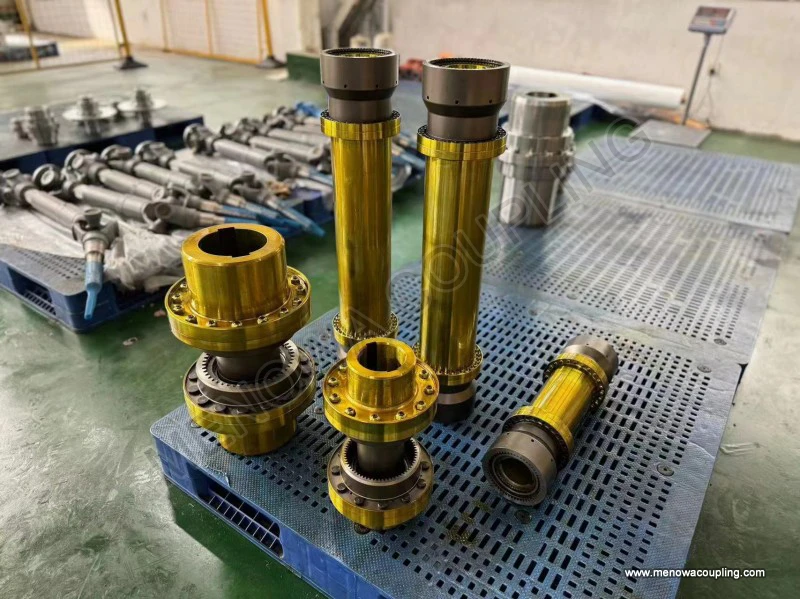
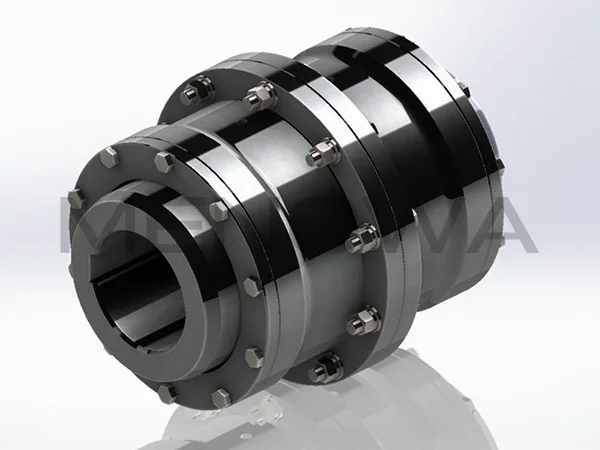
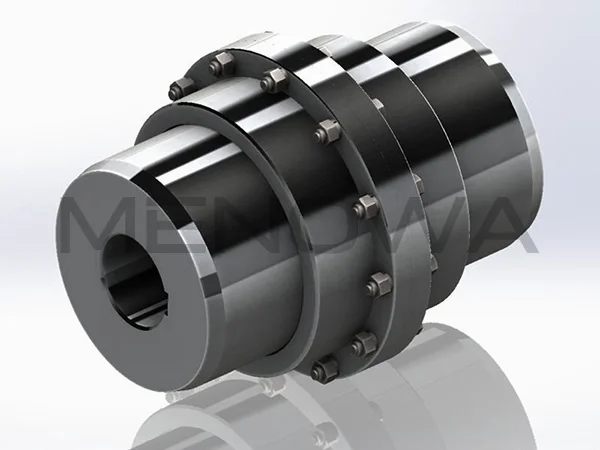
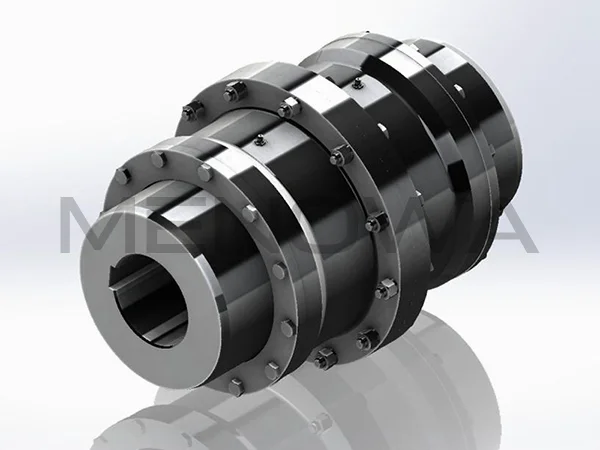
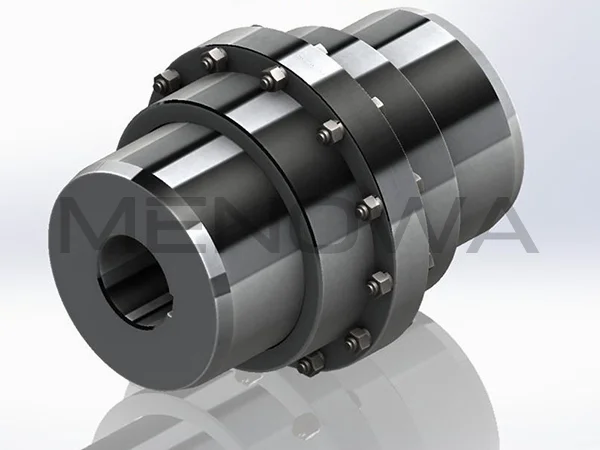
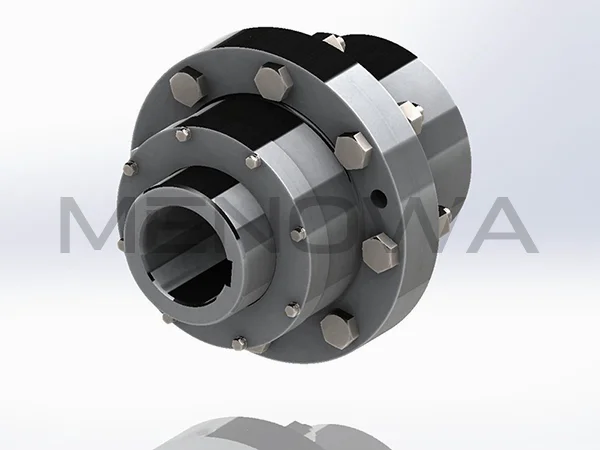
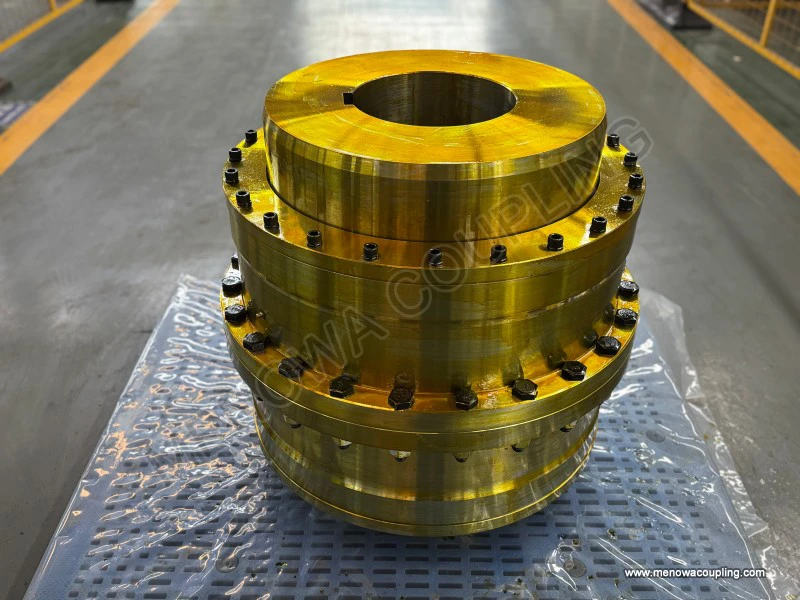
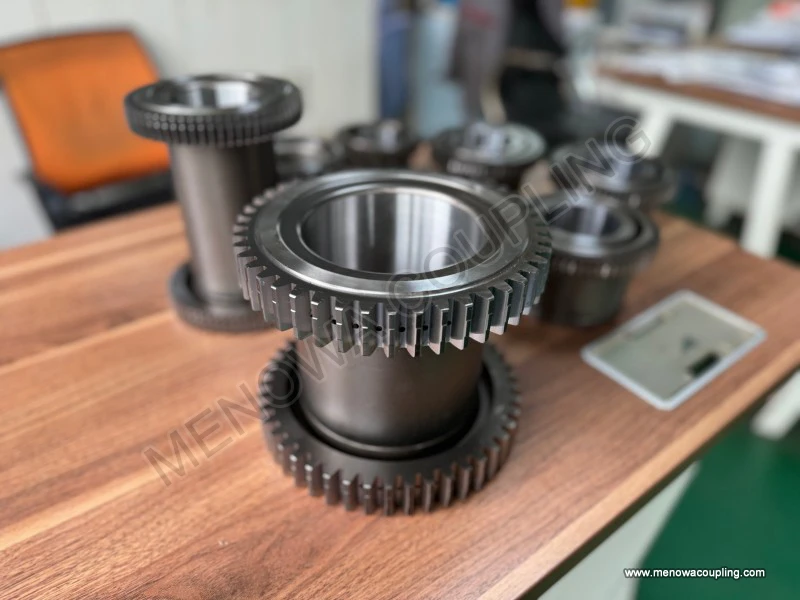
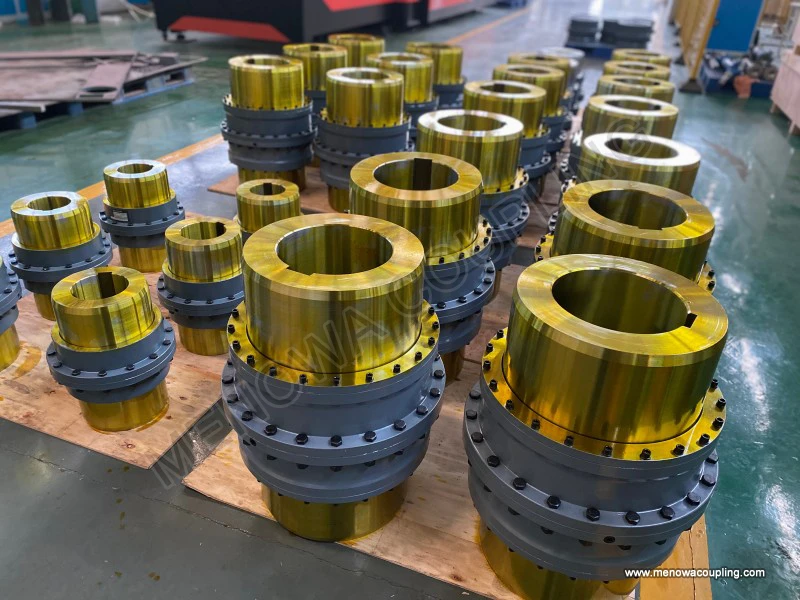
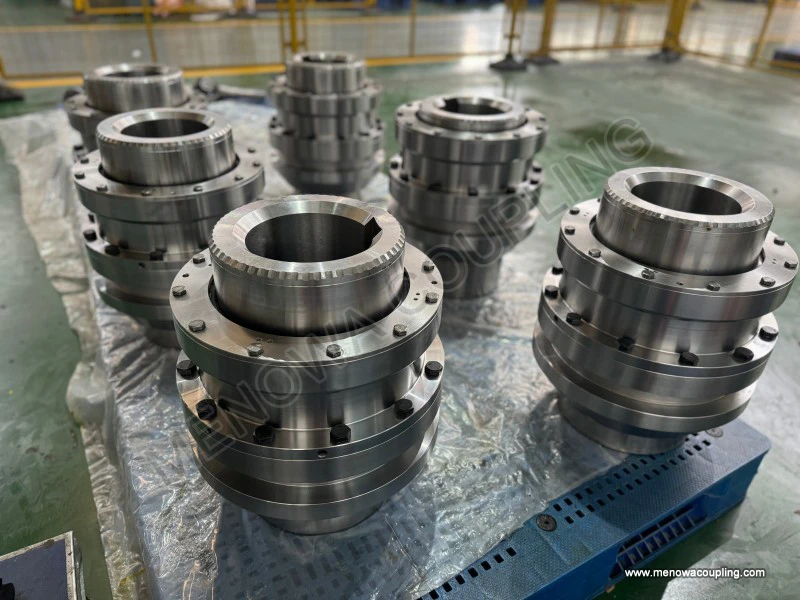
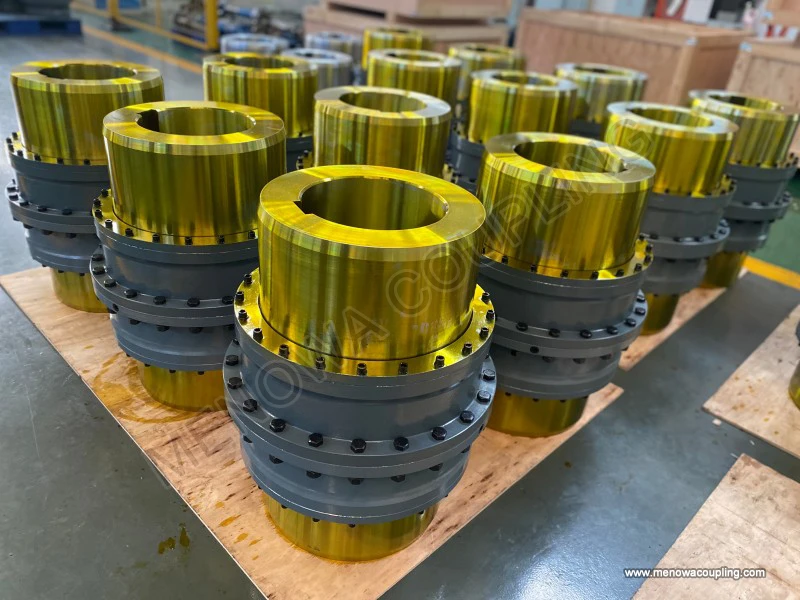
From the perspective of basic structural composition and flexible engagement form, gear type couplings can be primarily divided into full gear couplings and half gear couplings, which are the most fundamental and widely used classification modes in industrial applications. Full gear couplings, also known as double-engagement gear couplings, consist of two external gear hubs and a middle sleeve with internal gear teeth, forming two independent flexible engagement planes. The external gear teeth on the two hubs mesh with the internal gear teeth of the sleeve respectively, and the tooth gap between meshing teeth reserves a reasonable tolerance range, which can effectively compensate for angular misalignment, parallel offset, and axial displacement between the driving shaft and driven shaft. This double-flexible structural design endows full gear couplings with excellent comprehensive compensation performance, enabling them to adapt to complex shaft misalignment states generated by equipment installation errors, mechanical vibration, and thermal expansion and contraction during long-term operation. In terms of mechanical performance, full gear couplings maintain high torsional rigidity under rated load, ensuring stable torque transmission without obvious power loss, and can withstand alternating loads and instantaneous impact loads in industrial production. This type of coupling is mostly applied in heavy-duty mechanical scenarios such as mining machinery, metallurgical equipment, and large-scale conveyor systems that require high torque transmission and continuous stable operation.
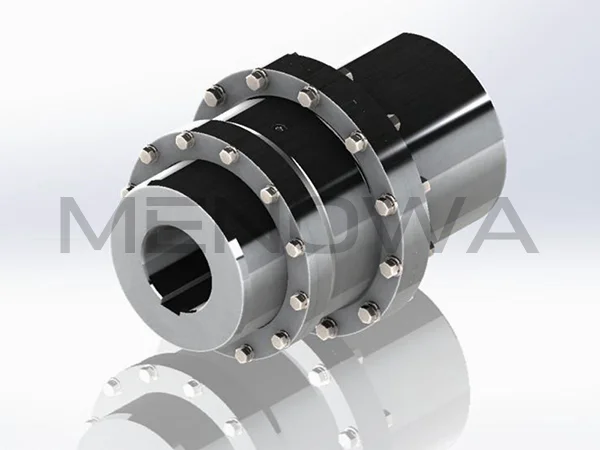
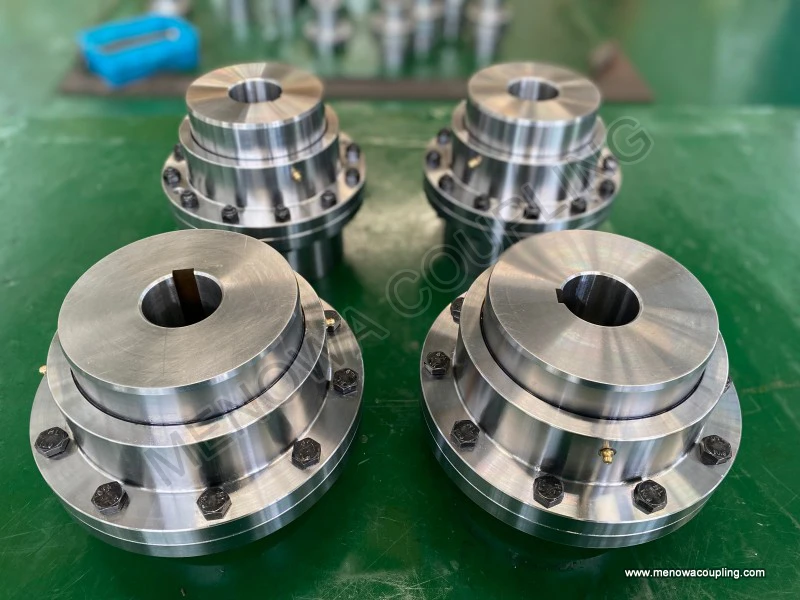
Different from full gear couplings, half gear couplings are single-engagement flexible transmission structures, also called flex-rigid gear couplings. This structure adopts a matching design of one flexible gear engagement end and one rigid connection end. Specifically, one side is equipped with an external gear hub meshing with the internal gear sleeve to form a flexible compensation structure, while the other side uses a rigid flange or fixed hub for direct shaft connection without gear meshing engagement. The single flexible plane design simplifies the overall structure of the coupling, reduces component weight and assembly difficulty, and retains basic compensation capability for conventional shaft misalignment. Although its compensation range for angular and parallel deviation is slightly smaller than that of full gear couplings, it can fully meet the operation requirements of medium and low-load mechanical systems. The rigid connection end ensures high positioning accuracy of the shaft, avoiding excessive axial floating of the transmission shaft, while the flexible gear end buffers small vibration and impact in the transmission process. Half gear couplings are characterized by low manufacturing cost, simple maintenance, and compact installation space, and are widely used in general industrial machinery such as light processing equipment, small fan systems, and ordinary pump transmission devices with stable load and low misalignment requirements.
Tooth profile structure is another key classification standard for gear type couplings, which directly determines the meshing state, wear resistance, and deviation adaptation performance of the coupling. According to the axial tooth profile shape of external gear teeth, gear type couplings are divided into straight tooth gear couplings and crowned tooth gear couplings. Straight tooth gear couplings are the earliest developed and most traditional gear coupling type, with linear axial tooth profiles and uniform tooth thickness distribution. The processing technology of straight tooth structures is mature and simple, with low processing difficulty and high dimensional accuracy control efficiency. In the meshing process, the tooth surface contact of straight tooth couplings is stable under the condition of precise shaft alignment, and the torque transmission is uniform without partial load. However, when there is angular misalignment between shafts, the contact state of straight gear teeth will change significantly, resulting in edge contact at the tooth end, which causes uneven tooth surface wear, increased meshing friction, and even local stress concentration on gear teeth. This defect makes straight tooth gear couplings only suitable for working conditions with high installation accuracy, small shaft misalignment, and stable operation load, and they are gradually replaced by crowned tooth gear couplings in high-precision and high-flexibility application scenarios.
Crowned tooth gear couplings are optimized and improved on the basis of straight tooth structures, with arc-shaped axial tooth profiles for external gear teeth. The tooth surface presents a smooth curved transition from the middle to both ends, which fundamentally solves the edge contact problem of straight gear teeth under misalignment conditions. When angular or parallel deviation occurs between the connected shafts, the curved tooth surface can automatically adjust the meshing contact position, realizing uniform contact of the tooth surface in the effective meshing area, avoiding local stress concentration and abnormal wear. The optimized tooth profile structure greatly improves the misalignment adaptability and service life of the coupling, and enhances the buffer performance against instantaneous impact loads. Although the processing technology of crowned tooth structures is more complex than straight teeth and requires higher precision processing equipment, its comprehensive mechanical performance is far superior to traditional straight tooth couplings. At present, most high-performance gear couplings used in medium and high-end industrial equipment adopt crowned tooth designs, which can adapt to complex working conditions such as frequent start-stop, alternating load, and long-term high-speed operation.
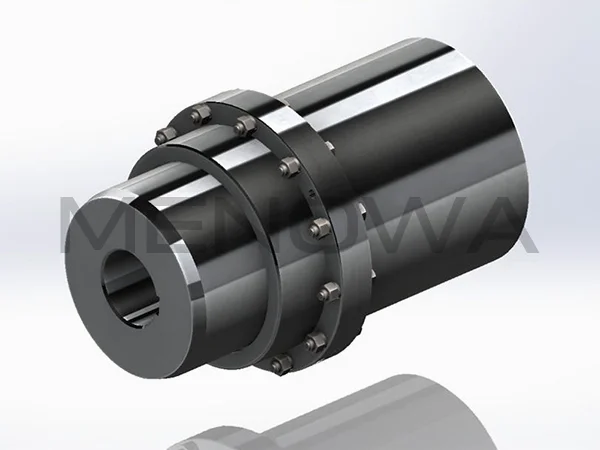
According to the assembly structure and shaft spacing adaptation characteristics, gear type couplings can be classified into common continuous sleeve gear couplings, spacer gear couplings, and floating shaft gear couplings. Continuous sleeve gear couplings are integrated sleeve structures with no additional intermediate parts, and the internal gear sleeve directly meshes with two external gear hubs. This integrated structure has high overall rigidity, good sealing performance, and simple assembly steps, which can effectively prevent external dust, impurities, and moisture from entering the meshing tooth surface, reducing gear wear and lubricating oil deterioration. It is suitable for short-distance shaft connection scenarios with fixed shaft spacing and compact installation space, and is widely used in integrated mechanical equipment with concentrated transmission structures.
Spacer gear couplings are improved based on continuous sleeve structures, with a detachable spacer component added between the two gear hubs. The existence of the spacer increases the axial distance between the two hubs, providing sufficient operating space for equipment installation, debugging, and later maintenance. When equipment needs daily maintenance, component replacement, or fault detection, the spacer can be disassembled directly without moving the connected equipment, which greatly improves maintenance efficiency and reduces equipment downtime. The length of the spacer can be customized according to the actual shaft spacing requirements, making this type of coupling highly flexible in installation adaptation. It is mostly used in mechanical systems such as pipeline pumps, industrial fans, and transmission devices with reserved maintenance space between shafts.
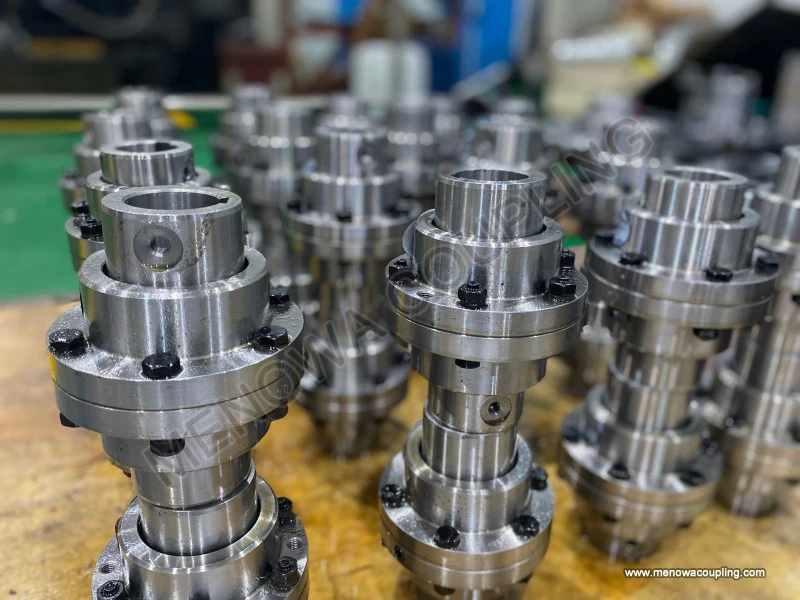
Floating shaft gear couplings are special structural gear couplings designed for long-distance shaft transmission, composed of two sets of gear coupling units and an intermediate floating connecting shaft. The two ends of the floating shaft are respectively connected with the gear hubs of the driving end and driven end equipment through flexible gear structures, realizing long-span torque transmission. The floating shaft structure can effectively compensate for large-range parallel offset and angular deviation caused by long-distance shaft installation errors and equipment operation deformation, and the flexible meshing at both ends buffers the vibration transmission between the two ends of the equipment, avoiding the resonance problem of long-distance transmission shafts. This type of coupling is mainly applied in large-scale mechanical equipment with long shaft spacing such as industrial assembly line transmission systems, large metallurgical transmission lines, and remote power transmission devices.
In addition to the above mainstream classification methods, gear type couplings can also be divided into sealed gear couplings and open gear couplings according to the sealing and protection structure. Open gear couplings have no special protective shell and sealing device, with exposed gear meshing parts, featuring simple structure, low processing and assembly costs, and convenient daily inspection of gear meshing status. However, due to the lack of sealing protection, external dust, metal debris, and humid gas are easy to adhere to the tooth surface, causing accelerated gear wear, lubricating oil failure, and even corrosion of gear teeth. Therefore, open gear couplings are only suitable for indoor, dry, dust-free, and low-load working environments with low operation continuity requirements.
Sealed gear couplings are equipped with integral protective shells and professional sealing components such as sealing rings and gaskets on the basis of basic gear transmission structures. The closed protective structure completely isolates the gear meshing area from the external working environment, effectively preventing the invasion of external pollutants and avoiding the leakage of internal lubricating grease. Good sealing performance ensures that the gear meshing surface is always in a clean and well-lubricated state, reducing friction and wear, improving transmission efficiency, and greatly enhancing the environmental adaptability of the coupling. Sealed gear couplings can work stably in harsh environments such as outdoor open air, dusty workshops, humid and corrosive working spaces, and are the mainstream type of gear couplings used in modern industrial production.
It is worth noting that different types of gear type couplings have obvious differentiated characteristics in load bearing capacity, misalignment compensation range, operation stability, and maintenance cost, and there is no universal optimal type applicable to all working conditions. In the actual equipment design and selection process, it is necessary to comprehensively consider key factors such as equipment operation load, rotation speed, shaft installation accuracy, working environment, and maintenance cycle. For heavy-load, high-speed, and harsh environment working conditions, sealed crowned tooth full gear couplings are usually selected to ensure transmission stability and service life; for medium and low-load, stable-operation conventional equipment, straight tooth half gear couplings can be used to control equipment cost on the premise of meeting transmission requirements; for long-distance shaft transmission and equipment with frequent maintenance needs, spacer or floating shaft gear couplings are more suitable.
With the continuous upgrading of industrial mechanical equipment towards high precision, high efficiency, and high stability, the structural design and classification system of gear type couplings are also constantly optimized and improved. On the basis of traditional classification types, new optimized structures such as vibration-damping gear couplings and high-precision micro-deviation gear couplings have gradually emerged, further enriching the product system of gear type couplings. A clear understanding of the classification characteristics and performance differences of various gear type couplings is the basis for realizing scientific model selection, efficient equipment operation, and refined maintenance. Reasonable selection of coupling types can not only ensure the efficient and stable operation of the mechanical transmission system, but also effectively reduce equipment failure rate, extend the service cycle of mechanical components, and create stable economic benefits for industrial production.
Post Date: May 25, 2026
https://www.menowacoupling.com/china-coupling/classification-of-gear-type-coupling.html
Products
Tags
Supply
Related Articles
Gear Type Coupling Production
Gear type couplings are essential mechanical components widely used in various industrial fields to connect two shafts and transmit torque while accommodating minor misalignments. The production of gear type couplings is a complex and precise process that requires strict control over every link, from material selection …Gap Chart of Curved Tooth Coupling
Global industrial transformation across manufacturing, energy exploitation, heavy engineering and marine equipment has steadily lifted market demand for curved tooth coupling in cross-continental industrial supply chains over recent years, with gap chart becoming an indispensable technical reference for product matching…Gear Type Coupling Price
Gear type couplings stand as one of the most versatile and widely adopted mechanical transmission components in modern industrial machinery, serving as a critical link between rotating shafts to ensure stable torque transfer while accommodating unavoidable shaft deviations during equipment operation. Unlike rigid coupli…Specification of Gear Type Coupling
Gear type coupling is a widely adopted rigid-flexible transmission component in mechanical power transmission systems, designed primarily to connect two rotating shafts for continuous torque transmission while absorbing and compensating for various shaft misalignments generated during equipment operation. Its core worki…Maintenance of Curved Tooth Coupling
Curved tooth coupling, also widely known as crowned gear coupling, remains one of the most widely adopted positive-locking flexible transmission components across global heavy-duty industrial markets, thanks to its outstanding torque capacity, multi-directional misalignment compensation and stable torsional rigidity und…Gear Type Coupling Supplier
xIn the complex and interconnected system of modern industrial transmission machinery, gear type couplings stand out as one of the most indispensable core components, undertaking the critical task of torque transmission, shaft misalignment compensation, and mechanical operation stabilization for various heavy-duty and h…
 WeChat
 WhatsApp