Coaxiality of Gear Type Coupling
Gear type couplings serve as fundamental mechanical transmission components widely applied in industrial power transmission systems, primarily responsible for connecting two rotating shafts to transmit torque, rotational speed, and mechanical power between driving and driven equipment. Coaxiality, as a core geometric and operational indicator of gear type couplings, refers to the degree of overlap between the central axes of the two coupled shafts during static installation and dynamic operation. It directly determines the meshing state of internal and external gear teeth, the uniformity of force distribution, and the overall operational stability of the transmission system. Even minor deviations in coaxiality can trigger a series of adverse mechanical effects during long-term high-speed and heavy-load operation, gradually reducing transmission efficiency, accelerating component wear, and inducing equipment vibration and noise, which may eventually lead to transmission failure and unplanned equipment downtime. Therefore, in the whole lifecycle of gear type couplings including design, installation, commissioning, operation, and maintenance, precise control of coaxiality is essential to ensure the reliability, durability, and economical operation of mechanical transmission systems.
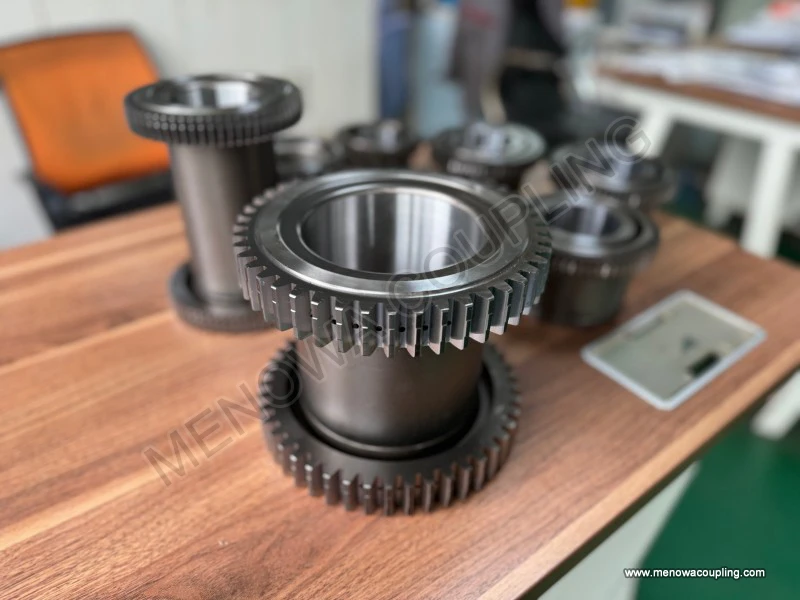
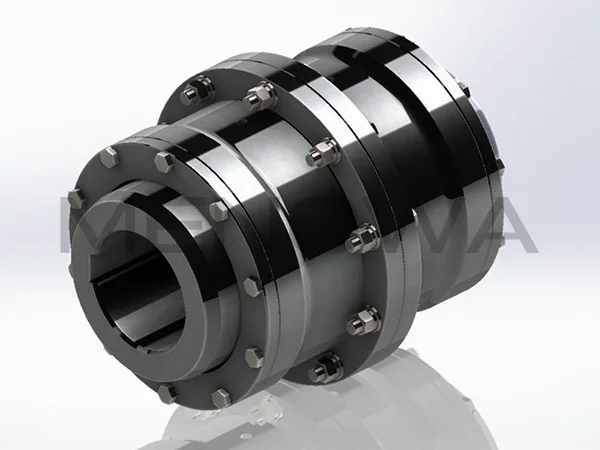
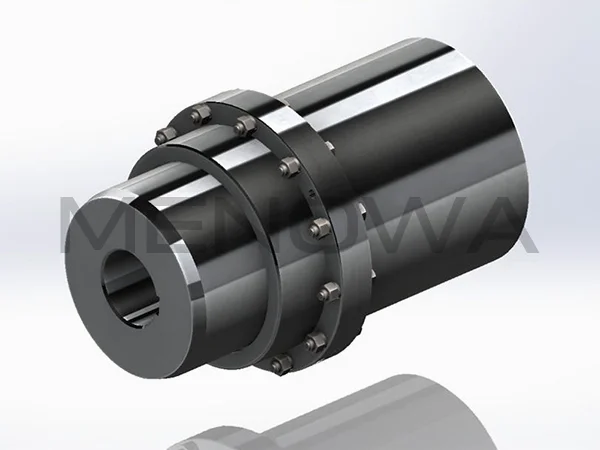
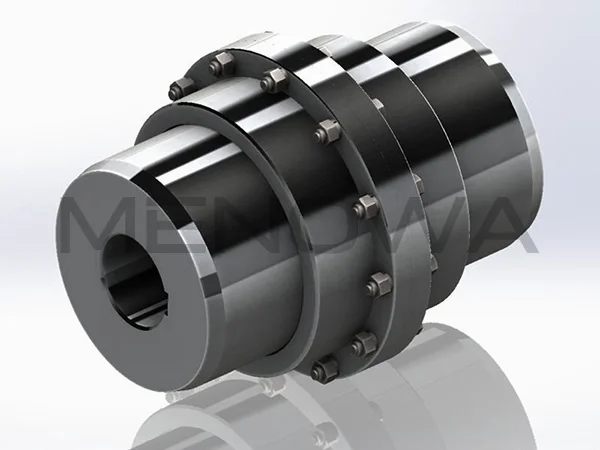
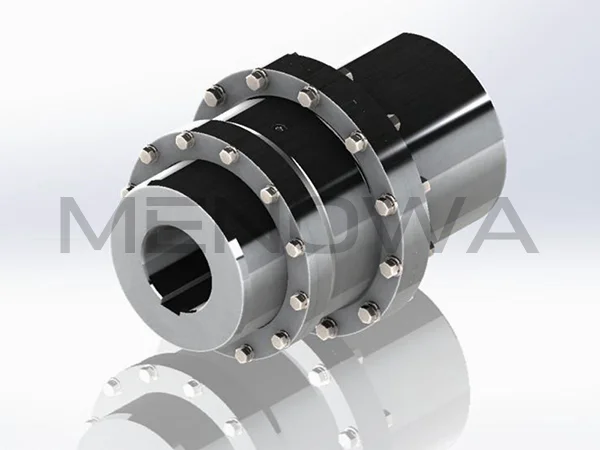
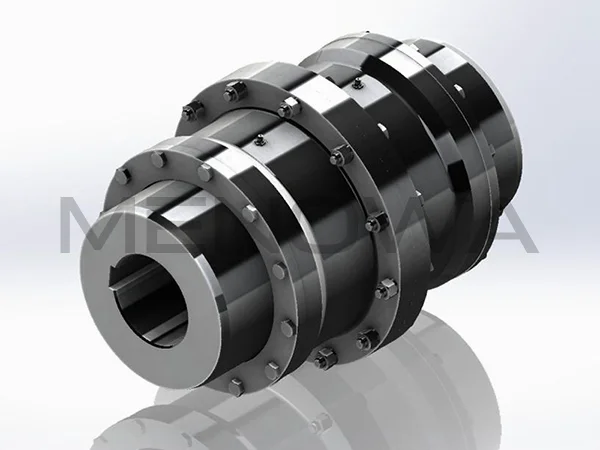
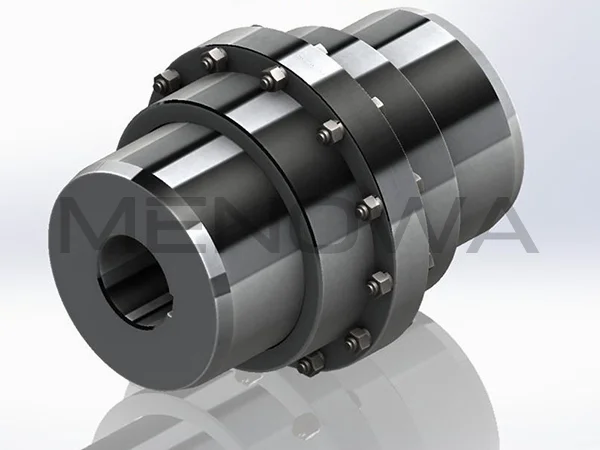
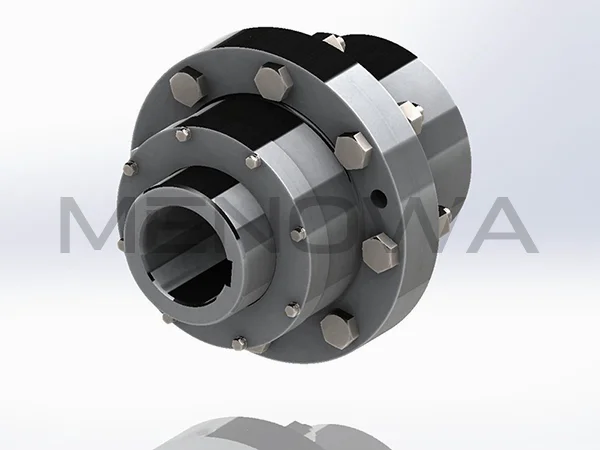
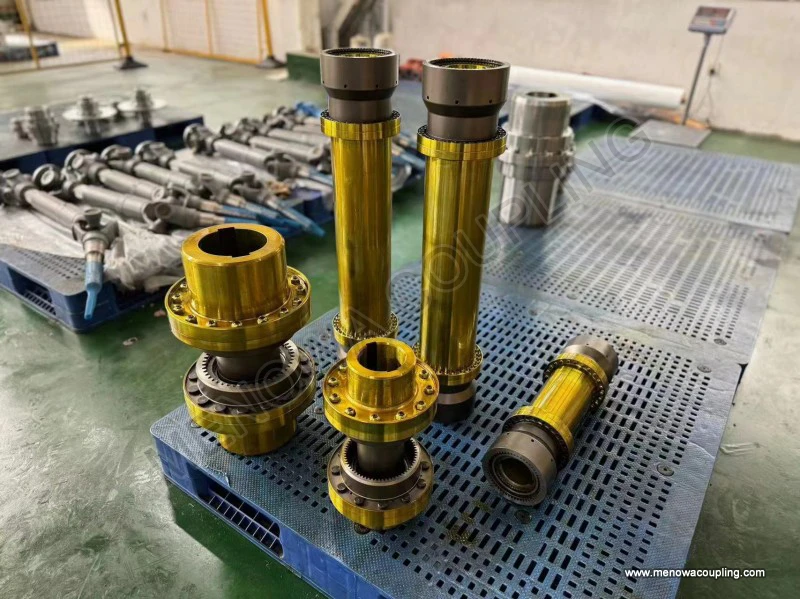
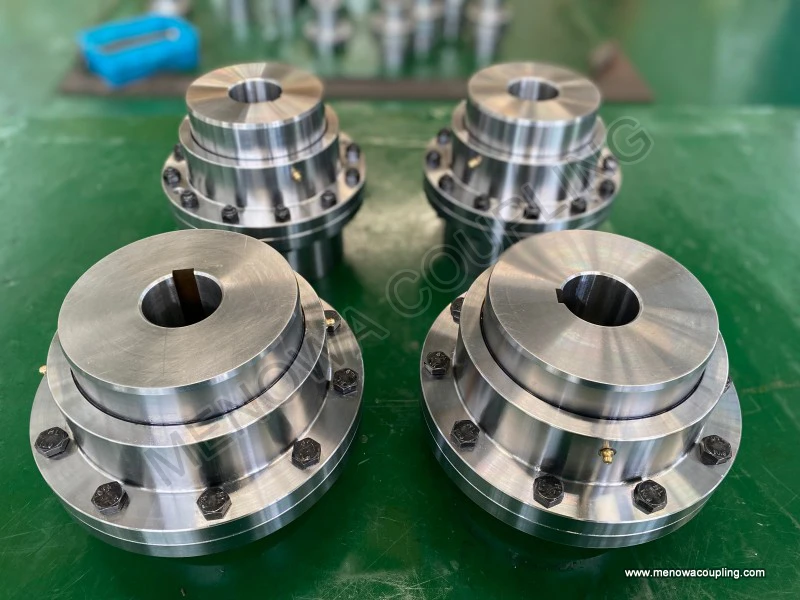
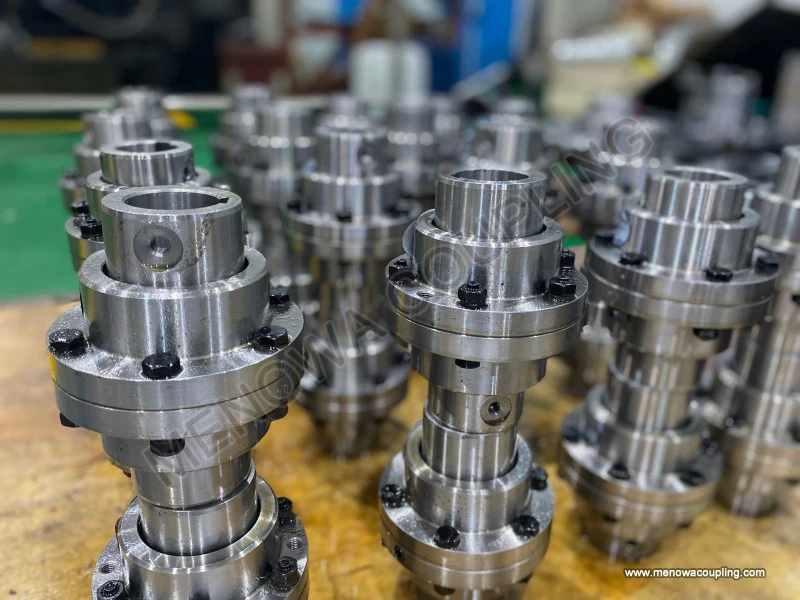
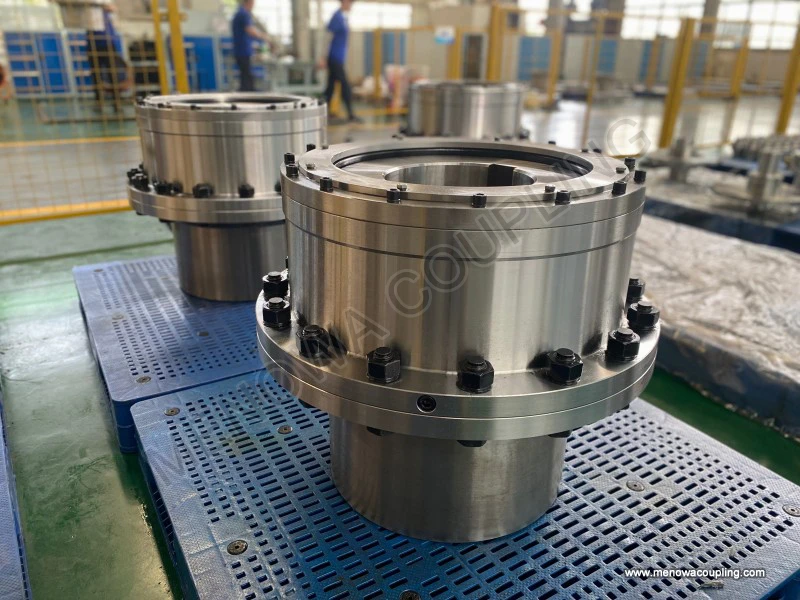
To fully understand the importance of coaxiality control for gear type couplings, it is necessary to start with their structural characteristics and working principles. A standard gear type coupling mainly consists of two toothed hubs fixed on the driving and driven shafts respectively and a middle sleeve with internal gear teeth. The external gear teeth on the hubs mesh with the internal gear teeth of the sleeve to realize power transmission. Different from rigid couplings that require absolute axis alignment, gear type couplings are designed with reasonable tooth backlash and tooth profile modification, enabling them to tolerate a certain range of shaft misalignment and axial displacement. This flexible compensation feature is the core advantage of gear type couplings distinguishing from rigid transmission structures. However, this compensation capability has strict quantitative limits. Once the coaxiality deviation exceeds the allowable design range, the flexible structure cannot offset the additional load caused by axis deflection, and the original uniform meshing state of gear teeth will be completely broken.
Coaxiality deviations of gear type couplings are mainly divided into three basic forms, which often exist simultaneously in actual industrial operation rather than occurring independently. The first is radial coaxiality deviation, also known as parallel misalignment, which means the two connected shaft axes remain parallel but produce a certain radial offset in the horizontal or vertical direction. This deviation usually arises from inconsistent installation elevation of equipment bases, base deformation after long-term load bearing, or offset errors generated during equipment assembly. When radial deviation occurs, the meshing gap of gear teeth presents an uneven distribution state in the circumferential direction. Partial gear teeth bear excessive contact pressure while others are in a semi-separated state, resulting in concentrated local stress on the tooth surface. The second form is angular coaxiality deviation, namely angular misalignment, where the two shaft axes intersect at a tiny angle instead of being parallel. This deviation is mostly caused by inclined installation of equipment, uneven settlement of the foundation, or thermal deformation of the frame during equipment operation. Angular deviation will cause periodic alternating stress on gear teeth during each rotation cycle of the coupling, making the tooth surface bear repeated impact loads and increasing the risk of fatigue wear and tooth surface peeling. The third form is axial coaxiality deviation, referring to the relative displacement of the two shafts along the axial direction. This deviation is mainly affected by thermal expansion and contraction of the shaft system during operation, installation gap reservation errors, and axial play of bearing components. Excessive axial deviation will change the effective meshing length of gear teeth, reduce the torque transmission area, and cause unstable power output.
The formation of coaxiality errors in gear type couplings stems from multiple links throughout equipment manufacturing and operation, covering static installation factors and dynamic operating factors. In the manufacturing stage, machining errors of coupling hubs, sleeves, and shaft parts are the initial source of coaxiality deviation. Tiny errors in the roundness of gear teeth, concentricity of shaft holes, and flatness of positioning end faces will accumulate after assembly, forming basic coaxiality deviations. In the installation and commissioning stage, manual alignment accuracy, flatness of equipment installation bases, and stability of fixing bolts all directly affect the final coaxiality level. Improper operation such as forced alignment and rigid fastening during assembly will artificially increase axis offset, laying hidden dangers for subsequent operation. In the dynamic operation process, the working environment and equipment operating state will further induce and amplify coaxiality errors. Long-term vibration impact of equipment will cause slight loosening of fixing parts and micro-displacement of the frame position. Continuous load operation will lead to elastic deformation of the shaft system and local plastic deformation of the base structure. In addition, temperature changes in the working environment will cause inconsistent thermal expansion coefficients of different metal components, resulting in real-time changes of shaft axis positions and dynamic coaxiality deviations that are difficult to eliminate through static calibration.
Uncontrolled coaxiality deviation will bring comprehensive and irreversible adverse effects on the performance and service life of gear type couplings and even the entire transmission system. The most direct impact is abnormal wear of gear teeth. Under standard coaxial conditions, the contact stress of each meshing tooth is uniformly distributed within the design range, and the tooth surface wear presents a uniform and slow state. When coaxiality is out of tolerance, the uneven meshing gap causes partial tooth surfaces to bear excessive instantaneous contact pressure, resulting in abrasive wear, adhesive wear, and even pitting corrosion on local tooth surfaces. With the extension of operation time, the wear gap continues to expand, further increasing coaxiality deviation and forming a vicious cycle of deviation and wear. Severe tooth surface wear will reduce the meshing precision of the coupling, lead to torque transmission loss, and reduce the overall transmission efficiency of the equipment.
Excessive coaxiality deviation will also induce severe mechanical vibration and noise in the transmission system. The uneven meshing state of gear teeth will produce periodic unbalanced excitation force during the rotation process. This excitation force acts on the shaft system, bearings, and equipment frame, causing high-frequency vibration of the entire transmission structure. Long-term abnormal vibration will not only generate harsh operating noise to affect the working environment but also cause fatigue damage to bearing components. Bearings will bear alternating radial and axial impact loads beyond the design range, accelerating wear of rolling elements and raceways, reducing bearing precision and service life, and even causing bearing jamming and shaft system locking in severe cases. At the same time, vibration will also loosen the connecting bolts and fixing parts of the coupling, further deteriorating the coaxial state and threatening the safe and stable operation of the entire equipment.
In addition to component wear and vibration noise, coaxiality deviation will also reduce the structural fatigue resistance of gear type couplings and shorten the service cycle of parts. The alternating stress generated by misalignment meshing acts on the tooth root and shaft shoulder parts for a long time, which are stress concentration areas originally. Long-term cumulative alternating load will easily initiate micro-cracks at the tooth root, and the cracks will gradually expand with the operation cycle, eventually leading to tooth root fracture and coupling failure. For high-speed and heavy-duty transmission equipment, the harm of coaxiality deviation is more prominent. High-speed rotation amplifies the unbalanced force caused by tiny axis offset, and heavy load increases the contact pressure of misaligned meshing teeth, making the coupling more prone to rapid wear and fatigue damage. In severe industrial scenarios, excessive coaxiality deviation may even cause shaft system bending, coupling fracture, and sudden equipment shutdown, bringing serious losses to continuous industrial production.
Effective control and correction of coaxiality are key measures to eliminate the above adverse effects and give full play to the performance advantages of gear type couplings. The coaxiality management of gear type couplings should adhere to the full-cycle control principle, covering pre-installation inspection, precise installation and alignment, regular operation detection, and dynamic correction and maintenance. Before installation, it is necessary to inspect the machining precision of coupling components, check for defects such as tooth surface deformation, shaft hole eccentricity, and end face warping, and eliminate initial coaxiality errors caused by unqualified parts. At the same time, the equipment installation base should be leveled to ensure the flatness and firmness of the installation foundation, avoid base settlement and deformation in subsequent operation, and lay a foundation for precise axis alignment.
Precision alignment in the installation stage is the core link of coaxiality control. Professional detection tools are required to measure and adjust the radial runout and end face runout of the two coupling hubs in multiple circumferential directions. By fine-tuning the position and elevation of the driving and driven equipment, the radial offset and angular deflection of the two shaft axes are controlled within the allowable design range. Different operating speed scenarios correspond to different coaxiality tolerance standards. For high-speed rotating equipment with a speed higher than 1500 revolutions per minute, the coaxiality deviation needs to be strictly controlled within a tiny range to avoid high-frequency vibration induced by micro-deviation; for low-speed heavy-duty equipment, the tolerance range can be appropriately relaxed according to the load characteristics, but it must not exceed the maximum misalignment compensation limit of the coupling structure. After alignment, the fixing bolts should be fastened symmetrically and evenly to avoid local stress concentration and axis offset caused by one-sided excessive fastening.
Regular detection and dynamic calibration in the operation process are important guarantees to maintain long-term coaxiality stability. Affected by thermal deformation, vibration impact, and foundation aging, the coaxial state of the coupling will gradually change with operation time. Therefore, periodic shutdown detection and alignment correction are required in daily equipment maintenance. For equipment operating in high-temperature, high-humidity, and heavy-dust harsh environments, the detection cycle should be appropriately shortened because the harsh working environment accelerates component deformation and part loosening. In the detection process, the deviation data of radial and angular coaxiality should be recorded in detail, and the deviation change trend should be analyzed to predict potential equipment faults in advance. For small coaxiality deviations within the tolerance range, real-time dynamic compensation can be realized through the reserved tooth backlash of the coupling; for deviations exceeding the standard, timely shutdown adjustment is required to avoid long-term operation with faults.
Reasonable lubrication management also plays an auxiliary role in maintaining coaxiality stability and reducing deviation hazards. Good lubricating oil film can buffer the contact impact of gear teeth under slight misalignment conditions, reduce friction and wear of tooth surfaces, and avoid tooth gap enlargement caused by excessive wear which further deteriorates coaxiality. Insufficient lubrication or deterioration of lubricating grease will lead to dry friction of gear teeth, causing rapid wear of tooth surfaces, increased meshing gaps, and aggravated coaxiality deviation. Therefore, it is necessary to select suitable lubricating media according to the operating conditions of the coupling, regularly replace lubricating oil, and check the sealing performance of the coupling to prevent dust, impurities, and moisture from entering the meshing area and affecting the meshing precision and coaxial stability.
In industrial practical applications, the coaxiality control of gear type couplings should also be combined with equipment operating characteristics and working conditions to form a targeted management system. For frequent start-stop and variable-load equipment, the instantaneous impact load during start and stop will easily cause micro-displacement of the shaft system, so it is necessary to strengthen coaxiality detection after frequent load changes. For long-term continuous operating equipment, the thermal deformation of the shaft system is obvious, so thermal alignment should be carried out after the equipment reaches the stable operating temperature to eliminate dynamic coaxiality errors caused by temperature difference. Through standardized installation, scientific detection, and refined maintenance, the coaxiality of gear type couplings can be stably controlled within the optimal range, ensuring uniform meshing of gear teeth, stable torque transmission, and minimizing vibration, wear, and fault risks of the transmission system.
In conclusion, coaxiality is a key technical indicator that restricts the operating performance, service life, and operational stability of gear type couplings. It is not only a static geometric parameter in the installation stage but also a dynamic operating parameter that changes with equipment operation and environmental conditions. All links from component manufacturing, equipment installation, daily operation to maintenance and repair are closely related to coaxiality control. Standardizing coaxiality management can effectively avoid a variety of mechanical faults caused by misalignment, improve the transmission efficiency and operational reliability of mechanical equipment, reduce maintenance costs and equipment downtime losses, and provide a solid guarantee for the stable and efficient operation of industrial transmission systems. With the continuous improvement of industrial mechanical transmission precision requirements, the precise control and dynamic monitoring of gear type coupling coaxiality will become more important in modern industrial equipment management, and it is an essential part of realizing refined and intelligent equipment operation and maintenance.
Post Date: May 25, 2026
https://www.menowacoupling.com/china-coupling/coaxiality-of-gear-type-coupling.html
Products
Tags
Supply
Related Articles
Maintenance of Curved Tooth Coupling
Curved tooth coupling, also widely known as crowned gear coupling, remains one of the most widely adopted positive-locking flexible transmission components across global heavy-duty industrial markets, thanks to its outstanding torque capacity, multi-directional misalignment compensation and stable torsional rigidity und…Gear Type Coupling Supplier
xIn the complex and interconnected system of modern industrial transmission machinery, gear type couplings stand out as one of the most indispensable core components, undertaking the critical task of torque transmission, shaft misalignment compensation, and mechanical operation stabilization for various heavy-duty and h…Structure of Gear Type Coupling
Gear type coupling is a widely used flexible mechanical transmission component designed to connect two rotating shafts in mechanical systems, realizing stable torque and rotational motion transmission while compensating for various shaft misalignments generated during equipment operation and installation. Its structural…Material of Curved Tooth Coupling
Curved tooth couplings have emerged as one of the most reliable and versatile mechanical transmission components in the global industrial machinery sector, serving as a core connecting unit for shaft torque transmission in heavy-duty, high-speed, and misalignment-tolerant operating environments. The unique curved tooth …Characteristics of Curved Tooth Coupling
In the global industrial transmission equipment market, curved tooth couplings have emerged as a core universal transmission component, widely adopted in heavy-duty machinery, energy equipment, marine engineering, and mining industries across all regional markets. Differing from traditional straight tooth gear couplings…Gear Type Coupling Supply
Gear type couplings stand as one of the most reliable and high-performance mechanical components designed for torque transmission and shaft connection across diverse industrial mechanical systems. As a core component in power transmission machinery, these specialized couplings are engineered to connect two rotating shaf…
 WeChat
 WhatsApp