Coaxiality of Curved Tooth Coupling
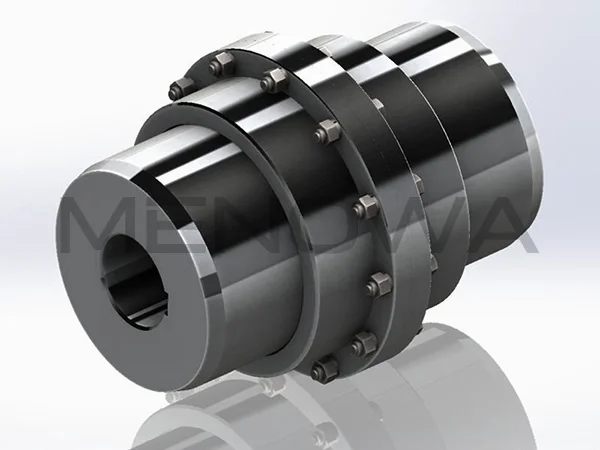
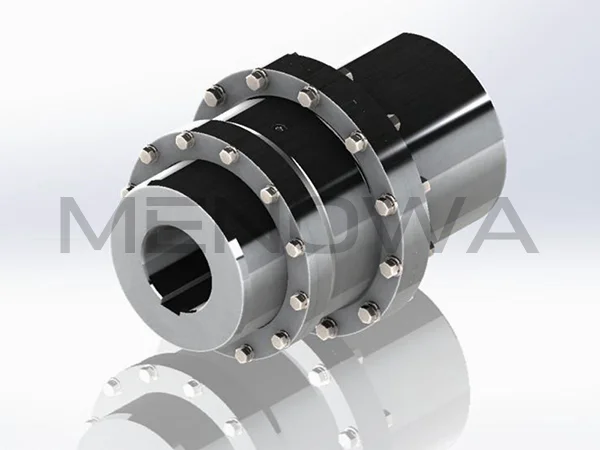
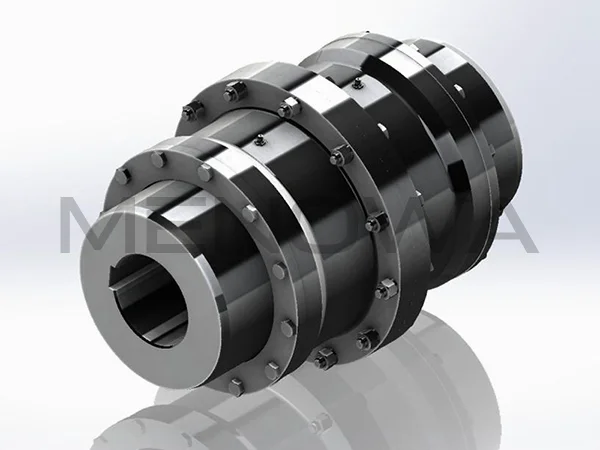
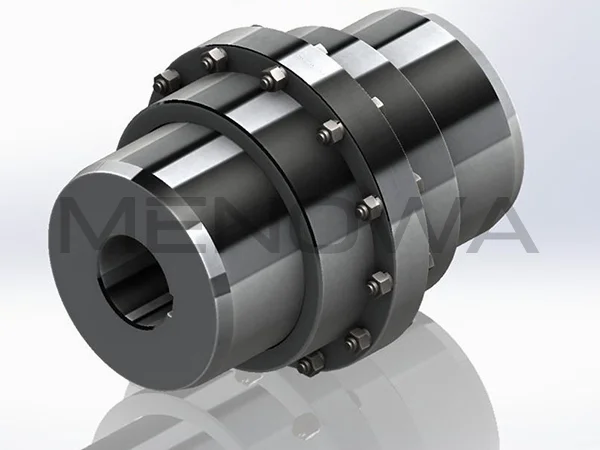
In the global industrial transmission industry, curved tooth couplings have emerged as a core component of high-precision and high-torque shaft connection systems, widely adopted in heavy machinery, automated production lines, energy transmission equipment and cross-border industrial supporting fields. Coaxiality, as the most critical performance indicator of curved tooth couplings, directly determines the stability of power transmission, the service life of mechanical equipment, and the comprehensive operational efficiency of industrial systems. Against the backdrop of the global manufacturing upgrade trend, where high-precision processing, low failure rate operation and long-cycle stable production have become universal demands of international markets, the control and optimal matching of curved tooth coupling coaxiality have gradually become a key research and application focus in industrial transmission design, equipment maintenance and model selection engineering worldwide. Different from traditional straight-tooth couplings and ordinary flexible couplings, the special curved tooth profile structure of curved tooth couplings endows them with unique coaxial self-correction capabilities, which can effectively adapt to minor shaft misalignment generated by equipment operation, assembly errors and mechanical vibration, making them irreplaceable in medium and heavy-duty transmission scenarios in the international industrial field.
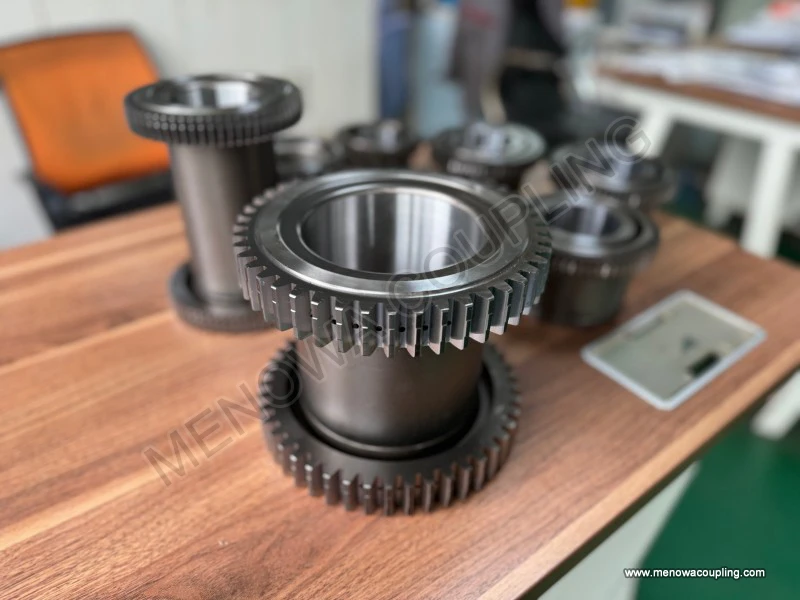
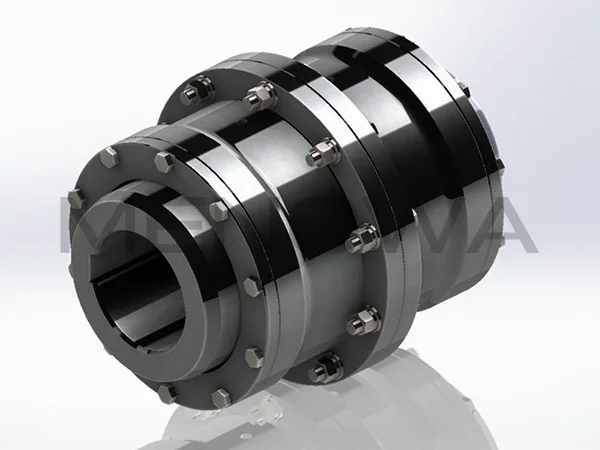
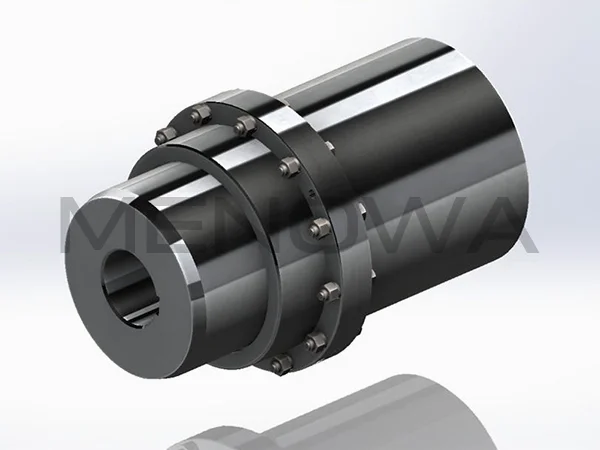
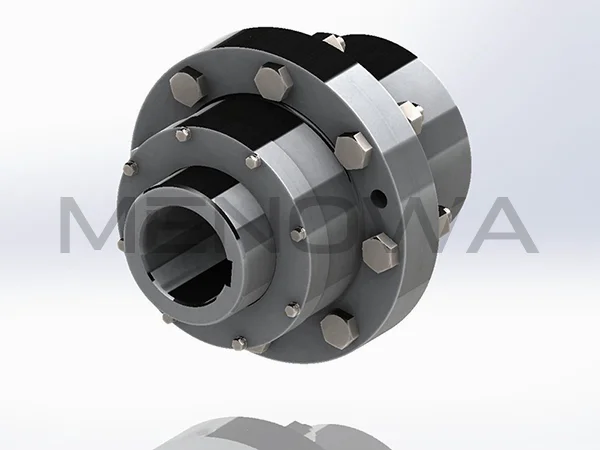
The essence of curved tooth coupling coaxiality lies in the precise alignment state of the driving shaft and driven shaft connected by the coupling during static assembly and dynamic operation, including radial coaxiality, angular coaxiality and axial position consistency. The unique spherical curved tooth design of the coupling takes the central axis of the gear as the spherical center, and the curved contour of the external teeth can fit closely with the internal tooth sleeve during meshing. This structural feature enables the coupling to achieve active centering under axial clamping force, evenly distributing the load on all meshing teeth and avoiding local stress concentration caused by shaft deviation. In the global industrial application scenario, the coaxiality error of curved tooth couplings is an inevitable physical state. Assembly tolerances, thermal deformation during equipment operation, mechanical wear of rotating parts and foundation settlement will all lead to slight deviations in shaft alignment. Excessive coaxiality deviation will cause abnormal tooth surface friction, increased transmission vibration, accelerated wear of gear teeth and bearings, and even cause shaft system torsion and equipment shutdown failure in severe cases. Therefore, accurate control of coaxiality and scientific selection of couplings matching the coaxiality tolerance of equipment working conditions are crucial to adapting to the rigorous operation standards of international industrial equipment.
To ensure the scientificity and rationality of curved tooth coupling selection in global industrial projects, professional torque calculation and coaxiality matching formulas have been universally applied in international mechanical design specifications. The core calculation formula for coupling selection is the calculated torque formula, which is the primary basis for judging whether the coupling can adapt to the coaxiality deviation and load operation of the equipment. The core formula is Tc = K × T, where Tc represents the calculated torque required for equipment operation, K represents the working condition coefficient, and T represents the theoretical torque generated by the equipment power output. The theoretical torque T can be further derived from the power formula T = 9550P/n, where P is the equipment rated power and n is the equipment rated speed. In this formula, the working condition coefficient K is closely related to coaxiality adaptation. For stable operation equipment with extremely low coaxiality deviation, the K value is usually controlled between 1.0 and 1.5; for frequently started, impacted or slightly misaligned shaft systems with regular coaxiality deviation, the K value needs to be adjusted to 1.5 to 2.5; for heavy-load, high-vibration industrial equipment with long-term coaxiality offset, the K value should be set above 2.5 to ensure that the coupling has sufficient load margin to compensate for performance loss caused by coaxiality errors.
In terms of coaxiality matching calculation, the international general evaluation standard takes the maximum allowable misalignment of curved tooth couplings as the core index. The curved tooth structure can effectively compensate for angular misalignment of up to 1.5 degrees, which is 50% higher than that of traditional straight-tooth couplings, and can adapt to radial coaxiality deviation within 0.1mm to 0.5mm and axial displacement within a reasonable range. In the selection process, it is necessary to compare the actual coaxiality error of the equipment shaft system with the allowable deviation range of the coupling. When the actual measured coaxiality deviation is close to the upper limit of the coupling’s allowable value, the model should be upgraded appropriately to avoid long-term overload operation of the coupling’s tooth surface, which will accelerate the attenuation of coaxiality compensation performance. At the same time, the transmission efficiency of curved tooth couplings can reach 99.7% under standard coaxiality conditions. With the increase of coaxiality deviation, the transmission efficiency will decrease linearly, and the energy consumption of equipment operation will increase accordingly. This performance change rule is an important reference for energy-saving optimization design of mechanical transmission systems in international green manufacturing markets.
In the global market application layout, curved tooth couplings with excellent coaxiality performance cover a full range of medium and heavy industrial scenarios, showing strong environmental adaptability and working condition compatibility. In the field of heavy engineering machinery such as port cranes, mining hoists and metallurgical rolling equipment, the frequent start-stop, impact load and long-term high-load operation will cause minor coaxiality deviation of the shaft system. The curved tooth coupling can rely on its flexible meshing and self-centering performance to stabilize the shaft alignment state, reduce vibration and noise during equipment operation, and extend the service life of transmission components. In the energy industry, wind power generation equipment, hydraulic transmission systems and large pump sets have high requirements for transmission stability. The high-precision coaxiality retention capability of curved tooth couplings can avoid power loss caused by shaft deviation and ensure the continuous and stable operation of energy transmission equipment.
In the field of automated industrial production, precision processing equipment and intelligent assembly lines put forward higher requirements for coaxiality control of couplings. Slight coaxiality errors will affect the processing accuracy of products and the synchronization of automated operations. The uniform tooth load distribution characteristic of curved tooth couplings can maintain stable coaxiality accuracy under high-speed operation, ensure the synchronization of driving and driven shafts, and meet the high-precision transmission needs of intelligent manufacturing equipment. In addition, in marine engineering equipment, chemical industrial transmission systems and high-temperature and high-humidity industrial environments, curved tooth couplings can resist coaxiality deviation changes caused by environmental deformation and mechanical fatigue, and maintain long-term stable transmission performance, which is why they are widely recognized in global harsh working condition markets.
In international engineering selection practice, besides formula calculation and scenario matching, there are multiple key coaxiality-related selection precautions that need to be standardized and implemented. First of all, it is necessary to measure the actual coaxiality error of the equipment shaft system before selection, including radial runout, angular deflection and axial gap, and avoid blind selection only based on power and speed parameters. Many international engineering failure cases show that most coupling damage and equipment vibration problems are caused by mismatched coaxiality tolerance rather than overload torque. Secondly, the operating speed of the equipment should be matched with the coaxiality performance of the coupling. Under ultra-high-speed operating conditions, small coaxiality deviations will be amplified by centrifugal force, leading to severe tooth surface wear and shaft system jitter. Therefore, high-speed equipment needs to select curved tooth couplings with higher coaxiality precision and lower moment of inertia to reduce dynamic load fluctuation.
Thirdly, environmental factors in international application scenarios must be fully considered. In high-temperature, low-temperature, dusty and corrosive working environments, the thermal expansion and contraction of coupling materials and surface corrosion will change the original coaxiality accuracy. It is necessary to select couplings with structural designs that are more adaptable to environmental deformation and reserve a certain coaxiality tolerance margin during selection. Fourthly, the assembly process will directly affect the initial coaxiality of the coupling. Even if the model selection is accurate, unreasonable assembly will lead to excessive initial coaxiality deviation, making the coupling unable to exert its self-compensation performance. International universal assembly standards emphasize precise positioning and uniform clamping force to ensure that the coupling achieves the best centering state after installation, laying a foundation for long-term stable operation.
Fifthly, in the selection of supporting equipment, the matching between shaft diameter tolerance and coupling aperture accuracy should be focused on. Excessive matching gap will cause radial displacement of the shaft during operation, induce continuous coaxiality deviation, and accelerate the fatigue damage of the curved tooth surface. For high-precision transmission systems, interference fit or precision transition fit is required to ensure the stability of shaft-coupling matching and maintain lasting coaxiality accuracy. In addition, for equipment with frequent load changes and alternating working conditions, the coaxiality compensation performance of the coupling will be continuously consumed in the long term. It is necessary to properly improve the coaxiality tolerance level of the selected model and enhance the dynamic adaptive capacity of the shaft system.
From the perspective of global industrial market development trends, with the continuous advancement of high-precision manufacturing and intelligent operation technology, the market demand for curved tooth couplings is gradually shifting from simple torque transmission to high coaxiality stability, low wear loss and long-life cycle operation. In the international market competition, products with excellent coaxiality control performance can better adapt to the diversified and rigorous working condition requirements of various regional industries, covering heavy industry in Europe and America, precision manufacturing in East Asia, and resource development equipment in emerging markets. The unique structural advantages of curved tooth couplings make them superior to other types of flexible couplings in coaxiality self-correction, load uniformity and misalignment compensation, and their application scope is still expanding in the global industrial field.
In practical international engineering applications, the scientific control of coaxiality runs through the whole process of coupling selection, installation, operation and maintenance. Reasonable model selection based on working condition parameters and calculation formulas can fundamentally avoid coaxiality mismatch risks; standardized installation and commissioning can maximize the coupling’s self-centering performance; regular detection of shaft system coaxiality deviation and timely maintenance and adjustment can effectively delay the performance attenuation of the coupling. For global industrial enterprises, attaching importance to the coaxiality performance of curved tooth couplings is not only a key measure to improve equipment operation stability and reduce failure maintenance costs, but also an important part of optimizing industrial transmission system efficiency and adapting to the high-standard development trend of global manufacturing. In the future, with the continuous optimization of curved tooth profile design and precision processing technology, the coaxiality control accuracy and dynamic compensation performance of curved tooth couplings will be further improved, providing more reliable technical support for high-efficiency and stable operation of global industrial transmission systems.
Post Date: Jun 3, 2026
https://www.menowacoupling.com/china-coupling/coaxiality-of-curved-tooth-coupling.html
Products
Tags
Supply
Related Articles
Parts of Curved Tooth Coupling
Curved tooth couplings stand as one of the most reliable and widely adopted mechanical transmission components in the global industrial machinery sector, renowned for their superior torque transmission capacity, flexible misalignment compensation, and durable structural performance. As global industrialization continues…Classification of Curved Tooth Coupling
Classification and Application Analysis of Curved Tooth Coupling in Global Industrial MarketsIn the global industrial transmission system, curved tooth couplings have emerged as one of the most critical flexible transmission components, widely adopted in heavy-duty machinery, precision industrial equipment, and large-sc…Gear Type Coupling Wholesale
Gear type couplings stand as one of the most reliable and versatile mechanical transmission components in modern industrial machinery, serving a core role in connecting rotating shafts and transmitting torque across diverse heavy-duty and high-precision operating scenarios. As industrial manufacturing continues to scale…Uses of Gear Type Coupling
Gear type couplings stand as one of the most robust and versatile mechanical transmission components in modern industrial machinery, serving as a critical connecting element between rotating shafts in countless mechanical systems. Engineered with a unique structure of meshing internal and external gear pairs, these coup…Dimensions of Gear Type Coupling
Gear type couplings stand as fundamental flexible transmission components widely applied in industrial mechanical systems, primarily tasked with transmitting rotational torque between adjacent drive and driven shafts while accommodating minor shaft misalignments generated by mechanical operation, assembly errors, and st…Size Chart of Curved Tooth Coupling
The global industrial transmission component market has maintained steady expansion alongside the continuous upgrading of industrial manufacturing, intelligent equipment iteration, and the vigorous development of heavy industry sectors worldwide. As a core high-efficiency power transmission component, curved tooth coupl…
 WeChat
 WhatsApp