Fork Coupling
Mechanical power transmission forms the fundamental backbone of all industrial and mechanical operational systems, serving as the critical bridge that connects rotating components, transfers rotational torque and kinetic energy, and maintains the coordinated movement of interconnected mechanical parts across diverse operational environments and working conditions. Within the extensive array of mechanical connection components developed to fulfill this core transmission function, fork coupling stands out as a structurally pragmatic and functionally reliable connecting component, tailored to address the basic and complex demands of shaft connection, rotational motion transfer, and operational stability maintenance across ordinary and harsh mechanical working scenarios. Unlike many specialized connecting parts designed for narrow and single application scenarios, fork coupling integrates simple mechanical geometry with reasonable force transmission logic, balancing structural simplicity, installation convenience, displacement compensation capacity, and operational durability to adapt to a wide spectrum of mechanical transmission systems ranging from conventional low-speed operation to medium-load continuous cyclic work. The core value of fork coupling in modern mechanical operation lies not in complex structural transformation or intricate auxiliary configuration, but in its inherent ability to stabilize power transmission between two rotating shafts, absorb subtle and medium-level operational vibrations, offset inevitable installation and operation-derived shaft misalignment, and maintain consistent transmission efficiency throughout long-term cyclic service cycles, making it an indispensable basic component in general machinery manufacturing, industrial production equipment, and various mechanical transmission supporting systems.
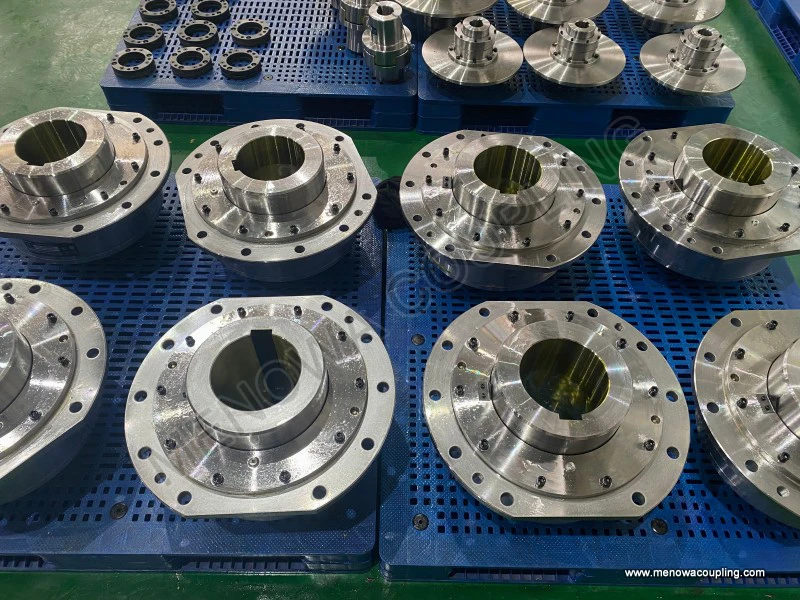
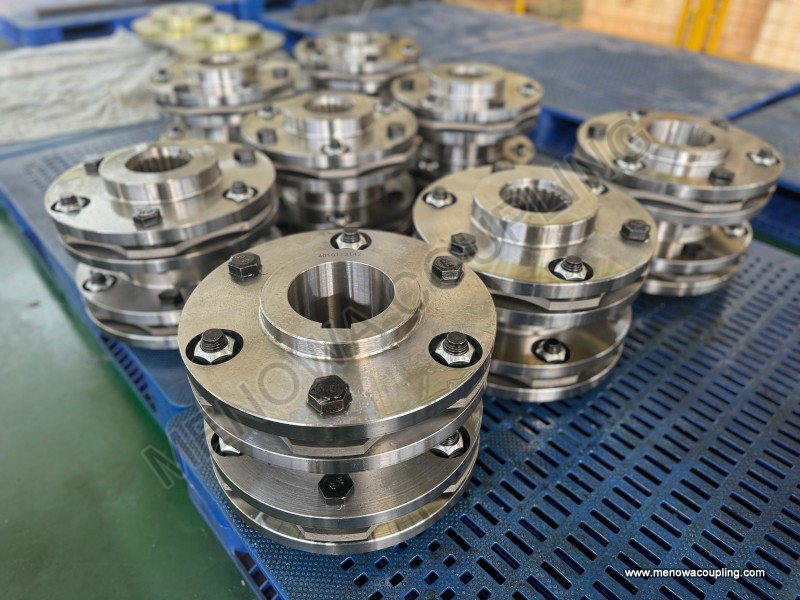
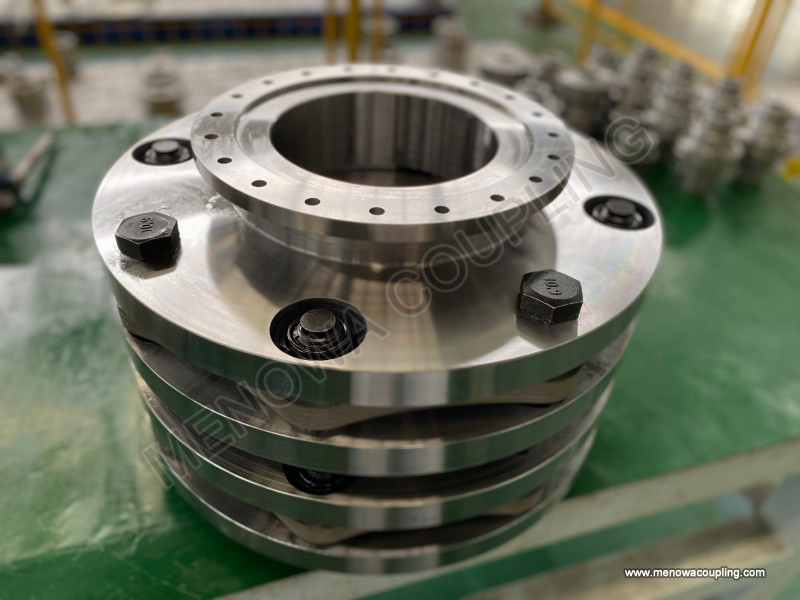
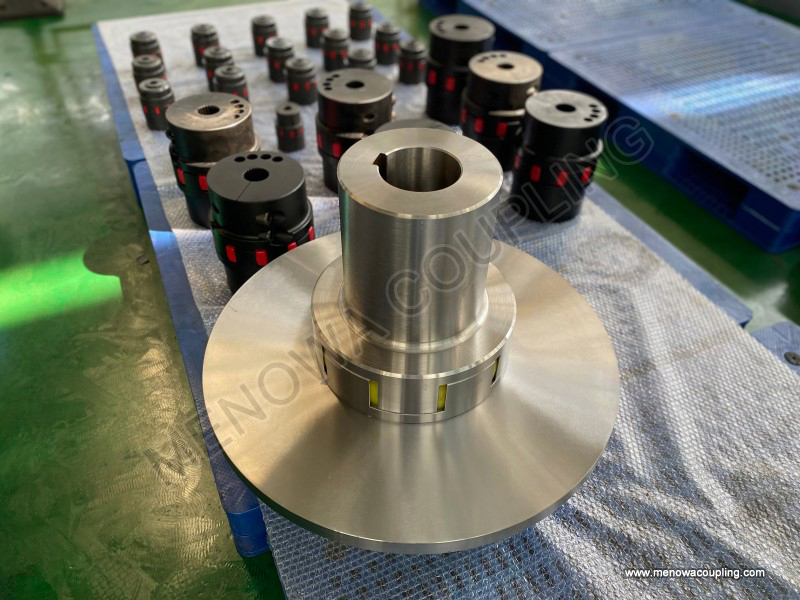
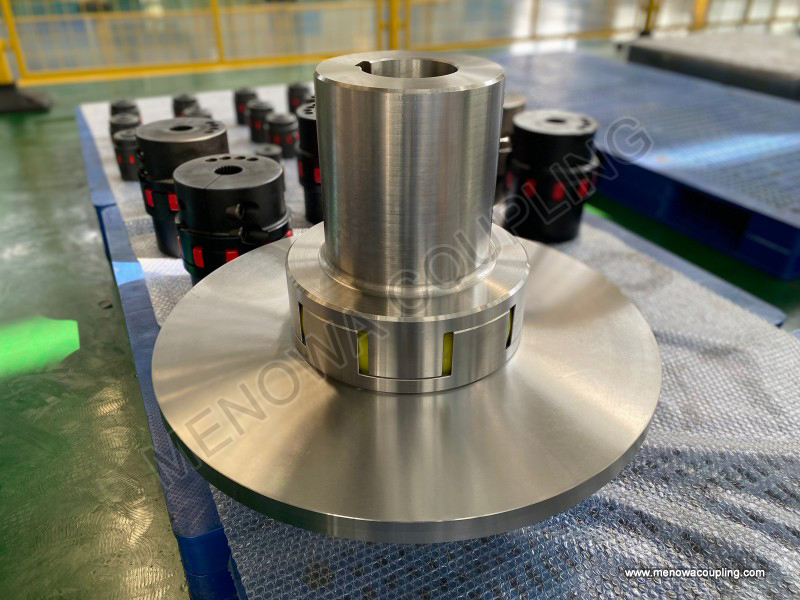
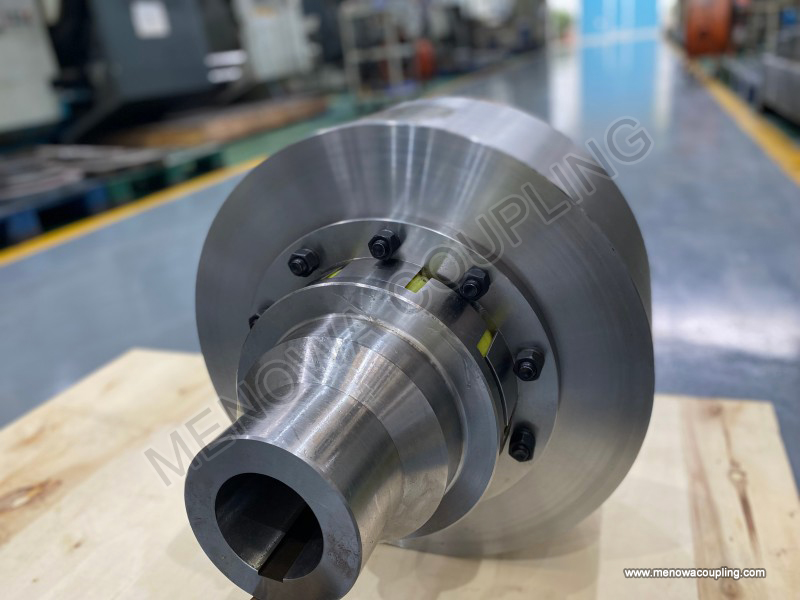
To fully understand the practical value and operational essence of fork coupling, it is essential to start with its basic structural composition and the inherent mechanical logic that underpins its power transmission process, as every structural design detail of this coupling is carefully arranged to adapt to the physical laws of torque transfer, mechanical stress distribution, and relative displacement coordination between connected shafts. The overall structure of fork coupling follows a symmetrical and coordinated mechanical layout, mainly composed of two independent fork-shaped connecting bodies, a central force transmission core component, and auxiliary matching connecting and buffering parts that work in tandem to complete the entire power transmission cycle between the driving shaft and the driven shaft. The two fork-shaped connecting bodies are the primary mounting and force-bearing parts of the entire coupling structure, each fixedly assembled on the end section of the driving shaft and the driven shaft respectively through conventional mechanical fastening methods, ensuring synchronous rotational movement between the shafts and the fork bodies during equipment operation. The fork-shaped design of these two main connecting parts is not a random structural choice but a mechanical optimization based on force transmission uniformity and stress dispersion; the fork arms extend outward in a regular geometric distribution, forming stable connecting and meshing positions for the central force transmission component, and enabling uniform dispersion of rotational torque acting on the contact surfaces during rotation, avoiding local stress concentration that often leads to structural deformation or partial wear in poorly designed connecting components. The central force transmission core, serving as the intermediate connection medium between the two fork-shaped bodies, undertakes the dual core tasks of transferring rotational torque from the driving side fork body to the driven side fork body and coordinating relative adaptive displacement between the two shafts during equipment operation. This central component is precisely matched with the contact and meshing parts of the fork arms, with its structural size and contact surface area designed according to conventional mechanical stress calculation standards, ensuring stable force transmission without excessive friction or mechanical jamming during high-frequency cyclic rotation.
Auxiliary supporting parts of fork coupling include basic fastening accessories and optional elastic buffering matching components, which play a vital role in optimizing the overall operational performance and extending the service cycle of the coupling beyond the basic power transmission function. Fastening accessories are used to lock the assembly position between the fork bodies and the connected shafts, preventing relative rotational sliding or axial displacement between the coupling and the shafts during long-term torque transmission, which would otherwise cause transmission deviation and accelerated component wear. Elastic buffering components, arranged at the contact and meshing gaps between the fork bodies and the central force transmission core, are designed to absorb instantaneous impact loads generated during equipment start-up, shutdown, sudden load fluctuation, and cyclic operation. In the actual operation of mechanical equipment, instantaneous impact force is an unavoidable external load factor; frequent impact will cause rigid collision between metal connecting parts, leading to surface wear, structural fatigue, and even subtle deformation of key components over time. The elastic buffering parts of fork coupling can effectively weaken and dissipate such instantaneous impact energy, convert rigid contact collision into flexible buffered contact, protect the main structural parts of the coupling and the connected shaft components from impact damage, and maintain the smooth progress of power transmission. All structural parts of fork coupling adopt standardized mechanical processing dimensions and conventional material processing technology, which not only reduces the processing difficulty and subsequent assembly complexity of the coupling itself, but also facilitates daily inspection, maintenance, and partial replacement of components in later mechanical operation management, bringing obvious convenience to the overall equipment operation and maintenance work of industrial production and mechanical application enterprises.
The working operational mechanics of fork coupling follow the most basic principles of mechanical torque transmission and relative motion coordination, and the entire power transmission and displacement compensation process presents strong stability and controllability in actual mechanical operation. When the mechanical equipment starts to run, the power source drives the driving shaft to produce rotational motion and rotational torque, and the driving shaft drives the fixedly connected driving side fork body to perform synchronous rotational movement. As the driving side fork body rotates, its fork arms apply uniform rotational acting force on the central force transmission core component through contact and meshing action, driving the central core component to rotate synchronously with the fork body. Subsequently, the rotating central force transmission core transmits the received rotational torque and kinetic energy to the driven side fork body through the reverse contact and meshing action, and the driven side fork body drives the fixedly connected driven shaft to perform synchronous rotational operation, thus completing the whole process of power and motion transmission from the driving end to the driven end. In this continuous cyclic transmission process, all force-bearing and contact parts of the fork coupling maintain continuous and stable contact fit, the torque transmission path is clear and direct, and the mechanical energy loss generated in the transmission link remains at a low and stable level, ensuring that the rotational power output by the power source can be efficiently transmitted to the driven mechanical components to meet the normal operational power demand of the equipment.
Beyond the basic power transmission function, the more core practical advantage of fork coupling in actual mechanical application lies in its reliable multi-directional displacement compensation capacity, which solves the common operational problems caused by shaft misalignment in mechanical shaft connection systems. In the actual assembly and long-term operation of mechanical equipment, it is almost impossible to achieve absolute perfect coaxial alignment between the driving shaft and the driven shaft due to various objective factors. Initial installation errors during equipment assembly will cause subtle axial, radial, and angular relative displacement between the two connected shafts; long-term continuous operation of the equipment will lead to slight foundation settlement of the mechanical unit, structural thermal expansion and contraction caused by operational temperature changes, and minor mechanical wear of supporting bearing parts, all of which will further expand the relative misalignment and displacement between the two shafts. If the connecting component between the two shafts lacks effective displacement compensation ability, the relative displacement and misalignment will generate additional mechanical stress on the shafts and the connecting parts, leading to increased operational friction, accelerated component wear, unstable power transmission, and even abnormal vibration and noise of the equipment in severe cases, affecting the normal operational efficiency and service life of the entire mechanical system. The special fork-shaped matching structure and flexible contact fit design of fork coupling can well adapt to these objective relative displacements generated during equipment operation. The matching gap between the fork arms and the central force transmission core allows subtle adaptive positional changes in the axial, radial, and angular directions during rotation, automatically offsetting and compensating for various relative misalignments between the two shafts, avoiding the generation of additional additional stress, ensuring that the power transmission process is not affected by shaft displacement, and maintaining the long-term stable and reliable operation of the mechanical transmission system.
The material selection of fork coupling directly determines its mechanical load-bearing performance, wear resistance, temperature adaptability, and long-term fatigue resistance in different working environments, and the material configuration of each structural part is formulated according to the different force-bearing characteristics and operational requirements of different components. The two main fork-shaped connecting bodies, as the main force-bearing and rotating parts of the coupling, need to have good structural rigidity, tensile strength, and anti-deformation ability to withstand long-term cyclic torque action and occasional impact loads without permanent structural deformation. Conventional high-quality carbon structural alloy materials are mostly used for processing these parts; such materials have balanced mechanical properties, with moderate hardness and toughness, not only meeting the basic load-bearing and anti-deformation requirements of long-term operation, but also having good processing performance and low-temperature and normal-temperature operational stability, suitable for most conventional indoor and outdoor industrial working environments. For fork couplings applied in special working scenarios with high load intensity, frequent cyclic impact, or long-term continuous high-intensity operation, optimized alloy materials with trace alloy elements added can be selected appropriately to enhance the overall fatigue resistance and structural stability of the fork bodies, ensuring that the components do not experience fatigue failure or surface cracking after long-term cyclic work.
The central force transmission core component, as the key intermediate force-bearing and contact part, needs excellent surface wear resistance and contact fatigue resistance, because this component is in frequent friction and contact extrusion with the fork arms during each rotation cycle, and surface wear is the main form of performance attenuation in long-term service. On the basis of ensuring basic structural rigidity, the surface of the central force transmission core is usually treated with conventional mechanical surface strengthening processes to improve surface hardness and wear resistance, reduce the wear rate in long-term friction contact, and extend the service replacement cycle of the core component. The elastic buffering auxiliary parts are made of high-elasticity and aging-resistant flexible polymer materials, which can maintain stable elastic buffering performance under long-term cyclic compression and deformation, will not easily aging, hardening or losing elasticity due to operational temperature changes and long-term use, and can continuously play a role in absorbing impact and weakening vibration in the entire service cycle of the coupling. All materials selected for fork coupling comply with conventional mechanical industry processing and application standards, without relying on special processing techniques or rare raw materials, which ensures the stable supply of raw materials for production and processing, and also facilitates the subsequent replacement and maintenance of components in mechanical equipment operation.
In terms of operational vibration damping and impact buffering performance, fork coupling shows obvious practical advantages compared with some traditional rigid connecting couplings, which is particularly prominent in mechanical equipment with frequent start-stop operation and unstable load changes. Rigid couplings rely on completely rigid metal contact for power transmission, with no buffering and vibration damping space in the structural fit; when the equipment starts, stops or the load fluctuates suddenly, the instantaneous impact force generated will be directly transmitted to all connected mechanical parts without any attenuation, resulting in strong equipment vibration, obvious operational noise, and easy damage to shaft parts and bearings. Fork coupling, equipped with elastic buffering components and adaptive structural matching gaps, can effectively absorb and dissipate impact vibration energy generated in various unstable operational stages. During equipment start-up, the elastic parts slowly buffer the instantaneous torque surge, avoiding rigid impact between the fork bodies and the central core; during equipment shutdown, the elastic structure slowly releases residual rotational kinetic energy, preventing sudden rigid braking impact between components; during normal operation with fluctuating loads, the elastic buffering structure weakens periodic vibration generated by load changes, reducing the overall vibration amplitude of the equipment and lowering operational noise. This good vibration damping and buffering effect not only optimizes the operational comfort and stability of mechanical equipment, but also effectively protects other precision matching parts in the transmission system, reducing the wear and failure probability of bearings, shafts, and related auxiliary components, and indirectly reducing the daily maintenance workload and operational loss of mechanical equipment.
The installation and assembly process of fork coupling is simple and standardized, with low operational requirements for construction and maintenance personnel, which is one of the important reasons why it is widely used in various mechanical transmission scenarios. The entire installation and assembly work follows a clear and orderly mechanical assembly process, without complex positioning calibration steps or special professional assembly tools. Before installation, it is only necessary to check the processing dimensional accuracy and surface integrity of each structural part of the coupling to ensure no obvious deformation, wear or structural damage of the parts, and clean the assembly contact surfaces of the coupling and the connected shafts to remove impurities such as dust, iron filings and oil stains that affect the assembly accuracy and fastening effect. During formal installation, the two fork-shaped connecting bodies are respectively sleeved on the end positions of the driving shaft and the driven shaft, and the initial assembly positions are adjusted to ensure that the two fork bodies are in relatively parallel and symmetrical positions, laying a foundation for the subsequent assembly of the central force transmission core and elastic buffering parts. After adjusting the positions, the fastening accessories are used to preliminarily lock the relative positions of the fork bodies and the shafts, then the central force transmission core and elastic buffering components are installed in the matching gap between the two fork bodies, and the assembly tightness is adjusted according to the conventional mechanical assembly standards to ensure stable contact fit between all parts, neither too loose to cause rotational sliding nor too tight to cause excessive friction and inflexible rotation.
After the basic assembly is completed, simple manual rotation inspection and no-load trial operation can be carried out to check whether the coupling rotates smoothly, whether there is abnormal jamming, vibration or noise during rotation, and fine-tune the assembly position and fastening tightness according to the trial operation effect until the entire coupling operates smoothly and stably. The whole installation process does not require high-precision professional testing equipment or complex assembly technology, and general mechanical operation and maintenance personnel can complete the entire assembly and installation work proficiently after simple standardized operation training. In addition, the disassembly work of fork coupling is equally convenient; when daily inspection and maintenance or later component replacement is needed, the fastening accessories can be loosened in sequence, and the parts can be disassembled step by step for inspection, maintenance or replacement, without disassembling a large number of adjacent mechanical components, reducing the time cost and labor cost of equipment maintenance, and improving the overall operational efficiency of mechanical equipment.
Fork coupling has extremely wide application adaptability, covering general machinery manufacturing, industrial production and processing, auxiliary mechanical supporting equipment, light industrial production machinery, agricultural mechanical equipment and many other fields, and can meet the power transmission needs of different working intensities and operational environments. In general industrial production workshops, various conventional production and processing machinery needs stable and reliable shaft connection components to maintain continuous cyclic operation; fork coupling is used in these equipment to undertake basic power transmission tasks, adapt to the installation errors and operational slight displacement of workshop equipment, ensure the continuous and stable operation of production machinery, and meet the daily production and processing work needs. In mechanical equipment with frequent start-stop and intermittent operation, the vibration damping and impact buffering performance of fork coupling can effectively cope with the impact load generated by frequent start-stop, protect the equipment transmission system, and extend the overall service life of the equipment. In outdoor working environments with changing temperatures and slightly harsh working conditions, the good temperature adaptability and structural stability of fork coupling materials enable it to maintain stable working performance in different temperature environments, not affected by seasonal temperature changes and outdoor environmental factors, and maintain reliable power transmission effect for a long time.
In medium-load mechanical transmission systems that do not require ultra-high speed and ultra-precision transmission, the comprehensive performance advantages of fork coupling are fully reflected. It neither requires complex maintenance work like some precision specialized couplings nor has the defect of poor displacement compensation capacity of rigid couplings, achieving a balanced match between performance, cost and maintenance. For some mechanical transmission equipment with limited installation space, the compact structural layout of fork coupling does not occupy excessive axial and radial installation space, can adapt to narrow installation space constraints, and complete efficient shaft connection and power transmission work. Whether it is continuous long-term uninterrupted operation or intermittent cyclic operation, whether it is indoor stable working environment or outdoor variable working conditions, fork coupling can adjust its working state adaptively according to actual operational needs, maintain stable transmission efficiency and operational reliability, and provide solid basic guarantee for the normal operation of various mechanical equipment.
Daily maintenance and routine inspection management are crucial to maintaining the long-term service performance and extending the service life of fork coupling, and scientific and standardized maintenance measures can effectively avoid premature wear and failure of the coupling and ensure the long-term stable operation of the mechanical transmission system. The daily inspection work of fork coupling is simple and intuitive, mainly focusing on checking the fastening state of fastening accessories, the surface wear degree of contact parts, the working state of elastic buffering components, and whether there is abnormal vibration and noise during operation. In the daily equipment inspection process, operators only need to regularly check whether the fastening parts of the coupling are loose; slight loosening of fastening accessories is a common phenomenon after long-term operation, and timely locking and fastening can prevent relative sliding and displacement between components, avoiding accelerated wear caused by loose assembly. Regular observation of the surface wear of the fork body contact parts and the central force transmission core is also essential; when uniform slight wear appears on the contact surface, routine maintenance can be continued, and when excessive wear or local groove wear that affects the fit effect occurs, timely replacement of the corresponding parts is needed to ensure the fit accuracy and force transmission stability of the coupling.
The inspection of elastic buffering components should focus on checking whether there is aging, hardening, deformation or cracking; elastic parts will gradually age after long-term use, and once the buffering performance decreases, the vibration damping and impact resistance effect of the coupling will be weakened, so aging and invalid elastic parts need to be replaced in a timely manner to restore the buffering performance of the coupling. In addition, during the daily operation of the equipment, attention should be paid to whether the coupling has abnormal vibration and abnormal noise; once abnormal operation conditions are found, the equipment should be stopped in time for inspection and troubleshooting to avoid small wear problems evolving into large structural failures, affecting the normal operation of the entire mechanical equipment. The daily maintenance work of fork coupling does not require complex maintenance procedures and professional maintenance equipment, only regular simple inspection and timely replacement of worn and aging parts, with low maintenance difficulty and low maintenance cost, which is very suitable for long-term popularization and application in various mechanical operation scenarios.
In the long-term service cycle, the performance attenuation law of fork coupling presents a slow and stable trend, and reasonable use and maintenance can ensure that the coupling maintains good working performance for a long time. The main form of performance attenuation of fork coupling is gradual surface wear of contact force-bearing parts and slow aging of elastic buffering parts, without sudden structural failure or sudden performance decline under normal working conditions. With the increase of service time, the friction contact surface between the fork body and the central force transmission core will produce uniform slight wear, the fit gap will increase slightly, and the transmission efficiency will fluctuate within a small stable range, which will not affect the normal use of the mechanical equipment. The elastic buffering parts will slowly age with the passage of time and the number of cyclic deformation, and the buffering and vibration damping effect will decrease slightly, but the basic power transmission function of the coupling will not be affected in a short time. Only after long-term use to a certain cycle number, the wear and aging degree will gradually increase, and the corresponding parts need to be replaced to restore the overall performance of the coupling.
Compared with other types of couplings with similar power transmission functions, fork coupling shows obvious comprehensive balance advantages in structural complexity, installation difficulty, displacement compensation ability, vibration damping effect, maintenance cost and application scope. Some precision elastic couplings have good vibration damping and compensation performance, but their structural design is complex, processing and installation accuracy requirements are high, subsequent maintenance is difficult, and the application scope is limited to high-precision and high-speed professional transmission scenarios, not suitable for conventional general mechanical working conditions. Some rigid simple couplings have simple structure and low cost, but they have no displacement compensation and vibration damping ability at all, and are only suitable for ideal working conditions with perfect shaft coaxiality and stable load, with poor adaptability to complex actual working environments. Fork coupling just makes up for the shortcomings of the above two types of couplings, with simple and reliable structure, low installation and maintenance difficulty, good displacement compensation and vibration damping buffering performance, wide application adaptability, and can meet the power transmission needs of most general mechanical working scenarios, achieving an optimal balance between structural performance and practical application value.
With the continuous development and upgrading of modern mechanical manufacturing industry and the continuous expansion of industrial mechanical application scenarios, the market demand for basic mechanical connecting components such as fork coupling is also constantly developing and changing, and the structural optimization and performance upgrading of fork coupling are also advancing with the times. On the basis retaining the original simple and reliable basic structural characteristics and core working principles, the optimized design of fork coupling is mainly reflected in material performance improvement, structural fit precision optimization, and adaptive adjustment of buffering performance. New optimized alloy materials are applied to the processing of fork coupling main parts to further improve the structural fatigue resistance and wear resistance of the coupling, adapt to higher load working conditions and longer service cycle requirements. The structural fit precision between the fork body and the central force transmission core is further optimized through precise mechanical processing technology, making the power transmission more stable, the displacement compensation more accurate, and the mechanical energy loss in the transmission process lower. The formula of elastic buffering materials is continuously optimized to improve the aging resistance and temperature adaptability of buffering parts, so that the coupling can maintain stable buffering performance in more harsh high-temperature and low-temperature working environments.
At the same time, according to the differentiated needs of different mechanical application scenarios, fork coupling has derived multiple optimized structural forms adapted to different working intensities, including enhanced load-bearing type suitable for medium and heavy load operation, compact small-size type suitable for limited installation space, and high-temperature resistant type suitable for special temperature working environments. These derived optimized fork couplings continue to retain the core advantages of simple structure, convenient installation and maintenance, and reliable operation, and on this basis, targeted performance optimization is carried out for specific working conditions, further expanding the application scope and practical value of fork coupling in modern mechanical transmission systems. As a basic and essential mechanical connecting component, fork coupling will always rely on its pragmatic design concept and balanced comprehensive performance to play an important basic role in the operation and development of various mechanical transmission fields.
In conclusion, fork coupling, with its unique fork-shaped structural design, scientific internal force transmission mechanics, reliable multi-directional displacement compensation capacity, good vibration damping and impact buffering performance, simple installation and maintenance process, and wide application scenario adaptability, has become a core basic component that cannot be replaced in general mechanical power transmission work. From structural composition and working principle to material selection and operational performance, from installation and assembly to daily maintenance and long-term service, every link of fork coupling reflects the practical mechanical design concept of combining simplicity and reliability, balancing performance and cost, and adapting to diverse working conditions. In all mechanical equipment that needs stable shaft connection and power transmission, fork coupling can provide stable and efficient transmission guarantee, effectively cope with various objective adverse factors such as installation errors, operational displacement, load fluctuation and temperature changes, maintain the long-term stable and reliable operation of mechanical transmission systems, and create favorable basic conditions for the efficient operation and long-term stable development of various industrial production and mechanical application work. With the continuous progress of mechanical processing technology and the continuous upgrading of mechanical application needs, fork coupling will also continue to carry out targeted optimization and innovation on the basis of maintaining core advantages, continuously adapt to the changing mechanical working environment and operational requirements, and always maintain its important practical position in the field of mechanical power transmission basic components.
Post Date: Apr 25, 2026
https://www.menowacoupling.com/coupling-supplier/fork-coupling.html
Tags
Related Articles
Advantages Of Flexible Coupling
In the complex and interconnected world of mechanical power transmission, the seamless transfer of torque and rotational motion between rotating shafts stands as a foundational requirement for the steady operation of all types of industrial and commercial machinery. Every mechanical system that relies on motors, engines…
 WeChat
 WhatsApp