Expansion Sleeve Coupling
In the entire field of mechanical power transmission, the connection and coordination between rotating shafts directly determine the stable operation state, service life and comprehensive operating efficiency of all kinds of mechanical equipment. Every mechanical system that relies on rotational power output and transmission needs reliable connecting components to connect driving shafts and driven shafts, realize the continuous transmission of torque, rotational speed and axial force, and cope with various complex operating conditions generated during equipment operation. Among numerous shaft connection and transmission components, expansion sleeve coupling has gradually become a key connecting part widely used in medium and heavy-duty mechanical transmission scenarios and precision mechanical operation systems by virtue of its unique friction clamping transmission mode, reasonable structural design and excellent comprehensive adaptability. Different from traditional key connection couplings, rigid sleeve couplings and ordinary elastic couplings that rely on mechanical meshing or simple structural extrusion to transmit power, expansion sleeve coupling abandons the traditional transmission mode that easily causes structural wear, connection looseness and transmission deviation, and adopts the uniform radial expansion and friction clamping principle between precision machined contact surfaces to realize integrated and stable connection between shafts and transmission parts. This innovative structural and transmission design not only optimizes the torque transmission effect of the coupling itself, but also effectively solves many common pain points in the long-term operation of traditional shaft connection structures, such as connection gap increase after long-term use, obvious wear of key parts, difficult alignment correction of shaft bodies, inconvenient disassembly and replacement, and poor adaptability to alternating load and vibration working conditions. With the continuous upgrading of mechanical manufacturing technology and the gradual improvement of industrial production requirements for equipment operation stability and transmission accuracy, expansion sleeve coupling has been continuously optimized in structural design, material selection and processing technology, and has been widely promoted and applied in many industrial fields such as mechanical processing equipment, material conveying systems, mining machinery, metallurgical equipment, new energy power generation auxiliary facilities and automated production lines, becoming an indispensable basic component in modern mechanical transmission engineering.
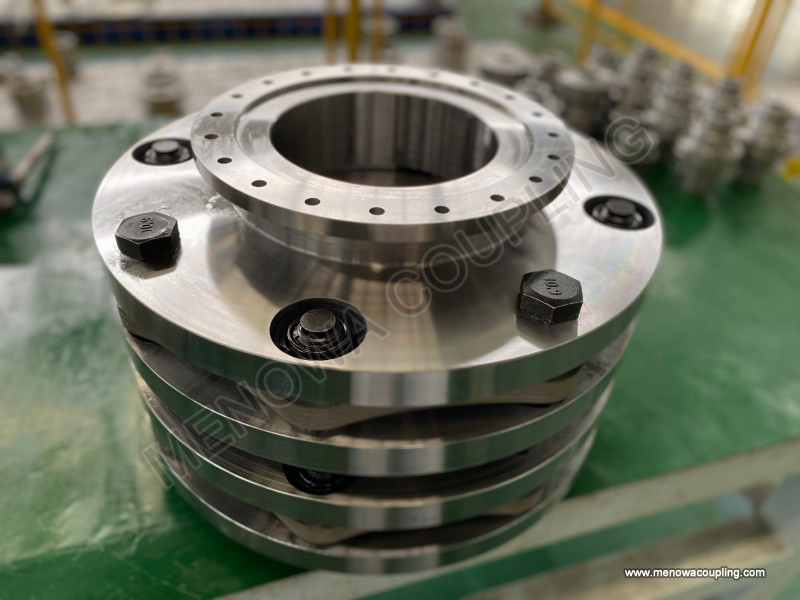
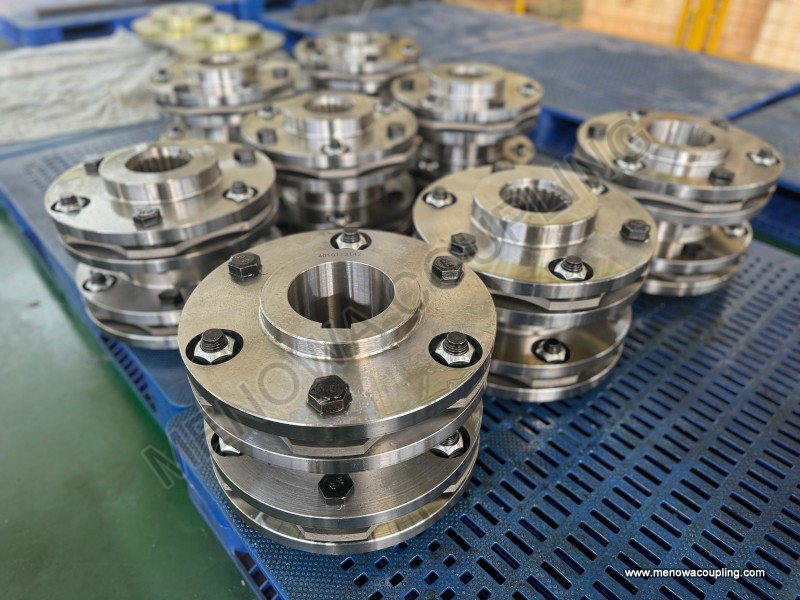
To fully understand the application value and working advantages of expansion sleeve coupling in mechanical transmission systems, it is first necessary to clarify its basic definition and core positioning in mechanical connection structures, and distinguish it from other types of couplings and ordinary expansion sleeve accessories used in single fixing scenarios. An expansion sleeve coupling is a composite transmission connecting component integrating expansion sleeve clamping structure and coupling transmission function, which takes the expansion sleeve locking assembly as the core clamping and connecting carrier, and cooperates with the coupling main body structure to realize the fixed connection between two rotating shafts and the stable transmission of rotational power. It is different from a single expansion sleeve that only plays the role of fixed positioning between shafts and parts, and also different from a traditional coupling that only realizes power transmission through pre-set structural connection methods. The expansion sleeve coupling perfectly combines the dual functions of reliable clamping and precise transmission, realizing the organic unity of shaft fixing positioning and torque synchronous transmission. In practical mechanical matching, this kind of coupling is mainly used for the connection between driving power components such as motors, reducers and hydraulic motors and driven working components such as conveyor rollers, processing equipment spindles and mechanical transmission gears. It can not only bear conventional constant torque transmission requirements, but also adapt to complex working conditions such as alternating torque, frequent start-stop operation and slight shaft position deviation, ensuring that the power output of the power source can be accurately and stably transmitted to the working execution end without power loss and transmission lag. The core design concept of expansion sleeve coupling is to use mechanical extrusion to generate uniform radial pressure between the inner and outer contact surfaces of the expansion sleeve, form stable friction binding force through close contact between metal surfaces, and rely on friction force rather than mechanical key meshing to complete all power transmission work. This fundamental change in transmission principle makes the coupling get rid of the structural defects caused by keyway opening and key part meshing in traditional connection modes, and lays a solid foundation for its long-term stable operation and low maintenance cost in complex industrial environments.
The internal working mechanism of expansion sleeve coupling is based on the basic principles of mechanical tribology and elastic deformation of metal materials, and the whole torque transmission process is stable and efficient without relative sliding and mechanical impact during operation. The core power transmission process starts from the tightening action of the fastening parts matched with the expansion sleeve structure. When the assembly work of the expansion sleeve coupling is completed, the staff will tighten the auxiliary fastening bolts or fastening rings configured on the coupling according to the standard assembly process. The tightening operation will generate continuous and uniform axial extrusion force, which acts on the wedge-shaped matching structure inside the expansion sleeve assembly. Under the action of axial extrusion force, the inner and outer sleeve bodies of the expansion sleeve will produce micro elastic deformation, the inner sleeve body will shrink inward to closely fit the outer surface of the connected shaft body, and the outer sleeve body will expand outward to closely fit the inner hole wall of the coupling main body. After the deformation is stabilized, all contact surfaces between the expansion sleeve and the shaft body, and between the expansion sleeve and the coupling main body will form a fully fitted tight contact state, and uniform and stable contact pressure will be distributed on all contact areas. According to the basic law of tribology, the friction force generated between two contact metal surfaces is directly affected by contact pressure, friction coefficient and effective contact area. The contact surfaces of expansion sleeve coupling are all processed by precision machining technology, with smooth surface finish and stable and uniform friction coefficient, which can form lasting and reliable friction binding force after clamping and fixing. When the driving shaft starts to rotate and output torque, the rotational power will not rely on any protruding structural parts for meshing transmission, but will be synchronously transmitted to the coupling main body through the friction force between the shaft body and the expansion sleeve, and then transmitted to the driven shaft connected with the other end of the coupling through the overall rigid connection of the coupling main body. In the whole transmission process, there is no relative sliding displacement between all connecting contact surfaces, no mechanical collision and meshing wear, and the torque transmission is completed in a pure friction clamping state. Even in the working state of instantaneous torque change and frequent load fluctuation, the uniform contact pressure and stable friction force can always maintain the synchronous rotation state of the driving shaft and the driven shaft, avoid transmission dislocation and power loss, and ensure the consistency of rotational speed and torque at both ends of the coupling. This working mechanism also enables the expansion sleeve coupling to have good self-centering performance in the assembly and working process. The uniform radial expansion and contraction deformation of the expansion sleeve can automatically compensate for tiny alignment deviations between the two connected shafts, ensure high concentricity of the shaft connection, reduce the additional mechanical vibration and shaft body abrasion caused by shaft misalignment, and further optimize the overall operating state of the mechanical transmission system.
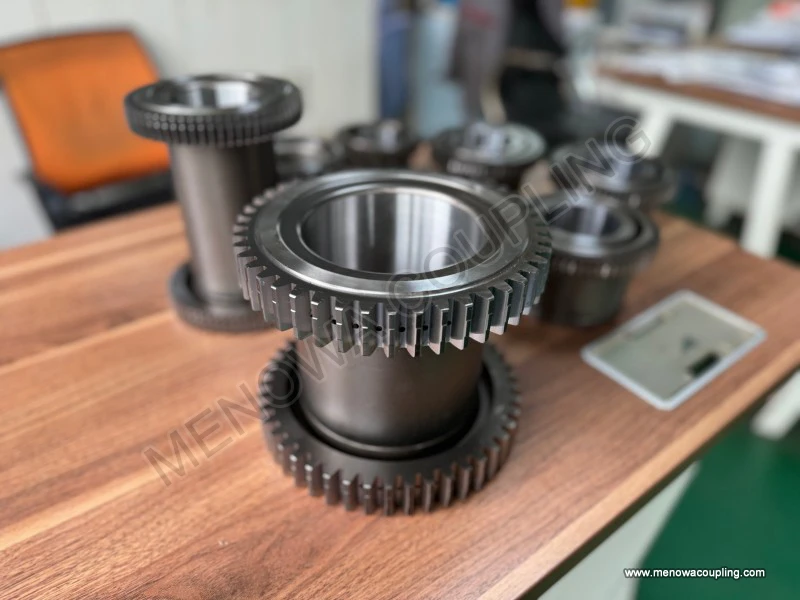
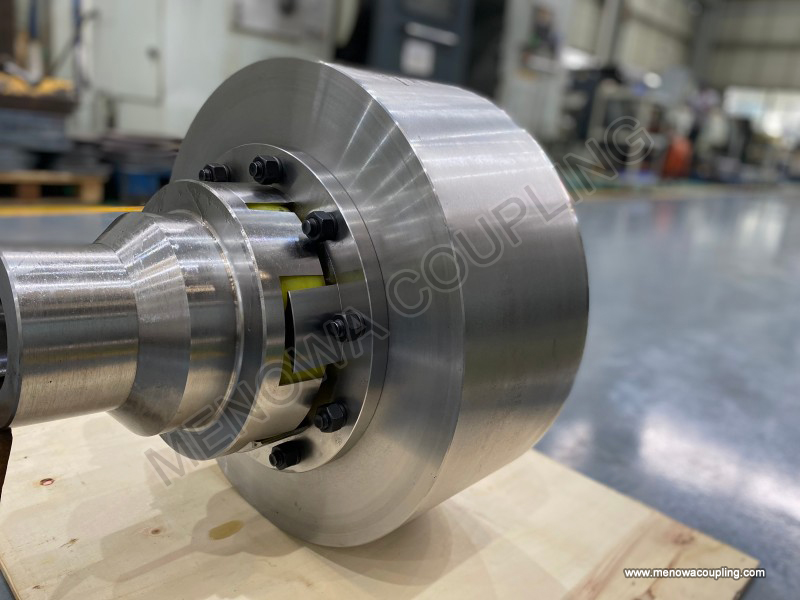
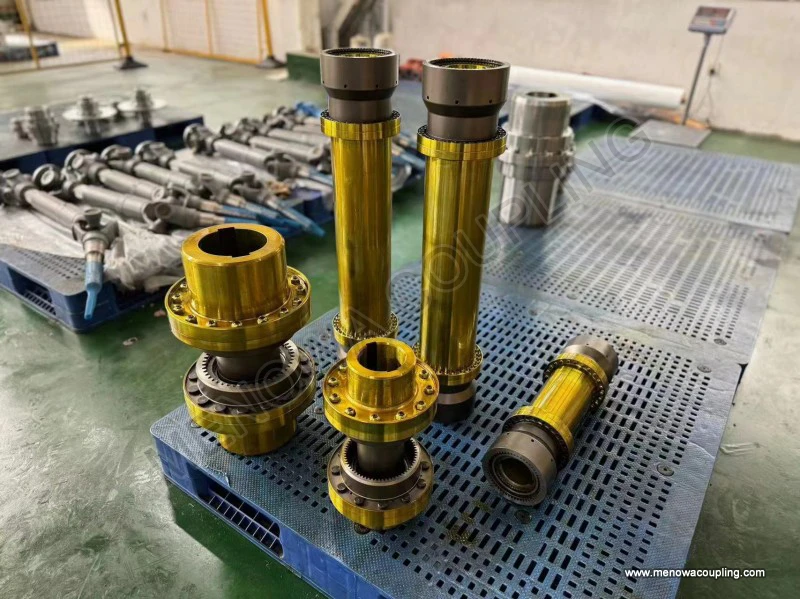
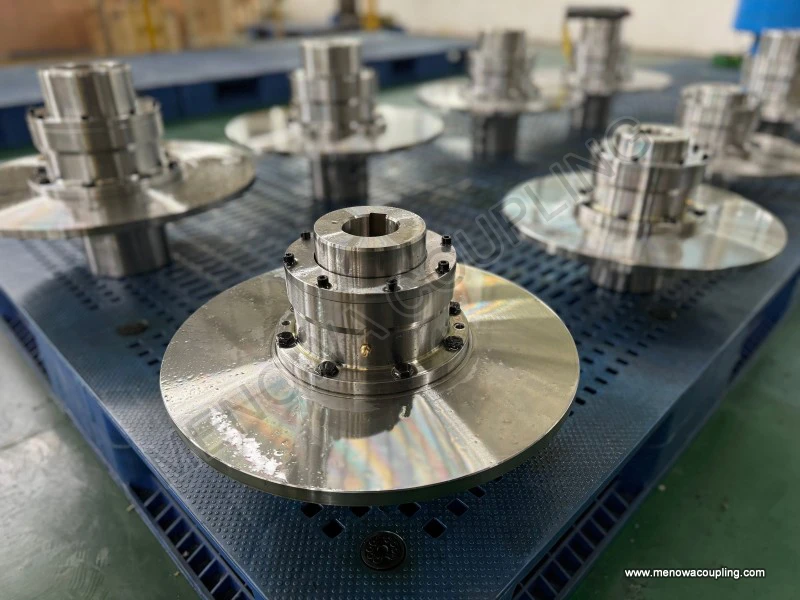
The overall structural composition of expansion sleeve coupling is simple and compact, with clear functional division of each component, and all parts are designed and manufactured around the core functions of friction clamping connection and stable torque transmission. The whole coupling can be divided into three core functional parts: coupling main body structure, expansion sleeve locking assembly and fastening adjusting parts, and each core part is composed of several precision machined small parts, which cooperate with each other to jointly complete the connection and transmission work. The coupling main body is the basic outer frame part of the whole equipment, mostly made of high-strength alloy steel or cast steel materials with good mechanical properties and strong structural rigidity. The main body structure is usually designed as a symmetrical two-half structure or an integrated sleeve structure with connecting flanges at both ends. The inner part of the main body is provided with a precision matching inner hole, which is specially used for installing and placing the expansion sleeve assembly. The outer part of the main body is designed with a reinforcing structure according to the torque bearing demand, which can effectively enhance the overall structural strength of the coupling, avoid structural deformation and damage under long-term heavy load operation, and maintain the overall structural stability of the coupling during long-term use. The expansion sleeve locking assembly is the core functional component of the entire expansion sleeve coupling and the key to realizing friction clamping transmission. It is composed of an inner thin-walled sleeve, an outer thin-walled sleeve and a wedge-shaped transition matching structure arranged between the inner and outer sleeves. The inner and outer sleeves are made of high-quality spring steel or alloy structural steel with good elastic deformation performance and fatigue resistance. After special heat treatment processes such as quenching and tempering, the sleeves have appropriate hardness and toughness, which can produce stable micro elastic deformation under the action of external extrusion force, and can quickly rebound to the original state after the extrusion force is removed, facilitating subsequent disassembly and adjustment work. The wedge-shaped structure between the inner and outer sleeves is the key stress and deformation transmission part. The reasonable wedge angle design can convert the axial extrusion force generated by the fastening parts into uniform radial expansion and contraction force, ensuring that the pressure on each contact surface is evenly distributed without local stress concentration, and avoiding local deformation and damage of the expansion sleeve caused by uneven stress. The fastening adjusting parts mainly include high-strength fastening bolts, locking gaskets and adjusting rings, which are responsible for providing stable axial extrusion force for the expansion sleeve assembly and locking the tightened state to prevent loosening during equipment operation. All fastening bolts are made of high-strength alloy materials, with strong tensile strength and shear resistance, which can maintain stable tightening force under long-term vibration and alternating load working conditions. The locking gaskets and adjusting rings can effectively prevent the fastening bolts from loosening due to mechanical vibration during operation, ensure that the clamping state of the expansion sleeve remains stable for a long time, and avoid the reduction of clamping force and connection looseness caused by bolt loosening.
The selection of manufacturing materials for expansion sleeve coupling directly affects its bearing capacity, service life, environmental adaptability and operational stability, and different parts need to be matched with appropriate materials according to their respective stress characteristics and functional requirements. In the selection of coupling main body materials, priority is given to materials with high structural rigidity, strong compressive resistance and good impact resistance. For conventional medium-load general industrial transmission scenarios, high-quality cast steel materials are often selected. This kind of material has low manufacturing cost, good casting performance and easy processing and forming, and can meet the torque transmission and structural stability requirements of conventional working conditions. For heavy-duty transmission scenarios with large torque, frequent load impact and long-term continuous operation, high-strength alloy forged steel materials are mostly used. After forging and heat treatment, the internal structure of the material is dense, with higher strength and toughness, stronger fatigue resistance and impact resistance, and will not produce structural deformation or brittle damage under long-term heavy load and alternating impact working conditions. The inner and outer sleeves of the core expansion sleeve assembly need to have good elastic deformation performance and wear resistance, so spring steel with excellent comprehensive mechanical properties is the preferred material. After special quenching and tempering heat treatment and surface strengthening treatment, the spring steel sleeve has both high hardness and good toughness, which can ensure stable elastic deformation during multiple assembly and disassembly, and will not produce plastic deformation or fatigue failure after long-term repeated clamping and loosening. At the same time, the surface of the expansion sleeve contact surface will be processed by fine grinding and anti-wear treatment, which not only ensures the smoothness of the contact surface and stable friction coefficient, but also enhances the surface wear resistance and corrosion resistance, and adapts to various complex industrial production environments such as dust, humidity and slight chemical corrosion. The fastening bolts and small locking parts are made of high-strength alloy steel with high tensile and shear strength, which can withstand continuous tightening force and will not break or deform during long-term use. For some special application scenarios such as high humidity, easy rust and weak chemical corrosion environment, the surface of all parts of the expansion sleeve coupling will be treated with galvanizing, anti-rust coating and other anti-corrosion processes to prevent metal corrosion and rust, avoid structural performance degradation caused by corrosion, and further extend the overall service life of the coupling.
Compared with traditional key connection couplings, rigid couplings and ordinary elastic couplings, expansion sleeve coupling has prominent comprehensive performance advantages in structural connection, transmission effect, operation stability and later maintenance, which are also the important reasons why it is widely used in modern industrial mechanical transmission. First of all, the expansion sleeve coupling adopts pure friction clamping transmission, with no keyway opening on the connected shaft body and no mechanical meshing structure inside the coupling. The traditional key connection structure needs to open keyways on the shaft body and the coupling, which will damage the structural integrity of the shaft body, reduce the structural strength of the shaft body, and easily cause wear and deformation of the key and keyway after long-term operation, resulting in increased connection gaps and reduced transmission accuracy. The expansion sleeve coupling does not need any key connection structure, which protects the structural integrity of the shaft body, will not cause local stress concentration of the shaft body, and effectively prolongs the service life of the shaft and the coupling itself. Secondly, the expansion sleeve coupling has high transmission accuracy and good concentricity retention effect. The uniform radial expansion deformation of the expansion sleeve can realize full contact and close fitting between the shaft and the coupling, automatically compensate for tiny installation alignment deviations, maintain high concentricity of the two connected shafts, reduce the radial runout and axial swing of the shaft during rotation, and avoid additional mechanical vibration and equipment noise caused by shaft misalignment. In the long-term operation process, there will be no relative sliding and wear between the contact surfaces of the expansion sleeve coupling, the connection state will always remain stable, and the transmission accuracy will not decrease with the extension of service time, which is very suitable for precision mechanical transmission equipment that requires high rotational positioning accuracy. Thirdly, the expansion sleeve coupling has strong load adaptability and can cope with various complex working conditions such as alternating torque, frequent start-stop and instantaneous load impact. The friction clamping structure can buffer and absorb part of the instantaneous impact force generated during load fluctuation, avoid rigid impact damage to the motor, reducer and other power components caused by instantaneous torque change, and protect the safety of the entire mechanical transmission system. In addition, the expansion sleeve coupling is very convenient for assembly, disassembly and position adjustment. During installation, only the expansion sleeve needs to be sleeved on the shaft body, the coupling main body is installed in place, and then the fastening bolts are tightened according to the standard process to complete the assembly and fixing work. During disassembly and maintenance, only the fastening bolts need to be loosened, the expansion sleeve rebounds and resets, and the coupling can be easily removed without special disassembly tools and complex operation steps. At the same time, the installation position of the coupling on the shaft body can be adjusted freely according to the actual mechanical assembly needs, and the position fixation is flexible and convenient, which is not available in traditional fixed couplings. Finally, the later maintenance cost of the expansion sleeve coupling is low. The whole structure has no vulnerable wearing parts, no need for frequent replacement of accessories, and no need for regular lubrication and maintenance. Daily operation only needs to regularly check the tightening state of the fastening bolts to ensure stable clamping force, which greatly reduces the daily maintenance workload and long-term use cost of mechanical equipment.
In the actual industrial mechanical matching work, the application scope of expansion sleeve coupling covers almost all medium and heavy-duty mechanical transmission fields and precision mechanical operation systems, and it shows excellent adaptability and stable operation effect in different working environments and transmission requirements. In the field of automated production and precision mechanical processing equipment, expansion sleeve coupling is widely used in the spindle connection of CNC machining equipment, the transmission connection of automated assembly line rollers and the power matching of precision transmission mechanisms. These equipment have high requirements for transmission accuracy and operation stability, and need to maintain consistent rotational speed and positioning accuracy during long-term high-speed operation. The high concentricity and no-slip transmission characteristics of expansion sleeve coupling can fully meet the precision operation needs of such equipment, avoid processing errors and production line operation failures caused by transmission deviation, and ensure the stable and efficient operation of precision production and processing links. In the field of material conveying and logistics transportation machinery, such as various belt conveyors, chain conveyors and screw conveying equipment, the equipment often operates continuously for a long time, with heavy conveying load and frequent start-stop operation, and the transmission system needs to bear large alternating torque and impact load. The expansion sleeve coupling has strong load-bearing capacity and impact resistance, can adapt to the long-term continuous operation state of conveying equipment, avoid connection looseness and transmission failure caused by long-term load operation, and ensure the continuous and stable transportation of materials. In the field of mining and metallurgical heavy machinery, the working environment is harsh, with large dust, serious equipment vibration and heavy working load, and the requirements for the connection reliability and vibration resistance of transmission parts are high. The compact structure and stable friction clamping performance of expansion sleeve coupling can adapt to the harsh working environment of mining and metallurgy, resist the influence of mechanical vibration and dust on the connection structure, maintain the stable connection state of the shaft body, and reduce the failure rate of mechanical equipment in harsh working conditions. In the field of new energy power generation auxiliary equipment and large-scale fan transmission supporting facilities, the mechanical transmission system needs to adapt to variable load and intermittent operation working conditions, and has high requirements for connection safety and fatigue resistance. The expansion sleeve coupling has good fatigue resistance and alternating load adaptability, can operate stably in variable wind load and intermittent power generation state, ensure the stable transmission of fan rotational power, and provide reliable guarantee for the normal operation of new energy power generation equipment. In addition, in chemical machinery, building materials processing machinery, agricultural machinery and other industrial fields, expansion sleeve coupling has also been applied in large quantities, replacing traditional outdated coupling connection structures, optimizing the operation performance of mechanical equipment, and improving the overall operation efficiency and service life of mechanical systems.
The installation, commissioning and daily operation and maintenance management of expansion sleeve coupling are important links to ensure its long-term stable performance and extended service life. Standardized assembly and scientific maintenance can give full play to all performance advantages of the coupling, while irregular installation and neglect of daily maintenance will easily lead to insufficient clamping force, poor alignment effect and early wear and failure of the coupling, affecting the normal operation of the entire mechanical equipment. In the installation and commissioning stage, the first step is to do a good job in the pre-installation inspection work, carefully check whether the dimensional matching degree of the coupling main body, expansion sleeve and the connected shaft body meets the design requirements, check whether the contact surface of each part is smooth and flat, whether there are burrs, scratches, rust and sundries, and ensure that all matching surfaces are clean and free of impurities, so as to avoid affecting the fitting effect and friction coefficient after assembly. Before formal assembly, it is necessary to slightly polish and deburr the shaft surface and the inner hole surface of the expansion sleeve to ensure that the matching surfaces are closely fitted. Then, the expansion sleeve is smoothly sleeved on the preset position of the driving shaft and the driven shaft respectively, and the coupling main body is aligned and installed outside the expansion sleeve to ensure that the overall position of the coupling is centered and the two shafts are initially aligned. After the preliminary positioning is completed, the fastening bolts need to be tightened in a symmetrical and staggered sequence in strict accordance with the assembly operation specifications. The tightening force of each bolt should be uniform and consistent, and it is not allowed to tighten a single bolt excessively at one time, so as to avoid uneven stress on the expansion sleeve, resulting in eccentric deformation of the sleeve body and poor shaft alignment. After all bolts are tightened to the standard tightening degree, a concentricity detection and rotation test should be carried out to check whether the coupling runs smoothly, whether there is obvious vibration and abnormal noise during rotation, and fine-tune the bolt tightening state according to the test situation until the coupling runs stably and the shaft alignment meets the operation requirements. In the daily operation and maintenance process, the staff only need to carry out regular routine inspection work, regularly observe the operation state of the coupling during the operation of the equipment, check whether there is abnormal vibration, abnormal noise and local heating phenomenon, and regularly check the tightening state of the fastening bolts to prevent the bolts from loosening due to long-term mechanical vibration. For the expansion sleeve coupling operating in harsh working environments such as high dust and high humidity, regular surface cleaning and anti-corrosion inspection should be done to remove dust and sundries accumulated on the surface of the coupling, check whether the surface anti-corrosion layer is damaged, and do a good job in anti-rust and anti-corrosion protection work in time. When the equipment needs to be overhauled, replaced with parts or adjusted the shaft position, the fastening bolts can be loosened in the reverse order, the expansion sleeve can automatically rebound and reset, and the coupling can be easily disassembled and adjusted without damage to the shaft body and coupling parts, and the reassembly work can be completed quickly after the maintenance is completed.
The correct selection of expansion sleeve coupling is the premise to ensure that it matches the actual mechanical transmission needs and gives full play to its performance advantages. In the selection process, it is necessary to comprehensively consider multiple key factors such as actual transmission torque, shaft diameter specification, equipment operation working condition, installation space limitation and environmental use requirements, and avoid blind selection leading to model mismatch and poor use effect. First of all, the most core selection basis is the actual working torque of the mechanical transmission system, including the rated torque during normal operation and the instantaneous peak torque during equipment start-stop and load impact. It is necessary to select the coupling model with appropriate torque bearing capacity according to the calculated actual torque value, and reserve a reasonable torque safety margin according to the load fluctuation degree of the equipment, so as to avoid long-term overload operation of the coupling leading to insufficient clamping force and connection failure. Secondly, the matching relationship between the inner hole specification of the expansion sleeve coupling and the diameter of the connected driving shaft and driven shaft should be accurately matched, ensuring that the shaft diameter and the coupling inner hole are in precise matching size, so as to ensure the tight fitting effect after assembly and avoid poor connection caused by excessive matching gap. Thirdly, according to the actual operation working condition of the equipment, different structural types and material configurations of expansion sleeve couplings should be selected. For precision equipment with high-speed operation and high transmission accuracy requirements, couplings with high-precision processing and high-concentricity design should be selected; for heavy-duty equipment with large load impact and long-term continuous operation, couplings made of high-strength alloy materials with strong impact resistance and fatigue resistance should be selected; for working environments with humidity, corrosion and easy rust, couplings with anti-corrosion surface treatment should be prioritized. In addition, the installation space of the mechanical equipment should be considered comprehensively, and the overall structural size of the coupling should be matched with the reserved installation space of the equipment to avoid the problem that the coupling cannot be installed normally due to excessive overall size. At the same time, considering the later maintenance and disassembly needs of the equipment, the coupling structure with simple assembly and convenient disassembly should be selected on the premise of meeting the transmission performance requirements. Through scientific and reasonable selection matching, the expansion sleeve coupling can be perfectly adapted to various mechanical transmission systems, ensuring that it can maintain stable working performance in long-term operation, give full play to the advantages of high efficiency transmission, stable connection and low maintenance, and create good operating conditions for the normal operation of mechanical equipment.
With the continuous progress of mechanical manufacturing technology and the continuous development of industrial automation and intelligent production, the performance optimization and application scope expansion of expansion sleeve coupling will continue to advance. In the future, with the upgrading of material science and precision processing technology, the manufacturing materials of expansion sleeve coupling will be more diversified and high-performance, and new alloy materials and composite materials with higher strength, better elasticity and stronger corrosion resistance will be gradually applied to the production and manufacturing of couplings, further improving the load-bearing capacity, fatigue resistance and environmental adaptability of products. At the same time, with the continuous improvement of precision processing and heat treatment technology, the processing accuracy and structural coordination degree of expansion sleeve coupling parts will be further optimized, the transmission accuracy and connection stability will be continuously improved, and it can meet the higher precision and more stringent working condition requirements of emerging intelligent mechanical equipment and high-end precision processing equipment. In terms of structural design, the expansion sleeve coupling will develop towards miniaturization, compactness and integrated multifunction, adapting to the miniaturization and integrated development trend of modern mechanical equipment, saving installation space for mechanical design, and integrating more auxiliary functions such as vibration buffering and deviation compensation on the basis of maintaining the core clamping and transmission functions. In terms of industrial application, with the rapid development of new energy equipment, intelligent manufacturing production lines, modern logistics conveying equipment and other emerging industrial fields, the market demand for high-performance expansion sleeve couplings will continue to grow, and the application scenarios will be further expanded to more emerging mechanical transmission fields. As a basic core connecting component in mechanical transmission engineering, expansion sleeve coupling will rely on its own excellent performance advantages and continuous technological innovation and optimization, always play an important basic supporting role in the development of modern mechanical industry, and provide reliable guarantee for the stable operation and efficient production of all kinds of mechanical equipment.
Post Date: Apr 26, 2026
https://www.menowacoupling.com/coupling-supplier/expansion-sleeve-coupling.html
Tags
Related Articles
Advantages Of Flexible Coupling
In the complex and interconnected world of mechanical power transmission, the seamless transfer of torque and rotational motion between rotating shafts stands as a foundational requirement for the steady operation of all types of industrial and commercial machinery. Every mechanical system that relies on motors, engines…
 WeChat
 WhatsApp