Conical Shaft Coupling
In the intricate and interconnected ecosystem of modern mechanical power transmission systems, the reliable connection between rotating shafts stands as one of the most foundational and functionally critical elements that determine the overall operational stability, mechanical efficiency, and long-term service life of entire equipment sets. Every mechanical device that relies on rotational motion to transfer power, drive functional components, or facilitate continuous production processes depends on shaft connections that can maintain precise alignment, stable torque transmission, and effective resistance to various external and internal mechanical stresses generated during prolonged cyclic operation. Among the diverse array of shaft connection solutions developed and optimized over decades of mechanical engineering advancement, the conical shaft coupling has emerged as a remarkably practical and structurally sophisticated component, distinguished by its unique conical mating geometry, self-centering mechanical characteristics, and adaptable performance across an extensive spectrum of industrial and mechanical application scenarios. Unlike many conventional coupling designs that rely on simple cylindrical interference fits, rigid bolted flange connections, or flexible elastic intermediaries to link adjacent shafts, the conical shaft coupling leverages the inherent mechanical properties of tapered contact surfaces to create a unified, high-integrity connection that integrates precise shaft positioning, consistent torque transfer, reliable axial fixation, and convenient assembly and disassembly functionality within a single compact structural assembly. This specialized mechanical component is engineered to address the core limitations of traditional shaft coupling designs, including insufficient concentricity after installation, uneven stress distribution on mating surfaces, difficulty in repeated disassembly and reassembly without causing component damage, and gradual performance degradation under fluctuating load conditions and prolonged continuous running cycles.
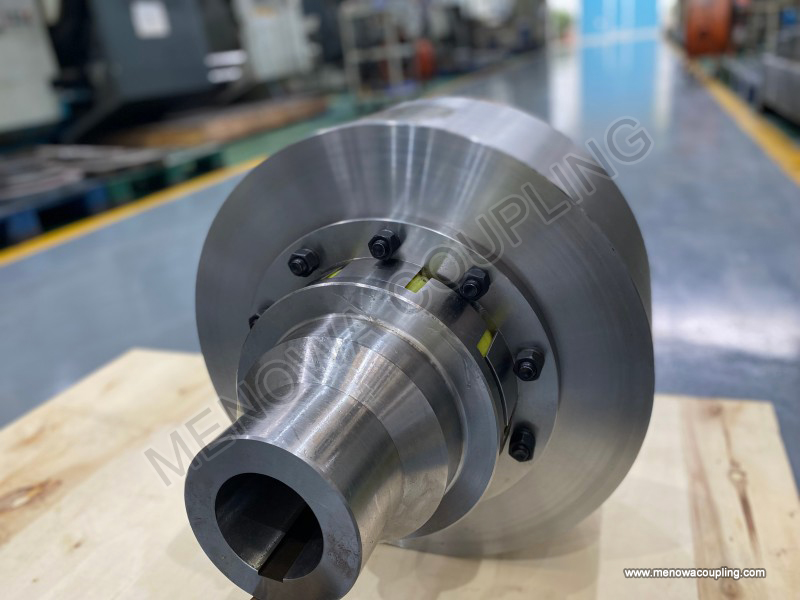
The fundamental working logic of the conical shaft coupling originates from the basic mechanical principles of wedge action and uniform surface contact pressure distribution, two core mechanical concepts that have long been applied in high-precision mechanical connection structures across various engineering fields. The entire structural configuration of the coupling revolves around precisely machined conical contact surfaces that mate perfectly with corresponding tapered profiles on the connected shafts or intermediate connecting sleeves, forming a seamless and tightly fitted assembly once axial fastening force is applied through standard fastening hardware. As tightening force acts on the conical mating parts, the wedge effect generated by the tapered geometry converts linear axial compression force into uniform radial clamping pressure that distributes evenly across the entire conical contact area between the coupling body and the shaft outer surface. This uniform radial pressure creates a powerful frictional connection between all mating components, enabling the stable transmission of rotational torque from one shaft to the adjacent connected shaft without relying on additional keyways, splines, or other positive locking mechanical structures that often introduce structural weak points and localized stress concentration risks. The self-centering attribute inherent to the conical geometry further enhances the alignment accuracy of the two connected shafts during the assembly process, as the tapered surfaces naturally guide the shafts into perfect concentric positioning as the fastening process progresses, effectively eliminating radial misalignment and angular deviation that commonly plague other types of shaft coupling assemblies. This inherent alignment capability ensures that the rotating shafts maintain consistent concentricity throughout all operational stages, from initial static installation to high-speed dynamic rotation and fluctuating load operation, laying a solid foundation for smooth mechanical operation and reduced mechanical wear on all connected transmission components.
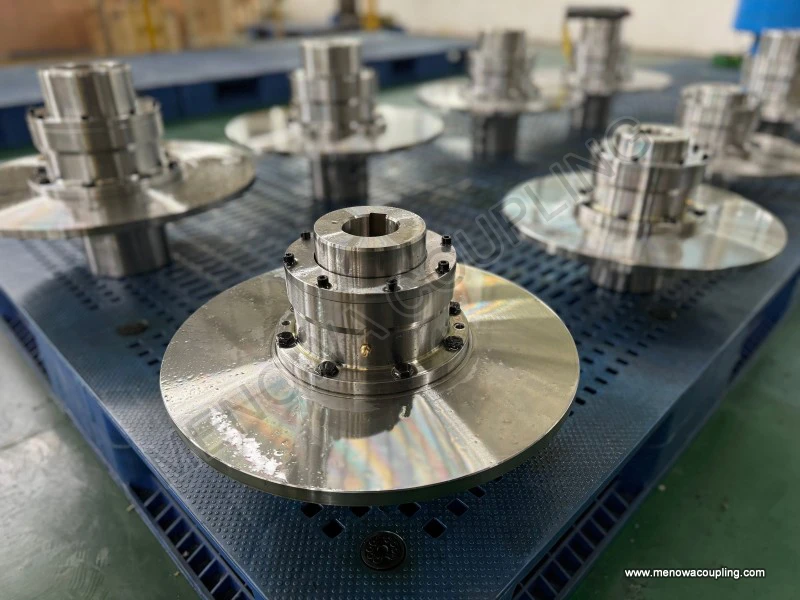
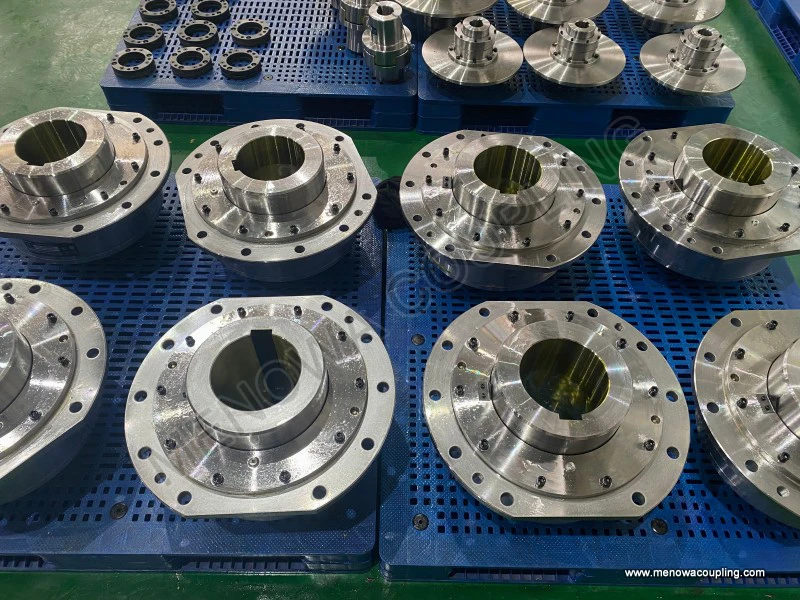
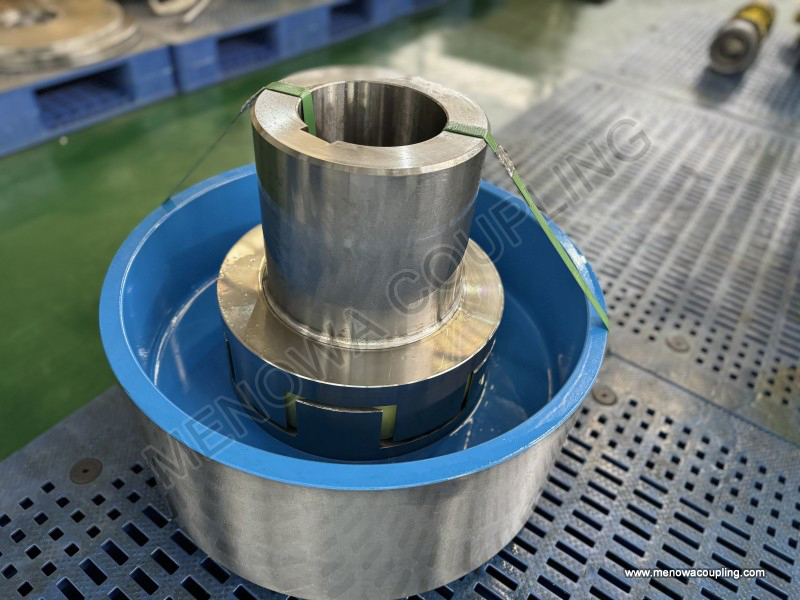
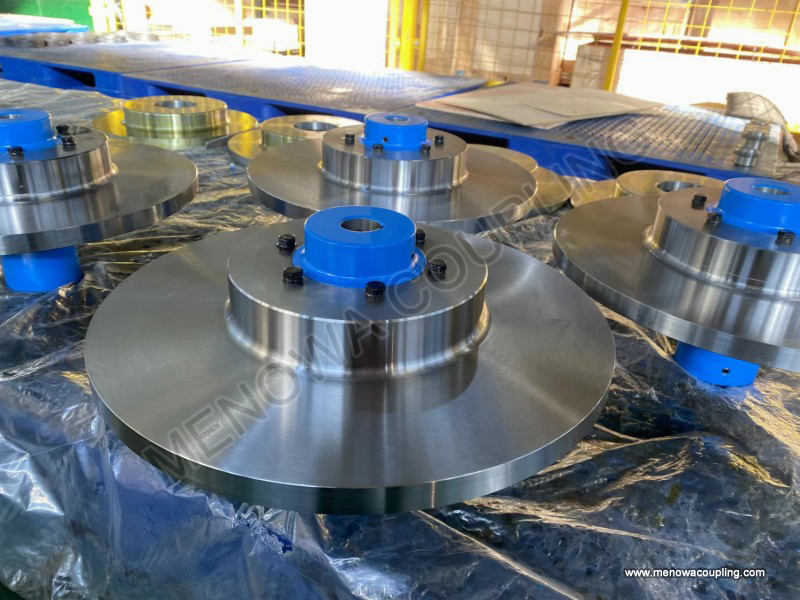
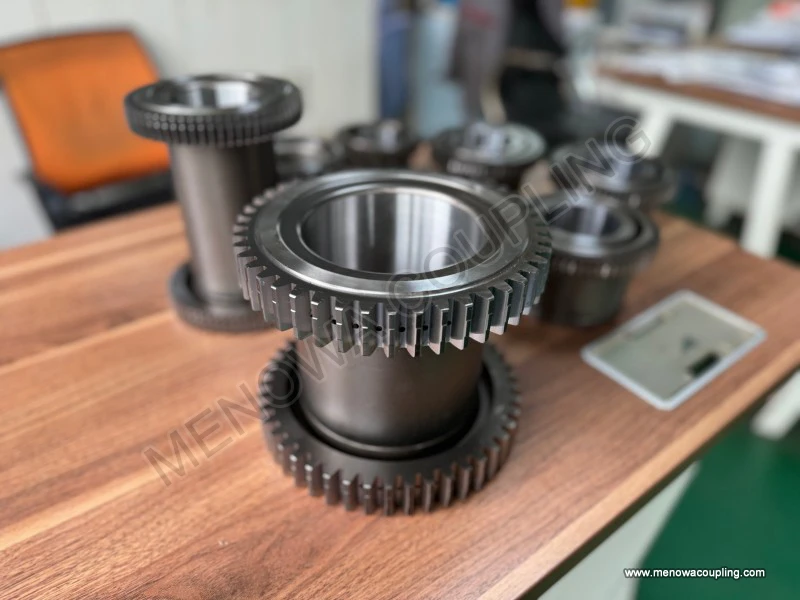
Delving into the basic structural composition of a typical conical shaft coupling, the overall design maintains a relatively streamlined and compact form while incorporating all necessary structural parts required for stable connection, reliable torque transmission, and easy operational maintenance. The core components primarily include an outer coupling hub with an inner precisely machined conical bore, one or two tapered intermediate sleeves designed to fit between the outer hub and the outer diameter of the connected shafts, and a set of standard fastening bolts or locking nuts used to apply controlled axial tension to compress the conical mating surfaces into tight contact. Each of these core components undergoes rigorous precision machining processes to ensure the conical taper angles of all mating surfaces maintain strict dimensional consistency and surface smoothness, as even minor deviations in taper angle or surface flatness can lead to uneven contact pressure distribution, reduced torque transmission capacity, and accelerated localized wear during long-term use. The outer coupling hub serves as the main load-bearing structural part of the entire coupling assembly, providing structural rigidity and maintaining the overall geometric stability of the connection during torque transmission and mechanical load fluctuation. The inner conical bore of the outer hub is machined to a precise taper specification that matches perfectly with the outer conical surface of the intermediate tapered sleeves, ensuring full surface contact rather than partial line contact after assembly. The tapered intermediate sleeves act as transitional connecting parts between the rigid outer hub and the connected shafts, offering the dual benefits of uniform pressure dispersion and convenient adaptability to different shaft diameter specifications without requiring complete replacement of the entire coupling assembly. These tapered sleeves are usually designed with a slight split structure in some configurations, which further enhances the uniformity of radial deformation during the fastening process, allowing the sleeve to fit closely against the shaft surface without creating gaps or uneven contact points. The fastening hardware, including high-strength bolts and locking nuts, is selected to provide consistent and controllable axial clamping force, with the tightening process designed to apply force evenly and gradually to avoid excessive local stress that could deform the coupling hub or damage the shaft surface material.
The structural design details of conical shaft couplings are carefully optimized to address the practical challenges encountered in real-world mechanical operation, with every dimensional parameter and structural feature tailored to balance structural rigidity, operational flexibility, assembly convenience, and long-term durability. The taper angle of the conical mating surfaces is a critical design parameter that undergoes meticulous calculation and verification during the engineering design phase, as this angle directly determines the conversion ratio between axial fastening force and radial clamping pressure, as well as the self-locking performance of the entire coupling assembly during operation. A reasonably designed taper angle ensures that sufficient radial clamping force can be generated with moderate axial tightening torque, while also maintaining stable self-locking performance to prevent loosening of the conical mating surfaces under the influence of rotational vibration, alternating loads, and continuous mechanical impact during equipment operation. If the taper angle is too large, the self-locking effect weakens significantly, increasing the risk of coupling loosening and connection failure during long-term cyclic operation; if the taper angle is too small, the required axial fastening force becomes excessively large, increasing the difficulty of assembly and disassembly and potentially causing unnecessary structural deformation of the coupling components. In addition to the taper angle, the surface finish of the conical contact surfaces is also strictly controlled during machining, as smooth and uniform contact surfaces maximize the effective friction coefficient between mating parts, ensuring stable torque transmission without relative micro-slip between the coupling and the shaft during load changes. Excessively rough contact surfaces lead to localized wear and micro-fretting fatigue over time, while overly polished surfaces may reduce friction stability and affect the long-term reliability of frictional torque transmission. The wall thickness of the outer coupling hub and the structural thickness of the tapered sleeves are also optimized to ensure sufficient mechanical rigidity to withstand torsional stress and radial pressure generated during operation, while avoiding excessive structural weight that could increase rotational inertia and affect the dynamic balance of high-speed rotating mechanical systems.
One of the most prominent practical merits of conical shaft couplings lies in their exceptional assembly and disassembly performance, a key advantage that makes these couplings highly suitable for mechanical equipment that requires regular maintenance, component replacement, or frequent shaft connection and separation operations. Unlike traditional interference fit couplings that require hydraulic pressing or thermal expansion and contraction methods for installation and removal, operations that often cause irreversible damage to shaft surfaces and coupling inner bores after repeated use, conical shaft couplings can be assembled and disassembled through simple tightening and loosening of fastening hardware without the need for specialized large-scale installation equipment or complex operational processes. During the assembly process, the tapered sleeves are first placed on the ends of the two connected shafts, followed by positioning the outer coupling hub over the tapered sleeves to align all conical mating surfaces naturally. Gradual and symmetrical tightening of the fastening bolts or locking nuts pushes the conical surfaces into closer contact, generating uniform radial clamping pressure that firmly secures the coupling hub, tapered sleeves, and shafts into an integrated connected structure. The self-centering effect of the conical surfaces ensures that the two shafts automatically maintain high-precision concentricity throughout the tightening process, eliminating the need for complex alignment calibration work that is essential for installing many other types of couplings. When disassembly is required for equipment maintenance, component replacement, or system adjustment, simply loosening the fastening hardware relieves the axial compression force on the conical mating surfaces, causing the radial clamping pressure to disappear completely and allowing the coupling components to be easily separated from the shafts without prying, hammering, or applying external impact force. This non-destructive assembly and disassembly feature protects the dimensional integrity and surface quality of the shafts and coupling components, enabling repeated use of the coupling assembly over many maintenance cycles without degradation in connection performance or alignment accuracy.
In terms of operational performance during actual mechanical system operation, conical shaft couplings deliver excellent stability and adaptability under diverse load conditions and rotational speed ranges, meeting the performance requirements of both low-speed heavy-duty mechanical transmission and high-speed precision rotational equipment operation. The uniform pressure distribution on the conical contact surfaces eliminates localized stress concentration points that commonly exist in keyed shaft connections and rigid flange couplings, effectively reducing mechanical fatigue wear on shaft ends and coupling components during prolonged cyclic operation. Traditional shaft connection methods that rely on keyways for positive torque transmission often create stress concentration at the keyway corners, which over time leads to fatigue cracks, shaft deformation, and gradual failure of the transmission system, especially under alternating torque and impact load conditions. Conical shaft couplings, by contrast, transmit torque entirely through surface friction across the entire conical contact area, achieving smooth and even load transfer without any structural stress concentration points, thus extending the service life of both the coupling itself and the connected shafts significantly. Additionally, the compact structural design of conical shaft couplings results in small overall radial and axial dimensions compared to equivalent-performance flange couplings, making them suitable for installation in mechanical equipment with limited internal installation space and compact structural layouts. This compact size also reduces the overall rotational inertia of the rotating transmission system, contributing to faster dynamic response of the equipment and lower energy consumption during acceleration and deceleration operational phases.
The vibration and misalignment compensation performance of conical shaft couplings further enhances their practical value in complex industrial operating environments, where slight inevitable misalignment and operational vibration are unavoidable during long-term equipment running. Although conical shaft couplings are primarily designed as rigid connection components for precise shaft positioning, their structural characteristics still provide a certain degree of tolerance for minor radial, axial, and angular misalignment between connected shafts generated by installation errors, equipment foundation slight deformation, or long-term operational component wear. The uniform elastic deformation of the tapered mating surfaces under clamping pressure can absorb and buffer small amounts of misalignment stress, preventing excessive additional bending stress from acting on the shafts and bearings, which would otherwise lead to accelerated bearing wear and shaft fatigue damage. Moreover, the tight conical contact assembly has a certain vibration damping effect, as the large-area frictional contact surfaces can absorb and dissipate part of the rotational vibration and mechanical impact generated during equipment startup, shutdown, and load fluctuation. This vibration damping capability helps reduce overall equipment operation noise, improve the smoothness of mechanical movement, and reduce the adverse effects of vibration on other precision components within the mechanical system, such as bearings, gears, and precision transmission parts. For mechanical systems operating under variable load conditions with frequent startup and shutdown cycles, this vibration buffering and misalignment tolerance performance effectively enhances the overall operational stability and anti-fatigue capability of the entire transmission system.
Conical shaft couplings find extensive and diversified application across a wide range of industrial sectors and mechanical equipment types, covering precision manufacturing machinery, general industrial transmission equipment, material handling systems, processing production lines, and various special mechanical devices, due to their comprehensive performance advantages in precision positioning, reliable torque transmission, convenient maintenance, and long-term stable operation. In the field of machine tool manufacturing and precision processing equipment, these couplings are widely used to connect the main drive shafts, feed system drive shafts, and servo motor output shafts of various precision machine tools, where high concentricity and stable torque transmission are essential to ensure the processing accuracy and surface quality of machined workpieces. The precise self-centering performance of conical shaft couplings ensures that the machine tool transmission shafts maintain minimal rotational runout during high-speed operation, avoiding processing errors caused by shaft misalignment and rotational vibration, while the convenient disassembly feature facilitates routine maintenance and replacement of machine tool transmission components without affecting the original equipment alignment precision. In general industrial production and conveyor transmission systems, conical shaft couplings are applied to connect the drive shafts of conveyor belts, mixing equipment, stirring machinery, and general power transmission devices, providing reliable power transmission for long-term continuous industrial production operation. These industrial equipment often operate under stable but long-lasting load conditions, requiring shaft couplings that can maintain stable performance for extended periods and allow quick maintenance during production line downtime, requirements that conical shaft couplings fully meet with their durable structure and easy assembly and disassembly design.
In mechanical processing auxiliary equipment, packaging machinery, textile machinery, and light industrial production equipment, conical shaft couplings are favored for their compact structure, low rotational inertia, and smooth operation performance, supporting the high-speed and stable operation of light-load and medium-load precision transmission systems. These types of light industrial machinery usually require high operational smoothness and low vibration during high-speed cyclic operation, and the vibration damping and precise alignment characteristics of conical shaft couplings effectively meet these operational needs, ensuring consistent product processing quality and continuous production efficiency. In addition, in marine mechanical equipment, agricultural machinery, and engineering machinery auxiliary transmission systems, conical shaft couplings adapt to harsh operating environments with dust, humidity, and occasional impact loads, maintaining stable connection performance and long service life under complex and variable working conditions. The tight conical fit structure of the coupling effectively prevents external dust, moisture, and impurities from entering the mating contact surfaces, reducing internal wear and corrosion of the connection parts, and improving the environmental adaptability and operational reliability of the equipment in harsh working scenarios. Regardless of low-speed heavy-duty operation or high-speed precision rotation, stable continuous production or frequent variable load operation, conical shaft couplings can adapt their working performance to match the actual operational requirements of different mechanical systems, demonstrating strong universal applicability in the field of mechanical power transmission.
The material selection and manufacturing process of conical shaft couplings play a decisive role in determining their mechanical performance, structural durability, and long-term operational reliability, with all production and processing steps strictly controlled to meet the mechanical strength and precision requirements of different application scenarios. The main body of conical shaft couplings is generally manufactured from high-strength carbon steel or alloy steel materials, which possess excellent mechanical rigidity, torsional strength, and wear resistance, capable of withstanding long-term torsional load, radial pressure, and cyclic mechanical stress without structural deformation or performance degradation. The raw materials undergo preliminary forging or rolling processing to refine the internal metal structure, eliminating internal material defects such as pores and inclusions, ensuring the overall structural uniformity and mechanical stability of the coupling blank. Subsequent precision machining processes, including turning, grinding, and fine finishing, are applied to process the inner and outer conical surfaces and key structural dimensions, ensuring that the taper angle, dimensional tolerance, and surface finish of all mating conical surfaces meet strict precision standards. For conical shaft couplings used in high-precision and high-load working conditions, additional heat treatment processes such as quenching and tempering are carried out to improve the surface hardness and internal toughness of the coupling components, enhancing wear resistance and fatigue resistance while maintaining sufficient structural toughness to prevent brittle fracture under impact load. The tapered intermediate sleeves and fastening hardware are also manufactured from matching high-strength materials, with consistent machining precision to ensure perfect coordination and uniform stress bearing between all components of the entire coupling assembly.
Quality inspection and performance testing work run through the entire production and manufacturing process of conical shaft couplings, ensuring that every finished coupling product meets the required dimensional precision, mechanical performance, and operational stability standards before leaving the production workshop. During the production process, dimensional inspection of the conical taper angle, bore diameter, and structural overall dimensions is carried out using high-precision measuring instruments to ensure all dimensional parameters are within the designed tolerance range. Surface quality inspection of the conical contact surfaces is conducted to check for processing defects such as scratches, burrs, and uneven machining marks, ensuring the smoothness and flatness required for full contact mating. After assembly of the finished coupling sample, basic performance testing including concentricity testing, torque transmission testing, and fastening stability testing is carried out to verify the self-centering effect, torque bearing capacity, and connection loosening resistance of the coupling assembly. For couplings used in special high-load or high-speed working conditions, fatigue life testing and vibration resistance testing are also conducted to simulate long-term actual operational working conditions, verifying the structural durability and performance stability of the coupling after prolonged cyclic operation. Through comprehensive multi-link quality control and performance testing, conical shaft couplings maintain consistent product quality and reliable operational performance in various practical application environments, avoiding connection failure and equipment operational faults caused by manufacturing defects or substandard performance.
Rational installation, correct use, and standardized daily maintenance are essential prerequisites to ensure the long-term stable operation and extended service life of conical shaft couplings in actual mechanical system operation, as even well-designed and high-quality manufactured couplings require scientific operational management to maintain optimal working performance. During the installation process, it is necessary to first clean the conical contact surfaces of the coupling, the surface of the connected shafts, and all fastening hardware thoroughly to remove dust, oil stains, metal debris, and other impurities that may affect the tightness and contact accuracy of the mating surfaces. Impurities remaining on the conical contact surfaces will lead to uneven contact, reduced friction coefficient, and localized stress concentration, affecting torque transmission stability and accelerating component wear. The fastening bolts or locking nuts should be tightened gradually and symmetrically in a standardized sequence to ensure uniform axial compression force applied to the conical surfaces, avoiding one-sided excessive tightening that causes coupling structural deformation and shaft misalignment. After installation, a simple rotational inspection should be carried out to check for abnormal rotational resistance, shaft runout, or uneven coupling operation, confirming that the connection assembly meets the operational requirements before formal equipment startup. During the daily operation of the equipment, regular routine inspection of the conical shaft coupling should be arranged, focusing on checking whether the fastening hardware is loose, whether the coupling has abnormal vibration or noise during operation, and whether there is excessive temperature rise on the coupling surface during long-term running.
If any abnormal loosening, vibration, or temperature rise is detected during daily inspection, the equipment should be shut down in a timely manner for inspection and troubleshooting, avoiding continued operation with hidden faults that may lead to coupling connection failure or even damage to other important transmission components. During equipment maintenance and component replacement, the disassembly and reassembly operations of the conical shaft coupling should follow standardized operational steps, avoiding violent disassembly methods that may damage the coupling conical surfaces and shaft surfaces. After long-term use, if wear or slight deformation occurs on the conical mating surfaces of the coupling, timely maintenance and repair or component replacement should be carried out to ensure the connection precision and torque transmission performance of the coupling are not affected. Good lubrication management should also be implemented according to the actual working environment; although conical shaft couplings do not require complex lubrication systems for torque transmission, appropriate anti-rust and lubrication treatment on the conical contact surfaces and fastening hardware can prevent corrosion and rust caused by long-term exposure to air or harsh working environments, ensuring the flexibility of subsequent disassembly and assembly operations and the long-term stability of the connection structure.
When comparing conical shaft couplings with other commonly used types of shaft coupling products in the mechanical transmission industry, the unique comprehensive performance advantages of conical shaft couplings become more prominent, showing irreplaceable value in specific application scenarios with high precision requirements and frequent maintenance needs. Compared with traditional rigid flange couplings, conical shaft couplings have smaller overall structural dimensions, lighter weight, more convenient assembly and disassembly, and higher self-centering alignment accuracy, while avoiding the complex bolt alignment and tedious calibration work required for flange coupling installation. Flange couplings rely on rigid bolted connection for torque transmission, which requires high installation alignment precision and is prone to bolt loosening under long-term vibration, while conical shaft couplings rely on conical wedge friction connection with better anti-loosening performance and simpler daily maintenance. Compared with flexible elastic couplings that rely on elastic elements for vibration damping and misalignment compensation, conical shaft couplings have higher structural rigidity and torque transmission accuracy, without the elastic deformation and torque hysteresis problems of flexible elastic elements, making them more suitable for precision transmission scenarios that require strict rotational synchronization and positioning accuracy. Flexible couplings are prone to aging and fatigue damage of elastic components after long-term use, requiring frequent replacement of vulnerable parts, while conical shaft couplings have fewer vulnerable components and longer overall service life, reducing long-term equipment maintenance costs and downtime.
Compared with keyed interference fit couplings, conical shaft couplings avoid the stress concentration and shaft damage problems caused by keyway processing, with uniform stress distribution on mating surfaces and better repeated assembly and disassembly performance. Interference fit couplings are difficult to disassemble and assemble, and repeated disassembly and assembly will seriously damage the shaft and coupling matching surfaces, affecting connection precision and service life, while conical shaft couplings can maintain stable connection performance and precision after multiple disassembly and assembly cycles. Although conical shaft couplings have relatively higher requirements for conical surface machining precision and manufacturing process compared with some simple coupling structures, the comprehensive benefits brought by their stable operation, long service life, convenient maintenance, and high transmission precision far outweigh the initial manufacturing investment differences, making them a cost-effective and reliable shaft connection solution in the long-term operation of mechanical equipment. With the continuous advancement of mechanical engineering technology and the continuous upgrading of industrial mechanical equipment, the performance requirements for shaft transmission connections in various mechanical systems are constantly improving, and conical shaft couplings, with their unique structural design and excellent comprehensive performance, will continue to be widely used and continuously optimized in more industrial and mechanical application fields.
Looking ahead to the future development trend of conical shaft coupling technology, with the continuous progress of precision machining technology, new material application technology, and mechanical structure optimization design concepts, the overall performance and structural design of conical shaft couplings will continue to be upgraded and improved to adapt to the increasingly complex and high-standard operational requirements of modern intelligent mechanical equipment and high-efficiency industrial production systems. Future optimization directions for conical shaft couplings will include further refinement of conical surface machining precision and structural dimensional optimization, improving the alignment accuracy and torque transmission efficiency of the coupling under ultra-high-speed and ultra-high-load working conditions. The application of new high-strength, wear-resistant, and corrosion-resistant alloy materials will further enhance the environmental adaptability and service life of conical shaft couplings in harsh working environments such as high temperature, high humidity, and strong corrosion. Structural optimization design will also focus on further reducing the overall weight and rotational inertia of the coupling while maintaining structural rigidity, adapting to the dynamic operation requirements of high-speed intelligent mechanical transmission systems. In addition, combined with intelligent mechanical equipment operation and maintenance management concepts, conical shaft couplings will be matched with auxiliary monitoring structures in some application scenarios to realize real-time monitoring of coupling connection status, fastening tightness, and operational vibration data, facilitating predictive maintenance and fault early warning of mechanical transmission systems. As an indispensable basic mechanical component in the field of mechanical power transmission, conical shaft couplings will continue to rely on their mature working principle, excellent structural performance, and wide application adaptability to provide stable and reliable shaft connection guarantee for the development of various mechanical engineering fields and modern industrial production.
Post Date: Apr 26, 2026
https://www.menowacoupling.com/coupling-supplier/conical-shaft-coupling.html
Tags
Related Articles
Advantages Of Flexible Coupling
In the complex and interconnected world of mechanical power transmission, the seamless transfer of torque and rotational motion between rotating shafts stands as a foundational requirement for the steady operation of all types of industrial and commercial machinery. Every mechanical system that relies on motors, engines…
 WeChat
 WhatsApp