Elastomer Drive Shaft Coupling
In the entire mechanical power transmission system, the connection between driving equipment and driven equipment forms the core link that determines the stability, continuity and service life of the whole mechanical operation process. Every mechanical transmission scenario involving rotary power output and load transmission needs a reliable connecting component to connect different drive shafts, coordinate rotational operation rhythms, and transfer torque generated by power sources to various load executing structures smoothly and stably. Among all types of shaft connecting components used in modern mechanical transmission design, elastomer drive shaft coupling has gradually become a widely adopted basic component in general machinery, industrial supporting equipment and automated production facilities by virtue of its unique elastic deformation characteristics, excellent vibration damping effect and good misalignment adaptation capability. Unlike rigid connecting structures that pursue absolute rigidity and precise fixed connection, elastomer drive shaft coupling relies on the inherent elastic properties of polymer elastomer materials to realize flexible power transmission, which not only meets the basic torque transmission requirements of mechanical operation, but also effectively resolves various adverse mechanical problems easily generated in the long-term operation of drive shaft systems, including inevitable shaft position deviation, instantaneous impact load, continuous vibration excitation and mechanical noise diffusion. The design and application logic of this type of coupling fully conforms to the actual operation characteristics of mechanical equipment, allowing for minor displacement and angle changes between connected shafts within a reasonable range, avoiding additional mechanical stress concentration and component wear caused by forced rigid connection, and creating a more stable and durable operating environment for the entire drive train system.
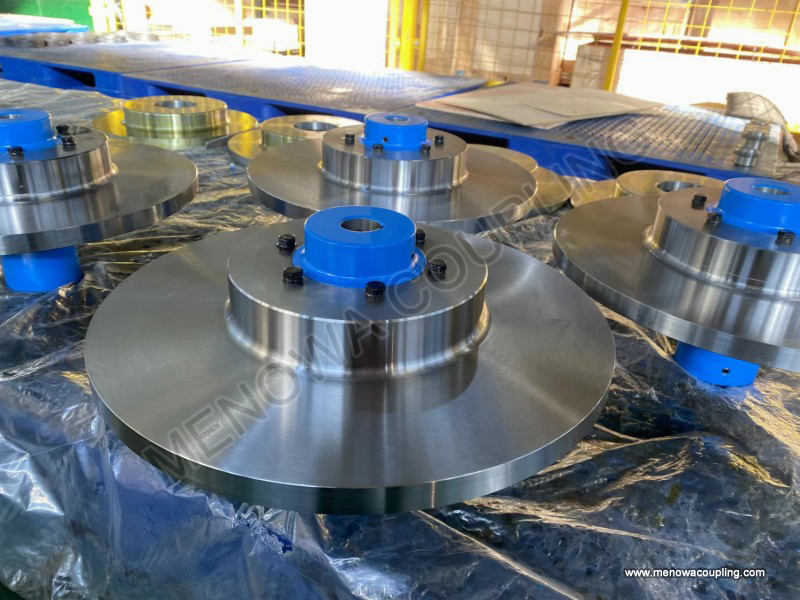
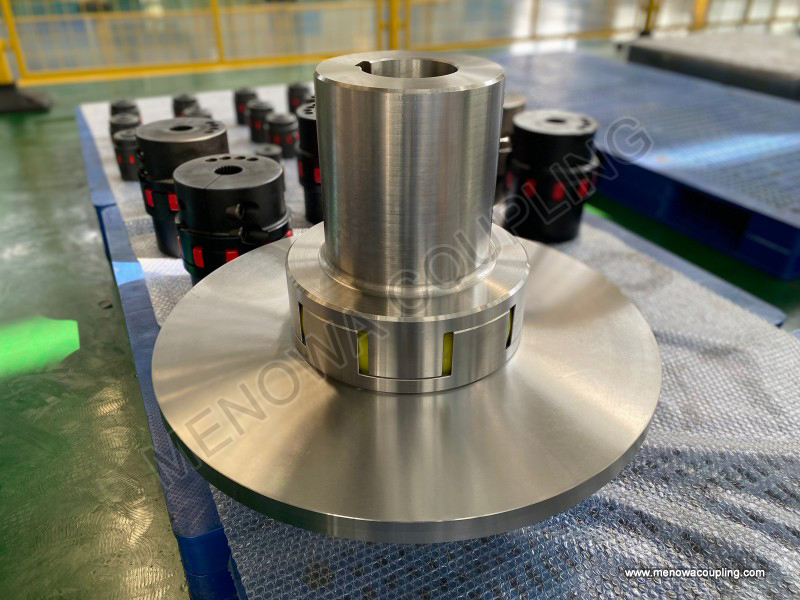
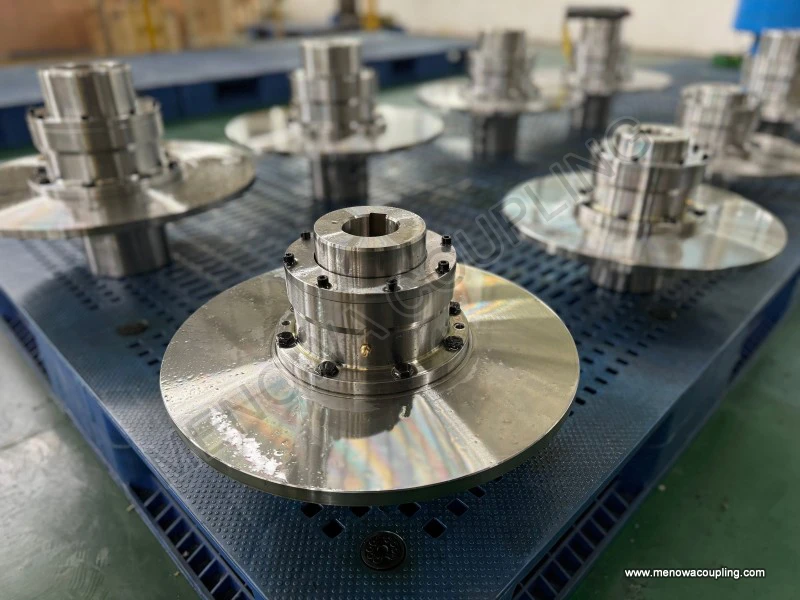
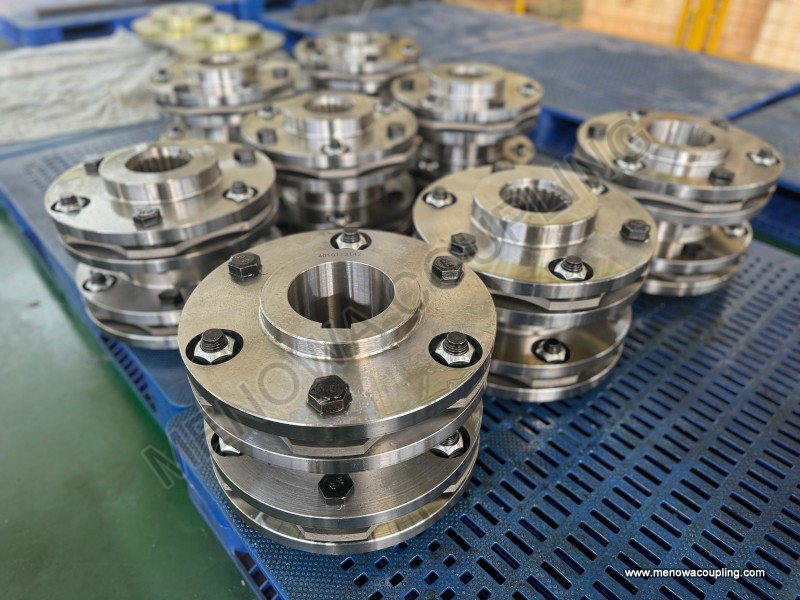
The basic working mechanism of elastomer drive shaft coupling is based on the elastic deformation recovery characteristics of elastomer materials and the structural cooperation between rigid connecting hubs and flexible elastic intermediate components. The overall structure of the coupling is mainly composed of two rigid metal hubs connected to the driving shaft and driven shaft respectively, and a central elastomer elastic element clamped and fixed between the two hubs. In the actual power transmission process, the driving shaft drives one side of the metal hub to rotate synchronously, and the rotational torque is gradually transmitted to the elastomer element through the contact and extrusion between the hub structure and the elastomer part. The elastomer element undergoes mild and controllable elastic shear and compression deformation under the action of torque load, and then transmits the rotational power to the other side of the metal hub, finally driving the driven shaft and the connected load equipment to operate synchronously. The whole torque transmission process does not depend on rigid hard contact and fixed meshing transmission, but relies on the flexible deformation of the elastomer material to buffer and transition the power transfer process. This unique transmission mode fundamentally changes the stress state of the drive shaft system during operation. When the equipment starts, stops, adjusts speed or bears sudden load changes, the elastomer element can absorb and decompose instantaneous peak impact force through its own deformation, prevent the instantaneous sharp change of torque from directly acting on the shaft body, bearing parts and internal structures of driving and driven equipment, and avoid early fatigue damage and structural fracture of key mechanical components caused by frequent impact load excitation.
In the actual assembly and operation of mechanical equipment, it is almost impossible to achieve absolute perfect alignment between the driving shaft and the driven shaft. Due to machining errors of mechanical parts, assembly operation deviations, thermal expansion and contraction of metal components during long-term operation, slight structural deformation of the frame base under long-term load, and natural wear and tear of supporting parts after long-time use, various forms of misalignment will inevitably occur between the two connected drive shafts. These misalignment states mainly include parallel radial misalignment where the two shafts are parallel but have a certain radial offset, angular misalignment where the center lines of the two shafts form a small included angle, and axial misalignment where there is a certain gap or axial displacement between the end faces of the two shafts along the rotation axis. In most practical engineering application scenarios, the misalignment between drive shafts is not a single form, but a composite state formed by the superposition of multiple misalignment forms. For rigid shaft connecting components, any slight misalignment will generate continuous additional radial force, axial force and torsional shear force during the rotation process. These additional loads will not only cause severe vibration and abnormal noise during equipment operation, but also accelerate the wear of shaft bearings and shaft seal components, lead to obvious fatigue deformation of the shaft body, and even cause loosening and fracture of connecting fasteners in severe cases, affecting the normal operation cycle of the entire equipment and increasing daily maintenance and replacement costs. Elastomer drive shaft coupling is designed to adapt to this actual engineering situation. The elastic deformation space of the intermediate elastomer element can well compensate various composite misalignments generated between drive shafts within the allowable range. Through the flexible adaptive deformation of the elastomer during each rotation cycle, the additional mechanical stress caused by shaft misalignment is effectively released, the uniform transmission of torque is maintained, and the continuous stable operation of the equipment is ensured without generating excessive additional load on the shaft system and supporting components.
Vibration and noise control is another core functional advantage of elastomer drive shaft coupling in mechanical transmission system operation. Most mechanical drive equipment will produce regular torsional vibration and mechanical excitation vibration during operation due to the periodic rotation of internal moving parts, meshing operation of transmission structures and unstable load changes in the working process. These vibrations will be transmitted along the drive shaft to the entire equipment frame and even the connected supporting facilities, causing overall vibration of the equipment, affecting the operating accuracy of precision mechanical parts, and generating continuous mechanical noise that affects the working environment. Long-term high-intensity vibration will also accelerate the fatigue aging of various mechanical components, shorten the overall service life of the equipment, and even affect the production stability and product processing quality of automated production lines. The elastomer material used in the coupling has excellent vibration damping and energy absorption characteristics, which can effectively attenuate torsional vibration generated in the torque transmission process and isolate the mutual transmission of vibration between the driving end and the driven end. When vibration energy is transmitted to the elastomer element, the internal molecular structure of the elastomer will undergo mild hysteresis deformation, convert part of the vibration mechanical energy into internal heat energy for natural dissipation, reduce the vibration amplitude transmitted along the shaft system, and weaken the resonance effect easily generated between adjacent mechanical components. At the same time, the flexible connection mode of the coupling avoids the rigid resonance noise generated by direct hard contact between metal structures, effectively reduces the overall operating noise level of the equipment, creates a quieter and more stable operating environment for mechanical operation, and meets the environmental operation requirements of various industrial production scenarios and public supporting mechanical equipment.
The selection of elastomer materials is the key factor determining the overall performance, service life and application scope of elastomer drive shaft coupling. Different elastomer materials have obvious differences in hardness, elastic modulus, compression and shear resistance, aging resistance, temperature adaptability and chemical corrosion resistance, and these performance differences directly affect the vibration damping effect, misalignment compensation ability and long-term operation stability of the coupling. Common elastomer materials used for manufacturing coupling intermediate elastic elements include natural rubber, synthetic rubber and polyurethane polymer materials, and each material has its own suitable application scenarios and performance characteristics. Natural rubber materials have good comprehensive elasticity and excellent low-temperature deformation recovery performance, with soft and gentle vibration damping effect, suitable for conventional low-load, low-speed and normal temperature operating environments, and can provide stable flexible transmission effect for general light industrial machinery and conventional supporting transmission equipment. Synthetic rubber materials are optimized and improved on the basis of natural rubber, with better heat resistance, oxidation resistance and aging resistance, able to maintain stable elastic performance in long-term continuous operation and slightly higher temperature working environments, and have stronger tolerance to conventional mechanical fatigue and environmental temperature changes, suitable for medium-load and medium-speed industrial mechanical transmission scenarios that require long-term uninterrupted operation. Polyurethane elastomer materials have higher structural strength, excellent wear resistance and tear resistance, good torsion resistance and compression deformation resistance, can maintain stable working performance under high-load, high-frequency operation and complex working conditions, and have outstanding resistance to oil pollution and conventional chemical medium erosion, suitable for heavy-duty mechanical equipment, hydraulic transmission matching equipment and industrial machinery with harsh working environments and complex load changes. Different hardness grades of the same elastomer material will also bring different application effects. Elastomer elements with lower hardness have better flexibility and stronger misalignment compensation and vibration damping capabilities, suitable for precision transmission occasions and equipment with strict vibration control requirements; elastomer elements with higher hardness have higher torsional stiffness and torque transmission capacity, suitable for high-torque transmission scenarios that require stable power output and small torsional deformation.
Compared with other types of flexible coupling products in the mechanical transmission market, elastomer drive shaft coupling has prominent comprehensive use advantages in structural design and daily operation and maintenance. The overall structural layout of the coupling is simple and compact, with fewer overall components, no complex precision transmission structures and delicate matching parts, which brings great convenience to equipment assembly, disassembly and replacement work. In the whole life cycle of operation, the coupling does not need regular lubrication, oiling, grease filling and other daily maintenance operations required by metal meshing transmission couplings and gear couplings, nor does it need frequent adjustment and calibration of connection clearance and working state. After one-time assembly and installation, it can maintain long-term stable operating effect under normal working conditions, effectively reduce the daily maintenance workload of mechanical equipment, save maintenance labor costs and accessory replacement costs, and improve the overall operation and management efficiency of mechanical equipment. In addition, the elastomer drive shaft coupling also has good electrical isolation performance. The intermediate non-metallic elastomer element can isolate the mutual conduction of current between the driving shaft and the driven shaft, avoid the current transmission and electrostatic accumulation between different mechanical equipment caused by metal hard connection, prevent the impact of stray current on precision electrical components and mechanical equipment internal parts, and play a certain protective role for electrical control systems and mechanical transmission systems. At the same time, the overall weight of the coupling is relatively light, with small rotational inertia, which will not cause additional rotational load and dynamic balance pressure on the high-speed rotating shaft system, and can maintain good dynamic balance state during high-speed operation, ensuring the stable and reliable operation of high-speed transmission equipment.
Although elastomer drive shaft coupling has many excellent application performance, its use process also has certain applicable limitations and working condition restrictions, which need to be fully considered in the early stage of mechanical equipment design and coupling type selection. The most prominent limitation is the temperature adaptability of elastomer materials. All polymer elastomer materials will be affected by extreme temperature environments. In long-term high-temperature working environments, the internal molecular structure of the elastomer will undergo thermal aging and thermal deformation, resulting in the gradual decline of elasticity, hardening and brittleness of the material, easy cracking and damage under load, and reduced service life. In long-term low-temperature working environments, the elastomer material will become hard and stiff, the elastic deformation ability will decrease, the misalignment compensation and vibration damping effect will be weakened, and brittle fracture may occur under sudden impact load. Therefore, this type of coupling is not suitable for long-term operation in extreme high-temperature or extreme low-temperature working conditions, and it is necessary to select elastomer materials with special temperature resistance formulas or choose other types of coupling products according to the actual operating temperature of the equipment. In addition, elastomer materials have poor resistance to strong chemical corrosion media. Long-term contact with strong acid, strong alkali, organic solvents and other corrosive substances will cause corrosion, swelling, aging and damage of the elastomer element, affecting the normal use effect and service life of the coupling. For mechanical equipment working in chemical production and special corrosive environments, it is necessary to do a good job in coupling external protection and isolation, or select corrosion-resistant modified elastomer materials for production and matching. At the same time, compared with all-metal rigid couplings and high-strength diaphragm couplings, the torsional stiffness of elastomer drive shaft coupling is relatively lower, and it will produce certain torsional deformation during torque transmission, so it is not suitable for ultra-high precision transmission occasions that require extremely high positioning accuracy and zero torsional deformation, such as some high-precision numerical control processing equipment and precision servo transmission systems that require strict synchronous positioning.
The installation and commissioning quality of elastomer drive shaft coupling directly affects its subsequent operating effect, service life and the overall operating stability of the mechanical drive system. Standardized installation steps and accurate alignment adjustment work are essential links to give full play to the performance advantages of the coupling. Before formal installation, it is necessary to carefully check the dimensional matching degree of the coupling hub and the driving and driven shafts, clean the surface of the shaft body and the inner hole of the hub, remove oil stains, rust and sundries on the contact surface, ensure the tight fit between the hub and the shaft body, and avoid relative rotation and friction between the hub and the shaft during operation. In the assembly process, the two metal hubs need to be respectively fixed on the driving shaft and the driven shaft through standard fasteners, and the fastening force of the fasteners should be kept uniform and moderate, to avoid installation deviation caused by excessive local fastening force or loosening hidden dangers caused by too small fastening force. After the hub is fixed, the intermediate elastomer elastic element is installed in the matching gap between the two hubs, ensuring that the elastomer element is installed in place without skew, extrusion deformation and position deviation, to avoid local stress concentration caused by poor assembly position during subsequent operation. After the preliminary assembly is completed, the key alignment adjustment work needs to be carried out. By adjusting the position and horizontal height of the driving equipment and driven equipment, the parallel deviation, angular deviation and axial gap between the two shafts are controlled within the allowable range of the coupling design. Excessive misalignment should not be pursued to be forced to install, otherwise it will cause long-term overload deformation of the elastomer element, accelerate fatigue damage and affect the normal service life. After the installation and alignment are completed, it is necessary to conduct no-load trial operation for a certain period of time, observe the operation state of the coupling, check whether there is abnormal vibration, abnormal noise and local heating phenomenon, and confirm that the coupling runs smoothly without abnormal state before putting it into formal load operation.
Daily inspection and periodic maintenance management are important measures to prolong the service life of elastomer drive shaft coupling and maintain long-term stable operating performance. In the daily operation and use of the equipment, operators and maintenance personnel only need to conduct regular visual inspection and running state observation without complex maintenance operations. The main contents of daily inspection include checking whether the elastomer element has obvious deformation, swelling, cracking, aging hardening and surface damage, checking whether the connecting fasteners of the coupling hub are loose or displaced, and observing whether the coupling has abnormal vibration and abnormal noise during equipment operation. Once abnormal phenomena are found in the inspection process, timely shutdown inspection and troubleshooting should be carried out to avoid small faults evolving into larger mechanical failures and affecting the normal production and operation progress. In the periodic maintenance work according to the equipment operation cycle, the coupling can be properly disassembled and inspected, the dust, oil dirt and sundries on the surface of the elastomer element and the metal hub can be cleaned, the aging and wear degree of the elastomer element can be comprehensively checked, and the elastomer element with serious aging, obvious wear and potential damage can be replaced in a timely manner. The replacement of the elastomer element is simple and convenient, with low replacement cost and short operation time, which will not cause long-term shutdown and production loss of the equipment. In addition, in the seasonal environment change stage, it is necessary to pay attention to the influence of ambient temperature and humidity on the elastomer element, avoid the coupling being exposed to direct sunlight and long-term humid and dusty environment for a long time, reduce the aging speed of the elastomer material, and maintain the stable elastic performance of the coupling for a long time.
Elastomer drive shaft coupling has a wide range of application coverage in modern industrial production, civil supporting equipment, mechanical manufacturing and other fields, and can be reasonably matched and applied according to different equipment power, load characteristics and working environment conditions. In the supporting transmission system of various motor and gearbox combination equipment, the coupling can buffer the torque impact generated during motor starting and gear shifting operation, compensate the shaft misalignment caused by equipment assembly and thermal expansion, reduce the vibration and noise generated during the operation of the gear transmission system, and protect the motor and gearbox internal gears and bearing components from impact damage. In pump and compressor mechanical equipment often used in petrochemical, water supply and drainage, HVAC and other industries, the coupling can adapt to the slight vibration and load fluctuation generated during the operation of pump body and compressor, ensure the stable transmission of power, reduce the axial and radial additional load of the pump shaft and compressor shaft, reduce the failure rate of shaft seal and bearing damage, and extend the continuous operation cycle of fluid conveying equipment. In conveyor and material handling equipment used in mining, building materials, logistics and other industries, the coupling can cope with the frequent starting, stopping and impact load changes of conveying equipment, absorb instantaneous impact force during material conveying, maintain the stability of power transmission of the conveyor, and avoid equipment shutdown and component damage caused by load mutation. In automated production equipment, packaging machinery and light industrial processing machinery, the coupling can reduce the vibration interference in the precision transmission process, ensure the stable operation of precision mechanical actuators, improve the processing accuracy and operation stability of automated equipment, and create good operating conditions for efficient and standardized production operations.
With the continuous progress of mechanical design technology and the continuous upgrading of elastomer material manufacturing technology, the overall performance of elastomer drive shaft coupling is also constantly optimized and improved, and the application fields and matching scenarios are becoming more and more extensive. The continuous innovation of elastomer material formula makes the new generation of elastic elements have better temperature resistance, corrosion resistance, fatigue resistance and aging resistance, breaking through the application limitations of traditional elastomer couplings in extreme working conditions. The continuous optimization of coupling structural design makes the product have higher torque transmission efficiency, smaller torsional deformation and stronger misalignment compensation ability, which can meet the matching needs of more high-power, high-speed and high-precision mechanical transmission equipment. At the same time, with the increasing attention paid to equipment energy saving, consumption reduction and low-noise operation in various industries, the flexible vibration damping and low-energy consumption operation characteristics of elastomer drive shaft coupling make it more in line with the current development trend of green and efficient mechanical equipment operation. In the future mechanical transmission system design and equipment supporting selection work, elastomer drive shaft coupling will still rely on its simple structure, convenient maintenance, excellent vibration damping performance and reliable flexible transmission capacity, occupying an irreplaceable important position in the field of basic mechanical connecting components. Through reasonable material selection, standardized installation and scientific daily maintenance, the coupling can always maintain stable and efficient operating state in the long-term mechanical operation process, provide reliable guarantee for the safe and stable operation of various mechanical equipment, and create good economic and operational benefits for industrial production and mechanical application.
Post Date: Apr 26, 2026
https://www.menowacoupling.com/coupling-supplier/elastomer-drive-shaft-coupling.html
Tags
Related Articles
Advantages Of Flexible Coupling
In the complex and interconnected world of mechanical power transmission, the seamless transfer of torque and rotational motion between rotating shafts stands as a foundational requirement for the steady operation of all types of industrial and commercial machinery. Every mechanical system that relies on motors, engines…
 WeChat
 WhatsApp