Flanged Coupling
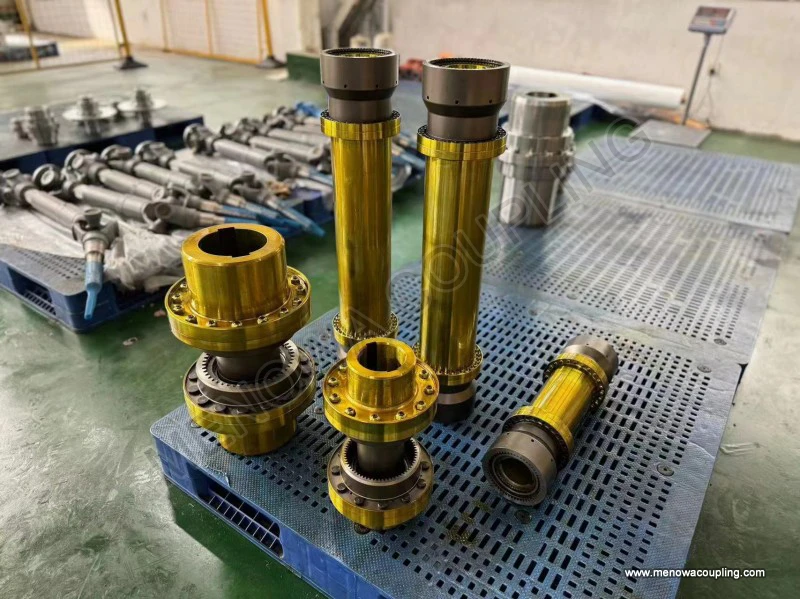
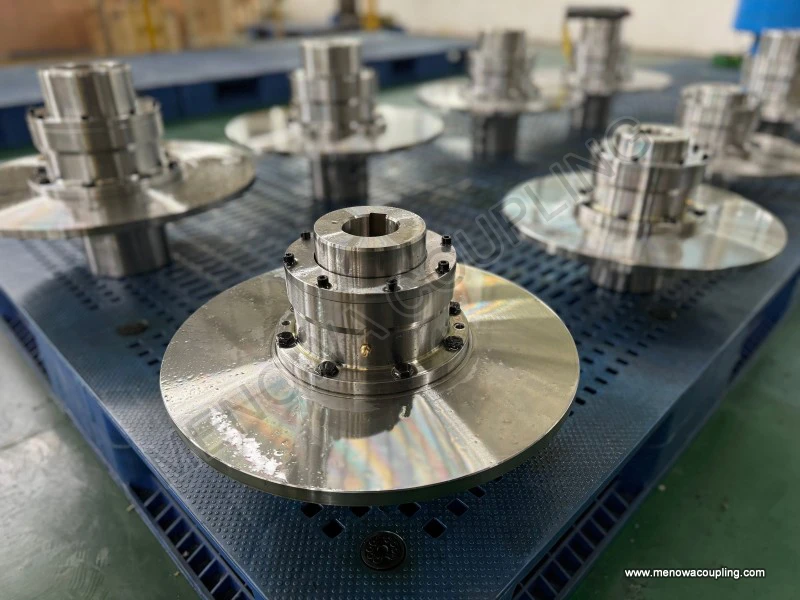
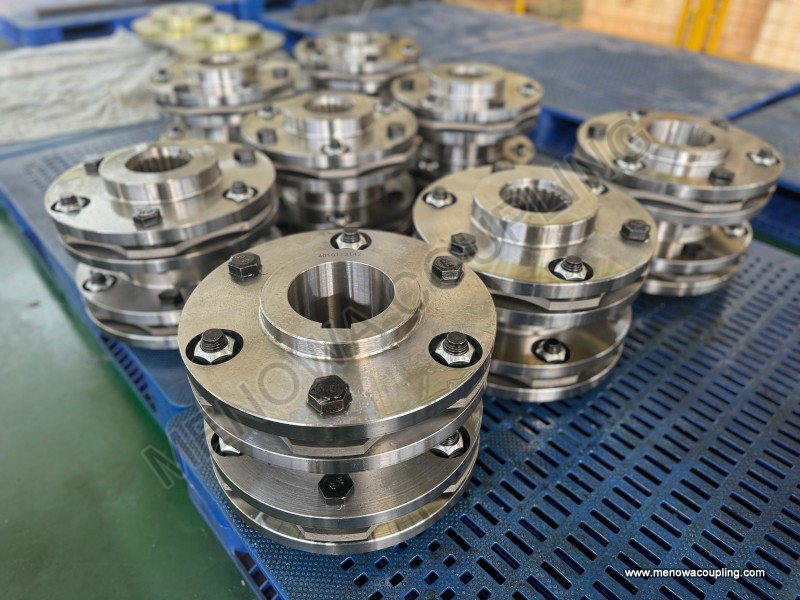
Flanged coupling stands as one of the most fundamental and widely adopted mechanical connection components in the entire field of mechanical transmission and fluid conveying engineering, serving as a critical intermediate structure that realizes the stable connection of rotating shafts, pipeline terminals and various mechanical equipment interfaces in diverse industrial production scenarios. Unlike other types of connecting parts that adopt simple sleeving or threaded fixing methods, this kind of coupling relies on integrated flange disc structures and matched bolt fastening assemblies to form a reliable integral connection state, effectively realizing the efficient transmission of rotational torque, the stable docking of equipment operation axes and the effective sealing of internal fluid or gas passages within mechanical and pipeline systems. Its core design concept focuses on balancing structural rigidity, connection stability, assembly convenience and later maintenance feasibility, making it adaptable to complex working environments involving different temperature ranges, pressure levels and mechanical load changes, and it has become an indispensable basic component supporting the normal operation of heavy machinery, industrial pipeline networks, power transmission equipment and production processing facilities across multiple industrial sectors. The basic composition of flanged coupling follows a mature and practical mechanical design logic, with each structural part setting corresponding functional positioning, and the coordination and cooperation between different parts directly determine the overall connection effect, transmission efficiency and service life of the coupling in actual operation. A complete flanged coupling assembly mainly consists of two symmetrical flange disc bodies that are respectively fixed on the connected shaft ends or pipeline ends, a sealing gasket arranged between the two flange disc joint surfaces, and a complete set of bolt and nut fastening components used for clamping and fixing the two flange discs together. Each part complements and restricts each other, forming a closed and stable connecting whole, avoiding connection looseness, medium leakage and transmission deviation that may occur during the long-term operation of mechanical equipment and pipeline systems, and ensuring the continuity and safety of industrial production and mechanical operation processes.
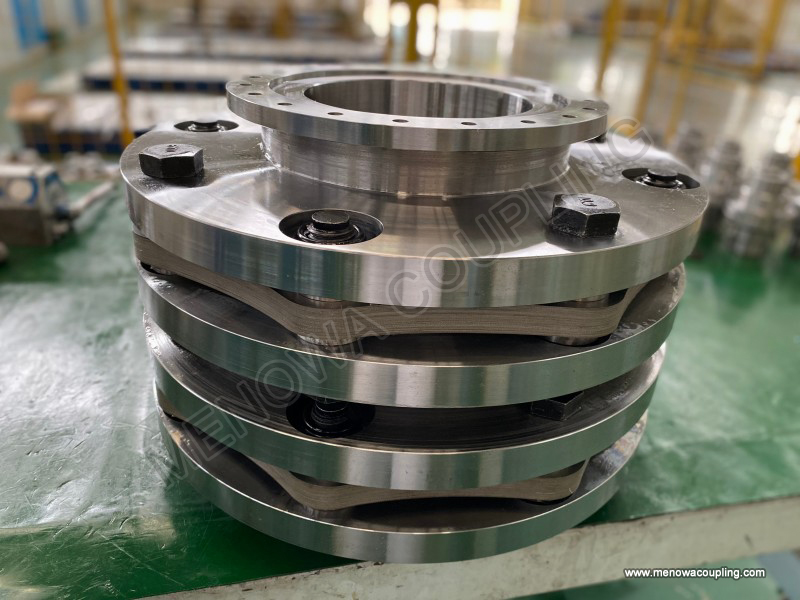
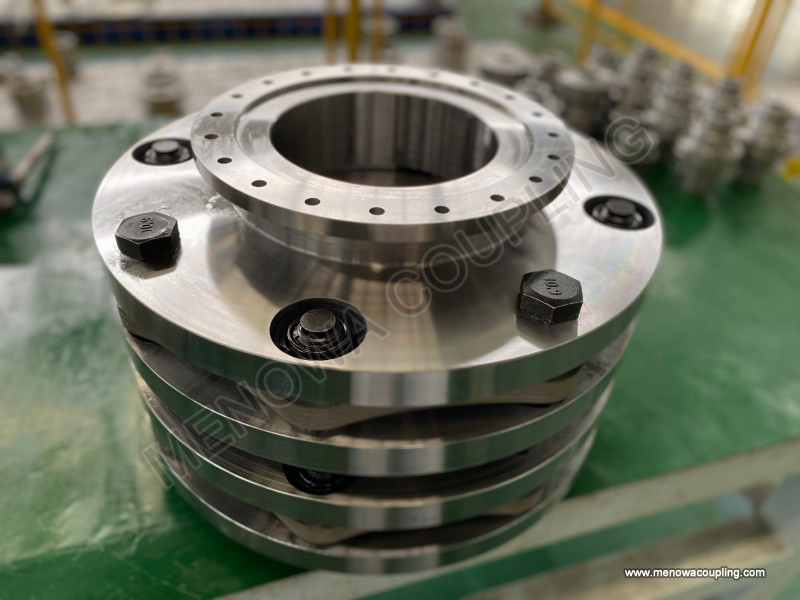
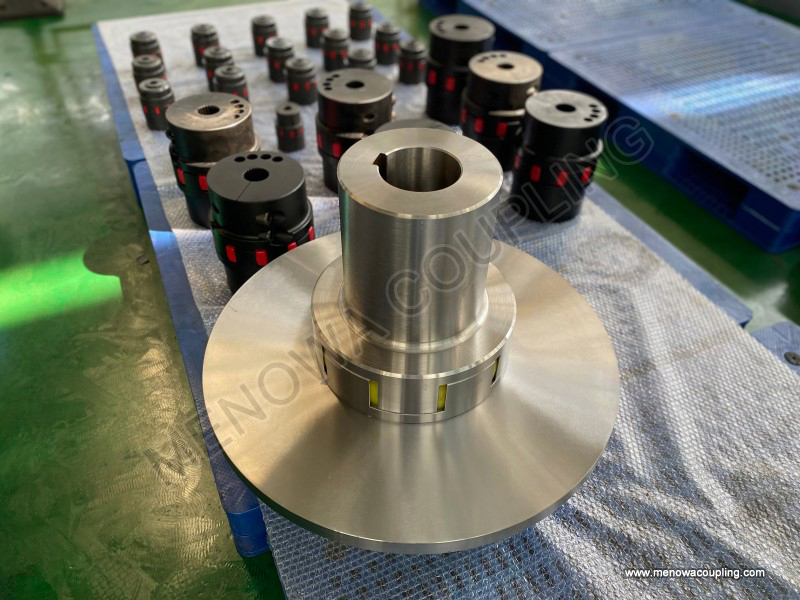
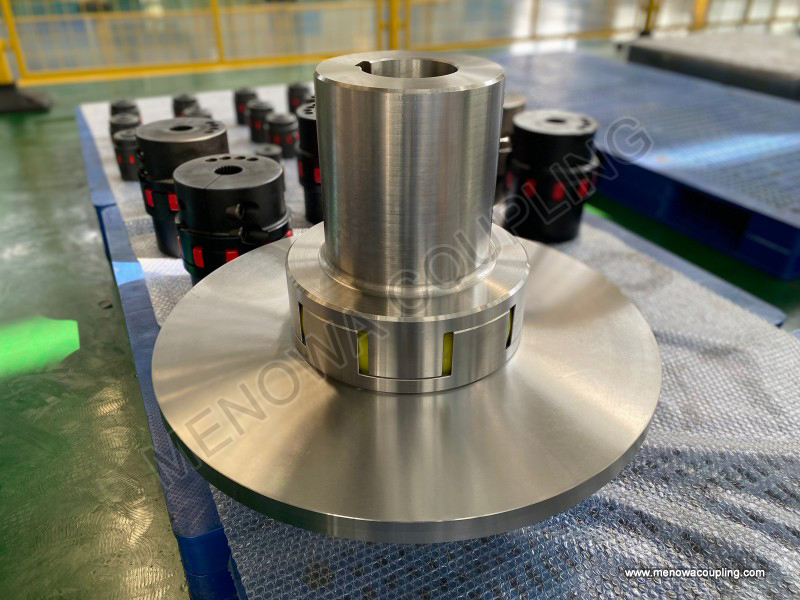
The structural design of the flange disc body, the core component of flanged coupling, follows the mechanical stress distribution law and the actual docking demand of connected equipment, and the overall structure is processed into a flat disc-shaped structure with uniform thickness and smooth joint surfaces. The center of each flange disc is provided with a precise through hole or mounting shaft sleeve structure, which is used for tight assembly and fixed connection with the outer wall of the rotating shaft or the outer wall of the pipeline end. The connection mode between the flange disc and the shaft or pipeline can be selected according to different application scenarios and structural requirements, including integral forging integrated forming, welding fixed connection and threaded assembly connection, each with its own applicable characteristics and scope of application. The integral forging integrated forming process makes the flange disc and the connected shaft or pipeline form an integrated mechanical structure, with good overall structural rigidity and strong resistance to external impact and torsional load, suitable for heavy-load and high-strength working occasions that require high connection stability. The welding fixed connection mode is more flexible in application, suitable for on-site assembly and transformation of various pipeline and mechanical equipment, and can adapt to different pipe diameters and shaft diameter specifications, with low processing and assembly difficulty and strong on-site adaptability. The threaded assembly connection mode features convenient disassembly and assembly, no need for complex welding processing and integral forging forming, and is mostly used for light-load working environments and equipment connection parts that require frequent disassembly, inspection and maintenance in the later stage. The outer edge of each flange disc is uniformly distributed with a number of bolt mounting holes arranged in a circular array, and the number, aperture and hole spacing of these mounting holes are designed according to the overall specification of the coupling, the bearing load level and the fastening force required for connection. The uniform arrangement of bolt holes ensures that the fastening force generated by bolt tightening can be evenly distributed on the entire joint surface of the two flange discs, avoiding local stress concentration caused by uneven force, preventing flange disc deformation, local warping and joint surface gaps in the process of long-term load operation, and laying a solid structural foundation for stable connection and reliable sealing of flanged coupling.
The working principle of flanged coupling can be divided into two core functional modules according to different application fields, namely the mechanical torque transmission principle for rotating shaft connection and the medium sealing and conveying stability principle for pipeline connection, and the two modules follow the same structural connection logic but bear different functional responsibilities in actual industrial operation. In the mechanical rotating shaft transmission scenario, flanged coupling connects the driving shaft and the driven shaft of mechanical equipment through two flange discs fixed on the respective shaft ends. After the two flange discs are tightly fitted and fastened by bolts and nuts, a rigid and integrated connecting structure is formed between the two shafts. When the driving shaft rotates and outputs torsional power, the torsional force is evenly transmitted to the flange disc on the driving shaft side, and then the torque is synchronously transmitted to the flange disc on the driven shaft side through the friction force between the flange joint surfaces and the shear resistance of the fastening bolts, finally driving the driven shaft to rotate synchronously and realize the stable transmission of mechanical power. In this process, the high structural rigidity of the flange disc and the uniform fastening force of the bolts ensure that there is no relative rotation, angular deviation and radial displacement between the two connected shafts during operation, maintaining the high alignment accuracy of the rotating shaft system, reducing vibration and impact generated during power transmission, and ensuring the smooth and efficient operation of mechanical transmission equipment. In the industrial pipeline connection scenario, flanged coupling mainly undertakes the dual tasks of pipeline fixed docking and internal medium sealing isolation. After the two flange discs fixed at the pipeline ends are butted, the sealing gasket clamped between the joint surfaces is compressed and deformed by the fastening force of the bolts, filling all tiny gaps and uneven grooves on the flange joint surfaces. This compressed deformation state of the gasket forms a continuous and tight sealing barrier between the two flanges, effectively preventing the leakage of liquid, gas and other conveying media inside the pipeline from the pipeline connection gap, while the rigid connection of the flange discs maintains the overall stability of the pipeline connection position, avoiding pipeline displacement, vibration and connection looseness caused by medium pressure fluctuation and external environmental impact during medium conveying, and ensuring the safe and stable conveying of various industrial media within the pipeline network system.
Material selection is a key factor that directly determines the overall mechanical performance, corrosion resistance, high and low temperature resistance and long-term service stability of flanged coupling, and the selection of raw materials needs to be comprehensively considered in combination with actual working environment conditions, load bearing requirements, medium characteristics and operation cycle demands. The mainstream base materials for manufacturing flanged coupling various types of carbon steel, alloy steel and stainless steel, and different materials show obvious differences in mechanical strength, structural toughness, environmental adaptability and processing performance. Carbon steel materials have excellent comprehensive mechanical properties, good structural rigidity and tensile strength, low production and processing costs, and easy forming and welding processing, making them the most widely used base material for flanged coupling. This type of material is mostly applied to conventional industrial production scenarios with normal temperature environment, conventional medium pressure and non-corrosive conveying media, such as conventional mechanical transmission equipment, ordinary water supply and drainage pipeline systems and general industrial ventilation pipeline connections, and can maintain stable structural performance and long-term service effect under conventional working conditions. Alloy steel materials are added with a variety of metal alloy elements on the basis of ordinary carbon steel, which significantly improves the high temperature resistance, low temperature resistance, pressure resistance and impact resistance of the material itself. Flanged coupling made of alloy steel is suitable for special working environments with extreme temperature changes, high medium pressure and strong mechanical impact load, such as high-temperature steam pipeline connections, high-pressure hydraulic transmission equipment shaft connections and low-temperature industrial fluid conveying pipeline connections, and can avoid structural deformation, material fatigue damage and connection failure caused by extreme working conditions. Stainless steel materials have outstanding corrosion resistance, rust resistance and oxidation resistance, and can resist the erosion and corrosion of various acidic, alkaline and chemically corrosive media. Flanged coupling processed from stainless steel is mostly used in chemical production, pharmaceutical processing, food manufacturing and marine industrial engineering fields, effectively preventing flange disc corrosion, surface rust and structural damage caused by long-term contact with corrosive media, ensuring the cleanliness of the connection position and the stability of the connecting structure, and meeting the strict hygienic and anti-corrosion requirements of special industrial production fields.
The sealing gasket matched with flanged coupling is a key auxiliary component affecting the sealing performance of the connection position, and the material selection and structural design of the gasket also need to be matched with the actual working conditions and flange application scenarios. Common gasket materials include rubber composite materials, asbestos-free compression materials, metal winding materials and polytetrafluoroethylene materials, each adapting to different temperature, pressure and medium corrosion conditions. Rubber composite gaskets have good elasticity and compression deformation recovery ability, soft material texture and good fitting effect with flange joint surfaces, suitable for normal temperature and low-pressure pipeline and equipment connection scenarios with ordinary water and gas as conveying media, with low cost and good basic sealing effect. Asbestos-free compression gaskets have moderate hardness and good pressure resistance and temperature resistance, can adapt to medium temperature and medium pressure working environments, and are widely used in general industrial steam pipelines and industrial circulating water pipeline flanged connection positions. Metal winding gaskets are composed of metal strips and non-metal soft materials wound alternately, with high pressure resistance, high temperature resistance and strong compression resistance, suitable for high temperature and high pressure extreme working conditions, and can maintain stable sealing effect under the condition of frequent pressure fluctuation and temperature change. Polytetrafluoroethylene gaskets have excellent chemical corrosion resistance, high and low temperature resistance and non-toxic and hygienic characteristics, suitable for chemical corrosive medium conveying and food and pharmaceutical hygienic production pipeline flanged connections, avoiding chemical reaction and corrosion damage between the gasket material and the conveying medium, and ensuring the safety and stability of medium conveying. The bolt and nut fastening components supporting flanged coupling are mostly made of high-strength alloy steel materials, which have strong tensile resistance and shear resistance, can withstand long-term fastening tension and mechanical shear force generated during equipment operation, and avoid bolt deformation, fracture and fastening looseness caused by long-term load operation.
Flanged coupling has a wide range of industrial application coverage, involving almost all core links of modern industrial production, mechanical manufacturing, energy transmission, petrochemical engineering, municipal engineering and marine engineering, and plays an irreplaceable connecting and stabilizing role in different industrial scenarios. In the field of mechanical manufacturing and heavy equipment production, flanged coupling is mainly used for the shaft end connection of various large mechanical transmission equipment, including fans, water pumps, compressors, generators and heavy-duty reducers. These mechanical equipment need to realize synchronous rotation and stable power transmission between the driving motor and the working host equipment, and the rigid connection performance and high alignment stability of flanged coupling ensure no power transmission loss and operation vibration deviation in the power transmission process, maintaining the efficient and stable operation of mechanical equipment. For large-scale rotating mechanical equipment that runs continuously for a long time, the detachable structural characteristics of flanged coupling also facilitate the daily inspection, equipment maintenance and parts replacement of the rotating shaft system, reducing the difficulty of later equipment maintenance and improving the overall operation efficiency of the production line. In the field of petrochemical and chemical industrial production, various chemical raw material conveying pipelines, reaction equipment connecting pipelines and high-pressure process pipelines need reliable and sealed connecting components, and flanged coupling becomes the preferred connecting structure for such pipeline systems. The chemical production process involves a variety of corrosive, high-temperature and high-pressure chemical media, and the flanged coupling made of corrosion-resistant and high-pressure resistant materials can effectively prevent medium leakage, avoid safety hazards such as chemical medium overflow and production safety accidents, and ensure the continuous and safe operation of chemical production processes. At the same time, the detachable connection form of flanged coupling facilitates the regular cleaning, maintenance and transformation of chemical pipelines, and meets the process adjustment and equipment upgrading needs of chemical production enterprises.
In the field of municipal engineering and urban infrastructure construction, flanged coupling is widely used in urban water supply and drainage pipeline networks, heating and steam supply pipeline systems, natural gas conveying pipeline projects and urban sewage treatment pipeline facilities. Urban municipal pipeline systems have the characteristics of wide distribution, long service cycle and complex external construction environment, and flanged coupling has the advantages of stable connection performance, strong environmental adaptability and convenient later maintenance, which can adapt to the complex external environment such as underground burial and outdoor exposed laying of municipal pipelines. The reliable sealing performance of flanged coupling effectively avoids the leakage of urban water resources, heating energy and natural gas energy, reduces the waste of public resources and the occurrence of pipeline safety hazards, and ensures the stable supply of urban public utilities and the normal operation of municipal infrastructure. In the field of marine engineering and offshore equipment manufacturing, flanged coupling is applied to offshore oil and gas exploitation platform pipeline systems, ship power transmission shaft systems and marine resource conveying pipeline connections. The marine working environment has the characteristics of high humidity, strong salt spray corrosion and complex wave impact load, and the flanged coupling made of special anti-corrosion and high-strength materials can resist marine environmental corrosion and external impact load, maintain the stability and safety of marine equipment and pipeline connections, and adapt to the harsh working conditions of marine engineering operations. In the field of electric power and energy transmission engineering, flanged coupling is used for the connection of power generation equipment shaft systems, power plant steam conveying pipelines and energy conversion equipment auxiliary pipelines, ensuring the stable transmission of power equipment power and energy media, and supporting the stable operation of power production and energy supply systems.
The installation process of flanged coupling is a key link affecting its later operation effect and service life, and standardized and standardized installation operation steps must be followed to avoid connection defects and potential safety hazards caused by irregular installation. Before the formal installation operation, comprehensive inspection and pretreatment of all components of flanged coupling are required first, including checking whether the surface of the two flange discs is flat and smooth, whether there are scratches, deformation, corrosion pits and processing defects on the joint surfaces, checking whether the specifications and models of fastening bolts, nuts and sealing gaskets match the flange main body, and eliminating all unqualified components with quality defects. At the same time, the surface of the flange joint surfaces, the inner wall of the bolt mounting holes and the surface of the fastening bolts need to be thoroughly cleaned to remove dirt, rust, oil stains and residual impurities, ensuring that the fitting surface of the flange and the gasket is tightly attached without gap interference, and ensuring that the bolts can be smoothly installed and tightened in place. In the formal docking and assembly stage, the two flange discs fixed on the shaft end or pipeline end need to be accurately aligned and positioned first, ensuring that the center lines of the two connected shafts or pipelines are kept coincident, avoiding angular deviation, radial displacement and axial misalignment caused by inaccurate positioning, which may lead to excessive vibration and unbalanced load during later operation. After the flange positioning is completed, the sealing gasket is placed in the middle of the two flange joint surfaces, ensuring that the gasket is placed in the center without offset, deformation and folding, to avoid local sealing failure caused by gasket displacement. Then the bolts are inserted into the flange mounting holes in sequence, and the nuts are initially screwed on manually to realize preliminary fixing of the flange position.
The bolt tightening operation of flanged coupling needs to follow the symmetrical and cross tightening sequence, which is a core detail to ensure uniform stress on the flange joint surface and stable connection effect. It is not allowed to tighten the bolts in a single direction or sequential order at will, otherwise it will lead to uneven fastening force on all parts of the flange, local warping and deformation of the flange disc, gaps between the joint surfaces, and eventual medium leakage and connection looseness. In the actual tightening operation, the bolts need to be tightened in multiple rounds according to the cross symmetry principle, with small tightening force applied in the first round to preliminarily compress the gasket and fit the flange joint surfaces closely, and the tightening force is gradually increased in the subsequent rounds until all bolts reach the standard fastening torque. After all bolts are tightened, it is necessary to conduct a comprehensive re-inspection of all fastening positions to check whether there is loose nuts, uneven bolt tightness and flange displacement, and adjust and reinforce the unqualified parts in time to ensure that the overall connection state of flanged coupling meets the operation requirements. After the installation is completed, a trial operation test of the equipment or pipeline system needs to be carried out to observe whether the flanged coupling connection position has abnormal vibration, medium leakage and operation deviation, and only after the trial operation is stable and no abnormal problems occur can the formal long-term operation be carried out.
Long-term daily maintenance and regular inspection management are essential to maintain the stable operation of flanged coupling, delay material aging and structural fatigue, and extend the overall service life. In the daily operation and management process, operators need to regularly observe the operation state of the flanged coupling connection position, focusing on checking whether there is medium leakage at the flange joint surface, abnormal vibration and noise during equipment operation, and obvious displacement and looseness at the flange connection position. For flanged coupling applied in high-temperature, high-pressure and corrosive working environments, the frequency of daily inspection should be appropriately increased to timely discover early potential problems such as local corrosion of the flange surface, aging and deformation of the sealing gasket and slight loosening of fastening bolts. In the regular maintenance work, all fastening bolts of flanged coupling need to be regularly inspected for tightness, and the loose bolts should be re-tightened in accordance with the standard symmetrical tightening sequence to ensure that the fastening force is always kept within the reasonable range required for operation. The surface of the flange disc should be regularly derusted and anti-corrosive maintained, and anti-corrosive coating materials should be coated on the exposed flange surface and bolt surfaces to avoid rust corrosion and structural damage caused by long-term exposure to the external environment.
Regular replacement of vulnerable parts is also an important part of the maintenance work of flanged coupling. The sealing gasket belongs to a vulnerable component with limited service life, and it will gradually age, deform and lose sealing elasticity after long-term compression, temperature change and medium erosion. It is necessary to regularly replace the sealing gasket according to the actual operation cycle and working condition severity, and replace it with a new gasket of matching specification and material to ensure the lasting and effective sealing performance of the flange connection position. For the fastening bolts that have been used for a long time, if deformation, thread wear and corrosion damage are found during inspection, they need to be replaced in a timely manner to avoid bolt fracture and connection failure during operation. When the flanged coupling needs to be disassembled due to equipment maintenance and pipeline transformation, the disassembly operation should be carried out in the reverse order of installation, and the disassembly process should avoid violent knocking and forced prying to prevent damage to the flange joint surfaces and thread structures, so as to ensure that the flange coupling can be reassembled and used normally after maintenance. Scientific and standardized maintenance management can effectively reduce the failure probability of flanged coupling in operation, reduce the frequency of equipment shutdown maintenance caused by coupling failure, improve the overall operation stability and continuity of industrial production and pipeline systems, and reduce the comprehensive operation and maintenance cost of industrial projects.
In the actual long-term operation process of flanged coupling, some common abnormal working problems are prone to occur due to installation irregularities, material aging, working condition changes and insufficient maintenance, and targeted analysis of causes and scientific troubleshooting measures are needed to ensure the rapid recovery of normal operation state. Medium leakage at the flange connection position is the most common abnormal problem, and the main causes include aging and failure of the sealing gasket, uneven tightening force of fastening bolts, scratches and deformation of the flange joint surfaces, and foreign matter impurities mixed between the joint surfaces during installation. For this kind of leakage problem, it is necessary to first stop the equipment and pipeline system for pressure relief and shutdown treatment, then re-inspect the fastening tightness of the bolts, re-tighten the loose bolts according to the standard sequence, replace the aging and failed sealing gaskets, trim and repair the scratched and deformed flange joint surfaces, and clean up the impurities and dirt between the joint surfaces, and the leakage problem can be effectively solved after reassembly and commissioning. Abnormal vibration and noise during the operation of flanged coupling are mostly caused by inaccurate alignment and positioning during installation, uneven bolt fastening force, excessive mechanical load and local structural fatigue of the flange disc. The troubleshooting measures include re-calibrating the alignment accuracy of the connected shaft or pipeline, re-adjusting the bolt fastening force to ensure uniform stress, reasonably adjusting the equipment operation load to avoid long-term overload operation, and repairing and replacing the fatigue-damaged flange components to eliminate operation vibration and abnormal noise.
Flange bolt corrosion and thread sticking are common failure problems in flanged coupling used in humid and corrosive environments. The corrosion of bolts will lead to the reduction of fastening strength, and thread sticking will make later disassembly and maintenance impossible. The prevention and solution measures include regular anti-corrosion maintenance of bolts, coating anti-rust and lubricating materials on bolt threads in daily maintenance, replacing severely corroded bolts in a timely manner, and avoiding long-term exposure of fastening components to corrosive environments. Structural deformation and fatigue damage of flange disc are mostly caused by long-term overload operation, extreme temperature and pressure fluctuation and excessive external impact load. Once the flange disc is deformed and fatigued, it cannot be repaired by simple maintenance measures, and the deformed and damaged flange coupling components need to be replaced in a timely manner to avoid major safety accidents such as connection fracture and equipment shutdown caused by structural damage. Timely handling of common abnormal problems of flanged coupling can effectively extend the overall service life of the coupling, ensure the stable and safe operation of industrial equipment and pipeline systems, and provide reliable basic component guarantee for the smooth progress of industrial production activities.
With the continuous progress of modern industrial manufacturing technology and the continuous upgrading of industrial production demand, the design optimization and manufacturing process improvement of flanged coupling are also constantly advancing, and the overall performance of the product is continuously improved to adapt to more complex and harsh industrial working conditions. In terms of structural design optimization, the modern flanged coupling design pays more attention to the optimization of stress distribution structure, adopting finite element mechanical simulation analysis technology to optimize the flange disc thickness, bolt hole arrangement and joint surface structure design, reducing local stress concentration, improving the overall structural rigidity and fatigue resistance of the coupling, and making the product more adaptable to long-term cyclic load operation. In terms of manufacturing process improvement, advanced precision forging, numerical control finishing and surface treatment processes are widely used in the production and processing of flanged coupling, improving the dimensional accuracy and surface flatness of flange products, reducing processing errors and surface defects, and further improving the connection fitting degree and sealing stability of flanged coupling. In terms of material innovation and application, new high-strength, corrosion-resistant and temperature-resistant alloy materials and composite sealing materials are continuously applied to the production of flanged coupling, improving the environmental adaptability and service life of the coupling in extreme working environments, and meeting the higher performance requirements of emerging industrial fields for connecting components.
At the same time, with the development of intelligent industrial operation management, the operation state monitoring technology of flanged coupling is also constantly innovating. By matching with simple detection and sensing devices, the real-time monitoring of flange connection tightness, sealing state and operation vibration state can be realized, which facilitates the early warning of potential operation faults of flanged coupling, realizes the transformation from passive maintenance after failure to active early warning and preventive maintenance, further improves the operation safety and stability of flanged coupling in industrial systems, and reduces the economic loss and safety risks caused by sudden coupling failure. As a basic and important mechanical connecting component, flanged coupling will always maintain an irreplaceable core position in the field of industrial connection and mechanical transmission. With the continuous development of industrial technology and the continuous expansion of application scenarios, its structural design, manufacturing process, material application and maintenance management technology will continue to be optimized and improved, constantly adapting to the new development needs of modern industrialization, and providing solid and reliable basic support for the stable operation and efficient development of all walks of industrial life.
Post Date: Apr 25, 2026
https://www.menowacoupling.com/coupling-supplier/flanged-coupling.html
Tags
Related Articles
Advantages Of Flexible Coupling
In the complex and interconnected world of mechanical power transmission, the seamless transfer of torque and rotational motion between rotating shafts stands as a foundational requirement for the steady operation of all types of industrial and commercial machinery. Every mechanical system that relies on motors, engines…
 WeChat
 WhatsApp