Brake Drum Coupling
In the complex and interconnected operating system of modern industrial mechanical transmission, the coordination between power transmission motion control and safe braking deceleration directly determines the stable operation efficiency and service life of the entire mechanical equipment. Most traditional mechanical transmission systems separate the shaft coupling structure responsible for torque transmission and the brake component responsible for equipment deceleration and parking into two independent parts, which not only increases the overall structural layout space of the mechanical system, but also easily causes cumulative alignment errors between different components during long-term operation, resulting in increased vibration and wear during equipment operation, and even potential safety hazards in frequent start-stop and braking working conditions. The brake drum coupling emerges as a practical integrated mechanical component that organically combines basic shaft connection and torque transmission functions with professional braking matching performance. It integrates the core advantages of flexible transmission coupling and brake friction matching structure into a single integrated design, realizing the dual core functions of stable power transmission during normal equipment operation and reliable friction braking during equipment deceleration, shutdown and emergency stop. This integrated structural design effectively optimizes the overall layout of mechanical transmission systems, reduces the number of connecting parts between transmission and braking modules, lowers the cumulative mechanical errors caused by multi-component assembly, and greatly improves the coordination and synchronization of power transmission and braking control in various heavy-duty and frequent start-stop industrial working scenarios. As a key connecting and control matching component widely used in heavy machinery, material handling equipment, mining transmission equipment, metallurgical production lines and industrial conveying systems, the brake drum coupling does not simply superimpose two mechanical functions, but through scientific structural optimization, reasonable material selection and precise dimensional matching design, it balances the flexibility required for shaft misalignment compensation in transmission operation, the rigidity required for high torque transmission, and the friction stability required for long-term cyclic braking, providing solid basic mechanical guarantee for the safe and efficient operation of various industrial mechanical equipment in complex and harsh working environments.
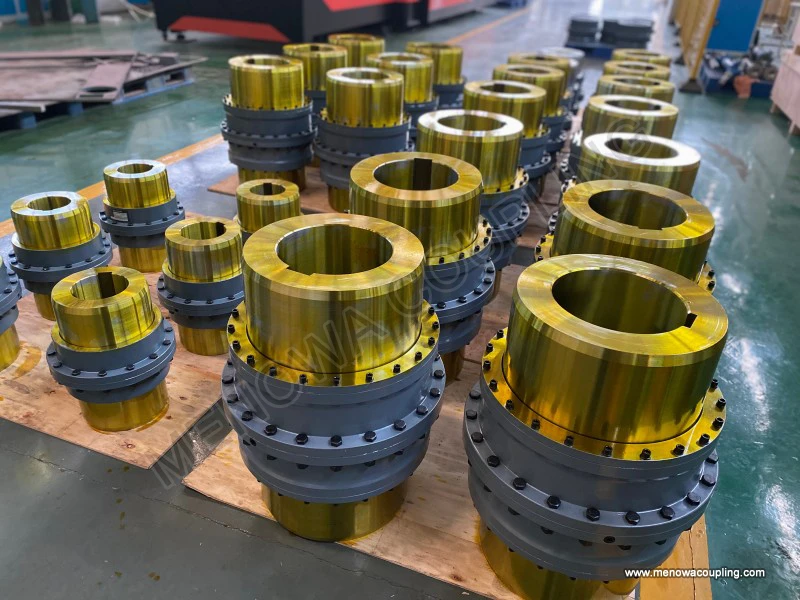
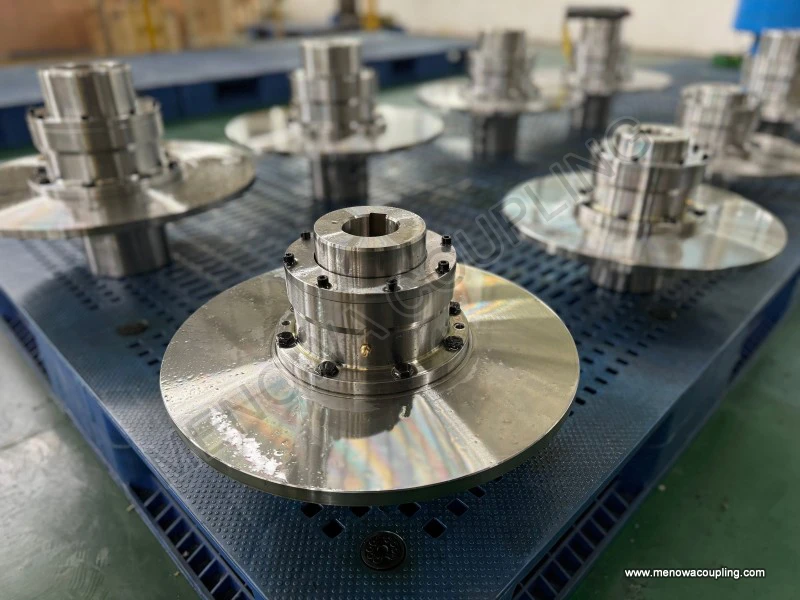
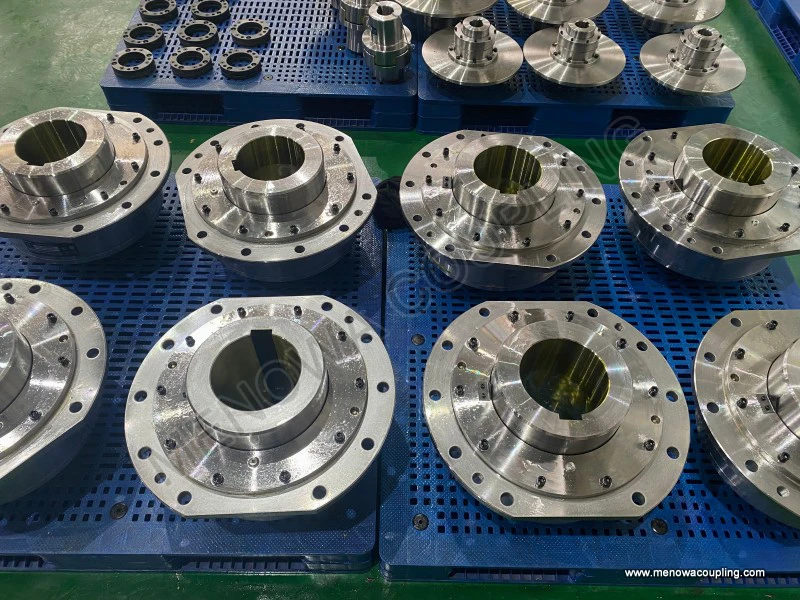
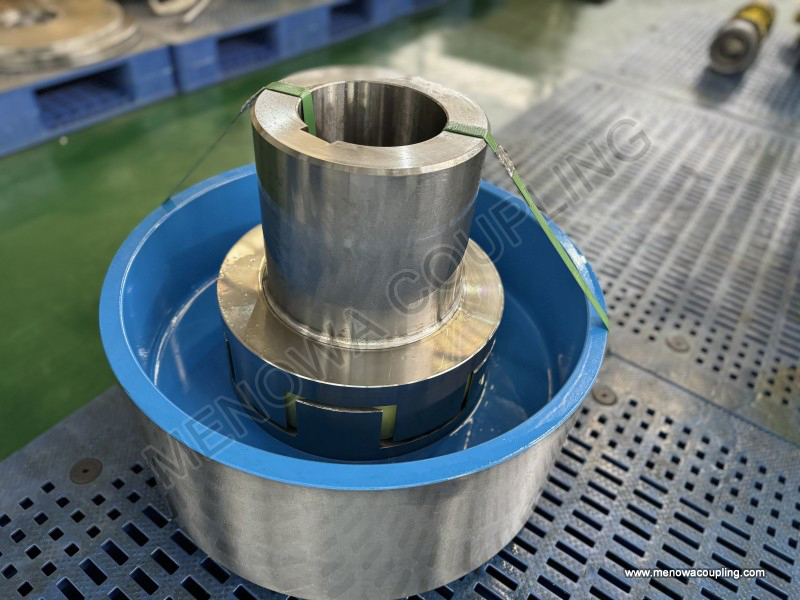
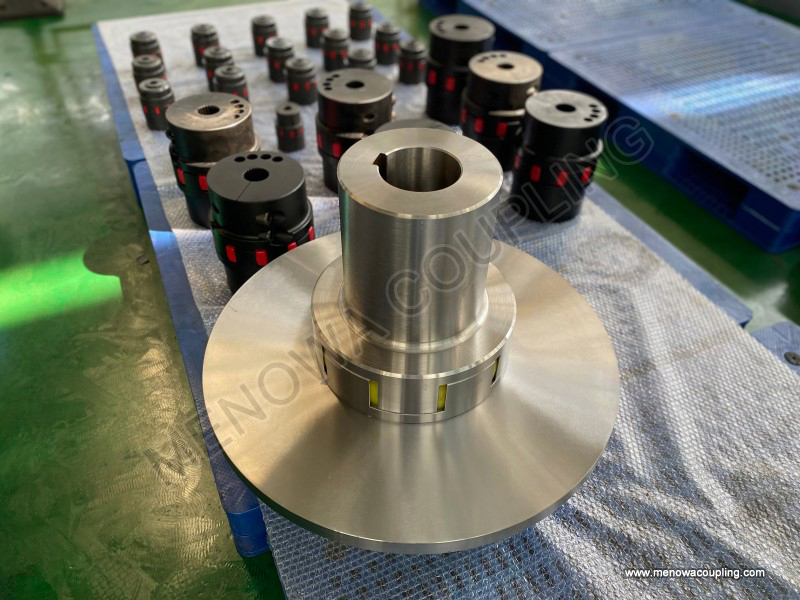
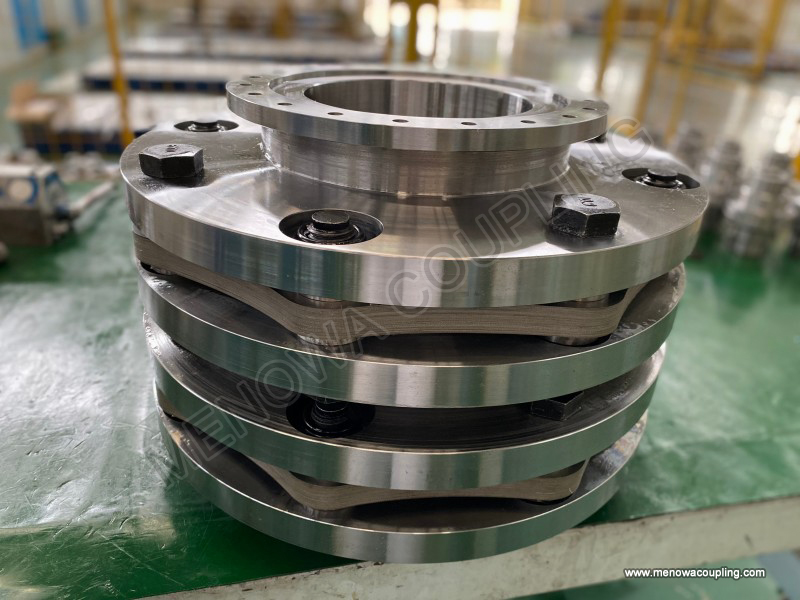
To fully understand the practical value and working logic of the brake drum coupling in industrial transmission systems, it is necessary to start with the basic structural composition of the equipment and clarify the functional division and matching relationship of each core component inside the whole assembly. A complete brake drum coupling assembly is composed of multiple core parts with different functional attributes, and each part is closely matched and coordinated with each other to jointly complete the dual tasks of power transmission and braking cooperation. The core basic components mainly include the coupling main body responsible for connecting the driving shaft and driven shaft, the precision matching hub installed at the end of the rotating shaft, the integrated brake drum with a smooth and uniform cylindrical friction outer surface, the flexible buffer assembly used for compensating shaft misalignment and absorbing operating vibration, the sealing protection assembly for isolating external dust and debris, and the fastening connecting parts for fixing all components to ensure synchronous rotation. Among all these components, the coupling main body and the matching hub form the basic transmission framework of the entire equipment. The hub is precisely sleeved and fixed on the outer circle of the driving shaft and driven shaft respectively through interference fit and fastening connection, realizing the stable connection between the coupling and the power input and output ends. When the power equipment such as the motor drives the driving shaft to rotate, the torque is steadily transmitted to the coupling main body through the hub, and then the power is synchronously transmitted to the driven shaft and the subsequent connected mechanical equipment, completing the basic power transmission work of the mechanical system. The brake drum part integrated on the outer side of the coupling main body is the core functional structure different from ordinary traditional couplings. Its outer cylindrical surface is processed by precision machining and special surface treatment to form a uniform and smooth friction working surface, which is the direct matching part for the external independent brake device to perform friction braking work. Unlike professional brake discs or independent brake wheels used alone, the brake drum of the brake drum coupling and the coupling transmission structure are integrally designed and processed or firmly connected into a synchronous rotating whole, so there is no relative rotation and displacement between the brake drum and the transmission coupling part during all operation and braking processes, ensuring that the braking force applied by the external brake can directly act on the rotating transmission shaft system without intermediate transmission loss, and improving the response efficiency and braking stability of the entire braking process.
The flexible buffer assembly inside the brake drum coupling is an indispensable key structure to ensure the long-term stable operation of the equipment and adapt to complex working conditions, and it is also an important difference between high-quality brake drum couplings and ordinary rigid connecting parts. In the actual installation and operation process of industrial mechanical equipment, it is difficult to achieve absolute perfect coaxial alignment between the driving shaft and the driven shaft due to installation accuracy errors, equipment foundation settlement, long-term operation vibration and thermal expansion and contraction of components during operation. Slight radial deviation, angular deviation and axial displacement between the two shafts are inevitable objective phenomena. If rigid connection parts are used for direct connection, these unavoidable misalignments will generate additional alternating stress and shear force on the shaft and connecting components during each rotation cycle of the equipment, resulting in severe wear of the shaft surface, fatigue damage of connecting parts, obvious vibration and noise during equipment operation, and even shaft fracture and equipment shutdown failure in severe cases. The flexible buffer assembly built into the brake drum coupling is designed to solve this practical industrial operation problem. This assembly is mostly made of high-elasticity wear-resistant polymer materials or special metal elastic structural parts, which have good elastic deformation ability and vibration absorption performance. During the normal power transmission process of the equipment, the flexible buffer assembly can rely on its own elastic deformation to automatically compensate for various slight misalignments between the driving shaft and the driven shaft, eliminate the additional mechanical stress generated by shaft deviation, and avoid rigid friction and collision between metal components. At the same time, it can effectively absorb the instantaneous shock load generated by equipment start-up, load sudden change and operation impact, reduce the vibration amplitude of the entire transmission system, make the power transmission process more stable and smooth, and reduce the fatigue loss of each component of the coupling and the connected shaft system. In addition, the flexible buffer structure can also play a good role in noise reduction during equipment operation, reducing the harsh mechanical noise generated by rigid friction and impact between parts, and improving the overall operating environment of the industrial production site.
The sealing protection assembly of the brake drum coupling is a structural detail that determines the service life and long-term operating stability of the equipment, and plays a vital role in adapting to various harsh industrial working environments. Most of the application scenarios of brake drum couplings are concentrated in industrial production links with harsh environmental conditions, such as mining operation sites with a lot of dust and sediment, metallurgical production workshops with high temperature and humidity, material handling yards with frequent material impact, and outdoor mechanical operation equipment exposed to wind and rain for a long time. In these working environments, a large amount of dust, sediment, metal debris, humid air and corrosive media will inevitably exist in the surrounding space. If these impurities enter the interior of the brake drum coupling, they will adhere to the surface of the flexible buffer assembly, the meshing part of the transmission structure and the matching gap of the rotating parts. Long-term accumulation will cause wear and aging of the flexible parts, increased friction of the transmission rotating parts, corrosion and rust of the metal structure, which will seriously affect the normal power transmission and braking matching performance of the coupling, and even lead to early failure and damage of the equipment. The sealing protection assembly adopts an integrated closed structural design, which is installed at the gap between the coupling rotating parts and the external environment. It can effectively isolate all kinds of external dust, debris and corrosive media from the internal working area of the coupling, prevent impurities from entering the interior to cause wear and corrosion, and at the same time lock the internal lubricating grease and protective grease inside the coupling structure to avoid grease loss and drying failure caused by long-term operation. A good sealing structure can ensure that all internal functional components of the brake drum coupling are always in a clean and well-lubricated working state, reduce the wear degree of parts in long-term cyclic operation, delay the aging speed of flexible components, and effectively extend the overall service cycle of the coupling.
The working operation logic of the brake drum coupling can be divided into two core working states according to the actual production and operation needs of industrial equipment, namely the normal power transmission operation state and the deceleration parking braking state, and the two states are switched flexibly and efficiently according to the production rhythm without mutual interference and influence. In the normal power transmission operation state of the equipment, the external brake device matched with the brake drum coupling is in a released non-working state, the brake friction part is separated from the outer cylindrical friction surface of the brake drum, and there is no friction resistance between the brake structure and the coupling brake drum. At this time, the entire brake drum coupling rotates synchronously with the driving shaft and the driven shaft as a whole. The power and torque generated by the power source are steadily transmitted through the coupling main body and the flexible buffer assembly. The flexible structure absorbs vibration and compensates for shaft misalignment during the transmission process, ensuring that the power transmission is stable and continuous, and the equipment operates smoothly according to the normal production operating speed. All components of the coupling only bear the torque load generated by normal power transmission and the slight vibration load generated by equipment operation, without additional braking friction load, and each part operates in a stable and low-loss working state. When the production process needs equipment deceleration, temporary shutdown, precise parking or emergency stop due to unexpected conditions, the external brake device quickly acts under the control of the electrical control system or mechanical operating mechanism. The friction parts of the brake are tightly pressed on the outer cylindrical friction surface of the brake drum coupling, and stable and uniform friction force is generated between the brake friction parts and the brake drum surface. With the continuous effect of friction force, the rotational kinetic energy of the coupling and the entire connected shaft system and mechanical equipment is gradually converted into heat energy, which is dissipated into the surrounding environment through the brake drum surface and the brake structure. The rotating speed of the shaft system and equipment gradually decreases until the equipment completely stops rotating and reaches a stable parking state. After the equipment completes parking and needs to restart operation, the external brake device releases the pressure on the brake drum, the friction contact state is disconnected, and the brake drum coupling returns to the normal power transmission operation state again.
The material selection of each component of the brake drum coupling is directly related to its mechanical bearing capacity, wear resistance, high temperature resistance and service life in different working conditions, and the scientific and reasonable material matching is the basic premise to ensure the reliable performance of the coupling. The coupling main body, hub and brake drum, which bear the main torque load and braking friction load, are mostly made of high-strength cast steel or alloy structural steel materials with good comprehensive mechanical properties. These metal materials have high structural rigidity, strong torque bearing capacity and good impact resistance, and can withstand the alternating torque load generated by long-term operation and the instantaneous impact load generated by frequent start-stop and braking. At the same time, these materials have good thermal stability, and will not produce obvious structural deformation and performance decline even under the high temperature working environment generated by long-term friction and braking. The outer friction surface of the brake drum will be subjected to frequent friction and extrusion with the brake friction parts for a long time, so on the basis of selecting high-strength steel materials, the surface will be processed by quenching and tempering treatment and surface hardening treatment to improve the surface hardness and friction wear resistance, reduce the wear rate of the friction surface in long-term cyclic braking, and ensure the long-term stability of the friction braking effect. The flexible buffer assembly is made of different elastic materials according to different working condition requirements. For conventional normal temperature and medium-load working conditions, high-strength rubber and polyurethane elastic materials are mostly selected. These materials have good elasticity, vibration absorption performance and fatigue resistance, and can meet the daily misalignment compensation and vibration reduction needs of conventional equipment. For special working conditions such as high temperature, low temperature, strong corrosion and heavy load, special metal elastic parts and high-temperature resistant elastic polymer materials are selected to ensure that the flexible buffer structure will not deform, age or fail in extreme working environments. The sealing protection parts are made of wear-resistant and aging-resistant rubber and plastic composite materials, which have good sealing performance, anti-aging ability and environmental adaptability, and can maintain stable sealing and protection effects in long-term outdoor and harsh industrial environments.
The installation and commissioning work of the brake drum coupling is a key link to ensure its subsequent stable operation and give full play to transmission and braking performance, and standardized and accurate installation operation can effectively avoid many subsequent operation failures and abnormal wear problems. Before the formal installation of the coupling, the staff need to carefully check all the components of the brake drum coupling to ensure that there are no casting defects, structural deformation, surface cracks and damage on the surface and inside of all metal parts, no aging, cracking and damage of the flexible buffer parts, and no deformation and damage of the sealing parts. At the same time, the surface of the driving shaft and driven shaft installation position should be cleaned and polished to remove rust, oil stains and burrs on the shaft surface, ensuring that the matching surface is smooth and clean, which is convenient for the subsequent precise assembly and fastening of the hub. In the formal installation process, the hub is first sleeved on the driving shaft and driven shaft respectively, and the coaxiality and installation position of the hub are accurately adjusted according to the equipment installation drawing and assembly process requirements, so that the installation position of the hub meets the design standard, and then the fastening bolts and positioning parts are locked and fixed to ensure that there is no relative rotation and displacement between the hub and the shaft during operation. After the hub is installed and fixed, the coupling main body with the brake drum and the flexible buffer assembly are assembled in sequence, and the connection gap and coaxiality between all connecting parts are adjusted in real time during the assembly process to ensure that the overall coaxiality of the entire brake drum coupling after assembly meets the operation requirements, and there is no obvious radial runout and axial deviation. After the assembly of all components is completed, the matching gap between the external brake device and the brake drum surface needs to be debugged accurately. The gap between the brake friction parts and the brake drum should be kept uniform and moderate, neither too large to affect the braking response speed, nor too small to cause friction and abrasion between the brake and the brake drum during normal operation. After the installation and debugging are completed, no-load trial operation should be carried out first. The equipment is operated at low speed without load to observe whether the coupling has abnormal vibration, noise and friction during operation, check whether the braking action is sensitive and reliable, and adjust and optimize the installation parameters in time if abnormal conditions are found. After the no-load trial operation is normal, gradual load test operation is carried out to ensure that the brake drum coupling can maintain stable transmission and reliable braking performance under rated load working conditions.
Daily maintenance and regular inspection of the brake drum coupling are important measures to extend its service life, reduce equipment failure rate and ensure long-term stable operation, and scientific maintenance management can avoid most sudden equipment shutdown failures caused by coupling wear and aging. In the daily production and operation process, the operation staff only need to carry out simple daily inspection work every day, mainly observing whether the brake drum coupling has abnormal vibration, abnormal noise and surface high temperature phenomenon during equipment operation, checking whether the brake drum surface has obvious wear scratches, cracks and deformation, and confirming whether the sealing structure has oil leakage and dust ingress. Once abnormal vibration, excessive noise or local overheating of the brake drum surface are found in daily inspection, the equipment should be shut down in time for inspection and troubleshooting to avoid small problems evolving into large equipment failures. On the basis of daily inspection, regular comprehensive maintenance and inspection work should be carried out according to the operating intensity and working environment conditions of the equipment. For couplings operating under conventional medium-load and good environmental conditions, a comprehensive maintenance and inspection can be carried out every few months; for couplings operating under heavy load, frequent start-stop and harsh dust and high-temperature environments, the maintenance cycle needs to be appropriately shortened. The content of regular maintenance includes checking the fastening state of all connecting bolts and positioning parts of the coupling, tightening the loose bolts in time to avoid component displacement caused by loose fastening parts during operation; checking the wear and aging degree of the internal flexible buffer assembly, replacing the severely aged and deformed flexible parts in a timely manner to ensure the misalignment compensation and vibration reduction functions are normally played; checking the wear degree of the brake drum friction surface, polishing and repairing the slight wear and scratches on the surface, and replacing the brake drum in time if there is serious wear, deformation and cracks; checking the sealing performance of the sealing protection assembly, replacing the aging and failed sealing parts, and supplementing the internal lubricating grease to ensure good internal lubrication and sealing protection effect. In addition, during the long-term shutdown of the equipment, the surface of the brake drum coupling should be cleaned and anti-rust treated to avoid rust and corrosion of metal components affecting subsequent normal use.
In the long-term operation process of the brake drum coupling, due to different working load levels, working environment conditions and maintenance management quality, some common minor operation faults may inevitably appear. Timely and accurate fault judgment and scientific targeted disposal can quickly restore the normal working performance of the coupling and reduce the impact on industrial production operation. The most common abnormal phenomenon in the operation process is obvious vibration and abnormal noise of the coupling during equipment operation. This situation is mostly caused by excessive shaft misalignment exceeding the compensation range of the flexible assembly, loose connecting bolts, serious aging and deformation of the flexible buffer parts, and uneven wear of the brake drum friction surface. When dealing with such faults, first shut down the equipment for inspection, readjust the coaxiality of the driving and driven shafts to ensure that the misalignment is within the allowable compensation range of the coupling, tighten all loose fastening bolts, replace the aging and failed flexible buffer parts, and polish and repair the uneven friction surface of the brake drum. Another common fault is weak braking effect and prolonged parking time of the equipment. The main reasons for this problem include excessive gap between the external brake device and the brake drum surface, serious wear of the brake friction parts, surface oil pollution and corrosion of the brake drum friction surface, and reduced friction coefficient. The disposal method is to readjust the matching gap between the brake and the brake drum, replace the severely worn brake friction parts, thoroughly clean the oil pollution and corrosion on the brake drum surface, and restore the friction performance of the friction surface. In addition, there is also the fault of local overheating of the coupling during operation, which is mostly caused by long-term friction between the brake and the brake drum in the released state, insufficient internal lubrication of the coupling, and excessive load operation. It is necessary to check and adjust the brake release gap, supplement internal lubricating grease, and avoid long-term overload operation of the equipment. Through targeted inspection and disposal of common faults, the stable working state of the brake drum coupling can be effectively maintained.
The wide application of brake drum couplings in various industrial production fields is inseparable from its unique integrated structural advantages and excellent comprehensive working performance, and it shows strong applicability and practical value in multiple industrial scenarios with different working condition characteristics. In the field of material handling and lifting machinery such as various cranes and conveyor equipment, the equipment needs frequent start-up, lifting operation, deceleration positioning and accurate parking work, and the mechanical transmission system needs to bear large torque load and frequent start-stop impact. The brake drum coupling integrates transmission and braking functions, which can meet the needs of high torque stable power transmission and frequent reliable braking positioning, and its flexible buffer structure can absorb the impact load generated by lifting and start-stop, protecting the lifting machinery and conveyor equipment from impact damage. In the field of mining and quarrying mechanical equipment, the working environment is harsh with a lot of dust, heavy equipment load and long-term continuous operation requirements. The brake drum coupling has a good sealing protection structure and high structural rigidity, which can adapt to the dusty and harsh working environment, resist heavy torque load and long-term continuous operation wear, and ensure the stable operation and reliable braking of mining transmission equipment. In the metallurgical industry production line, the equipment is in a high-temperature and humid working environment for a long time, and the mechanical equipment needs to run continuously with stable speed and accurate braking and parking in each production process link. The brake drum coupling is made of high-temperature resistant and high-strength materials, which can adapt to the high-temperature working environment, maintain stable transmission performance and braking effect, and meet the continuous and stable operation needs of metallurgical production equipment. In addition, in industrial manufacturing machinery, port handling equipment, construction engineering machinery and other fields, brake drum couplings are also widely used, providing reliable basic component support for the stable operation of various mechanical equipment.
With the continuous upgrading and development of modern industrial mechanical equipment towards high efficiency, stability, energy saving and long service life, the performance optimization and structural upgrading of brake drum couplings are also constantly advancing with the development of industrial technology. In the current industrial development trend, mechanical equipment has higher and higher requirements for transmission stability, braking accuracy, environmental adaptability and full-life cycle economy of matching coupling components. The traditional brake drum coupling basic structure can no longer fully adapt to the extreme working conditions of some high-precision, heavy-duty and long-term continuous operation equipment. Therefore, the continuous optimization and upgrading of brake drum coupling design and manufacturing technology have become an important part of the development of industrial transmission components. In terms of structural design optimization, the modern brake drum coupling adopts more streamlined and integrated structural design, further reduces the number of connecting parts, optimizes the internal force transmission path, reduces the structural stress concentration, and improves the overall structural stability and torque transmission efficiency. In terms of material innovation and application, new high-strength alloy materials, high-temperature resistant and wear-resistant composite materials and high-elasticity durable flexible materials are gradually applied to the production and manufacturing of brake drum couplings, further improving the mechanical bearing capacity, wear resistance, high temperature resistance and fatigue resistance of the products, and adapting to more extreme industrial working conditions. In terms of processing and manufacturing technology, modern precision machining technology and surface treatment technology are used to process the coupling and brake drum friction surface, improving the dimensional accuracy and surface finish of the components, reducing the operation friction and wear, and improving the braking stability and transmission efficiency. In terms of matching intelligent operation, the brake drum coupling is gradually matched with modern intelligent monitoring systems, which can monitor the operating temperature, vibration amplitude, wear degree and other operating data of the coupling in real time, realize early warning of potential faults, and further improve the operation safety and maintenance convenience of the equipment.
In summary, the brake drum coupling, as an important integrated mechanical component combining power transmission and braking matching functions, has irreplaceable important value in the field of modern industrial mechanical transmission. Its unique integrated structural design solves many practical problems such as complex layout, large assembly error and poor coordination of traditional separate transmission and braking components. Through reasonable structural composition, scientific material selection standardized installation and commissioning and perfect daily maintenance management, the brake drum coupling can maintain stable and efficient power transmission performance and reliable and sensitive braking effect in various complex and harsh industrial working environments. It not only optimizes the structural layout of mechanical equipment, reduces the overall operation and maintenance cost of the system, but also effectively improves the operation stability and safety of industrial mechanical equipment, and extends the overall service life of transmission and braking systems. With the continuous progress of industrial production technology and the continuous upgrading of mechanical equipment performance requirements, the brake drum coupling will continue to carry out structural optimization, material upgrading and performance improvement, constantly adapt to the changing industrial working condition needs, and provide more solid and reliable basic component guarantee for the stable and efficient operation of all walks of industrial mechanical equipment. In the future industrial mechanical transmission system design and equipment supporting selection work, the application value and comprehensive advantages of brake drum couplings will be further highlighted, becoming one of the key basic mechanical components indispensable in modern industrial production and mechanical operation.
Post Date: Apr 26, 2026
https://www.menowacoupling.com/coupling-supplier/brake-drum-coupling.html
Tags
Related Articles
Advantages Of Flexible Coupling
In the complex and interconnected world of mechanical power transmission, the seamless transfer of torque and rotational motion between rotating shafts stands as a foundational requirement for the steady operation of all types of industrial and commercial machinery. Every mechanical system that relies on motors, engines…
 WeChat
 WhatsApp