Disc Coupling
In the complex and interconnected ecosystem of modern mechanical power transmission, the reliable connection between rotating shafts stands as one of the most foundational and indispensable technical foundations for the stable operation of all types of industrial mechanical equipment. Every mechanical system that relies on rotational power output and power transfer, from large-scale industrial rotating machinery supporting industrial production and energy conversion to medium and small precision transmission equipment serving automated processing and intelligent manufacturing, needs a reasonable and efficient shaft connection component to realize the continuous, stable and accurate transmission of torque and rotational motion between the driving end and the driven end. Among numerous types of shaft coupling components developed and optimized for different transmission scenarios and working conditions, disc coupling has gradually become a mainstream transmission connection choice widely recognized and adopted in the field of high-precision transmission, high-speed operation and long-cycle continuous working conditions by virtue of its all-metal flexible structural form, torsionally rigid transmission characteristics, excellent misalignment compensation capacity and maintenance-free long-term operation advantages. Unlike traditional flexible couplings that rely on elastic rubber components for deformation buffering or gear couplings that depend on meshing friction for torque transmission, disc coupling adopts an all-metal structural design without any vulnerable elastic accessories or easily worn meshing transmission structures, and completes torque transmission and shaft misalignment compensation through the micro elastic deformation of thin metal disc packs. This unique structural and working mechanism not only endows disc coupling with outstanding adaptability to harsh working environments, but also enables it to maintain stable transmission performance and low operating vibration during long-term continuous operation, effectively reducing the additional mechanical stress and component wear caused by shaft position deviation and operational vibration to the connected power equipment and working machinery. In the actual operation of mechanical transmission systems, the coaxiality deviation between the driving shaft and the driven shaft is an objective and unavoidable mechanical phenomenon, which is affected by many factors such as equipment installation accuracy, structural thermal deformation during equipment operation, mechanical foundation settlement, long-term component fatigue deformation and dynamic load impact in the working process. Any shaft connection device used in industrial scenarios cannot completely eliminate the existence of misalignment, and the core competitiveness of excellent coupling products lies in how to effectively compensate various forms of misalignment within a reasonable deformation range, minimize the additional bending stress and alternating shear stress generated on the shaft and key connecting parts during power transmission, and ensure the synchronization and stability of rotational speed and torque transmission without causing additional energy loss and mechanical vibration. Disc coupling perfectly balances the two core performance requirements of torsional rigidity for accurate torque transmission and flexible deformation for misalignment compensation through the ingenious structural matching of metal hubs, high-strength connecting bolts and flexible metal disc packs, filling the performance gap between rigid couplings with no deformation compensation capacity and elastic couplings with insufficient torsional rigidity and poor high-speed adaptability.
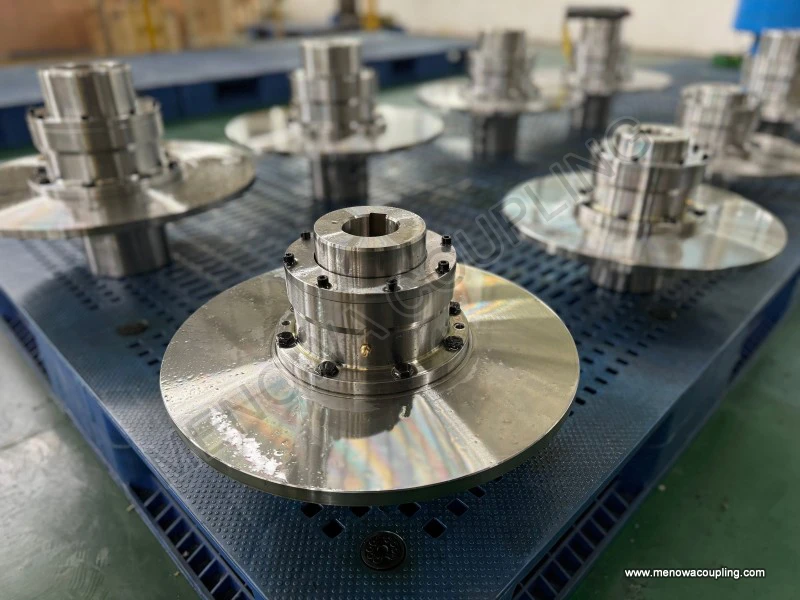
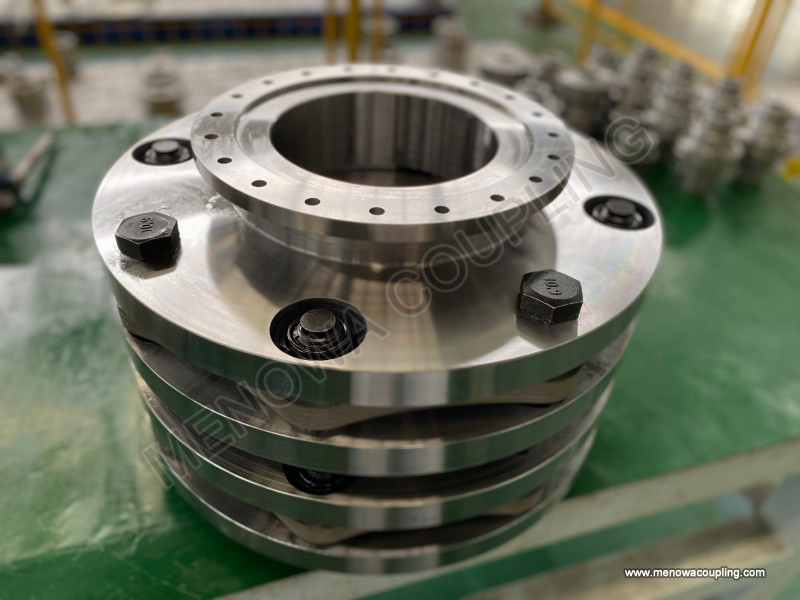
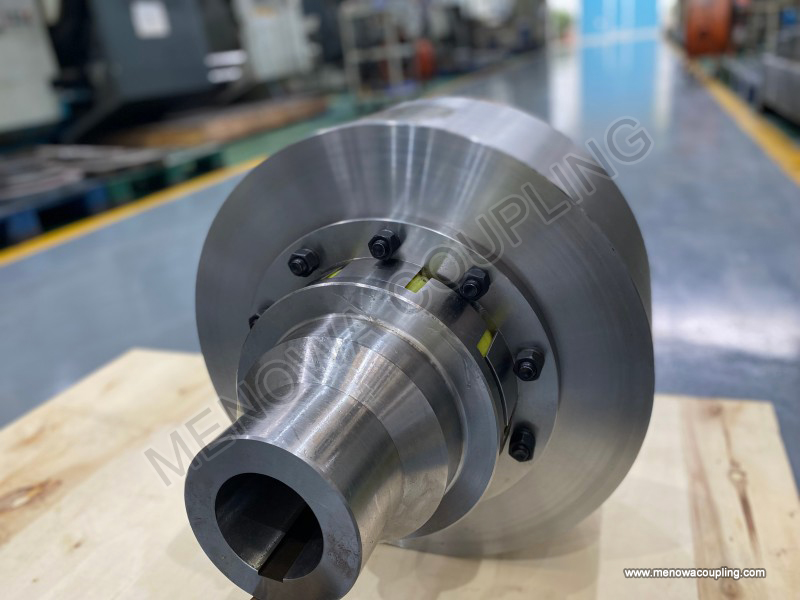
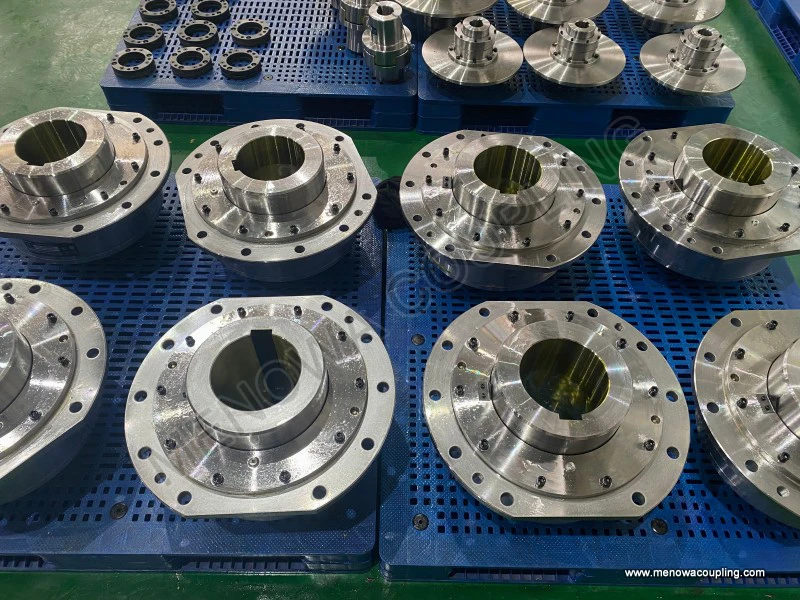
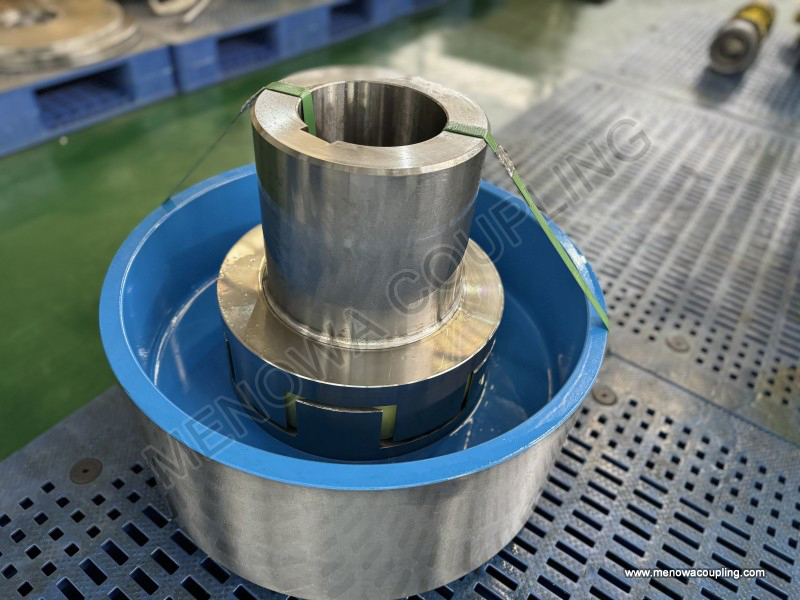
To deeply understand the inherent advantages and application value of disc coupling in mechanical transmission systems, it is necessary to start with its basic structural composition and core working mechanism, and systematically analyze the functional positioning and coordination relationship of each component in the whole power transmission process. The basic structural composition of disc coupling follows a simple and practical mechanical design logic, and the overall structure is mainly composed of two metal hubs used for shaft installation and fixation, one or more groups of thin metal flexible disc packs responsible for torque transmission and deformation compensation, and high-strength fastening bolts and matching locking parts used for connecting hubs and disc packs. Each component has clear division of labor and closely matched functions, and there is no redundant structural design or easily damaged auxiliary parts in the whole assembly structure, which lays a solid structural foundation for the long-term reliable operation of disc coupling. The two hubs are the basic installation and bearing parts of the disc coupling, which are directly sleeved and fixed on the driving shaft and the driven shaft of the mechanical equipment respectively. The structural size and inner hole specification of the hubs can be adaptively designed according to the shaft diameter of different mechanical equipment and the actual torque demand of the transmission system. The hubs are usually made of high-strength metal materials with good rigidity and structural stability, which can ensure that no obvious plastic deformation or structural loosening occurs during long-term torque bearing and rotational operation. The surface of the hubs is processed with precision bolt holes arranged according to a fixed bolt circle trajectory, which is used for penetrating and fixing connecting bolts, realizing the stable connection between the hubs and the flexible disc packs, and ensuring that torque can be smoothly transferred from the driving hub to the disc packs and then to the driven hub in sequence. The flexible disc pack is the core functional component of the entire disc coupling and the key part to distinguish it from other types of couplings. The disc pack is composed of multiple superposed thin metal discs processed by precision stamping and heat treatment, and each thin disc has uniform thickness, smooth surface and stable mechanical properties. These metal discs are made of high-quality metal materials with good fatigue resistance and elastic deformation recovery performance, which can withstand frequent micro elastic deformation for a long time without plastic deformation or fatigue fracture. In the assembly state, the disc pack is clamped and fixed between the driving hub and the driven hub or between the hub and the intermediate spacer, and the torque transmission between different bolt positions is completed through the surface friction and tensile deformation of the metal discs themselves. Different from the meshing transmission mode of gear couplings and the compression deformation mode of rubber elastic couplings, disc coupling relies on the tangential force transmission between bolts and the micro tensile and bending deformation of the metal disc material between adjacent bolt holes to realize power transmission and misalignment compensation. When the mechanical equipment starts to operate and the driving shaft drives the driving hub to rotate, the rotational torque acts on the disc pack through the fastening bolts on the driving hub, and the disc pack transmits the torque to the fastening bolts on the driven hub through the internal stress transfer of the metal disc itself, and finally drives the driven hub and the driven shaft to rotate synchronously, realizing the continuous transfer of mechanical power in the entire transmission link.
The misalignment compensation function of disc coupling for the connected rotating shafts is realized by the controllable micro elastic deformation of the flexible metal disc pack during operation, which is also the core mechanical principle that enables it to adapt to various complex installation and operation working conditions. In actual industrial production scenarios, the misalignment between the driving shaft and the driven shaft of mechanical equipment is mainly divided into three typical forms, including axial misalignment, radial misalignment and angular misalignment, and these three types of misalignment often exist in a mixed state rather than a single independent form. Axial misalignment refers to the axial position deviation between the two shafts caused by equipment installation errors or thermal expansion and contraction of components during operation, radial misalignment is the center distance deviation between the two shaft rotation centers in the radial direction, and angular misalignment means that there is a certain included angle between the central axes of the two rotating shafts, and the two shafts cannot maintain absolute parallel and coaxial rotation. For rigid couplings, any form of misalignment will generate huge additional mechanical stress on the shaft and connecting parts, leading to shaft bending deformation, bolt loosening, component vibration and even equipment failure and shutdown in a short time. For ordinary elastic couplings, although they can compensate for part of the misalignment through the deformation of elastic components, the elastic deformation range is large, the torsional rigidity is low, and it is easy to cause rotational speed lag and torque transmission loss during high-speed operation, which cannot meet the accuracy requirements of precision transmission equipment. The flexible metal disc pack of disc coupling can produce targeted micro elastic deformation according to different types of misalignment. When axial misalignment occurs between the two shafts, the metal discs in the disc pack produce slight axial bending deformation to adapt to the axial position change of the shafts; when radial misalignment exists, the discs produce uniform radial shear deformation between bolt holes to offset the radial center deviation; when angular misalignment occurs, different positions of the disc pack produce differentiated tensile and compressive bending deformation to balance the angle difference between the two shaft axes. All the deformations of the disc pack are within the elastic deformation range of the metal material, and the discs can quickly recover to the original structural state after the misalignment state disappears, without permanent deformation or structural damage. This elastic deformation compensation mode not only effectively eliminates the additional stress caused by shaft misalignment, but also ensures that the overall torsional rigidity of the coupling will not be significantly reduced, realizing the organic unity of flexible compensation and rigid torque transmission. In addition, the all-metal structural design makes the disc coupling not rely on any lubricating medium to maintain normal operation. There is no relative sliding friction or meshing wear between internal components during the whole working process, which fundamentally avoids the performance attenuation and component aging problems caused by lubricant deterioration, wear particle accumulation and elastic material fatigue aging existing in other types of couplings.
The material selection of each key component of disc coupling is directly related to its transmission performance, service life and environmental adaptability, and the scientific and reasonable material matching design is an important prerequisite to ensure that the coupling can maintain stable operation under different working conditions. The hubs, as the main bearing and installation components of the coupling, need to have high structural rigidity, good mechanical strength and strong impact resistance to withstand the instantaneous torque impact and long-term cyclic load during equipment startup, shutdown and variable load operation. Conventional hub materials are mostly high-strength alloy steel or lightweight high-rigidity aluminum alloy materials. Alloy steel hubs are suitable for heavy-duty transmission working conditions with large torque demand and harsh operating environments, and have strong bearing capacity and structural stability; aluminum alloy hubs are mostly used for light-duty and high-speed precision transmission scenarios, with the advantages of light overall weight, small rotational inertia and low dynamic operation load, which can effectively reduce the additional dynamic load of the transmission system during high-speed rotation. The flexible disc pack, as the core deformation and torque transmission component, has the highest requirements on material performance, and the selected materials must have excellent fatigue resistance, stable elastic recovery performance, high tensile strength and good corrosion resistance. The disc pack is usually made of high-quality stainless steel materials processed by special smelting and heat treatment processes. After precision tempering and surface treatment, the stainless steel discs can maintain stable mechanical properties under long-term repeated micro deformation, and are not easy to produce fatigue cracks, plastic deformation and surface corrosion damage even in humid, dusty and slightly corrosive working environments. The high-strength fastening bolts used for connection need to have high tensile shear strength and good locking performance, to ensure that no loosening or fracture occurs during long-term high-speed rotation and torque transmission. The bolts are made of high-strength alloy materials with special quenching and tempering treatment, and matched with anti-loosening gaskets and locking structures, which can maintain the clamping stability between hubs and disc packs for a long time and avoid assembly gaps caused by bolt loosening, thereby preventing mechanical vibration and transmission accuracy reduction during operation. The overall material matching design of disc coupling abandons all non-metal vulnerable materials, and all metal components have strong environmental adaptability, can work normally in a wide temperature range, and will not be affected by temperature changes, humidity changes and dust accumulation to produce performance degradation, which is incomparable to couplings relying on rubber, plastic and other non-metal elastic components.
Disc coupling can be divided into two main structural types according to the number of flexible disc packs and the presence or absence of intermediate spacer structure, namely single disc coupling and double disc coupling, and the two structural forms have different performance characteristics and applicable working condition scenarios, which can meet the diversified transmission needs of different mechanical equipment. Single disc coupling is the simplest structural form of disc coupling, which is composed of two hubs and a single group of flexible disc packs clamped between the two hubs, with no additional intermediate spacer structure. The overall structure of this type of coupling is compact, the axial installation size is small, the rotational inertia is low, and the assembly and disassembly process is simple and convenient. The single disc structure can compensate for conventional axial and angular misalignment generated in the operation of conventional transmission equipment, and is suitable for medium and small torque transmission scenarios with small installation space, low misalignment degree and conventional operating speed. It is widely used in small and medium-sized automated production equipment, precision processing machinery, small fan and pump transmission systems and other mechanical equipment with compact structural layout and stable working load. Double disc coupling is equipped with an intermediate spacer structure on the basis of two groups of flexible disc packs and two hubs, and the two disc packs are respectively arranged at the two ends of the intermediate spacer, forming a relatively independent double flexible deformation structure. The addition of the intermediate spacer makes the double disc coupling have larger axial installation distance and stronger comprehensive misalignment compensation capacity, especially for radial misalignment and large angular misalignment generated by equipment installation deviation and thermal deformation. The double disc packs can produce coordinated deformation at the same time, dispersing the deformation stress of a single disc pack, reducing the fatigue load of a single thin disc, and effectively prolonging the overall service life of the coupling. The intermediate spacer can be processed and manufactured according to the actual installation distance requirements of the equipment, which is convenient for adapting to the long-distance shaft connection requirements of large mechanical equipment. Double disc coupling is mostly used in large-scale industrial transmission equipment, high-speed rotating power equipment and mechanical systems with large load fluctuation and harsh working conditions, such as large industrial pumps, compressors, power generation equipment and heavy-duty reducer transmission systems. Whether it is single disc or double disc structural form, disc coupling maintains the all-metal non-lubricated design characteristics, and the difference in structure only adjusts the misalignment compensation range and installation adaptability, without changing the core working principle and basic performance advantages of the product.
In the actual operation and application of mechanical transmission systems, disc coupling shows incomparable comprehensive performance advantages compared with other traditional coupling products, and these advantages make it occupy an important position in high-end and high-demand industrial transmission scenarios. First of all, disc coupling has zero backlash transmission characteristics in the power transmission process. Due to the precise assembly and fastening connection between hubs, disc packs and bolts, there is no assembly gap and transmission clearance in the whole coupling structure. In the process of forward and reverse rotation and variable load operation, the torque and rotational speed can be transmitted synchronously and accurately without rotation lag and torque hysteresis, which fully meets the high-precision transmission requirements of intelligent manufacturing equipment and precision motion control systems. Secondly, the all-metal structural design enables disc coupling to have excellent high-speed operation adaptability. The metal disc pack has small deformation resistance and stable dynamic balance performance, and will not produce large vibration and amplitude increase during high-speed rotation. It can maintain smooth and stable operation under high rotational speed working conditions, and will not generate additional dynamic load and vibration impact on the equipment. Thirdly, disc coupling has extremely low maintenance demand in the whole service cycle. There is no relative movement and wear between internal components, no need for regular lubrication, oil change and replacement of vulnerable parts, and daily maintenance only needs regular visual inspection of the fastening state of bolts and the surface integrity of disc packs. Compared with gear couplings that need regular lubrication maintenance and elastic couplings that need frequent replacement of elastic components, disc coupling greatly reduces the later operation and maintenance cost and equipment downtime, and improves the continuous operation efficiency of the production line. In addition, disc coupling has good vibration absorption and impact buffering performance. The micro elastic deformation of the metal disc pack can absorb the instantaneous vibration and impact load generated by equipment startup, shutdown and sudden load change, reduce the vibration amplitude of the transmission system, protect the shaft, bearing and other key components of the equipment from impact damage, and prolong the overall service life of the mechanical equipment. At the same time, the metal material has strong corrosion resistance and aging resistance, and can maintain stable performance in harsh working environments such as high temperature, low temperature, humidity and dust, without performance attenuation caused by environmental factors.
The application scope of disc coupling covers almost all industrial fields involving mechanical power transmission, and it shows excellent application adaptability in different industry scenarios and different working condition requirements. In the field of energy and power equipment, disc coupling is applied to the shaft connection of power generation supporting equipment, large fans and water pump units. These equipment need long-term continuous uninterrupted operation, and have high requirements for the stability and durability of coupling components. The maintenance-free performance and long service life of disc coupling can ensure the long-term stable operation of energy power equipment and reduce the equipment failure rate caused by coupling problems. In the field of industrial manufacturing and automated production, precision processing machine tools, robotic transmission mechanisms and automated assembly lines have high requirements for transmission accuracy and motion synchronization. The zero backlash and high torsional rigidity characteristics of disc coupling ensure the precise transmission of motion and torque, avoid processing errors and motion deviation caused by transmission clearance, and improve the processing accuracy and production efficiency of automated production equipment. In the field of petrochemical and chemical industry production, the production equipment is usually in harsh working environments such as corrosive medium contact and large temperature change. The all-metal corrosion-resistant structure of disc coupling can adapt to the harsh working conditions of chemical production, and will not be corroded and damaged by chemical media, ensuring the safe operation of chemical production equipment. In the field of metallurgy and heavy industry, heavy-duty transmission equipment has large torque transmission demand and frequent load impact. The high structural strength and good impact resistance of disc coupling can bear heavy load torque and instantaneous impact load, and maintain the stability of heavy-duty transmission systems. In addition, disc coupling also has important application value in the fields of transportation equipment, aerospace supporting transmission components and new energy mechanical equipment. With the continuous upgrading of modern industrial production towards high precision, high efficiency and long-cycle continuous operation, the market demand for high-performance and low-maintenance coupling components is increasing day by day, and disc coupling, as a representative product of high-performance transmission connections, will have a broader application development space in the future industrial upgrading process.
The correct installation, commissioning and long-term scientific operation management are important guarantees to give full play to the performance advantages of disc coupling and extend its service life. Although disc coupling has strong working stability and low maintenance characteristics, unreasonable installation operation and long-term neglect of daily management will still lead to increased coupling operation stress, accelerated component fatigue and even early failure. In the equipment installation and commissioning stage, the coaxiality calibration of the driving shaft and the driven shaft is the key link of disc coupling installation. Although the coupling itself has good misalignment compensation capacity, excessive installation misalignment will make the disc pack bear long-term excessive deformation stress, accelerate the fatigue aging of the metal disc, and reduce the service life of the coupling. Professional precision calibration tools should be used to adjust the shaft position during installation, minimize the initial installation misalignment of the two shafts, and ensure that the coupling works within the optimal deformation compensation range. At the same time, the fastening bolts of the coupling need to be tightened in accordance with the specified torque and symmetrical tightening sequence, to avoid uneven bolt tightening force leading to unbalanced stress of the disc pack and structural eccentric load during operation. After the installation is completed, no-load trial operation and load test operation should be carried out to observe the operation vibration and rotation stability of the coupling, and adjust and correct any abnormal vibration and deviation in time. In the daily operation and management process of the equipment, regular routine inspection work should be formulated. The inspection content mainly includes checking whether the fastening bolts of the coupling are loose, whether the surface of the metal disc pack has obvious deformation, cracks and corrosion marks, and whether the coupling has abnormal vibration and abnormal noise during equipment operation. For long-term continuous operating equipment, regular shutdown maintenance and inspection should be arranged periodically to check the fatigue state of the disc pack and the wear state of the matching parts, and replace the disc pack in time if slight fatigue cracks or deformation signs are found, to avoid equipment safety accidents caused by sudden coupling failure. In addition, in the operation process of mechanical equipment, frequent sudden startup, sudden shutdown and long-term overload operation should be avoided as much as possible. Although disc coupling has certain impact buffering capacity, long-term frequent impact load and overload torque will still increase the operating load of the disc pack, accelerate component fatigue and affect the long-term stable operation of the coupling. Scientific installation, standardized commissioning and refined daily management can maximize the performance advantages of disc coupling, make it maintain efficient and stable transmission state for a long time, and create greater operational benefits for industrial mechanical transmission systems.
Looking at the overall development trend of modern mechanical power transmission technology, with the continuous progress of material processing technology, precision manufacturing technology and intelligent industrial production technology, the performance requirements for various mechanical transmission components are constantly improving, and high precision, high stability, long service life and low maintenance have become the core development direction of coupling products. Disc coupling, with its unique all-metal flexible deformation working mechanism, excellent transmission performance and wide working condition adaptability, has obvious technical advantages compared with traditional coupling products, and can well meet the increasingly stringent use requirements of modern industrial mechanical equipment. In the future, with the continuous innovation of new metal materials and precision processing technology, the structural design of disc coupling will be further optimized, the misalignment compensation capacity and fatigue resistance will be further improved, and the application scope in high-end precision manufacturing, extreme working condition operation and new energy equipment transmission fields will be further expanded. As an important basic component in mechanical power transmission systems, disc coupling will always rely on its reliable performance and practical structural design, provide stable and accurate shaft connection guarantee for the safe and efficient operation of various mechanical equipment, and play an irreplaceable basic supporting role in the continuous development and upgrading of modern industrial mechanical transmission technology.
Post Date: Apr 26, 2026
https://www.menowacoupling.com/coupling-supplier/disc-coupling.html
Tags
Related Articles
Advantages Of Flexible Coupling
In the complex and interconnected world of mechanical power transmission, the seamless transfer of torque and rotational motion between rotating shafts stands as a foundational requirement for the steady operation of all types of industrial and commercial machinery. Every mechanical system that relies on motors, engines…
 WeChat
 WhatsApp