Backlash-free Coupling
In the complex and interconnected operating ecosystem of modern industrial mechanical transmission systems, the stability, synchronization and positioning accuracy of power transmission between driving components and driven components determine the overall operating efficiency, service life and working reliability of the entire mechanical equipment. Every mechanical transmission link involves the connection of rotating shafts, and the connecting components responsible for torque transmission, misalignment compensation and motion synchronization play an indispensable foundational role in the normal operation of all types of mechanical equipment. Among various shaft connection components used in industrial production and precision mechanical processing, backlash-free coupling has gradually become a key basic component widely adopted in high-precision transmission scenarios due to its unique structural design, stable torque transmission performance and excellent motion synchronization effect. Unlike traditional ordinary couplings that inevitably have structural gaps and idle rotation intervals during operation, backlash-free coupling eliminates all internal clearance between matching parts through optimized structural layout and pre-tightening assembly design, realizing real-time synchronous rotation of the driving shaft and driven shaft in both forward and reverse operation processes, and avoiding motion hysteresis and transmission deviation caused by mechanical clearance. This core working characteristic makes this type of coupling break through the performance limitations of traditional connecting components, and fully adapt to the increasingly stringent precision control requirements of modern industrial automation, intelligent processing equipment and high-end motion control systems, providing reliable basic guarantee for the precise execution of mechanical motion commands and the stable output of production processing actions.
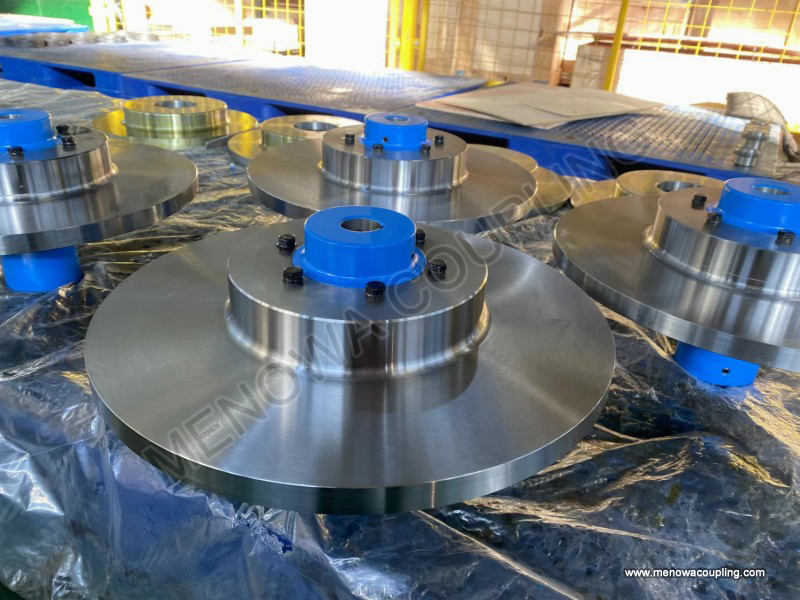
To fully understand the practical value and application significance of backlash-free coupling in modern mechanical transmission systems, it is first necessary to clarify the essential adverse effects of backlash in traditional coupling structures on mechanical operation and production processing. Backlash, also commonly referred to as mechanical clearance or idle stroke in the mechanical industry, refers to the tiny gap existing between the matching contact parts inside the coupling when two rotating shafts are connected and transmit torque. In the working process of ordinary couplings, this gap is an objective structural existence reserved for convenient assembly, thermal expansion and contraction of parts and slight mechanical displacement compensation. In low-speed, low-precision and unidirectional continuous rotation industrial scenarios, the slight backlash inside the coupling will not have an obvious impact on the basic operation of equipment and the completion of production tasks, and even plays a certain role in buffering mechanical vibration and reducing assembly difficulty. However, with the continuous upgrading of industrial production technology and the rapid development of precision manufacturing industry, more and more mechanical equipment needs to frequently switch forward and reverse rotation states, complete high-frequency reciprocating motion, and realize micron-level accurate positioning and repeated positioning operations. In these high-precision working scenarios, the traditional structural backlash will become a key hidden danger affecting equipment operation accuracy and motion stability. When the equipment switches the rotation direction or adjusts the motion position, the internal gap of the coupling will lead to a short idle rotation process between the driving shaft and the driven shaft. The motion command issued by the control system cannot be transmitted to the driven executing components in real time, resulting in motion hysteresis, positioning deviation and repeated positioning errors. Long-term operation under such deviation conditions will not only affect the processing quality of products and the consistency of production batches, but also cause periodic impact load on the internal parts of the coupling and the connected rotating shaft components. The continuous impact and vibration will accelerate the wear of mechanical parts, increase the operating noise of the equipment, shorten the overall service life of the transmission system, and even lead to equipment failure and production shutdown in severe cases. It is precisely to solve this series of practical problems caused by backlash that backlash-free coupling has been continuously optimized and iterated in structural design, material selection and assembly process, fundamentally eliminating internal transmission clearance and realizing seamless connection and synchronous transmission between shafts.
The core design concept of backlash-free coupling revolves around eliminating internal matching clearance and maintaining long-term stable pre-tightening contact between transmission parts, and all structural design and process optimization are carried out around this central goal. Different from ordinary couplings that rely on simple nesting and bolt fastening for assembly connection, the structural design of backlash-free coupling fully considers the coordination relationship between parts from the initial design link, adopts integrated forming processing technology and pre-tightening assembly mode, so that all contact and transmission parts inside the coupling are always in a close contact state without idle gap under any working state including static standby, low-speed operation, high-speed rotation and forward and reverse switching. The basic composition structure of most backlash-free couplings is mainly composed of two shaft connecting hubs installed on the driving shaft and driven shaft respectively and an intermediate elastic transmission connecting body connecting the two hubs. The two shaft connecting hubs are responsible for the fixed connection with the rotating shaft, ensuring that the coupling and the rotating shaft maintain high concentricity and stable connection strength, and will not produce relative rotation or displacement during long-term torque transmission. The intermediate connecting body is the core functional component to realize torque transmission, misalignment compensation and backlash-free operation, and its structural form and material characteristics directly determine the overall transmission performance, compensation ability and service life of the coupling. In order to achieve the backlash-free effect, the matching parts between the intermediate connecting body and the two shaft hubs adopt a precise interference fit or pre-tightening elastic compression fit design. There is no reserved assembly gap between the contact surfaces of all parts, and the elastic deformation characteristics of the intermediate connecting material are used to maintain continuous pressure between the matching parts, ensuring that even in the process of frequent forward and reverse rotation switching and load fluctuation, there will be no separation and gap between the contact surfaces, thus realizing real-time synchronous transmission of torque and motion without any idle stroke and hysteresis.
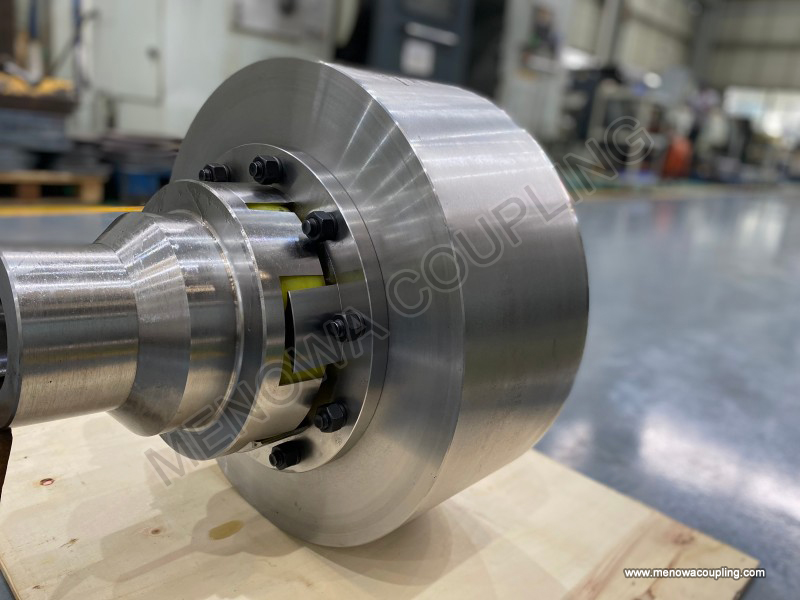
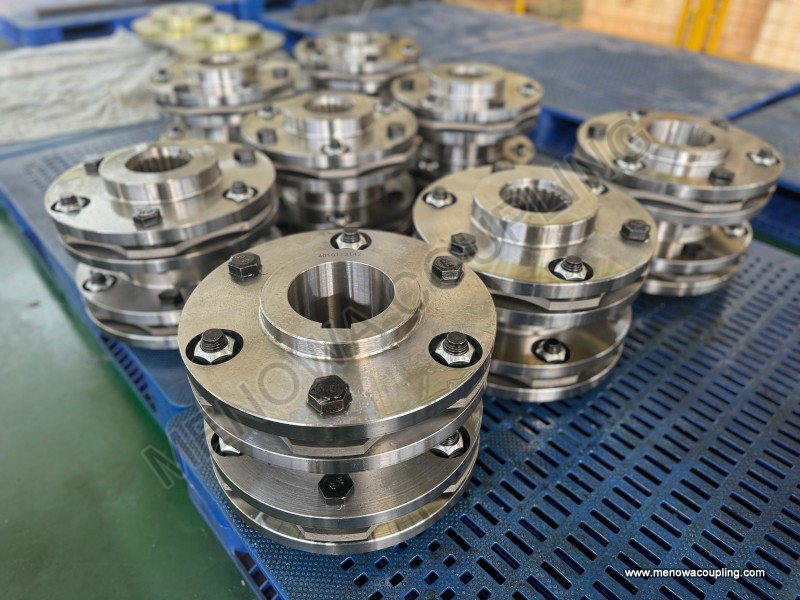
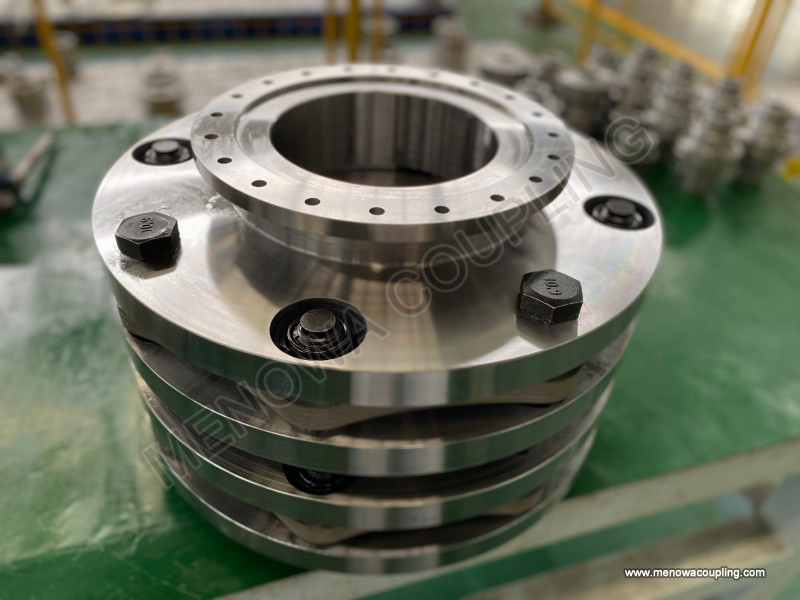
According to different structural forms, elastic deformation modes and transmission principles, backlash-free couplings can be divided into several mainstream structural types, each with unique design characteristics and applicable working condition scenarios, meeting the diversified precision transmission needs of different mechanical equipment. Diaphragm type backlash-free coupling is one of the most widely used structural forms in high-speed and high-precision transmission occasions. This type of coupling uses a multi-layer stainless steel thin plate diaphragm group as the intermediate transmission and elastic compensation component. The multi-layer diaphragm group is fixed between the two shaft hubs through high-strength fasteners, and the precise positioning and pre-tightening fixation between the diaphragm and the hubs are realized through the fastening assembly process. The torque transmission process is completed by the elastic deformation of the stainless steel diaphragm. When the driving shaft rotates, the torque is transmitted to the driven shaft through the tension and compression deformation of the diaphragm group. The overall structure has high torsional rigidity and excellent transmission synchronization. The pre-tightening fixing design between the diaphragm and the hubs completely eliminates assembly and transmission clearance, realizing absolute backlash-free operation. At the same time, the thin-plate diaphragm structure has good elastic deformation ability, which can effectively compensate for axial displacement, angular deviation and parallel misalignment between the two connected rotating shafts generated by equipment installation errors, mechanical operation vibration and thermal expansion and contraction of parts. This compensation function does not affect the precision torque transmission effect, and can always maintain the stability and synchronization of the transmission process while adapting to slight shaft position changes. The diaphragm type backlash-free coupling has the characteristics of fatigue resistance, high temperature resistance and stable performance attenuation, and can maintain long-term stable backlash-free operation under high-speed continuous rotation and frequent load fluctuation working conditions, which is very suitable for high-precision transmission links such as high-speed machine tool spindles and precision servo motor transmission systems.
Bellows type backlash-free coupling is another important precision transmission coupling type, which takes the thin-walled corrugated metal bellows as the core intermediate transmission component. The two ends of the metal bellows are respectively and fixedly connected with the two shaft connecting hubs through integrated welding or precision interference assembly. The overall structure is compact and the integration degree is high. There is no detachable matching gap inside the whole coupling structure from the source, so the fundamental backlash-free operation effect is realized in the structural design. The bellows itself has excellent torsional rigidity and good lateral flexibility. In the process of torque transmission, the bellows realizes power transmission through slight torsional deformation, and can adapt to various slight misalignments between shafts through elastic deformation in multiple directions. The thin-walled corrugated structure of the bellows can bear frequent forward and reverse rotation switching and high acceleration and deceleration motion impact, and will not produce plastic deformation and structural looseness after long-term operation. The internal integrated connection structure will not have part wear and gap increase, and the backlash-free performance can be permanently maintained in the whole service cycle. Compared with other types of backlash-free couplings, bellows type products have smaller rotational inertia, higher motion response speed and better positioning repeatability, and are more suitable for ultra-precision motion control scenarios such as precision numerical control processing equipment, robotic arm joint transmission and precision testing instrument transmission components. In these ultra-precision fields, even tiny motion hysteresis and positioning deviation will affect the final working effect, and the structural advantages of bellows type backlash-free coupling can fully meet the extremely high precision requirements of such equipment.
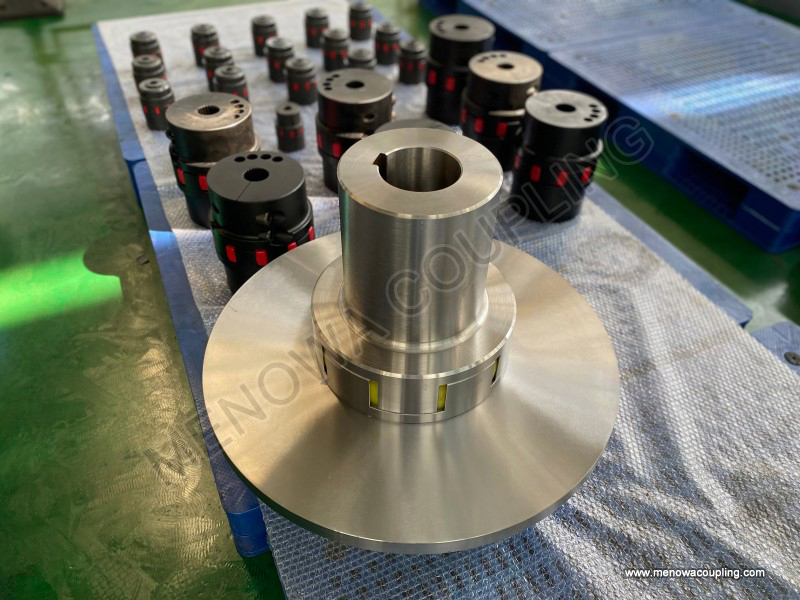
Elastomer pre-tightened jaw type backlash-free coupling is a kind of backlash-free connecting component suitable for medium and low speed heavy-load precision transmission scenarios. Different from the all-metal structural design of diaphragm type and bellows type couplings, this type of coupling adopts a composite structure of metal hubs and elastic elastomer buffer connecting parts. The inner side of the metal hub is provided with a special tooth-shaped groove structure, and the elastic elastomer connecting piece is installed between the two groups of tooth-shaped hubs in a pre-compressed state. Through the pre-tightening compression assembly design, the elastomer is always in a compressed state between the hub teeth, and there is no gap between the elastomer and the hub contact surface. Torque transmission is completed by the extrusion force between the hub teeth and the elastomer. The pre-compressed installation mode ensures that no matter forward rotation, reverse rotation or load change occurs, the contact parts are always closely fitted without idle stroke and backlash. The elastomer material has good vibration damping and impact absorption performance, which can effectively buffer the vibration and mechanical impact generated during equipment operation, reduce the vibration transmission between the driving shaft and the driven shaft, and protect the precision components of the equipment from impact damage. Although the torsional rigidity of elastomer pre-tightened jaw type backlash-free coupling is slightly lower than that of all-metal structural couplings, its vibration damping effect and heavy-load bearing capacity are more prominent. It is widely used in medium-precision transmission occasions such as automated production line transmission mechanisms, packaging machinery and textile machinery, which need both positioning accuracy and vibration and impact buffering.
The selection of manufacturing materials for backlash-free couplings is directly related to their backlash-free maintenance effect, transmission performance, service life and environmental adaptability, and different structural types of couplings adopt targeted material matching schemes according to their working characteristics and stress conditions. For all-metal structural backlash-free couplings such as diaphragm type and bellows type, high-strength stainless steel alloy materials are mostly selected as the main manufacturing raw materials. This type of stainless steel material has high tensile strength, good fatigue resistance, excellent corrosion resistance and stable mechanical properties at different temperatures. The diaphragm group made of ultra-thin stainless steel sheet can maintain good elastic deformation performance after long-term repeated tension and compression, and will not produce fatigue damage and structural deformation due to frequent motion switching. The metal bellows processed by high-quality stainless steel thin wall can withstand long-term torsional deformation and various directional elastic compensation without cracking and aging failure. For the shaft connecting hubs of all types of backlash-free couplings, high-strength alloy steel materials are generally used. After overall forging and precision machining, the hubs have high structural rigidity and wear resistance, ensuring that no deformation and wear occur at the connection position with the rotating shaft during long-term operation, maintaining the stability of the connection state and avoiding the generation of secondary gaps due to hub wear. For elastomer pre-tightened jaw type backlash-free couplings, the elastic intermediate connecting parts are made of high-performance polyurethane or rubber composite materials. These elastic materials have moderate hardness, good compression resilience and anti-aging performance. They can maintain stable elastic pre-tightening state for a long time after being compressed and installed, will not produce permanent deformation and elastic attenuation due to long-term compression and frequent extrusion, and ensure that the backlash-free effect of the coupling remains unchanged throughout the use process. At the same time, these elastic materials can effectively absorb vibration and reduce noise, improving the overall operating comfort and stability of the equipment.
In addition to structural design and material selection, standardized installation and scientific daily maintenance are important prerequisites to ensure the long-term stable backlash-free operation of backlash-free couplings. Even if the coupling itself has an excellent backlash-free structural design, irregular installation operation and improper daily maintenance will lead to installation deviation, structural looseness and part wear in the actual use process, resulting in the generation of new transmission gaps and losing the backlash-free working effect. In the installation process of backlash-free coupling, the first key link is to ensure the high concentricity alignment of the driving shaft and the driven shaft. Excessive installation misalignment will bring additional eccentric load and torsional stress to the coupling during operation. Long-term eccentric operation will cause uneven stress on the internal transmission parts of the coupling, accelerate local wear of parts, and even lead to structural deformation of elastic components, resulting in the separation of matching parts and the generation of transmission gaps. Therefore, professional precision alignment tools must be used in the installation work to finely adjust the position of the two rotating shafts, control the shaft misalignment within the reasonable compensation range of the coupling, and reduce additional operating stress. The fastening operation of connecting fasteners also needs to be carried out in accordance with the specified torque standards. Excessively loose fastening will lead to insufficient pre-tightening force between coupling parts, resulting in gaps due to loose contact during operation; excessively tight fastening will cause excessive structural stress on the coupling elastic components, leading to premature fatigue deformation and affecting the service life of the coupling. After the installation is completed, it is necessary to conduct no-load trial operation and load test operation to check whether the coupling has abnormal noise, vibration and motion hysteresis, and adjust the installation state in time to ensure that the coupling achieves the ideal backlash-free synchronous transmission effect.
Daily maintenance and inspection work of backlash-free couplings is relatively simple and convenient, which is also one of the important advantages of this type of coupling in industrial practical application. In the daily operation and use of equipment, it is only necessary to regularly observe the operating state of the coupling, check whether there is abnormal vibration, abnormal noise and surface damage, and regularly detect the fastening state of the connecting fasteners to avoid looseness caused by long-term vibration. For all-metal structural backlash-free couplings, regular anti-rust and corrosion protection treatment should be carried out according to the operating environment conditions, especially in humid, dusty and corrosive industrial production environments, to avoid surface corrosion of metal parts affecting the matching precision and structural strength. For elastomer type backlash-free couplings, the aging and wear degree of the elastic intermediate connecting parts should be checked regularly. If permanent deformation, cracking and elastic attenuation of the elastomer are found, the elastic parts should be replaced in time to ensure that the pre-tightening contact state inside the coupling is always good and the backlash-free performance is not affected. Scientific and standardized maintenance work can not only maintain the stable precision transmission performance of the backlash-free coupling, but also effectively extend the overall service life of the coupling, reduce the frequency of equipment maintenance and replacement, and save the comprehensive operating cost of industrial production and mechanical operation.
The application scope of backlash-free couplings covers almost all industrial fields involving precision mechanical transmission and motion control, and plays an irreplaceable core role in promoting the precision upgrading and stable operation of various mechanical equipment. In the field of precision numerical control machine tool processing, numerical control machine tools need to complete high-precision cutting, milling, drilling and other processing operations, and the spindle rotation and feed shaft motion need to achieve accurate positioning and repeated positioning. The use of backlash-free couplings in the spindle transmission and feed transmission links of machine tools can eliminate motion hysteresis and positioning deviation caused by transmission gaps, ensure that the motion commands issued by the numerical control system can be accurately transmitted to the processing executing components, improve the processing precision of machine tools and the surface finish of processed parts, and ensure the consistency and stability of batch processing of workpieces. In the field of industrial automation and robot technology, robotic arm joints, automated handling mechanisms and precision positioning platforms all need frequent forward and reverse rotation and high-precision position adjustment. Backlash-free couplings are used in these motion transmission links to ensure that each motion command of the robot and automation equipment can be responded to in real time, the motion track is accurate and error-free, and the precise operation requirements of automated production such as part handling, assembly and sorting are met.
In the field of new energy equipment and precision testing instruments, the operating environment and working performance requirements of equipment are more stringent, and the application value of backlash-free couplings is more prominent. New energy power generation equipment such as wind power generation equipment and photovoltaic tracking power generation equipment needs to work in complex outdoor environmental conditions for a long time, and the power transmission and angle adjustment mechanisms need to maintain stable operation and precise positioning for a long time. Backlash-free couplings can adapt to complex environmental changes, maintain stable transmission performance and backlash-free effect for a long time, and ensure the efficient power generation operation and accurate angle tracking adjustment of new energy equipment. Various precision testing instruments and experimental equipment need to complete micro-displacement detection and precision motion measurement work. The transmission links of these instruments have extremely high requirements for motion synchronization and positioning accuracy. The application of backlash-free couplings eliminates the slightest transmission error caused by backlash, ensures the accuracy and reliability of test data and detection results, and provides accurate basic data support for scientific research and product performance testing. In the field of packaging machinery, printing machinery and textile machinery in light industry production, equipment needs to complete high-speed reciprocating operation and fixed-length positioning processing. Backlash-free couplings ensure the synchronization of transmission operation, avoid product processing errors and production waste caused by transmission hysteresis, and improve the production efficiency and product qualification rate of light industry production lines.
With the continuous progress of industrial manufacturing technology and the rapid development of intelligent manufacturing industry, the development trend of mechanical transmission system is gradually moving towards higher precision, higher speed, higher stability and intelligent control. In this development process, the market demand and application scope of backlash-free couplings will continue to expand, and the technical performance of backlash-free couplings will also be continuously optimized and upgraded with the progress of industrial technology. In the future, the structural design of backlash-free couplings will be more compact and lightweight, and on the premise of maintaining high precision and backlash-free performance, the rotational inertia of the coupling will be further reduced to meet the higher dynamic response requirements of high-speed intelligent equipment. The material research and development of backlash-free couplings will continue to move towards high strength, high temperature resistance, corrosion resistance and fatigue resistance, adapting to more extreme working conditions and complex industrial application scenarios. At the same time, with the integration of intelligent monitoring technology, some backlash-free couplings will be equipped with simple and efficient state monitoring functions, which can real-time monitor the operating state, stress changes and wear degree of the coupling, realize early warning of potential faults, and further improve the operational reliability and intelligent management level of the transmission system.
In conclusion, backlash-free coupling, as a core basic component of modern precision mechanical transmission systems, solves the practical problems of motion hysteresis, positioning deviation and equipment wear caused by backlash of traditional couplings through unique structural design, scientific material selection and standardized assembly and maintenance. Different types of backlash-free couplings have their own performance characteristics and applicable scenarios, which can meet the diversified precision transmission needs of various industrial fields from ultra-precision testing and processing to heavy-load automated production. In the context of the continuous upgrading of modern industrial manufacturing and the rapid development of intelligent manufacturing, backlash-free couplings will always occupy an important position in the mechanical transmission industry with their excellent transmission synchronization, stable positioning accuracy and long-term operational reliability. Continuously optimizing the design and application level of backlash-free couplings is not only conducive to improving the operating efficiency and processing quality of mechanical equipment, but also provides a solid basic guarantee for the high-quality development of the entire modern industrial manufacturing industry and the continuous progress of precision mechanical technology.
Post Date: Apr 25, 2026
https://www.menowacoupling.com/coupling-supplier/backlash-free-coupling.html
Tags
Related Articles
Advantages Of Flexible Coupling
In the complex and interconnected world of mechanical power transmission, the seamless transfer of torque and rotational motion between rotating shafts stands as a foundational requirement for the steady operation of all types of industrial and commercial machinery. Every mechanical system that relies on motors, engines…
 WeChat
 WhatsApp