Flange Coupling
In the vast and intricate ecosystem of modern mechanical transmission systems, every basic mechanical component undertakes an irreplaceable foundational role in ensuring the stable operation, power transmission efficiency and long-term service reliability of complete industrial equipment. Among numerous shaft connection components used for linking rotating shafts and realizing torque transfer between adjacent mechanical equipment units, flange coupling stands out as a core connecting part that has been widely adopted in heavy-duty industrial production, mechanical manufacturing, fluid conveying engineering and power transmission fields for a long time. As a typical rigid connecting component designed based on mechanical bolt fastening and flange disc pressing fit structure, flange coupling has evolved continuously with the upgrading of industrial manufacturing technology and the diversification of working condition demands, gradually forming a mature and reliable mechanical connection solution that balances structural simplicity, transmission stability and assembly convenience. Its core functional positioning lies in firmly connecting the shaft ends of two independent rotating mechanical parts, realizing continuous and stable transmission of rotational torque and rotational speed in the mechanical operation process, while maintaining the relative position accuracy of the connected shafts within a reasonable range, avoiding power transmission interruption, shaft position deviation and mechanical operation failure caused by shaft disconnection or displacement during long-term equipment operation. Different from flexible coupling products that focus on vibration buffering and misalignment compensation and sleeve coupling products with simple structure and low load-bearing capacity, flange coupling focuses more on overall connection rigidity, torque transmission efficiency and structural operation stability, making it highly suitable for working scenarios with high load demand, stable operating speed, low vibration fluctuation and high requirements for shaft alignment accuracy. In the actual industrial operation process, the normal working state of flange coupling is directly related to the overall operating efficiency of the complete mechanical unit, the safety of production operation and the maintenance cycle of mechanical equipment. Any unreasonable structural design, improper material selection, non-standard installation operation and inadequate daily maintenance management will lead to abnormal wear of coupling components, bolt loosening and falling off, shaft position deviation, torque transmission loss and even sudden equipment shutdown and mechanical failure accidents, bringing unnecessary production losses and equipment maintenance costs to industrial production enterprises. Therefore, an in-depth understanding of the basic structural composition, internal working mechanism, core performance characteristics, scientific material selection criteria, standardized installation and commissioning procedures, daily operation and maintenance management methods, common fault causes and targeted troubleshooting measures of flange coupling, as well as its adaptive application scope and practical application effects in different industrial scenarios, is of great practical significance for mechanical design engineers, equipment operation and maintenance personnel and industrial production managers to optimize mechanical system design, improve equipment operation stability, extend the service life of mechanical components and reduce comprehensive production and operation costs.
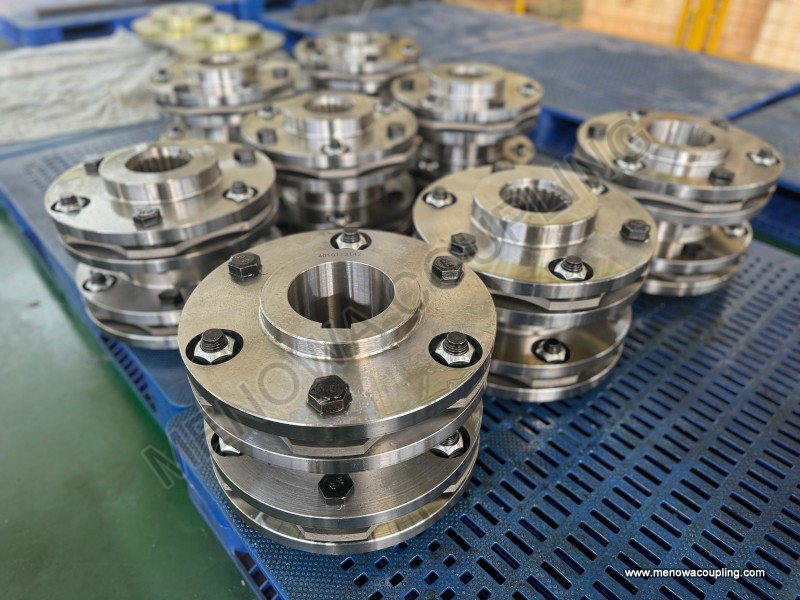
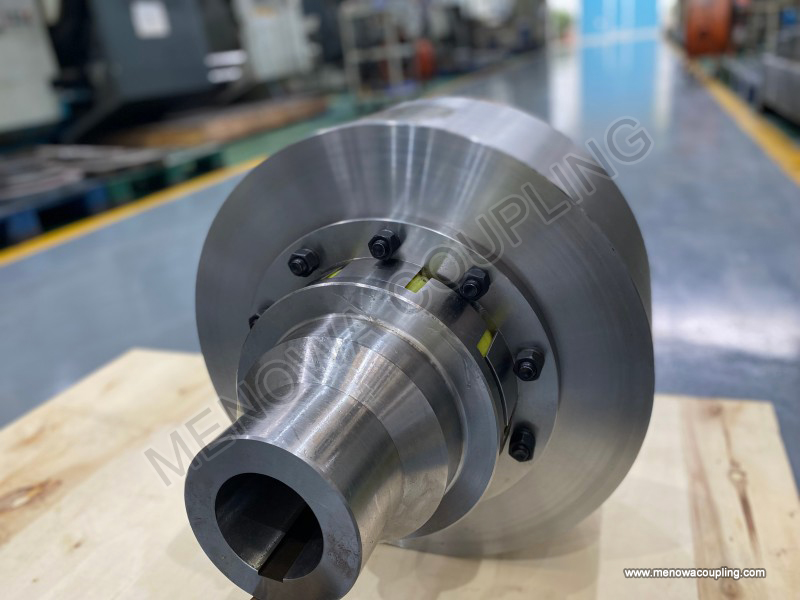
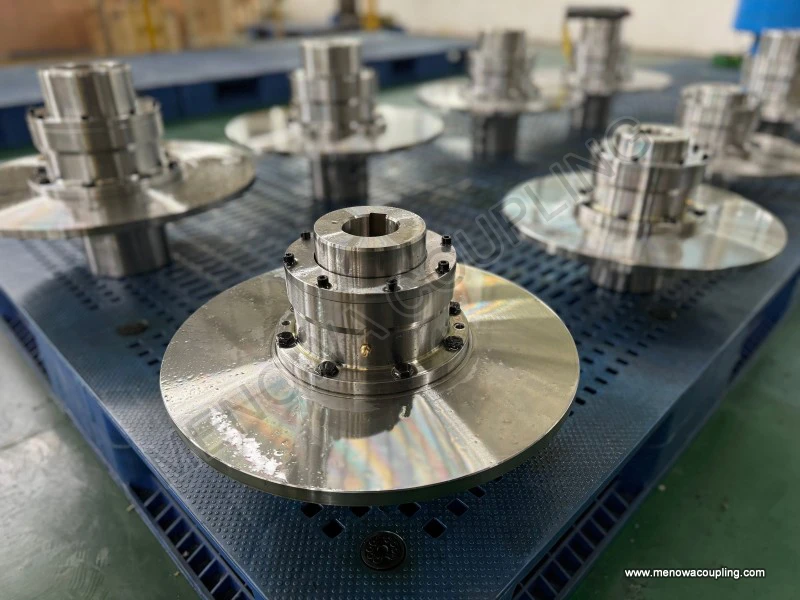
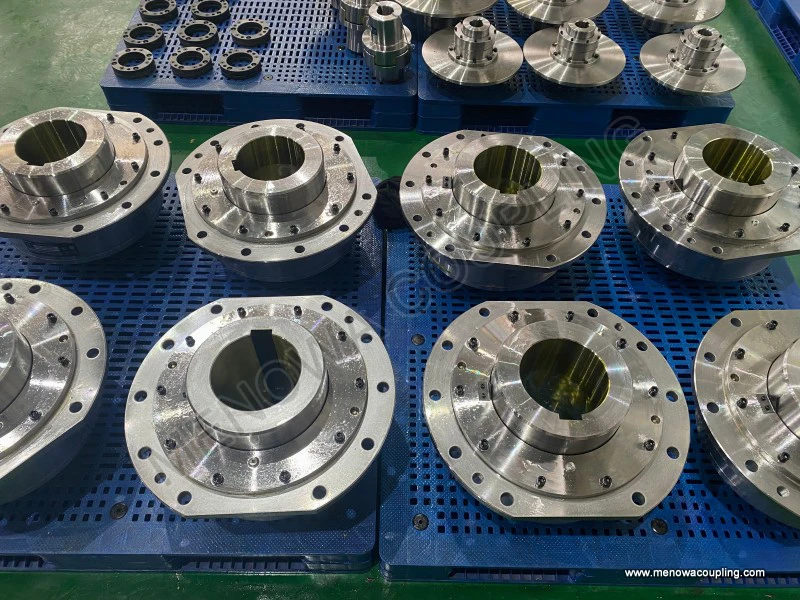
The basic structural composition of flange coupling is derived from the simplest mechanical bolted connection principle, and the overall structure is compact and regular without complex transmission accessories and elastic buffer parts, which is also one of the important reasons why it can maintain stable performance under heavy load and long-term continuous operation. The main body of a complete flange coupling is composed of two independent disc-shaped flange hubs with the same specification and matching size, which are respectively fixed and installed on the shaft ends of the two mechanical equipment units that need to realize torque transmission and shaft connection. Each flange hub is processed with a certain thickness of disc flange edge on the outer side close to the shaft end, and a number of bolt mounting holes with equal aperture are uniformly arranged in a circular array on the flange edge according to the mechanical design requirements. This uniform circular arrangement design of bolt holes can ensure that the fastening force applied by each bolt on the flange disc is evenly distributed in the circumferential direction during the subsequent assembly and fastening process, avoiding local stress concentration caused by uneven force on the flange connection surface, and effectively preventing flange disc deformation, local wear and connection looseness caused by unbalanced stress in the long-term rotating operation process. The inner hole of each flange hub is processed according to the outer diameter size of the matching connecting shaft, achieving a precise clearance fit or interference fit between the flange hub and the shaft end, so as to ensure that no relative rotation or radial displacement occurs between the flange hub and the shaft body during torque transmission. In order to further strengthen the fixing effect between the flange hub and the shaft end and avoid relative sliding between the hub and the shaft under high torque load, most flange couplings will be equipped with flat key connection structures or sleeve positioning structures at the matching part of the hub inner hole and the shaft body. The flat key is embedded in the key grooves processed on both the shaft surface and the hub inner hole, and relies on the shear resistance and extrusion resistance of the key body to bear the torque load, realizing the synchronous rotation of the flange hub and the shaft body and ensuring no relative displacement in the circumferential direction during power transmission. At the same time, the matching end faces of the two flange discs are processed with flat and smooth fitting surfaces, and some flange couplings used in high-precision working conditions will be processed with centering tenon and mortise matching structures at the center of the two flange fitting end faces. The centering tenon and mortise structure can realize rapid positioning and accurate centering of the two flange discs during installation and assembly, effectively reducing the radial misalignment and axial deviation between the two connected shafts, maintaining the coaxiality of the rotating shafts within a tiny error range, and reducing the additional mechanical vibration and shaft wear caused by shaft misalignment during equipment operation. In addition to the two flange hubs and the matching positioning and fixing structures, the complete set of flange coupling connection system also includes supporting bolt and nut fastening assemblies. The bolts usually adopt high-strength cylindrical studs or hexagonal bolts, which pass through the reserved mounting holes on the two flange discs respectively, and are locked and fixed with matching nuts after the two flanges are closely fitted. The number and specification of bolts are determined according to the designed torque bearing capacity and the outer diameter size of the flange coupling. More bolts with larger specifications are configured for large-size flange couplings used for heavy-load torque transmission to ensure that the connection fastening force can resist the shear force and extrusion force generated by high torque operation. Different from flexible couplings that require elastic buffer gaskets, conventional rigid flange couplings do not need additional elastic connecting parts between the two flange fitting surfaces, and rely entirely on the rigid compression fit of the metal end faces and the fastening tension of the bolts to realize integrated connection and synchronous rotation torque transmission. This simple and rigid structural design makes the overall compression resistance, shear resistance and torsional resistance of flange coupling far better than many flexible coupling products, and the structural stability will not decline with the increase of operating time and load change, adapting to long-term continuous stable operation requirements.
The core working mechanism of flange coupling is based on the comprehensive action of mechanical friction force generated by flange end face compression fit, shear force borne by bolt fastening assembly and circumferential limiting force of key connection structure, realizing efficient and stable torque and rotational speed transmission between two connected rotating shafts. When the driving mechanical equipment starts to operate and generate rotational power and torque, the driving shaft drives the fixedly connected flange hub to rotate synchronously through the key connection structure and the interference fit between the shaft and the hub. At this time, the fastening bolts between the two flange discs generate strong axial tension under the action of nut locking, which makes the fitting end faces of the two flanges produce great compressive friction force. Under the action of this friction force, the driven flange hub closely attached to the driving flange disc will synchronously rotate with the driving flange, and then drive the driven shaft connected with it to rotate together, thus realizing the continuous transmission of rotational torque from the driving equipment to the driven equipment. In the whole torque transmission process, the key connection structure mainly undertakes the circumferential limiting function between the shaft body and the flange hub, preventing relative sliding and circumferential displacement between the shaft and the hub caused by excessive torque, ensuring that the torque generated by the shaft can be completely transmitted to the flange disc without power loss. The fastening bolts not only provide axial compression force for the flange fitting surfaces to generate friction torque, but also bear a certain degree of shear force in the circumferential direction during the rotation process, further assisting in bearing the torque load and enhancing the overall connection firmness of the coupling. The centering tenon and mortise structure at the center of the flange plays a role in limiting radial displacement and ensuring coaxial operation, avoiding additional eccentric load and mechanical vibration caused by radial misalignment of the two shafts during rotation, and ensuring that the torque transmission process is always carried out in a stable and balanced state. In the actual operation process, as a rigid coupling, flange coupling does not have the function of elastic deformation buffering and misalignment compensation, so all the vibration generated by the operation of the driving equipment and the impact load generated by sudden load change will be directly transmitted between the connected shafts through the rigid flange connection structure. This working characteristic determines that flange coupling is more suitable for working conditions with stable load change, uniform operating speed and small vibration amplitude, and is not suitable for mechanical equipment with frequent start and stop, sudden load impact and large vibration fluctuation. When the equipment operates stably and the load remains within the rated design range, the torque transmission efficiency of flange coupling can remain at a high level, and there will be no obvious power loss and transmission delay in the transmission process. The rigid connection mode also ensures that the rotation synchronization of the two connected shafts is extremely high, the rotation speed difference is almost negligible, which can meet the high-precision synchronous operation requirements of various industrial mechanical transmission systems. With the continuous operation of the equipment, as long as the bolt fastening state remains good and the flange fitting surfaces are not severely worn, the working performance and transmission effect of the flange coupling will not change significantly, and it can maintain long-term and stable working operation, which is one of the important advantages of flange coupling in industrial long-term continuous production scenarios.
Material selection is the core key link that determines the mechanical performance, load-bearing capacity, wear resistance, corrosion resistance and overall service life of flange coupling. Different industrial application scenarios have different requirements for the hardness, toughness, compressive strength, shear resistance, high temperature resistance and corrosion resistance of flange coupling materials, so the material selection work needs to be comprehensively determined according to the actual working environment, load size, operating temperature and medium contact conditions of the equipment. The main materials used for manufacturing flange coupling hubs are various metal alloy materials with good mechanical properties and processing performance, and different materials have their own unique performance characteristics and applicable scenarios. Carbon steel is one of the most commonly used and cost-effective manufacturing materials for ordinary flange couplings. This type of material has moderate hardness, good tensile strength and compressive strength, excellent mechanical processing performance and welding performance, and can meet the mechanical performance requirements of most conventional industrial transmission working conditions with medium and low load, normal temperature environment and non-corrosive medium contact. Carbon steel flange couplings are widely used in general mechanical manufacturing, conventional conveyor equipment, ordinary water pump and fan transmission systems and other scenarios, with stable performance in conventional working environments and long service life under standardized operation and maintenance. For flange couplings used in heavy-load transmission working conditions that need to bear greater torque load and higher shear force, alloy structural steel with higher strength and better toughness will be selected as the manufacturing material. Alloy structural steel is added with a variety of alloy elements on the basis of ordinary carbon steel, which significantly improves the overall tensile strength, shear resistance, torsional resistance and impact toughness of the material, and can resist large instantaneous load impact and long-term heavy load fatigue wear. Flange couplings made of alloy structural steel are mostly used in heavy machinery equipment, large industrial reducers, mining transmission equipment and other heavy-load working scenarios, and can maintain structural integrity and working stability under long-term high-load operation without deformation and damage. In some special industrial production scenarios, such as chemical production equipment, marine mechanical transmission systems and coastal industrial equipment, the working environment is accompanied by corrosive media such as chemical reagents, seawater and humid air, which requires flange couplings to have good corrosion resistance and rust resistance. In these scenarios, stainless steel materials with excellent corrosion resistance and oxidation resistance will be selected for manufacturing. Stainless steel flange couplings can effectively resist chemical corrosion, electrochemical rust and atmospheric oxidation, avoid structural thinning and performance degradation of coupling components caused by long-term corrosion, and ensure long-term stable use in harsh corrosive environments. Although the cost of stainless steel materials is higher than that of carbon steel and alloy steel, it can effectively reduce the frequency of equipment replacement and maintenance in corrosive working environments, and reduce the comprehensive operation and maintenance cost in the long run. In addition to the flange hub body, the material selection of supporting bolt and nut fastening assemblies is also very important for the overall performance of flange coupling. The fastening bolts need to bear long-term axial tension and circumferential shear force, so high-strength alloy steel materials must be selected, and corresponding heat treatment processes such as quenching and tempering are carried out in the manufacturing process to improve the strength, hardness and fatigue resistance of the bolts, preventing bolt deformation, fracture and loosening during long-term operation. The surface of bolts and nuts can be treated with galvanizing or anti-rust coating according to the working environment to enhance anti-rust and anti-corrosion performance and extend the service life of fastening components. The material selection of flat keys and positioning parts also needs to match the strength of the flange hub body, ensuring that the key connection structure will not be damaged by shear force before the flange main body, and maintaining the overall structural coordination and stable load-bearing performance of the coupling. Scientific and reasonable material selection can not only ensure that the flange coupling meets the actual working load and environmental adaptation requirements, but also avoid performance redundancy and cost waste, realizing the optimal balance between use performance and economic cost.
The installation and commissioning process of flange coupling is a standardized and refined mechanical operation work, and the standardization of each installation step directly affects the later operation stability, transmission efficiency and service life of the coupling. Before the formal installation operation, comprehensive pre-installation preparation and inspection work must be carried out first to eliminate potential hidden dangers affecting the installation quality. Firstly, all parts of the flange coupling, including two flange hubs, fastening bolts, nuts, flat keys and positioning accessories, need to be carefully inspected to check whether there are obvious processing defects, surface cracks, deformation, thread damage and flange fitting surface wear on the surface and inside of each component. For parts with quality defects such as cracks and deformation, they must be replaced in time and cannot be installed and used reluctantly, so as to avoid mechanical failure caused by component damage in the later operation process. At the same time, the surface of the connecting shaft ends of the driving equipment and driven equipment need to be cleaned and polished to remove rust, oil stains, burrs and sundries on the shaft surface, ensuring that the matching surface between the shaft body and the flange hub inner hole is smooth and clean, without affecting the fitting accuracy and fixing effect. The key grooves on the shaft surface and the flange hub inner hole also need to be inspected for dimensional accuracy and surface flatness to ensure that the flat key can be closely matched and installed without gap and shaking. After the completion of component inspection and shaft surface treatment, the two flange hubs are respectively installed on the corresponding driving shaft end and driven shaft end. During the installation process, the flange hubs are pushed to the designated positioning position of the shaft end by mechanical auxiliary tools, and the flat keys are embedded in the key grooves in place to ensure that the matching between the hub and the shaft body and the key connection structure are tight and firm without looseness and displacement. After the two flange hubs are installed in place, the coaxiality alignment work of the two flanges needs to be carried out, which is the most critical core link in the whole installation process. The alignment work needs to rely on professional measuring tools to detect the radial runout and axial deflection of the two flange fitting end faces, fine-tune the position of the driving equipment and driven equipment according to the detection data, so that the coaxiality error of the two connected shafts is controlled within the allowable design range, and the flange fitting end faces are kept parallel and closely attached without obvious deflection and dislocation. Good coaxiality alignment effect can effectively reduce the additional vibration and shaft wear caused by shaft misalignment during the later operation of the equipment, and avoid the problem of unbalanced stress on flange bolts and local wear of fitting surfaces. After the flange alignment is completed, the fastening bolts can be installed and locked. The bolts need to be inserted into the bolt holes of the two flanges in sequence, and the nuts are initially tightened by hand to ensure that each bolt is installed in place without deflection and skew. The formal fastening of nuts must follow the crisscross symmetrical fastening sequence, and gradually tighten each nut in stages with a torque wrench, so that the axial tension of each bolt is kept consistent, and the compression force on the flange fitting surface is evenly distributed in the circumferential direction. It is forbidden to tighten the nuts in a single direction in sequence, which is easy to cause uneven stress on the flange disc, resulting in flange deformation and connection looseness. After all bolts are fastened in place, the final inspection of flange coaxiality and bolt fastening torque needs to be carried out again to confirm that all installation indicators meet the design and use requirements. After the installation and commissioning work is fully completed, the equipment can be tested and run at low speed first to observe the operation state of the flange coupling, check whether there is abnormal vibration, noise and flange loosening phenomenon. After the low-speed test run is normal, the equipment can be gradually loaded and put into formal production operation. Standardized installation and commissioning operations can lay a solid foundation for the long-term stable operation of flange coupling, effectively reduce the failure probability in the later use process, and extend the overall service life of the coupling.
Daily operation maintenance and regular inspection management are essential work to ensure the long-term stable performance and extended service life of flange coupling. Although flange coupling has a simple and rigid structure and strong operational stability, long-term continuous mechanical operation, load change, environmental temperature change and mechanical vibration will inevitably lead to bolt loosening, fitting surface wear, component corrosion and other minor problems. If these minor problems are not dealt with in time, they will gradually evolve into serious mechanical faults, affecting the normal operation of the whole equipment. Therefore, formulating a scientific and reasonable daily maintenance system and regular inspection plan, and implementing maintenance and inspection work in place can effectively eliminate potential faults in advance and ensure the stable operation of the coupling. In the daily equipment operation process, equipment operators need to regularly observe the working state of flange coupling during equipment operation every day, focusing on checking whether there is abnormal vibration, unusual noise, flange displacement and bolt loosening phenomenon at the flange connection position. In the process of equipment operation, if abnormal vibration and noise are found, it indicates that the coaxiality of the coupling may deviate, the bolts may be loose or the fitting surfaces may be severely worn. At this time, the equipment should be stopped for inspection in time, and operation with faults is strictly prohibited to avoid expanding the fault scope. For flange couplings working in high-temperature, humid and corrosive environments, daily surface cleaning work should be done well to remove dust, corrosive sundries and oil stains on the flange surface and bolt parts, reduce the probability of surface corrosion and rust of components, and keep the appearance and working state of the coupling clean and tidy. On the basis of daily observation and maintenance, regular professional inspection and maintenance work must be carried out regularly according to the equipment operation cycle and working condition severity. The regular inspection cycle can be adjusted appropriately according to the actual operation load and environmental conditions, with more frequent inspection for heavy-load and harsh working environments and relatively loose inspection cycle for conventional light-load and good working environments. The main contents of regular inspection include rechecking the fastening torque of all flange bolts, tightening the loose bolts in place again according to the standard fastening sequence, replacing the bolts with thread damage and serious aging in time, checking the wear degree of the flange fitting end faces and the key connection parts, observing whether there are scratches, pits and serious wear on the fitting surfaces, and judging whether the wear degree affects the connection tightness and torque transmission effect. At the same time, the coaxiality of the two connected shafts needs to be remeasured during regular inspection, and the alignment adjustment should be carried out again if there is position deviation to ensure that the shaft coaxiality is always within the qualified range. For flange couplings used in corrosive environments, the corrosion degree of the flange hub surface and fastening components needs to be inspected regularly, and anti-rust coating and anti-corrosion maintenance should be carried out regularly. For the severely corroded components that affect the structural strength, they should be replaced in a timely manner to avoid structural failure caused by corrosion thinning. In addition, during the long-term operation of the coupling, the fatigue wear of the key connection structure and the hub inner hole matching parts should be checked regularly, and the worn flat keys and positioning parts should be replaced in time to ensure the firm fixing effect between the flange hub and the shaft body. After each regular inspection and maintenance work is completed, detailed maintenance records should be made, including inspection time, inspection content, existing problems, maintenance measures and replacement parts information, to provide data support for subsequent equipment maintenance and coupling performance analysis. Scientific daily maintenance and regular inspection can effectively reduce the failure rate of flange coupling, maintain its good working performance for a long time, and reduce the frequency of equipment shutdown maintenance and component replacement cost.
In the long-term industrial application process, flange coupling may have a variety of common mechanical faults due to installation non-standardization, improper material selection, inadequate maintenance, long-term overload operation and working environment impact. Understanding the main causes of common faults and mastering targeted troubleshooting and maintenance measures is crucial to quickly eliminate faults and restore normal equipment operation. The most common fault of flange coupling is bolt loosening and connection looseness, which is mainly caused by unbalanced bolt fastening torque during installation, unreasonable fastening sequence, long-term mechanical vibration impact and lack of regular inspection and tightening. After the connection is loose, the flange fitting surfaces will have gaps and relative sliding during operation, resulting in reduced torque transmission efficiency, abnormal equipment vibration and operation noise, and even flange friction and wear aggravation in serious cases. For this fault, the solution is to stop the equipment to re-fasten all bolts according to the standard crisscross sequence, recheck the bolt fastening torque to ensure uniform stress, and strengthen the regular inspection and tightening work in the later maintenance process to avoid repeated loosening. Another common fault is shaft coaxiality deviation and excessive vibration of the coupling, which is mainly caused by inaccurate alignment during installation, foundation settlement of mechanical equipment and long-term operation leading to position displacement of the unit. Excessive coaxiality deviation will produce eccentric load during coupling operation, resulting in strong mechanical vibration, increased shaft wear and unbalanced bolt stress, which will accelerate component damage. The troubleshooting measure is to re-align the flange coaxiality with professional measuring tools, adjust the equipment position to ensure that the coaxiality error meets the design requirements, and reinforce the equipment foundation to avoid position displacement again. Flange fitting surface wear and key connection wear faults are mostly caused by long-term overload operation, frequent start-stop impact and poor lubrication protection after long-term use. Serious wear will lead to reduced connection tightness, torque transmission loss and coupling operation jitter. For slight wear, the fitting surface can be polished and repaired, and the flat key can be replaced; for serious wear and structural thinning, the flange coupling hub needs to be replaced as a whole to ensure the connection performance. Component corrosion and rust faults mainly occur in humid and corrosive working environments, which will lead to reduced component structural strength, thread sticking and bolt fastening failure. The solution is to do a good job in daily anti-corrosion maintenance, regularly apply anti-rust coating, and replace severely corroded components in time. In addition, flange coupling may also have bolt fracture and flange deformation faults, which are mainly caused by long-term overload operation and use of unqualified low-strength bolts. For such faults, it is necessary to replace high-strength qualified bolts and deformed flange hubs, and adjust the equipment operation load to avoid long-term overload operation. Timely detection and scientific treatment of common faults can effectively reduce the impact of coupling faults on industrial production and ensure the continuous and stable operation of mechanical equipment.
With the continuous progress of industrial manufacturing technology and the rapid development of various industrial fields, the application scope of flange coupling has been continuously expanded, and it has become an indispensable basic connecting component in many key industrial production and mechanical transmission links. In the field of heavy machinery manufacturing and engineering machinery production, flange coupling is widely used in the power transmission system of large excavators, cranes, loaders and other engineering equipment. These engineering machinery equipment need to bear large working load and complex working conditions in the operation process, and the rigid structural characteristics and high torque transmission capacity of flange coupling can meet the heavy-load power transmission requirements of engineering machinery, ensuring the stable transmission of power in the equipment walking and working device operation process. In the field of petrochemical and chemical industrial production, various chemical production reactors, fluid conveying pumps, chemical mixing equipment and pipeline supporting power transmission equipment all need to use flange coupling for shaft connection. The chemical production site has complex working conditions, accompanied by corrosive media and high-temperature operating environment, and the flange coupling made of corrosion-resistant and high-temperature resistant materials can adapt to the harsh chemical production environment, ensuring the long-term stable operation of chemical equipment and avoiding production interruption caused by coupling failure. In the field of electric power and energy production, whether it is thermal power generation equipment, hydropower generation equipment or new energy power generation supporting transmission equipment, flange coupling is used in the power transmission link between generators and supporting reducers and fans. The power production equipment needs long-term uninterrupted continuous operation, and the stable structure and reliable performance of flange coupling can meet the requirements of long-term continuous operation of power equipment, ensuring the stable output of electric power energy. In the field of industrial water supply and drainage and hydraulic engineering, various large water pumps, drainage fans and hydraulic power transmission equipment adopt flange coupling as the shaft connection component. The working environment of water conservancy equipment is humid for a long time, and the flange coupling with good anti-rust and anti-corrosion performance can adapt to the humid working environment, ensuring the normal operation of water supply and drainage and hydraulic engineering equipment. In addition, in the fields of mining machinery, metallurgical equipment, building materials production machinery and marine mechanical equipment, flange coupling has a wide range of application scenarios, playing an important basic supporting role in the stable operation of various industrial equipment. With the continuous upgrading of industrial production towards high efficiency, stability and safety, the design and manufacturing technology of flange coupling is also constantly optimized and improved, and new high-strength, corrosion-resistant and fatigue-resistant materials are continuously applied to the production and manufacturing of flange coupling. The structural design is constantly optimized to further improve the transmission efficiency and operation stability of the coupling, adapt to the increasingly complex industrial working condition requirements, and provide more reliable basic mechanical connection guarantee for the development of various industrial fields.
To sum up, flange coupling, as a typical rigid mechanical shaft connection component, relies on its simple and compact structural design, stable and reliable working mechanism, diverse and targeted material selection standards, standardized installation and commissioning requirements and perfect operation and maintenance management system, showing excellent application performance and high practical value in the field of industrial mechanical transmission. Its core advantages of high torque transmission capacity, good connection rigidity, high rotation synchronization and long-term operation stability make it irreplaceable in heavy-load, stable-speed and long-term continuous operation industrial scenarios. From the basic structural composition and internal working principle to scientific material selection, standardized installation and commissioning, from daily operation maintenance and regular inspection management to common fault troubleshooting and wide industrial application, every link of flange coupling is closely related to the stable operation of industrial mechanical equipment and the efficiency of production work. In the actual industrial production and mechanical design work, only by fully understanding the comprehensive performance characteristics and application adaptation rules of flange coupling, scientifically selecting coupling specifications and materials according to actual working conditions, strictly implementing standardized installation and commissioning operations, and doing a good job in daily maintenance and regular fault inspection, can we give full play to the excellent performance of flange coupling, ensure the long-term stable and efficient operation of mechanical transmission systems, reduce equipment operation failure rate and comprehensive maintenance costs, and provide solid basic mechanical support for the stable development and efficient operation of various industrial production industries. With the continuous innovation and development of industrial manufacturing technology, flange coupling will also continue to carry out technological upgrading and structural optimization, adapt to the changing industrial production needs, and always maintain its important basic position in the field of mechanical transmission connection.
Post Date: Apr 25, 2026
https://www.menowacoupling.com/coupling-supplier/flange-coupling.html
Tags
Related Articles
Advantages Of Flexible Coupling
In the complex and interconnected world of mechanical power transmission, the seamless transfer of torque and rotational motion between rotating shafts stands as a foundational requirement for the steady operation of all types of industrial and commercial machinery. Every mechanical system that relies on motors, engines…
 WeChat
 WhatsApp