Brake Wheel Coupling
In the complex and interconnected operating system of modern mechanical transmission equipment, the connection and coordination between rotating shafts directly determine the overall operating stability, running smoothness and operational safety of the entire mechanical set. All kinds of mechanical transmission accessories undertake different core tasks in the power transmission process, among which the brake wheel coupling stands out as a multifunctional integrated mechanical component that combines efficient torque transmission and reliable braking response. Unlike ordinary connecting parts that only focus on realizing the simple connection between driving shafts and driven shafts, this type of coupling integrates basic power transmission function and auxiliary braking matching function into a unified structural whole, perfectly adapting to the diversified operation requirements of various industrial mechanical equipment that need stable power transmission and frequent, flexible speed regulation and parking operations. In all kinds of heavy-duty industrial production scenarios, light-duty automated processing links and mechanical operation occasions that require precise start-stop control, the reasonable application of brake wheel coupling can effectively coordinate the running state of each part of the equipment, buffer the mechanical vibration and impact generated during the switching of working conditions, and ensure that the equipment can maintain a stable running state during normal power transmission and complete smooth and controllable deceleration and parking actions when braking instructions are issued. With the continuous upgrading of industrial manufacturing technology and the gradual improvement of mechanical equipment automation and intelligent operation level, the performance requirements for transmission and braking matching components in various industries are constantly improving, and the structural design optimization, material selection adaptation, processing technology improvement and later operation maintenance management of brake wheel coupling have become important contents that mechanical design engineers and equipment operation and maintenance managers need to focus on and study in depth. Understanding the internal structural composition, core working mechanism, performance characteristics under different working conditions, applicable industrial scenarios and scientific daily maintenance and maintenance methods of brake wheel coupling is not only conducive to selecting more suitable matching components for different mechanical equipment design and transformation work, but also can effectively extend the service cycle of the coupling and even the whole mechanical equipment, reduce the probability of unexpected mechanical failures in the production and operation process, and create more stable and reliable basic conditions for the sustainable and efficient operation of industrial production activities.
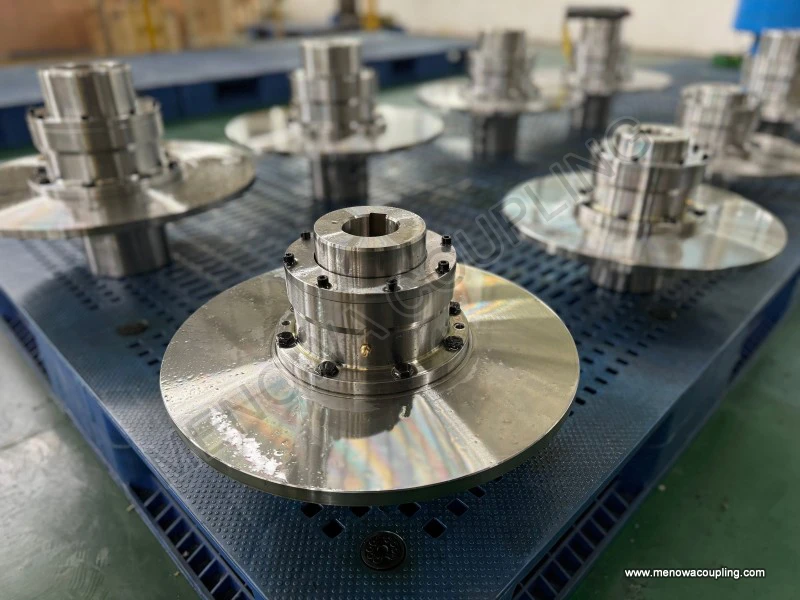
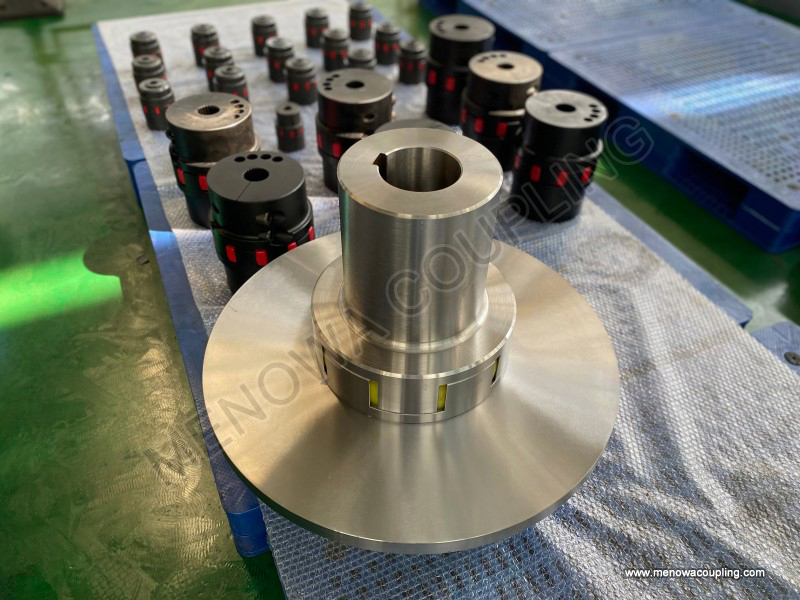
To fully understand the practical value and application advantages of brake wheel coupling, it is first necessary to clarify its basic positioning in the entire mechanical transmission system and the essential differences between it and other common types of couplings in structural design and functional positioning. Ordinary conventional couplings on the market are mostly designed with a single functional orientation, and their core design goal is to realize the stable connection between two adjacent rotating shafts in the mechanical transmission structure, ensure the efficient transmission of torque and rotational speed from the driving end to the driven end, and properly compensate for the slight radial, angular and axial displacement between the shafts caused by equipment installation errors, mechanical operation vibration and long-term structural deformation. Most of these conventional connecting parts do not have any structural design matched with braking components, and the braking work of the equipment needs to rely on independent braking devices installed separately on the transmission shaft or equipment body to complete. The brake wheel coupling, on the other hand, carries out integrated structural innovation on the basis of retaining all the basic torque transmission and displacement compensation functions of conventional couplings. It adds a special brake wheel structure with smooth and wear-resistant friction surface on the basis of the original coupling connecting structure, so that a single mechanical component can simultaneously bear the dual core responsibilities of power transmission and braking force bearing. In the actual installation and layout of mechanical equipment, this integrated design mode effectively simplifies the overall structural layout of the transmission and braking system, reduces the number of independent mechanical parts required for equipment assembly, saves the internal installation space of mechanical equipment, and avoids a series of adverse problems such as complex transmission links, increased power loss and inconsistent response speed between transmission and braking caused by the separate installation of conventional couplings and independent braking structures. In the actual operation process, the brake wheel arranged on the coupling can directly cooperate with the external brake shoe braking device. When the equipment needs to maintain normal rotating operation, the brake wheel does not bear any friction braking force, and the whole coupling only operates according to the conventional transmission mode to complete the stable transmission of power and torque; once the equipment receives a deceleration or stop operation signal, the external braking device acts on the outer friction surface of the brake wheel in real time, and the braking torque generated by friction directly acts on the coupling and the connected rotating shaft, realizing rapid and stable deceleration or parking of the equipment. This direct acting braking mode avoids the intermediate transmission links between the braking device and the rotating shaft, makes the braking response more sensitive and the braking effect more uniform, and effectively improves the overall safety and controllability of equipment operation.
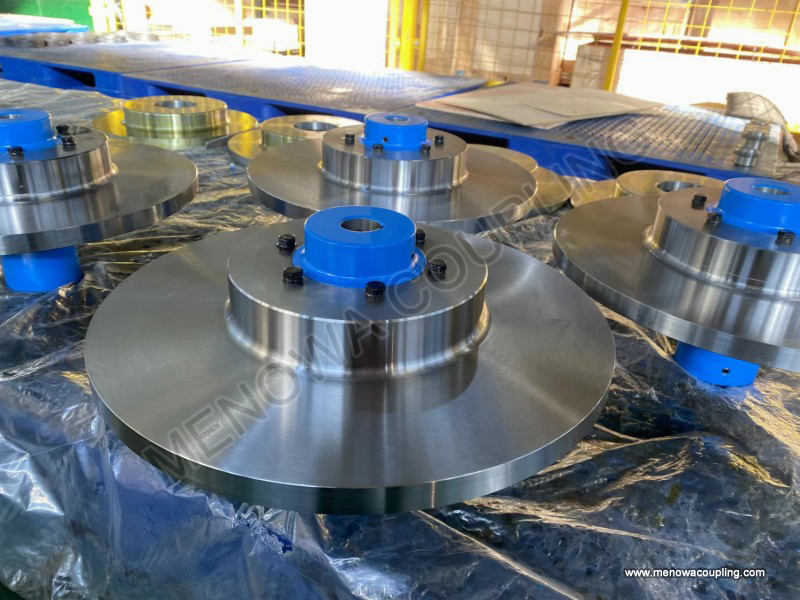
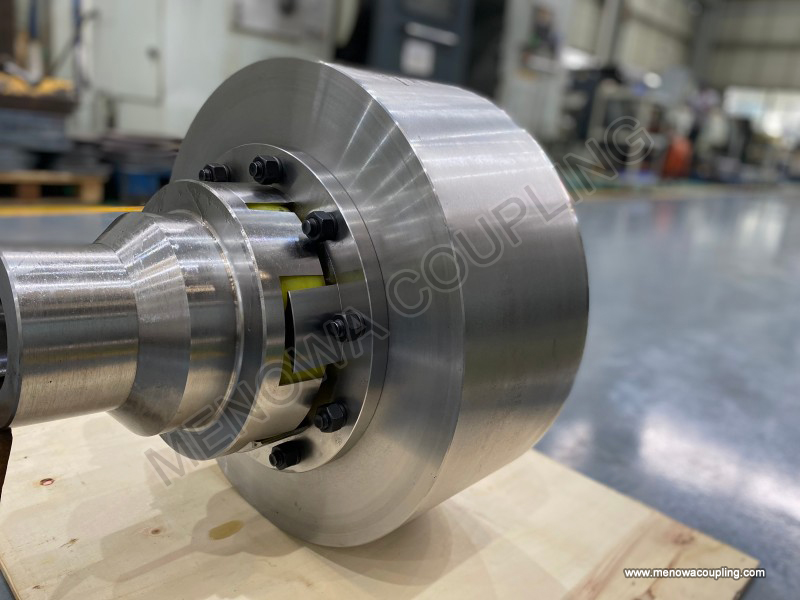
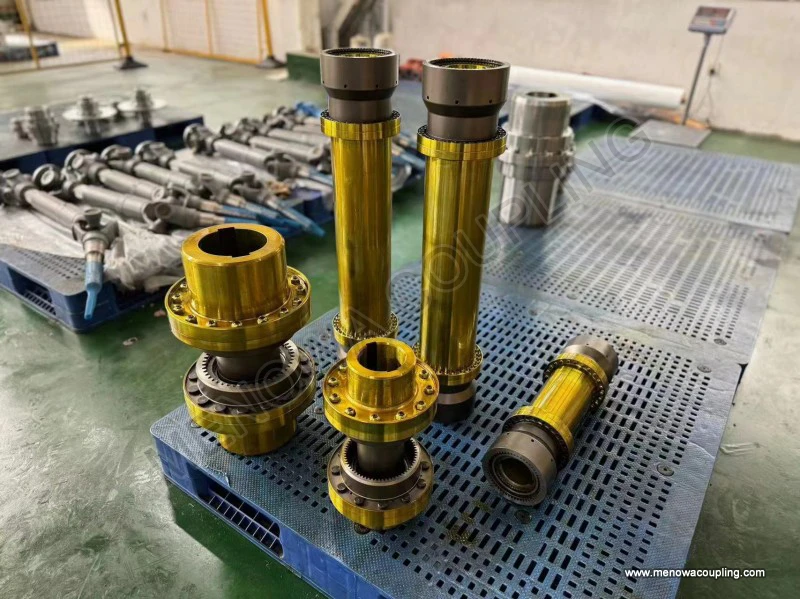
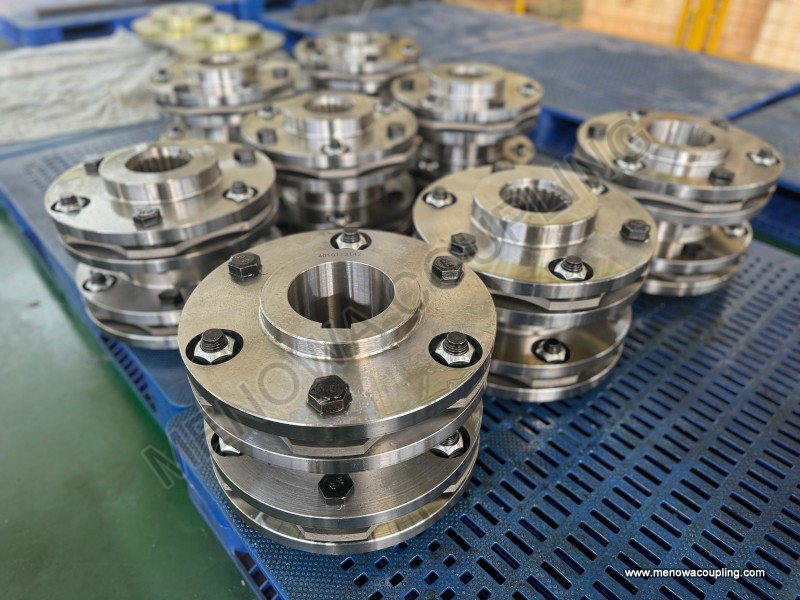
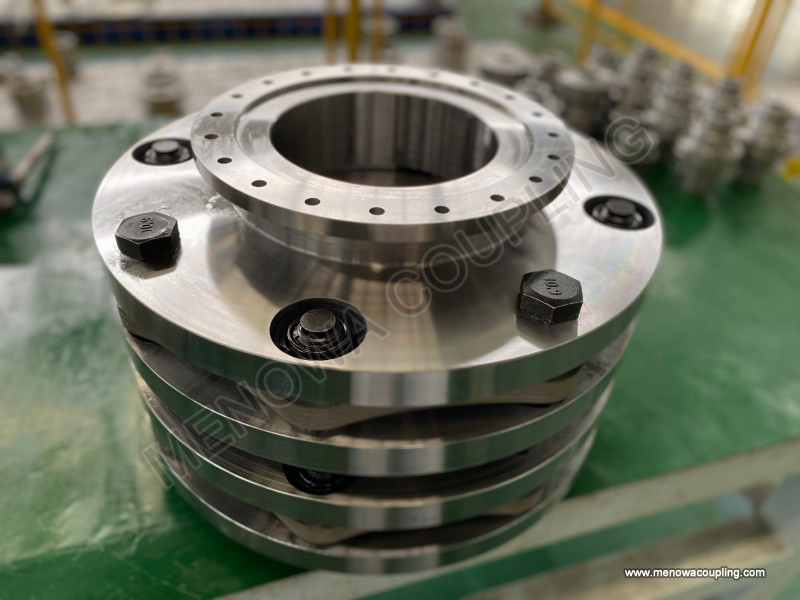
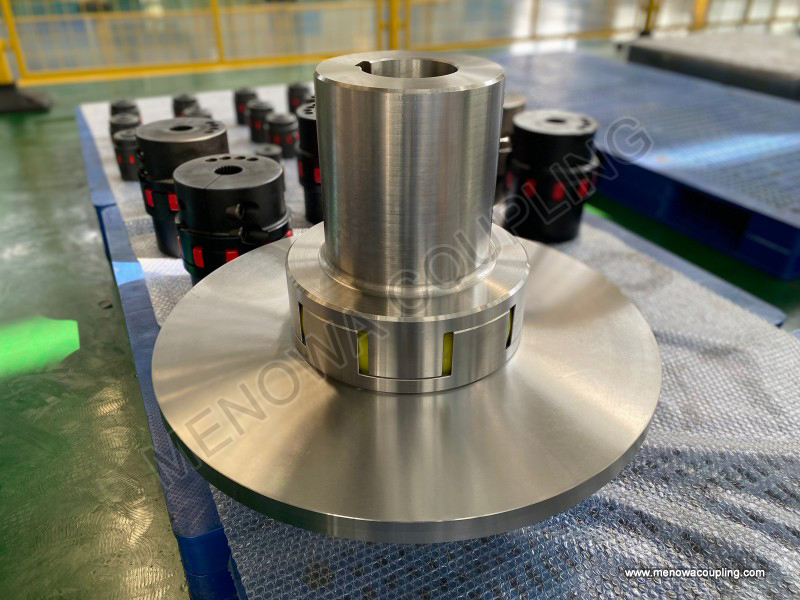
The overall structural composition of brake wheel coupling follows the design concept of integration and compactness, and each component has a clear division of labor and close coordination, jointly supporting the realization of dual functions of transmission and braking. The main structural components of a standard brake wheel coupling include two half-coupling bodies with connecting and fixing functions, a specially designed integrated brake wheel, elastic buffer compensation components and connecting fasteners for assembling and fixing all parts. Each component has its own unique structural characteristics and functional positioning, and the processing accuracy and material quality of each part directly affect the overall operating performance and service life of the entire coupling. The two half-coupling bodies are the basic connecting parts of the whole equipment, which are respectively installed and fixed on the driving shaft and the driven shaft of the mechanical equipment through interference fit or key connection structure. The structural design of the half-coupling fully conforms to the dimensional standard of conventional shaft connection accessories, which can be well adapted to the shaft diameter specifications of various mainstream mechanical equipment, ensuring the stability and firmness of the connection between the coupling and the rotating shaft in the high-speed rotating and high-torque transmission process, and avoiding relative rotation or displacement between the coupling and the shaft due to excessive torque or long-term vibration. The brake wheel is the most distinctive core component that distinguishes the brake wheel coupling from other ordinary couplings. It is usually designed as an integrated circular wheel structure, with the outer circle processed into a smooth and uniform friction working surface, which is the direct contact part with the external brake shoe during braking operation. The internal structure of the brake wheel is closely connected and fixed with one side of the half-coupling, forming an integrated stress-bearing structure. In the processing and manufacturing process, the friction surface of the brake wheel needs to undergo fine finishing and special surface treatment to ensure that the surface flatness and friction coefficient meet the actual braking work requirements, while maintaining good wear resistance and heat resistance, so as to cope with the thermal energy and friction loss generated by frequent friction and braking for a long time. The elastic buffer compensation components are installed between the two half-couplings, mostly made of high-strength elastic materials or flexible metal structural parts. The main functions of these components are to buffer the mechanical vibration and instantaneous impact load generated during the equipment start-up, shutdown and load switching process, compensate for the slight installation deviation and operation displacement between the driving shaft and the driven shaft, avoid rigid contact and rigid friction between metal parts of the coupling, reduce the wear degree of each structural component, and ensure the smooth and stable power transmission process. The connecting fasteners include high-strength bolts, nuts and positioning pins, which are responsible for tightly assembling and fixing all components of the coupling into a whole, preventing structural loosening and part displacement caused by long-term high-speed operation and mechanical vibration, and maintaining the structural stability of the coupling under various working conditions.
The core working mechanism of brake wheel coupling can be divided into two independent and coordinated working stages according to the operation state of mechanical equipment, namely the normal power transmission working stage and the friction braking deceleration working stage, and the two stages can be switched quickly and smoothly according to the actual operation needs of the equipment. In the normal power transmission working stage, the whole coupling operates synchronously with the driving shaft and the driven shaft of the equipment. The driving shaft drives the connected half-coupling to rotate synchronously, and the torque and rotational power are transmitted to the other half-coupling through the elastic buffer compensation components between the two half-couplings, and then stably transmitted to the driven shaft, realizing the continuous and stable operation of the mechanical equipment. During this process, the brake wheel integrated on the coupling rotates synchronously with the coupling body, but the external braking device does not contact with the friction surface of the brake wheel, and there is no friction resistance and braking torque. The elastic components in the coupling play a good buffering and vibration reduction role. When the equipment is started with load or the operating load fluctuates slightly, the elastic components deform appropriately to absorb the instantaneous impact force generated by power switching, avoid the sharp change of torque in the transmission process, protect the motor, reducer and other core power components of the equipment from impact damage, and ensure the stability and continuity of power transmission. At the same time, the elastic compensation function can effectively offset the slight radial displacement, angular deflection and axial movement between the two rotating shafts caused by equipment installation errors, long-term operation aging and mechanical vibration, reduce the additional stress and unilateral wear of the coupling and the shaft parts caused by shaft displacement, and maintain the long-term stable operation of the transmission system. In the friction braking deceleration working stage, when the mechanical equipment needs to reduce the operating speed or stop running completely, the external control system issues a braking instruction, and the matching brake shoe braking device acts quickly and clamps the outer friction surface of the brake wheel. With the continuous clamping action of the brake shoe, a stable friction braking force is formed between the brake shoe and the brake wheel friction surface. This friction force generates reverse braking torque acting on the brake wheel and the integrated coupling body, directly resisting the original rotating torque of the driving shaft and the driven shaft. The rotational kinetic energy generated by the rotating operation of the equipment is gradually converted into thermal energy through the friction effect between the brake shoe and the brake wheel, and the thermal energy is dissipated into the surrounding air environment through the surface of the brake wheel and the brake shoe, so that the rotating speed of the rotating shaft and the equipment gradually decreases until the equipment completely stops running. The whole braking process relies on the direct contact and friction between the brake wheel and the braking device, with few intermediate transmission links and fast torque response, which can realize accurate control of the braking process and avoid the problems of slow braking response and unstable parking effect caused by excessive transmission links.
The material selection of each component of brake wheel coupling is a key factor affecting its overall mechanical performance, wear resistance, heat resistance and long-term operational stability, and the material matching design needs to be carried out reasonably according to different working conditions and load-bearing requirements. The half-coupling body and the brake wheel matrix are mostly made of high-quality cast steel or high-strength alloy steel materials. These metal materials have high mechanical strength, good rigidity and strong pressure-bearing capacity, and can withstand high torque impact and mechanical load generated by long-term high-strength operation of the equipment, without structural deformation or fracture damage under the action of heavy load and frequent vibration. The internal organizational structure of cast steel and alloy steel is uniform and dense, with good processing performance and fatigue resistance, which can adapt to the long-term continuous rotation work and frequent braking impact work of the coupling, and effectively extend the overall service life of the structural main body. The friction working surface of the brake wheel usually adopts special surface strengthening treatment processes on the basis of the metal matrix, such as surface quenching, wear-resistant alloy spraying and other processing methods. These treatment processes can significantly improve the surface hardness and wear resistance of the brake wheel friction area, reduce the friction and wear loss caused by long-term contact with the brake shoe during frequent braking, avoid the rapid wear of the friction surface leading to the decline of braking effect, and at the same time enhance the heat resistance of the friction surface, prevent the surface metal from softening or even deforming due to the high temperature generated by friction braking, and ensure the stability of the friction coefficient of the brake wheel under long-term high-temperature working conditions. The elastic buffer compensation components are selected according to the actual load size and vibration buffering requirements of the equipment. For heavy-duty industrial equipment with large load fluctuation and strong mechanical vibration, high-strength flexible metal elastic parts are mostly selected, which have strong bearing capacity and good elastic recovery performance, and can maintain stable buffering and compensation effect under long-term heavy load working conditions; for light-duty automated mechanical equipment with small load and gentle operation, high-quality rubber or polymer elastic materials are usually used, which have good vibration absorption and noise reduction effects, low manufacturing cost and convenient later replacement and maintenance. The connecting fasteners are all made of high-strength alloy steel after overall quenching and tempering treatment, with high tensile strength and shear resistance, which can avoid bolt loosening, fracture and other problems caused by long-term vibration and torque impact, and ensure the firm and reliable assembly of all coupling components.
Brake wheel coupling has obvious comprehensive application advantages compared with the traditional combination of ordinary coupling and independent braking device in actual industrial production and mechanical operation scenarios. First of all, the integrated structural design effectively simplifies the overall mechanical structure of the equipment transmission and braking system, reduces the number of mechanical parts required for equipment assembly, reduces the complexity of equipment installation and debugging work, shortens the equipment assembly cycle, and reduces the space occupation of transmission and braking components inside the equipment. For mechanical equipment with compact internal installation space and strict structural layout requirements, this integrated design can well meet the space-saving and compact layout needs, and make the overall structural design of the equipment more reasonable and concise. Secondly, the direct braking action mode of the brake wheel coupling reduces the intermediate transmission links between the braking device and the rotating shaft, makes the braking torque transmission more direct and efficient, the braking response speed faster, and the braking process more stable and controllable. It can effectively avoid the problems of braking delay and uneven braking force distribution easily caused by too many intermediate transmission parts in the traditional separate installation mode, and improve the safety and accuracy of equipment start-stop and speed regulation control. In addition, the built-in elastic buffer compensation components of the coupling can effectively buffer the mechanical impact and vibration in the transmission and braking switching process, reduce the rigid wear between mechanical parts, reduce the failure rate of transmission and braking system components, and lower the daily operation and maintenance cost of the equipment. At the same time, the displacement compensation function of the elastic components can adapt to the slight shaft displacement generated by equipment installation errors and long-term operation aging, reduce the additional stress of the transmission shaft and coupling, and prolong the overall service life of the transmission system and braking system. Moreover, the brake wheel coupling has strong applicability and compatibility, and can be matched with various types of brake shoe braking devices and various specifications of mechanical transmission shafts. It can be applied not only to heavy-duty industrial machinery with high load and frequent braking, but also to light-duty automated equipment with stable operation and precise start-stop requirements, with wide application coverage and strong practical value.
Brake wheel coupling is widely used in many industrial production fields and mechanical operation scenarios, covering heavy industry production, automated manufacturing, logistics and transportation machinery and other multiple industries, and plays an irreplaceable core role in the stable operation of various mechanical equipment. In the field of heavy industrial machinery such as bridge cranes, port handling machinery and mining winches, the operating equipment usually has the characteristics of heavy load bearing, frequent start-stop operation, large torque transmission and high safety requirements. These hoisting and handling equipment need to transmit large power and torque during operation, and need to complete rapid and stable braking and parking operations when lifting heavy objects in place or stopping handling work to avoid safety accidents such as heavy object shaking and equipment runaway. The application of brake wheel coupling in this kind of heavy machinery can meet the dual needs of high-torque stable transmission and reliable emergency braking. The integrated structure can withstand heavy load impact, and the sensitive braking response can ensure the accurate parking of hoisting equipment, effectively improving the safety and stability of heavy-duty hoisting operation. In the field of modern precision processing and automated production equipment such as CNC machine tools, servo drive systems, industrial robots and automated packaging production lines, the equipment has high requirements for transmission stability, start-stop accuracy and operation smoothness. This kind of precision automated equipment needs to maintain stable torque transmission during high-speed operation to ensure the processing accuracy and production consistency of products, and needs to complete rapid and gentle deceleration and stop during processing switching and production line docking to avoid equipment vibration and position deviation affecting processing quality. The brake wheel coupling used in precision automated equipment can rely on the good vibration buffering and displacement compensation performance to ensure the smooth operation of high-speed transmission, and the stable braking performance can realize precise start-stop control, avoiding the impact of rigid braking on precision processing parts and equipment precision components, and ensuring the high-precision operation requirements of automated production and processing work. In addition, in the fields of metallurgical transmission equipment, chemical production machinery, building construction machinery and other industrial equipment that need continuous operation and frequent working condition switching, brake wheel coupling is also widely used. It can adapt to the harsh working environments such as high temperature, dust and complex load fluctuation in industrial production sites, maintain stable transmission and braking performance under harsh working conditions, and provide reliable basic guarantee for the continuous and efficient operation of various industrial production lines.
In the long-term operation process of brake wheel coupling, scientific and standardized daily maintenance and regular inspection and maintenance work are essential to maintain its stable performance, extend its service life and reduce mechanical failure risks. Due to the long-term operation characteristics of high-speed rotation, torque transmission and frequent friction braking, each component of the coupling will produce different degrees of wear, aging and structural fatigue after long-term use. If the maintenance and inspection work is neglected, it is easy to cause problems such as loose connecting parts, excessive wear of brake wheel friction surface, aging failure of elastic buffer components and reduced braking effect, which will affect the normal operation of the entire mechanical equipment, and even lead to equipment shutdown and safety accidents in serious cases. The daily maintenance work mainly includes regular cleaning of the coupling surface, checking the tightness of connecting fasteners and maintaining the good working environment of the coupling. The surface of the brake wheel and coupling body will accumulate dust, iron filings and other sundries during long-term operation. Regular cleaning can avoid these sundries adhering to the brake wheel friction surface affecting the friction coefficient and braking effect, and also prevent sundries from entering the connecting gap of each component causing abnormal wear and jamming. It is necessary to regularly check the tightness of all connecting bolts and positioning pins, and timely tighten the loose fasteners to prevent structural loosening and part displacement caused by long-term vibration, so as to maintain the structural integrity and stability of the coupling. The regular inspection and maintenance work needs to be carried out according to a fixed cycle, including detecting the wear degree of the brake wheel friction surface, checking the elastic deformation and aging state of the elastic buffer components, testing the coordination state between the coupling and the rotating shaft, and evaluating the overall transmission and braking performance of the coupling. For the brake wheel friction surface, if uneven wear, scratches or surface hardness decrease are found during inspection, timely grinding and repair shall be carried out, and replacement shall be arranged when the wear degree exceeds the safe range to ensure the stable friction braking effect. For the elastic buffer components, with the increase of service time, elastic aging and deformation fatigue will occur, resulting in reduced buffering effect and displacement compensation ability. The aged and failed elastic components need to be replaced regularly to avoid vibration impact and rigid wear during equipment operation. At the same time, it is necessary to regularly check the coaxiality between the driving shaft and the driven shaft connected by the coupling, adjust the installation position in time if shaft displacement deviation is found to be too large, reduce the additional stress and unilateral wear of the coupling, and ensure the stable operation of the transmission system.
With the continuous progress of industrial manufacturing technology and the continuous development of mechanical equipment towards high efficiency, energy saving, precision and intelligence, the design and manufacturing technology of brake wheel coupling is also constantly optimized and upgraded, and the future development direction is more in line with the diversified and high-standard operation needs of modern industrial machinery. In terms of structural design optimization, future brake wheel coupling will develop towards more compact structure, lighter weight and higher integration. On the premise of ensuring mechanical strength and bearing performance, the structural size will be further optimized, the overall weight will be reduced, the equipment energy consumption in the operation process will be lowered, and the applicability to more miniaturized and compact automated mechanical equipment will be improved. In terms of material innovation and application, with the continuous emergence of new high-strength, wear-resistant and heat-resistant composite materials, the main body and friction parts of brake wheel coupling will adopt more high-performance new materials, which can further improve the wear resistance, heat resistance and fatigue resistance of the coupling, reduce the frequency of maintenance and replacement, and extend the overall service life. In terms of performance optimization, the buffering and vibration reduction performance, displacement compensation accuracy and braking response sensitivity of the coupling will be further improved to adapt to the higher precision operation and more frequent start-stop control requirements of modern intelligent mechanical equipment. In terms of intelligent matching application, the future brake wheel coupling will be combined with intelligent monitoring technology, and corresponding sensing components can be configured to monitor the operating temperature, wear degree, vibration state and braking torque of the coupling in real time. The operation data can be transmitted to the equipment control system in real time, realizing real-time early warning of potential faults, predictive maintenance and intelligent management, reducing the probability of sudden mechanical failures, and making the operation and maintenance management of the coupling more scientific and efficient. In the future industrial production and mechanical transmission field, brake wheel coupling, as an important multifunctional integrated transmission and braking component, will continue to play an important role, and continuously adapt to the changing industrial production needs through continuous technological innovation and performance optimization, and provide more stable and reliable basic support for the safe and efficient operation of all kinds of mechanical equipment.
Post Date: Apr 26, 2026
https://www.menowacoupling.com/coupling-supplier/brake-wheel-coupling.html
Tags
Related Articles
Advantages Of Flexible Coupling
In the complex and interconnected world of mechanical power transmission, the seamless transfer of torque and rotational motion between rotating shafts stands as a foundational requirement for the steady operation of all types of industrial and commercial machinery. Every mechanical system that relies on motors, engines…
 WeChat
 WhatsApp