Engine Transmission Coupling
The entire power system of any mechanical equipment powered by internal combustion machinery relies on a stable and reliable connection between the power generation end and the power distribution and execution end, and the engine transmission coupling stands as an indispensable mechanical component that bridges the engine crankshaft and the transmission input shaft in this whole power transmission chain. Every mechanical device that generates rotational power through fuel combustion and converts thermal energy into mechanical kinetic energy needs a transitional connecting structure to transfer generated torque and rotational motion to subsequent transmission components, and this connecting structure undertakes far more than a simple physical connection function in actual operation. In the complex working environment of mechanical operation, the engine will produce continuous rotational vibration during ignition and power output, the transmission will bear variable load impact during gear switching and power adjustment, and the installation and assembly of various mechanical components will inevitably produce tiny position deviations and angle differences that cannot be completely eliminated by precision processing and assembly technology. All these objective existing working conditions and mechanical operating characteristics determine that the engine transmission coupling is not a simple auxiliary connecting part, but a core functional component that balances power transmission efficiency, vibration buffering, misalignment compensation, load protection and system operation stability. Understanding the intrinsic working logic, structural adaptation characteristics, operating state changes under different working conditions, and long-term performance attenuation rules of engine transmission coupling is essential for mechanical equipment operation management, daily maintenance, structural optimization design and service life extension of the entire power transmission system.
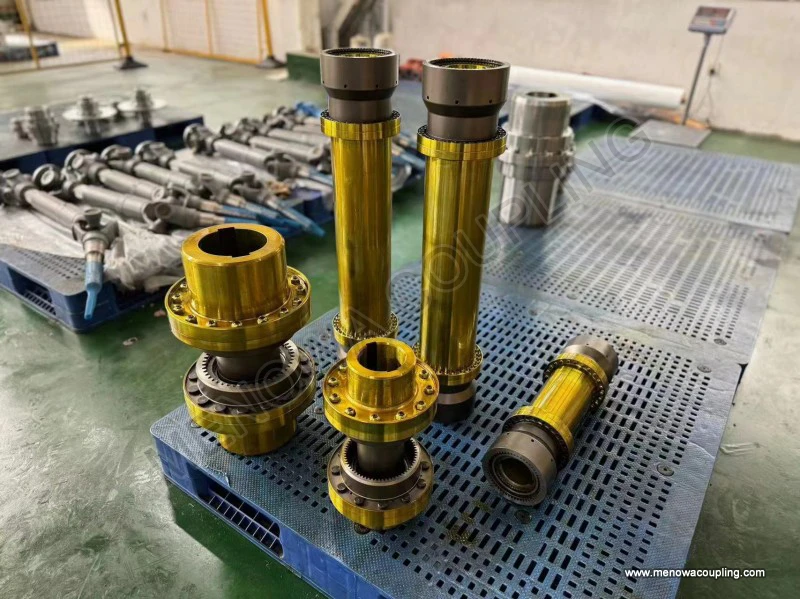
At the most basic mechanical operation level, the fundamental mission of the engine transmission coupling is to form a continuous and stable power transmission path between the rotating output end of the engine and the power input end of the transmission system. The engine converts the chemical energy released by fuel combustion into reciprocating mechanical motion of internal pistons, and then converts linear reciprocating motion into continuous rotational motion through the crankshaft structure. This rotational motion carries torque and power generated by the engine and needs to be accurately transmitted to the transmission device. The core function of the transmission device is to adjust the output torque and rotational speed according to different operation requirements of mechanical equipment, realize power shunting, speed change and direction adjustment, and finally transmit the adjusted power to the final execution components such as wheels, transmission rollers or working mechanical arms. Without the reliable connection provided by the engine transmission coupling, the power generated by the engine cannot be effectively transmitted to the transmission system, and the whole mechanical equipment will lose the power basis for normal operation. In the actual power transmission process, the coupling needs to maintain stable connection and synchronous rotation state under continuous rotation state, ensure that the torque loss in the power transmission process is controlled within a reasonable range, and avoid power transmission interruption and mechanical operation failure caused by loose connection or structural separation. This basic power transmission function runs through the whole operation cycle of mechanical equipment, and all other auxiliary functions of the coupling are expanded and derived on the premise of ensuring efficient and continuous power transmission.
In addition to the basic power transmission function, the most important practical value of the engine transmission coupling in actual mechanical operation lies in its ability to adapt to various unavoidable misalignment states between the engine crankshaft and the transmission input shaft. In the process of mechanical equipment production and assembly, even with high-precision processing equipment and standardized assembly processes, it is impossible to achieve complete absolute coaxial alignment between the engine output shaft and the transmission input shaft. There will always be tiny deviations in horizontal position, vertical height and rotation angle between the two shafts. These deviations are collectively referred to as shaft misalignment in mechanical engineering, including radial misalignment, axial misalignment and angular misalignment. Radial misalignment means that the central axes of the two rotating shafts are parallel but do not coincide, resulting in a certain radial distance deviation; axial misalignment refers to the tiny displacement of the two shafts in the axial direction during installation and operation, which is caused by assembly gaps and thermal expansion and contraction of components; angular misalignment means that the central axes of the two shafts form a certain included angle and cannot maintain a completely parallel and collinear state. If the two shafts are rigidly connected without any flexible buffer and misalignment compensation structure, the tiny misalignment existing in the static state will produce huge additional mechanical stress and alternating shear force during high-speed rotation and power transmission. These abnormal stresses will directly act on the engine crankshaft, transmission input shaft and related bearing components, resulting in increased component wear, accelerated fatigue aging of metal structures, and even early fracture and damage of key shaft parts in a short time. The engine transmission coupling is designed with reasonable structural flexibility and deformation tolerance, which can effectively absorb and compensate various misalignment deviations generated in static assembly and dynamic operation. Through the slight elastic deformation and structural displacement of its own parts, the coupling offsets the additional stress caused by shaft misalignment, ensures that the two shafts can maintain smooth synchronous rotation under the premise of not bearing abnormal tension and shear force, and protects the core shaft components and bearing parts of the engine and transmission from damage caused by assembly deviations and operational deformation.
Vibration and impact buffering is another key functional attribute that the engine transmission coupling must have in complex working conditions. The internal combustion engine will produce periodic vibration in the working process of piston ignition, compression, power generation and exhaust strokes. The intermittent power output of each cylinder will form regular rotational vibration on the crankshaft, and the vibration amplitude will change with the change of engine rotational speed and load. When the mechanical equipment starts, accelerates, decelerates, shifts gears and bears sudden load changes, the transmission system will generate instantaneous impact load in the process of power switching and torque adjustment. This kind of vibration from the engine and impact from the transmission system will form alternating mechanical force in the power transmission chain. If these vibration and impact forces are directly transmitted between the engine and the transmission without buffering, the whole power system will be in a state of violent vibration for a long time. Long-term vibration impact will not only cause loose connection of various fastening parts of mechanical equipment, abnormal noise during operation and reduced operation comfort, but also lead to continuous fatigue damage of internal precision parts of engine and transmission, accelerate the wear of gear meshing parts and bearing rotating parts, and greatly shorten the overall service life of the power system. The engine transmission coupling is equipped with buffer structures made of elastic materials or flexible mechanical structures inside. These structures can effectively absorb the vibration energy generated by engine operation and the instantaneous impact force generated by load changes. In the process of power transmission, the flexible part of the coupling undergoes small elastic deformation to convert instantaneous impact force into slow and stable continuous force, reduce the vibration amplitude transmitted between the two shafts, isolate the mutual interference of vibration between the engine and the transmission, make the whole power transmission process more stable and gentle, and reduce the fatigue loss of mechanical components caused by vibration and impact.
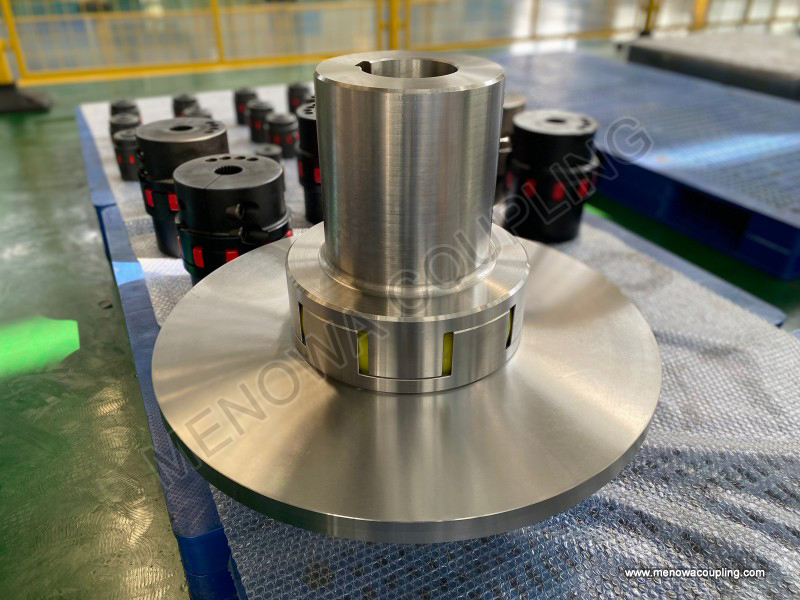
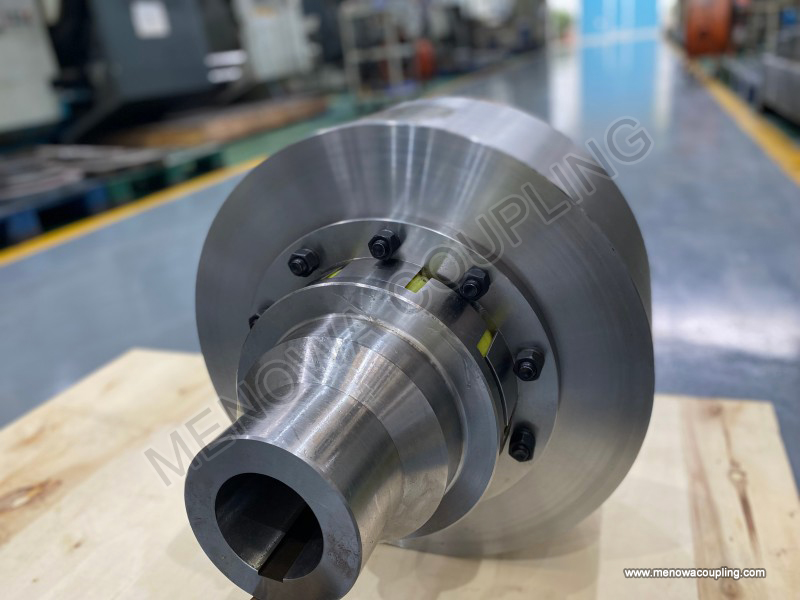
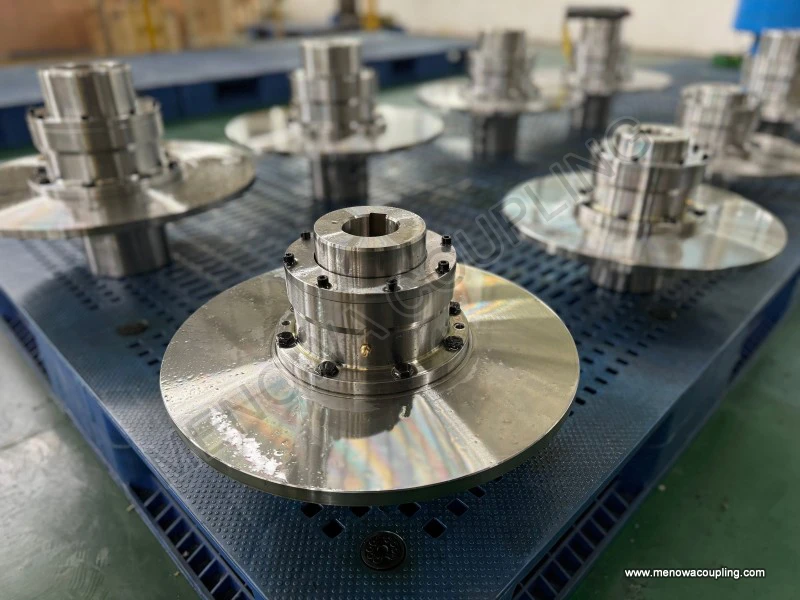
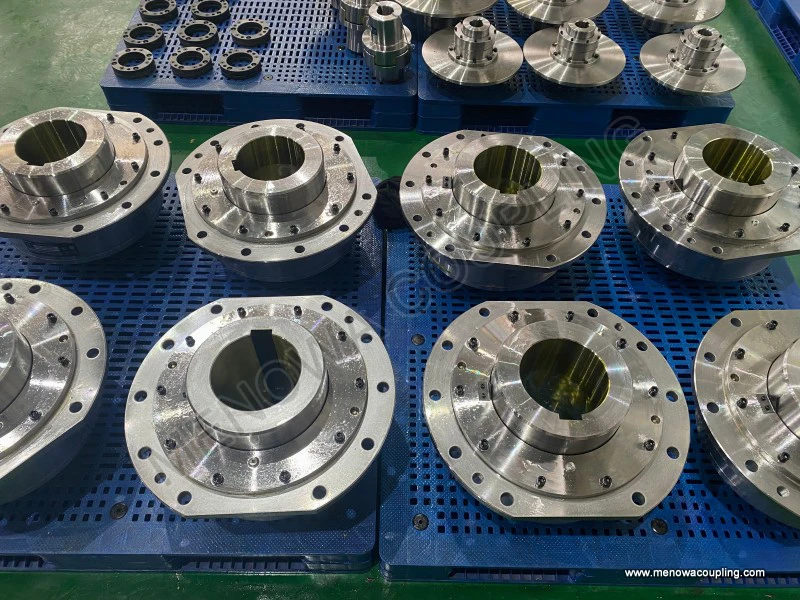
The structural design of engine transmission couplings is closely matched with the power demand and operating characteristics of different types of mechanical equipment, and different structural forms correspond to different torque bearing capacities, misalignment compensation ranges and vibration buffering effects. In general mechanical classification, engine transmission couplings can be divided into rigid structural forms and flexible structural forms according to different structural design concepts and working modes. Rigid engine transmission couplings are mainly composed of high-strength metal integral structures, with high structural rigidity and strong torque bearing capacity. This kind of coupling is mostly used in mechanical equipment with small power fluctuation, stable operation state and high assembly alignment accuracy. Because of its small structural deformation range, rigid couplings cannot compensate for large misalignment and vibration impact, so they need higher assembly precision and better working environment stability. Flexible engine transmission couplings add elastic buffer components or flexible connecting structures on the basis of metal fixed structures. The flexible parts can be made of various elastic materials or special flexible metal structures. This kind of coupling has obvious advantages in misalignment compensation and vibration buffering, and is suitable for most conventional mechanical equipment with complex working conditions, large power fluctuation and certain assembly deviation. Whether rigid or flexible, the core structural design logic of the coupling is to balance the two key indicators of power transmission rigidity and deformation flexibility, ensuring that sufficient structural rigidity is maintained to meet the torque transmission demand during normal operation, and appropriate flexibility is reserved to adapt to deformation and vibration under special working conditions.
In the actual operation process of mechanical equipment, the working state of the engine transmission coupling will change dynamically with the adjustment of engine rotational speed, load change and working environment temperature. When the equipment starts from a static state, the engine needs to output instantaneous starting torque to drive the transmission and subsequent working components to operate. At this moment, the coupling needs to bear the instantaneous peak torque generated during starting, and the internal structure will bear short-term impact load. The flexible parts of the flexible coupling will produce instantaneous elastic deformation to buffer the starting impact, avoid rigid collision between the engine shaft and the transmission shaft, and ensure smooth and gentle starting process of the equipment. When the equipment runs at a constant speed and stable load, the engine outputs stable torque, the transmission works in a fixed gear state, the power transmission state is stable, the deformation of the coupling structure is small, and the whole component is in a stable and low-loss working state. When the equipment needs to accelerate or decelerate, the engine torque output changes rapidly, the transmission gear position is adjusted synchronously, and the coupling needs to adapt to the rapid change of torque and rotational speed, maintain synchronous rotation of the two shafts, and continue to play a role in vibration buffering and misalignment compensation. When the equipment works under heavy load or variable load for a long time, the coupling will bear alternating torque and continuous vibration for a long time, and the internal structural parts will be in a state of repeated stress cycle. Long-term cyclic stress will lead to slow fatigue aging of materials, and the performance of elastic buffer parts will gradually decline with the increase of service time.
Temperature change in the working environment also has an obvious impact on the working performance and service life of the engine transmission coupling. The engine will continuously generate heat during operation, and the heat will be transferred to the coupling installation position through the crankshaft and connecting parts, resulting in the gradual rise of the working temperature of the coupling. In high-temperature working environment, the physical properties of the metal materials of the coupling will change slightly, the structural rigidity will decrease moderately, and the elastic buffer performance of the flexible parts will also change with the temperature rise. If the temperature is too high for a long time, the aging speed of elastic materials will be accelerated, the elasticity and buffering capacity will decrease, and the misalignment compensation effect will be weakened accordingly. On the contrary, in low-temperature working environment, the metal structure of the coupling will become harder and more brittle, and the flexible parts will lose part of their elasticity, which will easily lead to structural cracking under impact load. Therefore, the structural design and material selection of engine transmission couplings need to fully consider the temperature change range of the actual working environment, select materials with stable physical properties in different temperature environments, and ensure that the coupling can maintain stable working performance in both high-temperature and low-temperature working conditions without obvious performance attenuation or structural damage.
The matching selection of engine transmission couplings is a systematic work that needs to comprehensively consider multiple mechanical parameters and working condition factors, rather than simply selecting according to the size and installation dimensions. The first core factor to be considered in selection is the rated torque and peak torque generated by the engine during operation. The rated torque determines the conventional power transmission demand of the coupling during normal operation, and the peak torque determines the maximum load that the coupling needs to bear during starting, acceleration and sudden load change. The torque bearing capacity of the selected coupling must be higher than the actual peak torque generated by the power system, so as to avoid structural deformation, part damage or power transmission failure caused by overload operation. The second factor is the misalignment degree of the engine shaft and transmission shaft after actual assembly. According to the measured radial, axial and angular misalignment deviations, a coupling with matching misalignment compensation range should be selected to ensure that all assembly deviations can be effectively compensated and no additional stress is generated during operation. The third factor is the vibration intensity and impact frequency of the mechanical equipment during operation. For equipment with large vibration and frequent impact, a flexible coupling with good buffering performance and strong fatigue resistance should be preferred; for equipment with stable operation and small vibration, a rigid coupling with simple structure and high transmission efficiency can be selected.
In addition to the above core parameters, the matching selection of engine transmission couplings also needs to consider the working speed of the power system, the installation space of the equipment, the maintenance convenience and the long-term operation cost. Different couplings have different allowable working speed ranges, and excessive working speed beyond the design range will lead to increased centrifugal force of coupling parts, aggravated structural vibration and accelerated wear. The installation space of mechanical equipment is limited by the overall structural layout, so the overall size and installation form of the coupling need to adapt to the reserved installation space to avoid installation interference and assembly difficulties. The maintenance convenience directly affects the daily operation and management cost of the equipment. Couplings with simple structural composition, few wearing parts and convenient disassembly and assembly can reduce the time and labor cost of daily inspection and later replacement. The long-term operation cost is related to the material durability and wear resistance of the coupling. Couplings made of high-quality wear-resistant and fatigue-resistant materials have longer service life, lower replacement frequency and lower comprehensive operation cost in the long-term use process. Only by comprehensively balancing all the above factors can the most suitable engine transmission coupling be selected for the mechanical equipment, so as to ensure the long-term stable and efficient operation of the power transmission system.
Daily maintenance and regular inspection of engine transmission couplings are crucial to maintaining its good working performance and extending service life. In the long-term operation process, affected by vibration, impact, temperature change and material fatigue, the fastening parts of the coupling may become loose, the flexible buffer parts may age and deform, and the connecting surfaces may wear gradually. If these potential hidden dangers are not inspected and maintained in time, small problems will gradually evolve into large mechanical failures, affecting the normal operation of the whole equipment. The daily maintenance work mainly includes regular visual inspection of the coupling appearance to check whether there is obvious structural deformation, surface crack, part falling off and abnormal wear; regular inspection of all fastening connecting pieces to ensure that all bolts and connecting parts are in a tight state and no loose displacement occurs; regular cleaning of the coupling installation position to avoid dust, sediment and mechanical impurities from accumulating on the coupling surface and entering the connecting gap, so as to prevent impurities from aggravating part wear and affecting the normal flexible deformation and misalignment compensation function of the coupling.
Regular in-depth inspection needs to be carried out according to the operation time and working strength of mechanical equipment. During the regular inspection, the operation state of the coupling under rotating condition should be checked, focusing on whether there is abnormal vibration, abnormal noise and instantaneous jitter during power transmission. By detecting the vibration amplitude and noise frequency of the coupling operation, the aging degree of the internal flexible parts and the wear state of the connecting structure can be judged indirectly. At the same time, the axial and radial displacement changes of the coupling during operation should be measured to check whether the misalignment compensation function is still in a normal state. If it is found that the vibration of the coupling increases significantly, the abnormal noise is obvious, the elastic deformation of the flexible parts is insufficient or the wear degree exceeds the normal range, the aging and damaged parts should be replaced in time to avoid mechanical failure caused by performance attenuation. In the maintenance and replacement process, it is necessary to strictly follow the assembly operation specifications, ensure that the assembly alignment accuracy of the coupling meets the design requirements, avoid new assembly misalignment caused by irregular installation, and ensure that the coupling can give full play to its due functions after maintenance and replacement.
The failure forms of engine transmission couplings in actual use are relatively fixed, and most failures are caused by overload operation, long-term fatigue wear, improper installation and untimely maintenance. The common failure forms include structural fracture of coupling metal parts, aging and failure of flexible buffer parts, loosening and falling off of fastening parts, excessive wear of connecting contact surfaces and permanent deformation of coupling structure. Structural fracture of metal parts is mostly caused by long-term overload operation, excessive peak torque impact or material fatigue aging. Once the metal structure fractures, the power transmission path will be directly interrupted, resulting in the shutdown of mechanical equipment. Aging and failure of flexible buffer parts will lead to the loss of vibration buffering and misalignment compensation functions of the coupling, resulting in increased vibration of the power system, increased wear of engine and transmission parts, and accelerated damage of the whole power transmission chain. Loosening and falling off of fastening parts will lead to unstable connection of the coupling, relative displacement of connecting parts during rotation, abnormal noise and vibration, and even separation of the two shafts in serious cases, resulting in power transmission interruption. Excessive wear of connecting contact surfaces will increase the gap between coupling parts, reduce power transmission efficiency, and produce impact and jitter during operation, affecting the stability of equipment operation.
With the continuous progress of mechanical design technology and material processing technology, the design level and comprehensive performance of engine transmission couplings are also constantly optimized and improved. The traditional coupling design mostly focuses on basic power transmission and simple misalignment compensation, while the modern engine transmission coupling design pays more attention to the comprehensive balance of high efficiency transmission, long-term durability, intelligent vibration reduction and lightweight structure. In terms of material application, new high-strength and high-toughness metal alloy materials and high-elasticity and aging-resistant flexible materials are gradually applied to coupling manufacturing. These new materials have better fatigue resistance, temperature resistance and wear resistance, which can effectively extend the service life of couplings and reduce the frequency of maintenance and replacement. In terms of structural design, the optimized structural layout can further improve the misalignment compensation range and vibration buffering effect on the premise of ensuring torque transmission capacity, reduce the overall weight and structural size of couplings, and adapt to the lightweight development trend of modern mechanical equipment.
In terms of application scenario adaptation, modern engine transmission couplings are gradually developing towards personalized and customized design. According to the special working conditions of different mechanical equipment, such as heavy-load continuous operation, high-frequency variable load operation, extreme temperature environment operation and special working medium operation, targeted structural optimization and material matching are carried out to ensure that the couplings can maintain stable and reliable working performance in various complex and harsh working environments. At the same time, with the development of mechanical condition monitoring technology, more and more power systems begin to add real-time monitoring modules for coupling operation state. By collecting vibration data, temperature data and torque change data of coupling operation, the operation state of the coupling can be judged in real time, potential failure risks can be predicted in advance, and early warning and maintenance prompt can be realized, which further improves the operation reliability of the power transmission system and reduces the shutdown loss caused by sudden failure of the coupling.
Looking at the whole power transmission system of mechanical equipment, the engine transmission coupling, although not a core power generation or power adjustment component, plays an irreplaceable connecting and protective role in the whole mechanical operation process. It undertakes the important tasks of connecting the engine and transmission, transmitting power efficiently, compensating for assembly misalignment, buffering vibration impact and protecting core components. Every link from design selection, installation and commissioning to daily operation and maintenance is related to the operation stability, transmission efficiency and service life of the whole mechanical equipment. Reasonable selection of coupling type, standardized installation and assembly, scientific daily maintenance and timely fault handling can make the engine transmission coupling always maintain good working condition, give full play to its comprehensive performance, and provide a solid and reliable guarantee for the long-term stable and efficient operation of mechanical equipment. With the continuous development of mechanical engineering technology, the performance of engine transmission coupling will continue to be optimized, and its role in modern mechanical power system will become more prominent, providing more reliable basic support for the efficient operation of various mechanical equipment in different fields.
Post Date: Apr 26, 2026
https://www.menowacoupling.com/coupling-supplier/engine-transmission-coupling.html
Tags
Related Articles
Advantages Of Flexible Coupling
In the complex and interconnected world of mechanical power transmission, the seamless transfer of torque and rotational motion between rotating shafts stands as a foundational requirement for the steady operation of all types of industrial and commercial machinery. Every mechanical system that relies on motors, engines…
 WeChat
 WhatsApp