Centrifugal Pump Coupling
Centrifugal pump systems stand as one of the most widely applied fluid conveying equipment across all industrial production and civilian infrastructure fields, undertaking the core task of transporting various liquid media through the conversion of mechanical rotational energy into fluid pressure and flow energy. In the overall structural composition of a complete centrifugal pump operating unit, every component plays an indispensable role in maintaining stable operation, and the coupling, as the key connecting component between the pump body shaft and the driving motor shaft, occupies a pivotal intermediate position that cannot be replaced by any other part. Unlike the impeller that directly contacts and accelerates fluid media, the pump casing that forms a stable fluid flow channel, or the bearing assembly that supports shaft rotation, the centrifugal pump coupling does not participate in the direct conversion of fluid energy, but it undertakes the fundamental transmission of power source power, and bears the important responsibility of coordinating the operating state between the driving end and the driven end of the entire equipment system. The normal and efficient operation of the entire centrifugal pump unit is inseparable from the stable performance and reasonable matching of the coupling, and any neglect in coupling selection, installation, daily operation maintenance and later fault maintenance will directly lead to the decline of the overall operating efficiency of the pump system, accelerate the wear and aging of core precision components, and even trigger unexpected equipment shutdown and production operation interruption in severe cases, bringing unnecessary operational risks and additional operational burdens to industrial production and daily water supply and drainage work.
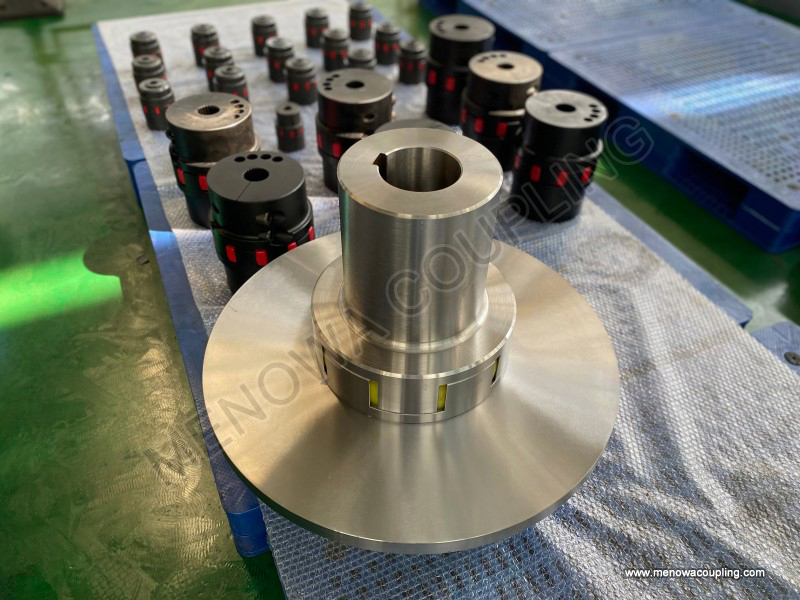
To understand the practical value and working significance of centrifugal pump couplings in depth, it is first necessary to clarify the basic operating logic of the entire centrifugal pump power transmission system and the core connection relationship between each component. The basic working process of a centrifugal pump relies on the rotational power provided by the driving motor to drive the internal impeller to rotate continuously at a set speed. When the impeller rotates, centrifugal force is generated inside the pump body, which makes the liquid medium form a low-pressure area at the center of the impeller, and the liquid is continuously sucked into the pump body under the action of external atmospheric pressure and internal pressure difference. The high-speed rotating impeller blades accelerate the sucked liquid, converting the rotational mechanical energy into the kinetic energy of the liquid itself. Subsequently, the liquid with high kinetic energy enters the volute flow channel inside the pump casing, and the volute structure gradually converts the kinetic energy of the liquid into stable pressure energy, realizing the continuous conveying and directional transportation of the liquid medium along the set pipeline. In this whole energy conversion and liquid conveying process, the motor is the initial power output source, and the pump shaft with the impeller installed is the core driven execution component. The two shafts cannot be directly connected and operated as an integrated whole due to the limitations of processing technology, equipment installation layout, thermal expansion and contraction deformation during operation, and independent maintenance and disassembly requirements. It is the centrifugal pump coupling that perfectly bridges this connection gap, realizing the synchronous rotation of the motor shaft and the pump shaft, ensuring that the rotational torque and speed output by the motor can be efficiently and stably transmitted to the pump shaft without loss, so as to ensure that the impeller can maintain a stable operating state and complete the liquid conveying work as designed.
The core functional attributes of centrifugal pump couplings are diverse and go far beyond the simple basic function of connecting two rotating shafts and transmitting torque. In actual industrial and civil operating scenarios, the coupling needs to cope with various complex objective conditions and dynamic operating changes generated during the long-term operation of the equipment, and undertake multiple protective and regulatory functions for the entire pump unit. The first and most basic core function is efficient power transmission, which requires the coupling to maintain stable connection rigidity during long-term continuous rotation, avoid torque transmission loss caused by connection looseness or structural deformation, and ensure that the actual operating speed and torque of the pump shaft are consistent with the output parameters of the motor, so that the centrifugal pump can operate within the rated working condition range and maintain stable fluid conveying capacity. The second key function is to adapt to various forms of shaft misalignment that are inevitably formed between the motor shaft and the pump shaft. No matter how precise the equipment installation and calibration work is in the initial stage, after the centrifugal pump unit is put into operation for a period of time, various misalignment problems will occur between the two shafts due to factors such as foundation settlement, slight deformation of the baseplate, thermal expansion and contraction of metal components during equipment heating, mechanical vibration during operation and long-term stress accumulation. These misalignment states include radial offset, angular deflection and axial displacement between the two shafts, and if these deviations cannot be effectively buffered and adapted, direct rigid friction and extrusion will occur between the shafts and internal components, resulting in rapid wear of bearings and shaft sleeves. The coupling can effectively compensate for these slight misalignments through its own structural design and material characteristics, avoiding rigid stress concentration and reducing the adverse impact of shaft position deviation on equipment operation.
In addition to power transmission and misalignment compensation, centrifugal pump couplings also undertake the important functions of vibration and shock buffering and equipment overload protection. During the start-stop switching process of the centrifugal pump unit and the sudden fluctuation of liquid medium flow and pressure in the pipeline system, the equipment will inevitably generate instantaneous mechanical shock and continuous periodic vibration. These vibration and shock forces will be directly transmitted between the motor and the pump body along the shafting structure without buffer protection, which will not only cause noise pollution during equipment operation, but also easily lead to fatigue damage of precision components such as mechanical seals and bearings, shortening the overall service life of the equipment. Many types of couplings are designed with elastic buffer structures, which can effectively absorb vibration energy and weaken instantaneous shock force in the process of power transmission, isolate the mutual transmission of vibration between the driving end and the driven end, and maintain the smooth and stable operation of the entire unit. At the same time, when the centrifugal pump encounters unexpected working conditions such as pipeline blockage, liquid medium cutoff and mechanical jamming during operation, the operating load of the pump shaft will increase instantaneously and exceed the normal rated load. The coupling can play a certain role in torque limitation and load buffering under such abnormal conditions, avoiding the direct transmission of excessive load torque to the motor and pump shaft, preventing shaft fracture, motor burnout and other serious equipment damage failures caused by overload, and providing a safe buffer period for equipment maintenance and fault handling.
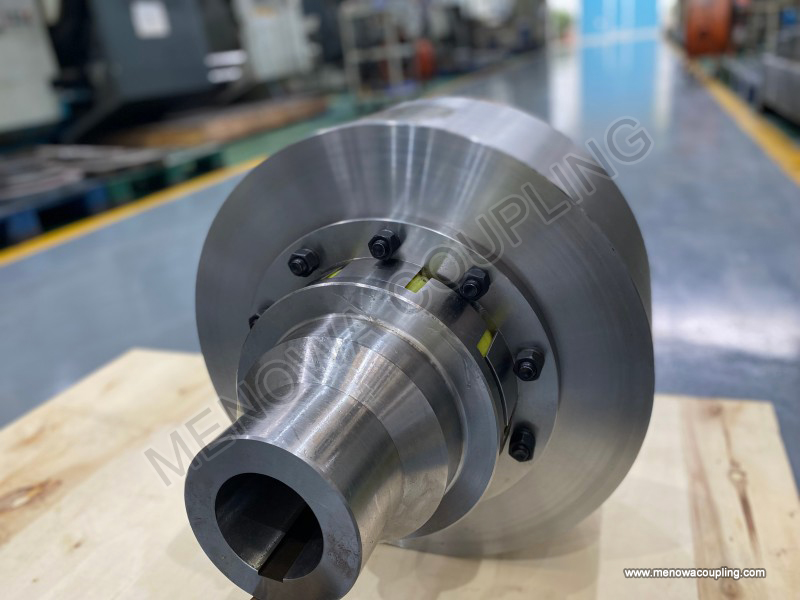
According to different structural design forms, material selection characteristics and applicable working condition requirements, centrifugal pump couplings can be divided into two main categories with obvious performance differences, namely rigid couplings and flexible couplings, and each category includes multiple subdivided structural forms suitable for different operating scenarios. Rigid couplings adopt an integrated rigid connection design without any elastic buffer parts and misalignment compensation structures inside, and the connection between the two shaft ends is completely fixed and locked by flange structures and fasteners. This type of coupling has high connection rigidity and excellent torque transmission efficiency, almost no power loss in the power transmission process, and is very suitable for centrifugal pump units with small power, low operating speed, fixed and stable installation foundation, and extremely high installation alignment accuracy. The structural composition of rigid couplings is simple, the number of internal parts is small, the processing and manufacturing difficulty is low, the daily assembly and disassembly operations are convenient, and the later maintenance and replacement work do not require complex professional technology and auxiliary equipment, with good long-term structural durability. However, the inherent limitations of rigid couplings are also very prominent. Due to the lack of elastic buffer and misalignment compensation capability, this type of coupling has extremely high requirements for the initial installation and calibration accuracy of the pump unit. Once slight misalignment occurs between the motor shaft and the pump shaft due to foundation deformation or thermal expansion during operation, it cannot be automatically adjusted and compensated, and rigid mechanical stress will be continuously generated at the connection position, leading to accelerated wear of bearings and seals, increased equipment vibration and noise, and even shaft deformation and fracture in long-term operation. Therefore, rigid couplings are mostly used in simple civilian water supply and drainage centrifugal pump equipment with low operating load and low continuous operation time, and are rarely used in large-scale industrial centrifugal pump units with high power, high speed and long-term continuous operation requirements.
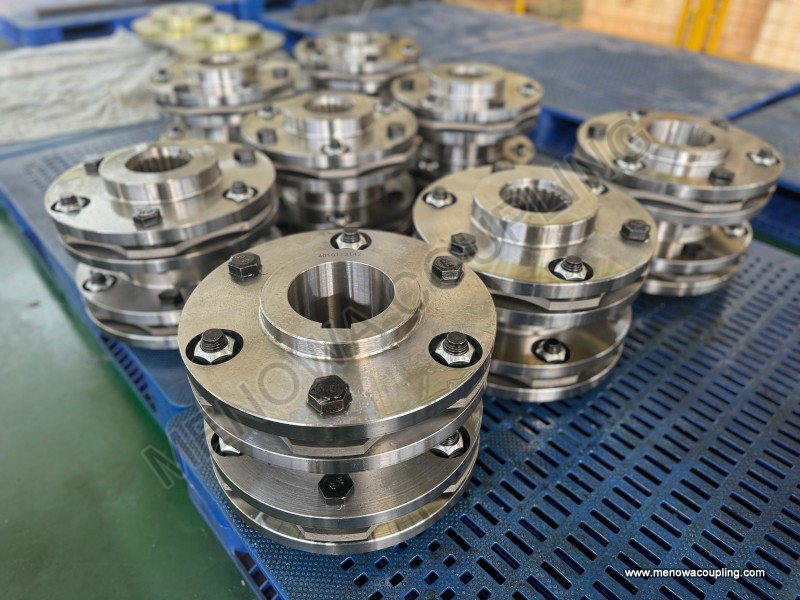
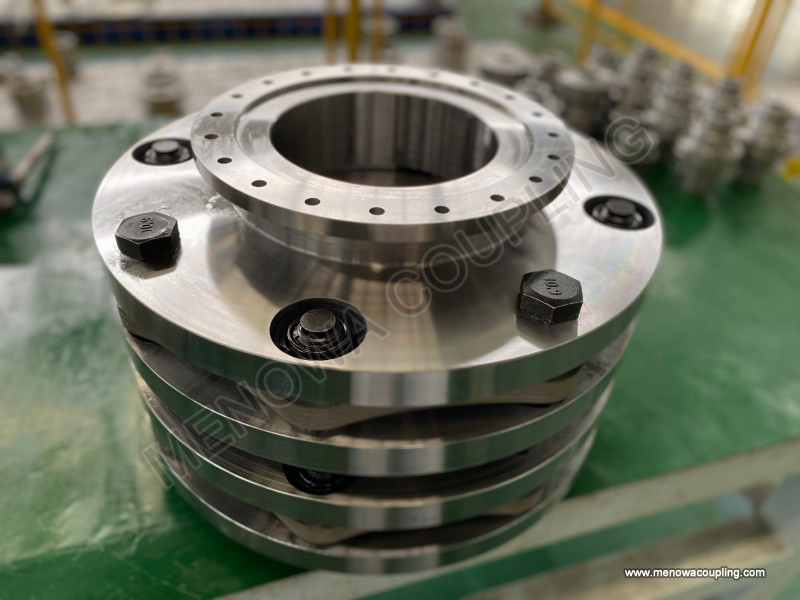
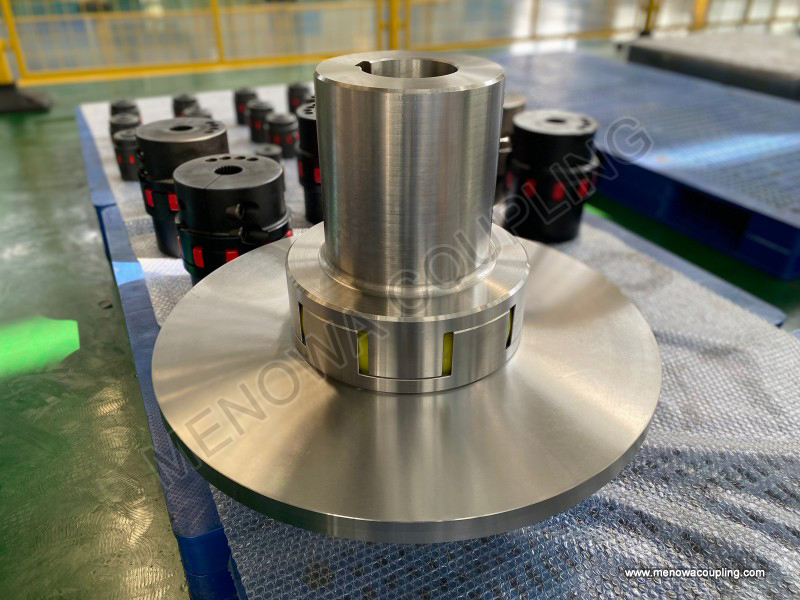
Flexible couplings are the most widely used coupling type in modern industrial centrifugal pump units, which are designed with elastic deformation components or movable flexible connection structures inside, making up for the inherent defects of rigid couplings in misalignment compensation and vibration buffering. This type of coupling can be further subdivided into elastic element flexible couplings and non-elastic movable flexible couplings according to different flexible compensation methods. Elastic element flexible couplings rely on the elastic deformation of internal rubber, polyurethane and other elastic materials to realize misalignment compensation and vibration and shock buffering. The elastic elements can effectively absorb vibration energy, reduce operating noise, and adapt to small radial, angular and axial misalignments between shafts. The overall operation stability is good, and the installation and alignment requirements are relatively low, with strong adaptability to slightly harsh operating environments. Non-elastic movable flexible couplings rely on the mutual movable fit between internal metal structural parts to realize misalignment compensation, without elastic buffer materials, and mainly rely on the structural gap and movable displacement of parts to adapt to shaft position deviation. This type of coupling has high structural strength and good high temperature and corrosion resistance, and is suitable for high-temperature, high-load and high-speed centrifugal pump operating environments where elastic materials are easy to age and fail. Flexible couplings of all subdivided types have strong environmental adaptability and working condition tolerance, can cope with various slight deformation and vibration problems generated during the long-term operation of centrifugal pumps, effectively protect the shafting and precision components of the equipment, and extend the overall maintenance cycle and service life of the unit. Although the torque transmission efficiency of flexible couplings is slightly lower than that of rigid couplings due to the existence of flexible structures, the transmission efficiency loss is within a reasonable and controllable range, which can fully meet the normal operating power demand of centrifugal pumps, and the comprehensive practical application value is far higher than rigid couplings in most industrial scenarios.
The selection of centrifugal pump couplings is a systematic and professional work, which cannot be carried out only based on the size of the shaft diameter and the simple matching of installation dimensions. It is necessary to comprehensively consider multiple key factors such as the rated operating power of the centrifugal pump unit, operating speed, working medium characteristics, operating environment conditions, installation foundation stability and continuous operating time, so as to ensure that the selected coupling can perfectly match the actual operating working conditions and give full play to its connection, transmission and protection functions. First of all, the matching of torque parameters is the primary core factor for coupling selection. The selected coupling needs to have a rated bearing torque higher than the maximum instantaneous operating torque of the centrifugal pump unit, so as to avoid structural deformation and damage of the coupling caused by instantaneous torque surge during equipment start-stop and load fluctuation. It is necessary to comprehensively calculate the rated torque of the motor and the actual operating torque required by the pump body conveying medium, and reserve a reasonable torque safety margin according to the actual working condition fluctuation range, so as to ensure that the coupling will not be overloaded during long-term operation. Secondly, the operating speed of the centrifugal pump is also an important selection basis. Different types of couplings have different allowable maximum operating speed ranges, and the structural stability and dynamic balance performance of couplings will change significantly under different speed conditions. High-speed operating centrifugal pump units need to select couplings with good dynamic balance performance and stable high-speed operation structure, avoiding coupling vibration and structural resonance caused by high-speed rotation, which affects the stable operation of the entire unit.
The characteristics of the liquid medium conveyed by the centrifugal pump and the on-site operating environment also play a decisive role in the selection of coupling materials and structural types. For centrifugal pumps used in chemical industry, environmental protection wastewater treatment and other scenarios, which need to convey corrosive, acidic and alkaline liquid media, the coupling needs to be made of corrosion-resistant metal materials or treated with anti-corrosion surface processes, so as to prevent the coupling from being corroded and rusted by volatile harmful gases and liquid splashing in the operating environment, resulting in structural strength decline and connection failure. For high-temperature steam water conveying and high-temperature industrial circulating water centrifugal pump units, it is necessary to avoid selecting couplings with ordinary elastic rubber components, because high temperature will accelerate the aging and deformation of elastic materials, lose buffer and compensation functions, and need to choose high-temperature resistant structural forms and special high-temperature resistant elastic materials. For outdoor open-air installed centrifugal pump units, which need to cope with rain, snow, wind and sun exposure all year round, the coupling should have good weather resistance and oxidation resistance, and the surface should be treated with anti-rust and anti-oxidation protection to avoid structural aging and performance degradation caused by long-term exposure to harsh natural environments. In addition, the installation and maintenance conditions of the equipment also need to be considered in the selection process. For centrifugal pump units with limited on-site installation space and inconvenient later disassembly and maintenance, couplings with simple structure, convenient assembly and disassembly and low maintenance cost should be preferred; for key production equipment that runs continuously throughout the year and has high requirements for equipment operation continuity, couplings with stable performance, long service life and low failure probability should be selected to reduce the frequency of equipment shutdown maintenance and ensure the stable progress of production and operation work.
The installation and alignment calibration of centrifugal pump couplings is the key link to determine the later operating effect and service life of the coupling, and the installation accuracy directly affects the vibration level, operating efficiency and component wear degree of the entire pump unit. No matter how excellent the performance and quality of the selected coupling is, if the installation and alignment work is not standardized and the shaft misalignment control is not in place, the coupling will not be able to give full play to its due performance advantages, and even accelerate the failure of the coupling and other equipment components. Before the formal installation of the coupling, it is necessary to first check the overall integrity of the coupling components, check whether there are defects such as structural deformation, surface cracks, thread damage and elastic component aging, and clean the shaft ends of the motor and pump shaft and the inner hole of the coupling to remove impurities such as rust, oil stains and processing burrs, ensuring that the matching connection surface is smooth and clean without sundries affecting the installation accuracy. Then, the motor and the pump body are fixed on the shared baseplate in sequence, and the preliminary position adjustment is carried out to make the two shafts preliminarily concentric, and the coupling half bodies are respectively installed and fixed on the motor shaft and the pump shaft, and the fastening fasteners are initially locked to ensure that the coupling half bodies are firmly connected with the shafts without looseness and radial displacement.
The core of the installation work is the precise alignment calibration of the two coupling half bodies, which mainly aims to eliminate radial offset and angular deflection between the motor shaft and the pump shaft, and control the misalignment error within the allowable small range specified by the process requirements. The commonly used alignment calibration methods include simple plug gauge and straightedge calibration method and precise dial indicator calibration method. The simple calibration method is suitable for small and low-power centrifugal pump units with low operating accuracy requirements. By placing a straightedge on the outer circular surfaces of the two coupling half bodies and using a plug gauge to measure the gap difference between the end faces, the position of the motor or pump body is continuously adjusted until the outer circle and end face gaps of the two coupling half bodies are uniform and consistent, completing the preliminary alignment work. The dial indicator precise calibration method is suitable for large-scale industrial high-power and high-speed centrifugal pump units with high operating stability requirements. The dial indicator is fixed on the coupling half body, and the radial and end face runout data of the other coupling half body are measured by rotating the shaft body. According to the measured runout data, the horizontal and vertical positions of the motor and pump body are accurately adjusted by adding and subtracting adjusting gaskets and moving the base position, so as to minimize the radial and angular misalignment error between the the two shafts. After the alignment calibration is completed, all coupling fasteners need to be locked symmetrically and evenly in sequence to avoid connection looseness caused by uneven locking force. After the installation and locking is completed, it is necessary to manually rotate the coupling and the shaft body to check whether the rotation is smooth and without jamming and abnormal friction, so as to confirm that the installation work meets the standard requirements, and then carry out the test run operation of the equipment.
Daily operation maintenance and regular inspection and maintenance of centrifugal pump couplings are important measures to maintain long-term stable performance and extend service life, and scientific and standardized maintenance management can effectively reduce coupling failure rate and avoid unnecessary equipment shutdown losses. In the daily normal operation process of the centrifugal pump unit, operators need to regularly observe the operating state of the coupling, focusing on checking whether there is abnormal vibration, abnormal noise and local heating at the coupling connection position. During the long-term operation of the equipment, slight looseness of fasteners, aging of elastic components and slight wear of connecting parts may occur inside the coupling. These small problems will not affect the normal operation of the equipment in a short time, but will gradually expand into serious faults if not dealt with in time. Abnormal vibration and noise are the most intuitive external manifestations of coupling abnormal wear and misalignment increase. Once abnormal conditions are found, the equipment should be inspected in time to find out the hidden troubles. The surface temperature of the coupling can also reflect the internal operating state. Excessive local temperature rise usually indicates that the coupling connection is too tight, internal friction is serious or the shaft misalignment is too large, resulting in increased friction heat generation, and adjustment and maintenance need to be carried out in time.
Regular professional maintenance and inspection work should be carried out in accordance with the actual operating intensity and operating environment conditions of the centrifugal pump. For centrifugal pump units that run continuously for a long time, a comprehensive inspection and maintenance cycle should be set up every few months, and for equipment with intermittent operation and low operating load, the maintenance cycle can be appropriately extended. The contents of regular maintenance include checking the fastening state of all coupling connecting fasteners, tightening the loose bolts and nuts in time to prevent connection looseness caused by long-term vibration; checking the wear and aging state of internal elastic components of flexible couplings, replacing the deformed, aged and failed elastic buffer parts in time to ensure that the coupling has good vibration buffering and misalignment compensation capabilities; checking the surface corrosion and wear degree of the coupling metal structure, carrying out anti-rust and anti-corrosion maintenance treatment on the parts with slight corrosion and rust, and repairing or replacing the severely worn and corroded coupling components; rechecking the alignment accuracy of the coupling regularly, and recalibrating and adjusting the shaft misalignment increased by foundation settlement and structural deformation to ensure that the misalignment error is always within the allowable range. In addition, during the long-term shutdown and standby of the centrifugal pump unit, the coupling should be protected against dust, moisture and corrosion, and the surface should be coated with anti-rust grease and covered with protective materials to avoid structural performance degradation caused by long-term idle storage.
In the long-term operation process of centrifugal pump couplings, various common faults are prone to occur due to improper installation, insufficient daily maintenance, long-term wear and tear and working condition changes. Timely and accurate fault judgment and scientific and reasonable maintenance and repair are the key to quickly restore the normal operating state of the equipment. The most common coupling fault is excessive vibration and abnormal noise during equipment operation, which is mainly caused by excessive shaft misalignment, loose connecting fasteners, serious wear of internal coupling parts and aging and failure of elastic components. After the fault occurs, the equipment should be stopped in time for inspection. First, check whether the fasteners are loose and tighten them symmetrically; then check the wear and aging of elastic components and replace the damaged parts; finally, recalibrate the coupling alignment to eliminate shaft misalignment, and the vibration and noise problems can be effectively solved. Another common fault is coupling connection looseness and torque transmission instability, which leads to insufficient power transmission of the pump body, reduced liquid conveying flow and pressure, and unstable equipment operation. This fault is mostly caused by long-term vibration leading to fastener loosening, coupling inner hole and shaft wear and fit clearance increase. It is necessary to re-lock the fasteners, check the wear degree of the matching parts, and replace the severely worn coupling to ensure the stable fit and firm connection between the coupling and the shaft body.
Local overheating and structural deformation of the coupling are also common serious faults, which are mainly caused by excessive shaft misalignment, too tight coupling installation, long-term overload operation of the equipment and poor heat dissipation of the coupling. Long-term overheating will accelerate the aging of elastic components and the fatigue damage of metal structures, and serious structural deformation will directly affect the power transmission effect and equipment operation safety. After the overheating and deformation fault occurs, the equipment load should be reduced first, the coupling alignment state and installation tightness should be readjusted, the equipment operating load should be controlled within the rated range, and the deformed and damaged coupling should be replaced in time to avoid secondary equipment damage caused by continued operation. In addition, coupling corrosion and rust failure often occur in humid and corrosive operating environments. The corroded coupling will have reduced structural strength and easy to break parts. It is necessary to regularly carry out anti-corrosion maintenance, replace the severely corroded coupling in time, and improve the on-site operating environment protection measures to reduce the impact of corrosive factors on the coupling.
With the continuous progress of industrial production technology and the continuous improvement of the operating efficiency and safety requirements of centrifugal pump systems, the design level and manufacturing process of centrifugal pump couplings are also constantly upgraded and optimized, and the development trend of couplings is gradually moving towards structural simplification, material high performance, intelligence and long service life. In the modern industrial production field, the operating working conditions of centrifugal pumps are becoming more and more complex and diverse, and the requirements for coupling comprehensive performance are constantly improving. Traditional single-structure couplings can no longer fully adapt to some extreme working condition operation requirements. New high-performance couplings adopt optimized structural design and new special engineering materials, which have better misalignment compensation capability, vibration buffering effect, high temperature resistance, corrosion resistance and fatigue resistance, and can adapt to more complex and harsh operating environments. At the same time, with the popularization of equipment intelligent operation and maintenance management mode, some coupling matching operation state monitoring technologies are gradually applied in practical engineering. By monitoring the vibration, temperature and torque operation data of the coupling in real time, the early warning of potential coupling faults can be realized, the maintenance plan can be arranged in advance, the passive maintenance after equipment failure is changed into active predictive maintenance, the equipment failure shutdown time is greatly reduced, and the overall operation efficiency and safety of the centrifugal pump unit are further improved.
In conclusion, although the centrifugal pump coupling is a small intermediate connecting component in the entire pump system, it undertakes multiple core tasks such as power transmission, misalignment compensation, vibration buffering and equipment protection, and is an indispensable key part to ensure the stable, efficient and safe operation of the centrifugal pump unit. From the basic working principle and structural classification, to scientific type selection, standardized installation and calibration, to daily operation maintenance, regular maintenance and common fault handling, every link is closely related to the operating state and service life of the coupling and the entire centrifugal pump equipment. In the actual industrial production and civilian infrastructure operation and management process, only by fully attaching importance to the important role of centrifugal pump couplings, strictly implementing standardized operation and management specifications in every link of selection, installation, use and maintenance, can the stable performance of couplings be fully exerted, the long-term efficient and reliable operation of centrifugal pump units be guaranteed, and solid basic support be provided for the stable development of various production and construction and daily life security work.
Post Date: Apr 26, 2026
https://www.menowacoupling.com/coupling-supplier/centrifugal-pump-coupling.html
Tags
Related Articles
Advantages Of Flexible Coupling
In the complex and interconnected world of mechanical power transmission, the seamless transfer of torque and rotational motion between rotating shafts stands as a foundational requirement for the steady operation of all types of industrial and commercial machinery. Every mechanical system that relies on motors, engines…
 WeChat
 WhatsApp