Working Principle of Flexible Diaphragm Coupling
Flexible diaphragm couplings are essential mechanical transmission components widely applied in modern industrial power transmission systems, serving as a critical bridge between driving and driven shafts to realize stable torque transmission while accommodating various shaft misalignments. Unlike rigid coupling structures that pursue absolute rigidity and zero deformation, this type of coupling relies on the elastic deformation characteristics of metal diaphragm components to balance transmission rigidity and operational flexibility, achieving efficient and reliable power delivery in complex and variable working environments. Its core working principle is based on the elastic mechanics of metal thin plates, combining structural mechanical design and dynamic operation characteristics to complete torque transmission, vibration buffering and misalignment compensation without relying on lubrication, friction or auxiliary flexible media such as rubber and springs, which endows it with unique operational advantages in high-speed, high-precision and long-cycle industrial transmission scenarios.
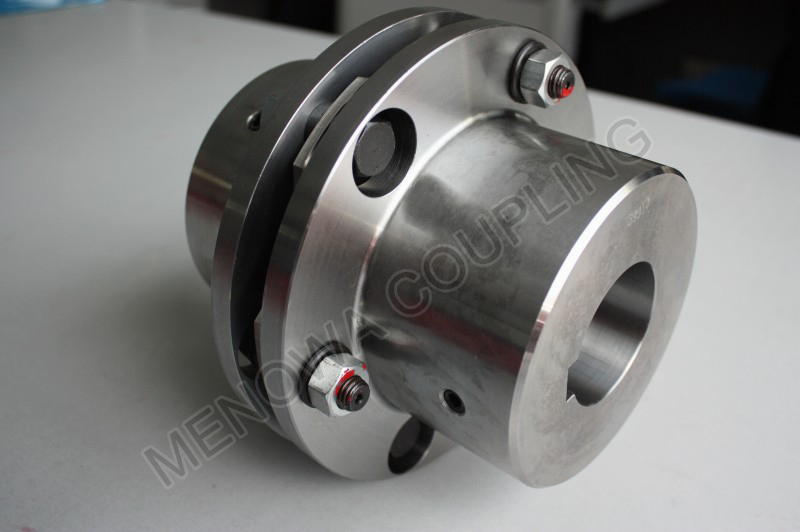
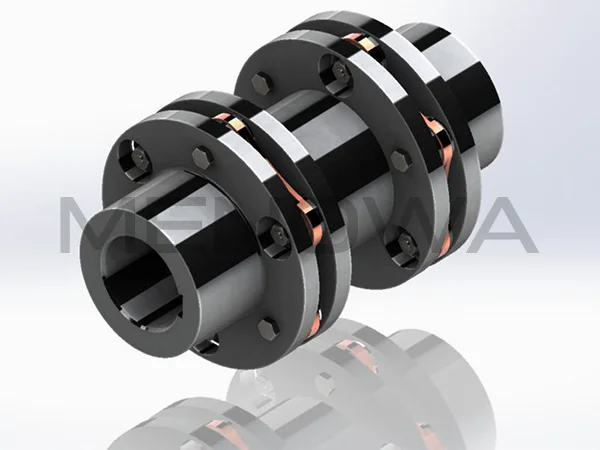
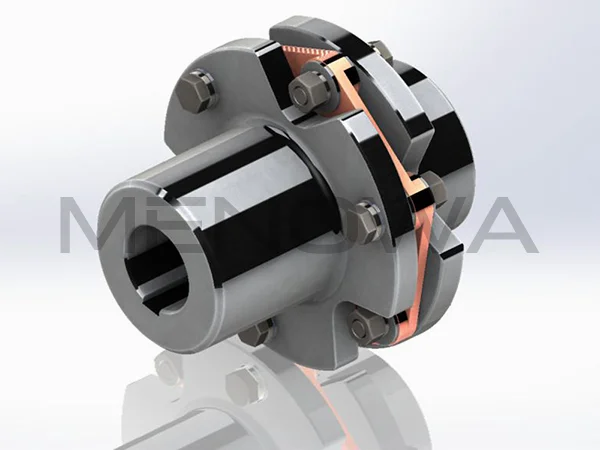
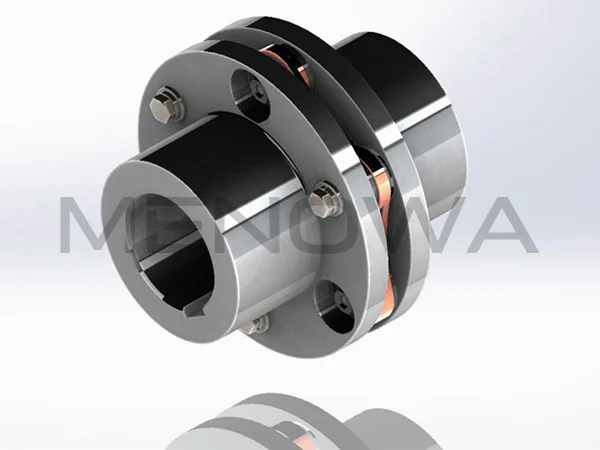
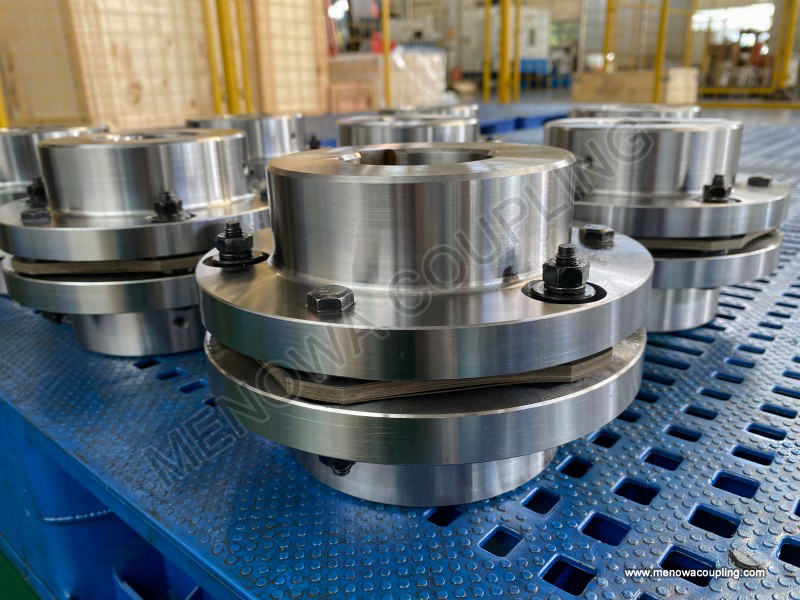
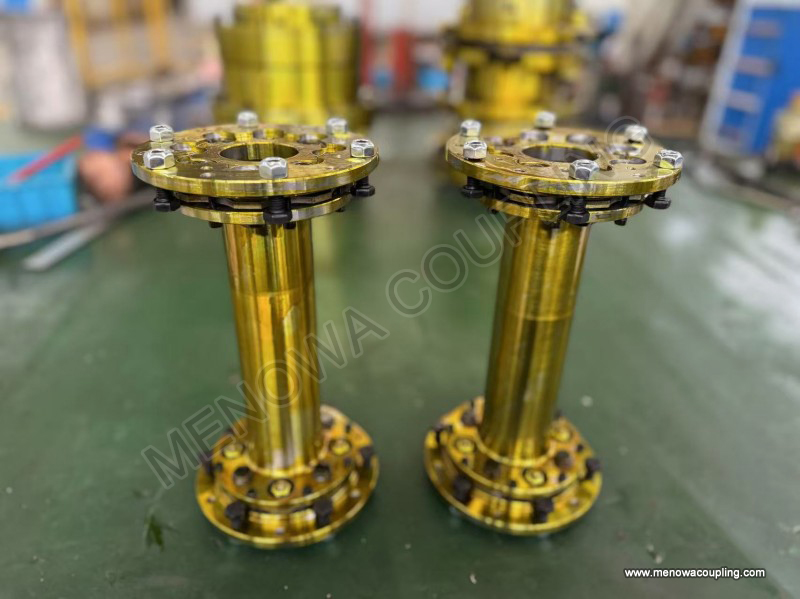
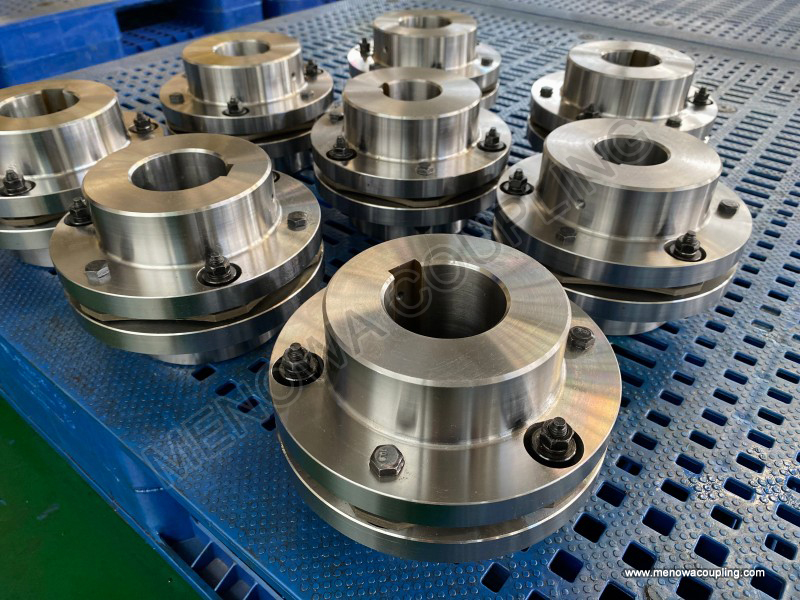
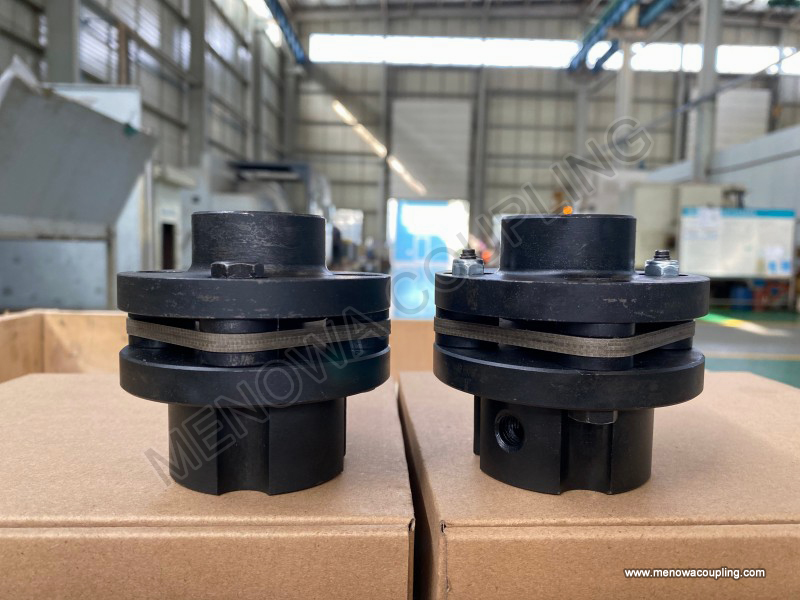
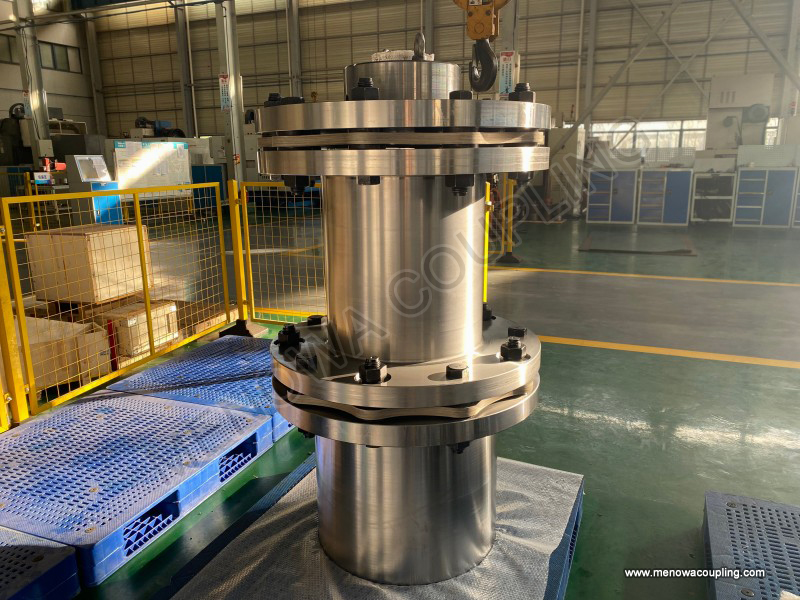
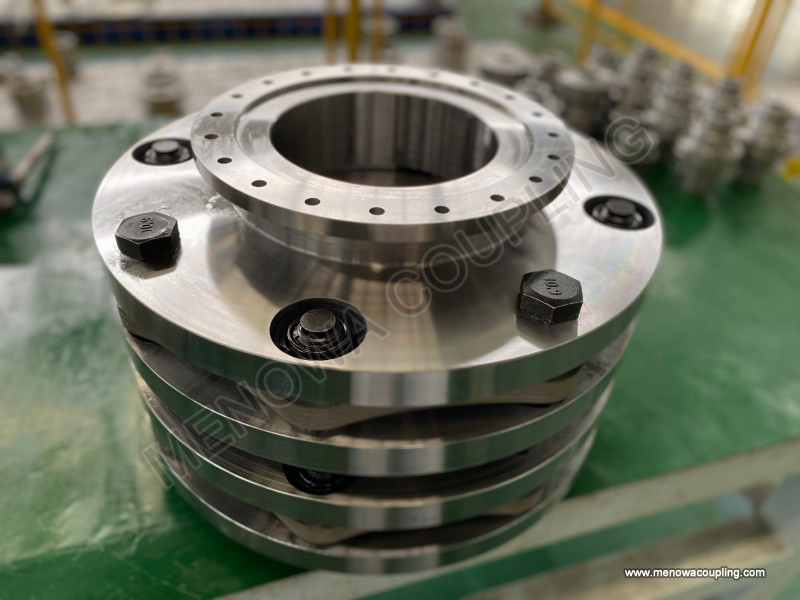
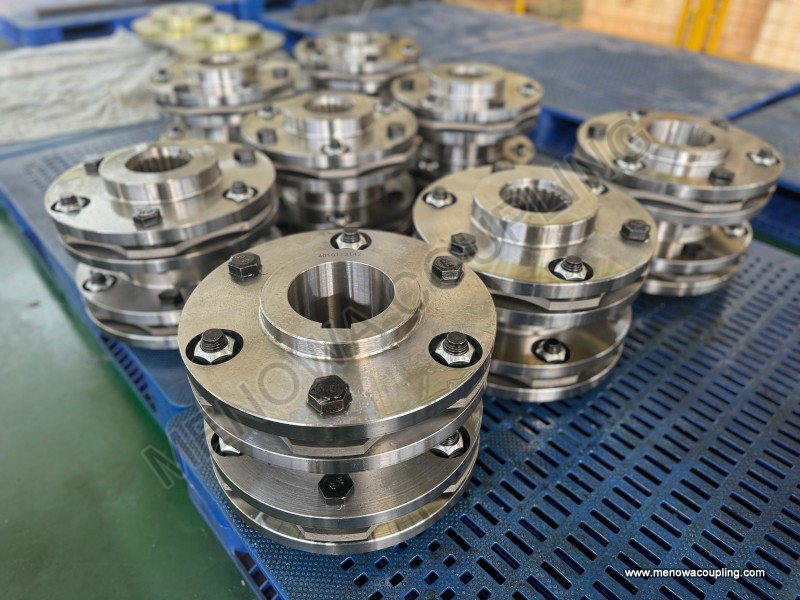
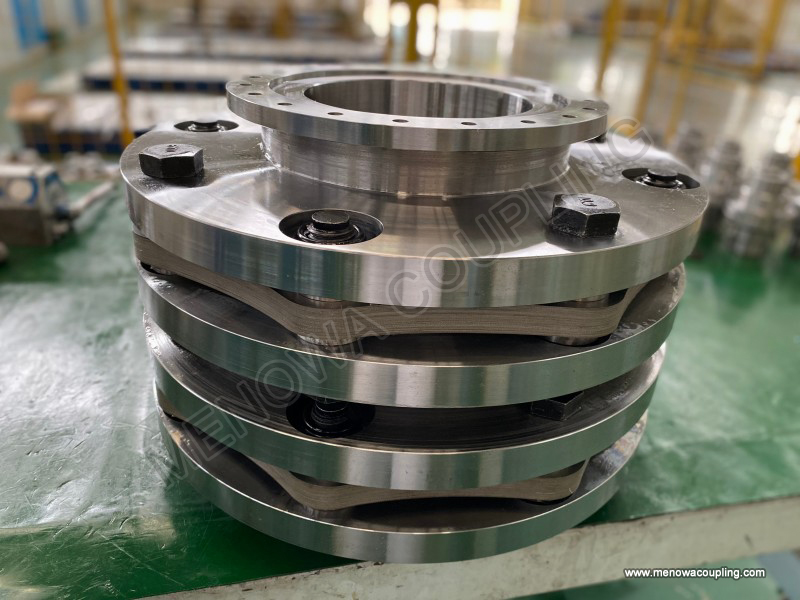
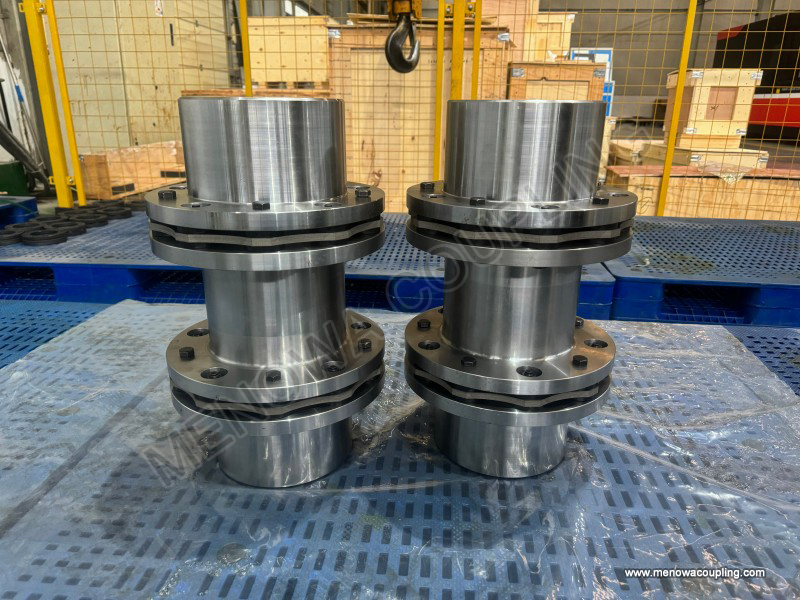
The basic structural composition lays a solid foundation for its working mechanism, and all components cooperate closely to ensure coordinated operation during power transmission. A complete flexible diaphragm coupling mainly consists of two symmetrical shaft hubs, a set of stacked metal diaphragm groups and circumferentially arranged connecting bolts. The shaft hubs are rigid structural parts fixedly connected with the driving shaft and driven shaft respectively, providing stable installation and positioning benchmarks for the entire coupling. The diaphragm group, usually made of high-strength stainless steel thin plates with uniform thickness and smooth surface, is the core flexible functional component of the coupling. Multiple diaphragms are stacked in groups to form an integral flexible assembly, which effectively improves structural strength and deformation uniformity while maintaining excellent elastic deformation capacity. The connecting bolts are arranged in a uniform circumferential array, alternately penetrating the inner and outer ring holes of the diaphragm group, and firmly fastening the diaphragm assembly with the driving and driven hubs. This staggered fastening structure enables the diaphragm to form a continuous force transmission path between the two hubs, avoiding rigid contact and direct force transmission between the hubs, and reserving sufficient elastic deformation space for the diaphragm during operation.
The fundamental torque transmission process of flexible diaphragm couplings follows a stable and efficient mechanical transmission logic, and the whole process is completed through the elastic coordination of rigid hubs and flexible diaphragms. When the power equipment starts to operate, the driving shaft drives the active hub to perform synchronous rotational motion, and the torque generated by rotation is first transmitted to the inner ring area of the diaphragm group through the fastening bolts on the active hub. Under the action of torque load, the metal diaphragm produces micro elastic shear and bending deformation, and the deformation energy generated by the elastic strain of the material is gradually transferred from the inner ring to the outer ring of the diaphragm. Subsequently, the outer ring of the diaphragm transmits the torque to the bolts fixed on the driven hub, and finally drives the driven hub and the connected driven shaft to rotate synchronously, realizing the continuous and stable transmission of power and torque. In the ideal absolute alignment state of the two shafts, the deformation of each diaphragm in the operation process is uniform and symmetrical, the stress distribution of the whole diaphragm group is balanced, and the coupling only completes simple torque transmission without additional alternating stress and displacement deviation.
In actual industrial operation, due to machining errors, equipment installation deviations, mechanical vibration, thermal expansion and contraction of components and long-term operational wear, absolute coaxial alignment between the driving shaft and driven shaft is almost impossible to maintain. Various forms of shaft misalignment will inevitably occur during equipment operation, and flexible diaphragm couplings realize adaptive compensation for these deviations through the controllable elastic deformation of diaphragms, which is the core functional principle of its flexible transmission. The misalignment forms that can be accommodated mainly include angular misalignment, radial misalignment and axial displacement, and the diaphragm corresponds to different elastic deformation modes for different deviation types to eliminate additional mechanical stress caused by misalignment.
Angular misalignment refers to the state where the center lines of the driving shaft and driven shaft intersect at a certain tiny angle rather than being completely parallel and collinear. When this deviation occurs, the distance between the corresponding bolt holes on the two hubs changes periodically with the rotation of the shaft. At this time, the metal diaphragm will produce regular bending elastic deformation in the circumferential direction. The flexible characteristics of the diaphragm material can adapt to the periodic angle change between the two hubs, offset the transmission jitter and stress concentration caused by angular deviation, and ensure that the torque transmission process remains smooth and continuous without rotation dead angles or torque attenuation. Radial misalignment is manifested as the parallel offset of the two shaft center lines in the radial direction, resulting in a certain radial distance between the rotation centers of the driving and driven hubs. Facing this deviation, the diaphragm group produces uniform shear deformation in the radial direction, and the elastic recovery force generated by the shear deformation balances the radial offset displacement. This deformation mode can well absorb the radial runout generated during shaft rotation, avoid rigid friction and extrusion between shafts and bearings, and reduce additional mechanical loss.
Axial displacement is the axial spacing change between the two shafts caused by equipment thermal expansion, mechanical vibration or assembly clearance changes. The thin-plate structure of the metal diaphragm has excellent axial telescopic deformation performance. When the axial distance between the hubs changes, the diaphragm can produce stretching or compression deformation along the axial direction, freely adapt to the axial displacement of the shaft system, and effectively release the axial stress accumulated in the transmission system. Different from the irregular deformation of traditional flexible couplings, the diaphragm deformation of flexible diaphragm couplings is controllable and uniform. The hyperbolic approximate contour design of the diaphragm plate makes the shear stress distribution of each area tend to be consistent during deformation, minimizes local bending stress concentration, and avoids fatigue damage caused by uneven stress.
The unique mechanical deformation mechanism also endows flexible diaphragm couplings with outstanding dynamic operation advantages, which are fundamentally different from other types of flexible couplings. Elastomeric flexible couplings rely on the compression and rebound of rubber or polymer materials to achieve flexibility, which are prone to aging, deformation and fatigue failure after long-term high-speed operation, and have poor resistance to high temperature and chemical corrosion. Couplings with sliding friction structures need continuous lubrication to reduce wear, and the friction clearance will cause transmission accuracy attenuation and torque loss. In contrast, flexible diaphragm couplings adopt all-metal flexible structure, and the core deformation part is the metal diaphragm with stable physical and chemical properties. The elastic deformation of metal belongs to reversible micro deformation within the material elastic limit, which will not produce plastic deformation and permanent failure under rated working conditions. There is no relative sliding and friction between all components during operation, so no lubrication maintenance is required, and the operation stability is greatly improved.
In high-speed rotating working conditions, the dynamic balance performance of the transmission system is crucial to the operation stability of the whole equipment. The structural symmetry of flexible diaphragm couplings and the uniformity of diaphragm deformation enable them to maintain excellent dynamic balance during high-speed rotation. The micro elastic deformation of the diaphragm can effectively absorb the high-frequency vibration generated by shaft rotation, offset the torsional vibration and impact load in the torque transmission process, reduce the vibration amplitude of the shaft system, and avoid the resonance phenomenon that may cause equipment damage. At the same time, the stacked diaphragm group structure can disperse the alternating load generated by misalignment and vibration on multiple diaphragm plates, so that the stress borne by each single diaphragm is controlled within a safe range, which significantly improves the fatigue resistance and service life of the coupling.
The stress operation law of flexible diaphragm couplings in long-term working process fully reflects the rationality of its working principle. During continuous rotation, the diaphragm bears periodic alternating stress composed of torque transmission stress and misalignment compensation stress. The optimized structural design makes the stress transition of the diaphragm smooth, and the rounded transition design at the connection between the diaphragm and the bolt hole effectively eliminates local stress concentration points. Even in the working environment of frequent start-stop, variable load and continuous operation, the coupling can always maintain stable elastic deformation and torque transmission performance. With the increase of operation time, there will be no structural loosening, performance attenuation or abnormal vibration, which ensures the long-term reliability of mechanical power transmission.
In practical transmission systems, the working principle of flexible diaphragm couplings also reflects excellent adaptability to complex working conditions. When the equipment is overloaded slightly, the diaphragm can produce enhanced elastic deformation to buffer the instantaneous impact torque, avoid rigid damage to gears, bearings, shafts and other core components of the transmission system, and play a good overload protection role. When the working temperature of the equipment changes, the all-metal structure will not produce performance mutation due to temperature change, and the stable elastic modulus ensures that the misalignment compensation ability and torque transmission efficiency remain stable in a wide temperature range. In addition, the compact structural design enables the coupling to complete efficient power transmission and deviation compensation in a limited installation space, which is suitable for various compact mechanical transmission equipment layouts.
To sum up, the working principle of flexible diaphragm couplings takes the reversible elastic deformation of high-strength metal diaphragms as the core, takes the rigid-flexible matching transmission structure of hubs and diaphragms as the carrier, and realizes the organic integration of efficient torque transmission and multi-dimensional misalignment compensation. Through uniform and controllable micro deformation, it solves the common mechanical problems of shaft misalignment, vibration impact and stress concentration in mechanical transmission, overcomes the performance defects of traditional couplings such as easy aging, large wear and poor stability. Its unique mechanical working mechanism makes it maintain high transmission accuracy, stable dynamic performance and long service life in high-speed, high-precision and long-cycle industrial transmission scenarios, providing reliable basic guarantee for the stable operation of modern mechanical transmission systems.
Post Date: May 25, 2026
https://www.menowacoupling.com/china-coupling/working-principle-of-flexible-diaphragm-coupling.html
Products
Tags
Related Articles
Material of Flexible Diaphragm Coupling
Flexible diaphragm couplings stand as critical mechanical components in modern power transmission systems, renowned for their exceptional alignment compensation capability, high transmission efficiency, and maintenance-free operational characteristics. Unlike traditional flexible couplings that rely on elastomer deforma…Flexible Diaphragm Coupling Vendor In China
In the global mechanical transmission industry, flexible diaphragm couplings play an indispensable role as key components that connect rotating shafts, compensate for relative displacements, and ensure stable power transmission. As the world’s largest manufacturing base, China has nurtured a large number of flexible di…Dimensions of Flexible Diaphragm Coupling
The flexible diaphragm coupling is a high-performance metal elastic flexible coupling that plays a crucial role in connecting two rotating shafts in industrial machinery, enabling efficient torque transmission while accommodating various types of misalignment between the shafts. Unlike many other coupling types that rel…Parts of Flexible Diaphragm Coupling
A flexible diaphragm coupling stands as a vital mechanical transmission component widely adopted in high-precision and high-speed industrial transmission systems, serving the core purpose of connecting driving and driven shafts to achieve stable torque transmission while compensating for diverse shaft misalignments gene…Flexible Diaphragm Coupling Wholesale
In the realm of industrial power transmission, the flexible diaphragm coupling stands out as a critical component that bridges the gap between rotating shafts, ensuring efficient, reliable, and precise power transfer across a wide range of applications. As industries continue to evolve and demand higher performance from…Flexible Diaphragm Coupling Exporter
In the global industrial transmission system, flexible diaphragm couplings have become an indispensable core component, widely used in various fields that require high-precision, high-reliability torque transmission. As a professional exporter focusing on flexible diaphragm couplings, we are committed to providing high-…
 WeChat
 WhatsApp