What is Flexible Diaphragm Coupling
Flexible diaphragm coupling is a high-performance metal flexible transmission component widely used in modern mechanical shafting systems, designed to connect driving and driven shafts while achieving efficient torque transmission and adaptive compensation of shaft misalignment. Unlike traditional rigid couplings that rely on fixed connection structures and elastic sleeve couplings that use polymer deformation, this type of coupling adopts metal elastic diaphragms as the core flexible load-bearing component, realizing flexible transmission through controllable elastic deformation of metal materials. It fills the performance gap between rigid couplings with zero misalignment tolerance and ordinary elastic couplings with limited high-load adaptability, and has become a key basic component in high-speed, high-precision and harsh-condition mechanical transmission fields. The core design logic of flexible diaphragm coupling is to separate torque transmission and displacement compensation functions structurally, ensuring stable and efficient power output while eliminating additional mechanical stress caused by installation errors, equipment operation vibration and thermal deformation of components.
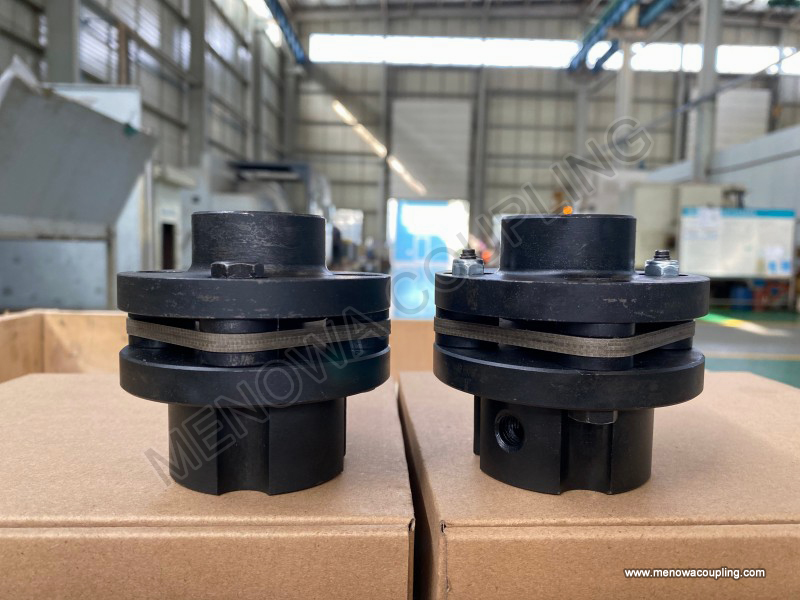
The working principle of flexible diaphragm coupling is based on the elastic mechanics characteristics of high-strength metal thin plates. In the overall transmission system, the coupling is installed between the driving shaft and the driven shaft, and the two ends of the diaphragm group are respectively fixed to the two shaft sleeves connected with the shafts. When the equipment operates, the driving end drives the shaft sleeve to rotate, and torque is evenly transmitted to the diaphragm group through the fastening connection structure. The metal diaphragm undergoes micro elastic deformation rather than rigid rotation under the action of torque and shaft displacement, and transmits power to the driven shaft sleeve and the driven equipment stably. During the operation process, various inevitable misalignments between the two connected shafts can be effectively compensated by the multi-directional deformation ability of the diaphragm. Axial misalignment caused by assembly gaps and thermal expansion of equipment components is absorbed by the axial bending deformation of the diaphragm; radial offset generated by long-term operation vibration and foundation settlement is adapted by the radial shear and bending composite deformation of the diaphragm; angular deviation formed by installation inclination and equipment frame deformation is offset by the asymmetric elastic deflection of the diaphragm group. All deformation processes belong to reversible elastic changes, which will not produce permanent structural damage or mechanical wear, ensuring the long-term stable operation of the transmission system.
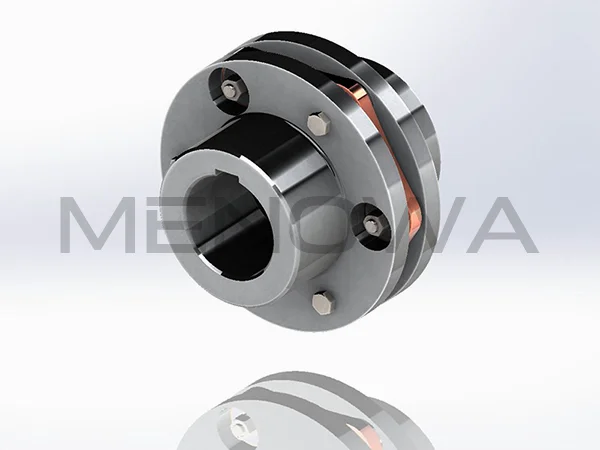
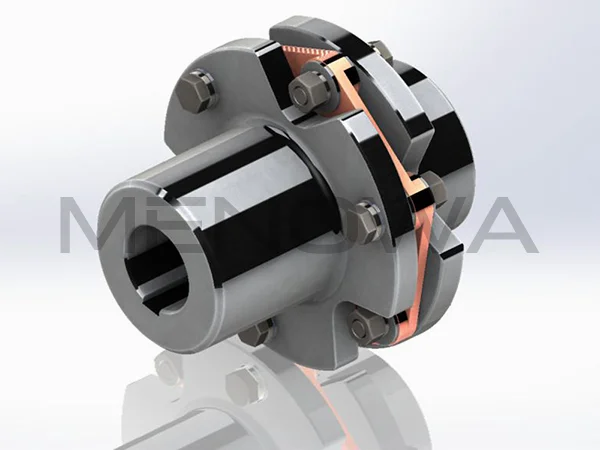
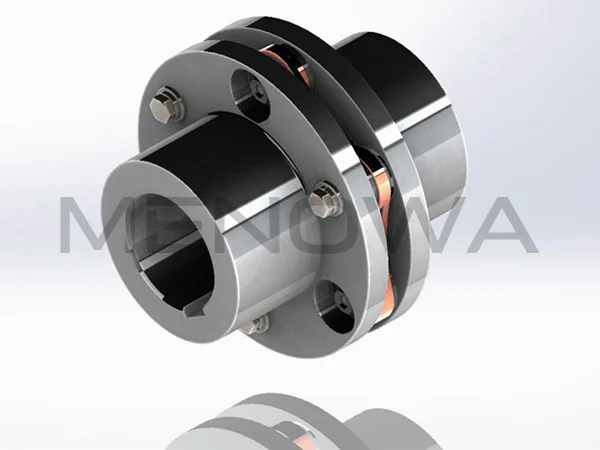
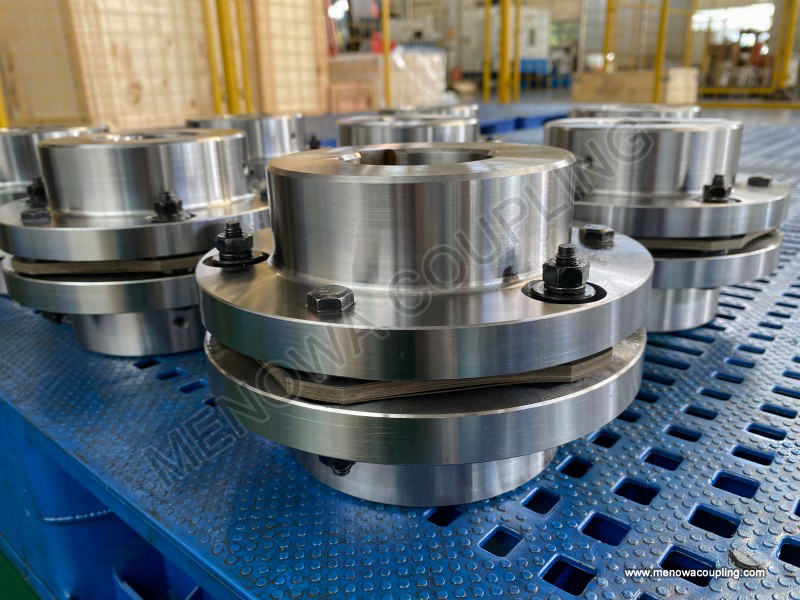
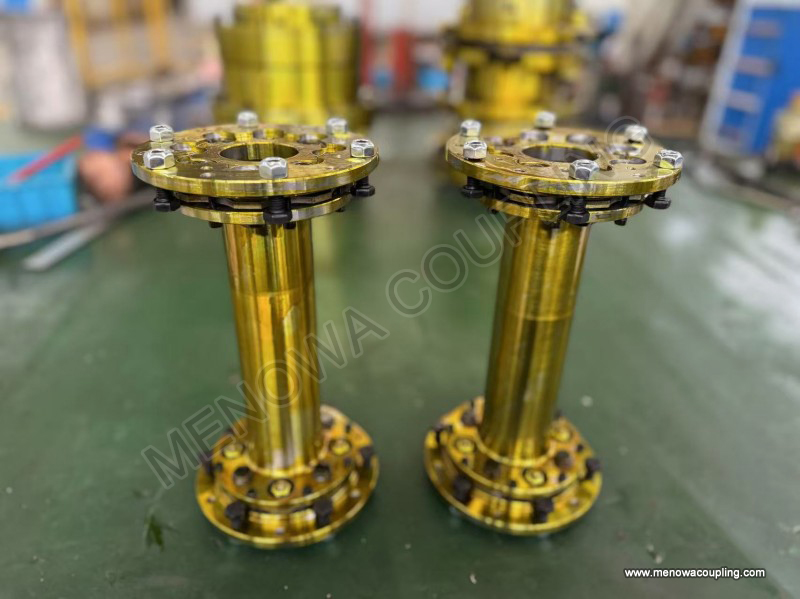
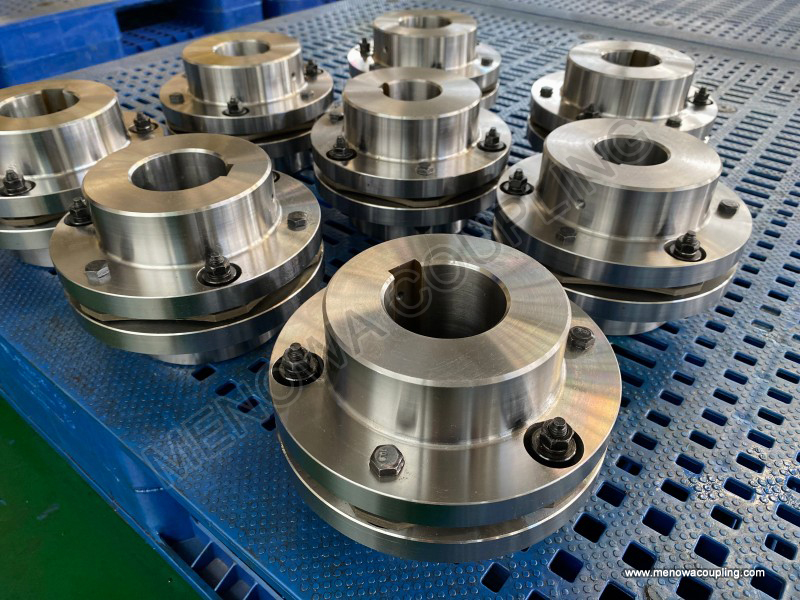
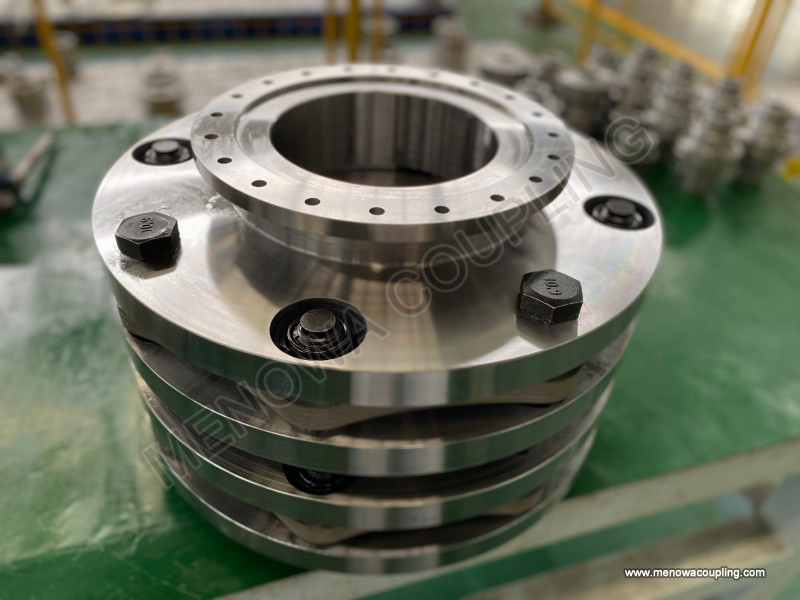
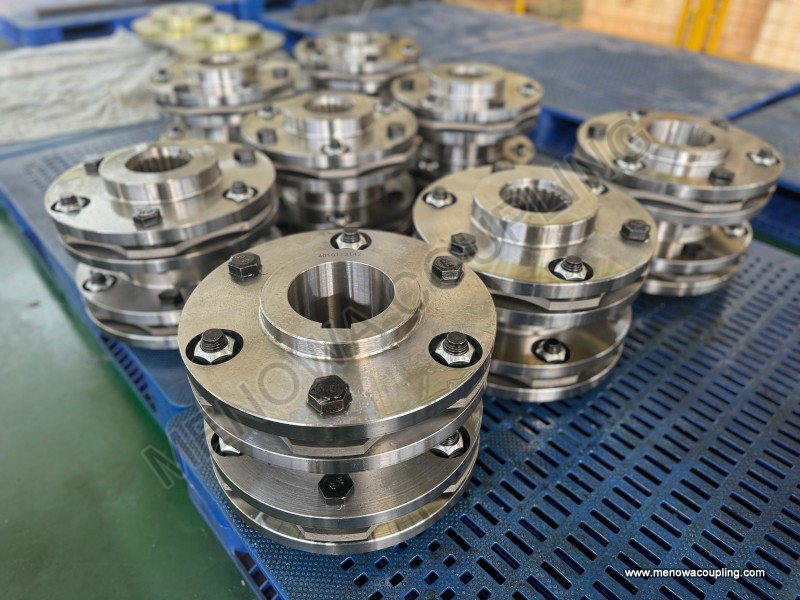
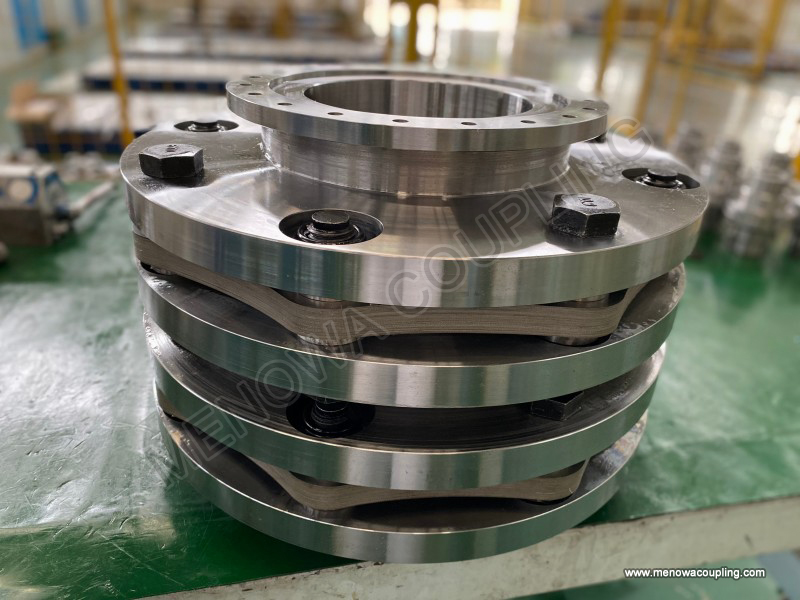
In terms of structural composition, flexible diaphragm coupling features a compact and integrated design with simple and reasonable overall layout, mainly composed of two symmetrical shaft sleeves and intermediate flexible diaphragm components. The shaft sleeves are usually made of high-strength alloy steel with good rigidity and wear resistance, which can achieve precise matching and stable connection with the transmission shaft, avoiding looseness and vibration during high-speed rotation. The core flexible component is the diaphragm group, which can be a single-layer thin metal plate or a multi-layer stacked composite structure according to different design specifications. Multi-layer diaphragm structures are more widely used in industrial scenarios because they can disperse structural stress, improve deformation uniformity and enhance fatigue resistance. The diaphragms are processed with special profiling structures and hole positions, which can optimize the stress distribution during deformation, avoid local stress concentration, and ensure that each part of the diaphragm bears force evenly during torque transmission and displacement compensation. The connection between the diaphragm group and the shaft sleeve adopts a distributed fastening structure, which can evenly transmit torque, reduce local load pressure, and maintain the coaxiality stability of the coupling during long-term operation. Compared with other flexible couplings with complex structures such as gear couplings and chain couplings, flexible diaphragm coupling has no sliding friction pairs, no gap rotation parts, and no need for auxiliary transmission accessories, which greatly simplifies the overall structure and reduces the failure rate of mechanical transmission.
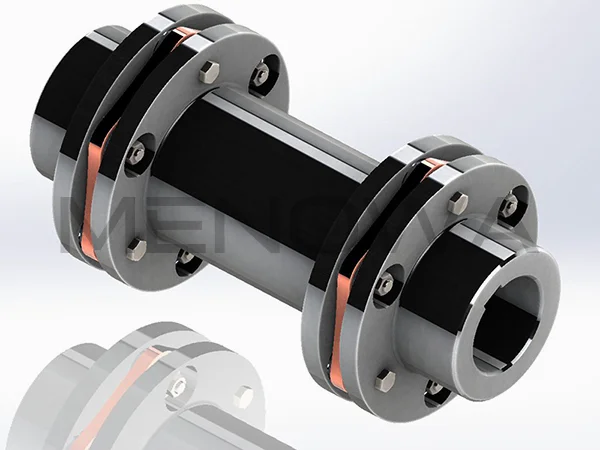
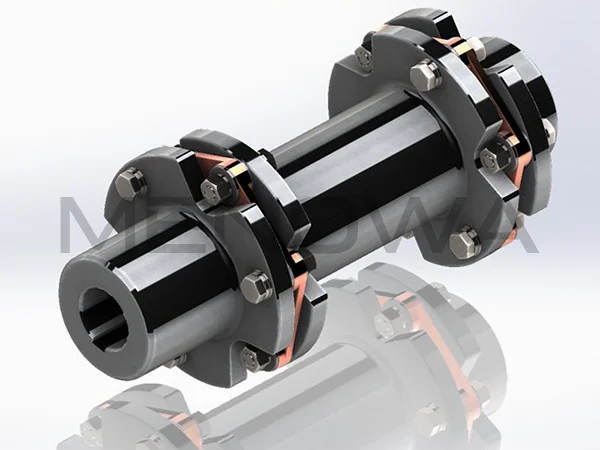
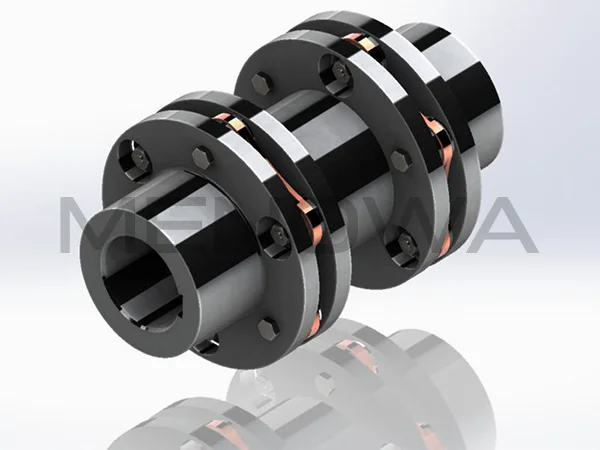
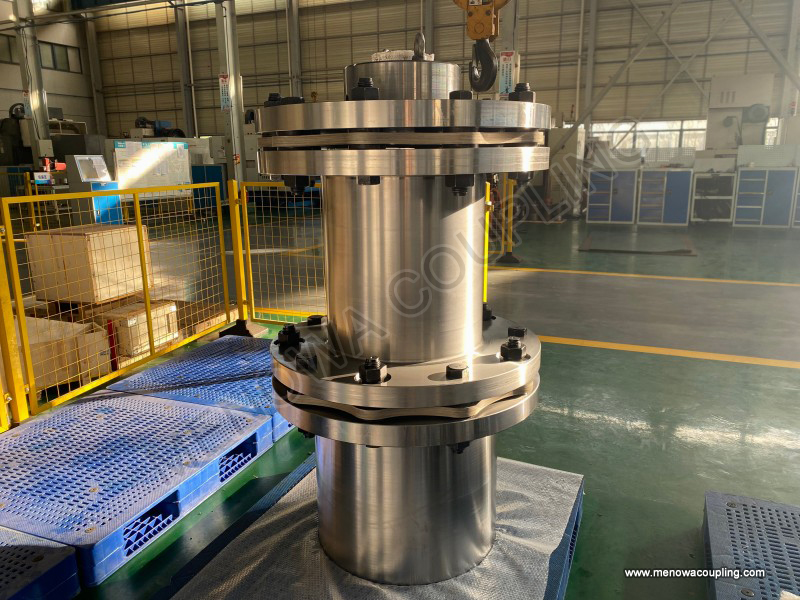
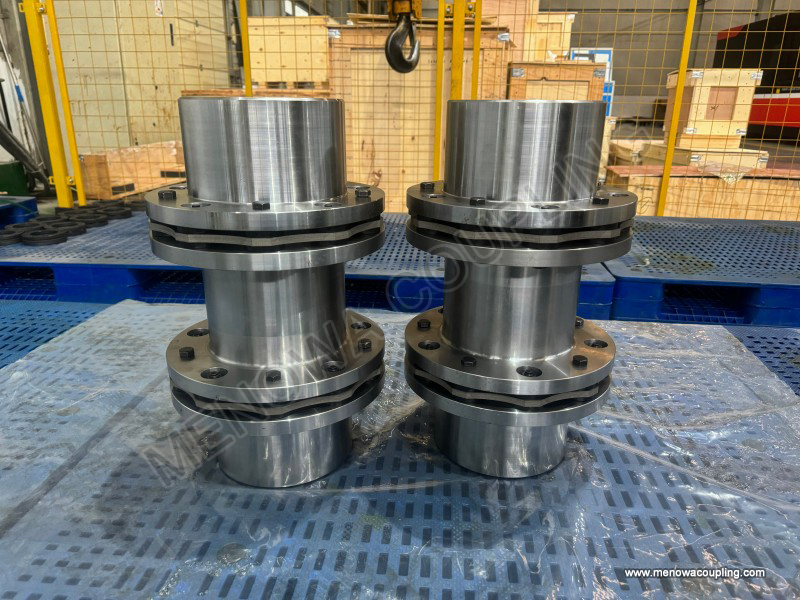
According to different structural forms and misalignment compensation capabilities, flexible diaphragm couplings can be divided into single-diaphragm and double-diaphragm structural types, which are applicable to different working condition scenarios. Single-diaphragm coupling has an extremely simple structure, light weight and small installation space occupation, and is suitable for low-load, low-misalignment and medium and low-speed transmission occasions. Its deformation compensation is completed by a single metal diaphragm, which can meet the basic axial and angular displacement compensation needs, but has limited adaptability to large radial offset, so it is mostly used in small precision mechanical equipment with high installation accuracy. Double-diaphragm coupling is composed of two sets of diaphragm groups and intermediate connecting components, which realizes collaborative deformation through two flexible units. This structural design greatly improves the comprehensive misalignment compensation ability, especially doubling the compensation range of angular displacement and significantly enhancing the adaptability to radial offset. The intermediate connecting section can further isolate the vibration and impact between the two shafts, making the power transmission more stable. Therefore, double-diaphragm flexible couplings are mostly used in heavy-load, high-speed and large-misalignment industrial transmission scenarios, and are the mainstream structural type in industrial applications.
Flexible diaphragm coupling has outstanding comprehensive performance advantages compared with traditional transmission couplings, which makes it stand out in various industrial mechanical supporting scenarios. First of all, it has maintenance-free operation characteristics. Since the core deformation component is all metal structure, there is no aging, fatigue failure and wear problem of polymer elastic materials, and there is no relative sliding and friction between internal parts during operation, so lubricating oil, grease and other lubricating media are not required. This completely avoids equipment failures and efficiency attenuation caused by lubricant deterioration, leakage and contamination, and greatly reduces daily operation and maintenance costs and manual maintenance workload. Secondly, it has excellent environmental adaptability. Metal diaphragm materials have stable physical and chemical properties, can maintain normal elastic deformation and torque transmission capacity in high-temperature, low-temperature, humid and corrosive working environments, and are not affected by oil pollution, atmospheric oxidation and weak acid and alkali medium erosion. It can stably operate in extreme temperature ranges and harsh industrial environments that ordinary elastic couplings cannot adapt to, expanding the application boundary of mechanical transmission systems.
In terms of transmission performance, flexible diaphragm coupling achieves a perfect balance between high rigidity and high flexibility. In the torque transmission direction, the metal diaphragm has high torsional rigidity, which can realize zero-clearance torque transmission, avoid rotation lag and power loss, and ensure high-precision synchronous operation of driving and driven equipment. In the radial, axial and angular directions, it has flexible deformation ability, which can effectively buffer and absorb the vibration and impact generated during equipment startup, shutdown and load mutation, reduce the vibration amplitude of the shafting system, and suppress mechanical noise. This unique performance enables the coupling to solve the common problems of traditional couplings, such as large transmission error of elastic couplings and poor vibration damping effect of rigid couplings. In addition, the coupling has high structural strength and fatigue resistance. Through optimized structural design and high-precision processing technology, the stress distribution of the diaphragm is uniform during repeated deformation and load cycle, which can resist long-term alternating load impact and has a long service life. Under standard working conditions, its service cycle is far longer than that of rubber elastic couplings and gear couplings, reducing the frequency of equipment replacement and shutdown maintenance.
The application scenarios of flexible diaphragm coupling cover almost all fields of modern industrial mechanical transmission, and show unique adaptability in high-end precision transmission and harsh working condition transmission. In the field of power machinery, it is applied to the transmission connection of gas turbines, steam turbines and high-speed fans, adapting to high-speed rotation and thermal deformation displacement of high-temperature equipment, ensuring stable power output of power equipment. In the field of precision manufacturing and automation equipment, it is used for the shafting connection of servo motors, precision machine tools, industrial robots and automated production lines. Its zero-clearance transmission and high-precision displacement compensation characteristics can effectively guarantee the positioning accuracy and operation stability of precision equipment, and avoid processing errors and equipment jitter caused by shaft misalignment. In the field of petrochemical and marine engineering, the coupling can resist corrosive media and humid salt spray environments, and is used for the transmission system of chemical pumps, compressors and marine power equipment, realizing long-term maintenance-free operation of equipment under harsh conditions.
In the field of heavy industrial equipment, flexible diaphragm couplings are matched with large fans, water pumps, reducers and metallurgical machinery equipment. Its high torsional rigidity and large torque transmission capacity can meet the power transmission needs of heavy-load equipment, and its good vibration damping performance can reduce the operation vibration of large-scale units and improve the overall stability of the equipment system. In addition, in the field of new energy equipment such as wind power generation and photovoltaic supporting power machinery, the coupling can adapt to the random load impact and variable speed operation characteristics of new energy equipment, compensate the shaft displacement caused by equipment swing and environmental vibration, and ensure the safe and stable operation of new energy power generation equipment. With the continuous upgrading of industrial equipment towards high speed, high precision and high reliability, the application scope of flexible diaphragm coupling is still expanding, gradually replacing part of traditional coupling products and becoming the preferred matching component of high-performance mechanical transmission systems.
In terms of installation and use, flexible diaphragm coupling has good convenience and controllability. Its compact structural design saves installation space, and the split assembly structure makes the disassembly and assembly process simple and efficient without complex debugging and calibration procedures. During the equipment installation stage, the coupling can tolerate reasonable installation misalignment, reduce the high-precision calibration difficulty of the shafting system, and improve the equipment installation efficiency. In the daily operation process, the all-metal visible structure is convenient for staff to carry out regular inspection. The operation state of the coupling can be judged by observing the deformation state of the diaphragm and the fastening state of the connecting parts, which is convenient for timely detection of potential equipment hazards. Although the coupling has strong fault tolerance, standard installation and use specifications still need to be followed in actual application. Excessive misalignment beyond the design range will cause long-term overload deformation of the diaphragm, resulting in accelerated fatigue loss of materials; excessive impact load will also cause local stress damage to the diaphragm, affecting the service life of the product.
Looking at the development trend of mechanical transmission components, flexible diaphragm coupling has obvious technical advantages and development potential. With the progress of material science and processing technology, the performance of diaphragm materials is continuously optimized, with higher strength, better fatigue resistance and stronger corrosion resistance, which further improves the adaptability and service life of the coupling. At the same time, with the popularization of finite element analysis and intelligent optimization design technology, the structural design of flexible diaphragm coupling is more refined. The stress distribution, deformation range and load-bearing capacity of the diaphragm are accurately optimized, realizing the matching design of different working conditions and further improving the comprehensive transmission performance. In the context of industrial intelligent upgrading and equipment high-precision development, the demand for high-stability, maintenance-free and high-precision transmission components is increasing day by day, and flexible diaphragm coupling will become more widely used in high-end manufacturing, intelligent equipment, energy power and other fields. As a key basic component of mechanical transmission, it will continue to support the efficient, stable and long-term operation of modern industrial mechanical systems, and play an indispensable role in promoting the high-quality development of industrial equipment manufacturing industry.
Post Date: May 25, 2026
https://www.menowacoupling.com/china-coupling/what-is-flexible-diaphragm-coupling.html
Products
Tags
Related Articles
Working Principle of Flexible Diaphragm Coupling
Flexible diaphragm couplings are essential mechanical transmission components widely applied in modern industrial power transmission systems, serving as a critical bridge between driving and driven shafts to realize stable torque transmission while accommodating various shaft misalignments. Unlike rigid coupling structu…Maintenance of Flexible Diaphragm Coupling
Flexible diaphragm couplings serve as indispensable components in modern mechanical power transmission systems, designed to transmit torque between rotating shafts while compensating for minor axial, angular, and radial misalignments through the elastic deformation of metal diaphragm elements. Unlike rigid coupling stru…Flexible Diaphragm Coupling Production
The production of flexible diaphragm couplings is a sophisticated process that combines precision engineering, advanced material science, and strict quality control to create components that play a critical role in modern mechanical transmission systems. These couplings are designed to transmit torque between two shafts…Material of Flexible Diaphragm Coupling
Flexible diaphragm couplings stand as critical mechanical components in modern power transmission systems, renowned for their exceptional alignment compensation capability, high transmission efficiency, and maintenance-free operational characteristics. Unlike traditional flexible couplings that rely on elastomer deforma…Flexible Diaphragm Coupling Vendor In China
In the global mechanical transmission industry, flexible diaphragm couplings play an indispensable role as key components that connect rotating shafts, compensate for relative displacements, and ensure stable power transmission. As the world’s largest manufacturing base, China has nurtured a large number of flexible di…Dimensions of Flexible Diaphragm Coupling
The flexible diaphragm coupling is a high-performance metal elastic flexible coupling that plays a crucial role in connecting two rotating shafts in industrial machinery, enabling efficient torque transmission while accommodating various types of misalignment between the shafts. Unlike many other coupling types that rel…
 WeChat
 WhatsApp