Coaxiality of Flexible Diaphragm Coupling
Coaxiality is a critical geometric parameter that directly determines the performance, reliability, and service life of flexible diaphragm couplings. As a high-performance flexible coupling widely used in various industrial fields, the flexible diaphragm coupling relies on the elastic deformation of the diaphragm to compensate for the relative displacement between the connected shafts, while transmitting torque stably and efficiently. However, the existence of coaxiality deviation will seriously affect the transmission accuracy of the coupling, increase energy consumption, accelerate the wear of components, and even lead to equipment failure in severe cases. Therefore, in-depth understanding of the connotation, influencing factors, detection methods, and adjustment measures of the coaxiality of flexible diaphragm couplings is of great practical significance for ensuring the safe and stable operation of mechanical equipment.
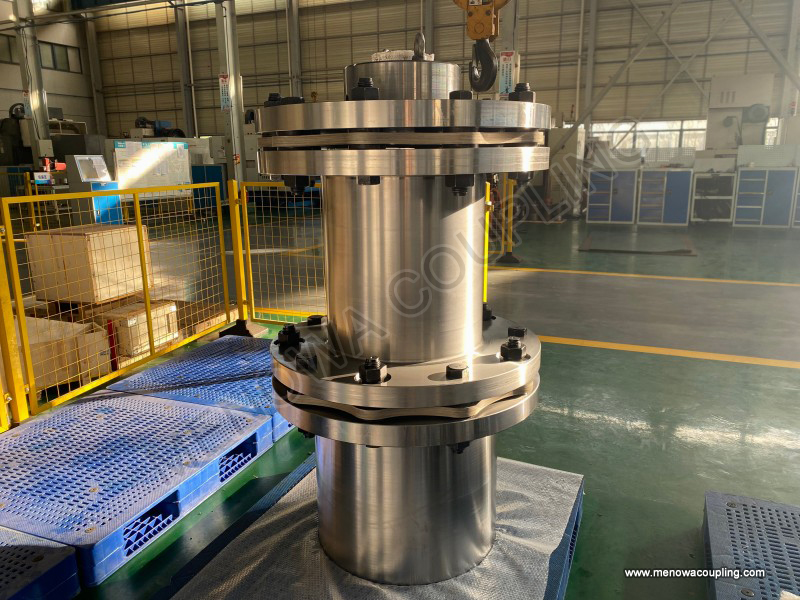
In essence, coaxiality refers to the degree of coincidence between the centerline of the driving shaft and the centerline of the driven shaft connected by the flexible diaphragm coupling. In an ideal working state, the two centerlines should be completely coincident, so that the coupling can transmit torque without additional stress, and each component can work under the designed load condition. However, in actual production and installation processes, it is almost impossible to achieve absolute coaxiality due to various objective factors. A certain degree of coaxiality deviation is inevitable, but when the deviation exceeds the allowable range, it will cause a series of problems. The flexible diaphragm coupling has a certain ability to compensate for coaxiality deviation due to the elastic characteristics of the diaphragm, but this compensation ability is limited. Excessive deviation will make the diaphragm bear excessive bending stress, leading to fatigue damage, and at the same time, it will cause abnormal vibration and noise of the equipment, affecting the overall operation stability of the transmission system.
There are many factors affecting the coaxiality of flexible diaphragm couplings, which can be roughly divided into three categories: manufacturing errors, installation deviations, and working condition changes. Manufacturing errors mainly come from the processing accuracy of the coupling itself and the connected shafts. For the flexible diaphragm coupling, the processing accuracy of the shaft sleeve, diaphragm, and connecting bolts will directly affect the coaxiality. For example, if the inner hole of the shaft sleeve has an eccentricity error during processing, or the plane of the diaphragm is not parallel to the end face of the shaft sleeve, it will cause the centerline of the coupling to deviate when it is assembled. Similarly, if the connected driving shaft and driven shaft have straightness errors or eccentricity during processing, the coaxiality of the entire transmission system will be affected. In addition, the uneven thickness of the diaphragm or the inconsistent hole position of the connecting bolts will also lead to uneven force on the coupling during operation, further aggravating the coaxiality deviation.
Installation deviations are another important factor affecting coaxiality, and they are also the most common factors in actual application. During the installation process, the levelness and centering of the equipment base will directly affect the coaxiality of the coupling. If the base is not level, the driving device and the driven device will be in an inclined state, resulting in the centerline of the two shafts not being on the same straight line. In addition, the incorrect installation sequence, improper tightening torque of the connecting bolts, and the presence of impurities on the connecting surface will all lead to coaxiality deviation. For example, when installing the coupling, if the two halves of the coupling are not aligned first and then the bolts are tightened, it will cause the centerline to shift; if the tightening torque of the bolts is uneven, the diaphragm will be deformed, resulting in asymmetric force and further affecting coaxiality. Moreover, the failure to clean the surface of the shaft and the inner hole of the coupling during installation will lead to uneven contact between the shaft and the coupling, resulting in local stress concentration and coaxiality deviation during operation.
Changes in working conditions will also cause the coaxiality of the flexible diaphragm coupling to change. During the operation of the equipment, the temperature rise of the motor, reducer, and other components will cause thermal expansion, which will lead to the displacement of the shaft centerline. For example, the motor will generate a lot of heat during operation, and the thermal expansion of the motor shaft will cause the centerline to move upward or horizontally, resulting in coaxiality deviation. In addition, the vibration of the equipment during operation, the settlement of the foundation, and the wear of the bearing will also cause the centerline of the shaft to deviate, thereby affecting the coaxiality of the coupling. For equipment working in harsh environments such as high temperature, high humidity, and corrosion, the deformation of the coupling components and the wear of the connecting parts will be accelerated, which will also lead to the gradual increase of coaxiality deviation.
The harm caused by the excessive coaxiality deviation of the flexible diaphragm coupling cannot be ignored. First of all, it will reduce the transmission efficiency of the equipment. When there is a coaxiality deviation, the diaphragm of the coupling will be in a state of continuous elastic deformation during operation, which will consume a part of the transmission energy, resulting in the loss of energy and the reduction of transmission efficiency. Relevant data show that good coaxiality can save 2% to 17% of energy consumption, while excessive coaxiality deviation will significantly increase energy loss. Secondly, it will accelerate the wear and damage of components. Excessive coaxiality deviation will cause the diaphragm to bear excessive alternating stress, leading to fatigue cracks, and even rupture in severe cases. At the same time, the connecting bolts will bear uneven force, which is easy to loose, deform, or break. In addition, the bearings of the motor and reducer connected to the coupling will also bear abnormal radial and axial forces, accelerating the wear of the bearings and reducing their service life. Finally, excessive coaxiality deviation will cause abnormal vibration and noise of the equipment, which will not only affect the working environment but also cause the loosening of the equipment foundation and the fatigue damage of other components, leading to serious equipment failures and even safety accidents.
In order to ensure the normal operation of the flexible diaphragm coupling, it is necessary to accurately detect the coaxiality deviation and take effective adjustment measures. At present, there are many methods for detecting the coaxiality of flexible diaphragm couplings, which can be divided into traditional mechanical measurement methods and modern precision measurement methods according to the measurement accuracy and equipment used. Traditional mechanical measurement methods mainly include the straightedge method, feeler gauge method, and dial indicator method. These methods are simple in operation, low in cost, and suitable for on-site measurement of general precision equipment. The straightedge method and feeler gauge method are mainly used for rough measurement of coaxiality deviation. By placing a straightedge on the outer circle of the two halves of the coupling, and measuring the gap between the straightedge and the coupling with a feeler gauge, the approximate value of the coaxiality deviation can be obtained. However, this method has low measurement accuracy and is only suitable for occasions with low coaxiality requirements.
The dial indicator method is a more commonly used traditional measurement method, which has higher measurement accuracy than the straightedge method and feeler gauge method. When using this method, the dial indicator is fixed on one half of the coupling through a magnetic base or a special fixture, and the measuring head of the dial indicator is in contact with the outer circle or end face of the other half of the coupling. Then, the coupling is rotated manually, and the reading change of the dial indicator is recorded. Through the analysis of the reading data, the radial deviation and angular deviation of the two shafts can be calculated, so as to determine the coaxiality deviation. When using the dial indicator method, it is necessary to measure at four positions of 0°, 90°, 180°, and 270° to take the average value, so as to reduce the measurement error. This method is suitable for the measurement of medium and low precision flexible diaphragm couplings, and is widely used in on-site installation and maintenance due to its simplicity and practicality.
With the continuous development of measurement technology, modern precision measurement methods represented by the laser alignment instrument have been widely used in the coaxiality detection of flexible diaphragm couplings. The laser alignment instrument uses laser technology to measure the coaxiality deviation of the two shafts with high precision. Its working principle is to install the laser emitter and receiver on the two shafts to be aligned respectively. The laser emitter emits a collimated laser beam, which is received by the receiver after passing through the coupling. The receiver converts the laser signal into an electrical signal and transmits it to the display device. The display device can directly display the radial deviation, angular deviation, and coaxiality deviation of the two shafts, and can also calculate the adjustment amount, providing accurate basis for the adjustment of coaxiality. Compared with traditional measurement methods, the laser alignment instrument has the advantages of high measurement accuracy, fast measurement speed, and easy operation. It can measure the coaxiality deviation in real time, and is especially suitable for the coaxiality detection of high-precision, high-speed flexible diaphragm couplings. The measurement accuracy can reach ±0.02mm, which can meet the requirements of high-precision equipment.
In addition to the above methods, there are also some advanced detection methods, such as vibration analysis method and ultrasonic detection method. The vibration analysis method judges the coaxiality deviation of the coupling by analyzing the vibration signal of the equipment during operation. When the coaxiality deviation exceeds the allowable range, the equipment will produce abnormal vibration, and the frequency and amplitude of the vibration signal will change. By collecting and analyzing the vibration signal, the coaxiality deviation can be indirectly judged. This method can realize online monitoring of coaxiality, but it requires professional equipment and technical personnel, and the measurement accuracy is affected by many factors. The ultrasonic detection method uses ultrasonic waves to detect the internal structure and coaxiality deviation of the coupling. It has the advantages of non-destructive detection and can detect the hidden defects of the coupling while measuring the coaxiality. However, this method is complex in operation and high in cost, and is mainly used in the quality inspection of high-precision couplings.
After detecting the coaxiality deviation of the flexible diaphragm coupling, it is necessary to take corresponding adjustment measures according to the size and type of the deviation to ensure that the coaxiality is within the allowable range. The adjustment of coaxiality mainly includes the adjustment of the driving device and the driven device, as well as the adjustment of the coupling itself. The specific adjustment methods need to be determined according to the type of coaxiality deviation. Coaxiality deviation is mainly divided into three types: parallel misalignment, angular misalignment, and comprehensive misalignment. Parallel misalignment refers to the parallel displacement of the centerlines of the two shafts, angular misalignment refers to the angular displacement of the centerlines of the two shafts, and comprehensive misalignment refers to the coexistence of parallel displacement and angular displacement.
For parallel misalignment, the main adjustment method is to adjust the position of the driving device or the driven device so that the centerlines of the two shafts are parallel and coincident. Specifically, shims can be added or removed under the feet of the motor or reducer to adjust the height of the equipment, so as to eliminate the parallel displacement. When adjusting, it is necessary to measure the coaxiality deviation in real time with a dial indicator or laser alignment instrument, and adjust the number and thickness of shims according to the measurement results until the parallel misalignment is within the allowable range. It should be noted that the shims should be placed stably and evenly to avoid uneven force on the equipment base.
For angular misalignment, the adjustment method is to adjust the angle of the driving device or the driven device so that the centerlines of the two shafts are on the same straight line. This can be achieved by adjusting the shims under the feet of the equipment on one side. For example, if the angle between the two shafts is too large, shims can be added under the feet of the motor on one side to increase the height of that side, thereby reducing the angle between the two shafts. During the adjustment process, it is necessary to repeatedly measure the angular deviation and adjust it gradually until the angular misalignment meets the requirements. In addition, the tightness of the connecting bolts of the coupling can also be adjusted appropriately to eliminate the angular misalignment caused by the deformation of the diaphragm.
For comprehensive misalignment, it is necessary to combine the adjustment methods of parallel misalignment and angular misalignment. First, adjust the angular misalignment to make the centerlines of the two shafts parallel, and then adjust the parallel misalignment to make the centerlines coincident. During the adjustment process, it is necessary to pay attention to the coordination between the two adjustments to avoid adjusting one deviation and causing the other deviation to increase. At the same time, it is necessary to repeatedly measure and adjust to ensure that the comprehensive misalignment is within the allowable range.
In addition to the adjustment of the equipment position, the adjustment of the coupling itself can also be carried out to improve the coaxiality. For example, if the coaxiality deviation is caused by the processing error of the coupling, the coupling can be reprocessed or replaced to ensure that the processing accuracy meets the requirements. For the diaphragm with uneven thickness or deformation, it should be replaced in time to avoid the diaphragm from causing coaxiality deviation during operation. In addition, the connecting bolts of the coupling should be checked and tightened regularly. If the bolts are loose or deformed, they should be replaced in time to ensure that the coupling is connected firmly and avoid coaxiality deviation caused by loose bolts.
In the actual application of flexible diaphragm couplings, in addition to detecting and adjusting the coaxiality during installation and maintenance, it is also necessary to take corresponding preventive measures to reduce the occurrence of coaxiality deviation. First of all, strict quality control should be carried out in the manufacturing process of the coupling and the connected shafts to ensure that the processing accuracy meets the design requirements. For example, the inner hole of the shaft sleeve, the plane of the diaphragm, and the position of the connecting bolts should be processed with high precision to reduce the manufacturing error. Secondly, the installation process should be standardized to ensure that the installation sequence is correct, the connecting surface is clean, and the tightening torque of the bolts is uniform. Before installation, the equipment base should be leveled to ensure that the driving device and the driven device are in a horizontal state. In addition, the "soft foot" problem of the equipment base should be checked. If there is a "soft foot", it should be handled in time to avoid the coaxiality deviation caused by the deformation of the base after the bolts are tightened.
In addition, attention should be paid to the influence of working conditions on coaxiality. For equipment working in high temperature environment, thermal expansion compensation measures should be taken to reserve a certain amount of thermal expansion space for the shaft, so as to avoid coaxiality deviation caused by thermal expansion. For high-speed equipment, dynamic coaxiality verification should be carried out to ensure that the coaxiality is within the allowable range during operation. At the same time, the equipment should be regularly maintained and inspected, including checking the wear of the bearing, the deformation of the diaphragm, and the tightness of the bolts, so as to find and solve the problems affecting coaxiality in time. In addition, the coupling should be avoided from being overloaded for a long time, and the operation accidents should be prevented, so as to reduce the damage of the coupling components and the increase of coaxiality deviation.
The coaxiality of flexible diaphragm couplings is also closely related to the selection of the coupling. When selecting a flexible diaphragm coupling, it is necessary to consider the coaxiality requirements of the transmission system, and select a coupling with appropriate compensation capacity. Different types of flexible diaphragm couplings have different compensation capacities for coaxiality deviation. For example, double diaphragm couplings have a stronger ability to compensate for angular misalignment than single diaphragm couplings, and are suitable for occasions with large angular misalignment. In addition, the material and structure of the coupling also affect its coaxiality performance. The diaphragm made of high-quality stainless steel has better elastic performance and fatigue resistance, which can better compensate for coaxiality deviation and ensure the stability of the coupling during operation.
In conclusion, the coaxiality of flexible diaphragm coupling is a key factor affecting the performance and service life of the transmission system. The coaxiality deviation is caused by many factors such as manufacturing errors, installation deviations, and changes in working conditions. Excessive coaxiality deviation will lead to reduced transmission efficiency, accelerated component wear, and equipment failure. Therefore, it is necessary to accurately detect the coaxiality deviation by using appropriate measurement methods, and take effective adjustment measures to ensure that the coaxiality is within the allowable range. At the same time, preventive measures should be taken in the manufacturing, installation, and operation processes to reduce the occurrence of coaxiality deviation. Only in this way can the flexible diaphragm coupling give full play to its performance advantages, ensure the safe and stable operation of the mechanical equipment, and improve the production efficiency and economic benefits.
Post Date: May 19, 2026
https://www.menowacoupling.com/china-coupling/coaxiality-of-flexible-diaphragm-coupling.html
Products
Tags
Related Articles
Parts of Flexible Diaphragm Coupling
A flexible diaphragm coupling stands as a vital mechanical transmission component widely adopted in high-precision and high-speed industrial transmission systems, serving the core purpose of connecting driving and driven shafts to achieve stable torque transmission while compensating for diverse shaft misalignments gene…Flexible Diaphragm Coupling Wholesale
In the realm of industrial power transmission, the flexible diaphragm coupling stands out as a critical component that bridges the gap between rotating shafts, ensuring efficient, reliable, and precise power transfer across a wide range of applications. As industries continue to evolve and demand higher performance from…Flexible Diaphragm Coupling Exporter
In the global industrial transmission system, flexible diaphragm couplings have become an indispensable core component, widely used in various fields that require high-precision, high-reliability torque transmission. As a professional exporter focusing on flexible diaphragm couplings, we are committed to providing high-…Specification of Flexible Diaphragm Coupling
Flexible diaphragm couplings represent a pivotal category of metal elastic transmission components widely adopted in high-precision mechanical power transmission systems, serving the core function of connecting driving and driven shafts to achieve stable torque transmission while accommodating inevitable shaft misalignm…Classification of Flexible Diaphragm Coupling
Flexible diaphragm couplings are essential components in modern mechanical transmission systems, designed to connect two shafts while compensating for relative displacements caused by manufacturing errors, installation deviations, thermal expansion, or operational vibrations. Unlike rigid couplings that require precise …Flexible Diaphragm Coupling Factory
A flexible diaphragm coupling factory is a specialized manufacturing facility dedicated to producing high-performance flexible diaphragm couplings, which are essential mechanical components used to connect two rotating shafts in various industrial applications. These couplings play a critical role in transmitting torque…
 WeChat
 WhatsApp