Structure of Flexible Diaphragm Coupling
Flexible diaphragm coupling serves as a vital mechanical transmission component widely applied in high-precision and high-speed mechanical transmission systems, relying on elastic deformation of metal diaphragm components to realize torque transmission and shaft misalignment compensation. Different from traditional flexible couplings that adopt elastomer buffer structures or sliding friction transmission mechanisms, this type of coupling features an all-metal flexible structure, achieving stable power transmission through pure elastic deformation without relying on lubrication or friction auxiliary structures. Its unique structural design endows it with outstanding performance in high-speed operation, low vibration, fatigue resistance and long-term stable operation, making it suitable for sophisticated mechanical equipment that requires high transmission accuracy and low maintenance frequency. The overall structural composition of flexible diaphragm coupling is compact and hierarchical, with each component undertaking independent functional responsibilities while cooperating closely with each other to form a complete transmission system that integrates torque transmission, misalignment compensation and structural stability support.
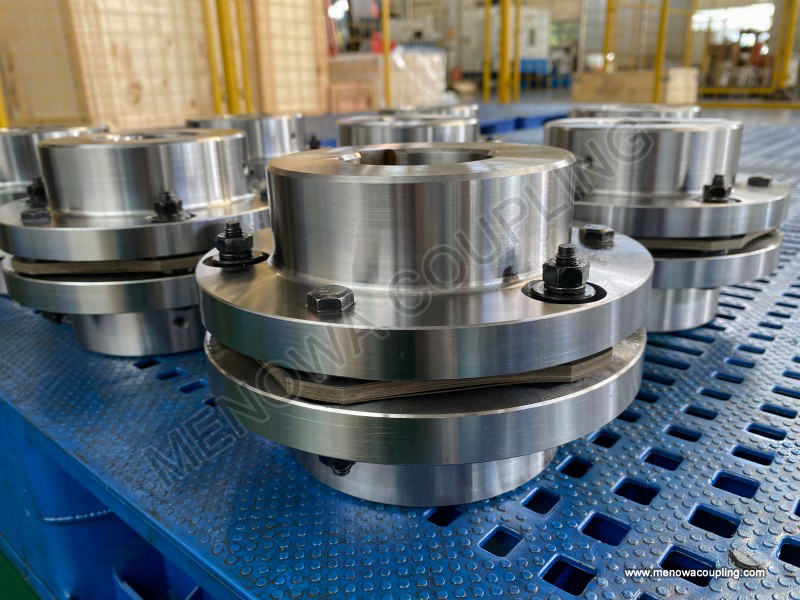
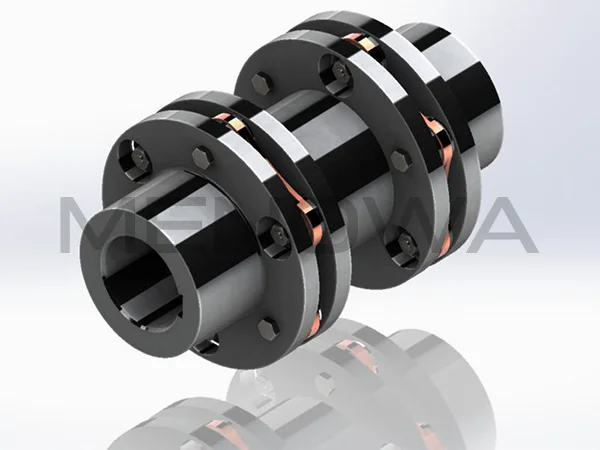
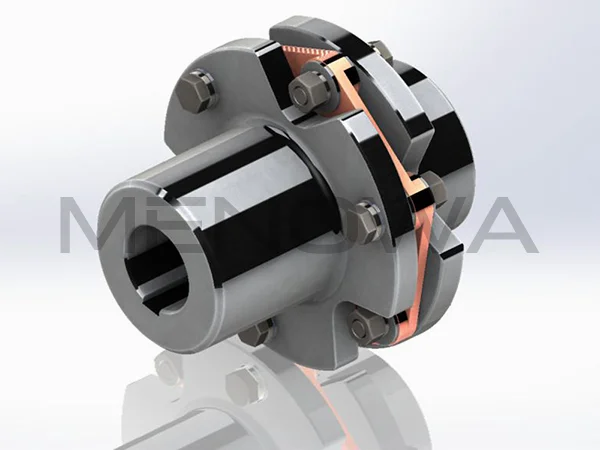
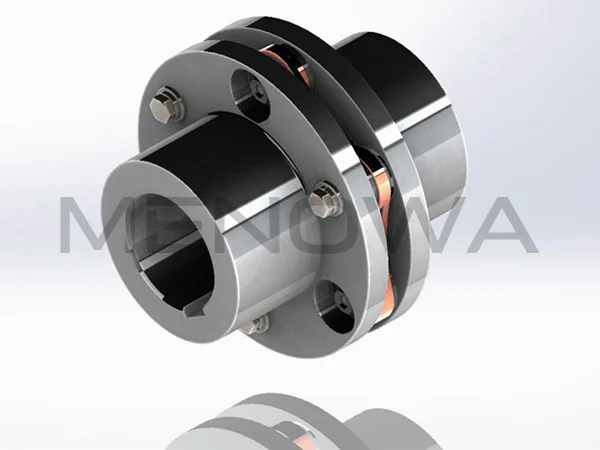
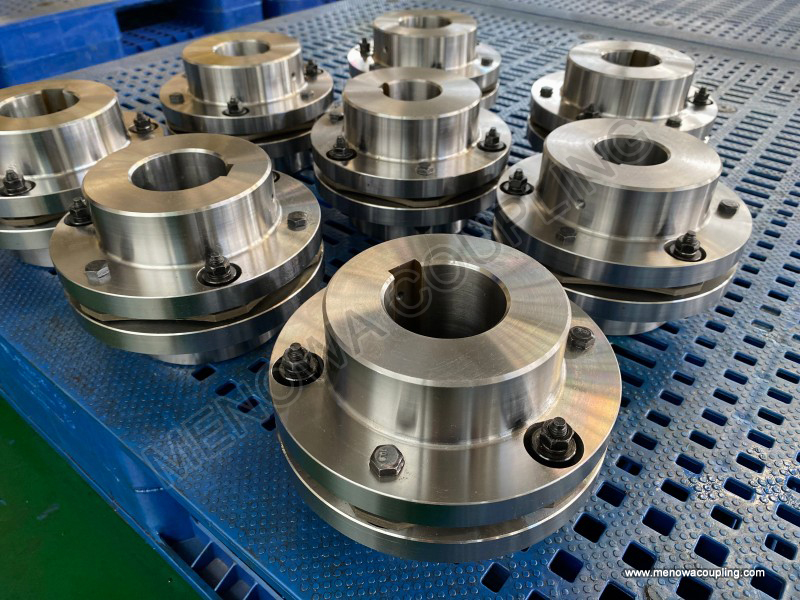
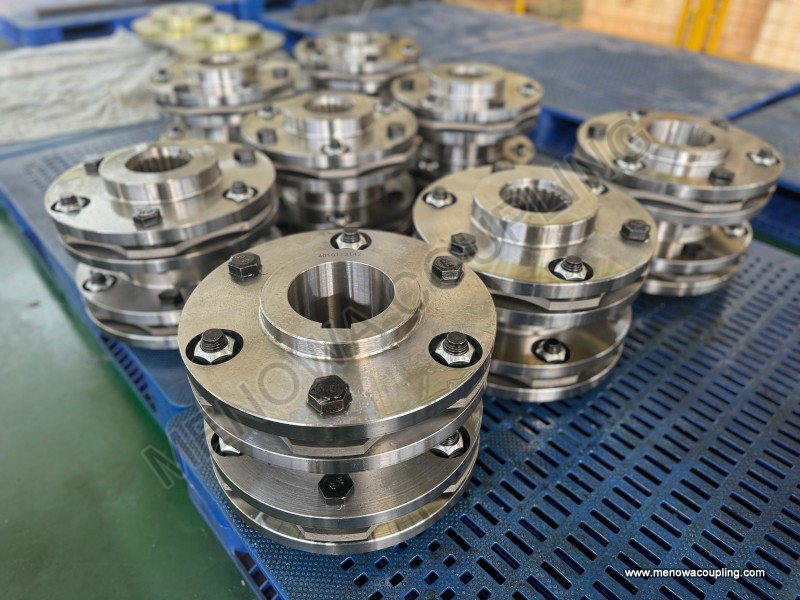
The basic overall structure of flexible diaphragm coupling mainly consists of half coupling flanges, flexible diaphragm groups, connecting fasteners and intermediate spacer components (equipped according to structural types). Each component follows mechanical optimization design principles, with structural parameters matched with torque transmission requirements and deformation compensation performance. The two half coupling flanges are symmetrically distributed on the driving end and driven end of the transmission system respectively, serving as the rigid connecting base of the entire coupling. Machined from high-strength alloy steel through integral forging and precision finishing, the flanges have high structural rigidity and dimensional stability, avoiding structural deformation or dimensional deviation under long-term torque load and high-speed rotation. The inner hole of the flange is designed for precise shaft fitting, which can be tightly sleeved on the driving shaft and driven shaft to ensure synchronous rotation between the coupling and the shafts, eliminating relative rotation gaps that may affect transmission accuracy. The flange surface is uniformly distributed with assembly holes for connecting fasteners, and the hole position accuracy and flatness of the mating surface are strictly controlled to ensure uniform stress during assembly and operation.
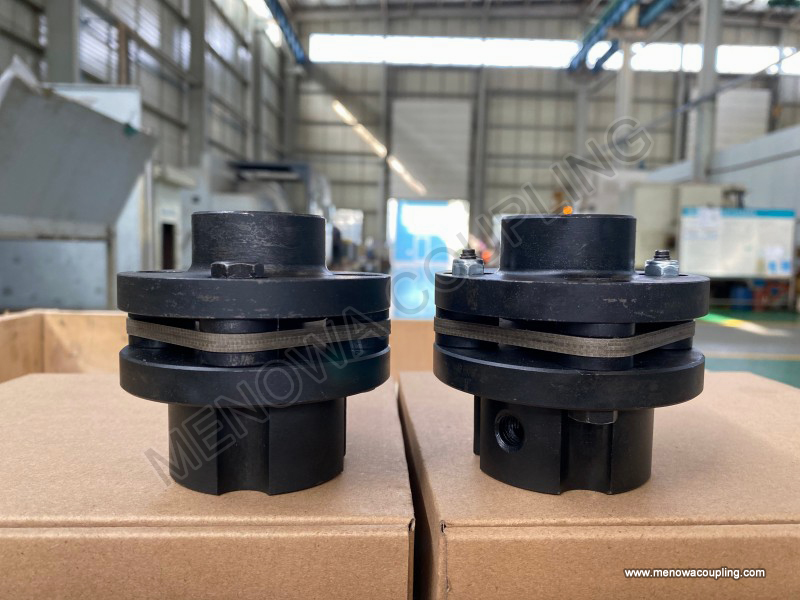
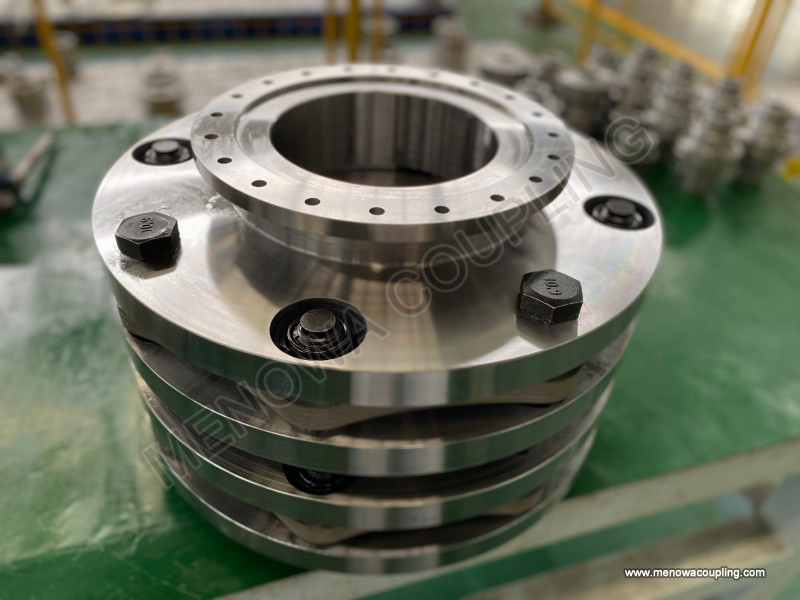
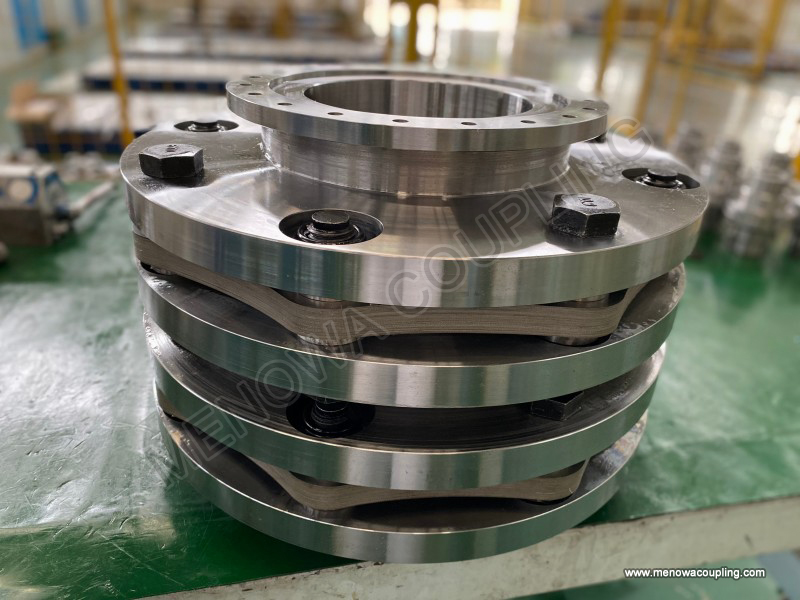
As the core functional component of the flexible diaphragm coupling, the diaphragm group determines the coupling’s misalignment compensation capability, torque transmission limit and fatigue service life. The diaphragm group is mostly composed of multiple layers of ultra-thin high-strength metal sheets stacked in parallel, and a small number of single-layer integral diaphragms are used in low-load and low-precision application scenarios. The metal sheets are commonly made of corrosion-resistant and high-fatigue-strength stainless steel alloys, which can maintain stable elastic deformation performance under long-term alternating load, high-speed rotation and slight temperature change environments. The thickness of each single-layer diaphragm sheet is precisely controlled within a small range, and the multi-layer stacking design effectively balances structural flexibility and load-bearing capacity. Compared with a single thick diaphragm, the stacked thin-layer structure can produce uniform micro-elastic deformation when bearing axial, angular and parallel misalignment, avoiding local stress concentration and structural fatigue damage caused by excessive single-point deformation. The shape of the diaphragm mostly adopts a special petal or circular porous integral structure, and the reserved holes at the edge are used for penetrating connecting bolts to realize the fixed connection between the diaphragm group and the two-end flanges.
The internal structural layout of the diaphragm group follows the mechanical principle of staggered stress dispersion. Each layer of the stacked diaphragms keeps a parallel fitting state without relative sliding during operation, and all deformation forms are pure elastic deformation of the metal material itself. This structural feature completely avoids the wear, aging and gap problems existing in elastomeric flexible couplings and gear couplings. In the working state, the diaphragm group takes charge of the core torque transmission work: the driving end flange transmits torque to the outer edge of the diaphragm, and the torque is uniformly transmitted to the inner connecting area of the diaphragm through the elastic metal sheet, and then transferred to the driven end flange, realizing synchronous power output of the two shafts. When the connected shafts produce axial displacement, angular deflection or parallel offset due to equipment operation vibration, thermal expansion and contraction or assembly errors, the diaphragm group absorbs and compensates for various misalignments through tiny elastic bending and telescopic deformation, ensuring that the torque transmission process remains smooth and stable without additional mechanical vibration and impact load.
Connecting fasteners are key components to ensure the overall structural integrity and operational stability of the coupling, mainly including high-precision bolts and matching locking auxiliary parts. The assembly mode of fasteners adopts a staggered penetration structure, with bolts alternately penetrating the flange holes and diaphragm group holes at both ends. This staggered connecting structure can lock the diaphragm group between the two flanges stably, ensuring that there is no relative displacement between the diaphragm and the flanges during high-speed rotation and torque transmission. The fasteners are made of high-strength alloy materials with high tensile strength and shear resistance, which can withstand the alternating shear force and tensile force generated during long-term operation. The surface of the fasteners is treated with anti-loosening and anti-fatigue processes to prevent bolt loosening caused by high-frequency vibration in high-speed working environments. The assembly pretightening force of each bolt is uniformly controlled, so that the stress on each connecting point of the diaphragm group is consistent, avoiding local excessive stress or insufficient fastening force leading to unbalanced structural stress and affecting the overall service life of the coupling.
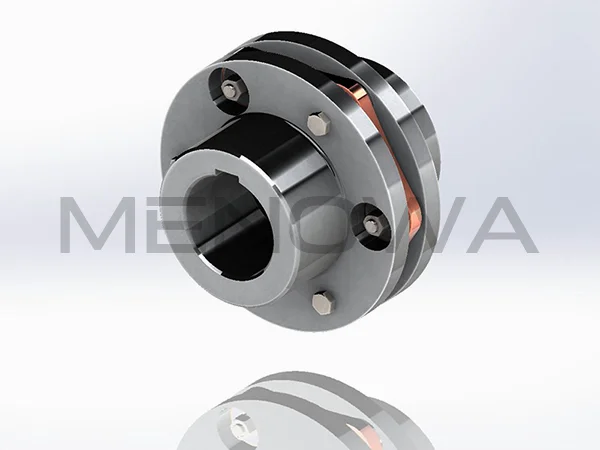
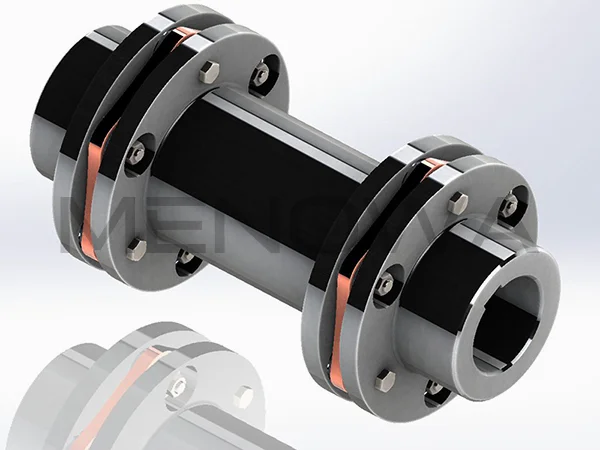
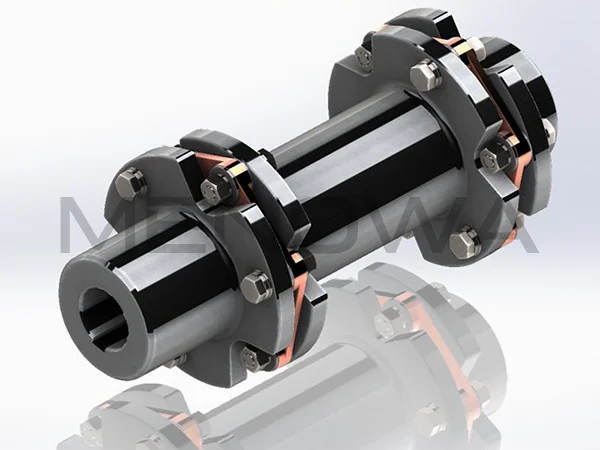
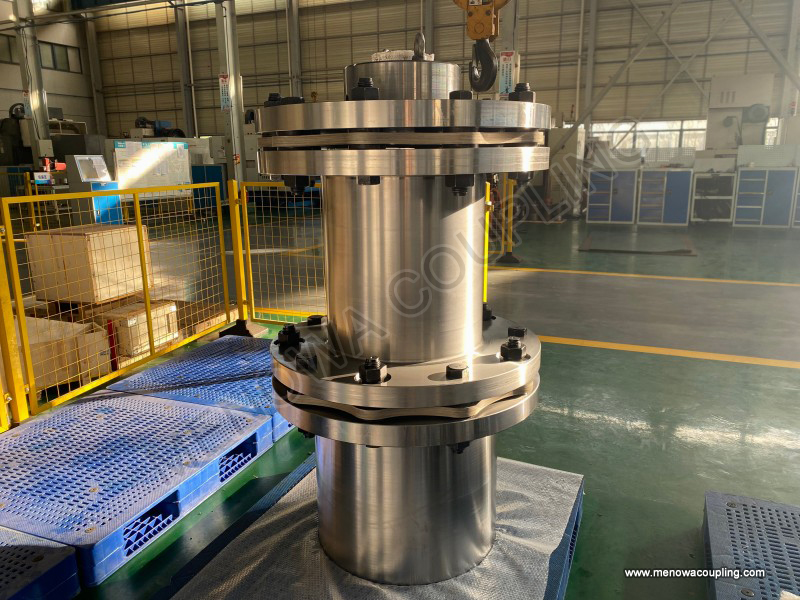
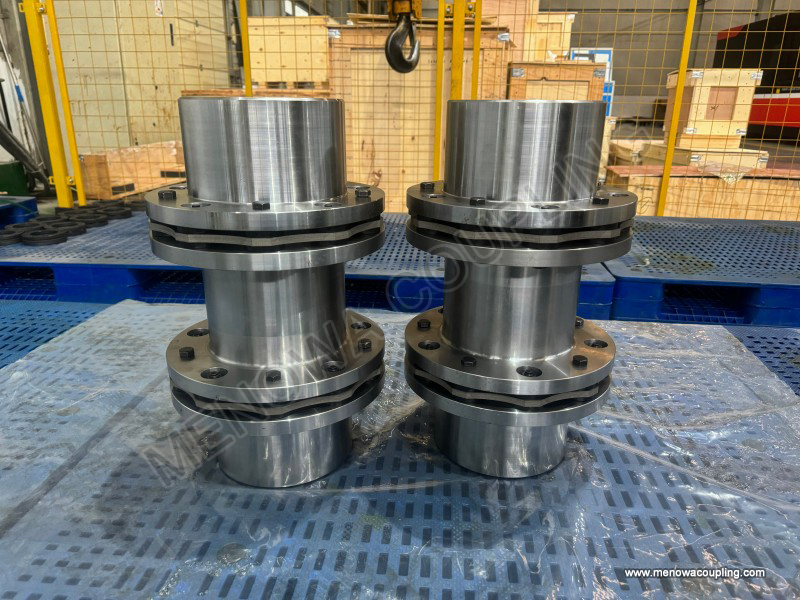
According to different structural combinations and application requirements, flexible diaphragm couplings can be divided into single-diaphragm structure and double-diaphragm structure, and the structural differences bring different functional characteristics and application scopes. The single-diaphragm coupling has a simpler overall structure, consisting of two flanges and a single-group diaphragm group, with a compact overall size and small installation space occupation. It is mainly applicable to short-distance shaft connection scenarios, with limited compensation capacity for parallel misalignment, but has excellent performance in axial and angular misalignment compensation, and is widely used in small and medium-power high-precision transmission equipment. The double-diaphragm coupling adds an intermediate spacer sleeve and another group of diaphragm groups on the basis of the single-diaphragm structure, forming a symmetrical double-flexible structure. The intermediate spacer sleeve is a rigid integral component, which connects the two groups of diaphragm groups at intervals, increasing the axial distance between the flexible units of the coupling. This optimized structural design greatly improves the coupling’s parallel misalignment compensation capability, while maintaining high sensitivity of axial and angular deformation compensation. The spacer sleeve has high structural rigidity, which will not produce self-deformation during torque transmission, ensuring the overall transmission rigidity and precision of the coupling, and is suitable for long-distance shaft connection and high-load, high-precision industrial transmission scenarios.
The detailed structural design of the flexible diaphragm coupling fully considers the adaptability of mechanical operation and long-term service reliability. The matching surfaces between the flange and the diaphragm group are finely polished to reduce assembly gaps and friction resistance, ensuring uniform stress transmission. The hole walls of the diaphragm connecting holes are smooth and free of burrs, avoiding stress concentration at the hole edges during deformation and preventing crack initiation and expansion under alternating fatigue load. The transition parts of the diaphragm’s flexible deformation area adopt arc transition design instead of right-angle structure, which effectively disperses structural stress and improves the fatigue resistance of the diaphragm. For multi-layer stacked diaphragm groups, the flatness of each diaphragm sheet is strictly controlled to ensure close fitting between layers, avoid local gaps caused by uneven sheets, and prevent abnormal stress and vibration during operation. In terms of overall structural coordination, all components are designed with unified precision tolerances, realizing high-precision assembly and matching, so that the coupling can maintain low runout and high synchronous accuracy during high-speed rotation.
The unique structural system of flexible diaphragm coupling endows it with irreplaceable structural advantages compared with other flexible couplings. First, the all-metal elastic deformation structure eliminates the aging, deformation and failure problems of non-metal elastic materials, and the overall structure has strong environmental adaptability, capable of stable operation in high temperature, low temperature, dry and slightly corrosive working environments. Second, the non-sliding and non-friction transmission structure does not require regular lubrication and maintenance, reducing equipment maintenance costs and downtime, and improving the continuous operation stability of mechanical equipment. Third, the layered flexible diaphragm structure realizes flexible integration of high transmission rigidity and low deformation vibration. It can maintain high-precision synchronous torque transmission under rated load, and can also absorb tiny vibration and misalignment deformation, ensuring the smooth operation of the transmission system. In addition, the modular structural design of the coupling facilitates disassembly, assembly and replacement of components. The damaged diaphragm group or fasteners can be replaced independently without integral replacement of the coupling, improving maintenance convenience and reducing equipment operation cost.
In practical industrial applications, the structural parameters of flexible diaphragm couplings will be optimally adjusted according to different working conditions. For high-speed rotating equipment, the diaphragm thickness and stacking number are optimized to reduce the overall mass and rotational inertia of the coupling, avoiding excessive centrifugal force during high-speed operation, while ensuring sufficient torque transmission capacity. For heavy-load transmission equipment, the structural strength of the diaphragm group and fasteners is enhanced, and the number of stacked diaphragm layers is increased to improve the load-bearing limit and structural stability. For equipment with frequent start-stop and alternating load operation, the fatigue resistance of the diaphragm structure is optimized through material selection and structural transition design, prolonging the service life under cyclic alternating load. All structural optimizations are based on the basic structural framework of flange rigid connection, diaphragm elastic deformation and fastener locking transmission, ensuring that the coupling always maintains efficient, accurate and stable power transmission performance in complex working environments.
In conclusion, the structure of flexible diaphragm coupling is a precise and optimized mechanical structural system with clear hierarchy and complete functions. The rigid flange components ensure the stability of shaft connection and torque input and output, the multi-layer flexible diaphragm group undertakes the core functions of elastic deformation, misalignment compensation and torque transmission, and the high-precision fasteners and intermediate components ensure the overall structural coordination and operational reliability. The scientific matching of each component structure and the reasonable optimization of deformation and stress distribution enable the flexible diaphragm coupling to overcome the structural defects of traditional couplings, and achieve excellent performance in transmission accuracy, operational stability, environmental adaptability and service life. With the continuous upgrading of industrial mechanical equipment towards high speed, high precision and high reliability, the structural design of flexible diaphragm couplings is also constantly optimized, further adapting to more complex and diverse industrial transmission scenarios, and providing stable core guarantee for the efficient operation of various mechanical transmission systems.
Post Date: May 25, 2026
https://www.menowacoupling.com/china-coupling/structure-of-flexible-diaphragm-coupling.html
Products
Tags
Related Articles
Types of Shim Pack Coupling
Shim pack couplings stand as a vital category of metal flexible transmission components widely applied in modern industrial mechanical shaft connection systems, serving the core purpose of stable torque transmission between driving and driven equipment while effectively absorbing and compensating for various minor misal…Uses of Flexible Diaphragm Coupling
In modern mechanical transmission systems, the stable connection and efficient torque transmission between rotating shafts are the core guarantees for the normal operation of all kinds of mechanical equipment. As a high-performance metal flexible transmission component, flexible diaphragm coupling has gradually become a…Diagram of Flexible Diaphragm Coupling
A flexible diaphragm coupling is a high-performance mechanical component designed to connect two shafts in rotating machinery, enabling the efficient transmission of torque while accommodating various types of misalignments between the shafts. Unlike traditional rigid couplings that require precise alignment to function…Flexible Diaphragm Coupling Fabrication
Flexible diaphragm couplings are essential components in modern mechanical transmission systems, designed to connect two shafts while compensating for axial, radial, and angular misalignments, absorbing vibrations, and ensuring efficient power transfer. The fabrication of these couplings is a sophisticated process that …What is Flexible Diaphragm Coupling
Flexible diaphragm coupling is a high-performance metal flexible transmission component widely used in modern mechanical shafting systems, designed to connect driving and driven shafts while achieving efficient torque transmission and adaptive compensation of shaft misalignment. Unlike traditional rigid couplings that r…Gap Chart of Flexible Diaphragm Coupling
The gap chart of flexible diaphragm couplings serves as a core technical reference that quantifies the spatial clearance parameters between key structural components under diverse operating conditions, laying a foundational role in installation calibration, operational condition monitoring, and service life prediction o…
 WeChat
 WhatsApp