Specification of Flexible Diaphragm Coupling
Flexible diaphragm couplings represent a pivotal category of metal elastic transmission components widely adopted in high-precision mechanical power transmission systems, serving the core function of connecting driving and driven shafts to achieve stable torque transmission while accommodating inevitable shaft misalignments through elastic structural deformation. Unlike traditional flexible couplings that rely on rubber, spring or friction-based compensation structures, this type of coupling utilizes ultra-thin metal diaphragm groups as the flexible functional core, realizing zero-clearance torque transmission and multi-dimensional displacement compensation with pure elastic deformation, which endows it with unique advantages in high-speed, high-precision and long-cycle operating scenarios. The overall structural design abandons vulnerable wearable parts and lubrication-dependent structures, enabling long-term stable operation with minimal maintenance intervention, making it a preferred transmission component for modern industrial precision equipment, power machinery and automated production lines.
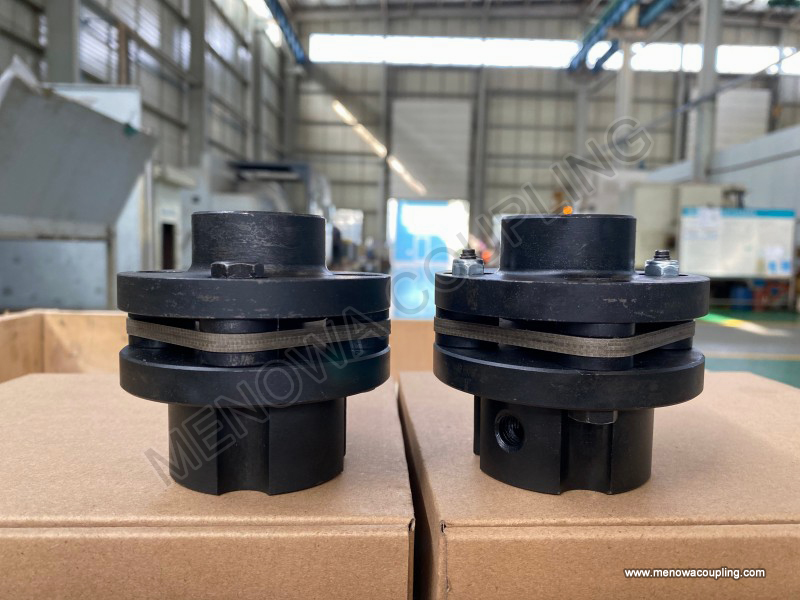
The basic working principle of flexible diaphragm couplings centers on the elastic deformation characteristics of metal diaphragms during power transmission. When the driving shaft rotates and outputs torque, the torque is uniformly transmitted to the driven shaft through the rigid connection of flange structures and the elastic bearing of diaphragm groups. During this process, tiny axial, angular and radial misalignments generated by shaft installation errors, equipment operation vibration, thermal expansion and mechanical wear will not cause additional structural stress or transmission deviation. Instead, the stacked metal diaphragms produce micro elastic bending and telescopic deformation within the allowable stress range, absorbing and offsetting various displacement deviations between the two shafts. This working mode completely avoids the relative sliding and friction between parts, ensuring continuous and accurate torque transmission while effectively isolating mechanical vibration and impact load in the transmission process. The elastic deformation of the diaphragm is controllable and reversible, which means the structural form and mechanical properties of the diaphragm can be fully restored after the external load and misalignment disappear, guaranteeing the long-term repeatability and stability of transmission performance.
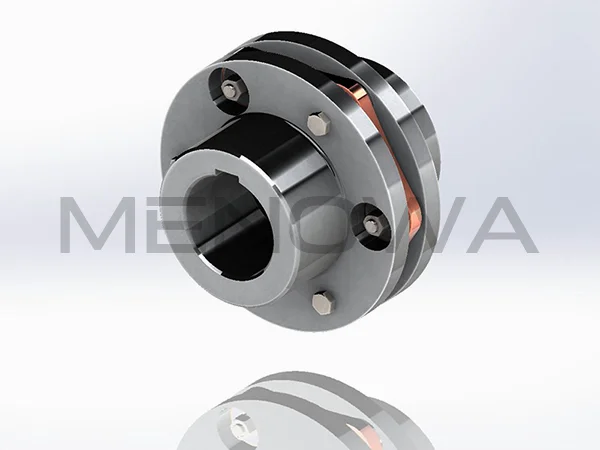
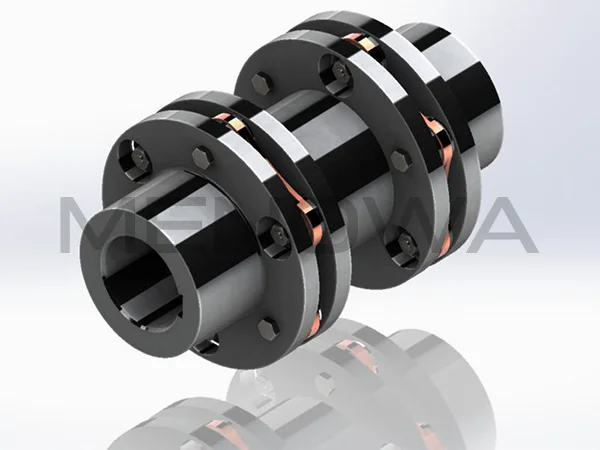
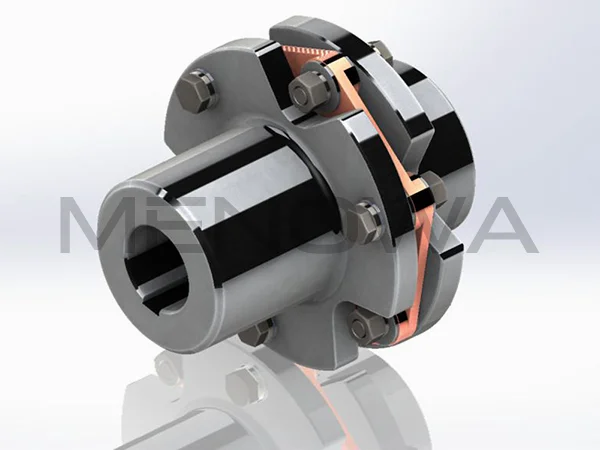
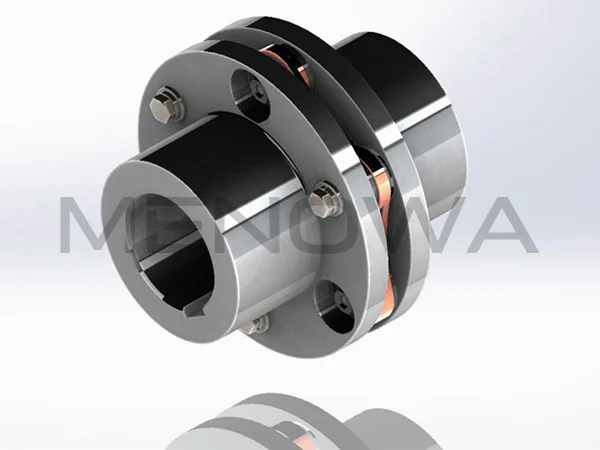
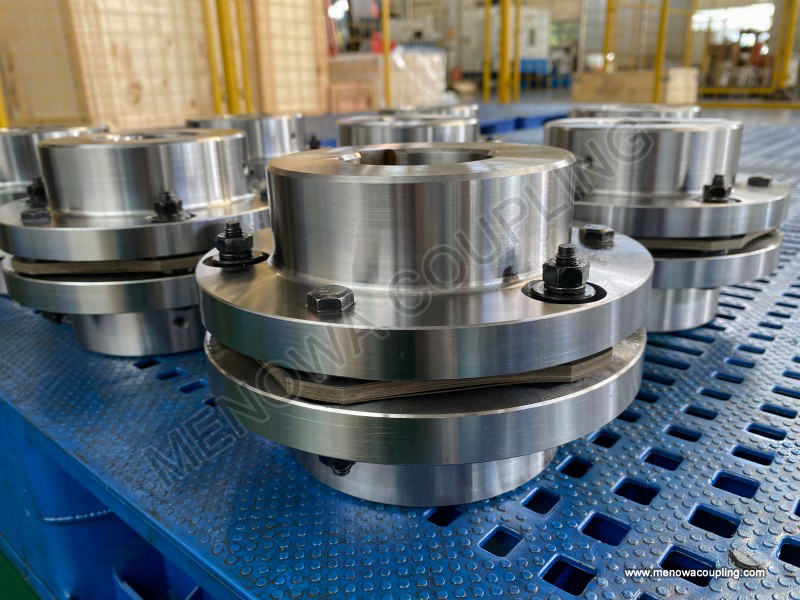
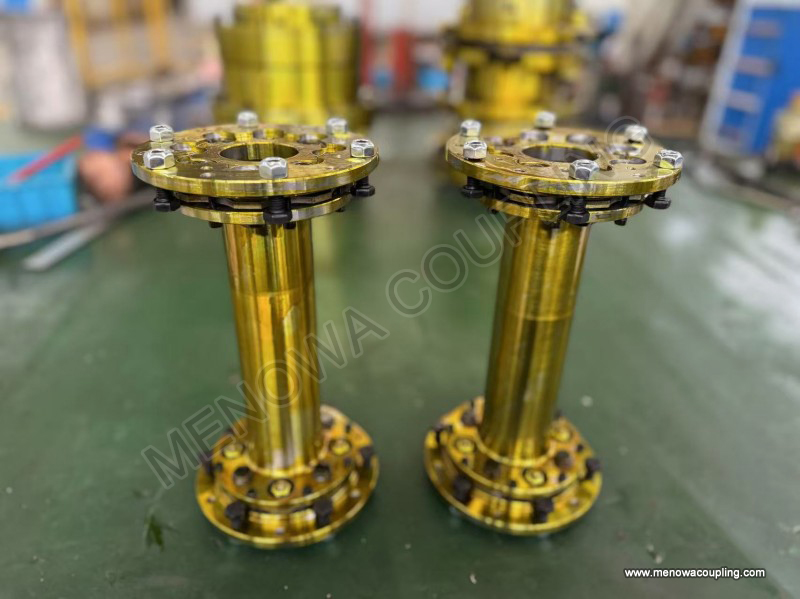
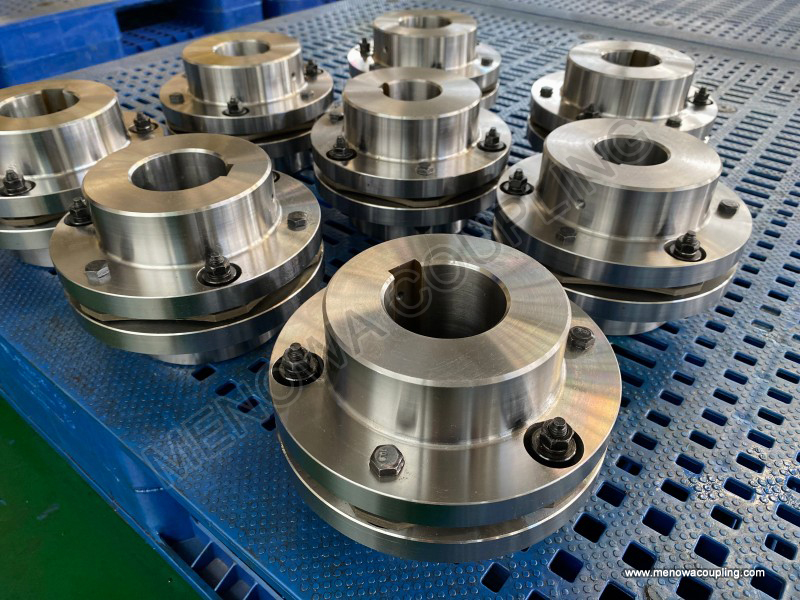
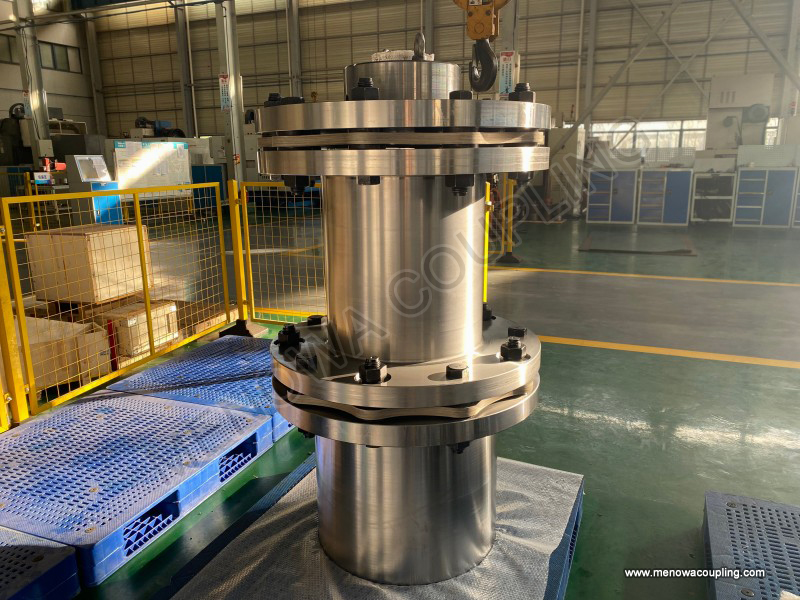
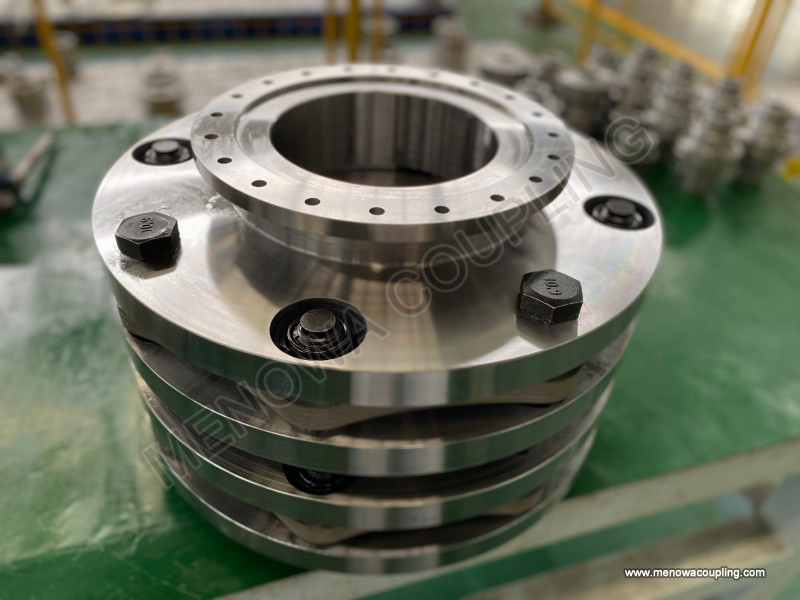
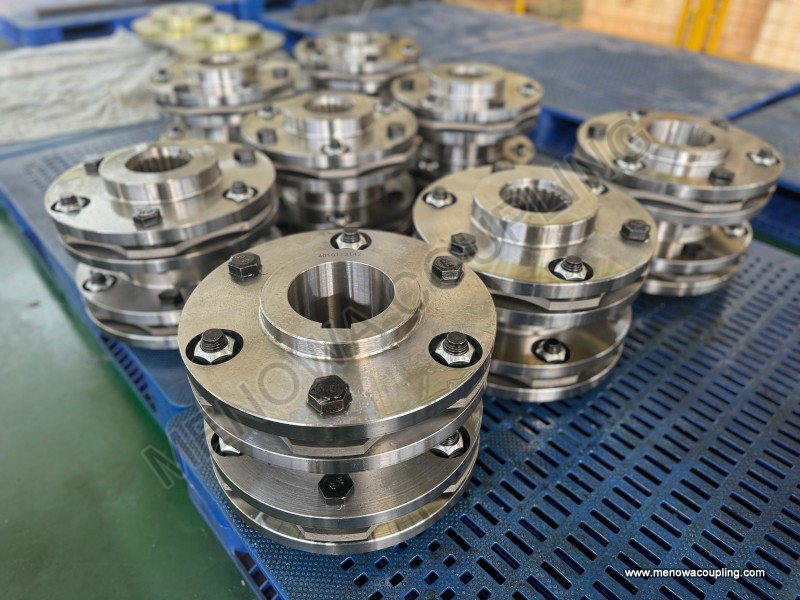
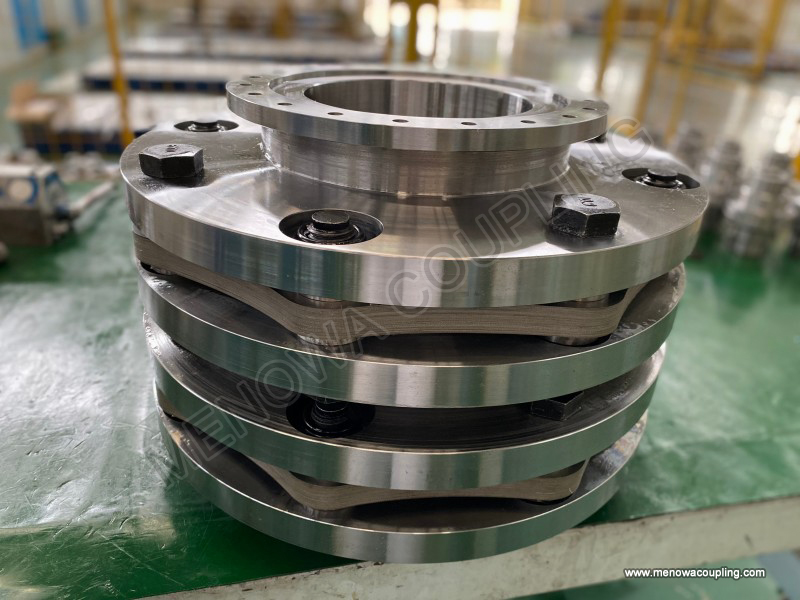
The structural composition of flexible diaphragm couplings follows a compact and integrated design logic, with the whole system mainly composed of rigid connecting components and flexible compensation components. The rigid parts include symmetric shaft sleeves, connecting flanges and fastening bolt assemblies, which undertake the fixed connection with the shaft and rigid torque transmission tasks. The shaft sleeve structure adopts an integrated cylindrical design with high machining precision, ensuring tight fitting and coaxial positioning with the transmission shaft, effectively avoiding shaft shaking and transmission jitter caused by assembly gaps. The flange structures on both sides are arranged symmetrically, with uniformly distributed mounting holes that match the diaphragm hole positions, realizing stable locking and force transmission. The core flexible component is the multi-layer stacked diaphragm group, which is usually made of high-strength stainless steel thin plates with uniform thickness and smooth surface. The number of stacked diaphragm layers varies according to torque transmission requirements and compensation performance standards, and the layered structure can disperse structural stress, improve deformation uniformity and enhance overall fatigue resistance compared with a single thick diaphragm. Auxiliary buffer and positioning sleeves are arranged at the bolt penetration position of the diaphragm group to avoid direct friction and extrusion between bolts and diaphragms, preventing local stress concentration and diaphragm damage caused by rigid contact.
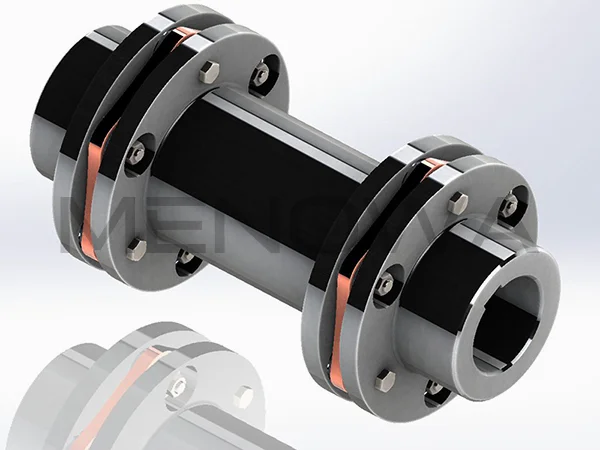
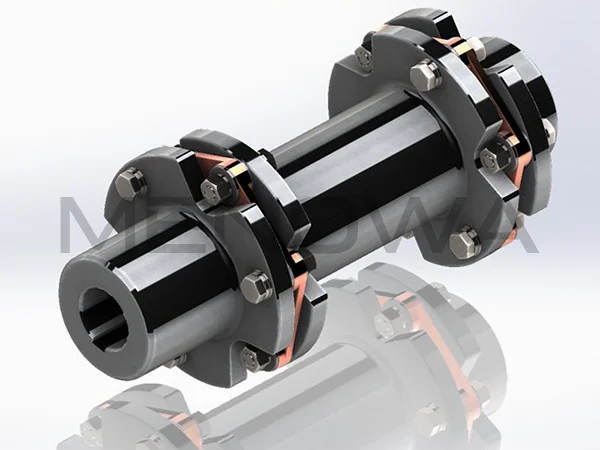
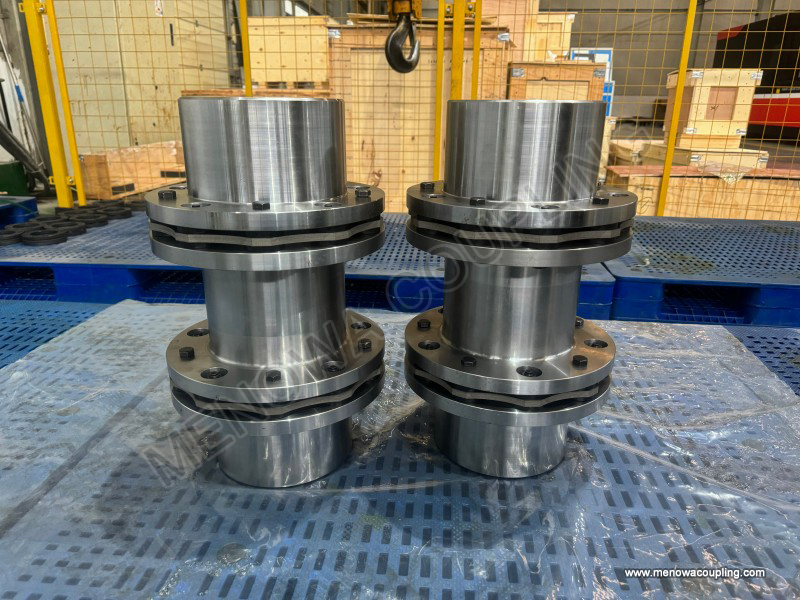
According to structural differences and compensation performance characteristics, flexible diaphragm couplings are mainly divided into single diaphragm and double diaphragm structural forms, each adapting to different operating condition requirements. Single diaphragm couplings feature a simple and compact overall structure with a small axial occupied space, suitable for transmission systems with low misalignment deviation and limited installation space. Their compensation capability is relatively concentrated, mainly adapting to small-angle angular deviation and micro axial displacement, with excellent stability in low-eccentricity and medium-low speed operating environments. Double diaphragm couplings add a middle spacing structure and two sets of symmetrically arranged diaphragm groups on the basis of the single diaphragm structure. The two groups of diaphragms cooperate through synchronous elastic deformation, greatly improving the multi-dimensional misalignment compensation ability, and the angular displacement compensation range is significantly expanded compared with single diaphragm structures. This structural form can simultaneously cope with axial, angular and complex radial combined deviations, showing stronger adaptability in long-distance shaft transmission and equipment systems with large operational vibration and thermal deformation.
In terms of core performance specifications, flexible diaphragm couplings have outstanding transmission accuracy and efficiency advantages. The zero-clearance structural design eliminates torque transmission delay and angle deviation, realizing real-time and synchronous transmission of rotational speed and torque, which can meet the high-precision operation requirements of precision transmission equipment. The power transmission efficiency remains at an extremely high level in conventional operating environments, with almost no power loss caused by structural friction and gap clearance. The elastic deformation design of the diaphragm group endows the coupling with low reaction force characteristics; when compensating shaft misalignment, the additional stress fed back to the shaft and bearing system is extremely small, which effectively protects the supporting structure and rotating parts of the equipment and reduces the failure rate of shaft system components.
Material performance is a key core specification that determines the service life and operating stability of flexible diaphragm couplings. Diaphragm materials need to have high tensile strength, excellent elastic fatigue resistance, stable mechanical properties and good corrosion resistance to adapt to long-term cyclic deformation and complex industrial environments. High-quality stainless steel series materials are widely used for diaphragm processing, which can maintain stable elastic performance under long-term repeated bending and telescopic deformation without permanent deformation or fatigue cracking. Rigid connecting parts such as flanges and shaft sleeves are made of high-strength alloy materials with good rigidity and wear resistance, ensuring that no structural deformation occurs under high torque load, and maintaining long-term assembly precision and connection stability. The overall material matching design enables the coupling to adapt to a wide temperature range, maintaining normal working performance in both low-temperature cold environments and high-temperature heat generation scenarios, without performance attenuation caused by temperature change.
The mechanical specification parameters of flexible diaphragm couplings cover torque transmission range, allowable misalignment, maximum operating speed and fatigue life, which constitute the key basis for model selection and application. Each structural specification corresponds to a matched rated torque and maximum allowable torque; the rated torque ensures stable long-term operation under conventional working conditions, while the maximum torque bears instantaneous impact load and peak load in equipment operation. In terms of misalignment adaptation, the standard parameters include allowable axial displacement, angular displacement and radial displacement, covering the deviation range of most conventional mechanical installation and operation. The maximum operating speed is restricted by structural balance performance and diaphragm dynamic stability; high-precision machining and symmetric structural design ensure that the coupling maintains dynamic balance at high rotating speed, avoiding vibration and resonance problems caused by unbalanced mass distribution. In terms of fatigue performance, the optimized diaphragm layered structure and stress distribution design keep the cyclic fatigue stress generated during operation far below the infinite life fatigue strength of the material, realizing long-term maintenance-free operation.
In terms of operational adaptability specifications, flexible diaphragm couplings have strong environmental tolerance and working condition compatibility. Compared with elastomeric flexible couplings that are easy to aging and deform, metal diaphragm structures are not affected by oxidation, aging and medium corrosion in conventional industrial environments, and can work stably in humid, dusty and weak corrosive gas environments. The structural design without wearable parts and lubrication requirements eliminates the need for regular oil injection, grease replacement and wearing part replacement, greatly reducing daily maintenance workload and equipment downtime. The compact overall structure saves installation space, and the split assembly design enables convenient on-site installation, disassembly and replacement without affecting the overall assembly structure of the equipment shaft system. In addition, the coupling has excellent vibration damping and impact resistance, which can absorb instantaneous mechanical impact and high-frequency vibration in the transmission process, stabilize the operating state of the transmission system and improve the overall operation smoothness of mechanical equipment.
The installation and use specifications of flexible diaphragm couplings put forward clear requirements for assembly precision and operating conditions to ensure the exertion of optimal performance. During installation, the coaxiality of the driving and driven shafts must be strictly controlled to avoid excessive initial misalignment exceeding the allowable range of the coupling, which would cause long-term over-deformation of the diaphragm and accelerate fatigue damage. The fastening bolts need to be locked evenly according to the symmetric locking sequence to ensure uniform stress on the diaphragm group and avoid local stress concentration caused by uneven bolt preload. In terms of operating conditions, continuous overload operation and frequent extreme impact load should be avoided in daily use; long-term overload torque will exceed the elastic deformation limit of the diaphragm, resulting in permanent structural deformation and loss of compensation performance. For high-speed operating equipment, regular dynamic balance detection of the coupling shaft system is required to prevent transmission vibration caused by accumulated installation deviation and structural micro-deformation.
In practical industrial applications, the specification advantages of flexible diaphragm couplings make them widely applicable in multiple precision transmission fields. They are deeply used in precision machine tool transmission systems, automated servo transmission equipment, high-speed fan and pump transmission systems, industrial turbine power transmission and mechanical transmission systems in new energy equipment. In high-precision servo control systems, the zero-clearance and high-response transmission characteristics ensure the accurate execution of equipment motion commands, improving the processing precision and operation consistency of automated equipment. In high-speed rotating machinery, the high dynamic balance performance and low vibration characteristics adapt to high-speed continuous operation, ensuring the stability and safety of long-cycle equipment operation. In complex environmental working conditions such as high temperature and slight corrosion, the stable metal material performance and structural durability avoid frequent component replacement caused by environmental aging, improving the overall operating efficiency of industrial equipment and reducing long-term operation costs.
In summary, the specification system of flexible diaphragm couplings covers structural design, material performance, mechanical parameters, environmental adaptability and application norms, forming a complete set of high-performance transmission component standards. Its core advantages of zero-clearance transmission, multi-dimensional misalignment compensation, long fatigue life, maintenance-free operation and strong environmental adaptability make it irreplaceable in high-precision and high-stability mechanical transmission scenarios. With the continuous upgrading of industrial equipment towards high speed, high precision and long-cycle operation, the structural optimization and performance improvement of flexible diaphragm couplings are also constantly advancing, further adapting to more complex and diversified industrial transmission working conditions, and providing reliable basic support for the stable operation of modern mechanical power transmission systems.
Post Date: May 25, 2026
https://www.menowacoupling.com/china-coupling/specification-of-flexible-diaphragm-coupling.html
Products
Tags
Related Articles
Flexible Diaphragm Coupling Exporter
In the global industrial transmission system, flexible diaphragm couplings have become an indispensable core component, widely used in various fields that require high-precision, high-reliability torque transmission. As a professional exporter focusing on flexible diaphragm couplings, we are committed to providing high-…Classification of Flexible Diaphragm Coupling
Flexible diaphragm couplings are essential components in modern mechanical transmission systems, designed to connect two shafts while compensating for relative displacements caused by manufacturing errors, installation deviations, thermal expansion, or operational vibrations. Unlike rigid couplings that require precise …Flexible Diaphragm Coupling Factory
A flexible diaphragm coupling factory is a specialized manufacturing facility dedicated to producing high-performance flexible diaphragm couplings, which are essential mechanical components used to connect two rotating shafts in various industrial applications. These couplings play a critical role in transmitting torque…Flexible Diaphragm Coupling Manufacture
Flexible diaphragm couplings stand as critical components in modern power transmission systems, bridging driving and driven shafts while accommodating misalignment, absorbing vibration, and ensuring efficient torque delivery across diverse industrial scenarios. The manufacture of these precision components integrates ma…Types of Diaphragm Coupling
Diaphragm couplings stand as a vital category of flexible metal couplings widely utilized in modern mechanical power transmission systems, designed to connect driving and driven shafts while delivering stable torque transfer and accommodating various forms of shaft misalignment through the elastic deformation of metal d…Structure of Flexible Diaphragm Coupling
Flexible diaphragm coupling serves as a vital mechanical transmission component widely applied in high-precision and high-speed mechanical transmission systems, relying on elastic deformation of metal diaphragm components to realize torque transmission and shaft misalignment compensation. Different from traditional flex…
 WeChat
 WhatsApp